

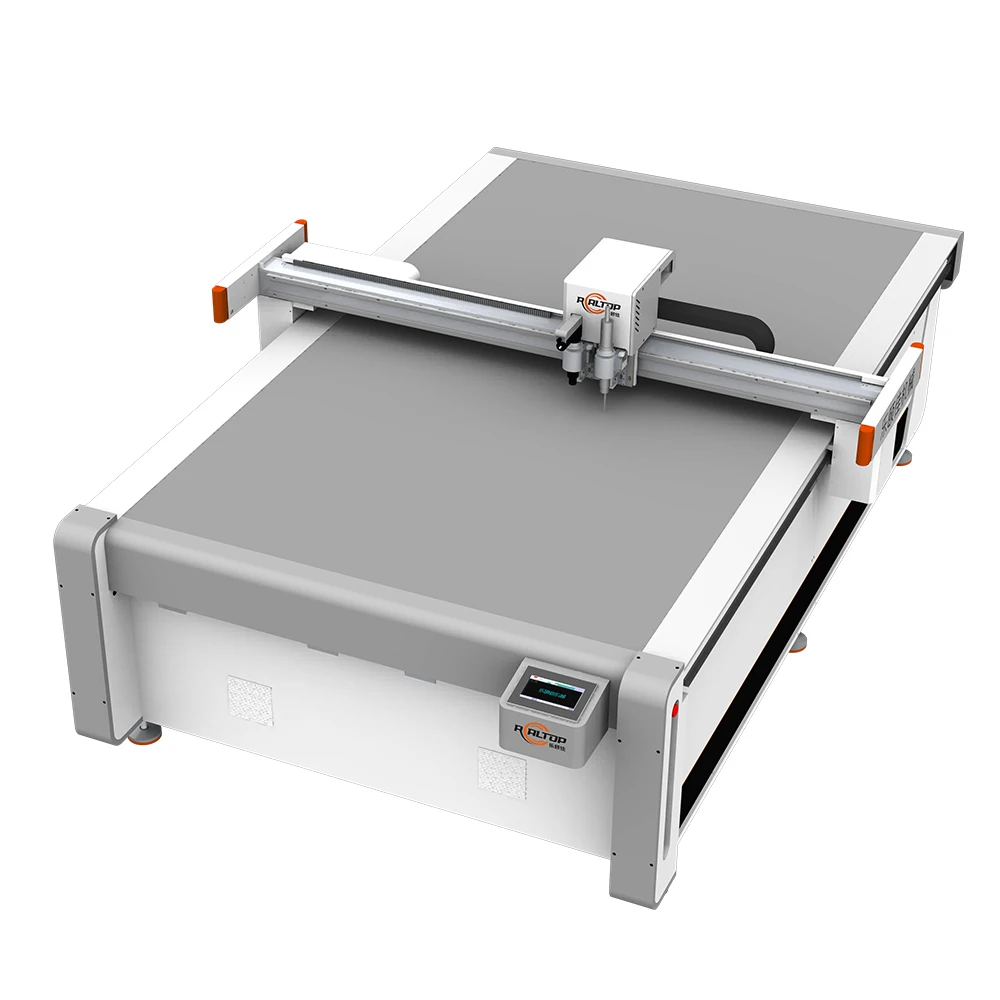
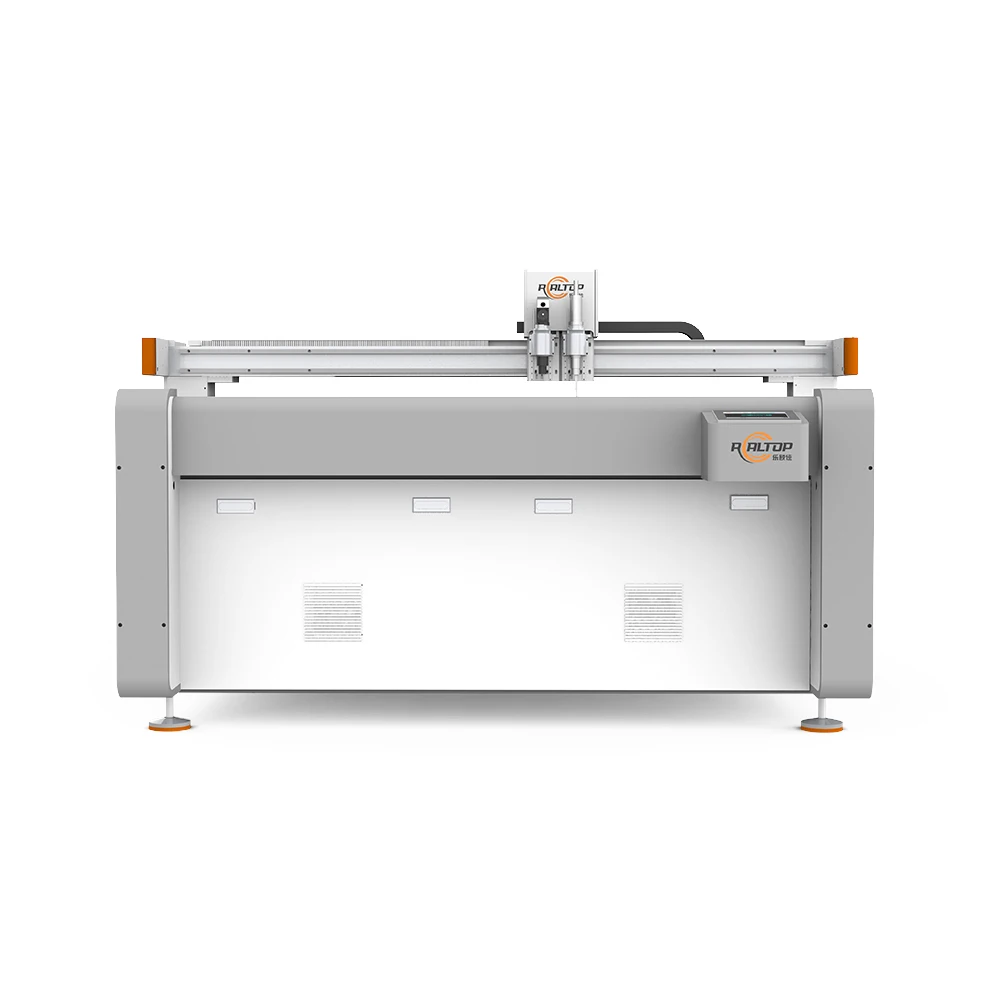
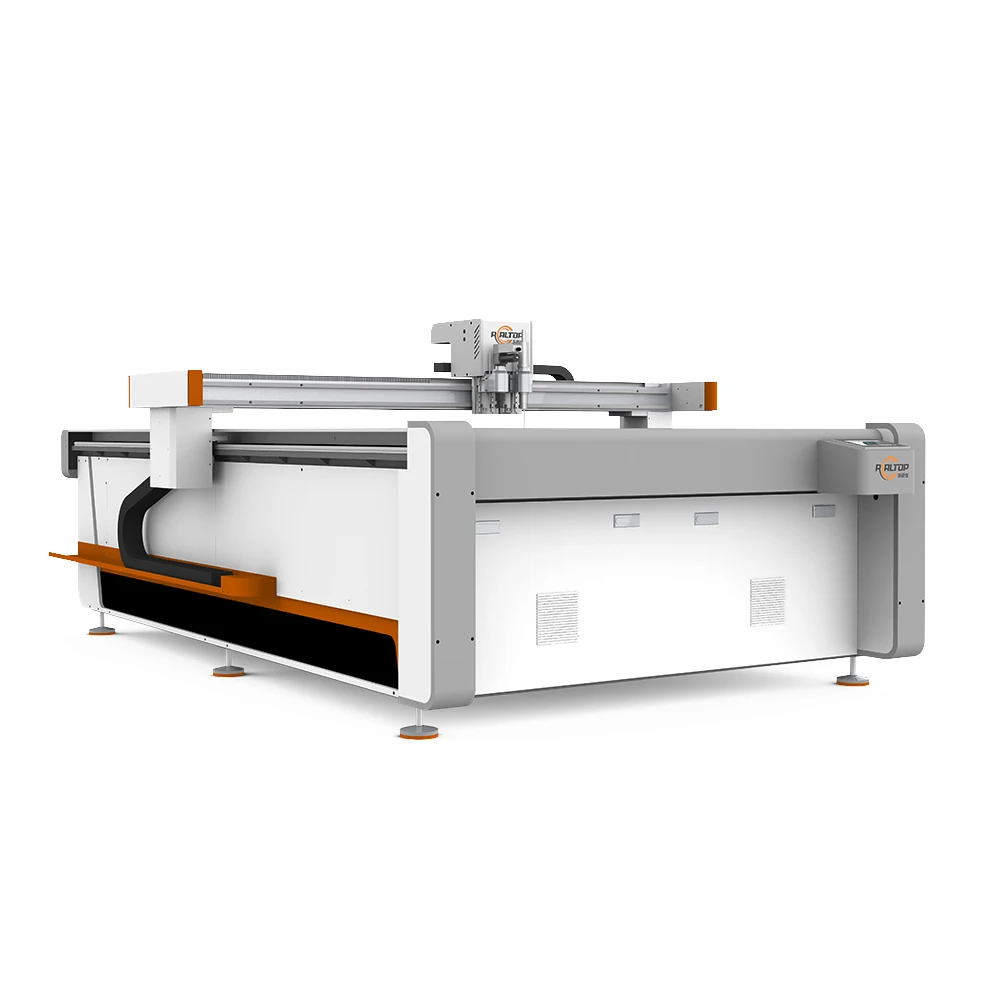




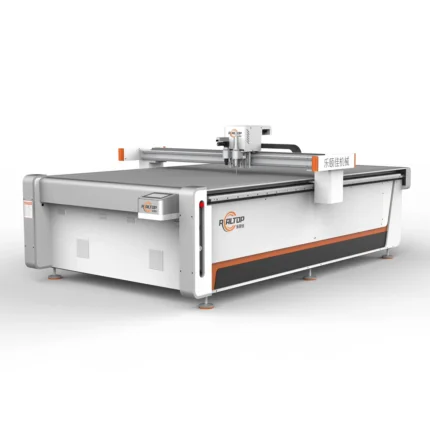
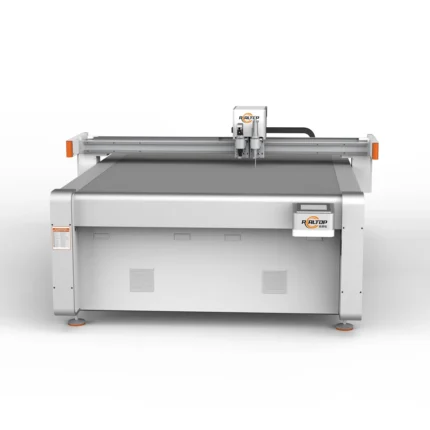
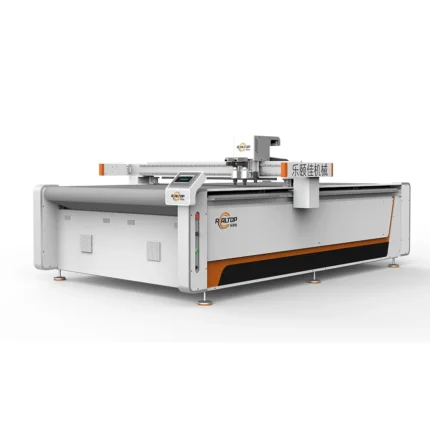
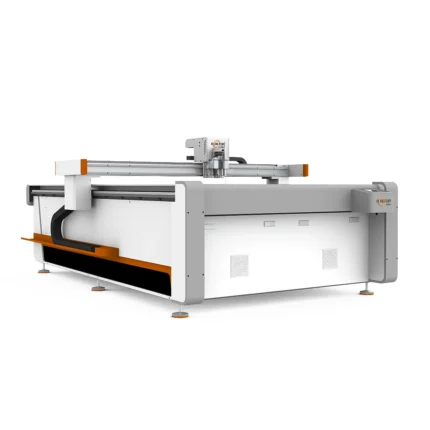
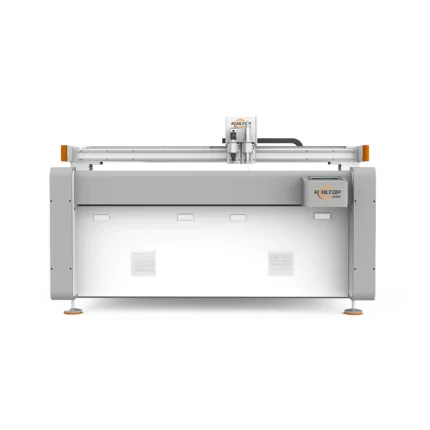
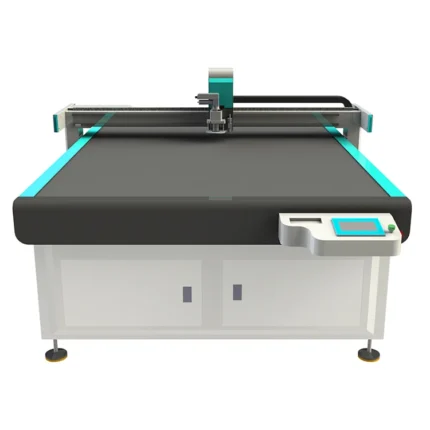
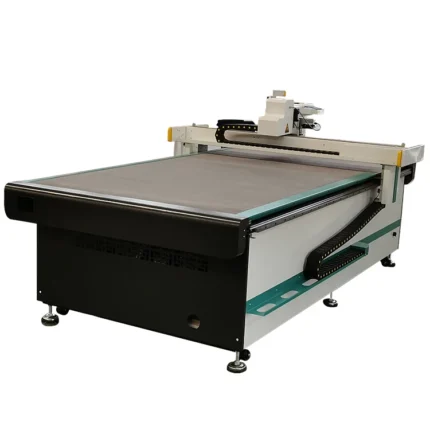
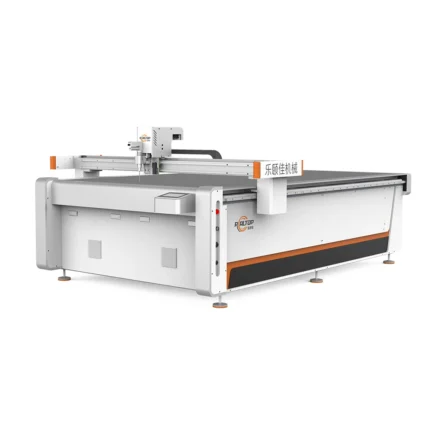
1625 Honeycomb Board Cutting Machine | Manufacturer OEM Available
OEM-capable manufacturer offering sample cutting on buyer’s own material to verify edge quality and tool head selection prior to order commitment
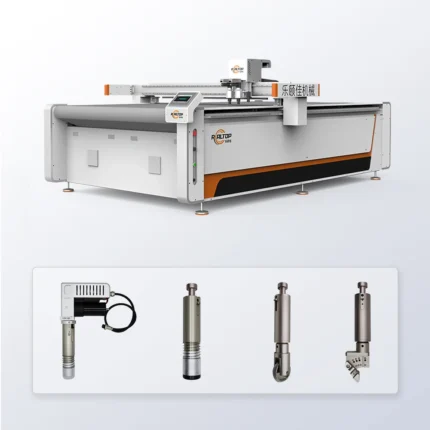
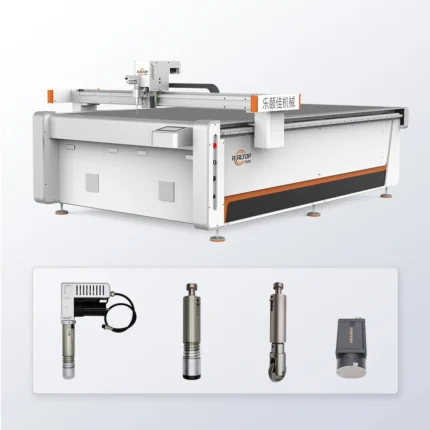
Tool Head Matching — The 1625 CNC Oscillating Knife Cutting Machine is configured with specific cutting and creasing tools only after testing your exact packaging material for edge quality and depth control.
Technical Specifications
| Parameter | Value |
|---|---|
| Product Type | CNC Oscillating Knife Cutting Machine |
| Working Area | 1600 × 2500 mm |
| Tool Head Options | Oscillating knife, Driven rotary knife, Creasing wheel, Kiss cutting tool, Pneumatic knife, Milling tool, V groove knife |
| Cutting Thickness Capacity | Up to 40 mm (material dependent) |
| Cutting Accuracy | ±0.1 mm |
| Maximum Cutting Speed | 1500 mm/s |
| Vacuum Pump Power | 9 kW |
| Vacuum Table Type | Aluminum bellows vacuum table |
| Voltage Options | 110V, 220V, 380V |
| Servo Motor Options | Panasonic, Delta, Dorna |
| Control System | PLC control panel |
| Profile Format Compatibility | PLT, DXF, AI, PDF |
| Safety Devices | Infrared sensor device, emergency stop device |
| Machine Dimensions | 3300 × 2100 × 1350 mm |
| Control Language Options | English, Russian, Italian, Chinese (special languages customizable) |
Application Suitability
| Application | Material or Output |
|---|---|
| Packaging Sample Making | Corrugated board, greyboard, cardstock without die-cut molds |
| Carton Prototyping and Short Runs | E-flute through BC-flute corrugated with creasing and kiss-cutting |
| Protective Packaging Inserts | EVA, EPE, PU foam for equipment cushioning and void fill |
| Gasket and Seal Production | Rubber mats, PTFE, silicone sheets for industrial seals |
| Textile and Leather Pattern Cutting | Velvet, fleece, non-woven fabric, synthetic leather for soft packaging |
| Composite Panel Processing | Adhesive-backed laminates and multi-layer packaging boards |
Why "Working Area" Is the Wrong Starting Point for a CO2 Laser Cutting and Engraving Machine Manufacturer Selection
Specifying a flatbed cutter by bed size alone ignores the tool head, vacuum zoning, and material interaction that determine whether your packaging stock actually feeds, holds, and cuts cleanly.
Many buyers sourcing a CO2 laser cutting and engraving machine manufacturer for packaging work assume the machine model defines capability, then discover the standard configuration was built for generic corrugated rather than their specific composite or adhesive-laden board [NEED_CITE: material hold-down requirements for adhesive-backed packaging substrates]. The cutting method must match the material stack, not the other way around. A machine rated for 40 mm cutting thickness on foam may struggle with dense greyboard of the same depth if the tool head and vacuum pressure are not aligned to that material’s density and surface friction.
Material Hold-Down and Vacuum Zoning Strategy
The 9 kW vacuum pump paired with the aluminum bellows vacuum table creates a continuous suction surface across the 1600 × 2500 mm working area. For small packaging prototypes or intricate gasket shapes, full-surface vacuum alone may not prevent material lift at the cut edges. The table zoning configuration determines whether suction concentrates under the actual cutting path or dissipates across unused bed space. Buyers processing small-format carton samples alongside large-format foam inserts need to confirm how the vacuum zones are segmented before the table is built, as retrofitting zone dividers after installation is typically impractical.
Tool Head Selection for Packaging Material Stacks
The available tool head range — oscillating knife, driven rotary knife, creasing wheel, kiss cutting tool, pneumatic knife, milling tool, and V groove knife — covers the primary operations in packaging sample making and short-run production. The oscillating knife handles most corrugated and foam substrates by vibrating at high frequency to shear through fibers without dragging. The creasing wheel scores fold lines without cutting through, which is essential for carton structural integrity. Selecting the wrong tool head for a given material thickness and density produces crushed edges on foam or ragged tear-out on multi-ply corrugated [NEED_CITE: tool head selection criteria for corrugated board flute profiles].
Reading the Specs Against Your Production Reality
The ±0.1 mm cutting accuracy figure is achievable when the servo drive system — available with Panasonic, Delta, or Dorna motors — is matched to the machine’s motion mass and the cutting forces required by the target material. A servo rated for high-speed positioning on thin cardstock may oscillate or overshoot when the oscillating knife encounters dense 40 mm EVA foam. The 1500 mm/s maximum cutting speed represents the upper limit of the motion system; actual production speed depends entirely on material resistance and the complexity of the cut path. The PLC control panel processes PLT, DXF, AI, and PDF file formats, but buyers must confirm that their existing packaging design software exports nest-compatible files without manual re-drawing. Voltage selection from 110V, 220V, or 380V must align with the buyer’s facility supply before the electrical cabinet is wired, as post-shipment voltage conversion typically requires transformer replacement or full rewinding.
The Cost of Skipping the Material Test
When a packaging converter specifies a machine based on catalogue working area and standard tooling, then introduces adhesive-backed composite boards or wax-coated corrugated into production, the result is typically blade fouling, inconsistent cut depth, and material lift that ruins dimensional accuracy [NEED_CITE: adhesive transfer effects on oscillating knife cutting edges]. The buyer then faces unplanned downtime for tool replacement, parameter recalibration, and scrap sorting — costs that were invisible at the quotation stage because the test sample used generic, non-representative stock.
Why This Configuration Approach Works for Packaging Buyers
In-house design and production covering the knife cutting platform means the tool head, vacuum table, and motion system are specified together against the buyer’s material sample, not assembled from generic modules. Sample cutting on the buyer’s own packaging stock — whether BC-flute corrugated, 20 mm EVA foam, or adhesive-laminated greyboard — confirms edge quality and cutting depth before the order is finalized. Software compatibility is verified by importing the buyer’s actual nesting files in their preferred format. Voltage, plug type, and control language are confirmed against the destination facility’s electrical standard and operator language requirement. The factory test record documents the specific tool head and speed parameters that achieved acceptable results on the buyer’s material.
Documentation & Verification
- Machine specification sheet listing confirmed tool head and vacuum table configuration for your material type
- Electrical schematic with voltage, amperage, and plug type verified against your facility supply standard
- Sample cutting report on your packaging substrate documenting cut quality, edge finish, and dimensional accuracy
- Software licence and file format compatibility note confirming PLT, DXF, AI, or PDF import from your design workflow
- Factory test record showing machine performance on your material before crating and dispatch
- Operation and maintenance manual in your selected control language with tool replacement intervals
Installation, Commissioning & Support
- Floor space requirement of approximately 3300 × 2100 mm with clearance for material loading on the 1600 × 2500 mm bed
- Dedicated electrical circuit matching the confirmed voltage option (110V, 220V, or 380V) and the 9 kW vacuum pump draw
- Machine arrives as a single frame assembly requiring power connection, vacuum hose routing, and control panel activation
- First-run commissioning includes vacuum zone verification, tool head calibration, and test cuts on your packaging stock
- Operator training covers tool head changeover between oscillating knife, creasing wheel, and kiss cutting configurations
- Spare parts list identifies consumable blades, creasing wheels, and vacuum table seal strips for your production volume
What to Prepare Before Requesting a Quotation
Provide the specific packaging material type, flute profile or foam density, sheet dimensions, and maximum thickness you will process daily. Confirm your facility voltage and frequency standard, preferred control language, and the file formats your packaging designers currently export. If you are replacing an existing die-cut workflow, share sample designs so the nesting and file compatibility can be validated before the machine is built.
Frequently Asked Questions
Q: How do I know the 1625 can handle my specific corrugated or foam thickness?
A: Send a sample of your actual packaging material to the factory for a cutting test. The test confirms which tool head — oscillating knife, creasing wheel, or pneumatic knife — produces a clean edge at your required thickness, and documents the speed and vacuum settings needed. This sample report is provided before you commit to an order, so you have verified data rather than catalogue claims.
Q: Which tool head do I need for my packaging material?
A: It depends on the material composition and the operation. Corrugated board typically requires an oscillating knife for cutting and a creasing wheel for fold lines. Foam inserts use the oscillating knife or a driven rotary knife depending on density. Kiss cutting for adhesive-backed labels or gaskets uses a dedicated kiss cutting tool. The correct selection is confirmed during the sample cutting test on your stock.
Q: What voltage and language options are available for my facility?
A: The machine is configurable for 110V, 220V, or 380V supply, and the control panel language is selectable from English, Russian, Italian, and Chinese, with special languages available on request. You must confirm your facility’s exact voltage, frequency, and plug type before the electrical cabinet is assembled, as changes after wiring are costly.
Q: Can the software import my existing packaging design files?
A: The dedicated packaging box structure design software accepts PLT, DXF, AI, and PDF formats. Before ordering, you should provide sample files from your current design workflow so the factory can verify direct import and nesting compatibility without manual redrawing or format conversion that could introduce dimensional errors.
Q: Can I test my material before placing an order?
A: Yes, sample cutting on your own packaging material is a standard step in the process. You send representative sheets of your corrugated board, foam, or composite stock, and the factory runs test cuts using multiple tool head configurations. The results — edge quality, dimensional accuracy, and cutting speed — are documented in a sample report provided to you before any purchase commitment is made.


Related products
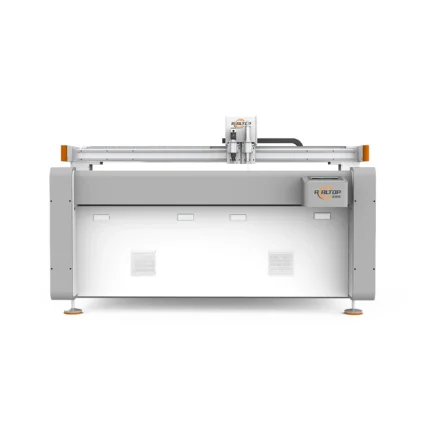
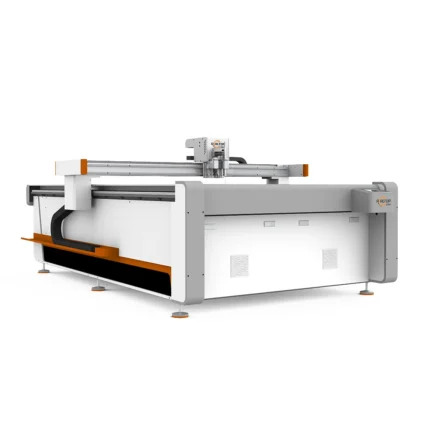
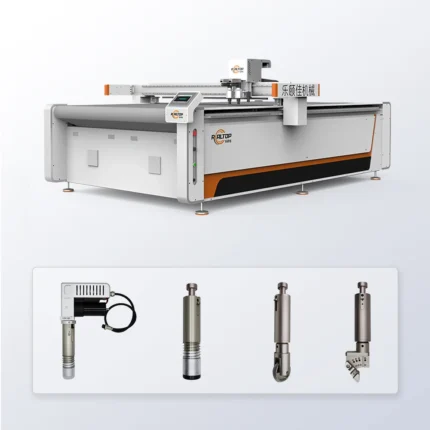
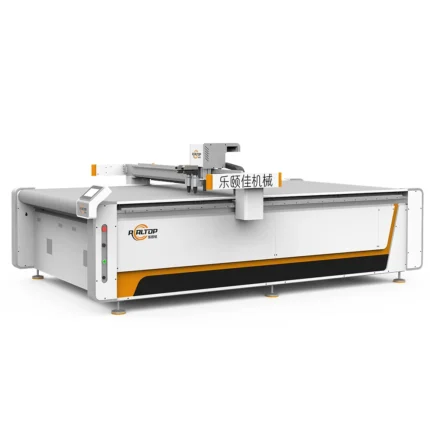
Automatic Digital Cardstock Cutter 2026 CNC Cutter
Product Introduction
Automatic Digital Cardstock Cutter 2026 is a CNC cutting machine ideal for white cardboard and kraft paper. It offers precise and efficient cutting performance, suitable for various paper processing needs in manufacturing and craft applications.Key Specifications
| Type | CNC Digital Cutting Machine |
| Material Compatibility | White Cardboard, Kraft Paper |
| Operation | Automatic |
| Application | Paper Cutting & Processing |
CNC Flatbed Cutter 2026 Digital Corrugated Box Making Machine
Product Introduction
High-precision CNC flatbed cutter designed for efficient cardboard box production. Ideal for 2026 digital corrugated box manufacturing, offering precise cutting and reliable performance for professional packaging solutions.
Key Specifications
| Type | CNC Flatbed Cutter |
| Application | Cardboard Box Production |
| Technology | 2026 Digital System |
| Material | Corrugated Board |
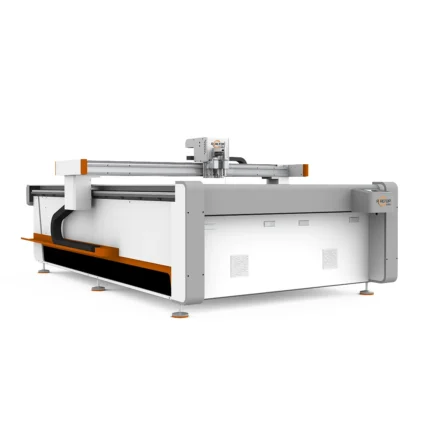
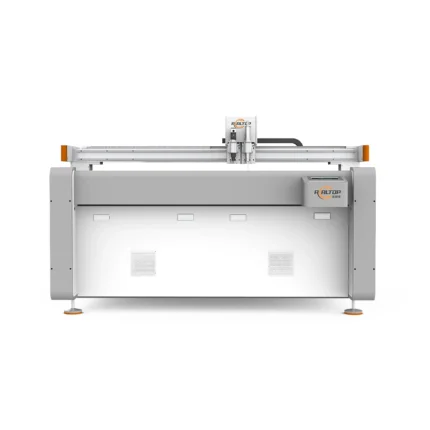
CNC Oscillating Knife Cutting Machine 2026 for Corrugated Cardboard & Honeycomb
Product Introduction
2026 CNC Oscillating Knife Cutting Machine, ideal for corrugated cardboard and honeycomb materials, offering precise and efficient cutting solutions for your production needs.Specifications
| Model | 2026 |
| Type | CNC Oscillating Knife Cutting Machine |
| Applicable Materials | Corrugated Cardboard, Honeycomb |
| Cutting Method | Oscillating Knife |
商品评价
There are no reviews yet.