





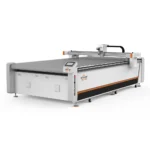
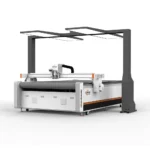
Auto Knife Leather Cutting Machine for Contour & Auto Feed – Manufacturer
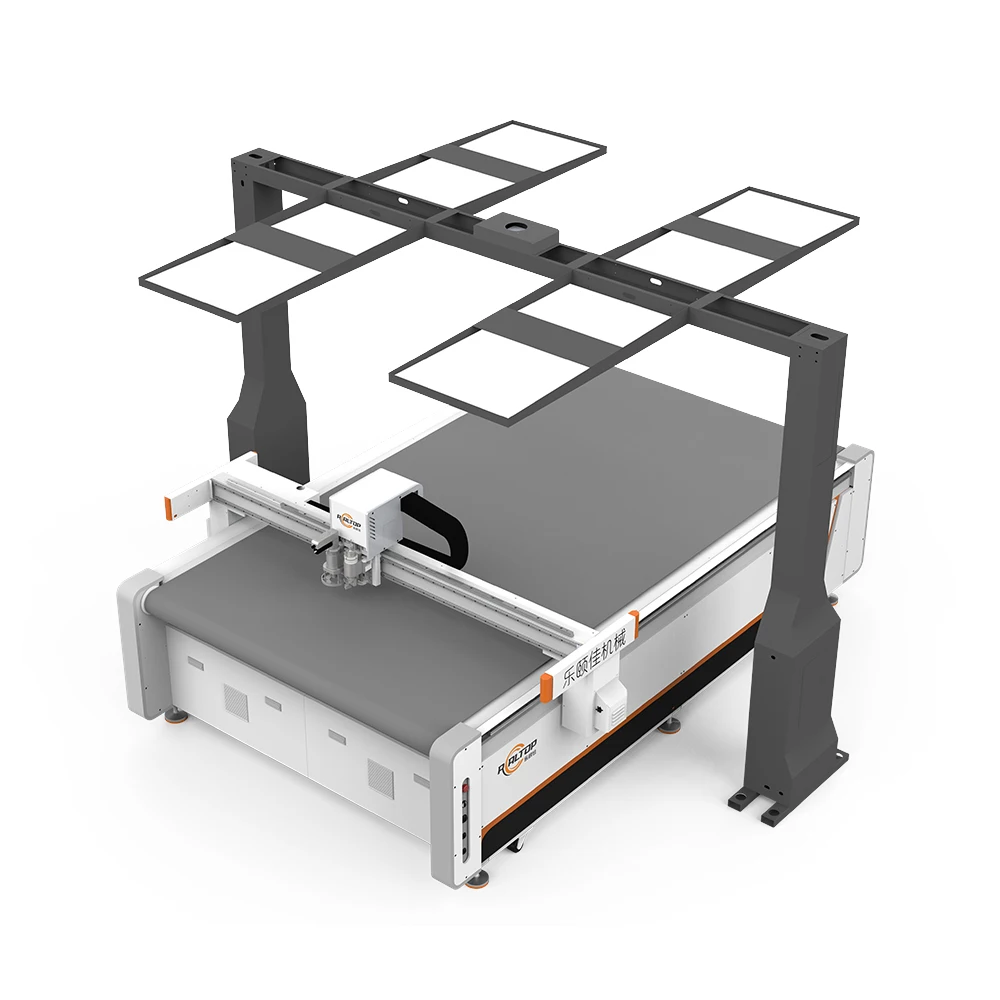
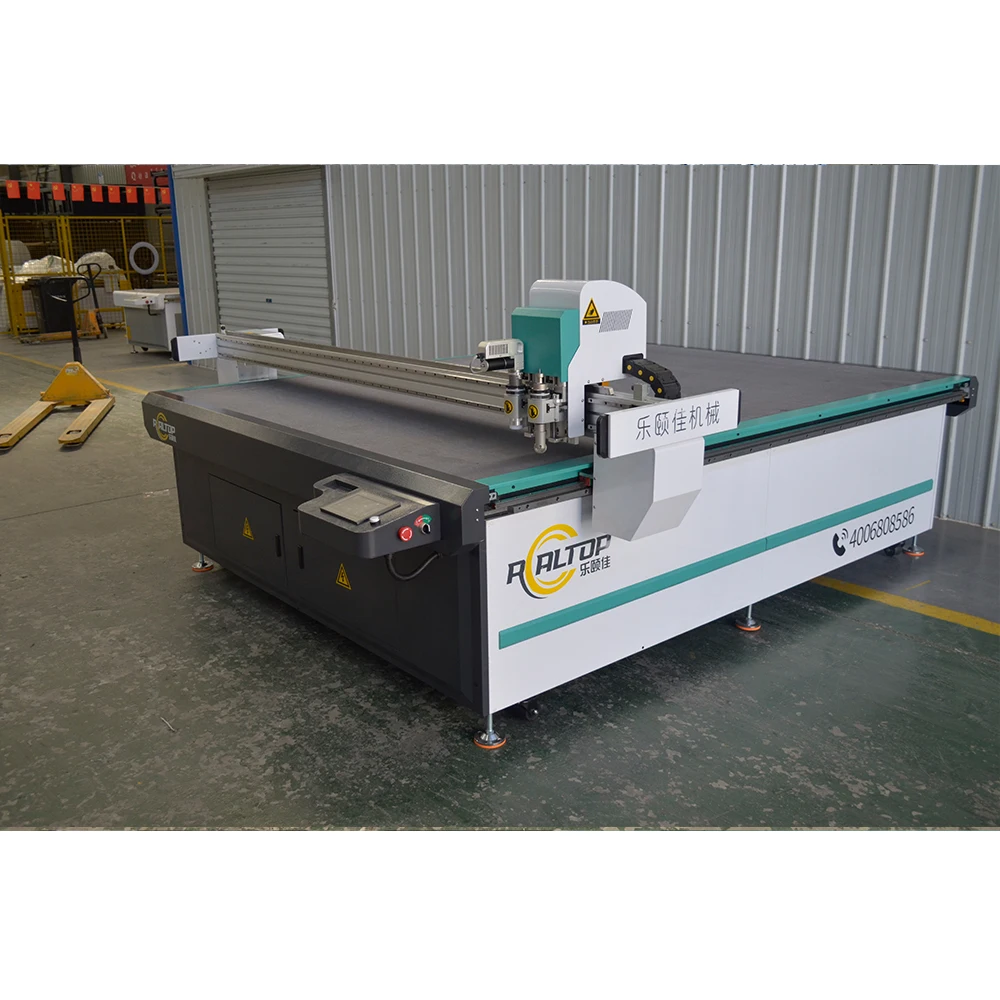
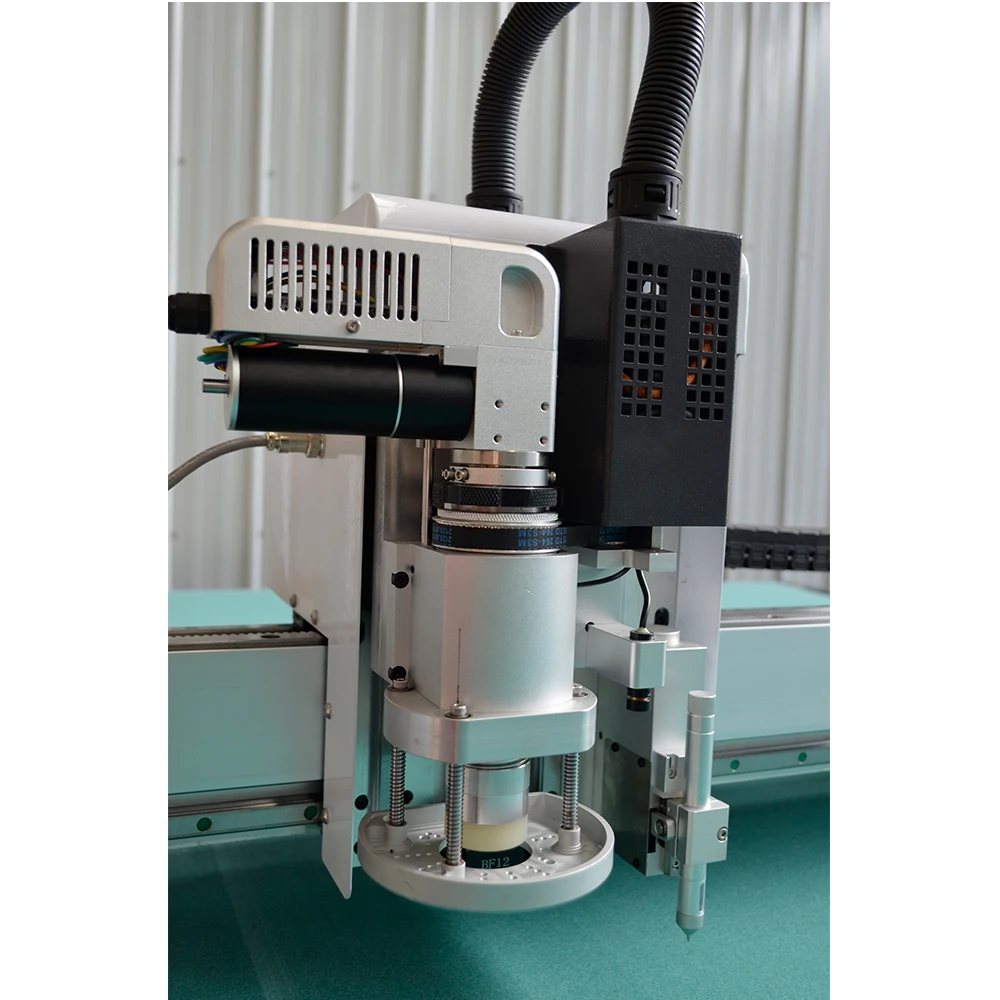
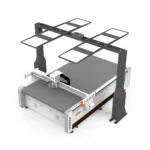
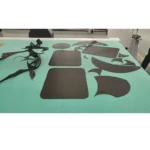
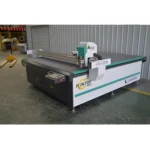
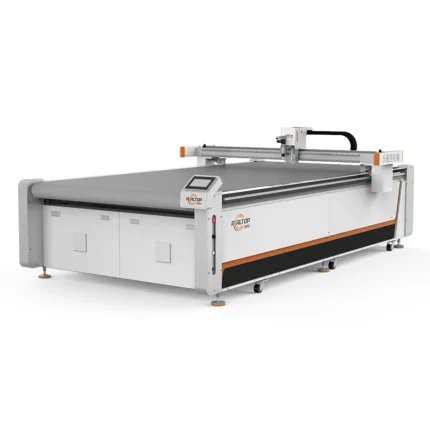
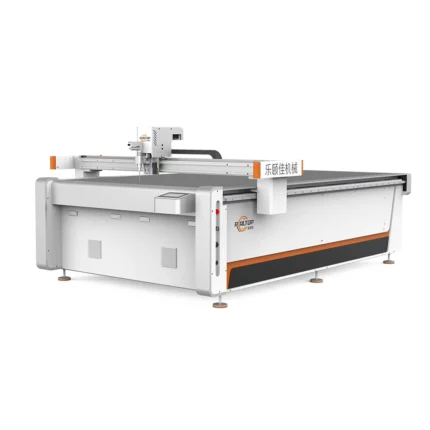
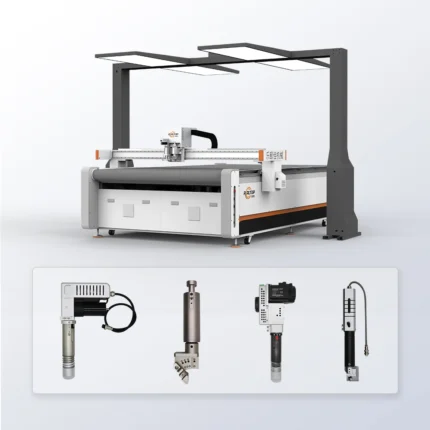
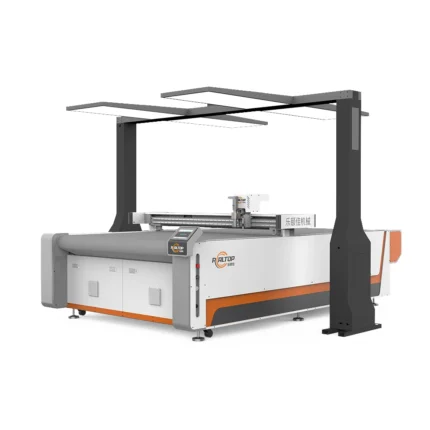
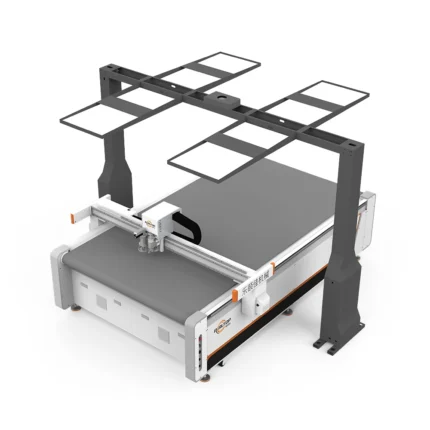
RT-D2516/RT-S2516 CNC Oscillating Knife Leather Cutting Machine, 1600×2500mm Working Area, 9kW, 380V — engineered for leather, composite and flexible material processing with Swiss imported knife head supporting full-cut, half-cut and cursor location modes.
- Magnesium-aluminum alloy vacuum table with PVDF coating ensures uniform hold-down across the entire work surface
- CCD camera contour recognition with panoramic and mark-point positioning options for printed leather hides
- Auto-feeding configuration available for continuous medium-to-high volume production runs
- Software supports PLT, DXF, AI formats with auto typesetting and multi-language control panel
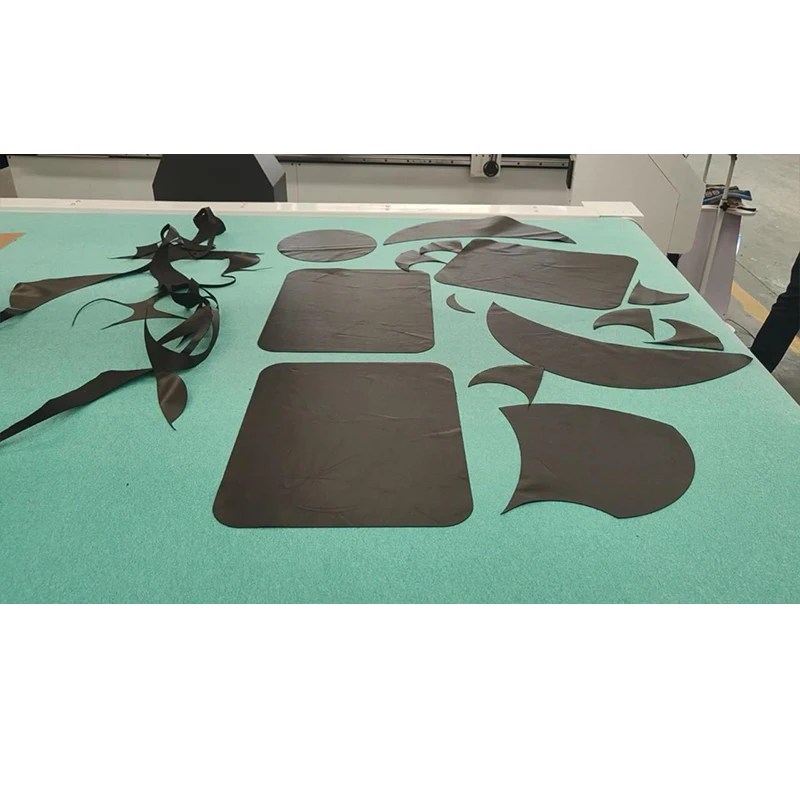
Sample cutting on your specific leather type and thickness is completed before order commitment, ensuring tool head selection and edge quality match your production requirements.
Precision Blade Depth Control — Unlike laser systems where quoted peak power often fails to deliver real cutting depth on thick composites, this oscillating knife platform uses physical blade penetration calibrated to your exact leather hide thickness and ply structure.
Technical Specifications
| Parameter | Value |
|---|---|
| Model | RT-D2516/RT-S2516 |
| Product Type | CNC Oscillating Knife Leather Cutting Machine |
| Working Area | 1600 × 2500 mm |
| Machine Footprint | 3450 × 2300 × 1250 mm |
| Rated Power | 9 kW |
| Translational Velocity | 800–2000 mm/s |
| Cutting Speed | 200–800 mm/s (material dependent) |
| Repeated Positioning Accuracy | ≤ 0.1 mm |
| Transmission | Digital servo motor, linear guide, synchronous belt, ball screw |
| Servo Motor Option | Delta or Panasonic |
| Vacuum Pump | 7.5 kW |
| Vacuum Table Surface | Magnesium-aluminum alloy, PVDF powder coated, anodized |
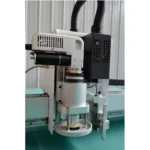
| Multifunctional Head | Swiss imported knife (full-cut, half-cut, cursor location) |
| Visual Positioning | Small CCD mark-point, panoramic camera, projection (optional) |
| Control Panel | Touch screen, multi-language |
| Software Formats | PLT, DXF, AI |
| Voltage | 380 V ±10% |
| Instruction Format | HP-GL compatible |
| Safety | Infrared sensors, anti-collision, emergency stop |
Application Suitability
| Application | Material or Output |
|---|---|
| Leather goods and footwear production | Natural and synthetic leather hides with nested pattern layout |
| Automotive interior trim | Sponge composite leather, flexible PU and EVA panels |
| Bag and luggage manufacturing | PU, EVA, XPE composite sheets in medium-to-high volume runs |
| Soft home furnishings and upholstery | Multi-layer fabric, sponge, and non-woven textile composites |
| Sealing gasket fabrication | Rubber, PTFE, silicone, and composite gasket stock |
| Graphic advertising and printing | Vinyl, sticker film, corrugated board, and foam board |
Why Quoted Laser Power Falls Short on Thick Leather and Composites
Physical blade depth eliminates the specification gap between peak and continuous cutting performance on layered flexible materials.
Many buyers discover after delivery that a laser’s quoted wattage reflects peak output rather than sustained continuous power, leaving insufficient energy to penetrate multi-layer leather or dense sponge composites at production speed. The result is incomplete through-cuts, scorched edges requiring secondary trimming, and material waste that accumulates across every shift. An oscillating knife system sidesteps this entirely — the blade physically enters the material to a set depth, so what you configure is what you cut, regardless of material density variations across a hide [NEED_CITE: industrial cutting power rating standards]. For the automotive seat producer I worked with who switched from single-layer genuine leather trials to multi-ply synthetic composite in production, the knife-based approach meant adjusting depth parameters rather than discovering the laser could not reach through the full stack.
Blade Configuration Matched to Hide Structure and Ply Count
The Swiss imported multifunctional head supports full-cut, half-cut, and cursor location modes, each selected according to the leather type and layering in your production workflow. Full-cut penetrates completely through single hides or composite stacks, while half-cut scores kiss-cut lines for peel-and-fold packaging or gasket scoring applications. Cursor location enables precise start-point alignment when working with pre-marked hides where natural defects must be avoided. Switching between modes requires no tool change — the head reconfigures through software command, keeping uptime intact across short runs of mixed products.
Contour Recognition at Line Speed on Printed Leather Sheets
The optional CCD visual positioning system provides three recognition methods: small camera mark-point positioning for registration marks placed at sheet corners, panoramic camera recognition for full-sheet contour mapping, and projection positioning for manual alignment verification. On printed synthetic leather where the cut path must follow a pre-printed design contour, the camera reads fiducial marks and the controller adjusts the toolpath dynamically [NEED_CITE: CCD contour tracking accuracy on flexible substrates]. This matters when material stretches or shifts slightly during the auto-feeding cycle — the system compensates in real time rather than cutting to a fixed coordinate grid that no longer matches the print.
Vacuum Flatness, Servo Response, and What They Mean for Edge Quality
The magnesium-aluminum alloy vacuum table with PVDF coating and anodized finish maintains flatness across the 1600 × 2500 mm work area, which is the foundation for consistent cut depth. A warped or uneven table causes the blade to cut deeper in some zones and shallower in others — visible as incomplete cuts in one corner and table-scoring in another. The 7.5 kW vacuum pump generates suction distributed through zoned channels, though zone configuration must match your smallest part dimensions; a zone larger than the part it holds will allow edge lift during oscillating cuts. The digital servo system (Delta or Panasonic selectable) drives the cutting head at up to 800 mm/s cutting speed with ≤ 0.1 mm repeated positioning accuracy, keeping edge deviation within tolerance even on tight curves common in footwear pattern pieces.
The Cost of Wrong Tool Head and Table Zoning Choices
Choosing a drag knife for closed-cell foam or thick composite leather produces crushed edges and delamination rather than clean shear — the material compresses under lateral blade pressure instead of being sliced by vertical oscillation [NEED_CITE: oscillating versus drag knife edge quality on composite materials]. Similarly, insufficient vacuum zoning causes small cut pieces to lift and shift mid-cycle, ruining nesting yield and forcing re-cuts that consume both material and schedule. These errors surface only after the machine arrives and production begins, when reconfiguration means ordering new heads and re-drilling table zones. Specifying the tool head and zone layout against your actual part catalog before shipment prevents this entirely.
Why Sourcing This Machine Here Makes Sense for Your Line
The design team handles both knife and laser platforms in-house, so when your material portfolio spans natural leather (knife-suitable) and acrylic templates (laser-suitable), the recommendation is based on material physics rather than pushing a single technology. Tool head and table configuration are specified per your submitted material samples, not pulled from a default catalog page. CCD contour positioning is validated on your printed sheets before the machine ships, confirming mark recognition at your production feed rate. Voltage, plug type, and control language are documented and confirmed against your facility’s electrical standard before production begins [NEED_CITE: voltage and frequency standards by export market]. A sample cutting report on your specific leather type and composite stack is provided so edge quality, depth consistency, and cycle time are verified before commitment.
Documentation & Verification
- Factory test record on your leather thickness range and composite layup before dispatch
- Electrical schematic with voltage confirmation and plug type for your destination market
- Tool head and vacuum zone configuration list matched to your submitted part catalog
- Software license with confirmed PLT, DXF, AI file format compatibility note
- Sample cutting report on buyer-supplied material with edge quality and depth photographs
Installation, Commissioning & Support
- Foundation must support 3450 × 2300 mm footprint plus operator clearance on three sides
- Dedicated 380 V ±10% circuit rated for 9 kW machine load plus 7.5 kW vacuum pump
- Machine ships assembled; table leveling and servo calibration performed on-site at commissioning
- Touch screen configured to selected language; cutting parameters loaded from sample cutting trial
- Swiss knife blade replacement cycle and oscillation bearing inspection schedule documented in manual
- Spare parts list includes blades, vacuum seals, and servo belts specific to your configuration
What We Need to Quote Accurately
Provide the leather type, thickness range, and whether you process single hides or multi-ply composite stacks. Confirm your daily volume and average nesting pattern dimensions so we can configure vacuum zoning and auto-feeding cycle speed. Specify your facility voltage, frequency, and required control panel language so electrical and software configuration are locked before production begins.
Frequently Asked Questions
Q: How do you determine the correct oscillating knife frequency and blade type for different leather grades?
A: We request physical samples of your leather — natural hide, synthetic composite, or multi-layer sponge-bonded material — and run cutting trials at multiple oscillation frequencies and blade geometries. The sample cutting report documents edge quality, depth consistency, and achievable cutting speed for each configuration. This data drives the tool head specification that ships with your machine, eliminating guesswork on your production floor.
Q: What CCD contour recognition options are available and how do they perform at production speed?
A: Three options exist: small CCD mark-point positioning for corner fiducial marks, panoramic camera for full-sheet contour mapping, and projection positioning for visual alignment verification. Each is tested against your printed material at the configured auto-feeding rate before shipment. The test confirms that mark detection and toolpath compensation keep pace with your cutting cycle without pausing for re-registration.
Q: How should I configure vacuum table zones for mixed part sizes in a single nesting layout?
A: Zone boundaries must be smaller than your smallest part dimension so that every cut piece sits fully within at least one active zone. We configure the zone layout based on your part catalog submitted before production. Undersized zones on large parts are acceptable; oversized zones under small parts cause lift and registration drift during oscillating cuts, which is the failure mode we configure to prevent.
Q: What electrical and language specifications are confirmed before the machine ships?
A: We provide a complete electrical schematic documenting voltage (380 V ±10%), frequency, plug type, and circuit requirements matched to your destination market standard. Control panel language is confirmed from available options — English, Russian, Italian, Chinese — or customized for your operator team. These are locked in writing before production starts, not adjusted after arrival.
Q: What does the sample cutting process look like before I commit to a purchase order?
A: You send representative material samples covering your thickness range and composite structures. We run cutting trials using the configured tool head, vacuum table, and feeding system, then deliver a report with cut-edge photographs, measured depth data, cycle time per nest, and recommended operating parameters. You review and approve the results before the order proceeds to production.


Related products
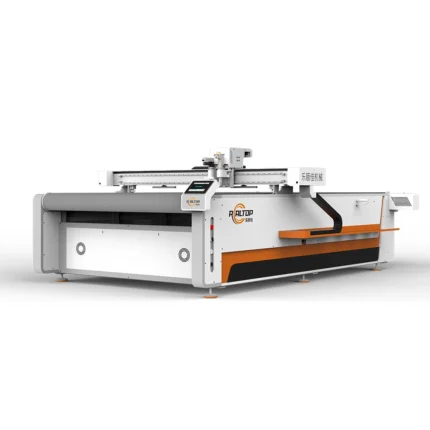
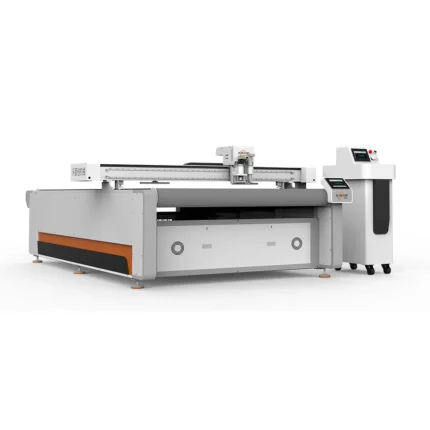


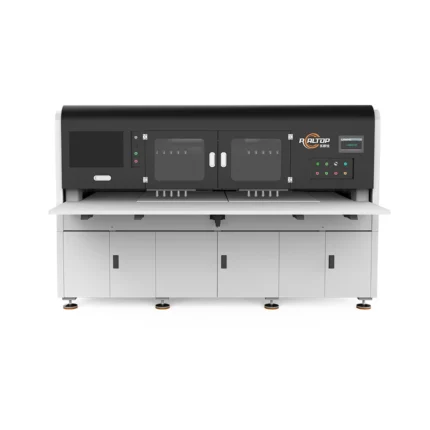
Auto Knife Leather Cutting Machine 2026 Contour & Auto Feed
Product Introduction
Auto Knife Leather Cutting Machine 2026 with contour cutting and auto feed functions, designed for precise leather processing. Ideal for efficient cutting tasks in manufacturing settings.Product Parameters
| Function | Contour Cutting & Auto Feed |
| Type | Auto Knife Cutting Machine |
| Application | Leather Processing |
| Year | 2026 |

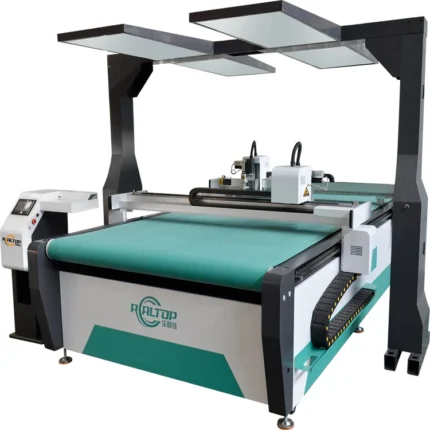
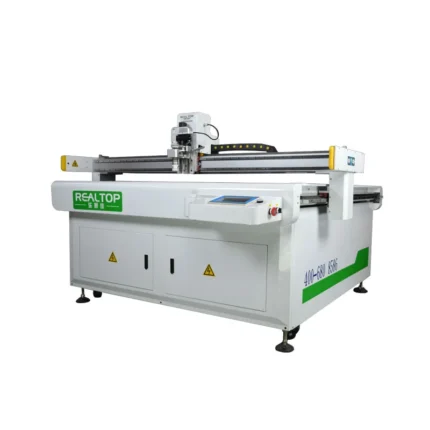
Leather CNC Oscillating Knife Cutter – Realtop1625
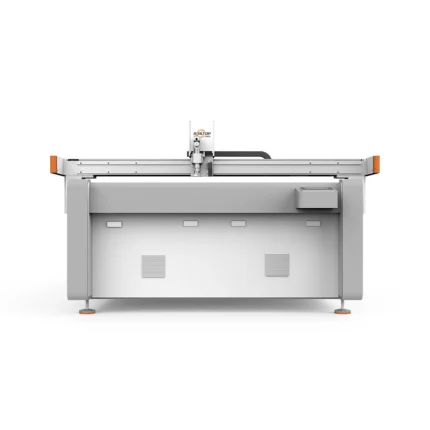
Realtop1625 Leather CNC Cutting Machine, 1600×2500mm, ≤30mm Thickness, CCD Contour Recognition — configured with interchangeable oscillating and rotary knife heads matched to leather grade and fabric density rather than a single fixed tool. Aluminum bellows vacuum table holds small contours flat across the full working area, with CCD camera tracking printed marks on patterned rolls at production speed.
Sample cutting on your own material with a written test report before order commitment, voltage and control language confirmed before shipment.
Python Snakeskin PU Leather Cutting Machine 2026 China
Product Parameters
| Model | 2026 |
| Material | Python Snakeskin PU Leather |
| Type | Luxury Cutting Machine |
| Application | Leather Processing |
Introduction
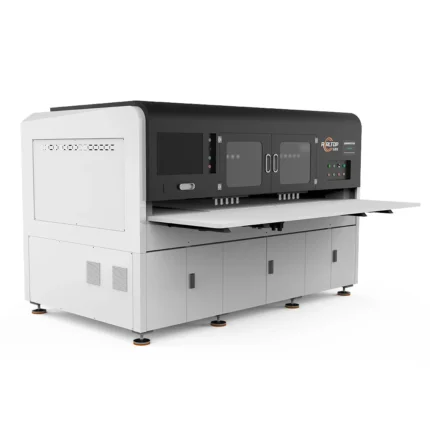
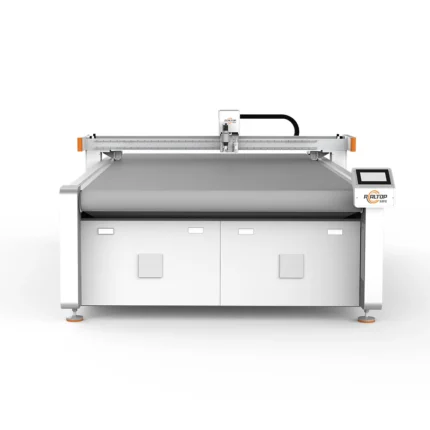
Luxury Python Snakeskin PU Leather Cutting Machine 2026, designed for precise cutting of premium PU leather. Ideal for manufacturing high-end leather products with efficiency and accuracy.
商品评价
There are no reviews yet.