

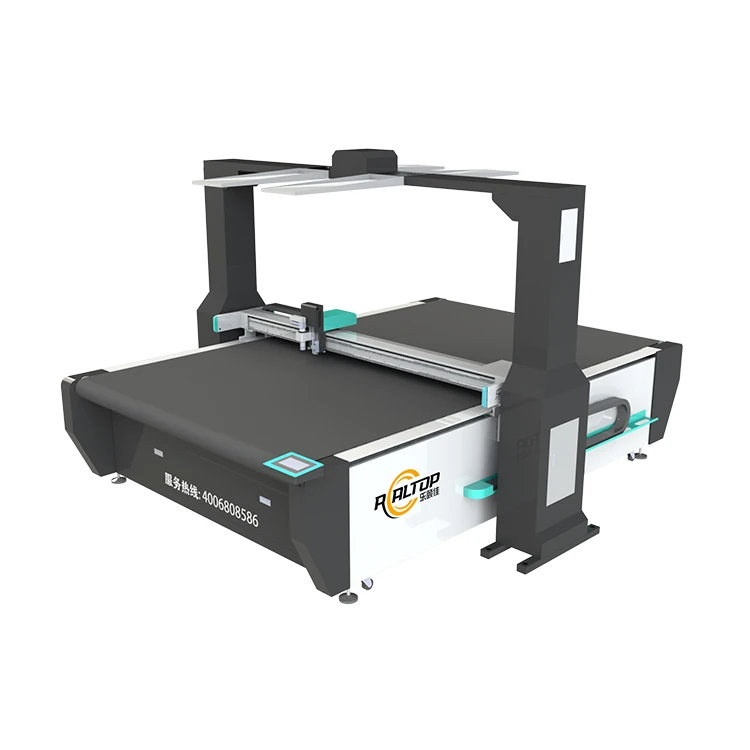
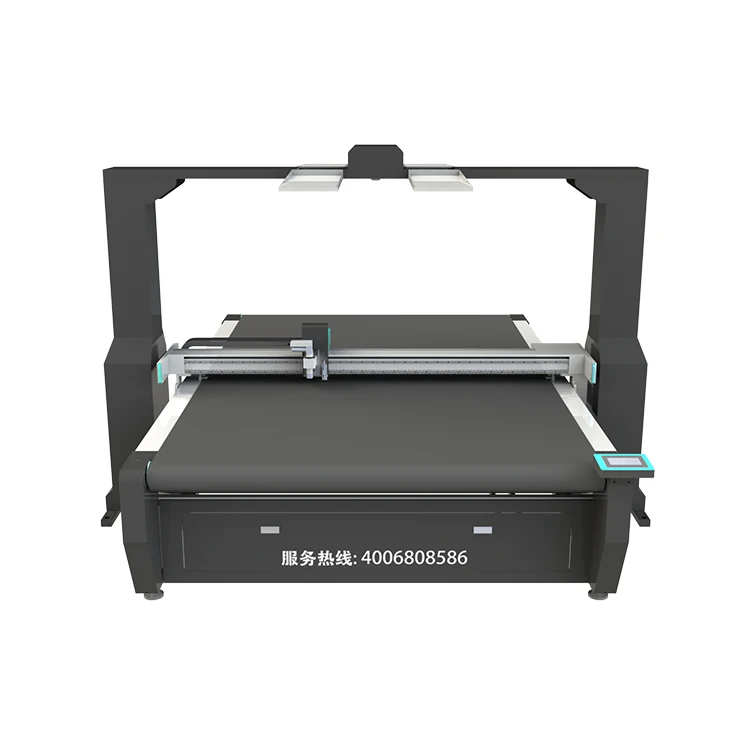
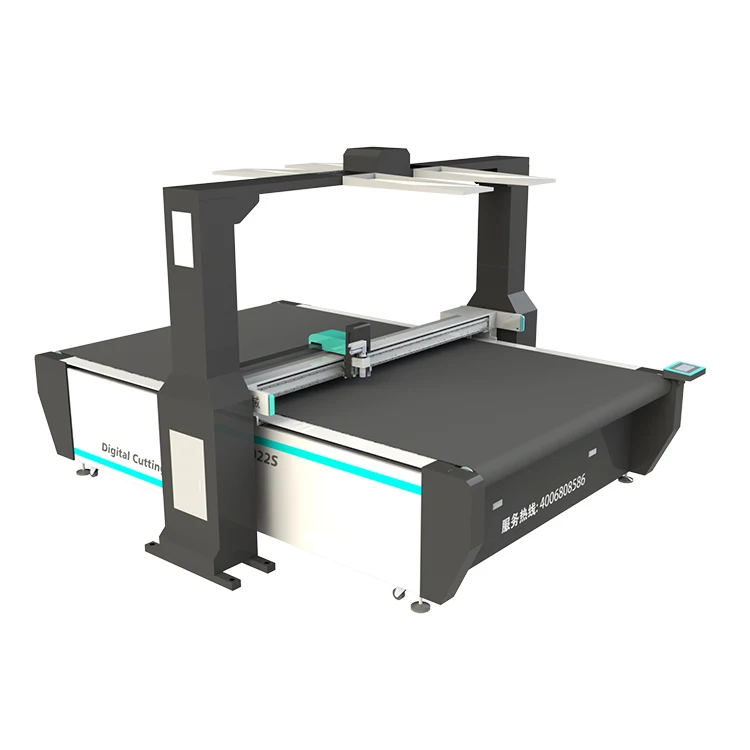
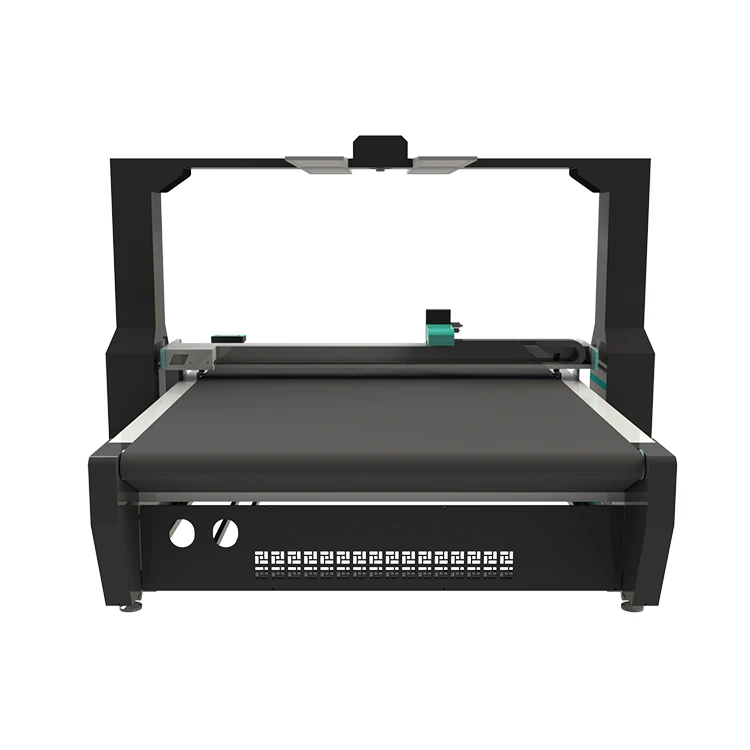

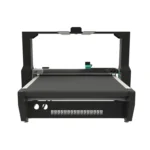
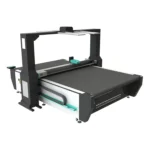
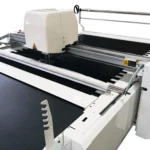


Auto Nesting Fabric CNC Cutter 150W CO2 Laser – Manufacturer
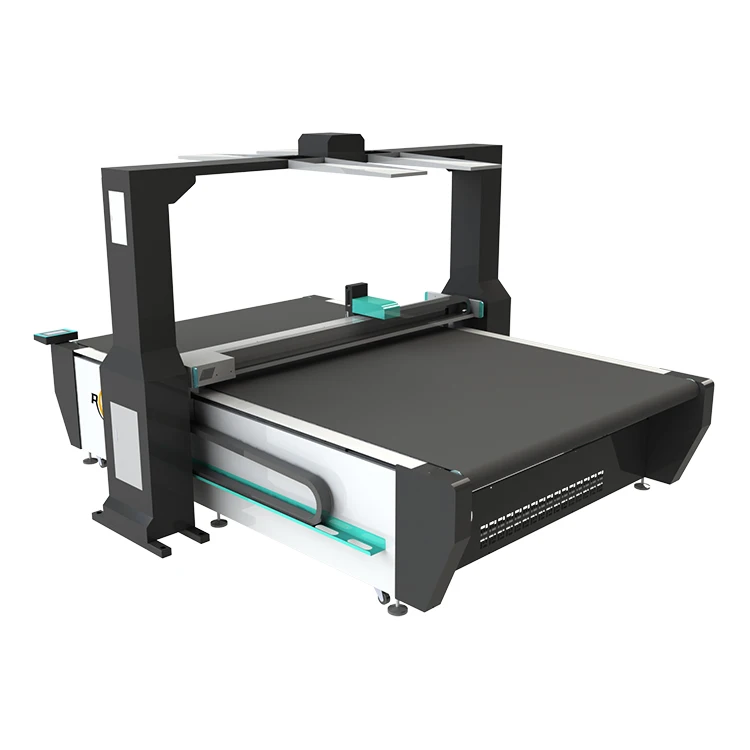
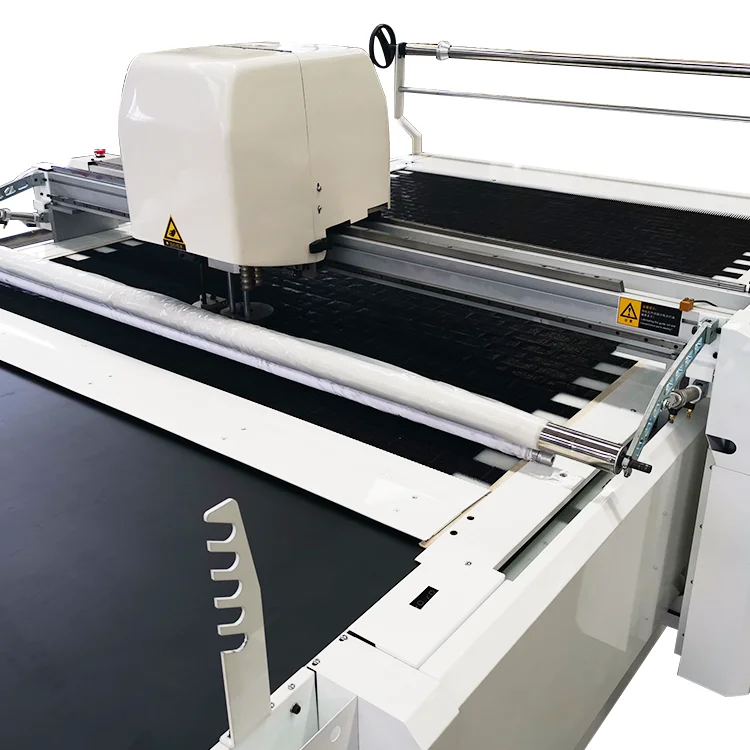
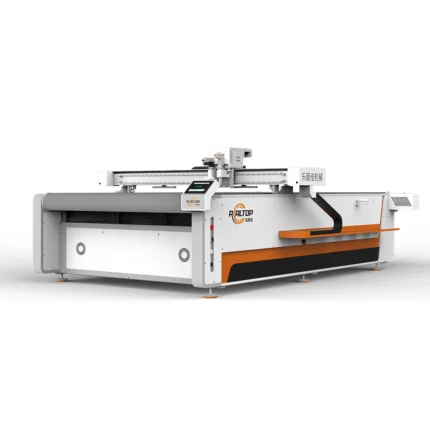
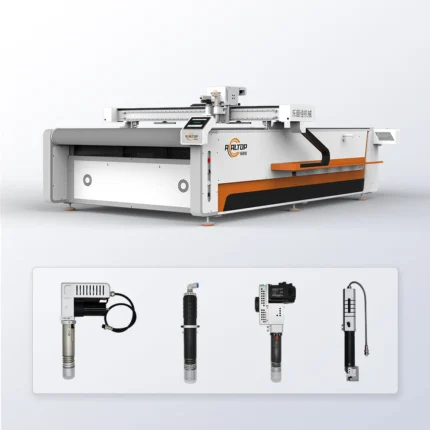
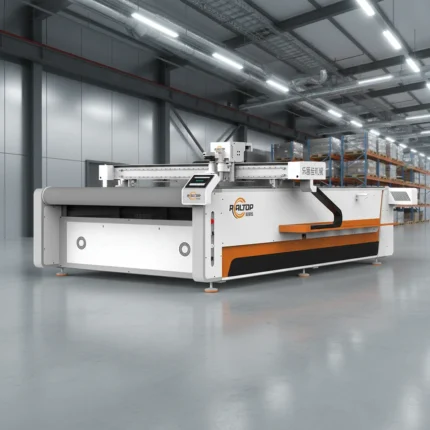
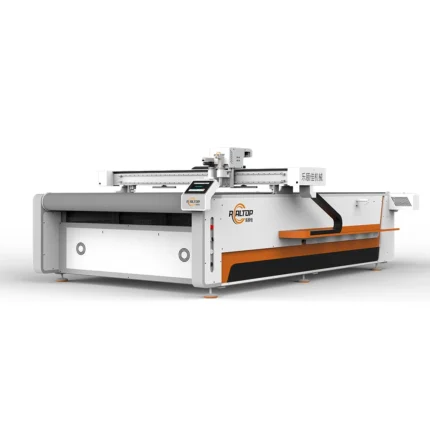
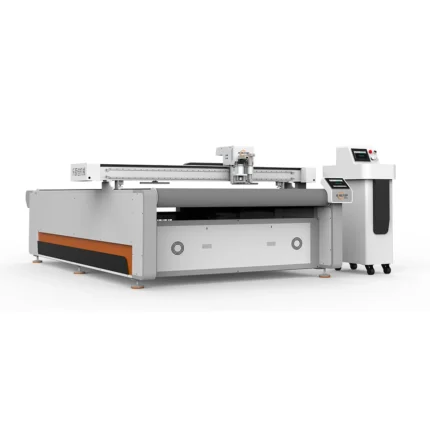
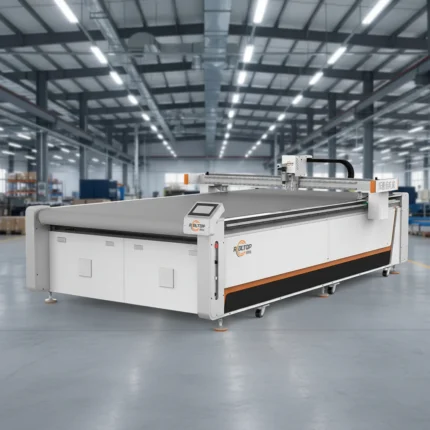
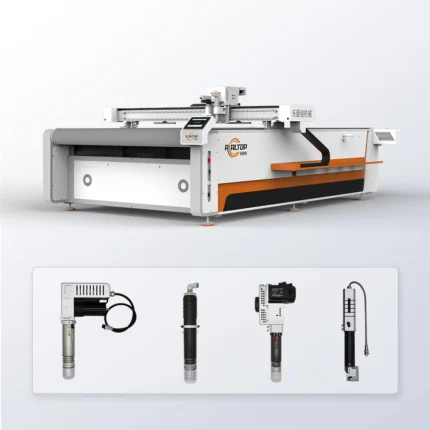
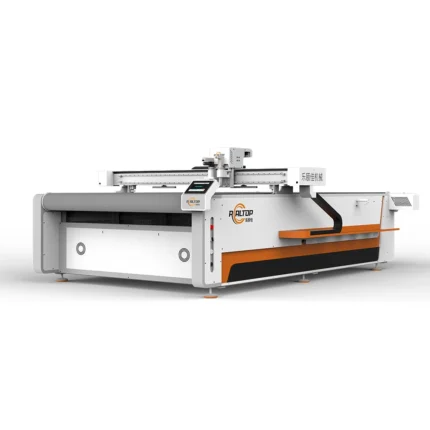
CNC Flatbed Digital Cutting Machine, 2500×1600mm to 3000×2000mm Working Area, 150W CO2 Laser — integrates laser cutting and oscillating knife on a single platform with ±0.1mm positioning accuracy.
- Continuous laser power rated for transparent capacity planning on textiles, acrylic and composites
- Tool head matched to material: CO2 for edge-sealed synthetics, oscillating knife for natural fibers and foam
- CCD contour recognition and vacuum table zoning configured per part size
In-house design team provides sample cutting reports on your actual material before order confirmation.
Voltage & Extraction Clarity — every CO2 laser parameter sheet we issue separates continuous wattage from peak rating and documents the assist gas and exhaust flow required for your specific textile grade.
Technical Specifications
| Parameter | Value |
|---|---|
| Product Type | CNC Flatbed Digital Cutting Machine (Laser & Oscillating Knife) |
| Working Area Options | 2500×1600mm / 2500×1800mm / 2500×2000mm / 3000×1600mm / 3000×2000mm |
| Laser Source | CO2 (continuous power rating specified per material) |
| Max Idle Speed | 2500 mm/s |
| Actual Cutting Speed | 500–2000 mm/s depending on material thickness and hardness |
| Positioning Accuracy | ±0.1 mm depending on material thickness and hardness |
| Cutting Depth Control Accuracy | 0.03 mm |
| Repeatability | ±0.01 mm |
| Voltage | 380V or 220V (optional) |
| Air Pump Power | 9 kW |
| Main Motor Power | 2 kW |
| Drive Motor | Imported Delta (optional Yaskawa or Panasonic servo) |
| Cutting Head | Imported MAXON vibrating cutter head (oscillating knife option) |
| Control Interface | 7-inch LCD touch screen |
| Cable | German igus high-flex shielded cable |
| Photoelectric Switch | Japan OMRON |
| Electrical Components | France Schneider, Chint |
| Pneumatic Components | Taiwan AirTAC |
| Guide Rail | Taiwan Shangyin |
| Rack | Taiwan YYC |
| Data Transfer | Ethernet interface |
| Software | CUT-REALTOP with intelligent nesting module; Laser, JDsoft format conversion |
| Safety | Infrared blocking stop, anti-collision protection, real-time position detection, automatic fault detection on power-on |
| Feeding Method | Fixed or conveyor feeding (optional) |
| Framework | CO2-protected welded bed, secondary vibration aging treatment |
| Total Weight | 1300 kg |
| Standards | CE declaration where applicable |
Application Suitability
| Application | Material or Output |
|---|---|
| Garment and apparel cutting | Natural and synthetic fabric, denim, technical textiles |
| Footwear upper and lining | Leather, PU, PVC, composite linings |
| Automotive interior trim | Multi-layer composite leather, foam-backed vinyl, headliner fabric |
| Signage and soft displays | Polyester banner, woven flag material, heat-transfer vinyl |
| Upholstery and furniture fabric | Heavy woven textile, chenille, microfiber |
| Technical textile and gasket | Aramid, felt, non-woven, rubber sheet |
Why Rated Power Matters More Than Peak Numbers on Textile Lasers
We quote continuous CO2 wattage, not the peak figure that disappears the moment the beam slows down at a corner.
A lot of textile shops discover too late that the CO2 laser cutting machine for textile they bought was rated at a peak value measured under lab pulses, not the sustained output needed when the head decelerates around armhole curves or collar points. The beam dwells longer at those points, and if the tube cannot hold its thermal envelope, you get scorch marks on light synthetics or incomplete cuts on dense woven layers. I spent four days at an automotive interior plant re-tuning a 150W tube that had been sold on peak output; the actual continuous delivery was noticeably lower once the chiller and optics were at operating temperature, and multi-layer composite leather with an adhesive interlayer was charring at every inside corner [NEED_CITE: continuous vs peak laser tube rating methodology]. Specifying continuous wattage and running sample cuts on the buyer’s real roll goods removes this guesswork before the machine is built.
Matching the Beam to the Fiber
A CO2 laser cutting machine for textile seals synthetic edges as it cuts, which stops polyester, nylon, and acrylic blends from fraying in high-cycle apparel or flag production. Natural fibers like cotton and wool do not melt and reseal the same way, so the operator has to tune power, speed, and assist air to keep the kerf from browning. On blended fabrics, the ratio of synthetic to natural content decides whether you get a clean fused edge or a brittle char line, and that ratio changes from roll to roll even within the same purchase order.
Exhaust, Assist Gas, and the Shop Floor
Cutting coated fabric, PVC-backed vinyl, or foam-bonded automotive trim releases fumes that need capture at the bed surface before they drift into the optics carriage [NEED_CITE: extraction requirements for laser-cut coated textiles]. A 9 kW air pump on this platform drives both the vacuum hold-down and the blow-off assist that clears molten residue from the kerf. If the extraction run is undersized, residue settles on the mirror and lens, cutting power at the workpiece and forcing unplanned optic cleaning mid-shift.
What the Spec Sheet Numbers Actually Mean on the Floor
Actual cutting speed of 500–2000 mm/s is a band, not a single figure, because a single-layer silk chiffon and a 6 mm stack of automotive seat foam react completely differently to the same beam. Positioning accuracy of ±0.1 mm and repeatability of ±0.01 mm come from the Taiwan Shangyin guide rails and YYC racks paired with Delta or optional Yaskawa servos; on a 3000×2000mm bed that span matters because thermal growth over a long shift has to be absorbed by the drive, not dumped into the cut path. The 0.03 mm depth control resolution is what lets an operator run a kiss-cut on a transfer vinyl without scoring the carrier sheet underneath. Vibration-aged welded bed at 1300 kg keeps the frame from resonating at high traverse speeds, which would otherwise show up as chatter marks on delicate fabrics.
The Cost of Picking the Wrong Head or the Wrong Wattage
Choosing laser for a material that actually needs an oscillating knife — or the other way around — shows up as rework rather than a clean machine fault. Synthetic woven that should be laser-sealed will fray if cut with a drag knife, and foam that should be knife-cut will melt into a fused bead under a CO2 beam, closing the kerf and trapping the part [NEED_CITE: material-tool mismatch in digital cutting]. A tube sized for light apparel will not hold continuous wattage when asked to cut automotive composite leather at production speed, and the operator ends up slowing the feed until throughput collapses. That is the reason we run sample cuts on the buyer’s real material and document the power curve, assist gas pressure, and exhaust flow before the order is locked.
Why Source This CO2 Laser Cutting Machine for Textile Here
In-house design covers both CO2 laser and oscillating knife, so the cutting method is chosen around the material instead of forcing one technology across the catalogue. Tool head, vacuum zoning, and exhaust configuration are specified per buyer’s material and daily volume rather than shipped as a default build. CCD camera positioning is available where printed contour recognition is needed, and software format compatibility with the buyer’s nesting workflow is confirmed before production starts. Voltage, plug type, and control language are locked in at quotation stage with a full electrical schematic, not discovered at uncrating. Sample cutting on the buyer’s own fabric or composite roll is standard, not an optional extra, and the report travels with the shipment.
Documentation & Verification
- Factory test record on your exact textile weight and layer count before dispatch
- Electrical schematic with confirmed voltage, plug, and control language per destination market
- Sample cutting report documenting continuous wattage, speed, and edge condition on your material
- Software license and file format compatibility note covering your existing nesting workflow
- CE declaration documentation where required by the import market
- Operation and maintenance manual with optic cleaning intervals and spare parts list
Installation, Commissioning & Support
- Floor must be level and grounded to handle the 1300 kg bed plus dynamic loads at 2500 mm/s idle speed
- Dedicated circuit matching the confirmed 380V or 220V supply with correct frequency for the drive motors
- Exhaust duct sized for the 9 kW air pump and routed per local fume extraction code
- First-run calibration of CO2 beam alignment and mirror path done on-site with your material
- Operator training on the 7-inch LCD touch screen, nesting module, and format conversion software
- Spare mirrors, lenses, and blades shipped with the machine; wear intervals in the manual
Before You Send an Inquiry
Tell us the fabric type, weight per square meter, and whether you are cutting single-ply or multi-ply lay-ups, along with the daily meterage target. Share the local voltage and frequency, the control language your operators read, and the CAD or nesting file formats you already use. If the material has a coating, adhesive interlayer, or foam backing, send a roll sample so the continuous wattage, assist gas, and extraction can be tuned and documented before build.
Frequently Asked Questions
Q: CO2 laser or oscillating knife — which should I run on my textile mix?
A: CO2 laser seals synthetic edges on polyester and nylon, preventing fraying in apparel and flags. Oscillating knife is better for natural fibers, heavy wovens, and foam-laminated materials where heat would melt or discolor the cut edge. When a shop runs both, we configure the flatbed with both heads so each job goes to the correct tool.
Q: What is the difference between continuous and peak laser power?
A: Peak power is measured in short lab pulses and does not reflect what the tube delivers when the head slows at corners or cuts thick stacks continuously. Continuous wattage is the sustained output at the workpiece during real production. We quote and test continuous values on your material so cutting depth and edge quality are predictable.
Q: How do I stop synthetic fabric from fraying after laser cutting?
A: Edge sealing happens when the CO2 beam melts synthetic fibers along the kerf, and the result depends on power, speed, and assist air. Too much power chars the edge; too little leaves loose filaments. We tune these three variables on your roll goods during sample cutting and record the settings for your operators.
Q: What extraction capacity does the machine need?
A: The 9 kW air pump drives both vacuum hold-down and kerf blow-off, but external exhaust must handle fumes from coatings, PVC backings, and foam laminates. Required duct diameter and fan rating depend on material chemistry and cutting hours per shift, and we specify the extraction package after reviewing your material safety data.
Q: Will my existing nesting software files run on this machine?
A: CUT-REALTOP accepts common vector formats, and JDsoft format conversion is included. Before order confirmation we test your actual design files through the nesting module to verify kerf compensation, part spacing, and output code so there are no surprises at first run.


Related products
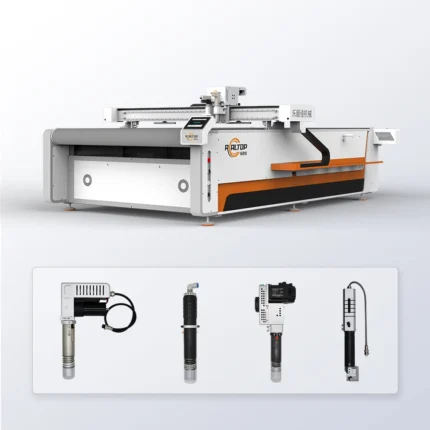
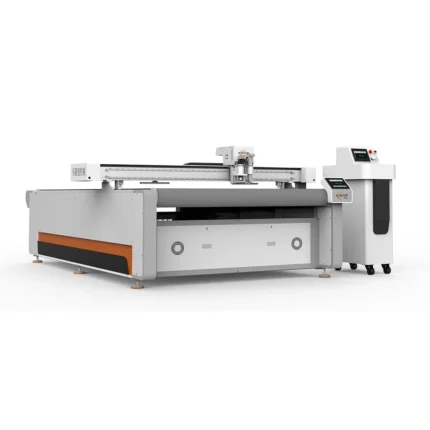
2026 Automatic PVC Tarpaulin Cutter Machine
Product Introduction
High-performance Automatic PVC Tarpaulin Cutter Machine 2026, ideal for precise and efficient cutting of PVC tarpaulin materials, designed for industrial manufacturing needs with reliable operation and user-friendly control.Product Parameters
| Model | 2026 |
| Type | Automatic PVC Tarpaulin Cutter |
| Application | PVC Tarpaulin Cutting |
| Feature | Precise & Efficient Cutting |
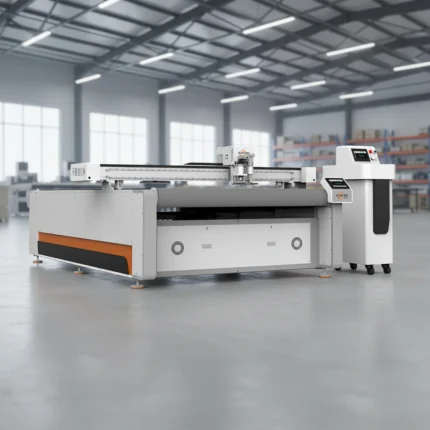
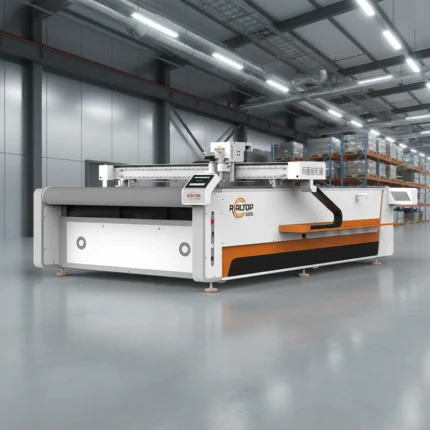
2026 CNC Knife Cutting Machine for Fabric Leather PVC Hot Sale
Product Introduction
2026 Hot Sale CNC Knife Cutting Machine for Fabric, Leather, PVC. Ideal for precise cutting of various materials with advanced CNC technology, perfect for manufacturing needs.
Product Parameters
| Application | Fabric, Leather, PVC |
| Type | CNC Knife Cutting Machine |
| Feature | Precision Cutting |
| Year | 2026 Model |
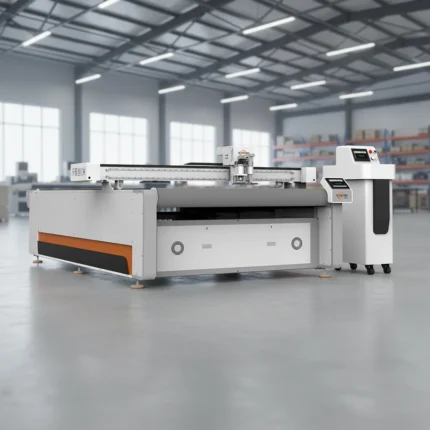
2026 Inflatable Surf SUP Board Cutting Machine
Product Introduction
Ideal for inflatable surf SUP board production, this 2026 cutting machine ensures precise and efficient cutting, tailored for manufacturers seeking reliable performance in water sports equipment manufacturing.
Specifications
| Application | Inflatable Surf SUP Board |
| Type | Cutting Machine |
| Model Year | 2026 |
Automatic Multi-Layer Vibrating Knife Cutter 2026
Product Introduction
Automatic Multi-Layer Vibrating Knife Cutter 2026, ideal for precise cutting of various materials with multi-layer processing capability, enhancing production efficiency.
Key Specifications
| Type | Automatic Vibrating Knife Cutter |
| Layer Capacity | Multi-Layer |
| Model | 2026 |
| Function | Precision Cutting |
Realtop CNC Fabric Cutting Machine 2026 CE Certified
Product Introduction
Realtop CNC Fabric Cutting Machine 2026, CE Certified, ideal for precision fabric cutting with advanced CNC technology. Engineered for efficiency and reliability in textile manufacturing processes.Key Specifications
| Model | Realtop CNC Fabric Cutting Machine 2026 |
| Certification | CE Certified |
商品评价
There are no reviews yet.