

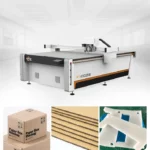
Automatic Cardstock & Kraft Paper CNC Cutting Machine – Manufacturer
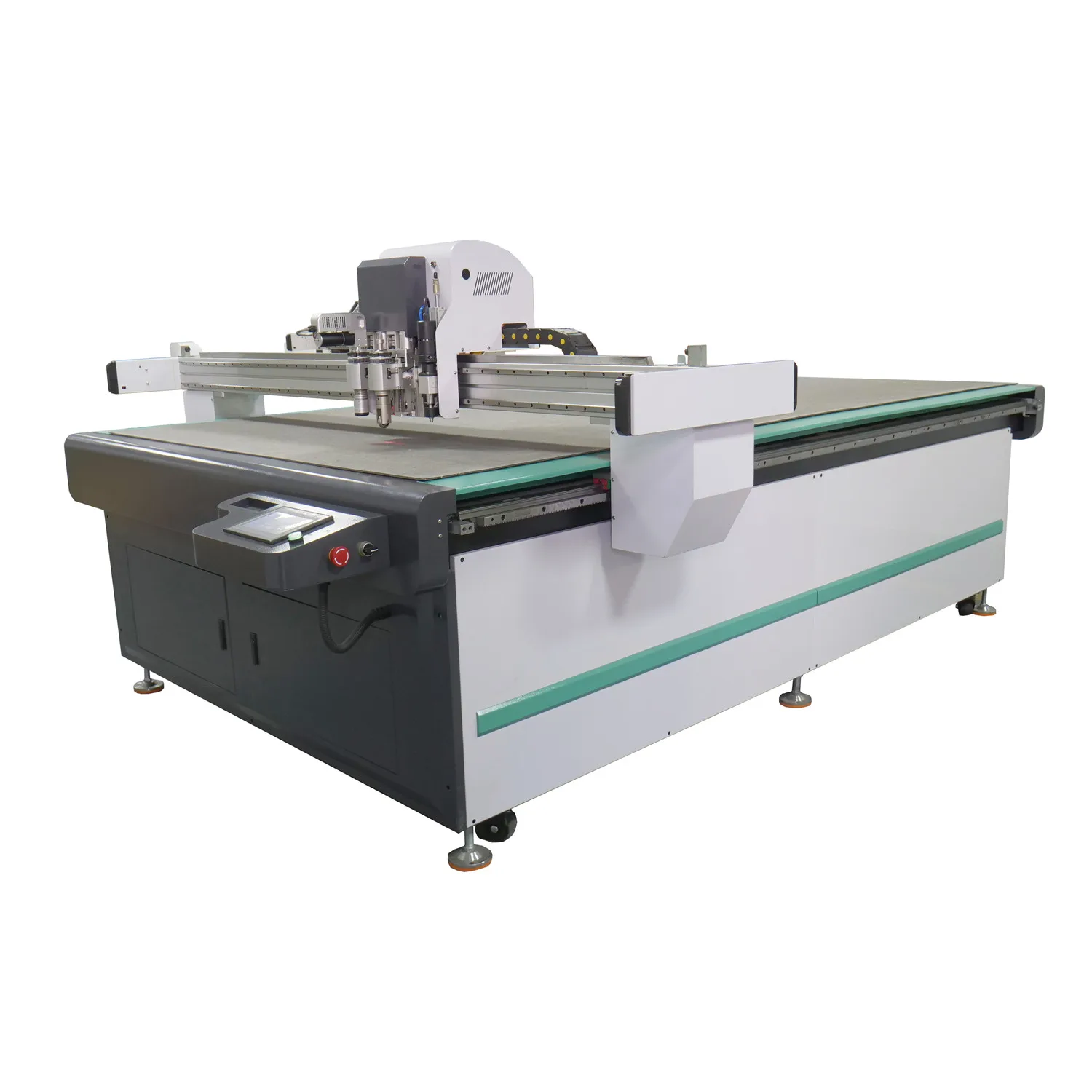
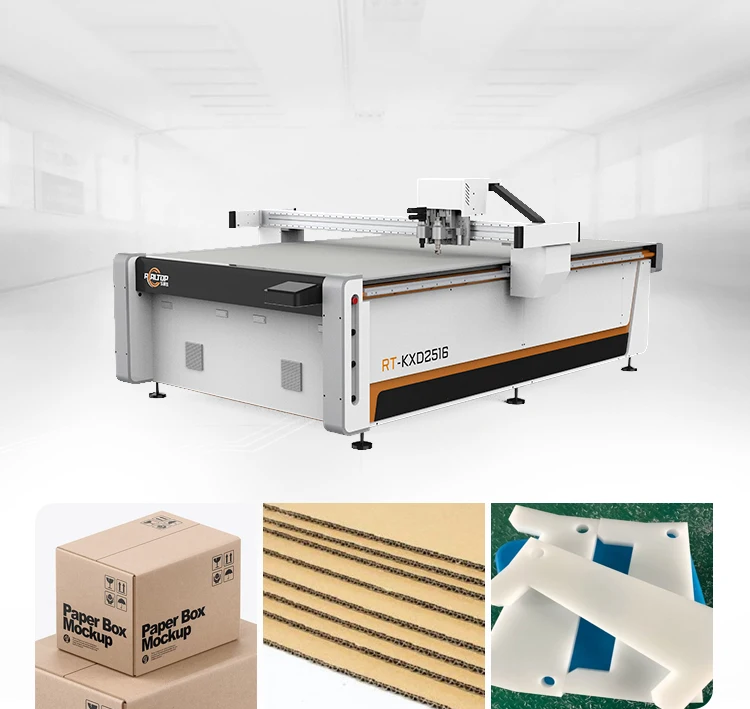
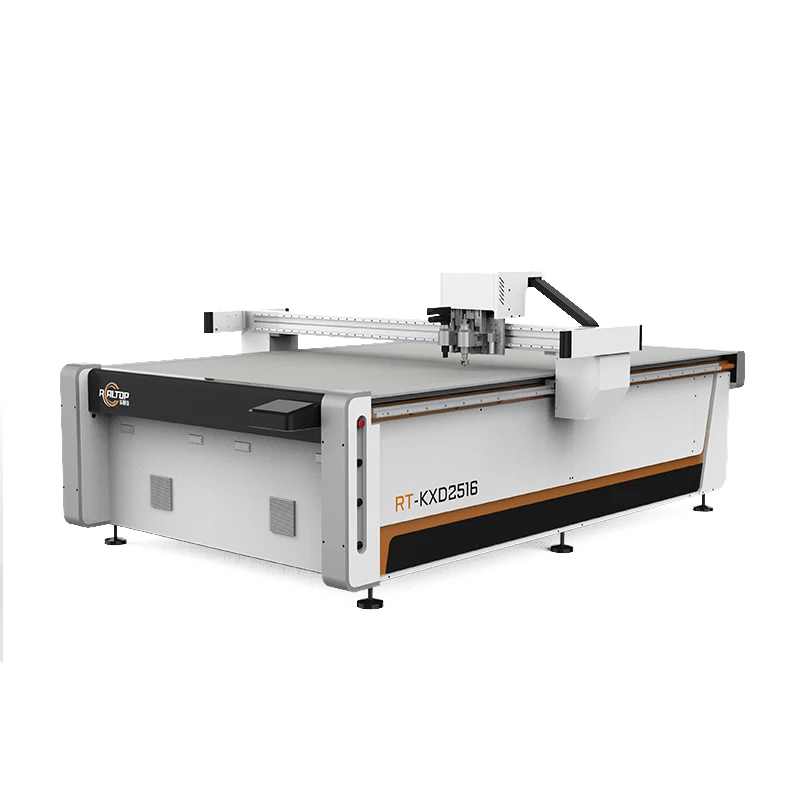
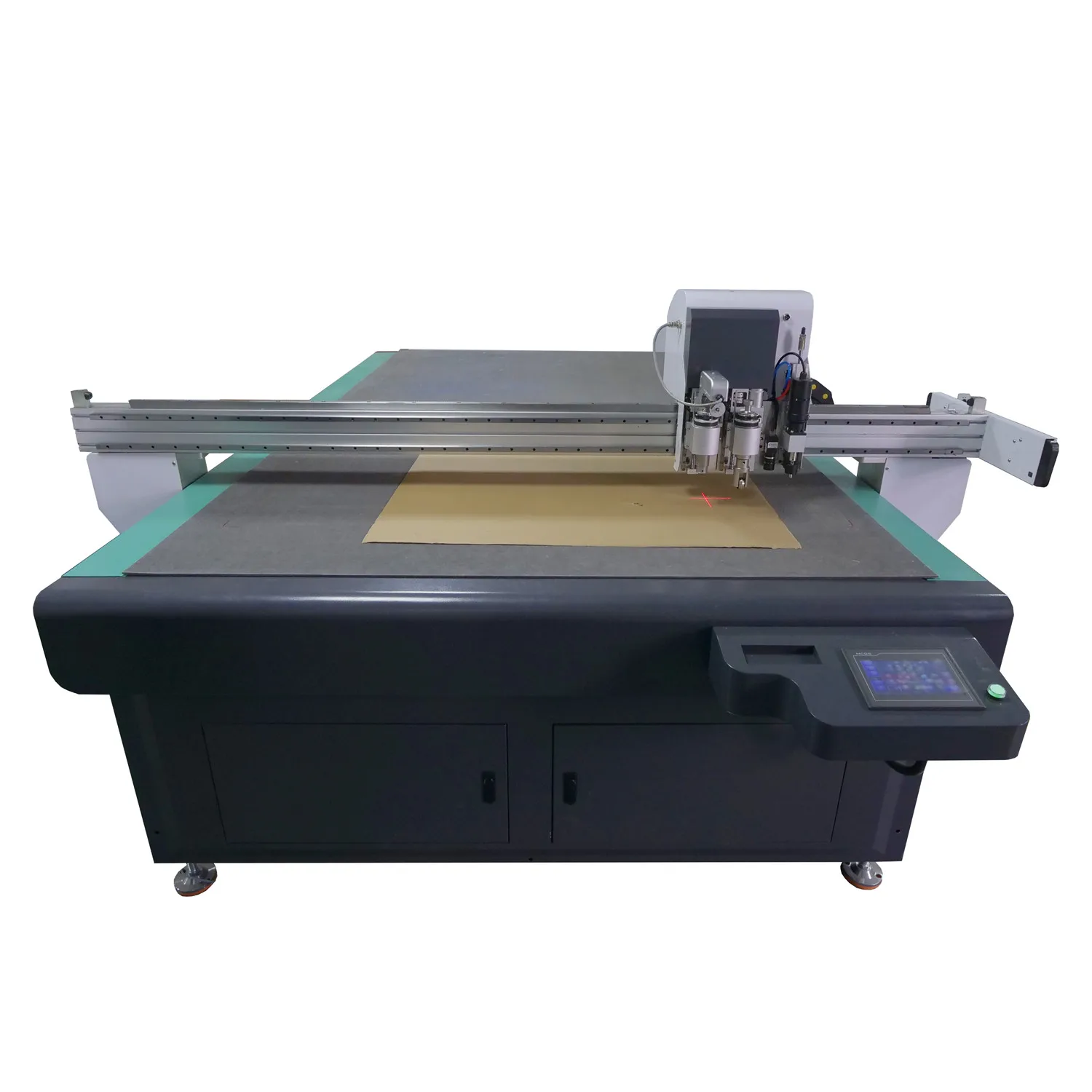
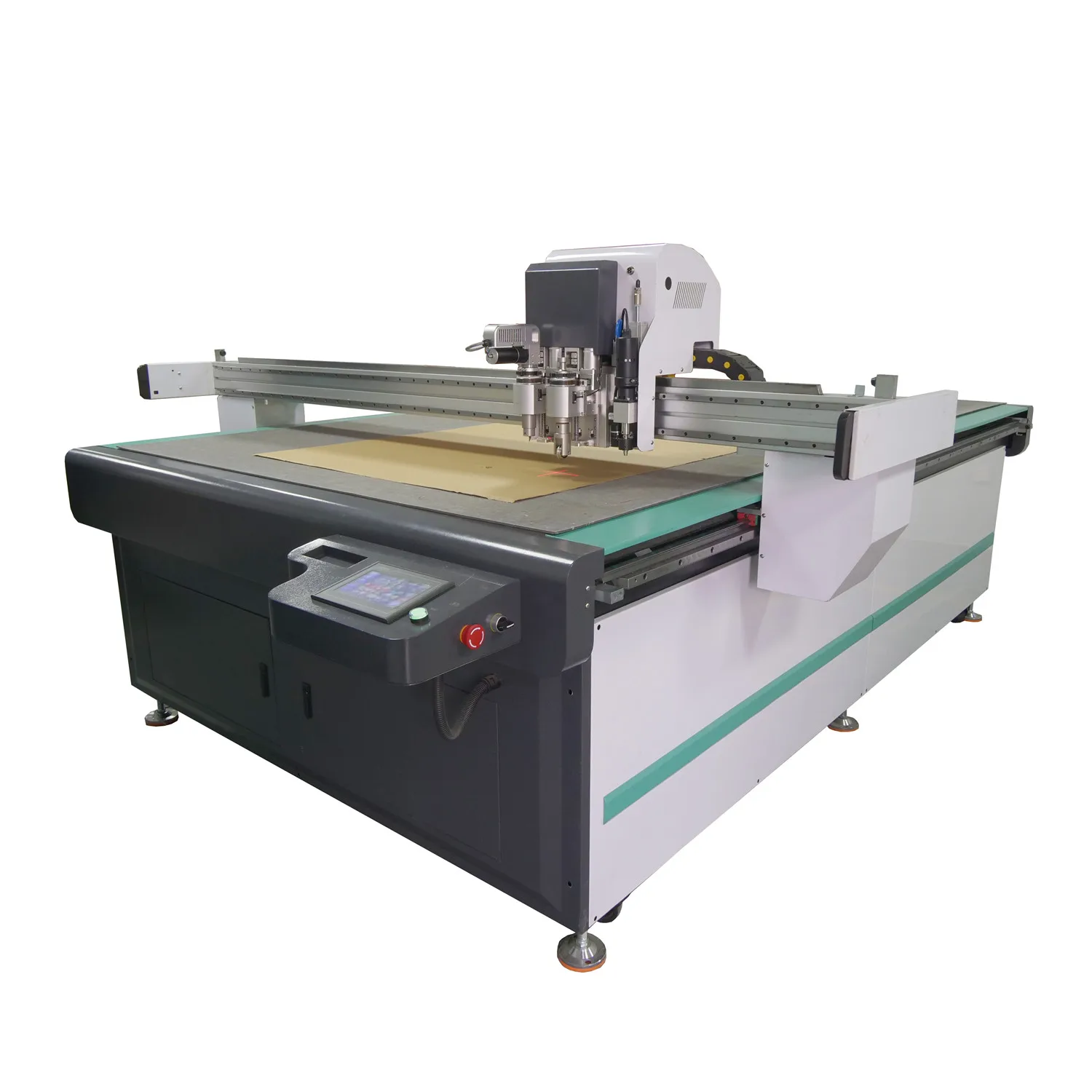
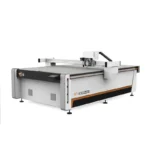
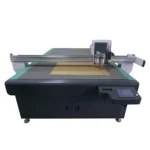
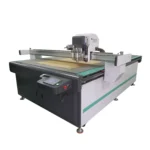
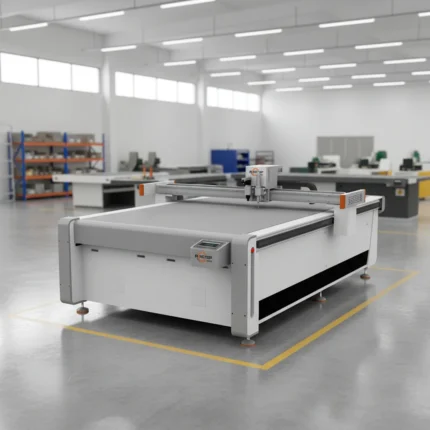
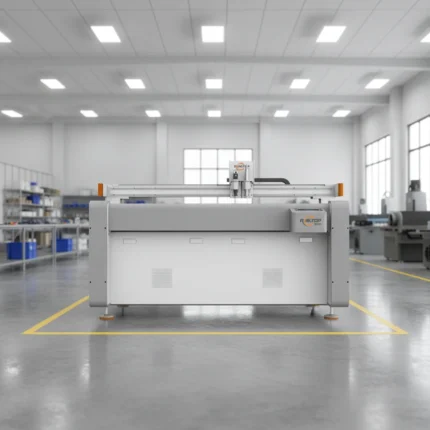
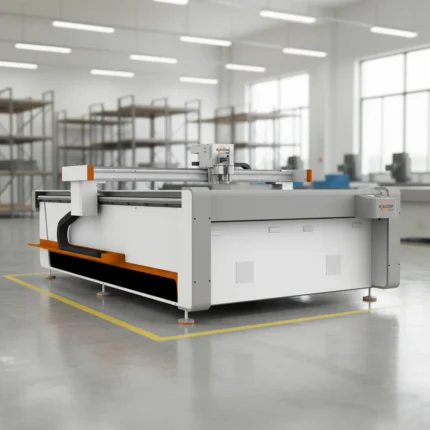
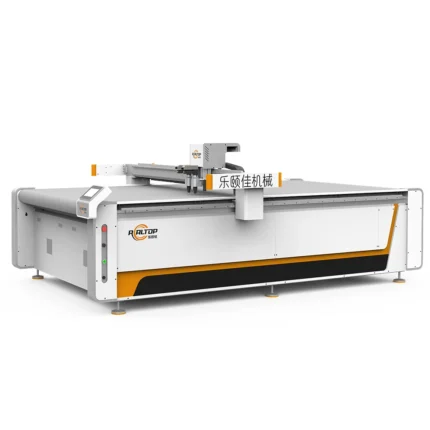
RT-D2516/RT-S2516 CNC Oscillating Knife Cutting Machine, 1600×2500mm Working Area, 9kW — engineered for packaging sample making, fabric and leather processing with configurable multifunctional tool heads.
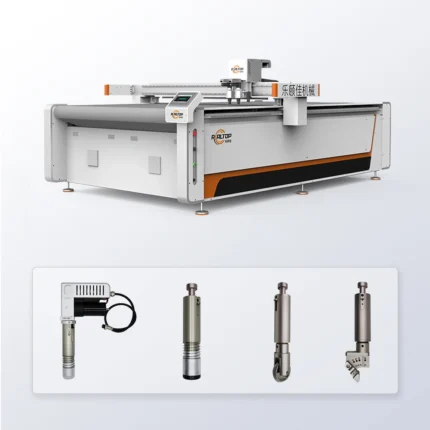
- Swiss imported knife supports full cutting, half cutting and cursor location; optional creasing wheel and V-cutting knife for carton slotting
- CCD camera visual positioning with mark point, panoramic or projection options for printed contour recognition
- Magnesium-aluminum alloy vacuum table with PVDF coating ensures high flatness and uniform adsorption across the work surface
- HP-GL compatible system accepts PLT, DXF and AI formats with auto nesting software
Request a sample cutting report on your own material to verify edge quality and cutting depth before commitment.
In-house laser engineering — power ratings validated against real cutting depth rather than quoted peak output, with assist gas and extraction specified per substrate.
Technical Specifications
| Parameter | Value |
|---|---|
| Product Type | CNC Oscillating Knife Cutting Machine |
| Model | RT-D2516/RT-S2516 |
| Working Area | 1600×2500 mm |
| Machine Size | 3450×2300×1250 mm |
| Rated Power | 9 kW |
| Voltage | 380V±10% |
| Control System | CNC with Touch Screen Control Panel |
| Fixed Model | Flat working table / Auto feeding table (optional) |
| Multifunctional Tool Head | Swiss imported knife (vibration full cutting, half cutting, cursor location); optional heads: oscillating knife, pneumatic knife, high-power vibrating knife, circular knife, V-cutting knife, drag knife, creasing wheel, dotted line knife, punching, brush |
| Visual Positioning | Small CCD camera mark point positioning / Panoramic camera recognition / Projection positioning (optional) |
| Translational Velocity | 800–2000 mm/s |
| Cutting Speed | 200–800 mm/s (varies according to material) |
| Cutting Thickness | ≤100 mm (basis not stated in source) |
| Repeated Accuracy | ≤0.1 mm |
| Transmission System | Digital servo motor (Delta or Panasonic optional), linear guide, synchronous belt, ball screw |
| Vacuum Table | Magnesium-aluminum alloy, PVDF powder spraying, anodic oxidation; 7.5 kW vacuum pump |
| Instruction System | HP-GL compatible format |
| Software & File Formats | PLT, DXF, AI; auto typesetting / nesting |
| Safety Device | Infrared sensors, anti-collision, emergency stop |
| Language Options | English, Russian, Italian, Chinese (special languages customizable) |
| Assembly State | Fully assembled |
| Standards | CE declaration where applicable |
Application Suitability
| Application | Material or Output |
|---|---|
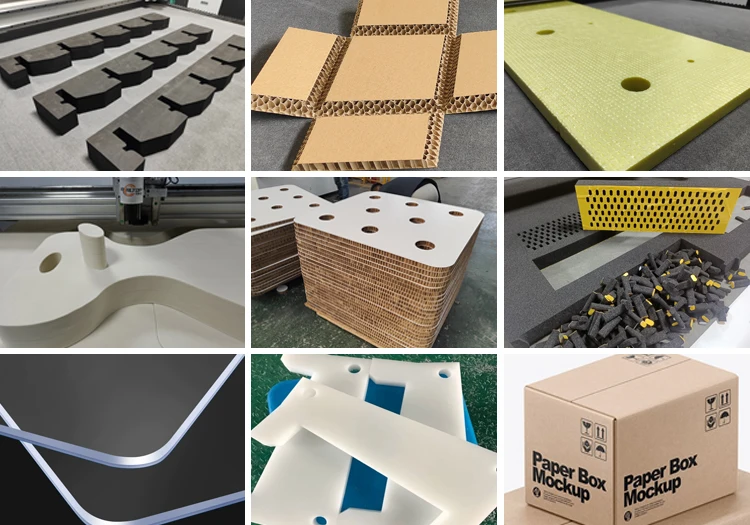
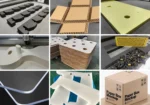
| Packaging sample making | Carton, corrugated cardboard, honeycomb cardboard, white cardboard, kraft paper |
| Garment and footwear production | Fabric, textile, leather, shoe upper materials |
| Automotive interior and gasket fabrication | Composite materials, foam, PVC, sealing pads |
| Signage and advertising | PVC sheet, soft glass, vinyl graphics |
| Foam and cushion processing | Foam board, sponge, EVA, XPE, PU |
| Floor covering production | Carpet, floor mats |
Why "Rated Laser Power" Fails the Moment You Load Your Material
The number on the tube tells you what the resonator can generate, not what actually reaches the cut kerf.
I spent years in the field watching buyers quote laser wattage like it was the only variable that mattered. The machine arrives, the tube fires up, and the cut on 3 mm cast acrylic comes out clean. Then the buyer loads 6 mm extruded acrylic or switches to MDF with resin-heavy core, and the beam loses focus, the edge chars, and the assist gas cannot blow the molten material clear. Wattage is a starting point, not a guarantee. A CNC oscillating knife cutting machine laser engraving system only performs when focal length, assist gas pressure, and lens condition are matched to the actual substrate on the table [NEED_CITE: laser focal depth and material interaction].
Beam Delivery and the Real Cutting Envelope
The optical path from tube to workpiece loses energy at every mirror and lens. A system rated at a given wattage may deliver noticeably less to the material surface once beam divergence and alignment tolerances are factored in. When specifying a CNC oscillating knife cutting machine laser engraving unit, ask for a cut sample on your exact material thickness and grade before the order is confirmed. Edge sealing on synthetics, kerf width, and char depth all shift with the real delivered power, not the label.
Assist Gas, Extraction, and the Workshop Reality
CO2 cutting relies on compressed air or inert gas to eject molten material from the kerf. Inadequate gas pressure leaves re-solidified dross on the cut edge, especially on thicker acrylic or wood composites. Extraction is equally critical: without a properly sized blower and ductwork, smoke deposits on the lens, degrading beam quality over the course of a production shift. The RT-D2516/RT-S2516 platform allows the buyer to confirm extraction requirements matched to the materials in the daily schedule.
Power, Focal Length, and Thickness Limits
A shorter focal length lens concentrates the beam for fine engraving and thin material, while a longer focal length maintains a usable spot size through thicker stock. Selecting the wrong lens for the job produces tapered kerfs on thick board or insufficient energy density on thin film. This is why tool head and lens configuration on the RT-D2516/RT-S2516 must be locked to the production mix before the machine ships [NEED_CITE: focal length selection for laser material processing].
Motion Control and Cut Consistency at Speed
Servo-driven motion with linear guides keeps the beam perpendicular to the work surface across the full 1600×2500 mm working area. At translational speeds up to 2000 mm/s, any mechanical play translates into waviness on the cut edge or positional drift during engraving passes. The Delta or Panasonic servo options and ball-screw transmission on this platform maintain repeated accuracy within 0.1 mm, keeping registration tight across long production runs.
The Cost of Skipping Material-Specific Configuration
Buyers who specify a system on working area and wattage alone often discover the problem only after installation. A vacuum table with insufficient zoning lets small parts lift during cutting, producing dimensional errors and scrapped pieces. A CCD system promised for printed contour work may track marks on white stock but fail on low-contrast kraft or corrugated surfaces at production speed. These failures are not defects — they are configuration mismatches that could have been resolved with a sample cutting report before commitment [NEED_CITE: vacuum hold-down requirements for CNC cutting].
Why Buyers Source This Platform
The manufacturer covers both knife and laser cutting technologies in-house, so the buyer is not forced into one method when the material demands the other. Tool head and table configuration on the RT-D2516/RT-S2516 is specified per material and daily volume, not sold as a universal package. CCD camera positioning is validated against the buyer’s printed substrate before order confirmation. Software compatibility with PLT, DXF, and AI formats is confirmed in advance, protecting the existing nesting workflow. Sample cutting on the buyer’s own material is conducted before any commitment is made.
Documentation & Verification
- Machine specification sheet matched to your selected tool head and table option
- Electrical schematic with voltage and frequency confirmed for your target market
- Sample cutting report on your material verifying edge quality and depth
- Software licence and file format compatibility note before dispatch
- Factory test record documenting motion accuracy and vacuum performance
- Spare parts list covering consumable lenses, mirrors, and knife blades
Installation, Commissioning & Support
- 3450×2300 mm footprint requires level concrete floor with clearance for material loading on all sides
- 9 kW rated power plus 7.5 kW vacuum pump demands a dedicated circuit at confirmed voltage and frequency
- Machine ships fully assembled; rigging and placement require overhead clearance above 1250 mm height
- Touch screen control panel configured in the buyer’s language before commissioning begins
- First-run calibration covers servo tuning, vacuum zoning, and CCD mark recognition on production material
- Operator training addresses tool change procedures, lens cleaning, and daily alignment checks
What We Need to Quote Accurately
Send the material types, thicknesses, and sheet dimensions you run most often. Confirm your local voltage, frequency, and plug standard. Specify the control language your operators will use and whether your existing nesting software exports PLT, DXF, or AI files. If printed contour cutting is part of the workflow, include samples of the printed stock so the CCD recognition system can be validated before the order is placed.
Frequently Asked Questions
Q: How is cutting thickness verified for my specific material?
A: The stated capacity is a general range. Before order confirmation, your material is cut on the actual machine and a sample report documents achievable depth, edge quality, and speed. This report becomes the baseline for the configuration you receive, so there is no guesswork about what the system will handle in your workshop.
Q: Which tool head or laser configuration suits my material?
A: Oscillating knives cut foam and fabric cleanly; drag knives handle vinyl; creasing wheels and V-cutting tools score carton stock. For laser work, CO2 tubes cut acrylic, wood, and textiles while fiber sources handle sheet metal. The correct head or source is selected after reviewing your material samples and daily production mix.
Q: Does the CCD system track printed marks on my substrate at speed?
A: Mark tracking depends on contrast, ink density, and substrate color. Before commitment, your printed material is run through the CCD system — small camera, panoramic, or projection — and tracking reliability is confirmed at production translational speeds, not just at slow alignment pace.
Q: What voltage and control language will be configured?
A: The platform supports 380V±10% as standard, with voltage and plug type confirmed for your market before shipment. Control panel language is set from English, Russian, Italian, Chinese, or a customized option, so your operators can work in their native interface from day one.
Q: Can I send material for sample cutting before ordering?
A: Yes. Send your actual production material — including printed stock if contour cutting is required — and a full cutting report is generated covering edge quality, achievable speed, and tool head selection. This report accompanies the quotation so you know exactly what configuration you are buying.


Related products
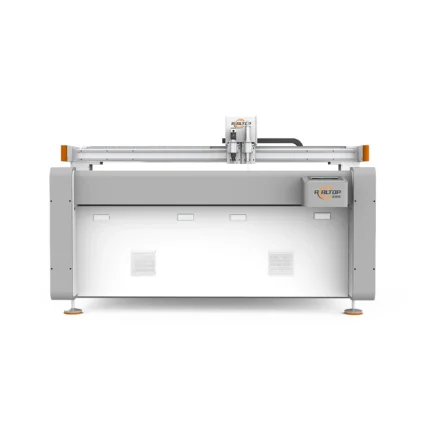
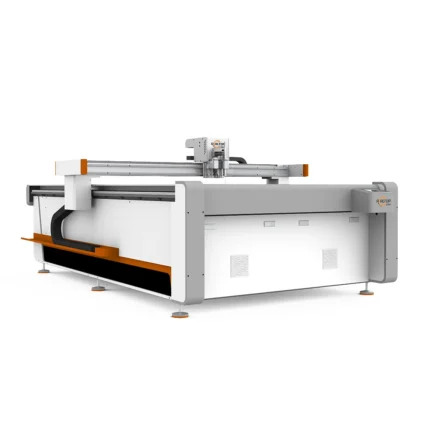
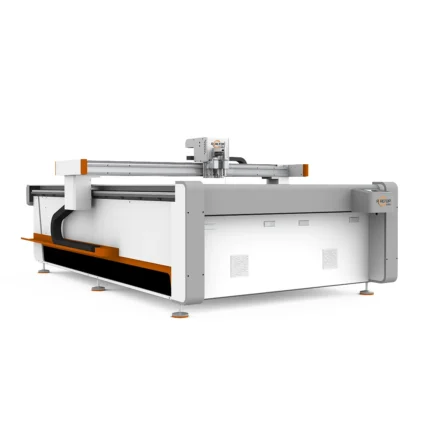
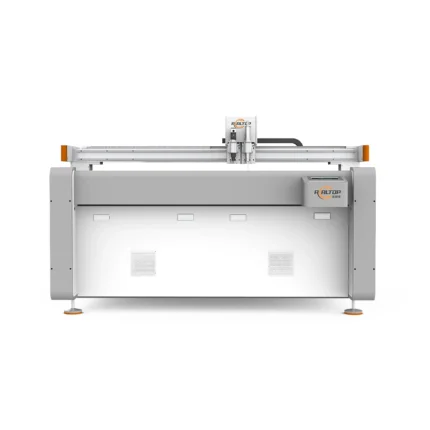
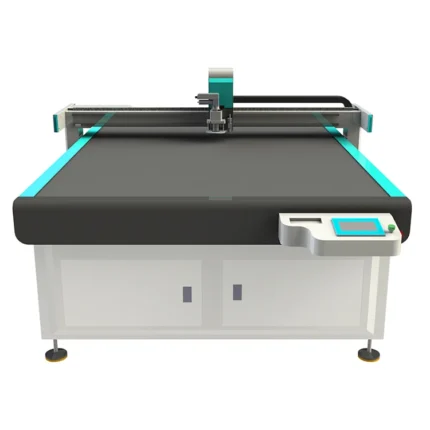
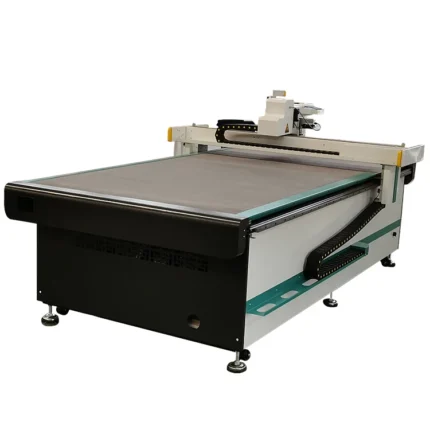
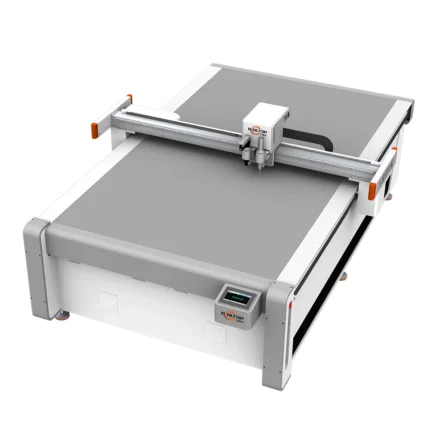
CNC Oscillating Knife Cutting Machine 2026 for Corrugated Cardboard & Honeycomb
Product Introduction
2026 CNC Oscillating Knife Cutting Machine, ideal for corrugated cardboard and honeycomb materials, offering precise and efficient cutting solutions for your production needs.Specifications
| Model | 2026 |
| Type | CNC Oscillating Knife Cutting Machine |
| Applicable Materials | Corrugated Cardboard, Honeycomb |
| Cutting Method | Oscillating Knife |


REALTOP 2026 Digital Industrial Cardboard Box Cutter
Product Introduction
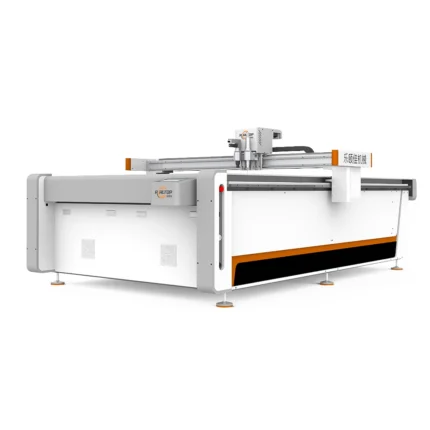
REALTOP Digital Industrial Cardboard Box Cutter Machine 2026 is a professional industrial-grade cutting equipment designed for efficient cardboard box processing, ideal for manufacturing and packaging applications.
Product Parameters
| Model | 2026 |
| Type | Digital Industrial Cardboard Box Cutter |
| Application | Cardboard Box Processing |
| Feature | Industrial-grade, Efficient Cutting |

商品评价
There are no reviews yet.