






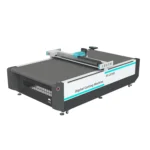

Automatic Oscillating Knife CNC Cutting Machine for Cloth – Factory Supply
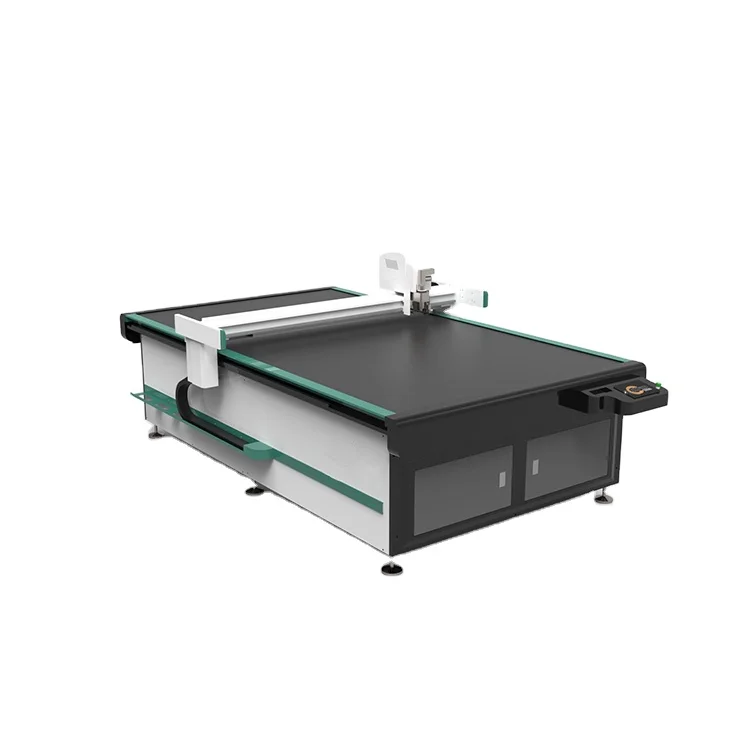
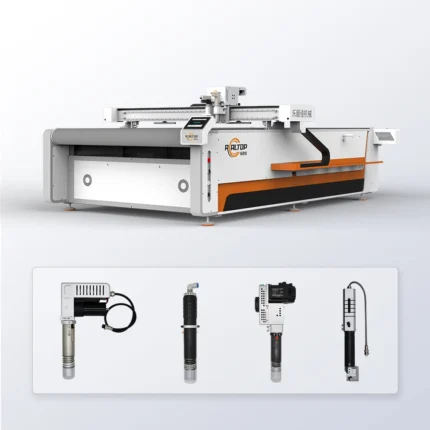
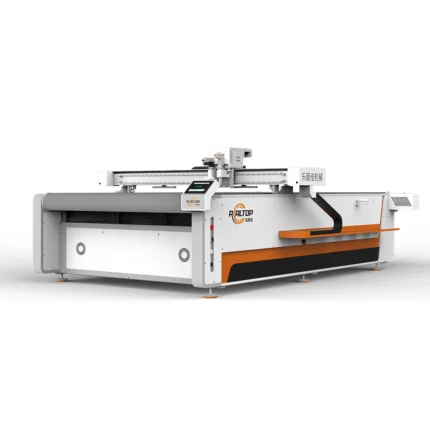
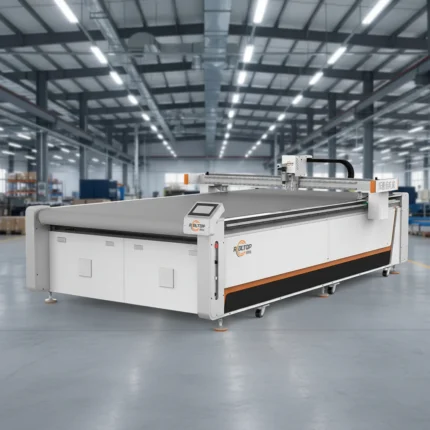
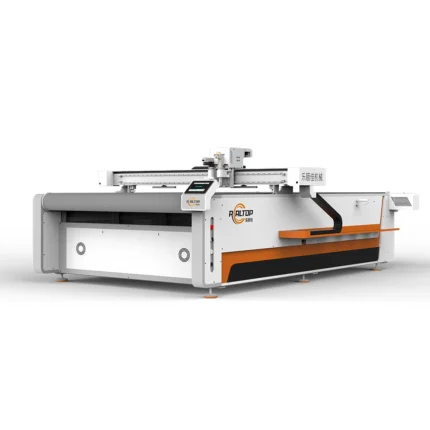
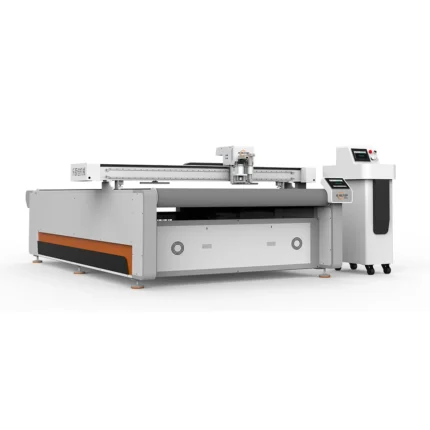
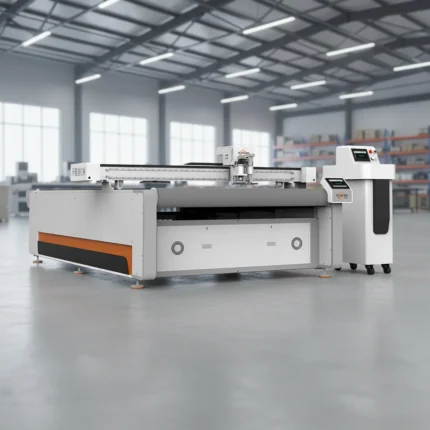
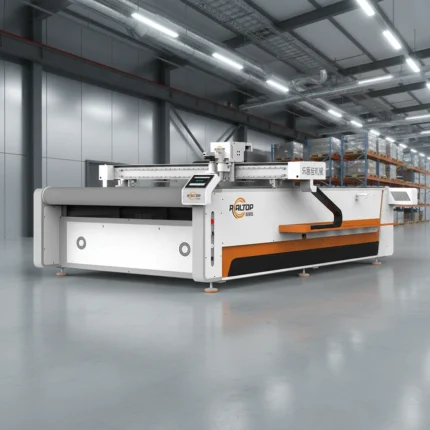
RT-D2516/RT-S2516 CNC Oscillating Knife Cutting Machine, 1600×2500mm Working Area, 7.5kW Vacuum Table, ≤50mm Cutting Thickness — configured by material type and layer density rather than working area alone.
- Swiss oscillating knife with full-cut, half-cut and cursor location handles silk through leather without blade drag
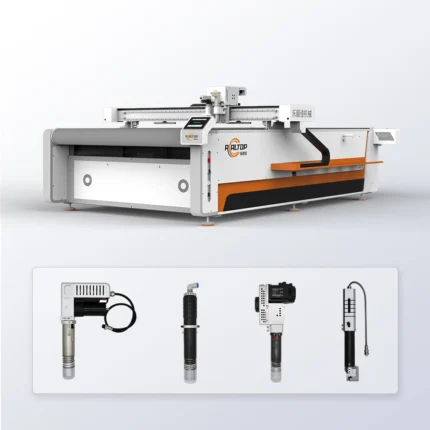
- Modular tool holder accepts round knife, marking pen and auto feeder for quick job changeover
- High-density felt surface with zoned vacuum holds small parts flat at up to 1200mm/s translational speed
Sample cutting on your own fabric or composite material confirms edge quality and throughput before commitment.
Material-First Tool Configuration — Oscillating knife frequency, blade type and vacuum zoning are matched to the buyer’s actual fabric density and layer count before the working area is finalized.
Technical Specifications
| Parameter | Value |
|---|---|
| Model | RT-D2516/RT-S2516 |
| Product Type | CNC Oscillating Knife Cutting Machine |
| Working Area | 1600 × 2500 mm |
| Machine Size | 3450 × 2300 × 1250 mm |
| Rated Power | 9 kW |
| Tool Head | Swiss imported oscillating knife (full cutting, half cutting, cursor location) |
| Cutting Thickness | Up to 50 mm depending on material density |
| Translational Velocity | 800–1200 mm/s |
| Repeated Accuracy | ≤0.1 mm |
| Table Type | Flat working table with high-density felt surface |
| Vacuum Pump | 7.5 kW |
| Transmission System | Digital servo motor, linear guide, synchronous belt, ball screw |
| Servo Motor | Panasonic / Delta |
| Guide Rail | Taiwan Hiwin |
| Conveyor Belt | Germany imported |
| Frame Structure | Overall welding process, imported milling machine processing |
| Instruction System | HP-GL compatible format |
| Voltage | 380V ± 10% |
| Modular Tool Holder | Compatible with round knife, marking pen, auto feeder |
| Safety Device | Infrared sensors |
| Language Options | English, Russian, Italian, Chinese (customizable) |
Application Suitability
| Application | Material or Output |
|---|---|
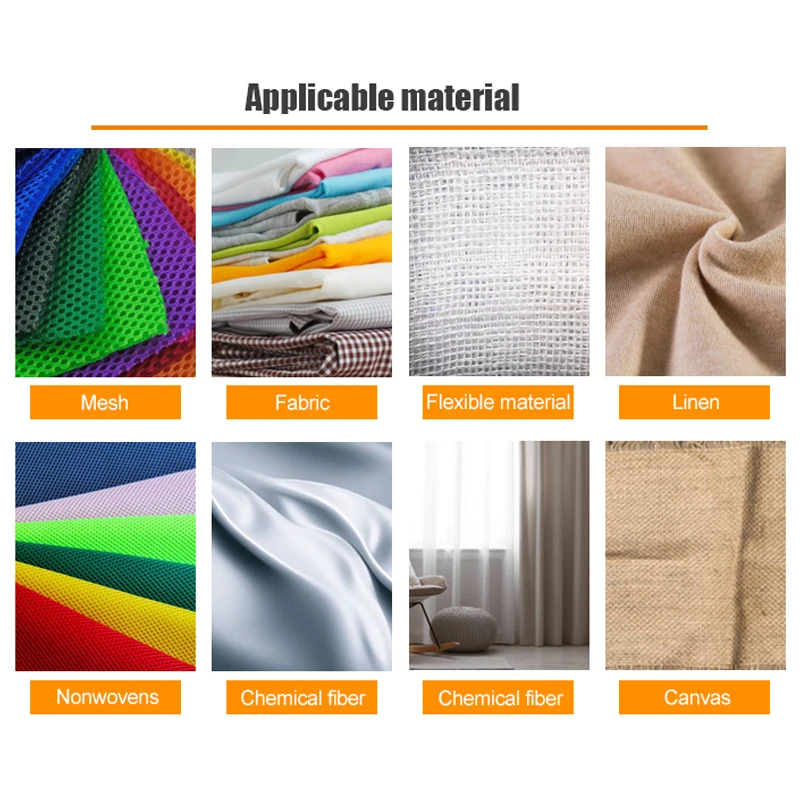
| Garment and footwear cutting | Single and multi-layer woven fabric, knit fabric, technical textiles |
| Automotive interior trimming | Leather, sponge composite leather, PVC sheet |
| Gasket and seal production | Silicon, rubber, soft glass, composite gasket material |
| Upholstery and soft furnishing | Foam-backed fabric, coated textile, flexible composite |
Why "Working Area First" Specification Fails Cloth Cutters
Choosing an Automatic Oscillating Knife CNC Cutting Machine for Cloth based purely on table dimensions regularly leads to misconfigured tool heads and insufficient vacuum hold on the actual production material.
The correct sequence starts with the material’s thickness, density and layer count, then determines blade frequency, downforce and table zoning, and only afterward confirms the working envelope.
I recall a buyer sourcing a flatbed cutter for automotive floor mats who tested successfully on plain polyester, then switched to PVC-coated composite in mass production. The oscillation frequency and downforce settings that produced clean edges on single-layer polyester crushed the foam core of the coated material, leaving frayed edges across the first batch [NEED_CITE: material-specific oscillation parameters for composite textiles]. Parameters had to be completely recalibrated before acceptable edge quality returned. A cutting machine configured around material behavior rather than bed size avoids this failure mode from the start.
Blade Frequency and Edge Behavior Across Fabric Types
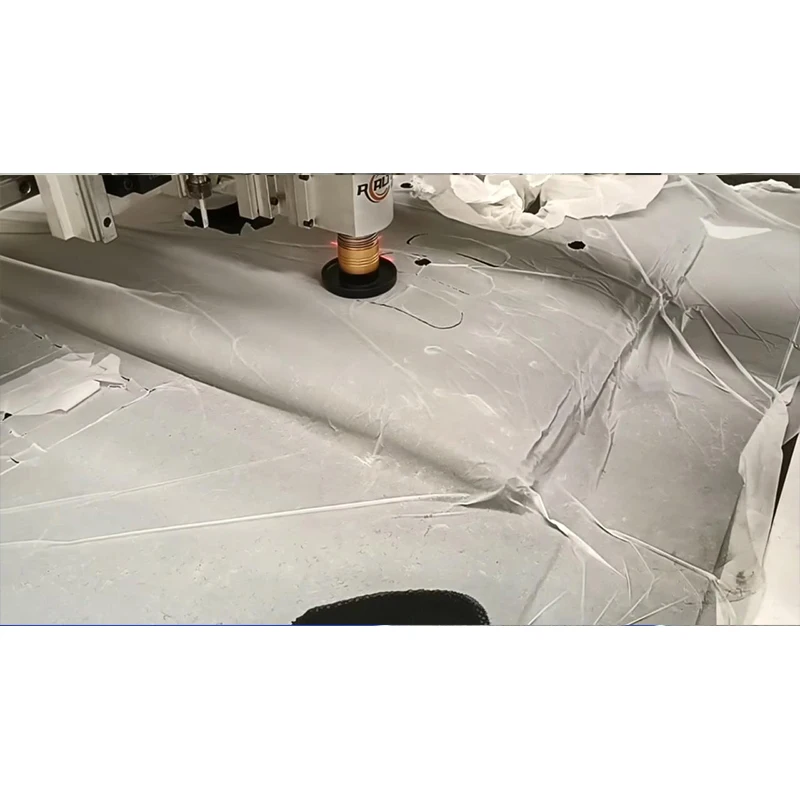
The Swiss imported oscillating knife on the RT-D2516/RT-S2516 operates across full-cut, half-cut and cursor-location modes. On tightly woven garment fabric, higher oscillation frequency with lower downforce prevents fiber pull and keeps cut edges clean through multiple layers. When the same machine transitions to sponge composite leather for automotive interiors, reduced frequency with increased downforce prevents the blade from riding up on the foam core. Switching between these modes is a tool-head change, not a machine replacement, which matters when a factory produces both apparel panels and interior trim on the same floor.
Vacuum Hold on Small, Lightweight Cut Pieces
The 7.5 kW vacuum pump working through a high-density felt table surface addresses a common problem in garment cutting: small pattern pieces lift off the table when the oscillating knife exits the material at high translational velocity. At speeds reaching 1200 mm/s, the blade exerts upward force on the trailing edge of each piece [NEED_CITE: vacuum retention requirements for high-speed oscillating knife cutting]. Adequate vacuum across the flat working table keeps these pieces registered so the next cut starts from a known position rather than a shifted one.
What the Frame, Drive and Rail Specifications Mean in Production
The overall-welded frame finished on an imported milling machine provides a flat reference surface that the Taiwan Hiwin linear guide rides on without deflection. When the RT-D2516/RT-S2516 carries the tool head across the full 1600 × 2500 mm envelope at continuous production speeds, any frame flex translates directly into positional drift; the ≤0.1 mm repeated accuracy spec depends on this rigidity. The Panasonic or Delta digital servo motor closes the loop between the HP-GL instruction file and actual blade position, correcting micro-deviations before they accumulate over a long cutting path. The Germany-imported conveyor belt, where equipped, feeds roll material onto the felt surface without stretching or skewing the weave, preserving the nesting layout the software calculated.
The Hidden Cost of Skipping the Material Sample
When a cloth cutting machine ships without a prior sample test on the buyer’s production material, the first adjustment period happens on the factory floor instead of the supplier’s floor. Oscillation frequency, blade angle and vacuum zone mapping each shift depending on whether the material is open-weave cotton, coated polyester or closed-cell foam laminate. Discovering that the default configuration produces crushed edges on the actual composite, rather than the generic sample fabric, delays production startup and generates scrap while parameters are worked out [NEED_CITE: pre-shipment sample testing for CNC cutting equipment].
Why Source This Cloth Cutter from REALTOP
In-house design covers both knife and laser processes, so the RT-D2516/RT-S2516 is specified by material suitability rather than pushing one technology across every application. Tool head and table configuration are documented against the buyer’s material type and daily volume before production begins. Software compatibility with the buyer’s existing nesting workflow and HP-GL file format is confirmed at order stage, not at commissioning. Voltage, plug type and control panel language — standard at 380V ± 10% with English, Russian, Italian or Chinese options — are agreed in writing before the machine ships. A sample cutting report produced on the buyer’s own material accompanies the quotation, providing edge quality and throughput evidence before commitment.
Documentation & Verification
- Machine specification sheet listing tool head, table zoning and vacuum pump rating for the confirmed configuration
- Electrical schematic with voltage and frequency locked to the buyer’s facility supply
- Sample cutting report run on the buyer’s fabric or composite material before order confirmation
- Software licence and HP-GL file format compatibility note confirming import of the buyer’s nesting files
- Factory test record documenting repeated accuracy and edge quality on the configured material
- Spare parts list covering oscillating blades, felt segments and vacuum seals with part numbers
Installation, Commissioning & Support
- The 3450 × 2300 × 1250 mm machine footprint requires a level concrete floor with clearance for the conveyor feed path
- A dedicated 380V ± 10% circuit rated for the 9 kW machine load plus the 7.5 kW vacuum pump must be available at the installation point
- The electrical box is fixed on the fuselage with high-flexibility cables, reducing on-site wiring to main supply connection
- First-run commissioning includes vacuum zone mapping and oscillation parameter tuning on the buyer’s production material
- Operator training covers tool head changeover between round knife, marking pen and oscillating blade configurations
- Routine maintenance schedule addresses guide rail lubrication, felt surface inspection and vacuum pump filter replacement
Preparing Your Inquiry
Share the specific fabric type, composite structure and maximum layer count you run in daily production, along with the largest sheet or roll width you need to feed. Confirm your facility voltage and frequency, the control language your operators require, and whether your current nesting software exports in HP-GL format. If your material is coated, laminated or foam-backed, sending a sample roll for cutting tests before quotation allows the tool head and vacuum configuration to be validated on your actual stock rather than a substitute.
Frequently Asked Questions
Q: How is the correct tool head selected for my fabric type and thickness?
A: Blade type, oscillation frequency and downforce are set after reviewing your material composition, density and layer count. The RT-D2516/RT-S2516 supports Swiss oscillating full-cut and half-cut knives alongside round knife and marking pen options through the modular tool holder, so the configuration matches the material rather than forcing a single blade across every job.
Q: Can the vacuum table hold small pattern pieces during high-speed cutting?
A: The 7.5 kW vacuum pump working through the high-density felt surface generates hold-down force distributed across the flat working table. This prevents lightweight garment pieces from lifting when the oscillating knife exits at translational velocities up to 1200 mm/s, maintaining positional accuracy for subsequent cuts.
Q: Will the software accept my existing DXF and PLT nesting files?
A: The instruction system accepts HP-GL compatible formats. Before order confirmation, we verify that your current nesting software exports files the RT-D2516/RT-S2516 can import directly, and document this compatibility in writing so no conversion step is needed at commissioning.
Q: How do I verify cutting edge quality before placing the order?
A: Send your production material to the factory for a sample cutting test. The resulting sample cutting report documents edge condition, cutting depth and throughput on your specific fabric or composite, providing physical evidence before you commit to the purchase.
Q: What voltage, frequency and control language will the machine ship with?
A: Standard supply is 380V ± 10%, with voltage and plug type confirmed to your facility specification before production. Control panel language options include English, Russian, Italian and Chinese, and the agreed language is documented in the order confirmation to avoid miscommunication at delivery.


Related products
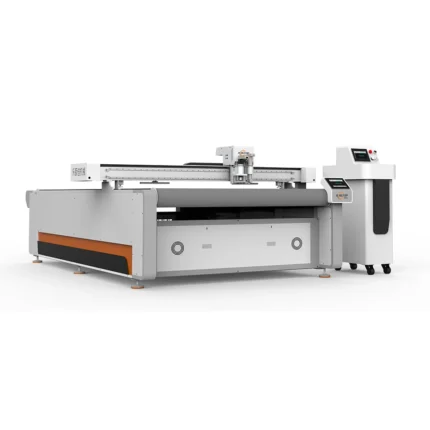
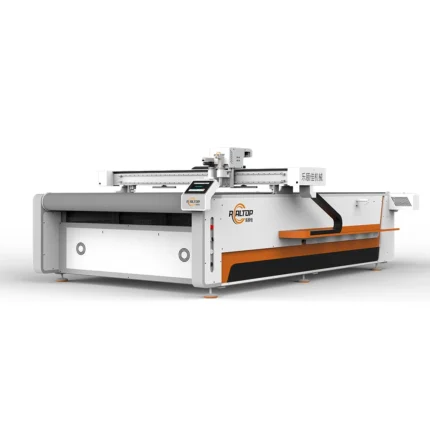
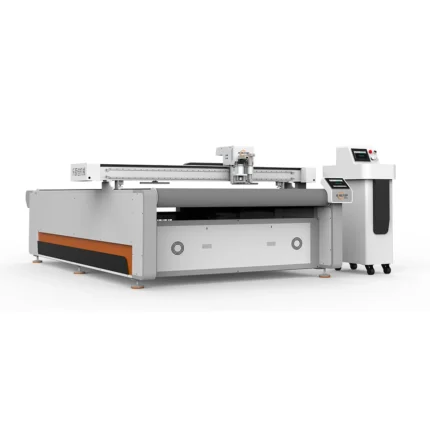
2026 Inflatable Surf SUP Board Cutting Machine
Product Introduction
Ideal for inflatable surf SUP board production, this 2026 cutting machine ensures precise and efficient cutting, tailored for manufacturers seeking reliable performance in water sports equipment manufacturing.
Specifications
| Application | Inflatable Surf SUP Board |
| Type | Cutting Machine |
| Model Year | 2026 |
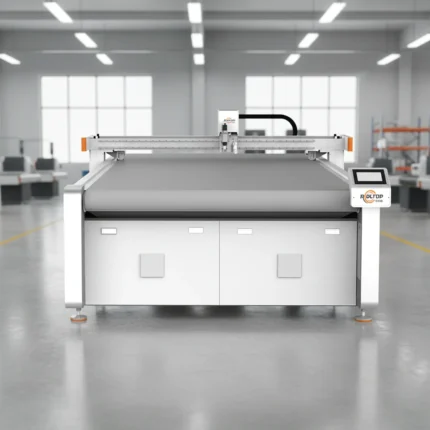
Automatic Multi-Layer Vibrating Knife Cutter 2026
Product Introduction
Automatic Multi-Layer Vibrating Knife Cutter 2026, ideal for precise cutting of various materials with multi-layer processing capability, enhancing production efficiency.
Key Specifications
| Type | Automatic Vibrating Knife Cutter |
| Layer Capacity | Multi-Layer |
| Model | 2026 |
| Function | Precision Cutting |
CNC Oscillating Knife Cutting Machine 2026 3000¡Á1600mm High-Speed
Product Parameters
| Model | CNC Oscillating Knife Cutting Machine 2026 |
| Working Area | 3000mm¡Á1600mm |
| Cutting Type | Oscillating Knife |
| Application | Fabric Cutting |
| Feature | High-Speed |
Introduction
High-performance CNC oscillating knife cutting machine with 3000mm¡Á1600mm working area, ideal for high-speed fabric cutting. Precision and efficiency for professional textile processing needs.

Electric Fabric Rotary Cutter 2026 12V Auto-Cut Industrial
Product Introduction
Industrial-grade Electric Fabric Rotary Cutter designed for precise cutting of scan-printed cloth. Features 12V auto-cut functionality for efficient, automated operation, ideal for professional textile processing.Product Parameters
| Power Supply | 12V |
| Function | Auto-Cut |
| Application | Scan-Printed Cloth |
| Type | Industrial Electric Rotary Cutter |
Jinan Realtop CNC Fabric Slitting Cutter 2026: Advanced Flexible Material Cutter
Product Introduction
Jinan Realtop CNC Fabric Slitting Cutter 2026 is a high-performance cutting equipment designed for precise fabric processing, ideal for industrial manufacturing needs with reliable CNC technology.Specifications
| Model | 2026 |
| Type | CNC Fabric Slitting Cutter |
| Manufacturer | Jinan Realtop |
| Application | Fabric Processing |
| Control System | CNC |

Jinan Realtop PVC Cutting Machine 2026 CE Certified
Product Introduction
Jinan Realtop PVC Cutting Machine 2026 is a CE-certified cutting solution, ideal for precise PVC material processing. Designed for efficiency and reliability in industrial applications.Product Parameters
| Model | 2026 |
| Certification | CE Certified |
| Application | PVC Cutting |
| Manufacturer | Jinan Realtop |
商品评价
There are no reviews yet.