


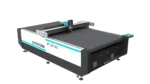
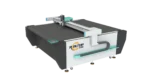
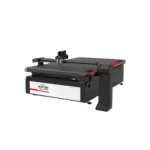
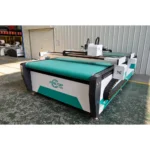

Cloth CNC Cutting Machine for Fabric Leather – Automatic
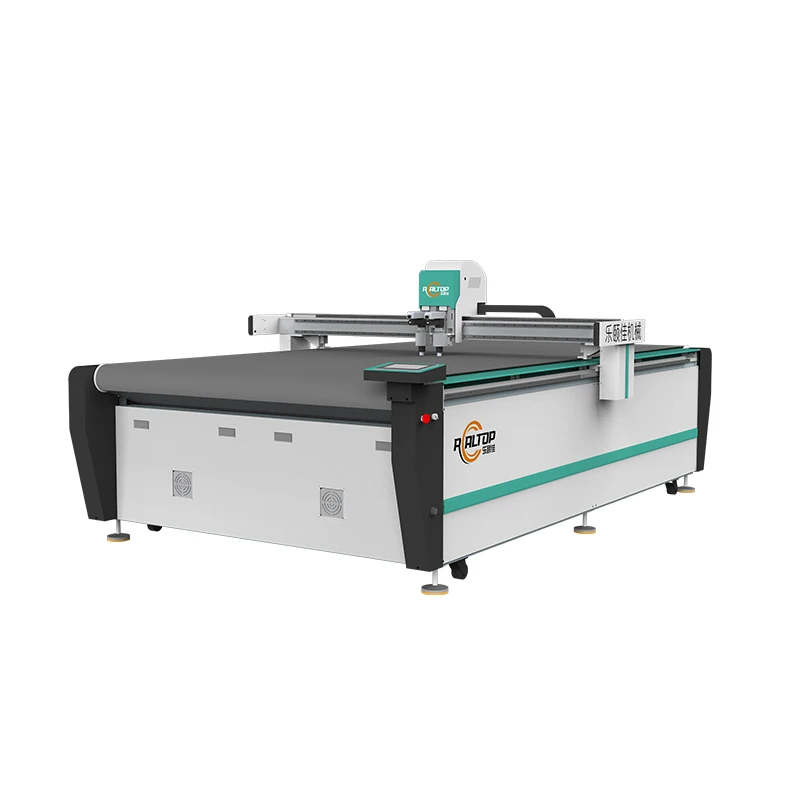
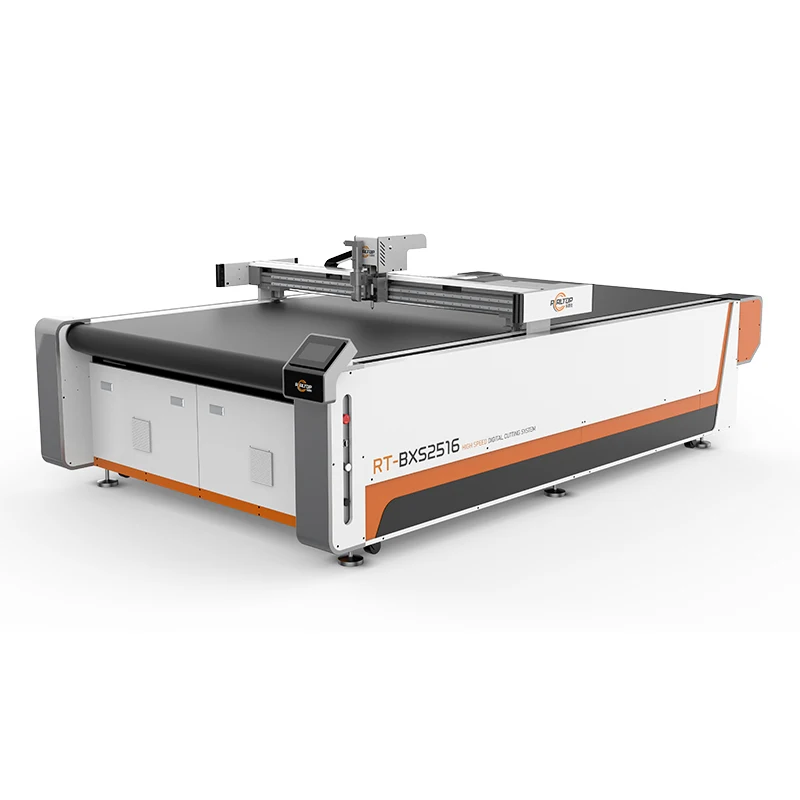
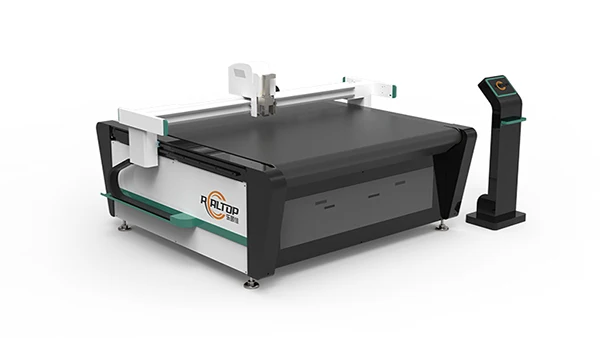
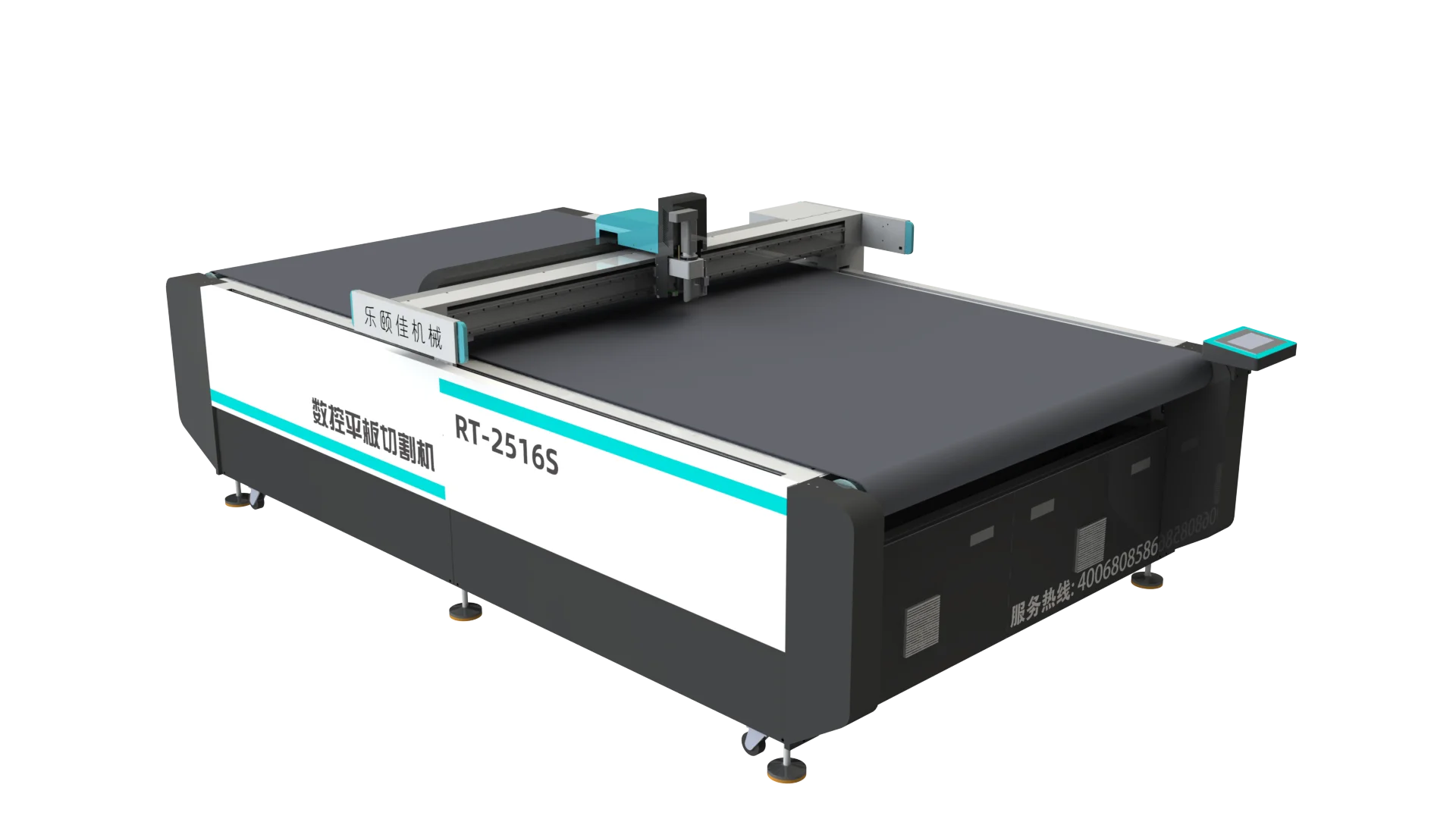
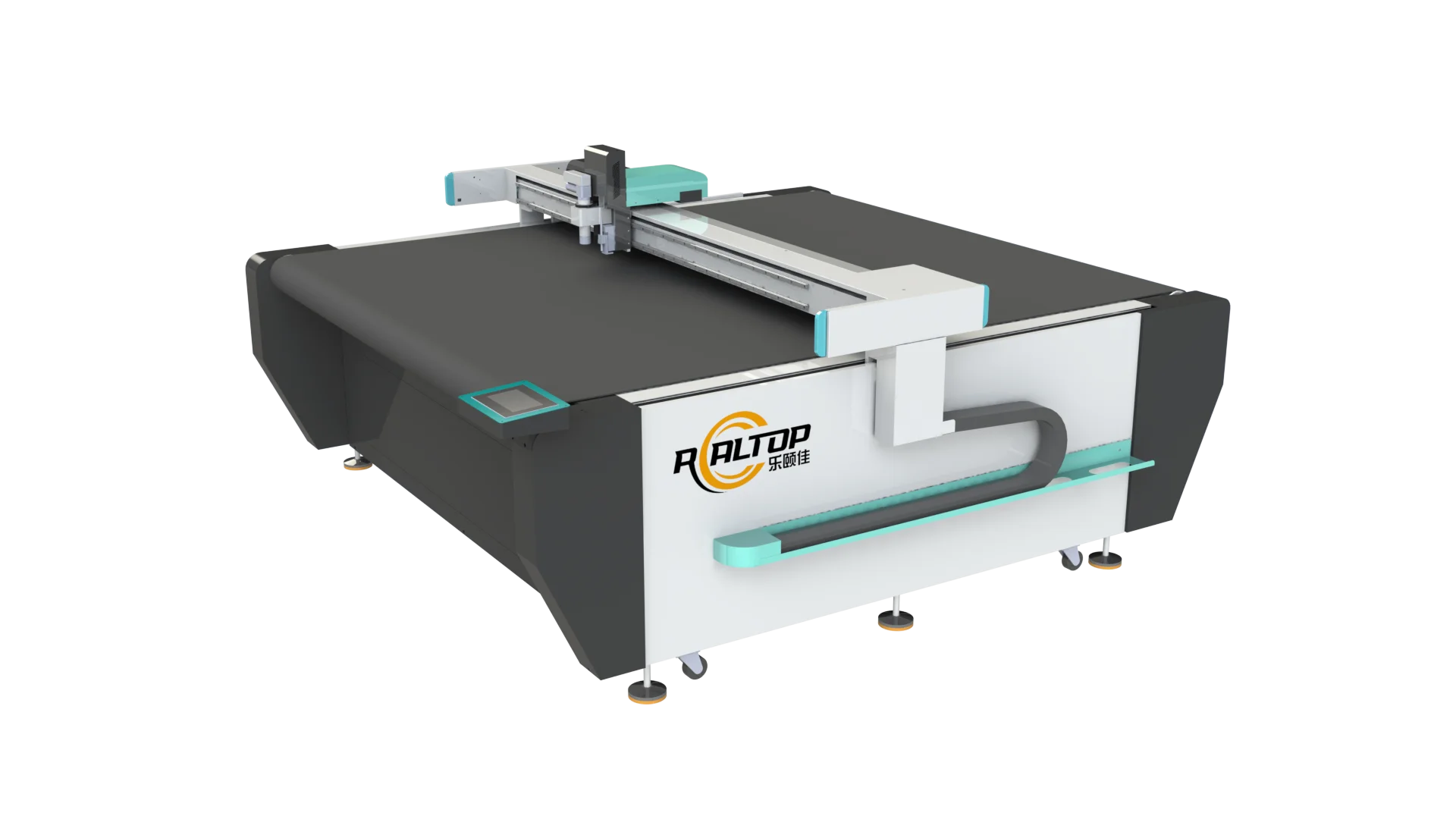
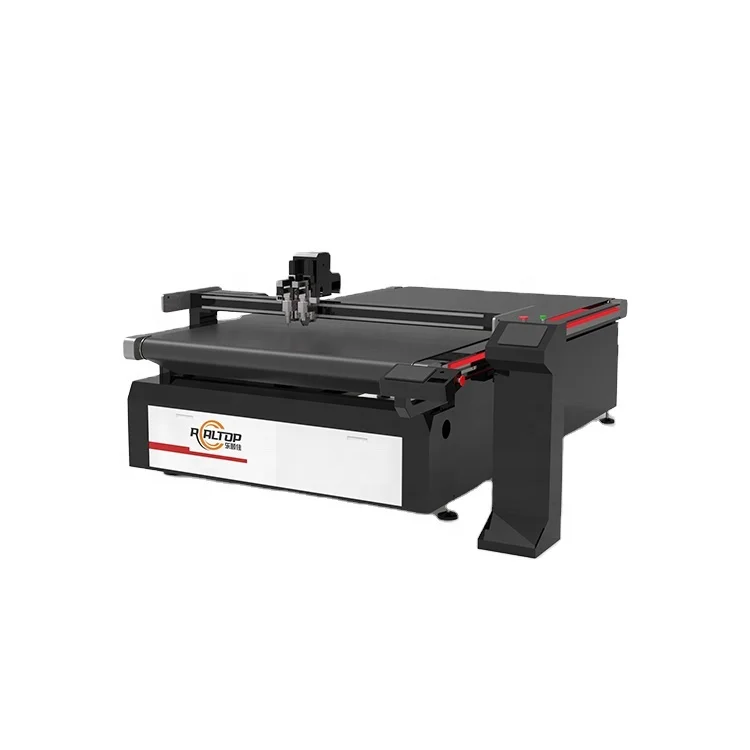
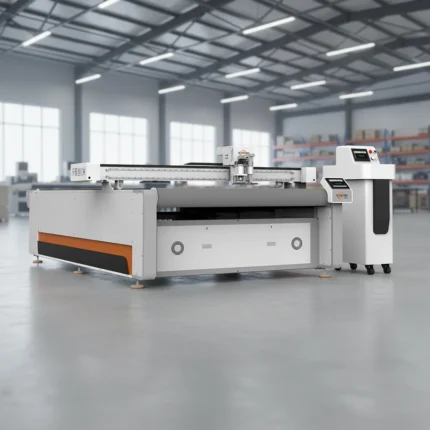
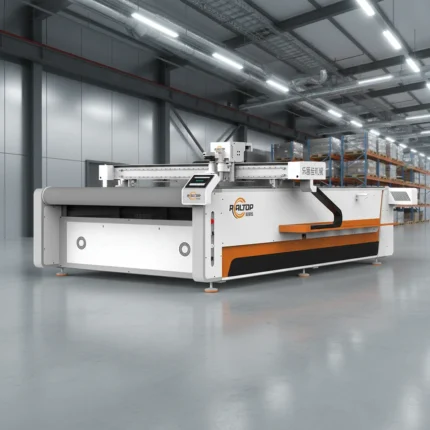
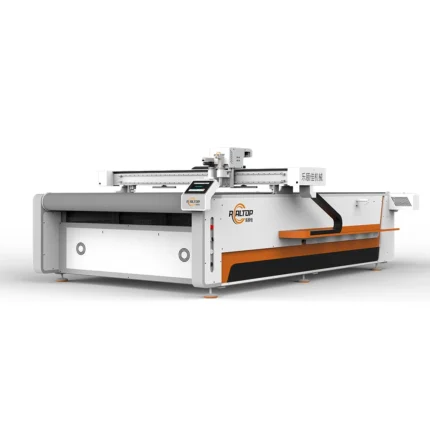
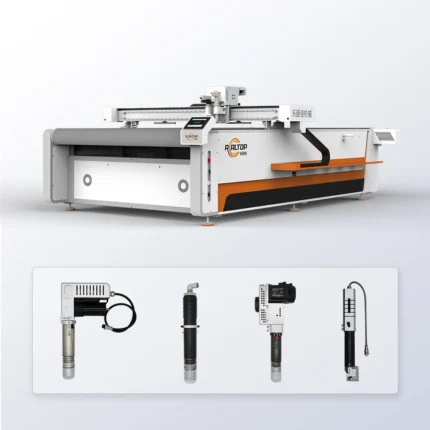
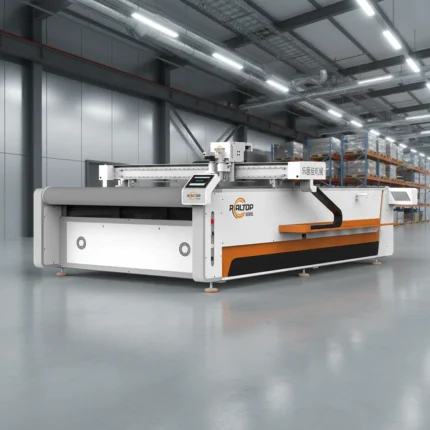
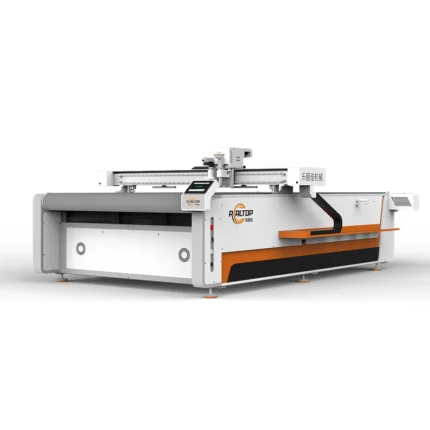
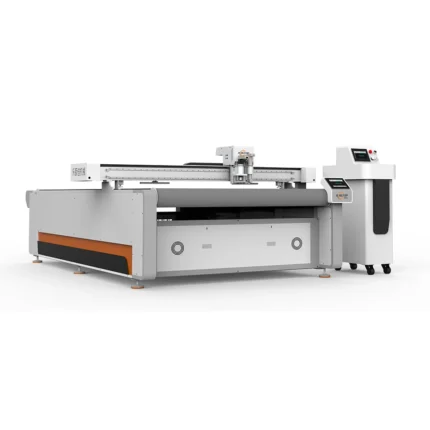
RT-D2516/RT-S2516 CNC Oscillating Knife Cutting Machine, 1600×2500mm Working Area, 9kW, 380V — configured with Swiss-imported oscillating knife, drag knife and creasing wheel heads for fabric, leather, foam and composite materials.
- Magnesium-aluminum vacuum table with PVDF coating and zoned suction holds small and large parts flat during cutting
- CCD camera mark-point positioning and panoramic recognition track printed contours at production speed
- Auto nesting software imports PLT, DXF and AI files to maximize material yield across garment, footwear, automotive interior and packaging workflows
Tool head and table configuration specified per your material and daily volume, with sample cutting on your own fabric or leather before commitment.
Tool head specified to material — oscillating knife, drag knife and creasing wheel tested on buyer fabric, leather and foam before configuration is locked, preventing crushed edges and ragged contours in production.
Technical Specifications
| Parameter | Value |
|---|---|
| Model | RT-D2516/RT-S2516 |
| Product Type | CNC Oscillating Knife Cutting Machine |
| Working Area | 1600×2500 mm |
| Machine Dimensions (L×W×H) | 3450×2300×1250 mm |
| Rated Power | 9 kW |
| Voltage | 380V ±10% |
| Translational Velocity | 800–2000 mm/s |
| Cutting Speed | 200–800 mm/s (basis not stated in source) |
| Maximum Cutting Thickness | ≤100 mm (varies with material) |
| Repeated Accuracy | ≤0.1 mm |
| Transmission System | Digital servo motor, linear guide, synchronous belt, ball screw |
| Servo Motor Brand Options | Delta (China) / Panasonic (Japan) |
| Linear Rail | Taiwan Hiwin |
| Vacuum Table Material | Magnesium-aluminum alloy with PVDF powder spraying, anodic oxidation |
| Vacuum Pump | 7.5 kW, integrated aviation aluminum shell with built-in silencer sponge |
| Conveyor Belt | Germany imported |
| Tool Head Types Available | Oscillating knife, pneumatic knife, high-power vibrating knife, circular knife, V-cutting knife, drag knife, creasing wheel, dotted line knife, punching, brush |
| Multifunctional Knife | Swiss imported knife (vibration full cutting, vibration half cutting, cursor location) |
| Instruction System Format | HP-GL compatible |
| Visual Positioning Options | Small CCD camera mark point positioning, panoramic camera recognition, projection positioning |
| Software | Auto typesetting / nesting, supports PLT, DXF, AI file formats |
| Control Panel | Touch screen, multi-language supported |
| Language Options | English, Russian, Italian, Chinese (custom languages available) |
| Safety Devices | Infrared sensor stop, anti-collision beam sensors, emergency stop button |
| Fixed Model Options | Flat working table / Auto feeding table |
| Assembly State | Fully assembled (split box platform option for transport) |
| Standards | CE (declaration where applicable) |
Application Suitability
| Application | Material or Output |
|---|---|
| Garment and footwear batch cutting | Fabric, textile, clothing cloth, shoe material, non-woven fabric |
| Leather goods and luggage manufacturing | Leather, PU, luggage material |
| Automotive interior and gasket production | Composite materials, sponge, PU, EVA, XPE, rubber, gasket material |
| Packaging sample making and carton prototyping | Cardboard, corrugated cardboard, plastic box |
| Signage and graphic advertising | PVC, sticker, film, foam board |
| Sealing and industrial fabrication | PTFE, ETFE, fiberglass, carbon fiber, soft glass, silicon |
Why the Tool Head Question Should Come Before the Working Area
A Cloth CNC Cutting Machine specified on bed size alone will fail the moment the material changes from standard fabric to layered composite or dense foam.
Buyers routinely lead with "I need a 1600×2500 table" and stop there. But a table is only a platform. The oscillating knife that slices cleanly through two layers of cotton textile may crush a 30 mm EVA foam sheet, producing ragged edges that the downstream sewing line rejects. I have watched production floors lose two full shifts because the wrong tool head was bolted on and no sample cutting had been done on the actual material. [NEED_CITE: tool head and material compatibility in digital flatbed cutting] The RT-D2516/RT-S2516 addresses this by offering a configurable multifunctional head — oscillating knife, pneumatic knife, drag knife, creasing wheel, V-cutting knife, circular knife and punching tools — so the cutting method follows the material rather than the other way around.
Matching the Knife to the Cloth and the Composite
The Swiss imported knife on this CNC Oscillating Knife Cutting Machine supports both full cutting and half cutting, which matters when the same production run moves from single-layer garment fabric to multi-layer shoe uppers. Full cutting drives the blade through the entire stack, while half cutting scores the top ply for fold lines or tear strips. Switching between them is a tool change, not a machine change, so operators can run mixed orders without re-fixturing the workpiece.
Visual Positioning for Printed Contour Work
When the job requires cutting around a printed graphic — a logo on a textile panel or a registered pattern on automotive upholstery — the CCD camera options pick up registration marks and adjust the cut path in real time. The system offers small CCD mark point positioning, panoramic camera recognition and projection positioning. Panoramic recognition is typically chosen for large-format printed fabric where a single mark point is insufficient, while projection positioning helps the operator visually verify alignment before the blade touches the material. [NEED_CITE: CCD camera contour recognition accuracy in textile production]
What the Specification Sheet Actually Means for Daily Output
The 200–800 mm/s cutting speed range carries a caveat: it depends on the material density, ply count and tool head in use. A single layer of non-woven fabric at 800 mm/s is realistic; a 50 mm stack of EVA foam with a high-power vibrating knife will sit at the lower end. The ≤100 mm maximum cutting thickness is a mechanical envelope, not a production recommendation — cutting that deep at production speed on any material requires a dedicated tool head and reduced velocity. The 9 kW rated power and 7.5 kW vacuum pump together draw a substantial electrical load, so the 380V ±10% supply should be confirmed against the workshop’s actual incoming voltage before the machine ships. The Taiwan Hiwin linear rails and digital servo motors from Delta or Panasonic maintain the ≤0.1 mm repeated accuracy across the full 1600×2500 mm travel, which matters when nesting software packs dozens of pattern pieces into a single lay and every millimeter of drift wastes fabric.
The Cost of Skipping the Material Sample Test
When a buyer skips sample cutting on their own material, the first sign of trouble appears on the production floor. Crushed foam edges mean the oscillating frequency is too low for the material density. Lifted small parts mean the vacuum zoning is too coarse. Ragged leather edges mean the drag knife should have been an oscillating knife. [NEED_CITE: vacuum table zoning and small part hold-down in digital cutting] Each of these failures traces back to a configuration decision that was never validated against the actual stock the machine would see.
Why Sourcing This Machine from the Factory Matters
In-house design covers both the mechanical frame and the tool head assembly, so the oscillating knife, drag knife and creasing wheel are engineered for the same motion platform rather than retrofitted from a third-party catalog. The magnesium-aluminum vacuum table with PVDF powder spraying and hard oxidation treatment resists the abrasion from composite materials and fiberglass that would scar a standard aluminum surface. The Germany-imported conveyor belt on the auto-feeding model is specified for continuous textile feeding, not light-duty packaging. Software compatibility — PLT, DXF and AI file imports with auto nesting — is confirmed against the buyer’s existing design workflow before the order is placed. Voltage, plug type and control language are locked in writing before production begins, eliminating the most common shipment-stage disputes. [NEED_CITE: voltage and frequency standards by export market]
Documentation & Verification
- Machine specification sheet listing confirmed tool head and table configuration for your material range
- Electrical schematic with voltage, plug type and frequency written for your local standard
- Sample cutting report on your own fabric, leather or foam with edge quality photographs
- Software licence and file format compatibility note confirming PLT, DXF or AI import from your design system
- Factory test record with repeated accuracy measurement before dispatch
- Packing photographs showing machine securing and split box platform condition if applicable
Installation, Commissioning & Support
- 9 kW rated power plus 7.5 kW vacuum pump require a dedicated 380V circuit with confirmed amperage headroom
- 3450×2300 mm machine footprint needs level floor and clearance for material loading on all sides
- Fully assembled delivery or split box platform option for container transport and on-site reassembly
- First-run parameter tuning on your material thickness and ply count with operator present
- Touch screen control training in selected language covering tool head change, CCD calibration and nesting setup
- Spare parts list including Swiss imported knife blades and vacuum table wear components
Preparing Your Inquiry
Share the specific material types, thickness range and maximum sheet size you will process, along with the daily volume you expect to run. Confirm your workshop voltage, frequency and plug standard so the electrical system is built correctly from the start. If your workflow relies on a particular nesting software or file format, tell us before the quote stage so compatibility is verified, not assumed.
Frequently Asked Questions
Q: How do I choose the right tool head for my material?
A: The RT-D2516/RT-S2516 supports oscillating knife, drag knife, circular knife, V-cutting knife and creasing wheel among others. Selection depends on material type, thickness and edge quality requirement. We run sample cutting on your actual stock to confirm the tool head before finalizing the configuration.
Q: Can I test the machine with my own fabric or leather before ordering?
A: Yes. Send a roll or sheet of your production material to the factory. We cut samples using the recommended tool head and vacuum table setting, then share a cutting report with edge quality photographs and speed data for your review before commitment.
Q: Will the CCD camera track printed marks at production speed?
A: The system offers small CCD mark point, panoramic camera and projection positioning. Tracking reliability depends on mark size, contrast and print quality. We validate with your printed material during the sample stage to confirm the camera holds registration at the speed your production requires.
Q: Does the software work with my existing design files?
A: The nesting software imports PLT, DXF and AI formats. If you use a proprietary system, share sample files before ordering so we confirm import compatibility and test the nesting output against your yield targets. Language options for the control panel include English, Russian, Italian and Chinese, with custom languages available.
Q: Can the voltage and plug match my country’s electrical standard?
A: The machine is built around a 380V ±10% supply. Voltage, plug type and frequency are confirmed in writing before production begins. The electrical schematic is included in the documentation package so your local electrician can verify the incoming supply matches the machine requirement.


Related products
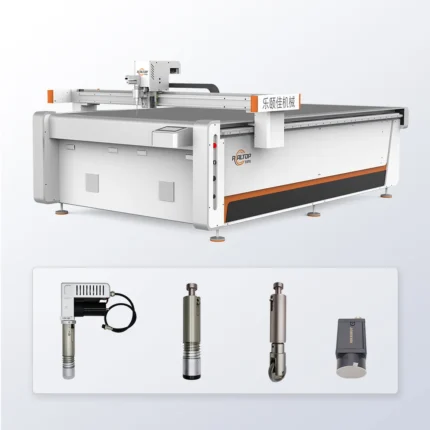
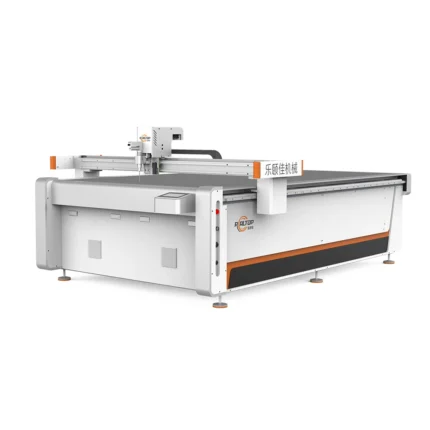
2026 Auto Fabric Cutter Round Knife High Efficiency
Product Introduction
High Efficiency 2026 Auto Fabric Cutter with Round Knife is a professional cutting equipment designed for fabric processing. It features advanced automation and high cutting efficiency, suitable for various fabric materials in industrial production.Product Parameters
| Model | 2026 |
| Type | Auto Fabric Cutter |
| Blade Type | Round Knife |
| Feature | High Efficiency |
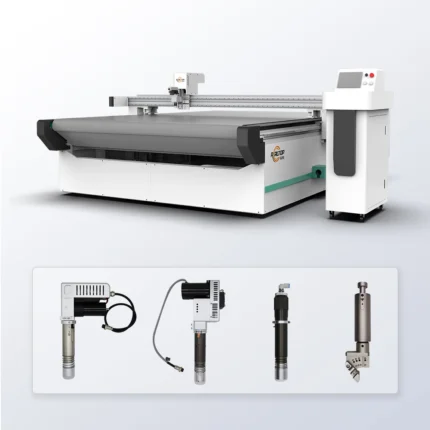
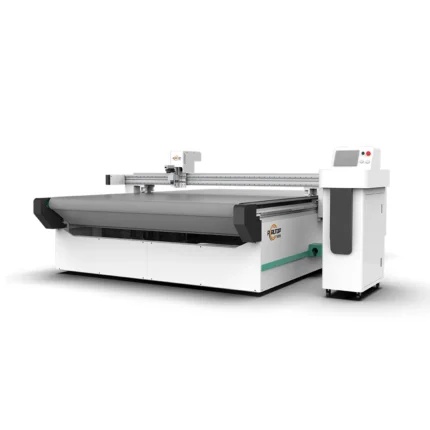
2026 Flatbed Oscillating Knife Cutter 1600x3500mm Auto-Feeding Textile
Product Overview
Flatbed Oscillating Knife Cutting Machine 2026 is a high-precision textile fabric cutter with auto-feeding function, ideal for efficient and accurate cutting tasks in textile manufacturing. It combines advanced oscillating knife technology with a large working area to meet industrial production needs.Key Specifications
| Model | 2026 |
| Working Area | 1600x3500mm |
| Feeding System | Auto-Feeding |
| Cutting Type | Oscillating Knife |
| Application | Textile Fabric |
Jinan Realtop CNC Fabric Slitting Cutter 2026: Advanced Flexible Material Cutter
Product Introduction
Jinan Realtop CNC Fabric Slitting Cutter 2026 is a high-performance cutting equipment designed for precise fabric processing, ideal for industrial manufacturing needs with reliable CNC technology.Specifications
| Model | 2026 |
| Type | CNC Fabric Slitting Cutter |
| Manufacturer | Jinan Realtop |
| Application | Fabric Processing |
| Control System | CNC |
Jinan Realtop CNC Oscillating Knife Cutter 2026
Product Introduction
Jinan Realtop CNC Oscillating Knife Cutter 2026, a precision cutting solution from China's leading welding & cutting equipment manufacturer, ideal for efficient material processing with advanced CNC technology.
Key Specifications
| Model | 2026 |
| Type | CNC Oscillating Knife Cutter |
| Manufacturer | Jinan Realtop |

Jinan Realtop PVC Cutting Machine 2026 CE Certified
Product Introduction
Jinan Realtop PVC Cutting Machine 2026 is a CE-certified cutting solution, ideal for precise PVC material processing. Designed for efficiency and reliability in industrial applications.Product Parameters
| Model | 2026 |
| Certification | CE Certified |
| Application | PVC Cutting |
| Manufacturer | Jinan Realtop |
商品评价
There are no reviews yet.