

CNC Digital Flatbed Cutting Machine for Carton – OEM Available
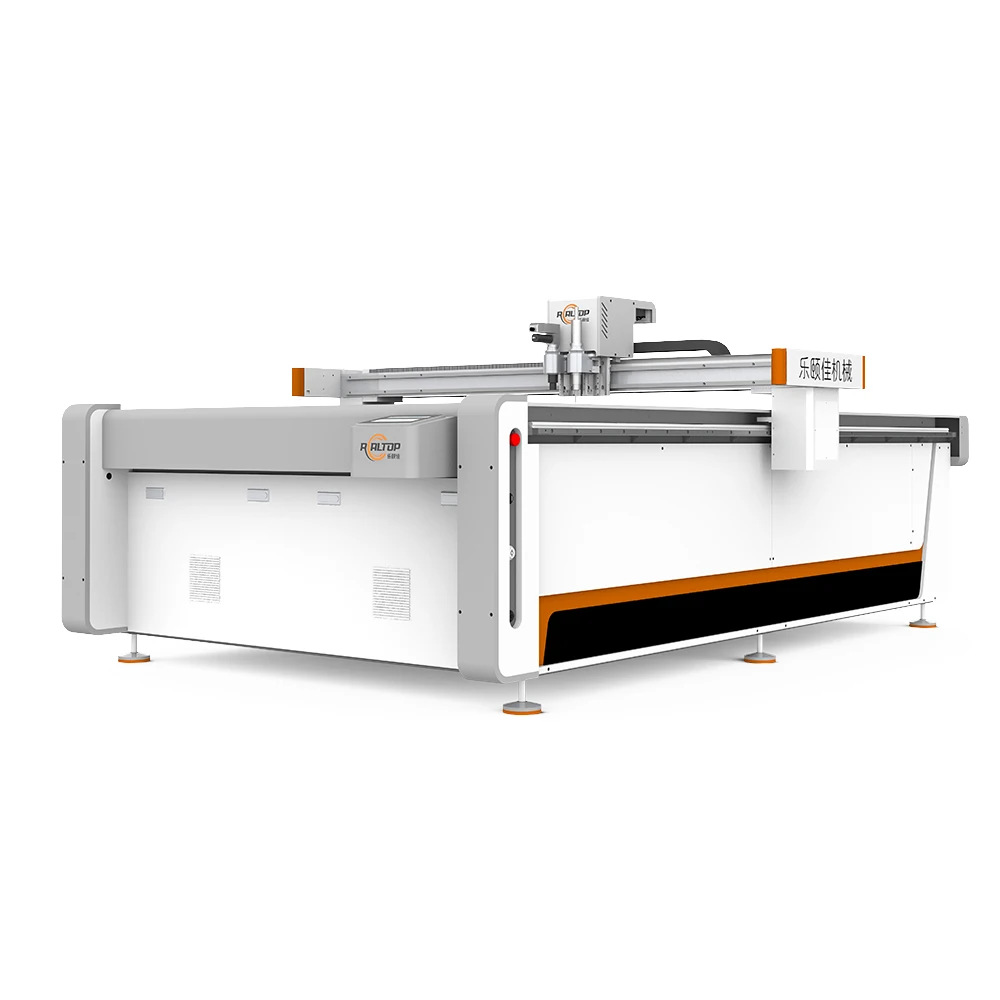
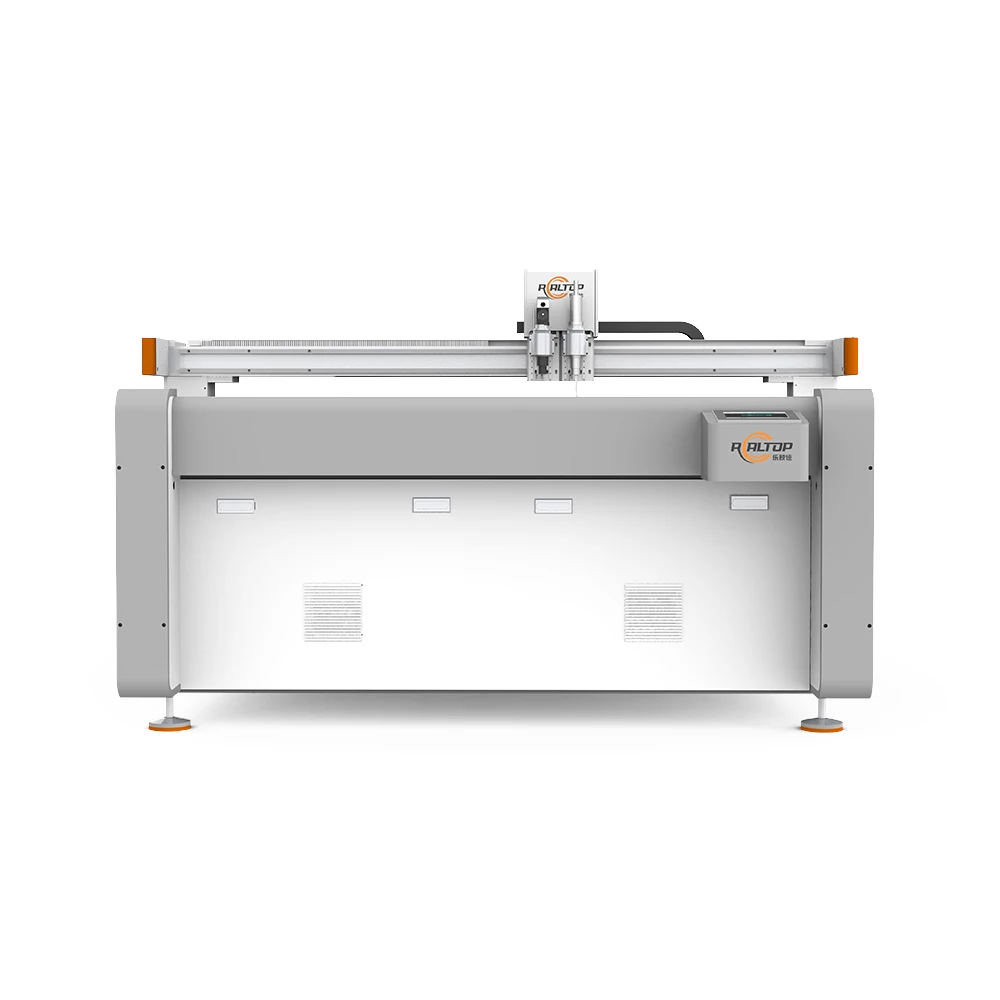
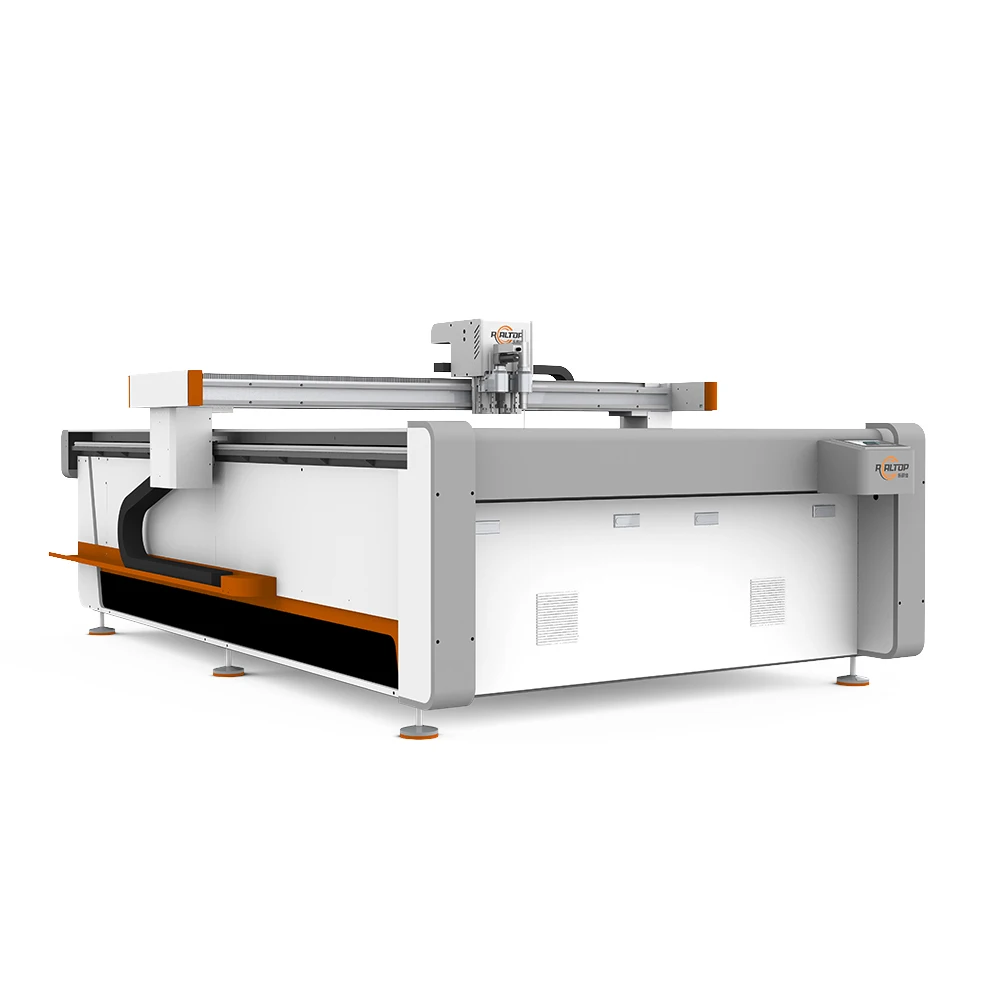
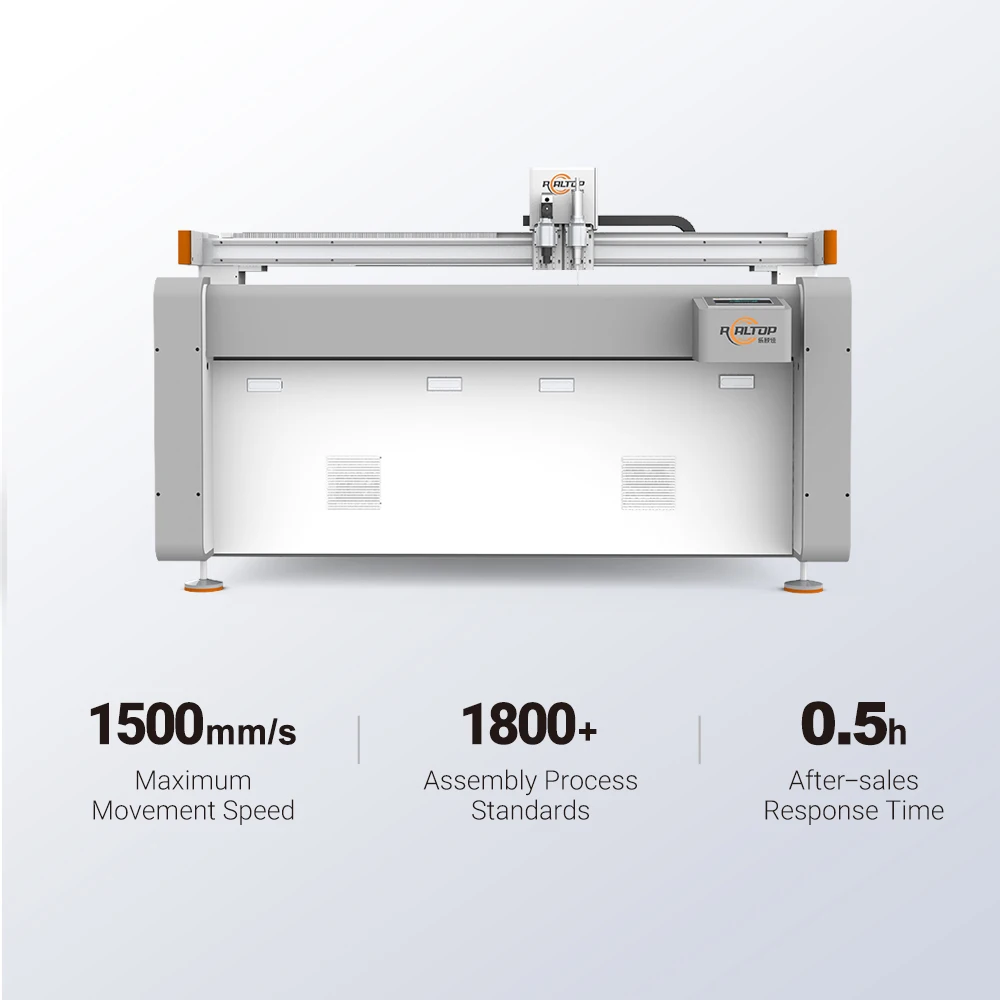
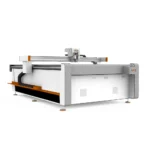
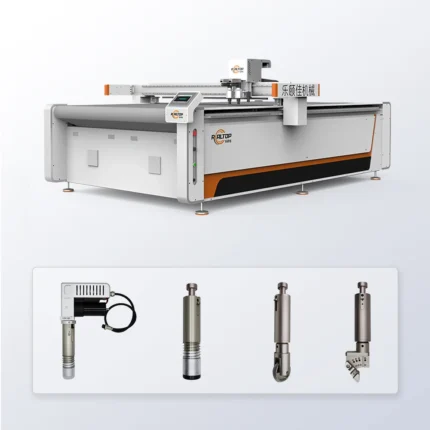
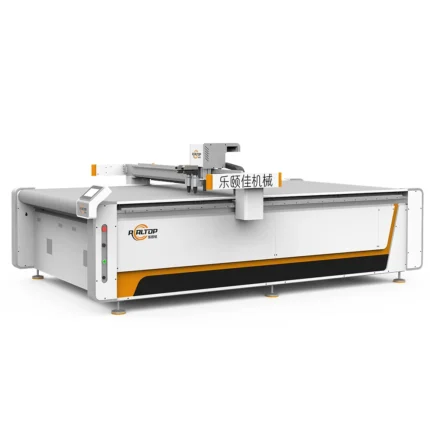
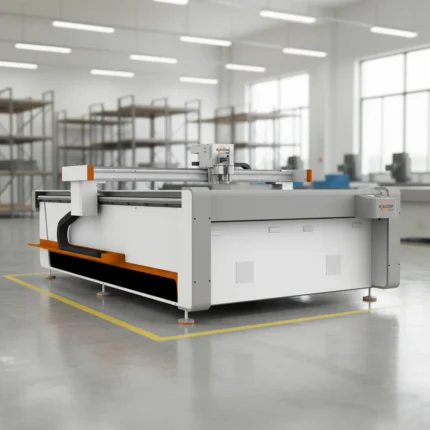
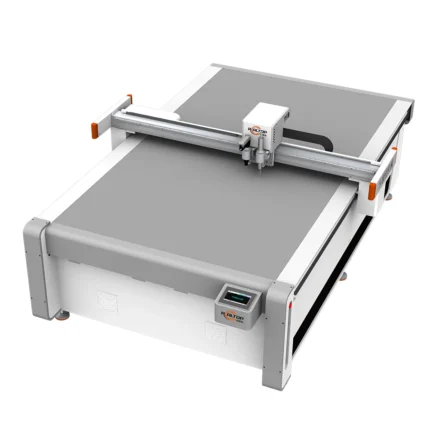
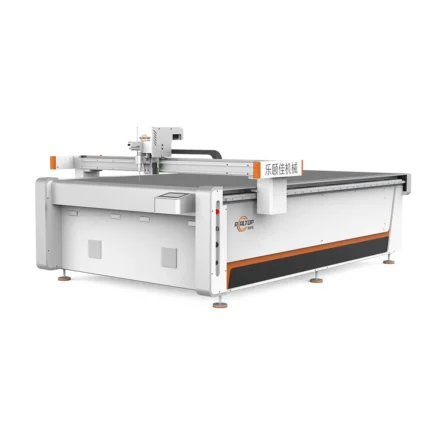
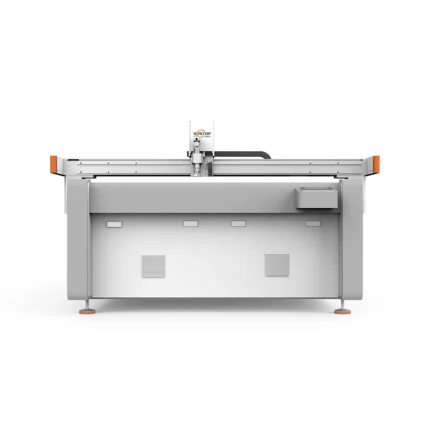
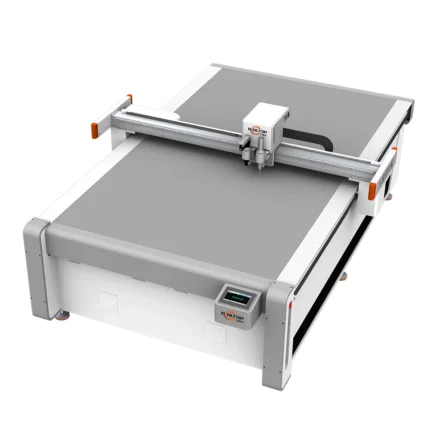
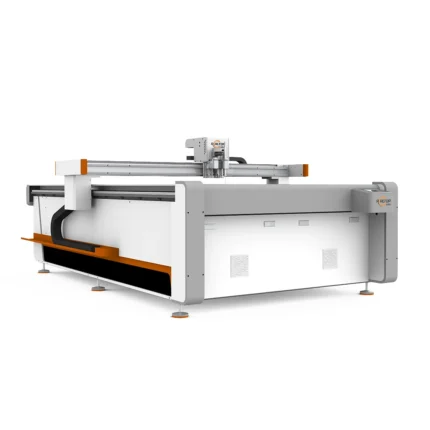
RT-D2516/RT-S2516 CNC Digital Flatbed Cutting Machine, 1600×2500mm working area, oscillating knife with full-cut and half-cut capability, Delta servo drive with ≤0.1mm repeatability.
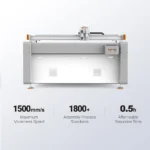
Complements laser workflows for packaging producers by delivering burn-free edges on corrugated board and grey board, where heat-based cutting causes discoloration or deformation. Aluminum honeycomb vacuum table with zone-following adsorption holds small carton parts flat during high-speed contour cutting at 800–2000mm/s.
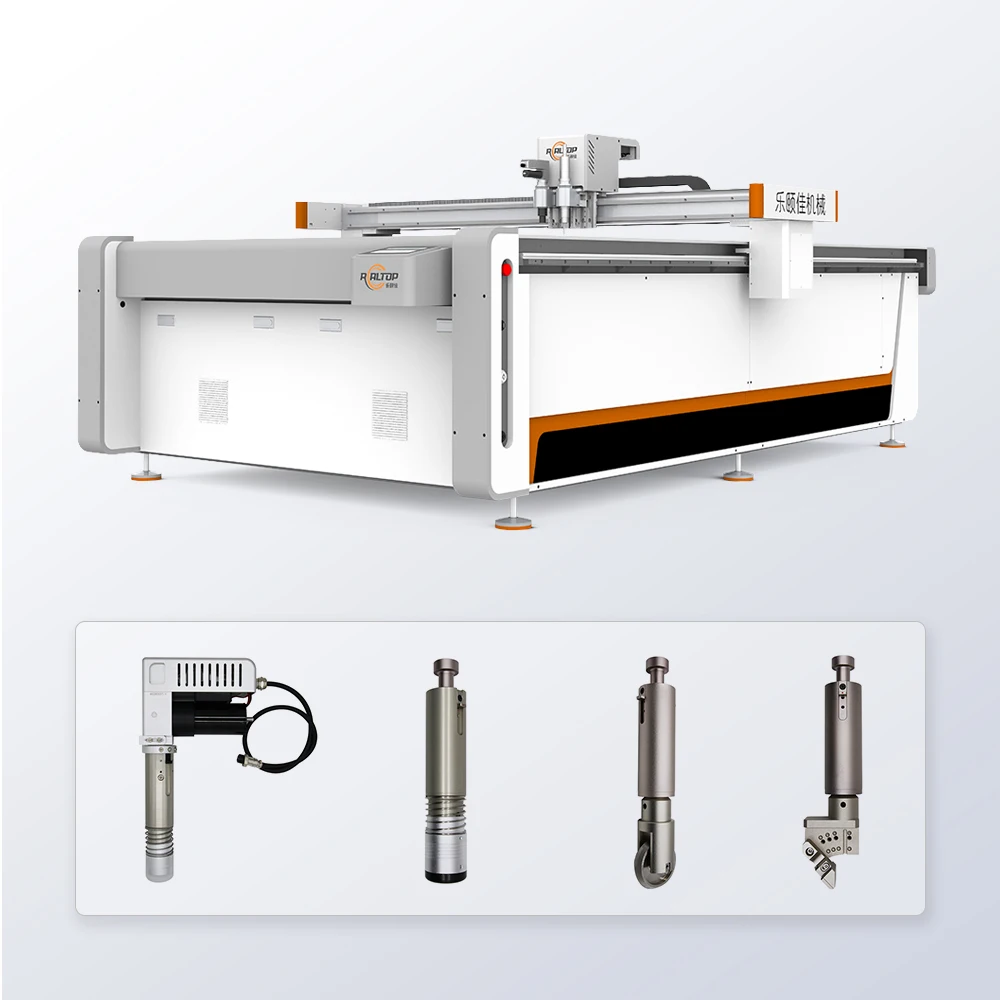
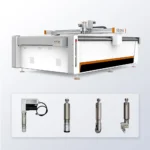
- Swiss imported tool head supports crease-and-cut in a single setup
- HP-GL compatible nesting software with multi-format import
- 380V±10% voltage with control language customization
Sample cutting on your specific board grade and flute profile is performed before commitment, ensuring thickness capacity and edge quality match your production requirements.
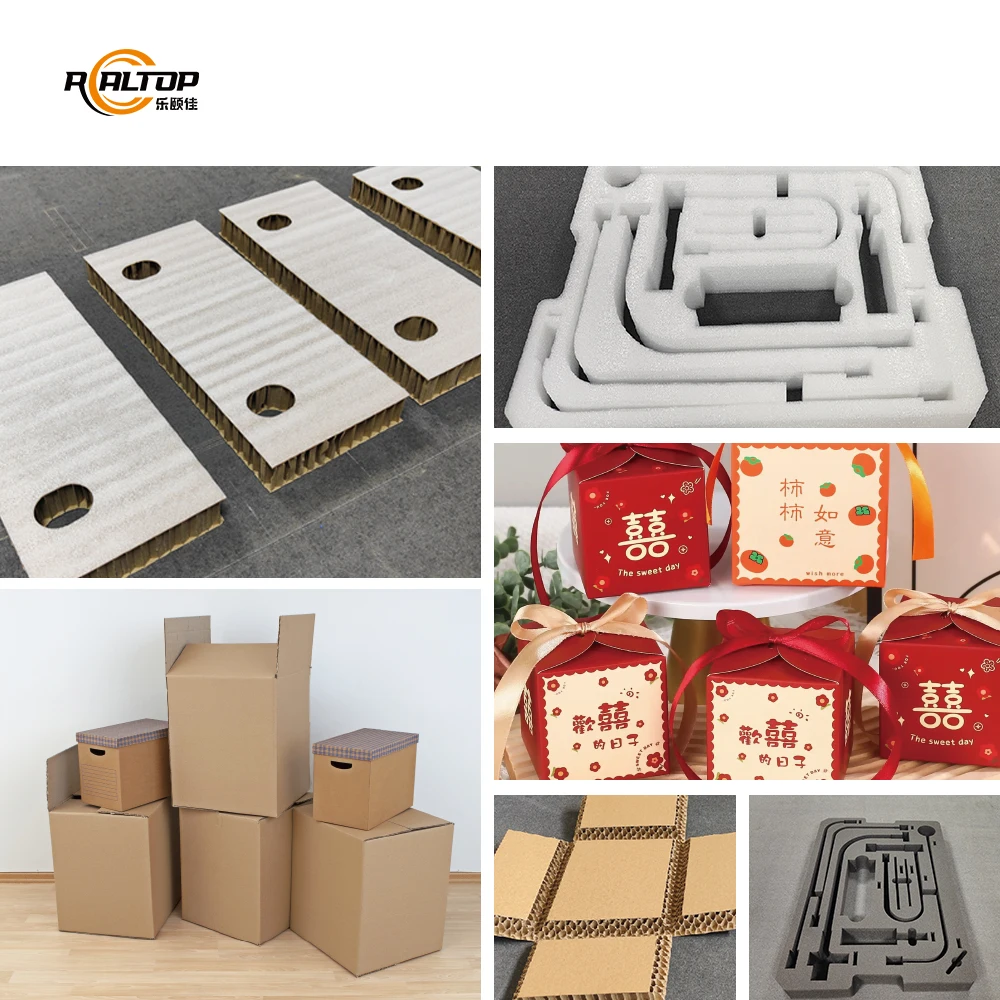
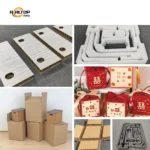
Oscillating Knife Edge Quality — Clean, no-burn crease-and-cut on corrugated board verified by factory sample test before shipment.
Technical Specifications
| Parameter | Value |
|---|---|
| Product Type | CNC Digital Flatbed Cutting Machine |
| Model | RT-D2516/RT-S2516 |
| Working Area | 1600 × 2500 mm |
| Machine Size | 3450 × 2300 × 1250 mm |
| Rated Power | 9 kW |
| Translational Velocity | 800–2000 mm/s |
| Repeated Accuracy | ≤0.1 mm |
| Tool Head | Swiss imported oscillating knife: full cut, half cut, cursor location |
| Transmission System | Taiwan Delta digital servo motors, Hiwin imported linear guides, synchronous belt, ball screw |
| Vacuum Table | Aluminum alloy honeycomb structure with automatic follow cutting area adsorption |
| Voltage | 380V ±10% |
| Instruction System | HP-GL compatible format |
| Safety Device | Infrared sensors |
| Additional Configuration | Germany imported conveyor belt, 7.5 kW vacuum pump, auto feeding |
Application Suitability
| Application | Material or Output |
|---|---|
| Carton and packaging sample making | Single-face, double-wall and heavy-duty corrugated board |
| Sticker and label contour cutting | Self-adhesive vinyl and coated paper stock |
| Premium gift box production | Thick grey board and rigid packaging board |
| Express paper box packaging | Light to medium flute corrugated material |
| Billboard and business card cutting | Cardstock and display board |
| Flexible material processing | Leather, garment fabric, sponge composite leather, PVC, soft glass, silicon, rubber |
Why Burnt Edges on Corrugated Board Push Buyers Toward Knife Cutting
A CNC Digital Cutting Machine with an oscillating knife eliminates the thermal damage that CO₂ lasers leave on fibrous packaging substrates.
I have walked through packaging sample rooms in the Middle East where operators were running corrugated board on laser tables, and the scorch marks along the cut edge made every prototype look like a reject. The heat seals the fibers on synthetics, which is useful for textiles, but on cardboard it produces a dark, brittle edge that flakes when the box is folded. That is why packaging and carton producers evaluating a CNC Digital Cutting Machine for sample making and short-run production keep circling back to knife-based tables. The mechanical cut leaves fibers intact, creases score cleanly, and the sample box looks production-grade without any secondary edge finishing [NEED_CITE: thermal versus mechanical cutting effects on cellulose-based packaging board].
The Knife-First Approach for Packaging Prototypes
A CNC Digital Cutting Machine configured with an oscillating knife head handles the full crease-and-cut workflow on a single table. The Swiss imported knife performs full cuts through the board thickness, half cuts for perforations, and cursor location for registration — so the operator loads one file and the machine produces a finished, foldable carton sample. This is the same workflow that packaging sample rooms rely on when iterating box structures before committing to a steel-rule die.
Where Laser Complements Rather Than Replaces
On the rttcuter.com side of the catalog, CO₂ and fiber laser machines handle acrylic, wood, textile and sheet metal processing. For packaging producers running a mixed operation, a laser table may handle engraving or thin-film cutting while the CNC Digital Cutting Machine takes the heavier corrugated and board work. The two methods cover different material ranges rather than overlapping, which is how factories avoid forcing one process to do the work of another [NEED_CITE: process selection criteria for packaging sample operations].
Reading the Specs That Actually Matter
The 1600 × 2500 mm working area accommodates standard full-sheet packaging board formats without repositioning, which matters when a large carton structure must be cut in a single pass. The Taiwan Delta servo motors paired with Hiwin linear guides hold ≤0.1 mm repeatability — tight enough that crease lines land precisely where the CAD file placed them, avoiding the misaligned fold lines that ruin a sample box. The aluminum alloy honeycomb vacuum table uses zone-following adsorption, meaning suction activates only under the active cutting area; this reduces vacuum pump load and, more importantly, holds small die-cut inserts flat without requiring a full-table draw. The 7.5 kW vacuum pump paired with this zoning is sized for sustained holding force on porous corrugated material, where air leakage through the board demands continuous extraction capacity.
What Happens When the Vacuum Zoning Falls Short
Buyers who specify a cutting table by working area alone sometimes discover that small packaging inserts lift during the final cuts because the vacuum zones are too large to generate sufficient localized hold-down. On corrugated board, the porous structure already bleeds air through the surface, so a table without adequate zoning loses suction exactly where the smallest parts sit. The result is ragged edges on precisely the intricate die-cut shapes that define a premium package. I have seen this play out when a factory switches from large carton blanks to nested small-part production without re-evaluating the vacuum configuration [NEED_CITE: vacuum hold-down requirements for small-part cutting on porous substrates].
Why Buyers Source This Configuration Here
The oscillating knife and laser cutting technologies are built under one roof, so a packaging producer can specify knife cutting for board work and laser for acrylic or textile without coordinating two separate machine builders. Tool head and table configuration are matched to the buyer’s material and volume before the order is finalized. Software file format compatibility is confirmed against the buyer’s existing CAD and nesting workflow during the quotation stage, not after delivery. Voltage, control panel language and plug type are locked in before production starts. Sample cutting on the buyer’s actual corrugated board, grey board or flexible material is completed and documented before the buyer commits to the full order.
Documentation & Verification
- Machine specification sheet listing confirmed tool head options and working area dimensions
- Electrical schematic with voltage and frequency matched to buyer’s local supply standard
- Sample cutting report produced on buyer’s own corrugated or board material
- HP-GL compatible software licence note with verified file format import list
- Factory test record documenting repeatability and cut quality on specified materials
- Spare parts list covering oscillating knife blades, vacuum seals and drive belts
Installation, Commissioning & Support
- Floor space clearance for 3450 × 2300 mm machine footprint plus operator access on three sides
- Dedicated 380V ±10% circuit rated for 9 kW continuous draw plus 7.5 kW vacuum pump
- Machine arrives on flatbed; vacuum table and gantry require on-site leveling and belt tension check
- First-run commissioning includes oscillating knife pressure calibration on buyer’s board grade
- Operator training covers HP-GL file import, nesting setup and vacuum zone configuration
- Wear parts kit includes Swiss knife blades, conveyor belt sections and vacuum pump filters
What to Send with Your Inquiry
Provide the specific board grades and flute profiles you run — single-face, double-wall, or heavy-duty — along with typical sheet dimensions and whether your smallest parts include intricate die-cut inserts. Confirm your local voltage and frequency, the control panel language your operators need, and which file formats your current design workflow exports. If you have material on hand, send a sample sheet so the factory can run a crease-and-cut test and return a documented sample report.
Frequently Asked Questions
Q: How is cutting thickness verified for my specific cardboard grade and flute type?
A: The factory runs your actual material on the RT-D2516/RT-S2516 before you commit. Oscillating knife pressure, blade type and cutting speed are adjusted during the test, and a sample cutting report documents edge quality, crease depth and achieved thickness so you can compare results against your production standard.
Q: Can the vacuum table zoning handle small packaging inserts and die-cut shapes?
A: The aluminum alloy honeycomb table uses automatic follow cutting area adsorption, meaning suction concentrates under the active cutting zone rather than across the full surface. This maintains hold-down force on small parts even when cutting porous corrugated board that bleeds air through its structure.
Q: What file formats does the nesting software accept, and does it integrate with my existing design workflow?
A: The system supports HP-GL compatible format and multiple file imports. Before order confirmation, the factory verifies compatibility with your specific CAD output format and nesting workflow, so file transfer and production setup work from day one without format conversion workarounds.
Q: Is the machine voltage and control panel language configurable for my local market before shipment?
A: Voltage is configurable within the 380V ±10% range, and control language options are confirmed during the quotation stage. Electrical schematics, plug type and operator interface language are all locked in before production begins so the machine arrives ready for your workshop.
Q: How does oscillating knife cutting compare to CO₂ laser for corrugated board edge quality and throughput?
A: Oscillating knife produces a clean mechanical cut with no thermal discoloration or fiber sealing, which is essential for packaging samples that must look production-grade. CO₂ laser cuts faster on some thin materials but leaves burnt edges on corrugated board and can compromise fold integrity along crease lines.


Related products
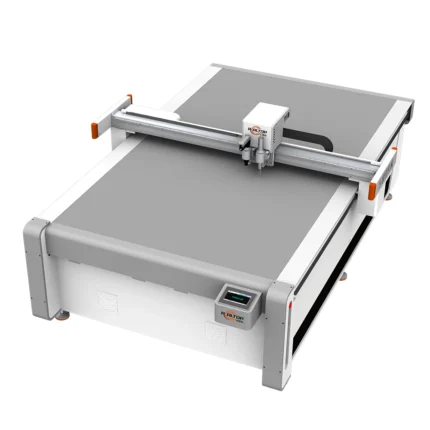
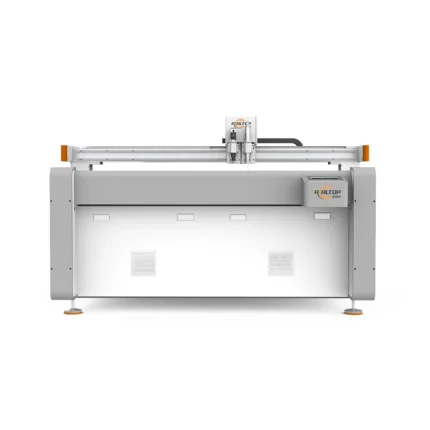
Automatic CNC Cutter Plotter 2026 Flat Bed Cardboard Cutter
Product Introduction
Automatic CNC Cutter Plotter 2026 is a flat bed cardboard cutting machine designed for precise and efficient cutting tasks. Ideal for various cardboard processing needs, it combines advanced CNC technology to deliver accurate results, suitable for manufacturing and packaging applications.Product Parameters
| Type | Automatic CNC Cutter Plotter |
| Model | 2026 |
| Design | Flat Bed |
| Application | Cardboard Cutting |

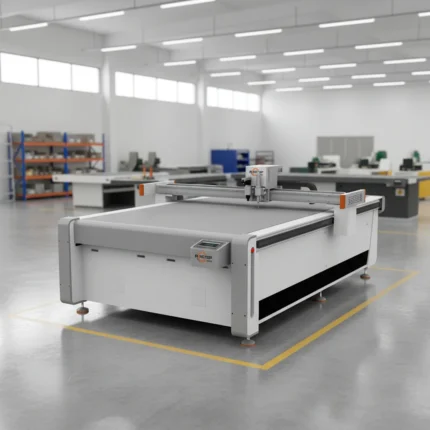
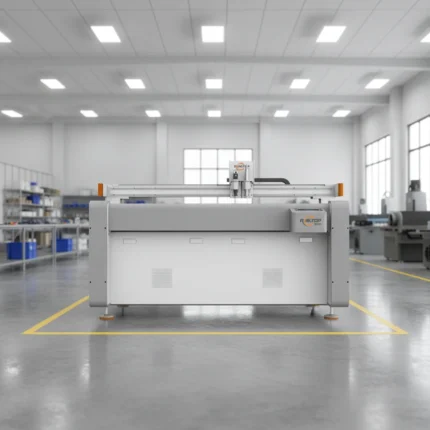

Realtop 2026 Digital Box Cutter High-Speed Corrugated Board
Product Introduction
Realtop Digital Box Cutting Machine 2026 is a high-speed solution for corrugated board cutting, designed for efficient and precise box production in manufacturing settings.Key Specifications
| Model | 2026 |
| Type | Digital Box Cutting Machine |
| Application | Corrugated Board |
| Feature | High-Speed Cutting |

REALTOP 2026 Digital Industrial Cardboard Box Cutter
Product Introduction
REALTOP Digital Industrial Cardboard Box Cutter Machine 2026 is a professional industrial-grade cutting equipment designed for efficient cardboard box processing, ideal for manufacturing and packaging applications.
Product Parameters
| Model | 2026 |
| Type | Digital Industrial Cardboard Box Cutter |
| Application | Cardboard Box Processing |
| Feature | Industrial-grade, Efficient Cutting |

Realtop CNC Carton Box Cutter 2026 CCD Camera Honeycomb Cutting
Product Introduction
Realtop CNC Carton Box Cutter 2026 is a professional cutting solution featuring CCD Camera and Honeycomb Cutting technology, ideal for precise carton box processing with efficient performance.Product Parameters
| Model | Realtop CNC Carton Box Cutter 2026 |
| Vision System | CCD Camera |
| Cutting Technology | Honeycomb Cutting |
商品评价
There are no reviews yet.