

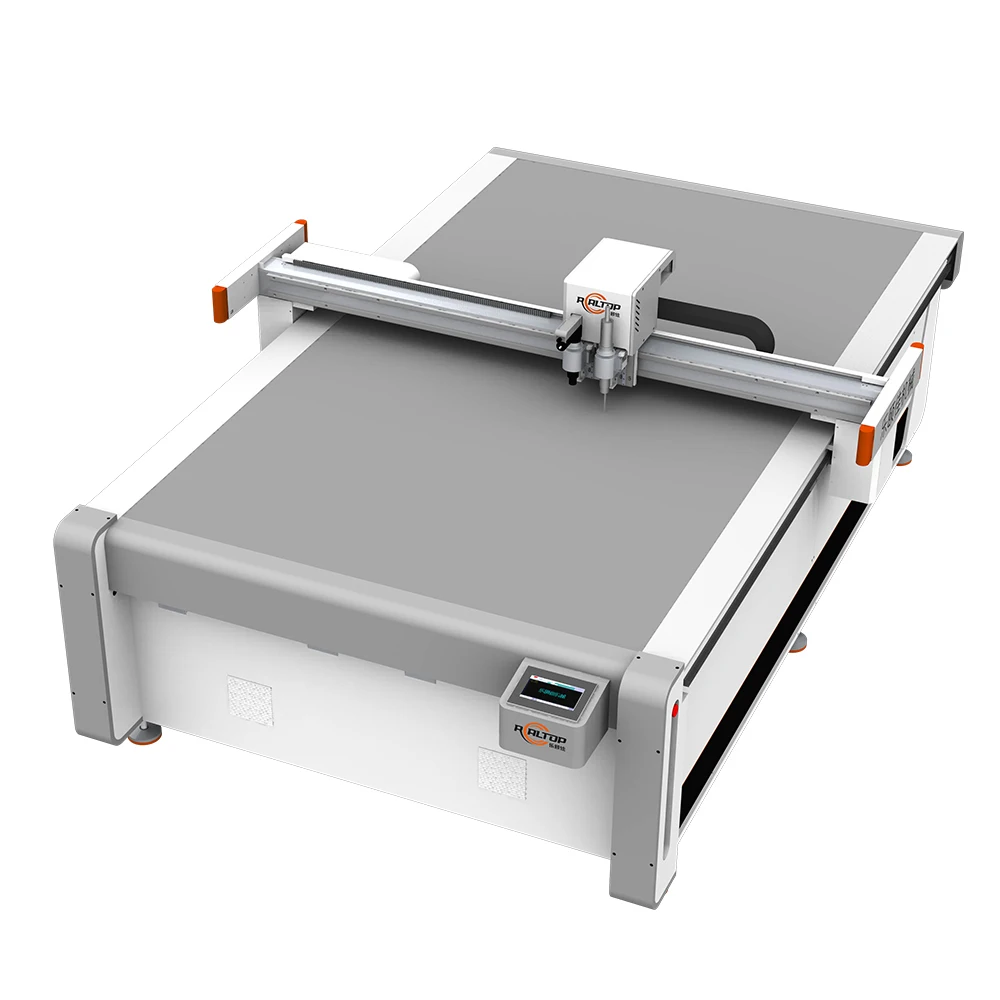
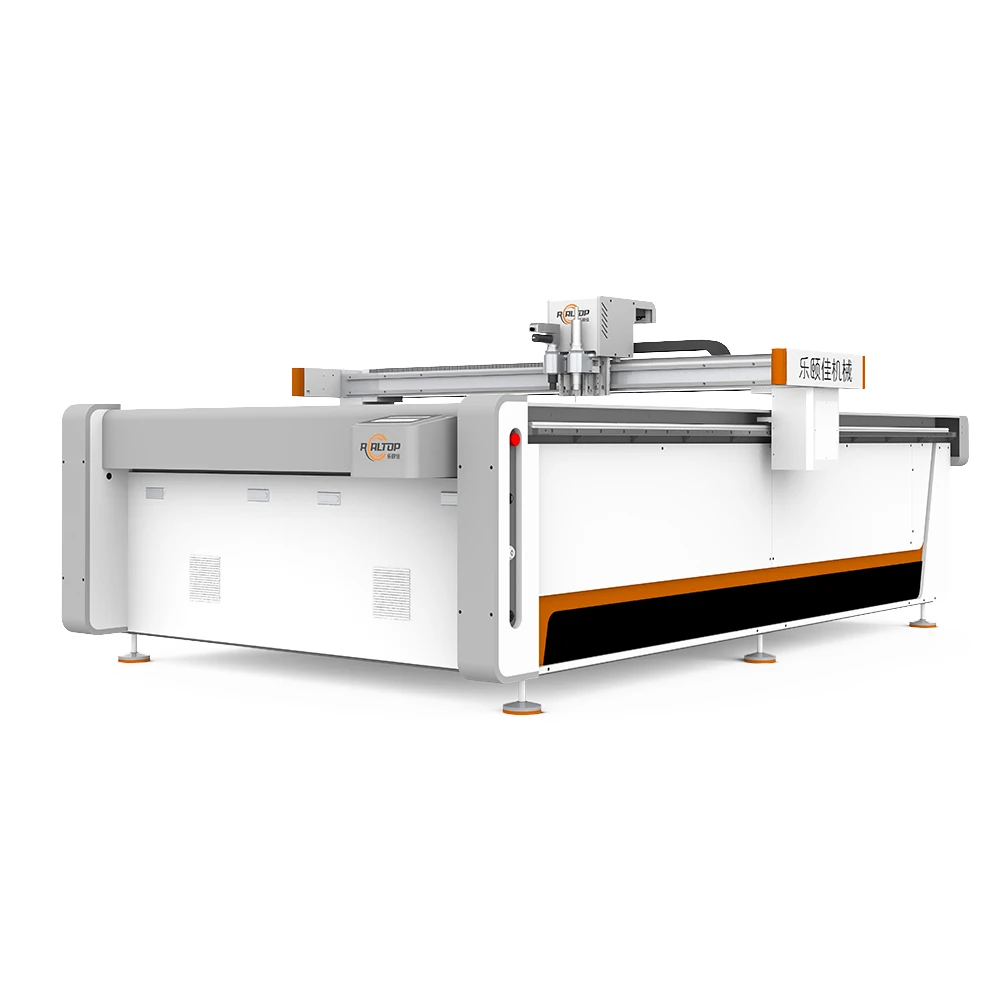
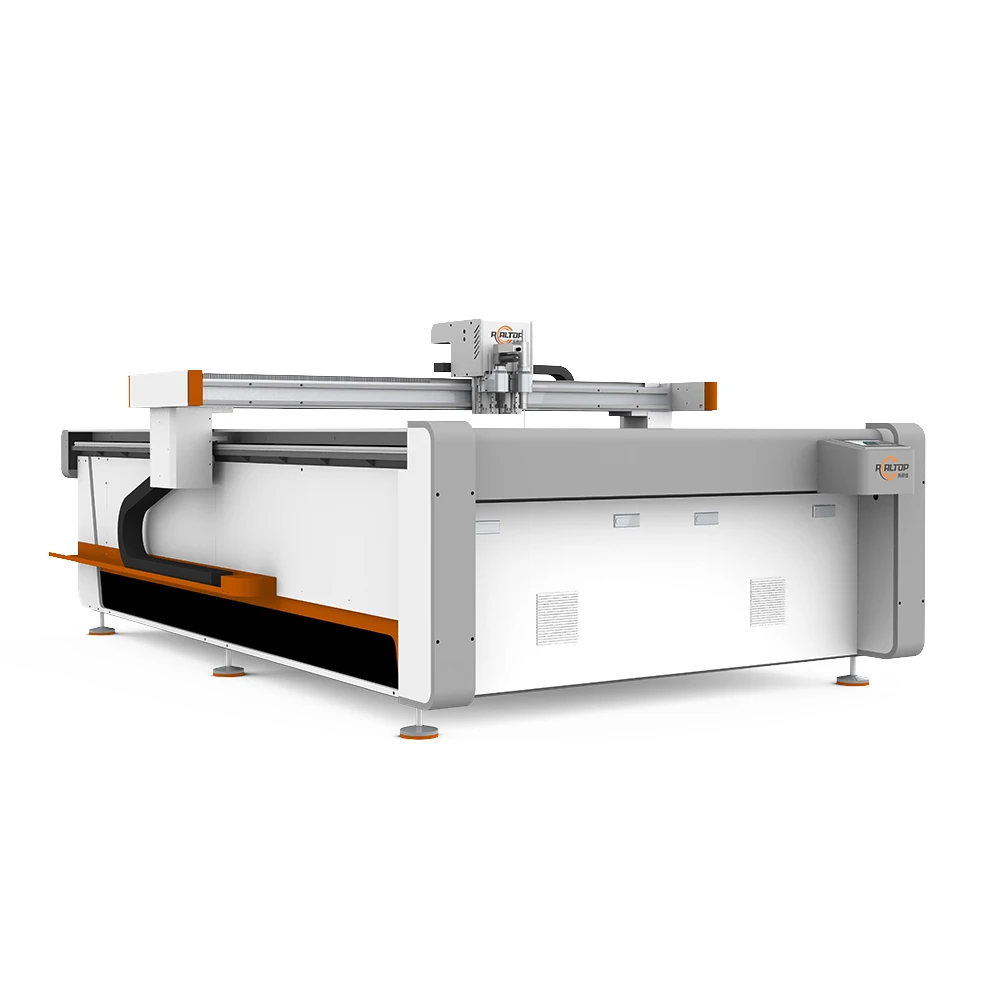
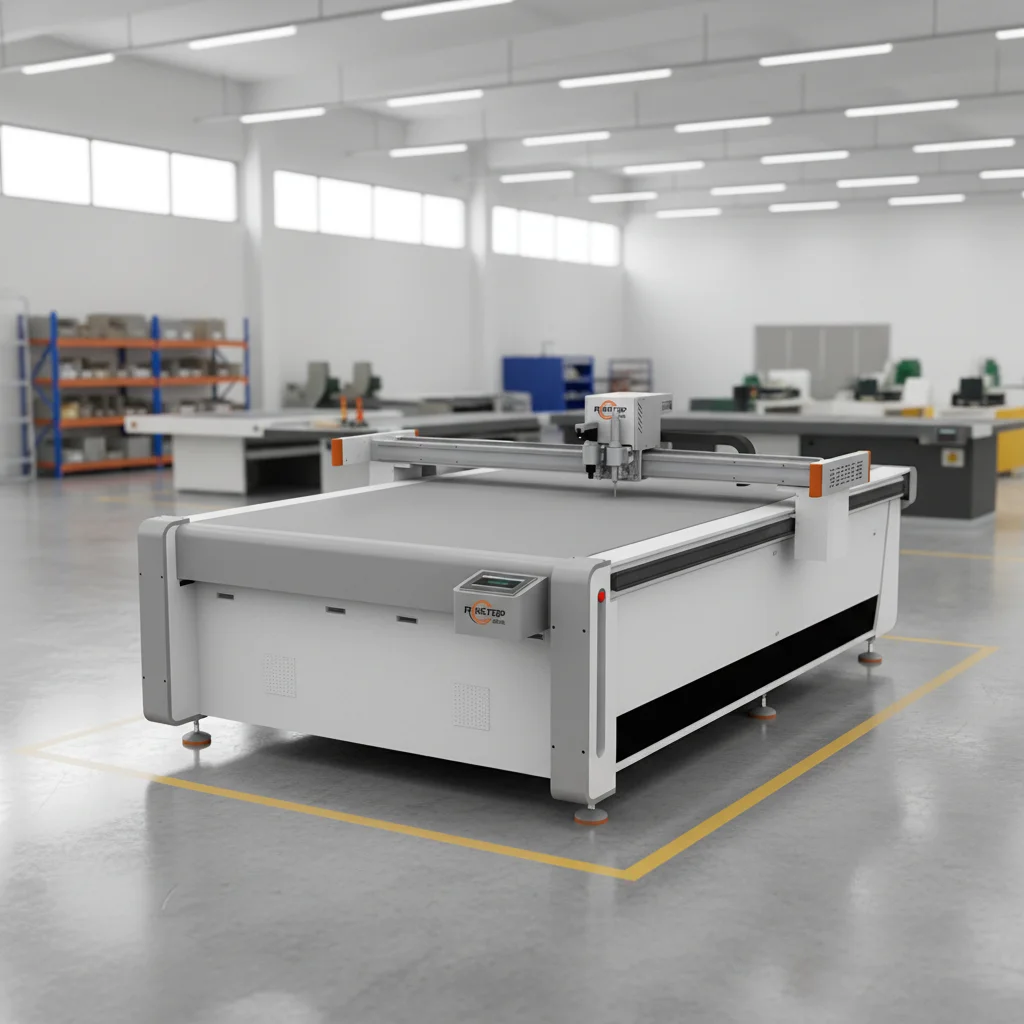
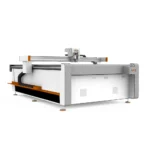
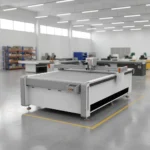


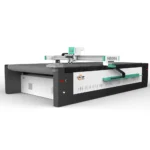

CNC Flatbed Oscillating Knife Cutting Machine 1625 for Packaging – OEM Available
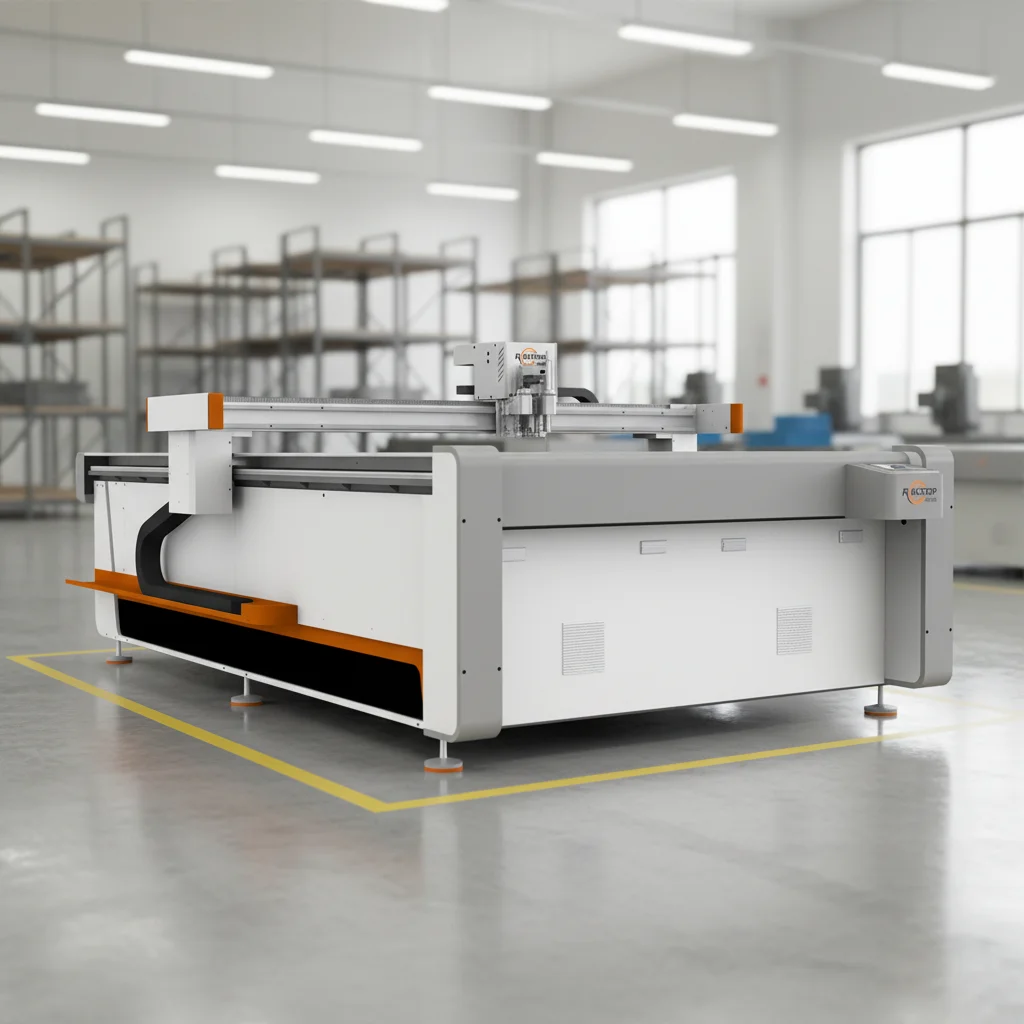
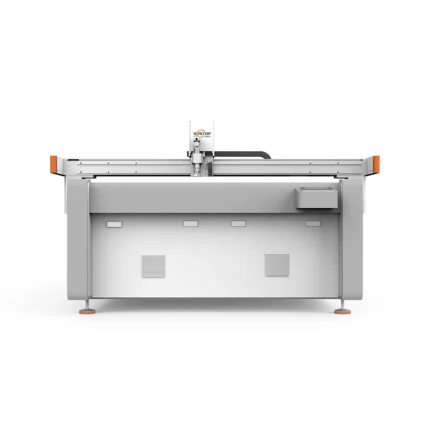
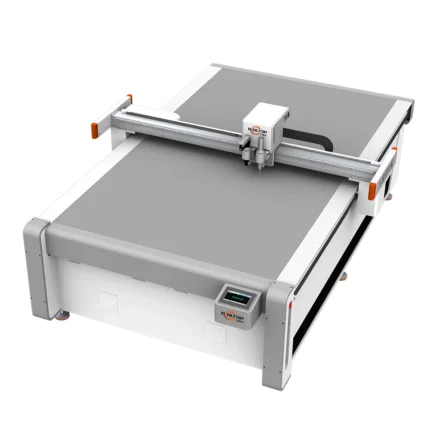
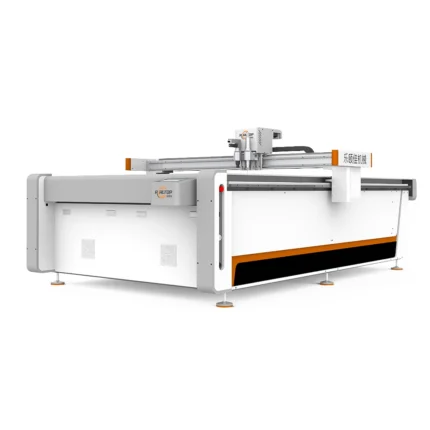
CNC Flatbed Oscillating Knife Cutting Machine 1625, 1600×2500 mm, ±0.1 mm Accuracy — designed for packaging sample making and short-run carton production.
- Multi-tool head setup covers oscillating knife, creasing wheel, and CCD camera for corrugated cardboard, greyboard, and foam.
- Aluminum bellows vacuum table with zoning holds small packaging blanks flat at cutting speeds up to 1500 mm/s.
- Supports PLT, DXF, AI, and PDF file import with PLC control and multi-language interface.
Sample cutting on your own packaging stock validates material handling and edge quality before commitment.
Precision-Driven Packaging Cutting — Every tool head and vacuum zone on the 1625 flatbed is matched to the buyer’s corrugated flute, foam density, and board coating before the machine leaves the factory.
Technical Specifications
| Parameter | Value |
|---|---|
| Model | 1625 |
| Product Type | CNC Flatbed Oscillating Knife Cutting Machine |
| Working Area | 1600×2500 mm |
| Cutting Speed | 0–1500 mm/s |
| Cutting Thickness | ≤40 mm (basis to be confirmed per material) |
| Cutting Accuracy | ±0.1 mm |
| Tool Head Options | Oscillating knife, Driven rotary knife, Creasing wheel, Kiss cutting tool, Pneumatic knife, Milling tool, V groove knife, CCD camera |
| Vacuum Table | Aluminum bellows vacuum table |
| Vacuum Pump Power | 9 kW |
| Control System | PLC control panel |
| Servo Motor Options | Panasonic, Delta, Dorna |
| Voltage Options | 110V, 220V, 380V |
| Supported File Formats | PLT, DXF, AI, PDF |
| Safety Devices | Infrared sensor, Emergency stop |
| Machine Dimensions (L×W×H) | 3300×2100×1350 mm |
| Language Options | English, Russian, Italian, Chinese (custom languages available) |
Application Suitability
| Application | Material or Output |
|---|---|
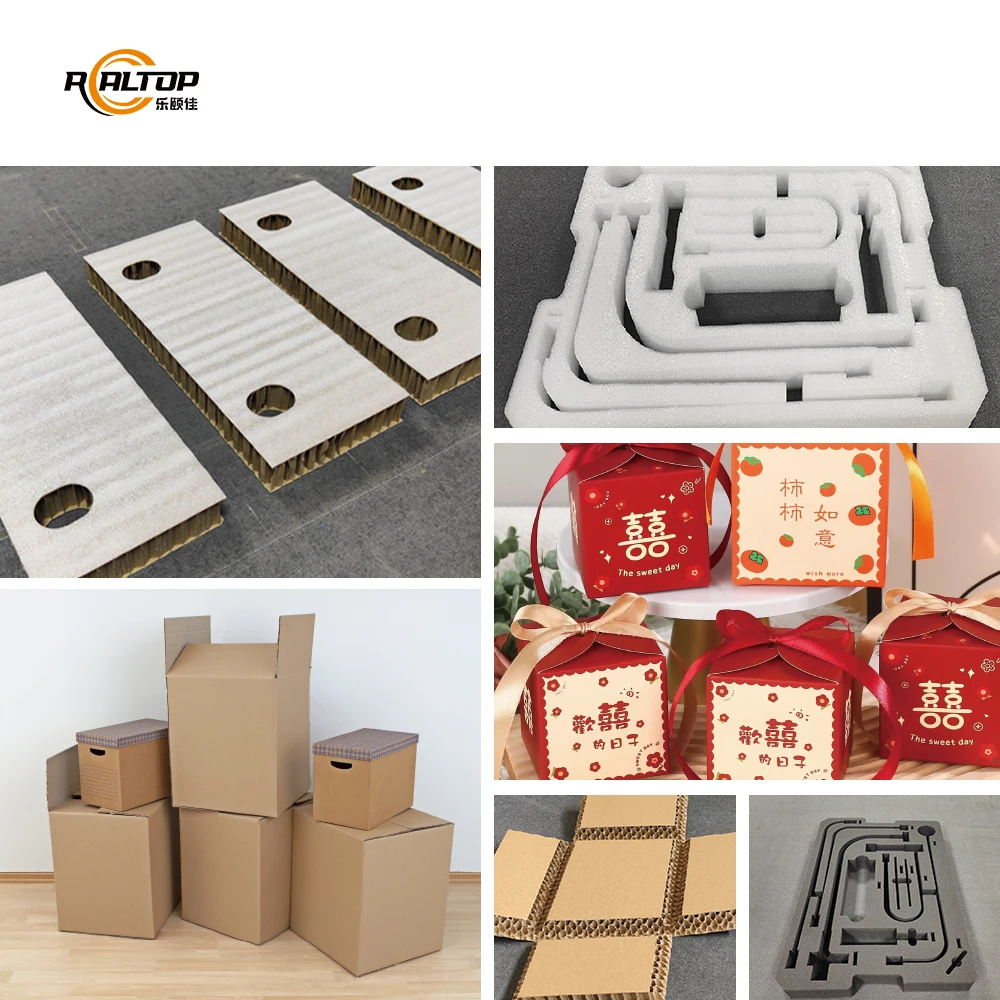
| Packaging sample making and short-run carton production | E-flute, B-flute, BC-flute corrugated cardboard, greyboard, cardstock |
| Protective foam insert fabrication | EVA, EPE, PU foam sheets for product cushioning |
| Folding carton and box structure prototyping | Art paper, coated board, adhesive-backed laminates |
| Non-metallic packaging component cutting | Velvet, fleece fabric, non-woven fabric, thin PVC and PET sheets |
| Leather and synthetic packaging accessories | Natural leather, synthetic leather, composite sheets |
Why "Cutting Thickness ≤40 mm" Does Not Tell the Whole Story
Real cutting capacity depends on material density, flute structure, and tool head selection — not a single number on a spec sheet.
A CNC oscillating knife cutting machine for packaging rated at 40 mm on low-density EPE foam may struggle at 15 mm on high-density EVA or double-wall corrugated board. I once saw a production line where the quoted thickness was validated on soft foam, but the actual packaging material was a dense composite cushioning insert. Blade wear doubled within the first week, and cutting edges turned ragged on the inner corrugated layers. The cutting speed had to drop significantly to maintain edge quality, disrupting the planned daily output. [NEED_CITE: oscillating knife cutting behavior on varying density packaging foams]
Laser Process versus Knife Cutting for Packaging Materials
The 1625 platform addresses packaging materials that laser process cannot handle cleanly. Corrugated cardboard with air gaps between flute layers produces uneven laser edges, and foam inserts often melt rather than cut under a focused beam. An oscillating knife system avoids thermal damage entirely, leaving clean mechanical edges on fluted board and foam alike. This matters when packaging samples go straight to client presentation without secondary edge finishing.
CCD Contour Recognition on Printed Packaging Artwork
For printed carton prototypes and short-run packaging where artwork registration is critical, the CCD camera option tracks printed marks on the sheet surface. The camera reads registration marks and adjusts the cutting path in real time, compensating for print-to-sheet misalignment that varies from sheet to sheet. This capability turns a standard dieline file into a finished, contour-accurate packaging sample without manual repositioning between the print and cut stages. [NEED_CITE: CCD camera contour tracking accuracy on printed corrugated substrates]
What the Specification Table Actually Means for Packaging Work
The 1600×2500 mm working area accommodates full-size corrugated sheets commonly used in packaging sample making, allowing multiple box blanks to be nested in a single pass. The aluminum bellows vacuum table delivers hold-down force across this full area, which is essential when cutting lightweight art paper or thin Coroplast that lifts easily under knife drag. The 9 kW vacuum pump generates sufficient negative pressure to keep these low-mass sheets flat without mechanical clamping that would interfere with the cutting path.
The ±0.1 mm cutting accuracy ensures that interlocking carton tabs and slots engage correctly on assembled prototypes — a tolerance mismatch here means the box does not fold square. Tool head variety is the other critical factor: the creasing wheel scores fold lines on corrugated board without severing the liner, while the V groove knife produces clean chamfered edges on foam inserts. Each tool head matches a specific packaging operation rather than forcing one blade type across all materials.
The Hidden Cost of Wrong Tool Head and Vacuum Configuration
When a buyer selects an oscillating knife for a material that actually requires a driven rotary knife, the result is crushed flute structure and delaminated board edges. This damage is not visible until the box is folded, by which time an entire sample batch is wasted. Similarly, a vacuum table without adequate zoning leaves small packaging blanks — such as cosmetic box inserts or partition dividers — lifting off the table mid-cut. The blade catches the lifted edge, producing a torn cut and potentially damaging the tool head. These failures trace back to configuration decisions made before the order, not operator error on the shop floor. [NEED_CITE: vacuum zoning requirements for small-part flatbed cutting]
Why Buyers Source This Machine from REALTOP
The manufacturer designs and builds both knife and laser cutting systems in-house, which means the recommendation for a packaging application is based on material suitability rather than pushing one technology. Tool head and vacuum table configuration is specified per material type and production volume before the order is confirmed. Sample cutting runs on the buyer’s actual packaging stock — flute type, board thickness, coating — with documented edge quality and creasing results before commitment.
Voltage, plug type, and control panel language are confirmed per destination market, so a 380V three-phase machine does not arrive at a 220V workshop. Software file format compatibility is verified during the pre-order stage, ensuring the buyer’s existing PLT, DXF, or AI packaging dieline files import correctly. The factory test record documents performance on the specific material submitted by the buyer, not a generic demonstration board.
Documentation & Verification
- Machine specification sheet listing all confirmed tool heads and vacuum zone layout
- Electrical schematic with voltage and plug type matching the destination market
- Sample cutting report on buyer-supplied packaging stock with edge quality photos
- Tool head and table configuration list mapping each tool to its intended material
- Software license and file format compatibility note for PLT, DXF, AI, PDF import
- Operation and maintenance manual in confirmed control language
Installation, Commissioning & Support
- Floor space requirement based on 3300×2100 mm machine footprint plus operator access clearance
- Dedicated electrical circuit matching confirmed voltage option (110V / 220V / 380V)
- Assembly and leveling of aluminum bellows vacuum table sections on arrival
- Initial tool head calibration and vacuum zone mapping for buyer’s packaging material
- Operator training on PLC control panel functions and file import workflow
- Spare oscillating knife blades and creasing wheels supplied with initial shipment
Before You Send an Inquiry
Provide your primary packaging material types, including flute designation for corrugated board and density for foam inserts, along with typical sheet sizes and daily sample volume. Confirm your local voltage and frequency standard, preferred control panel language, and whether your existing CAD files use PLT, DXF, AI, or PDF format. If you work with printed packaging artwork, let us know so we can validate CCD mark tracking on your specific print stock.
Frequently Asked Questions
Q: How is cutting thickness verified for my packaging material before I commit?
A: We run sample cuts on your actual packaging stock — corrugated flute type, board thickness, coating, and foam density all affect real cutting performance. The results are documented in a sample cutting report showing edge quality, creasing depth, and achievable cutting speed on your specific material before any order is placed.
Q: What voltage and plug options are available for my market?
A: The 1625 supports 110V, 220V, and 380V configurations. Your destination voltage, frequency, and plug type are confirmed during the pre-order stage, and the electrical schematic is provided for local electrician review before the machine ships.
Q: Can the CCD camera track printed registration marks on my packaging artwork?
A: The CCD camera option is validated on your printed packaging material before commitment. We test mark recognition and cutting path alignment on your actual printed sheets to confirm reliable contour tracking at production speed.
Q: Which file formats does the machine accept for packaging dieline import?
A: The control software imports PLT, DXF, AI, and PDF files directly. We verify compatibility with your existing CAD or packaging structure design workflow during the pre-order stage to ensure your current file library transfers without rework.
Q: How does vacuum table zoning work for small packaging blanks?
A: The aluminum bellows vacuum table supports zone control so that small items like box inserts or partition dividers receive adequate hold-down force without air bleed from empty table areas. Zone configuration is matched to your typical blank sizes during setup.


Related products
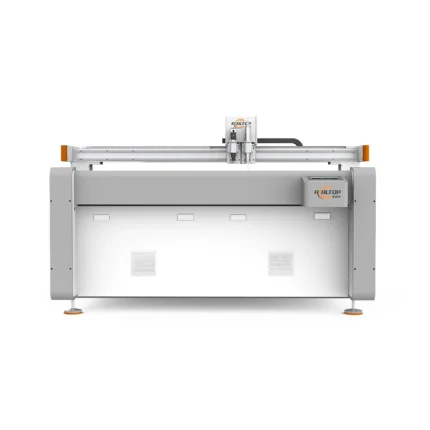
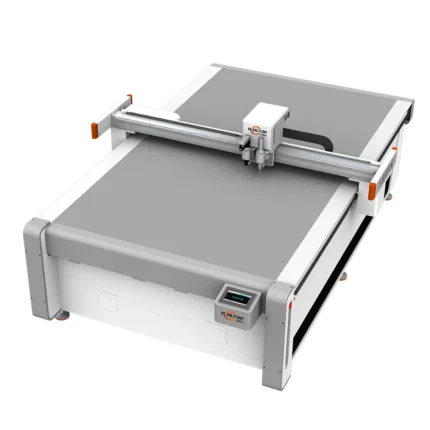
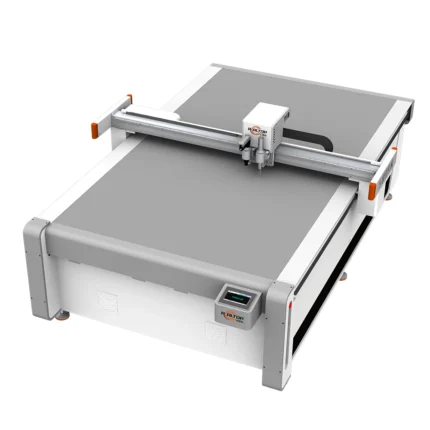
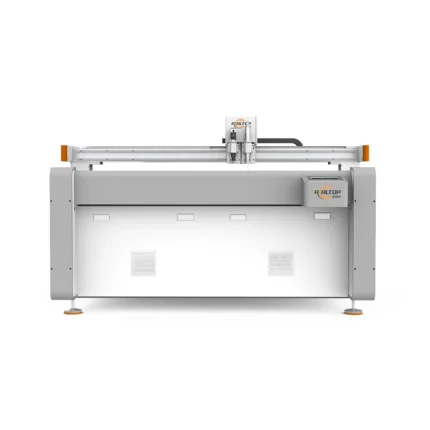
Automatic CNC Cutter Plotter 2026 Flat Bed Cardboard Cutter
Product Introduction
Automatic CNC Cutter Plotter 2026 is a flat bed cardboard cutting machine designed for precise and efficient cutting tasks. Ideal for various cardboard processing needs, it combines advanced CNC technology to deliver accurate results, suitable for manufacturing and packaging applications.Product Parameters
| Type | Automatic CNC Cutter Plotter |
| Model | 2026 |
| Design | Flat Bed |
| Application | Cardboard Cutting |
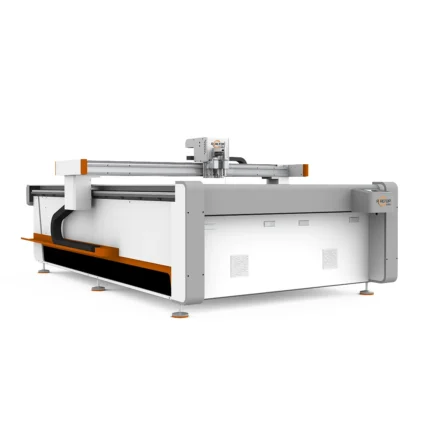
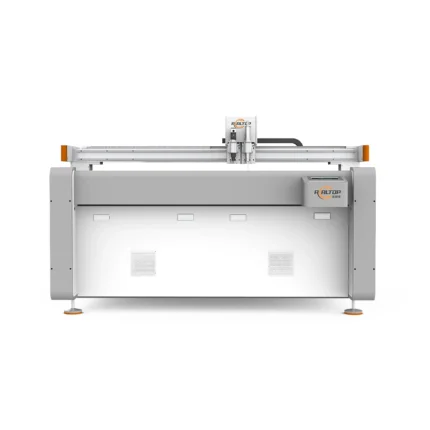


Digital CNC Cardboard Cutting Machine 2026
Product Introduction
High-precision Digital CNC Cardboard Cutting Machine 2026, ideal for efficient cardboard processing with advanced CNC technology, ensuring precise and fast cutting performance for various packaging and craft applications.
Key Specifications
| Model | 2026 |
| Type | Digital CNC Cutting Machine |
| Material | Cardboard |
| Feature | High Precision, Efficient Cutting |
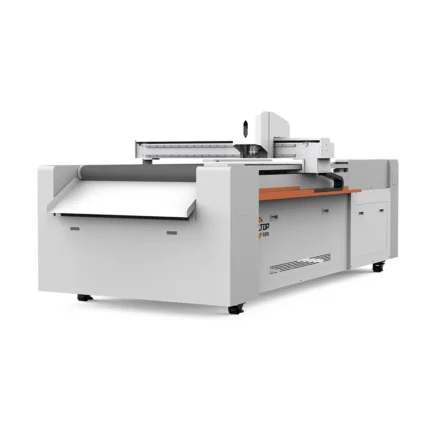
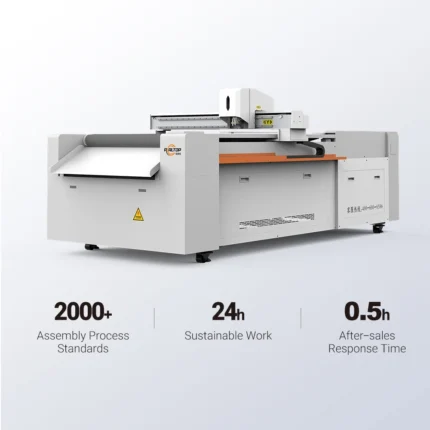
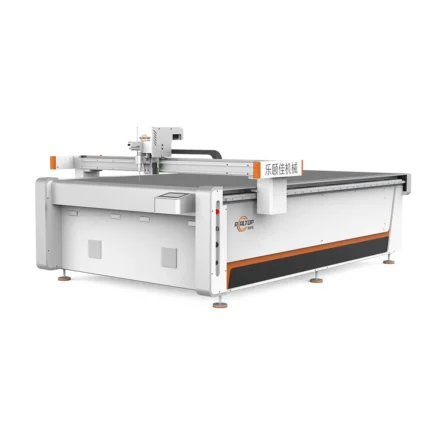
Realtop 2026 Digital Box Cutter High-Speed Corrugated Board
Product Introduction
Realtop Digital Box Cutting Machine 2026 is a high-speed solution for corrugated board cutting, designed for efficient and precise box production in manufacturing settings.Key Specifications
| Model | 2026 |
| Type | Digital Box Cutting Machine |
| Application | Corrugated Board |
| Feature | High-Speed Cutting |

REALTOP 2026 Digital Industrial Cardboard Box Cutter
Product Introduction
REALTOP Digital Industrial Cardboard Box Cutter Machine 2026 is a professional industrial-grade cutting equipment designed for efficient cardboard box processing, ideal for manufacturing and packaging applications.
Product Parameters
| Model | 2026 |
| Type | Digital Industrial Cardboard Box Cutter |
| Application | Cardboard Box Processing |
| Feature | Industrial-grade, Efficient Cutting |

商品评价
There are no reviews yet.