

CNC Gasket Cutter for Sealing Material – Factory Supply1
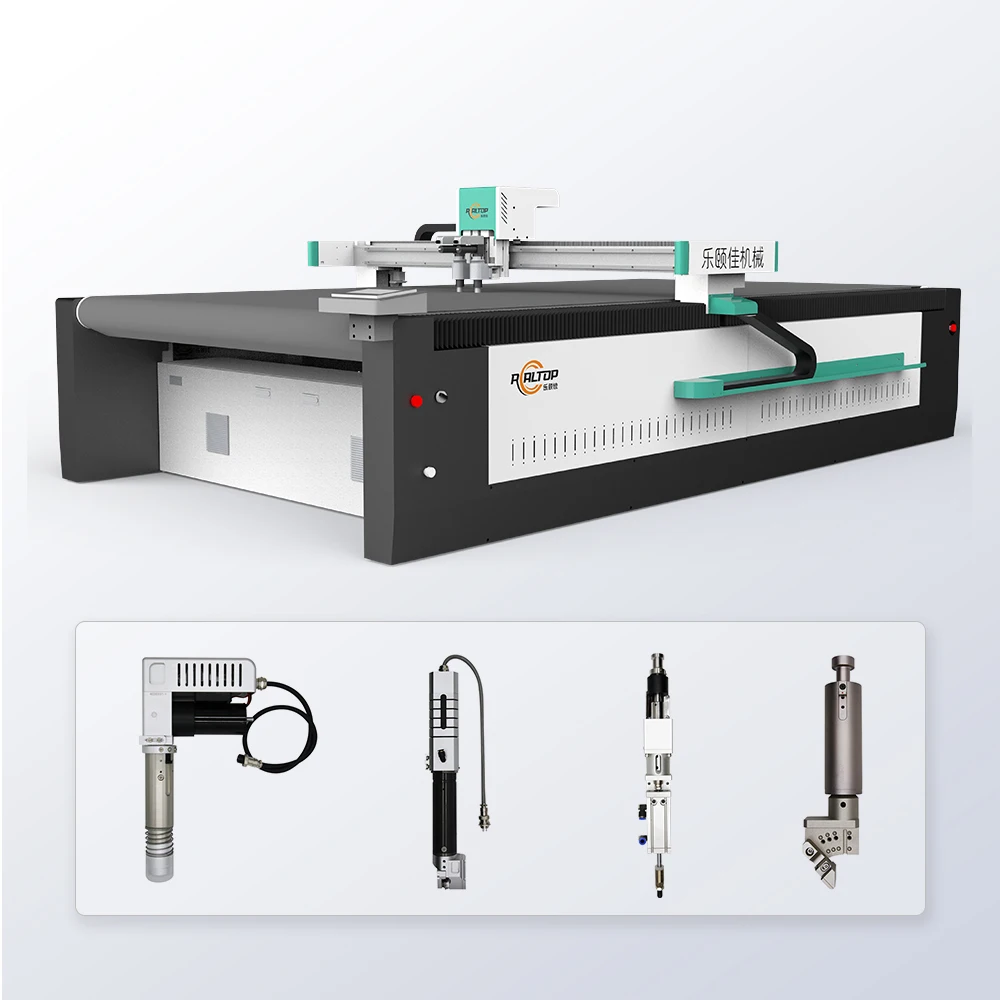
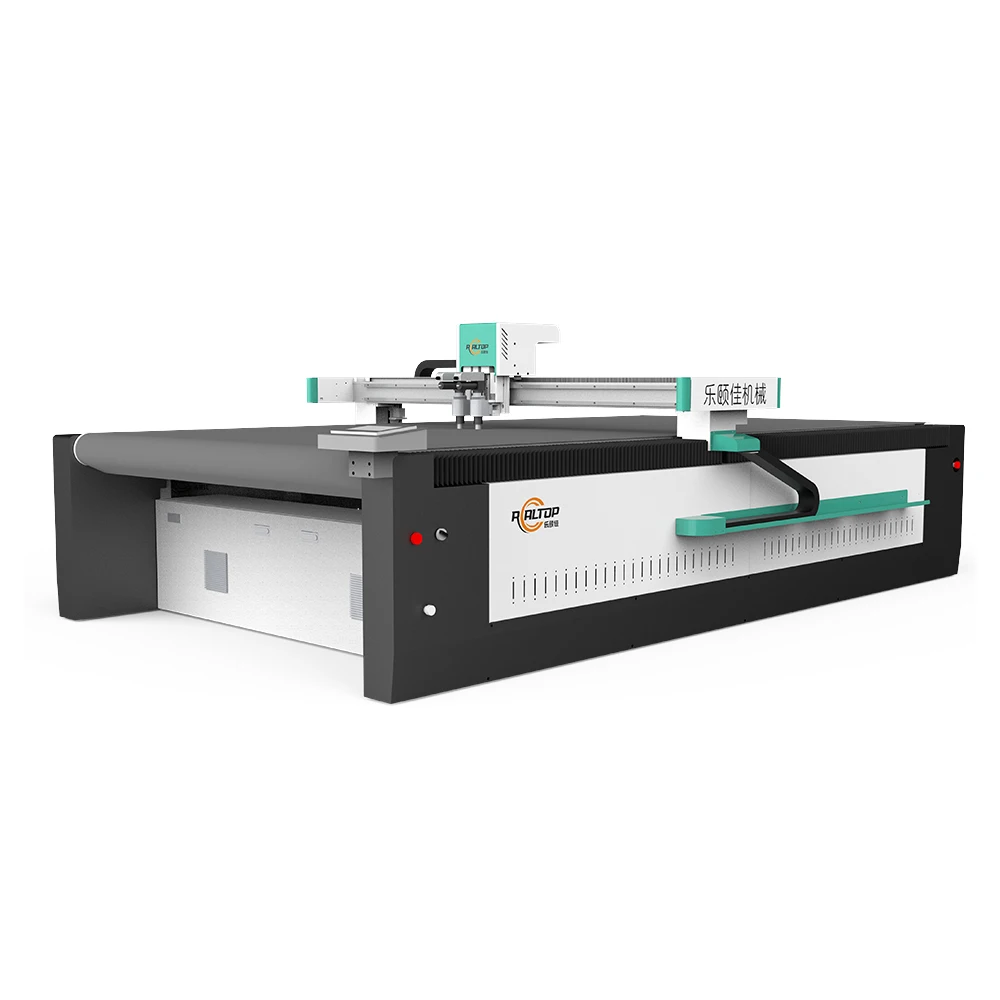
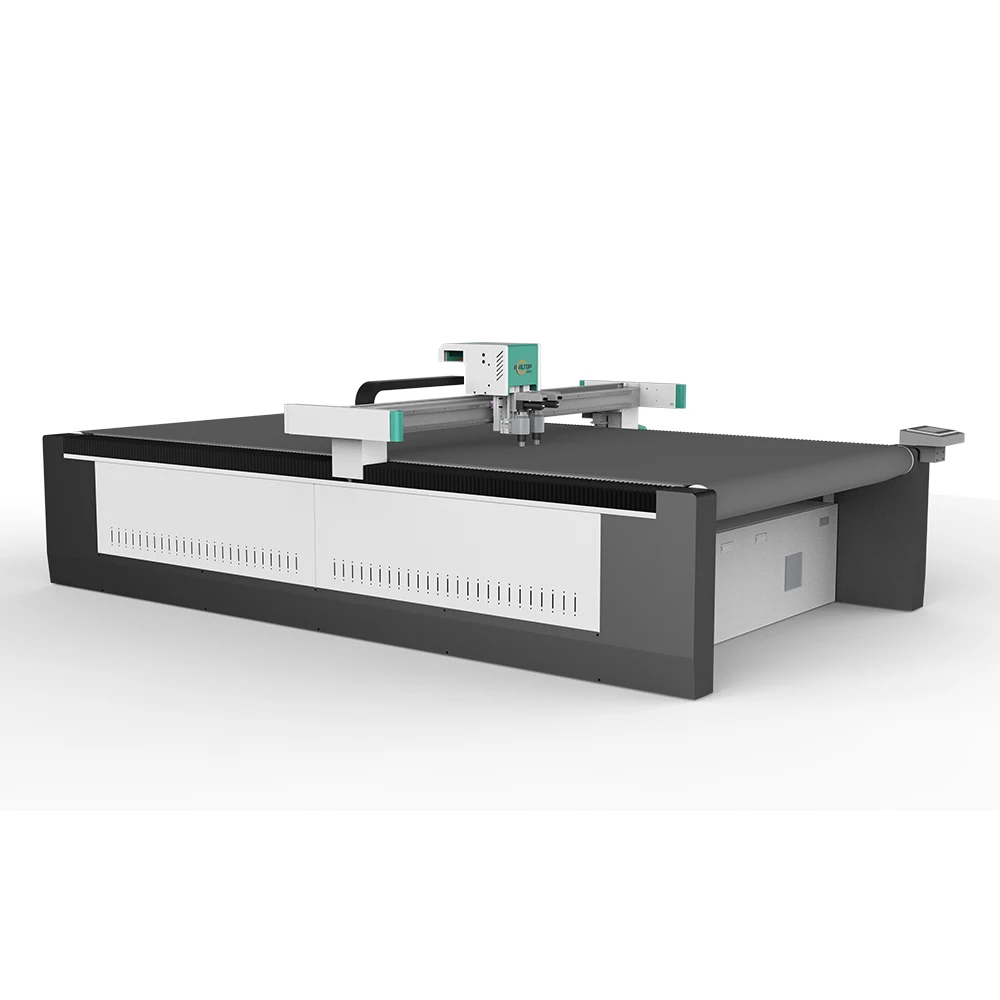
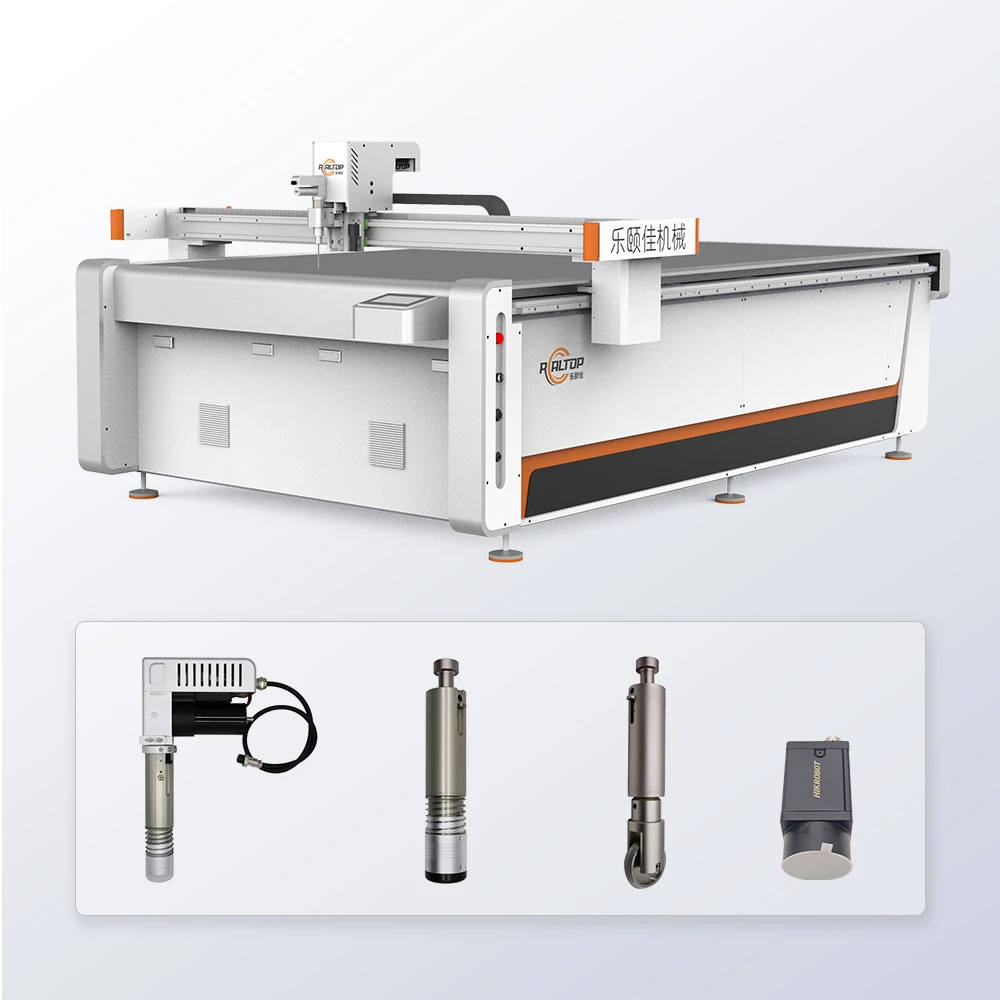
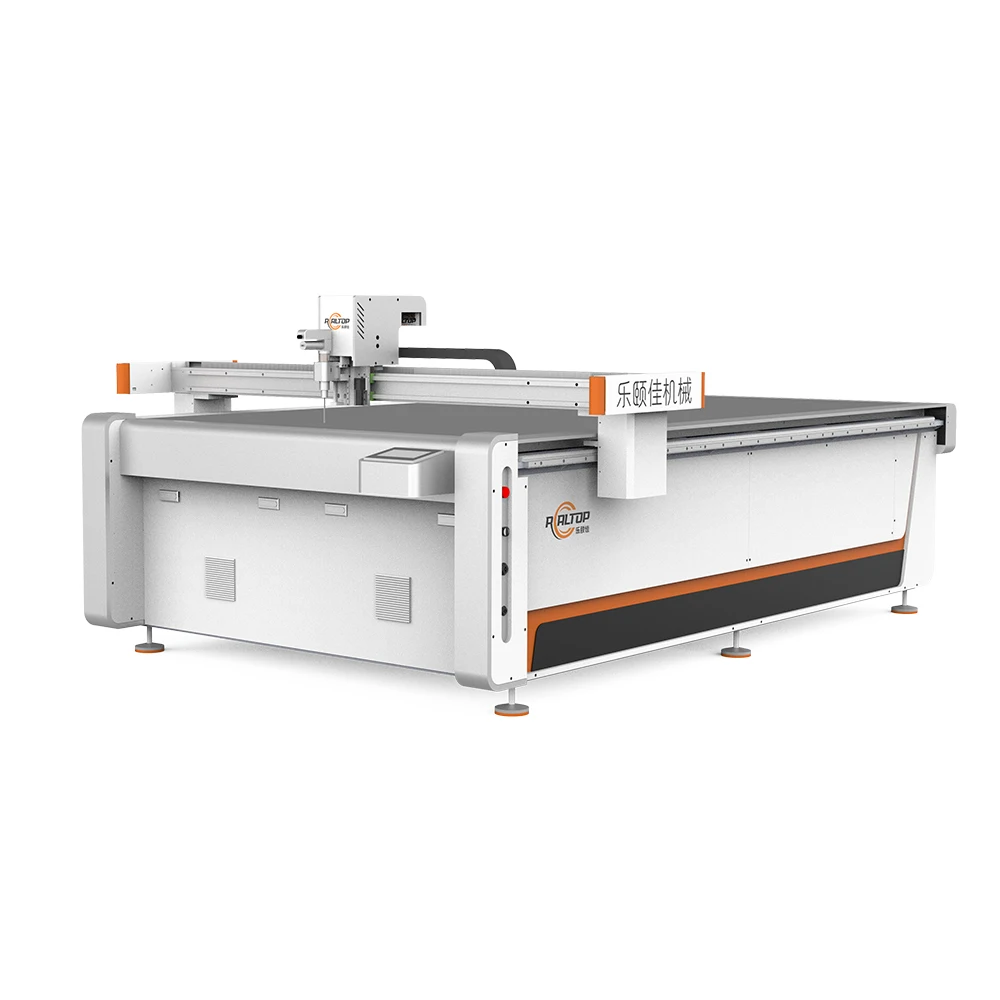
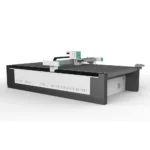
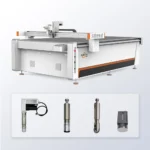
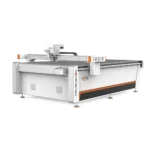
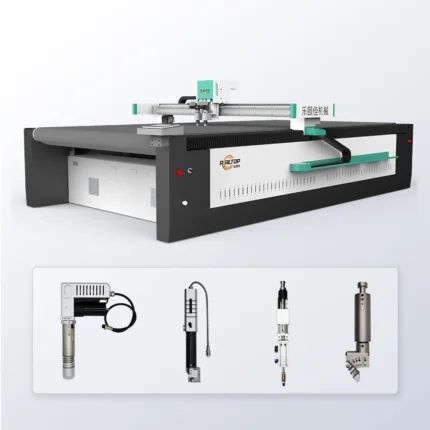
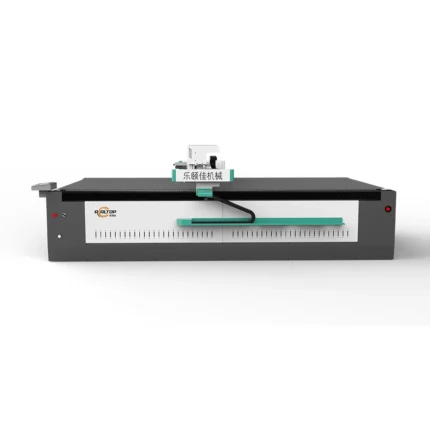
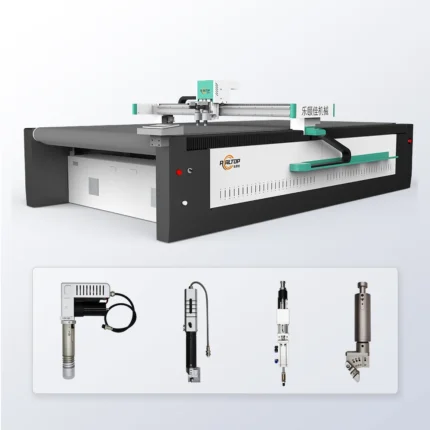
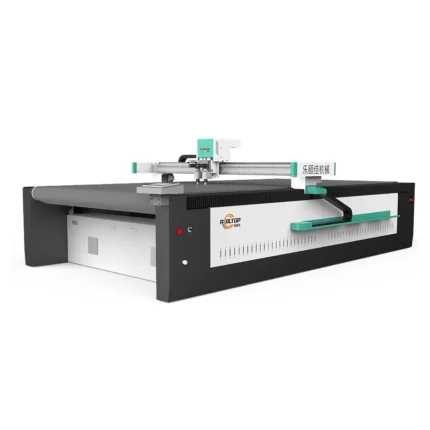
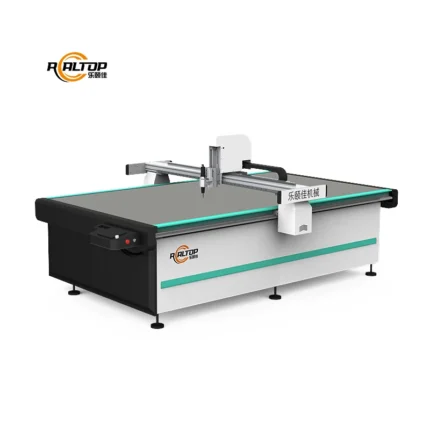
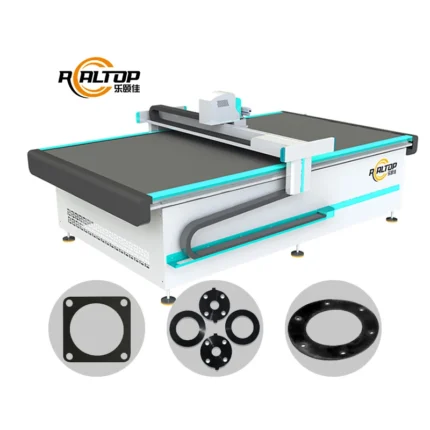
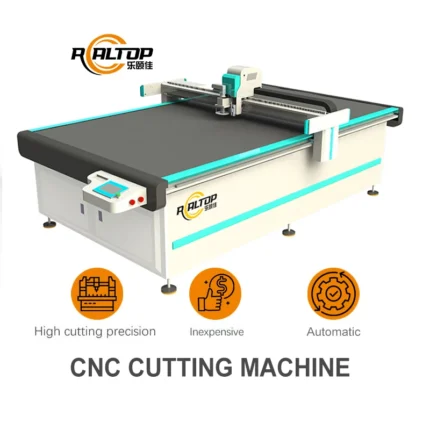
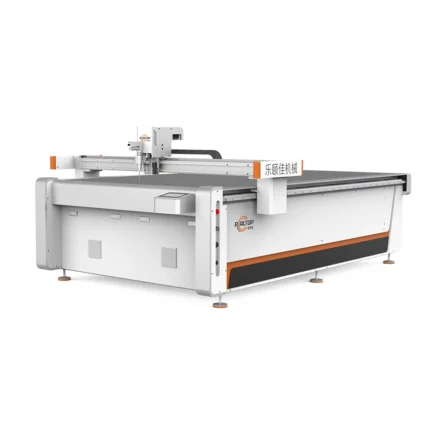
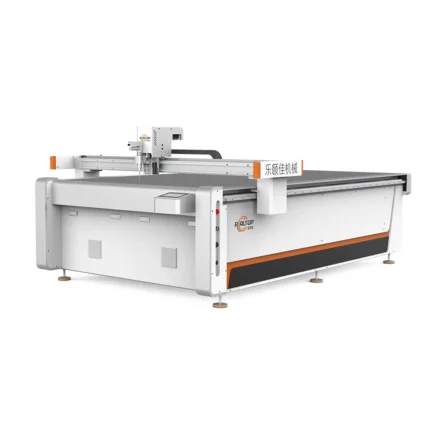
RT-D2516/RT-S2516 CNC Gasket Cutting Machine, 1600×2500mm, ≤100mm Thickness, 9kW — configured per sealing material with oscillating knife, pneumatic knife and CCD positioning options for rubber, PTFE, fiber composite and sponge gasket stock.
Oscillating knife outperforms CO₂ laser on thick or fiber-reinforced gasket materials where burnt edges compromise sealing integrity, and the magnesium-aluminum vacuum table with zoned suction holds small profiles flat through high-speed passes at ≤0.1mm repeatability.
Tool head and table configuration specified per your material and daily volume, sample cutting on your own gasket stock before commitment, and voltage, plug and control language confirmed before shipment.
Process-matched cutting configuration — in-house knife and laser development lets gasket producers select oscillating knife for thick composites or CO₂ laser for thin synthetics based on material response rather than machine availability.
Technical Specifications
| Parameter | Value |
|---|---|
| Product Type | CNC Oscillating Knife Cutting Machine |
| Working Area | 1600×2500mm |
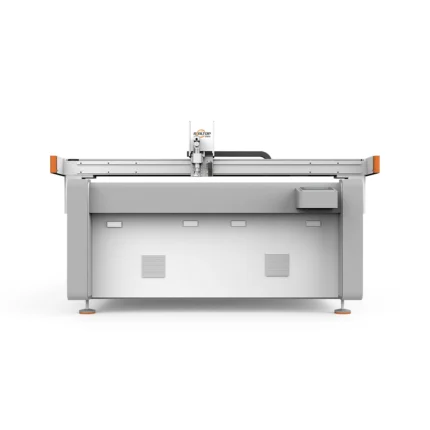
| Machine Dimensions | 3450×2300×1250mm |
| Rated Power | 9kW |
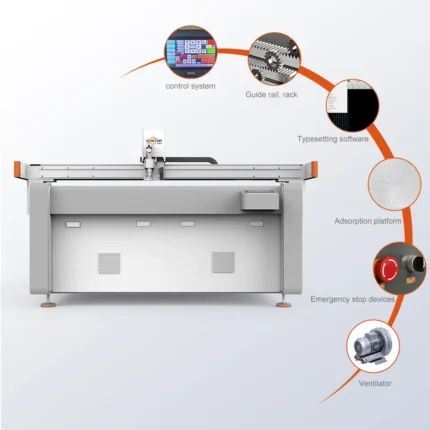
| Working Table | Flat vacuum adsorption table (magnesium-aluminum alloy, PVDF fluorocarbon powder spraying, anodic oxidation) |
| Tool Head Options | Oscillating knife, pneumatic knife, high-power vibrating knife, circular knife, V cutting knife, drag knife, creasing wheel, dotted line knife, punching, brush |
| Visual Positioning | Small CCD camera mark point positioning, panoramic camera recognition, projection positioning |
| Translational Velocity | 800–1200mm/s |
| Cutting Speed | 200–800mm/s (basis not stated in source — verify material / thickness) |
| Cutting Thickness | ≤100mm (varies with material density and tool head selection) |
| Repeated Accuracy | ≤0.1mm |
| Transmission System | Digital servo motor, linear guide, synchronous belt, imported ball screw |
| Servo Motor Brand | Delta or Panasonic (optional), IP67 waterproof |
| Vacuum Pump | 7.5kW, integrated aviation aluminum shell with built-in silencer sponge |
| Conveyor Belt | Germany imported |
| Guide Rail | Taiwan Hiwin |
| Instruction System | HP-GL compatible format |
| Voltage | 380V±10% (customizable) |
| Safety Device | Infrared induction blocking, beam anti-collision, emergency stop with in-situ resume |
| Frame Construction | Thick-walled seamless steel, high-temperature tempering, CNC machining center finished |
| Software Language | English, Russian, Italian, Chinese (special languages customizable) |
| Warranty | 1 year (parts free; buyer covers shipping and engineer travel/accommodation) |
Application Suitability
| Application | Material or Output |
|---|---|
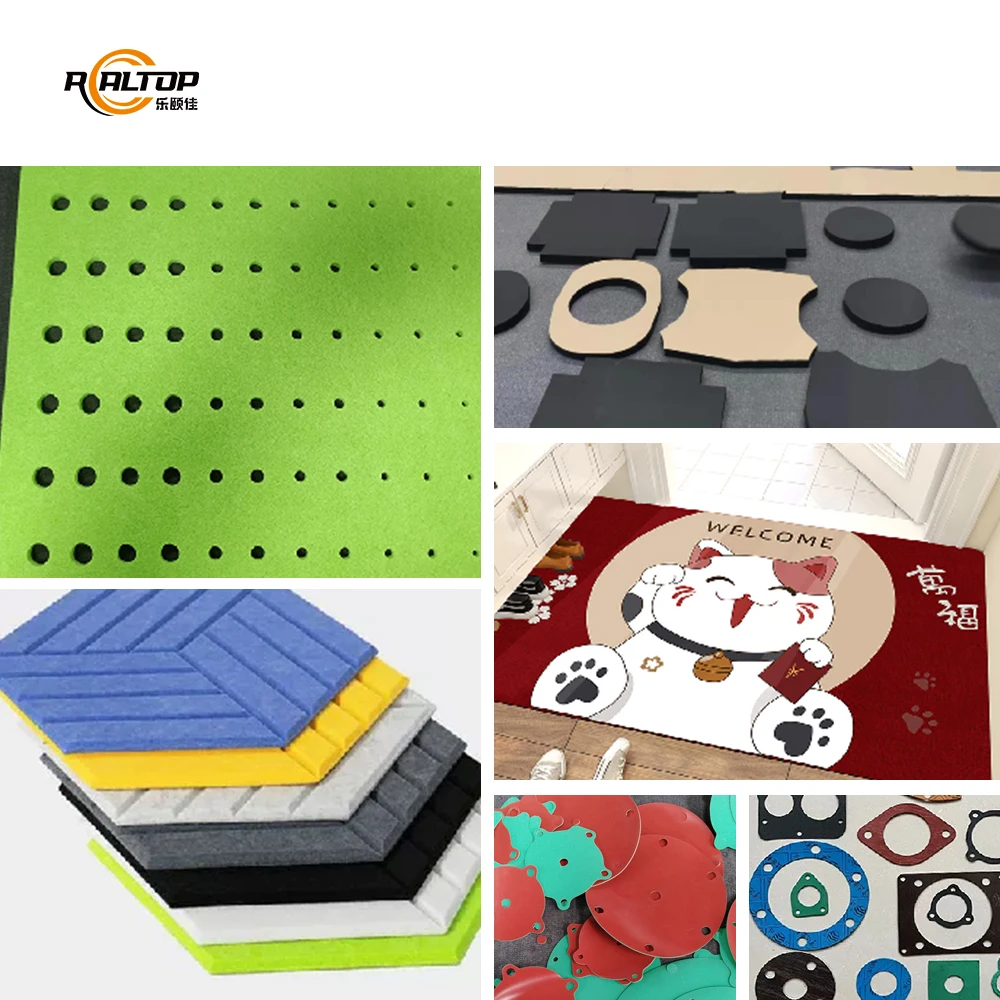
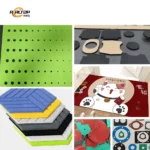
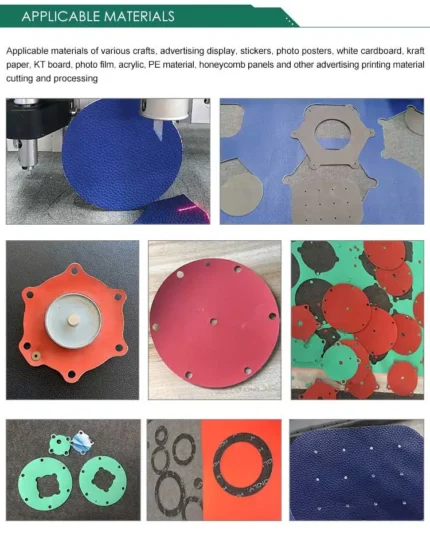
| Industrial gasket and sealing pad production | Rubber, PTFE, ETFE, fiber-reinforced composite sheets, sponge, silicone |
| Automotive interior and sealing fabrication | Multi-layer composite gasket stock, PU, EVA, XPE foam, non-woven fabric |
| Short-run and prototype sealing components | PVC, PP, PE, soft glass, fiberglass, corrugated cardboard templates |
| High-volume flat gasket blanking | Cloth, luggage material, carpet, PU leather, composite panels |
Why "Working Area" Is Not Enough for Gasket Material
A bed size tells you nothing about whether the machine can push a knife through wire-reinforced fiber composite at production speed.
I once worked with a gasket fabricator who specified a cutter purely on table dimensions. The machine arrived, but the oscillating knife head couldn’t penetrate their 8mm wire-inserted rubber stock at any useful speed. The material lifted off the table at the edges, and the vacuum zones were sized for large panels rather than small flange gaskets. A CNC Gasket Cutting Machine manufacturer must confirm tool head, vacuum zoning and motor torque against your actual material — not just the footprint [NEED_CITE: material-specific cutting force requirements for composite gasket stock]. When the knife stalls mid-pass, the entire sheet is scrap, and production halts until the configuration is corrected or replaced.
When Oscillating Knife Beats Laser on Sealing Materials
Gasket producers frequently ask whether a CO₂ or fiber laser could handle their workload. For thin synthetic films or PTFE under 3mm, laser cutting offers clean sealed edges and fine contour work. But once the material includes fiber reinforcement, compressed graphite, or thickness exceeding 10mm, the oscillating knife becomes the practical choice. The RT-D2516/RT-S2516 accommodates thickness up to 100mm depending on material density, with tool head selection matched to the stock before the order is placed.
The Role of Vacuum Zoning in Gasket Blank Accuracy
Small gasket profiles — flange seals, valve covers, custom O-ring sheets — are the hardest workholding challenge on any flatbed cutter. If the vacuum table pulls suction across the full bed area, small cut parts lose hold and drift during the final passes. The magnesium-aluminum alloy table on this unit uses PVDF fluorocarbon coating and anodic oxidation for surface durability, with zoned suction that concentrates hold where the active cutting area sits. This matters when cutting nesting layouts of mixed small and large gasket profiles across the 1600×2500mm bed.
How Core Specs Translate to Gasket Production Reality
The repeated accuracy of ≤0.1mm across the working area relies on the combination of Taiwan Hiwin linear guides and imported ball screws with digital servo drive — Delta or Panasonic motors with IP67 rating and automatic gain adjustment. For gasket work, this precision ensures that bolt-hole patterns and contour edges align with mating flange surfaces without secondary trimming. The thick-walled seamless steel frame undergoes high-temperature tempering and CNC machining center finishing, which prevents the micro-deflection that accumulates over long cutting passes on dense composite material. The 7.5kW vacuum pump with integrated silencer sponge maintains consistent suction without the noise level that disrupts shop-floor communication [NEED_CITE: industrial noise exposure standards for cutting equipment environments]. Swiss imported knife tooling supports full cut, half cut and cursor location in a single tool change, reducing setup time between gasket patterns.
What Happens When Configuration Is Skipped
Choosing a drag knife where an oscillating knife is needed produces ragged, compressed edges on fibrous gasket material — the seal surface is compromised before installation. Undersized vacuum zones allow thin PTFE sheets to lift during high-speed traversal at up to 1200mm/s translational velocity, causing positional drift that renders bolt-hole patterns unusable. Selecting the wrong servo specification leads to gain oscillation on dense stock, producing visible chatter marks along the cut line. Each of these failures is silent during the quotation stage and only appears when your material is on the table [NEED_CITE: common causes of dimensional deviation in digital flatbed cutting].
Why Procurement Here Reduces Specification Risk
In-house design covering both knife and laser platforms means the cutting method is matched to your sealing material rather than forced onto whichever machine is available. Tool head and table configuration is specified per material type, thickness and daily volume before the order proceeds. CCD camera positioning — available as small mark-point, panoramic or projection — is confirmed against your printed registration marks during sample testing. Software compatibility with your existing HP-GL workflow and nesting format is verified pre-order. Sample cutting on your own gasket stock produces a documented report covering edge finish, achievable speed and cutting depth before commitment.
Documentation & Verification
- Machine specification sheet listing confirmed tool head and vacuum table zone layout for your gasket material
- Electrical schematic with voltage and plug type confirmed against your facility supply before shipment
- Sample cutting report on your own gasket stock showing edge quality, depth and cutting speed achieved
- HP-GL file format compatibility note and software licence documentation for your nesting workflow
- Factory test record documenting positional accuracy across the 1600×2500mm bed under load
- Spare parts list covering Swiss knife blades, vacuum seals and guide rail lubrication components
Installation, Commissioning & Support
- 3450×2300mm footprint requires level concrete floor with clearance for the 7.5kW vacuum pump placement
- 380V±10% three-phase supply on a dedicated circuit matching the 9kW rated power draw of the unit
- Fully assembled delivery — no frame welding or gantry alignment required on site after uncrating
- First-run parameter tuning with your gasket material to set servo gain, vacuum zone and knife oscillation frequency
- Operator training covering tool head changeover, CCD mark-point calibration and HP-GL file loading procedures
- Preventive maintenance schedule for Hiwin guide rail lubrication, ball screw inspection and vacuum pump filter replacement
What to Prepare Before Sending Your Inquiry
To match the RT-D2516/RT-S2516 configuration to your gasket production, provide the material type and maximum thickness you intend to cut, the smallest profile dimension in your typical nesting layout, and your daily cutting volume. Include your facility voltage and frequency, preferred control language, and whether your existing CAD files use HP-GL or another format. If your material contains wire mesh or fiber reinforcement, send a physical sample for test cutting before configuration is finalized.
Frequently Asked Questions
Q: Oscillating knife vs CO₂ laser — which cuts gasket material better?
A: It depends on material and thickness. Laser seals edges on thin synthetics like PTFE film but struggles with fiber-reinforced composite or stock above 10mm. Oscillating knife handles thick, dense and layered gasket material without thermal damage. Sample cutting on your actual stock determines which method fits your application.
Q: How do I verify the 200–800mm/s cutting speed claim?
A: That range applies only when material type, thickness and tool head are specified together. A high-power vibrating knife through 3mm rubber runs faster than a pneumatic knife through 15mm compressed fiber. Request a cutting report on your own material to confirm achievable speed under your conditions.
Q: Will small gasket profiles stay flat on the vacuum table?
A: The magnesium-aluminum table uses zoned suction rather than full-bed pull. This concentrates hold in the active cutting region so small profiles like flange seals resist lift during high-speed passes. Zone layout is confirmed during the sample cutting stage before your order proceeds.
Q: How are voltage, plug type and control language handled?
A: The standard 380V±10% supply is confirmed against your facility spec before production. Plug type and control software language — English, Russian, Italian, Chinese or a custom language — are documented in the electrical schematic and software compatibility note shipped with the machine.
Q: What does sample cutting on my material involve?
A: You send a representative piece of your gasket stock. We run it on the configured tool head and vacuum zone setup, then document edge finish, cutting depth, achievable speed and any material-specific adjustments. The report is delivered before you commit to the order.


Related products
2026 CNC Gasket Cutter Pneumatic Knife Asbestos Rubber
Product Introduction
CNC Gasket Cutter Machine 2026 with pneumatic knife, ideal for cutting asbestos, non-asbestos, cork, PTFE, and rubber materials. Precision-engineered for efficient gasket production.
Key Specifications
| Cutting Material | Asbestos, Non-Asbestos, Cork, PTFE, Rubber |
| Knife Type | Pneumatic |
| Control System | CNC |
| Model | 2026 |
CNC Gasket Cutter 2026 ISO Certified High Quality
Product Parameters
| Certification | ISO Certified |
| Application | Cylinder Head Gasket Cutting |
| Type | CNC Gasket Cutter |
| Quality | High Quality |
| Year | 2026 |
Introduction
This high-quality CNC Gasket Cutter, ISO certified, is designed for precise cylinder head gasket cutting. Ideal for professional manufacturing, ensuring accuracy and reliability in 2026 production standards.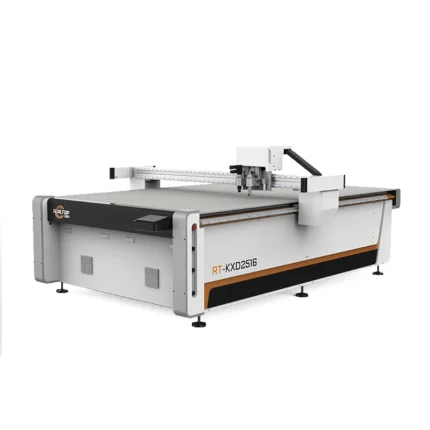
CNC Oscillating Knife Cutting Machine 2026 for Flexible Materials
Product Introduction
2026 CNC Oscillating Knife Cutting Machine, ideal for asbestos, cork, rubber, PTFE, felt, foam. Precision cutting solution from China's leading welding & cutting equipment manufacturer.
Product Parameters
| Model | 2026 |
| Type | CNC Oscillating Knife Cutting Machine |
| Materials | Asbestos, Cork, Rubber, PTFE, Felt, Foam |
| Manufacturer | China Leading Factory |
Realtop CNC Gasket Cutting Machine 2026 China Manufacturer
Product Introduction
Realtop CNC Gasket Cutting Machine 2026 is a precision tool designed for efficient gasket production, ideal for industrial manufacturing needs with advanced CNC technology.Key Specifications
| Model | Realtop CNC Gasket Cutting Machine 2026 |
| Type | CNC Gasket Cutting Equipment |
| Application | Industrial Gasket Manufacturing |
| Feature | Precision Cutting, Efficient Production |
Realtop Gasket Cutter 2026 Digital Oscillating Machine
Product Introduction
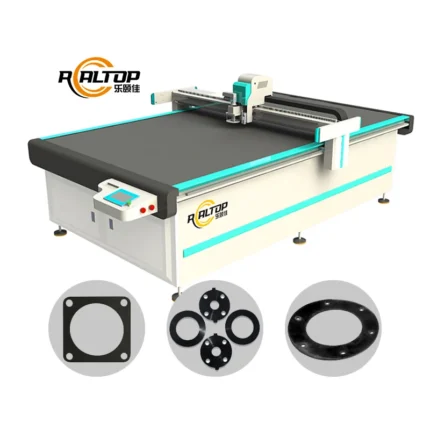
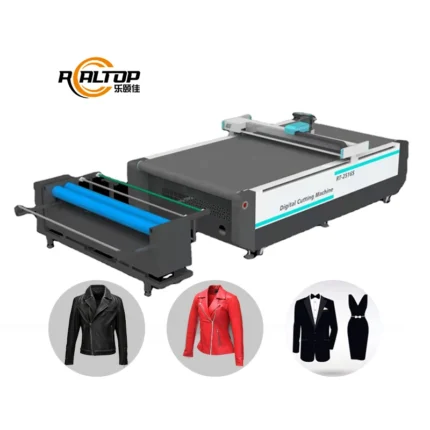
Realtop Gasket Cutter 2026 is a digital oscillating machine designed for precise cutting of silicone, asbestos, and non-asbestos felt materials, ideal for industrial gasket production.Product Parameters
| Model | Realtop Gasket Cutter 2026 |
| Type | Digital Oscillating Machine |
| Material Compatibility | Silicone, Asbestos, Non-Asbestos Felt |
| Operation | Digital Control |

商品评价
There are no reviews yet.