


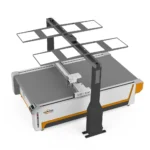
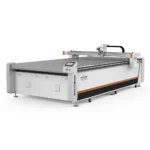

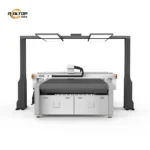

CNC Leather Cutter Oscillating Knife for Footwear – Industrial Application
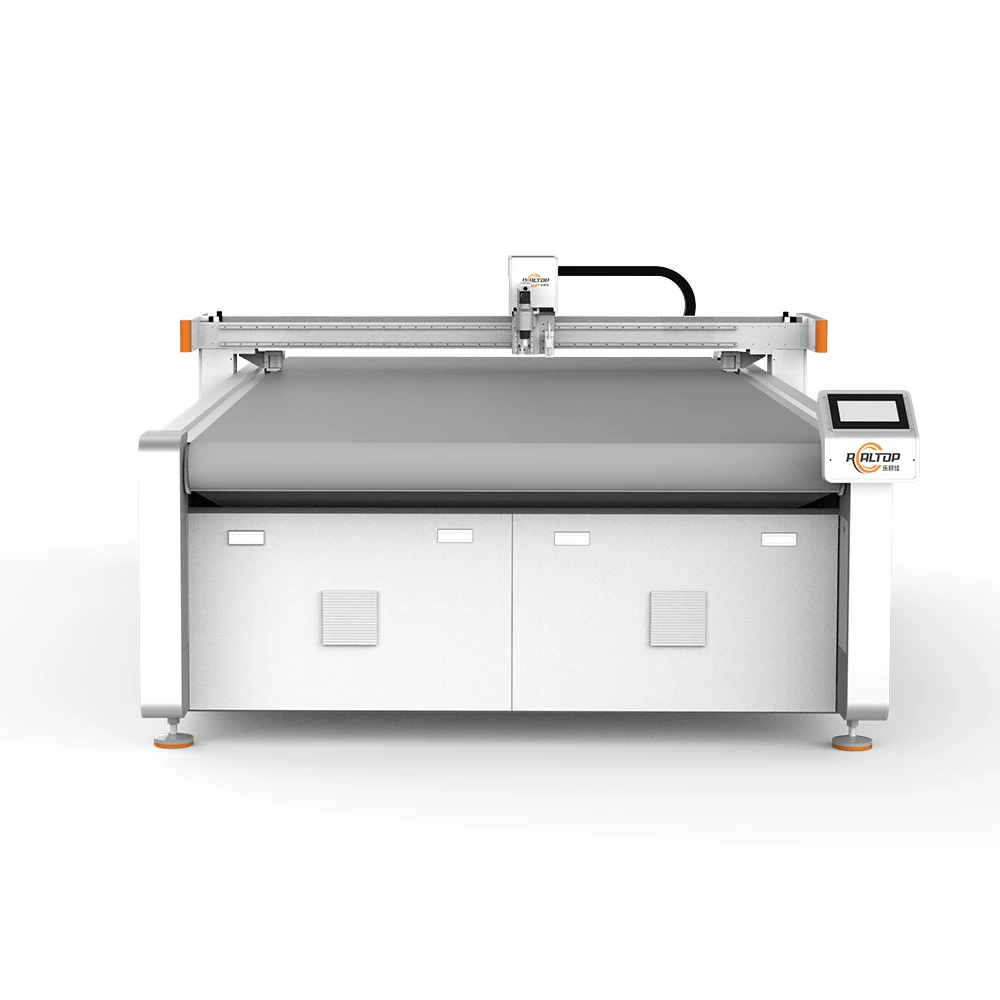
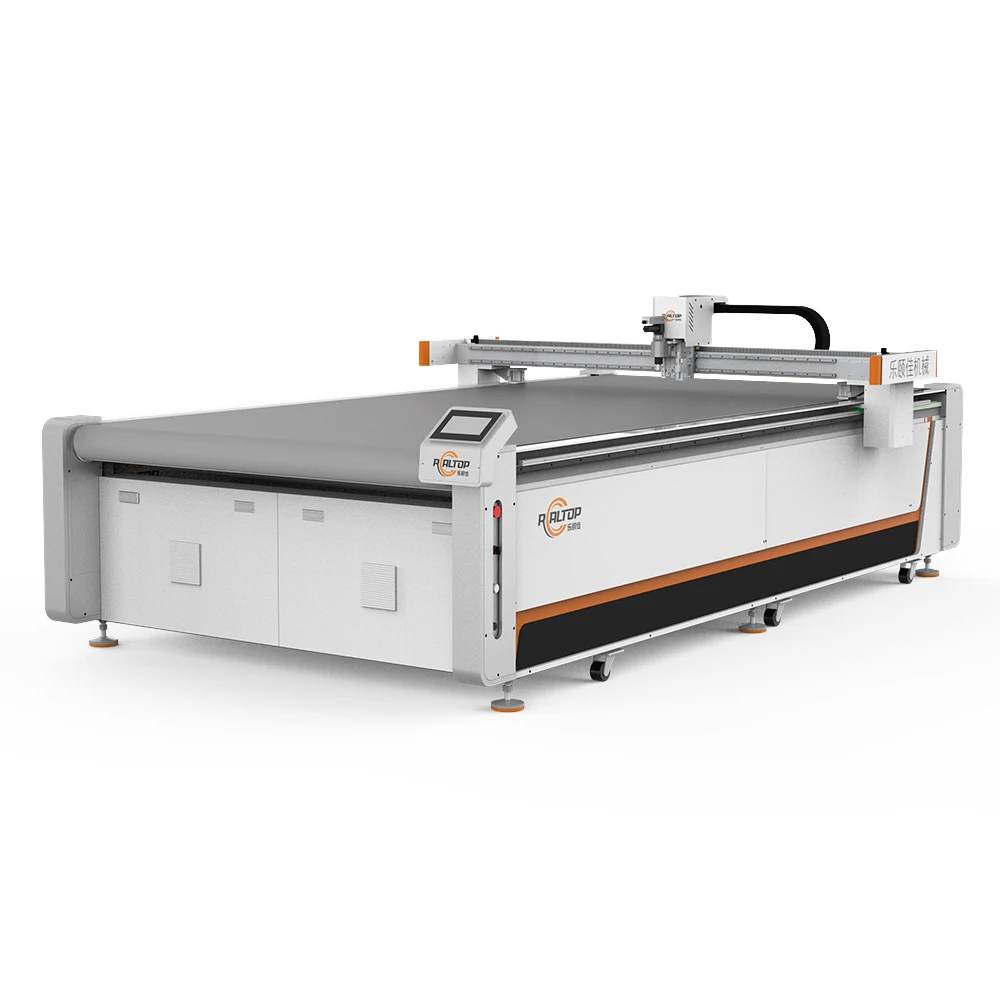
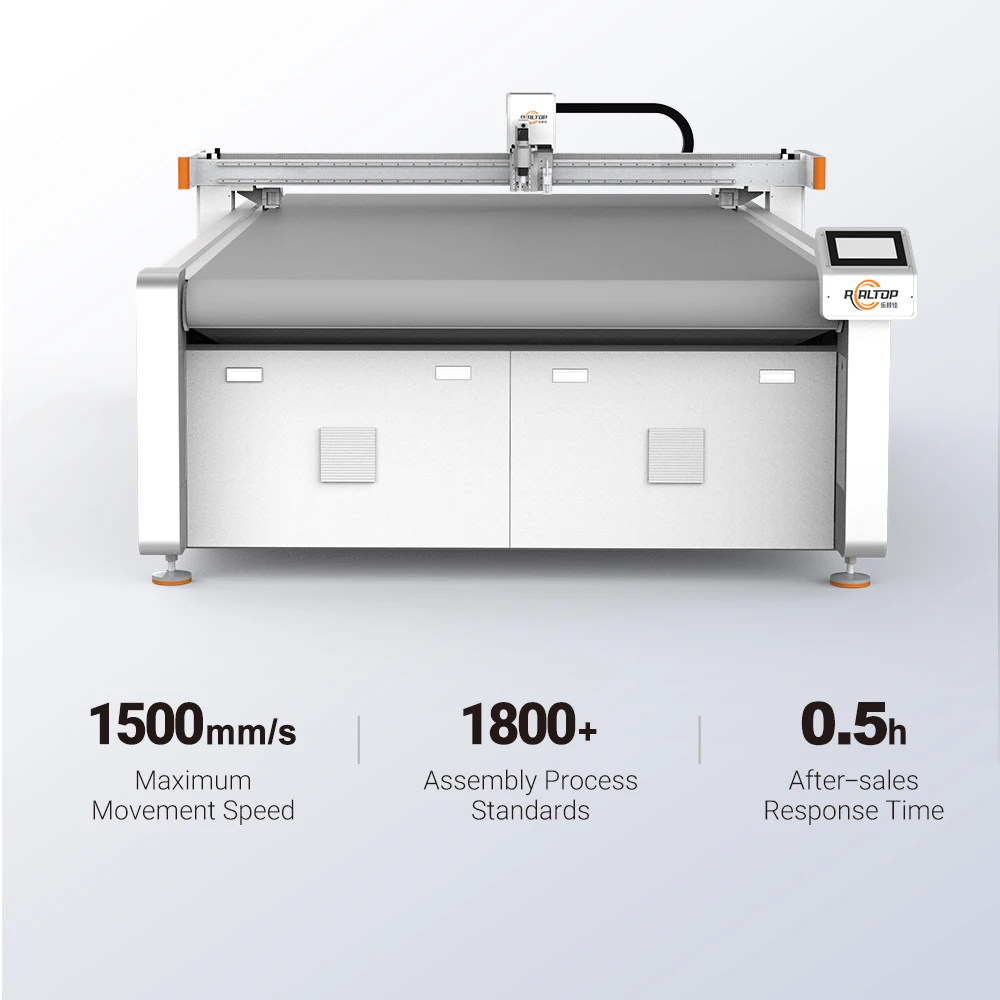
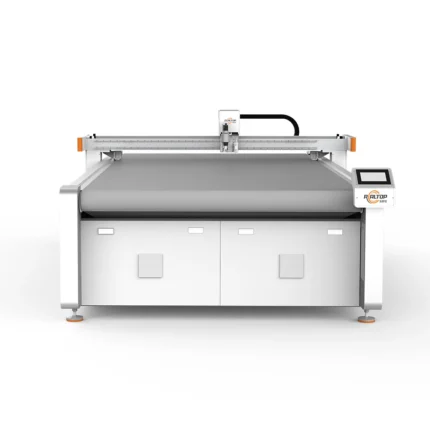
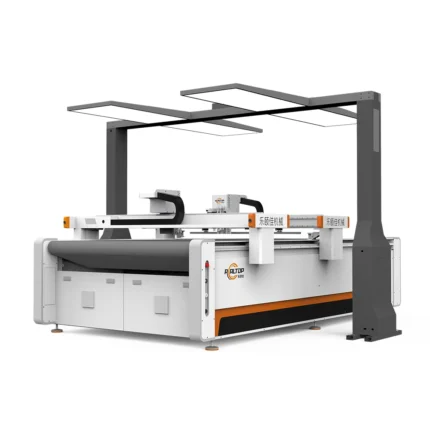
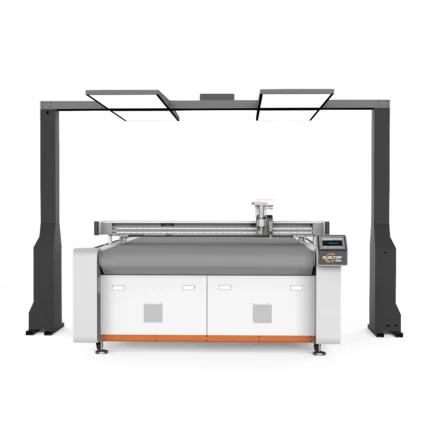
Leather CNC Cutting Machine, 1600×2500mm Working Area, 0-2000mm/s Cutting Speed — configured with oscillating and driven rotary knife tools for footwear uppers, bags and automotive leather parts.
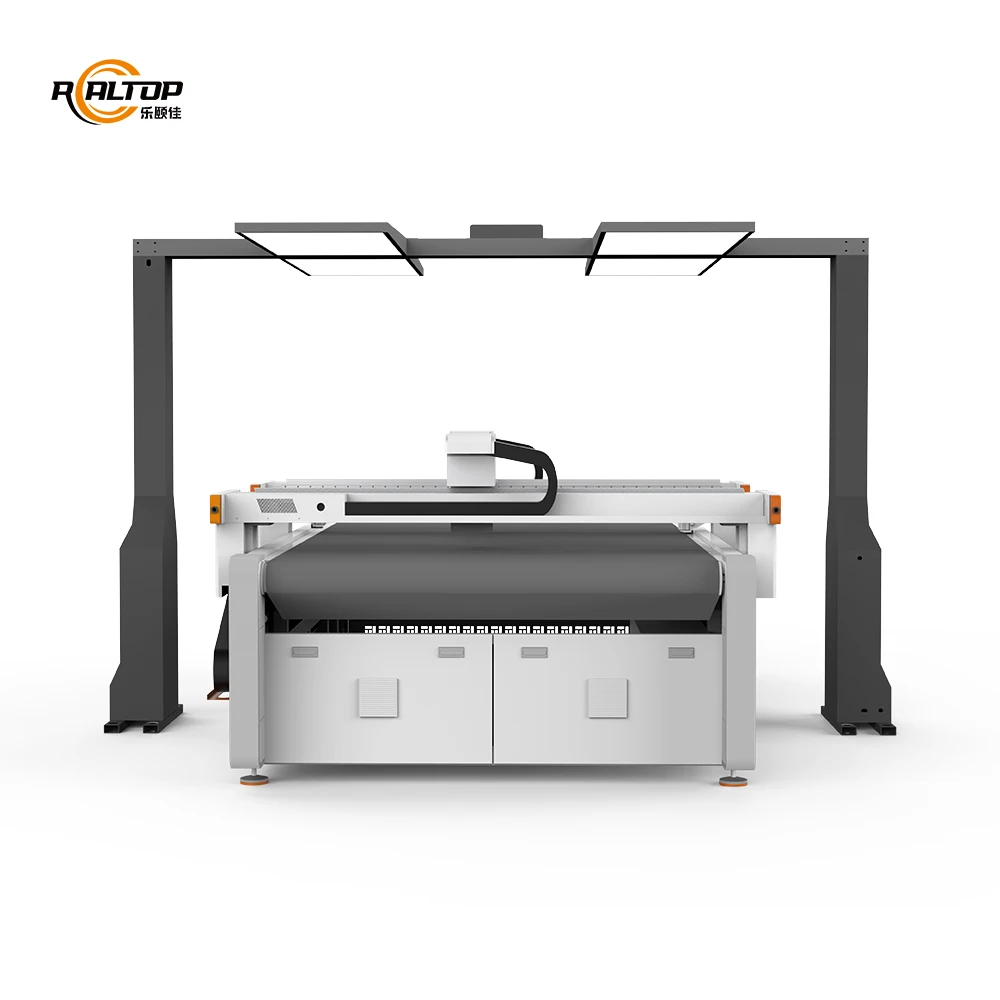
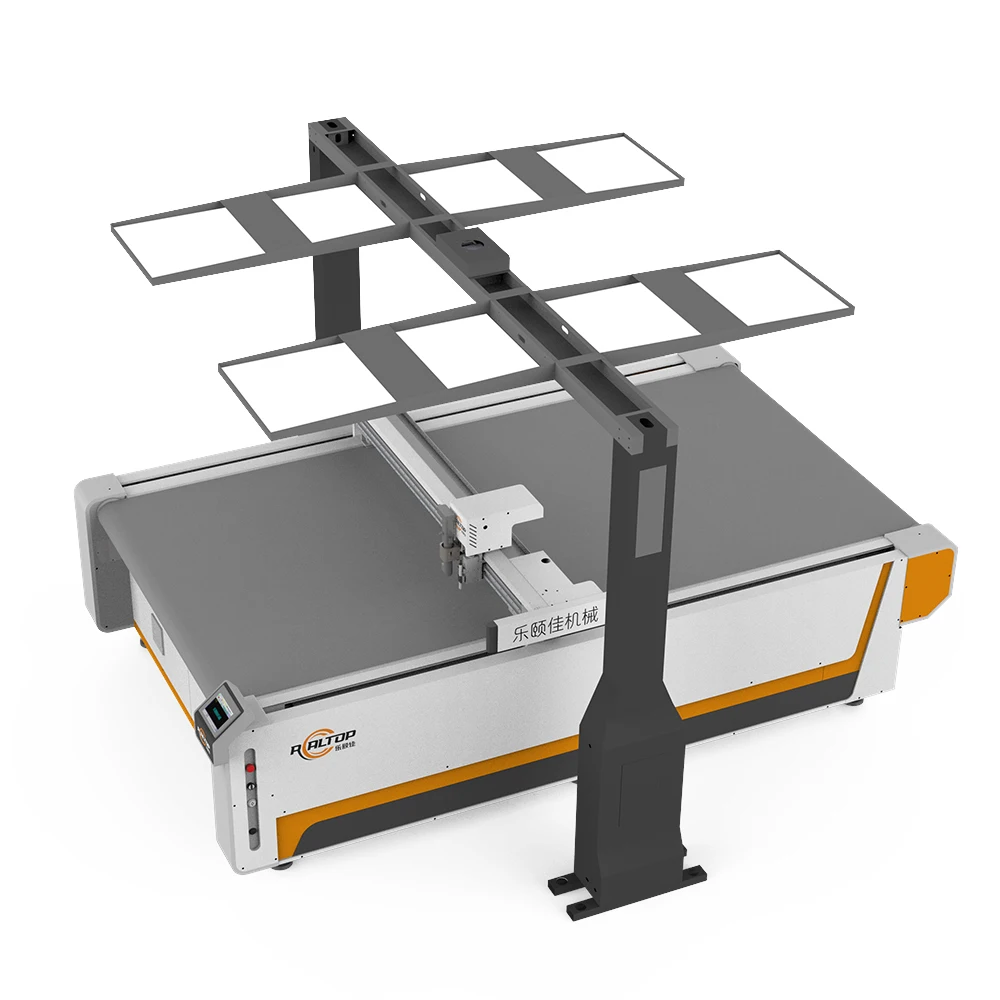
Oscillating knife selection is matched to leather thickness and grain direction, with vacuum table zoning holding small pattern pieces flat during high-speed contour cuts. CCD camera positioning tracks printed marks on patterned hides to align cuts with natural grain flow, reducing material waste in shoe upper production.
- ±0.1mm cutting accuracy across the full working area
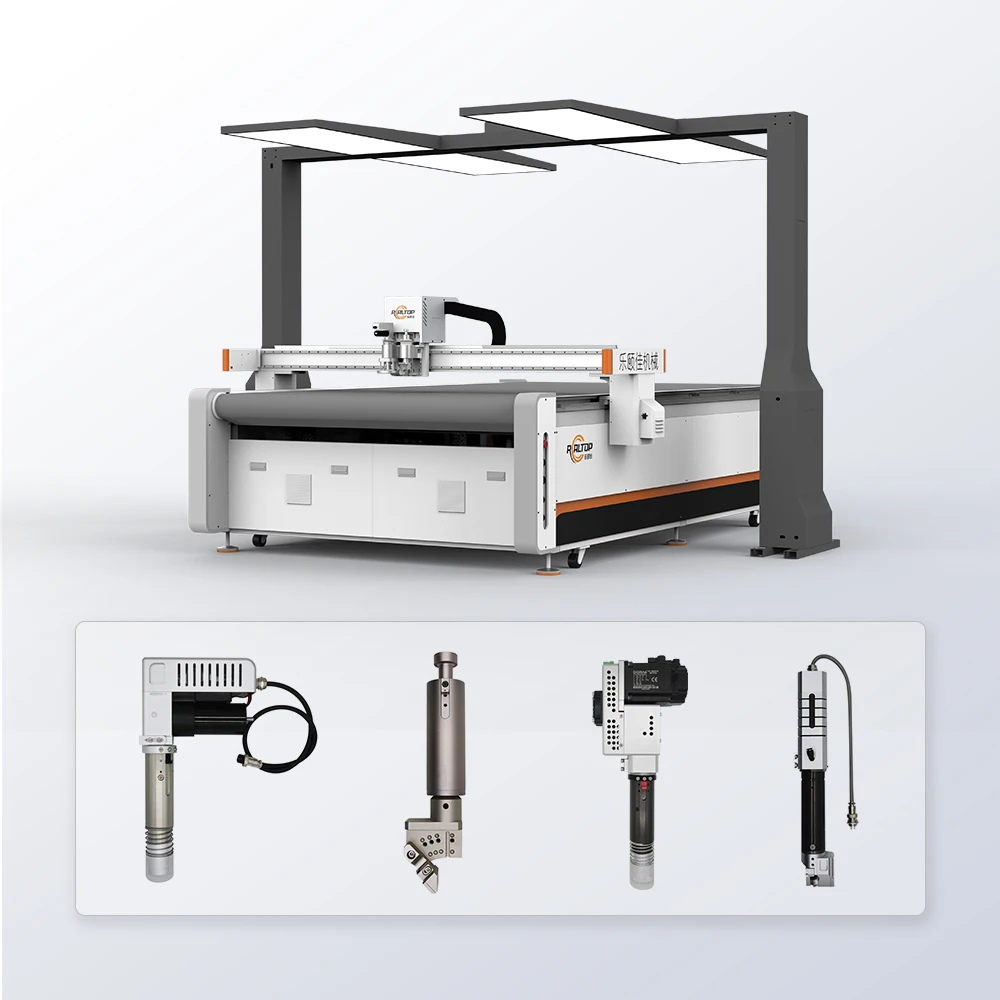
- Tools: oscillating knife, driven rotary knife, creasing wheel, pneumatic knife, V groove knife
- Supports PLT, DXF, AI, PDF file formats with nesting workflow compatibility
Sample cutting on your own leather stock is completed before order commitment, with tool head configuration and vacuum zoning confirmed against your specific material and daily volume.
Verified Cutting Depth on Real Material — every oscillating knife and rotary tool head is specified against the buyer’s actual leather stack height and hardness, ensuring edge quality matches production needs rather than brochure claims.
Technical Specifications
| Parameter | Value |
|---|---|
| Product Type | CNC Oscillating Knife Cutting Machine |
| Working Area | 1600 × 2500 mm |
| Tool Head Options | Oscillating knife, Driven rotary knife, Creasing wheel, Kiss cutting tool, Pneumatic knife, Milling tool, V groove knife |
| Applicable Materials | Leather, Fabric, Cardboard, Carton, Mats, PVC, EVA, Acrylic, Foam, PTFE, Rubber |
| Cutting Speed | 0–2000 mm/s |
| Cutting Thickness | ≤ 30 mm |
| Cutting Accuracy | ±0.1 mm |
| Vacuum Pump | 9 kW |
| Control System | PLC control panel |
| Servo Motor Options | Panasonic, Delta, Dorna |
| Voltage Options | 110V, 220V, 380V |
| Profile Format Compatibility | PLT, DXF, AI, PDF |
| Safety Devices | Infrared sensor, Emergency stop |
| Machine Dimensions | 3300 × 2100 × 1350 mm |
| Interface Language Options | English, Russian, Italian, Chinese (customizable) |
| Compliance | CE |
Application Suitability
| Application | Material or Output |
|---|---|
| Shoe upper cutting | Cowhide, sheepskin, split leather in single and multi-ply |
| Automotive seat covers | Leather and synthetic leather hides |
| Bags and leather goods | Full grain, corrected grain and bonded leather |
| Apparel pattern cutting | Fabric, fleece, technical textiles |
| Sofa and soft furniture | Upholstery fabric, foam panels |
| Automotive interior trim | Mats, foam boards, composite materials |
| Gaskets and seals | PTFE, Rubber sheets |
| Packaging and cartons | Cardboard, Carton sample making |
What Happens When Leather Hardness Is Ignored Before Configuration
Blade specification must match leather type, thickness, and ply count — not just the working area.
Early in my QC days at the Shandong workshop, I watched a single-layer oscillating knife setup arrive at a footwear factory where operators immediately stacked hardened cowhide for multi-ply cutting. The blade was never rated for that density. Edges frayed across a full batch of uppers, and the scrap loss wiped out what should have been a productive week. The machine was not defective; the configuration simply did not match the production job. That same mismatch appears again when buyers specify a leather CNC cutting machine based on table size alone, without confirming whether the leather is single or multi-ply, chrome-tanned or vegetable-tanned, or whether the daily volume requires continuous feeding. [NEED_CITE: leather cutting blade selection by hardness and ply count]
Laser Power Ratings and the Gap Between Peak Claims and Real Cutting Depth
When evaluating laser cutting and engraving equipment, the distinction between peak power and continuous power output determines whether the machine can actually penetrate the material at production speed. A CO2 and fiber laser cutting machine manufacturer quoting peak wattage may show impressive numbers on paper, yet the continuous output — the value that actually drives cutting depth — can fall noticeably short. Buyers processing acrylic, wood, or sheet metal need the continuous rating confirmed in writing before the order is placed, because a 150W peak claim delivering 90W continuous will behave entirely differently on 10mm acrylic than the specification sheet suggests.
Focal Length, Assist Gas, and Extraction Requirements Across Materials
Each material responds to laser energy differently. Acrylic benefits from a longer focal length that produces a flame-polished edge, while wood requires shorter focal distance and air assist to prevent charring. Synthetic textiles need edge sealing to prevent fraying, and that sealing quality depends on travel speed and power density working together. Extraction is not optional — cutting leather, PVC, or foam generates particulates and fumes that require dedicated ventilation. The laser cutting and engraving equipment must be specified with the extraction capacity matched to the material and daily cutting volume, not a generic fan rated for lighter duty. [NEED_CITE: industrial laser extraction standards for organic and synthetic materials]
How Oscillating Knife and Rotary Tool Heads Match Leather Characteristics
The oscillating knife head handles single-ply and softer leather at high speed, vibrating at frequencies that separate fibers cleanly without dragging. For tougher hides or multi-ply stacks, the driven rotary knife maintains consistent pressure through the full material thickness, preventing the layer shift that causes miscuts in shoe uppers. The pneumatic knife option addresses thick foam and gasket materials adjacent to leather work in automotive and furniture shops. Selecting the right tool head is not a preference — it is determined by leather density, ply count, and the edge finish required for the downstream sewing or bonding operation.
The Hidden Cost of Wrong Tool Head and Vacuum Zoning
If the vacuum table zoning does not match the part size, small leather pieces lift during high-speed cutting, producing dimensional errors that only surface at the sewing station. A full-bed vacuum zone holds large hides well but loses grip on narrow strips and small pattern pieces. Without adjustable zoning, the operator either slows cutting speed to compensate or accepts the reject rate. Similarly, choosing an oscillating knife for hardened multi-ply leather forces frequent blade changes and ragged edges that require secondary trimming. These costs do not appear on the quotation but accumulate across every shift. [NEED_CITE: vacuum table zoning impact on small part cutting accuracy]
Why Source Laser and Knife Cutting Equipment Through This Process
In-house design and production cover both knife and laser technologies, allowing the cutting method to be matched to the material rather than forcing one method across incompatible substrates. Tool head and table configuration is specified per leather type, thickness, and production volume — not pulled from a standard catalog. CCD camera positioning is available for printed contour work on patterned leather and synthetic hides. Software compatibility is confirmed against the buyer’s existing PLT, DXF, AI, or PDF workflow before the order is locked. Voltage, control language, and electrical configuration are set to the target market standard, and sample cutting on the buyer’s own leather is completed before commitment.
Documentation & Verification
- Machine specification sheet detailing oscillating knife and rotary tool head parameters
- Electrical schematic with confirmed voltage and frequency for destination market
- Tool head and vacuum table configuration list matched to leather type and ply count
- Sample cutting report produced on buyer’s own leather before order confirmation
- Software license and file format compatibility note for PLT, DXF, AI, PDF
- Spare parts list covering blades, rotary knife assemblies, and vacuum seals
Installation, Commissioning & Support
- Floor space of approximately 3300 × 2100 mm plus operator access clearance required
- Dedicated circuit matching confirmed 110V, 220V, or 380V supply at installation
- 9 kW vacuum pump requires separate power feed and dust collection routing
- First-run calibration of oscillating knife frequency and cutting depth on buyer’s leather
- PLC control panel training in selected language — English, Russian, Italian, or Chinese
- Replacement oscillating knife blades and rotary knife assemblies included as initial spare set
What to Provide with Your Inquiry
Share the leather type — chrome-tanned, vegetable-tanned, split, or bonded — along with thickness range and whether single-ply or multi-ply cutting is needed. Confirm your daily cutting volume and the largest hide or sheet dimension you process. Specify your workshop voltage and frequency, preferred control language, and whether your existing pattern files use PLT, DXF, AI, or PDF format. If you need contour cutting on printed leather, note that requirement so the CCD camera option can be included in the configuration.
Frequently Asked Questions
Q: How can I verify continuous laser power versus peak rating on a CO2 or fiber laser system?
A: Request a specification sheet that lists continuous output separately from peak wattage. Peak values represent momentary bursts, while continuous output determines actual cutting depth and speed. Ask the CO2 and fiber laser cutting machine manufacturer for a sample cut report on your specific material a*production travel speed.
Q: What cutting depth is realistic on leather with an oscillating knife versus a rotary knife?
A: Oscillating knife heads handle leather up to moderate thickness at high speed in single-ply applications. Driven rotary knives cut through thicker or multi-ply leather stacks with consistent edge quality. The actual depth depends on leather density and hardness. A sample cut on your own material confirms achievable depth before the machine configuration is finalized.
Q: What extraction capacity is needed for laser cutting leather and synthetic materials?
A: Laser cutting leather, PVC, or foam produces fumes and fine particulates requiring dedicated extraction. The ventilation system must match cutting volume and material type — heavier daily throughput demands higher airflow capacity. Extraction requirements should be documented before installation to ensure the workshop ducting and filtration meet safe operating standards.
Q: How does vacuum table zoning affect small leather part cutting accuracy?
A: Full-bed vacuum zones hold large hides effectively but lose suction on narrow strips and small pattern pieces. Adjustable zoning allows operators to activate only the sections under the cutting path, maintaining hold-down pressure across all part sizes. Incorrect zoning leads to material lift and dimensional errors that surface during downstream assembly.
Q: What electrical configuration is available for different export markets?
A: The laser cutting and engraving equipment is configurable for 110V, 220V, or 380V supply with matching frequency. The electrical schematic is confirmed before production to match the destination market standard. Control panel language is set to English, Russian, Italian, Chinese, or other requested languages prior to shipment.


Related products
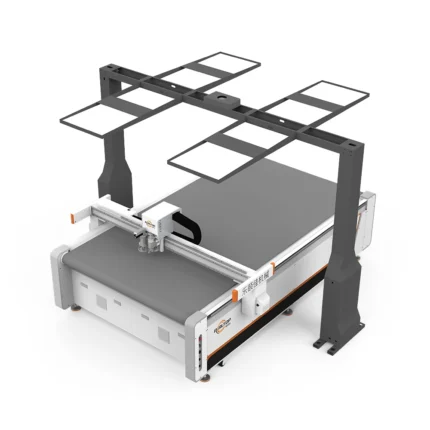
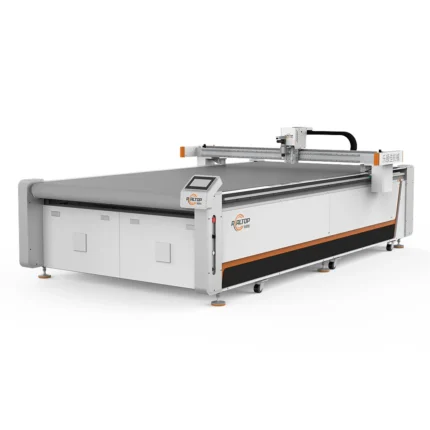
1625 CNC Oscillating Blade Cutter for Artificial Leather & Elastic Fabric
Product Introduction
1625 CNC Oscillating Blade Cutter, ideal for precise cutting of artificial leather and elastic fabric, offering efficient and accurate material processing for 2026 production needs.
Product Parameters
| Model | 1625 |
| Type | CNC Oscillating Blade Cutter |
| Applications | Artificial Leather, Elastic Fabric |
| Year | 2026 |
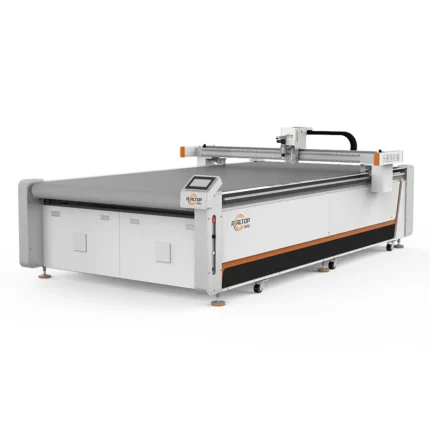
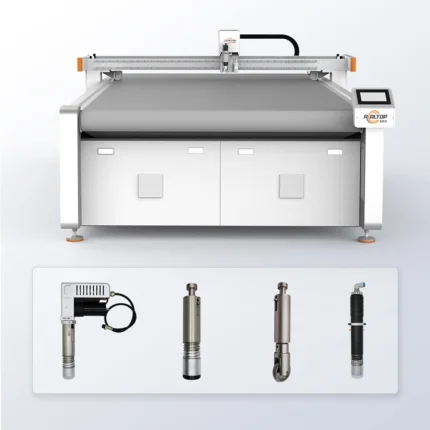
CNC Vibration Knife System 2026 Leather Cutting Machine
Product Introduction
Designed for precision leather cutting, the CNC Vibration Knife System 2026 delivers efficient and accurate cutting performance, ideal for leather processing applications.Key Specifications
| Model | CNC Vibration Knife System 2026 |
| Application | Leather Cutting |
| Cutting Technology | Vibration Knife |
| Precision | High Accuracy |
| Efficiency | Enhanced Productivity |
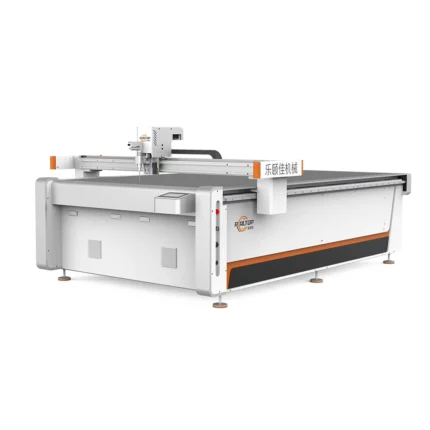
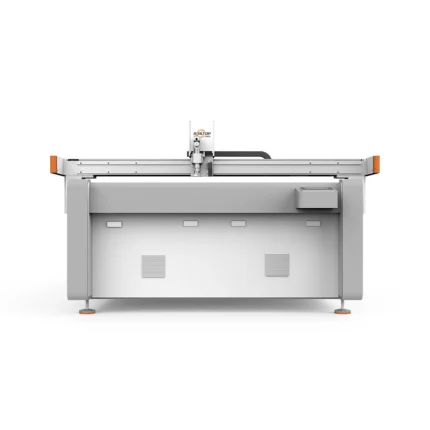
Leather CNC Oscillating Knife Cutter – Realtop1625
Realtop1625 Leather CNC Cutting Machine, 1600×2500mm, ≤30mm Thickness, CCD Contour Recognition — configured with interchangeable oscillating and rotary knife heads matched to leather grade and fabric density rather than a single fixed tool. Aluminum bellows vacuum table holds small contours flat across the full working area, with CCD camera tracking printed marks on patterned rolls at production speed.
Sample cutting on your own material with a written test report before order commitment, voltage and control language confirmed before shipment.
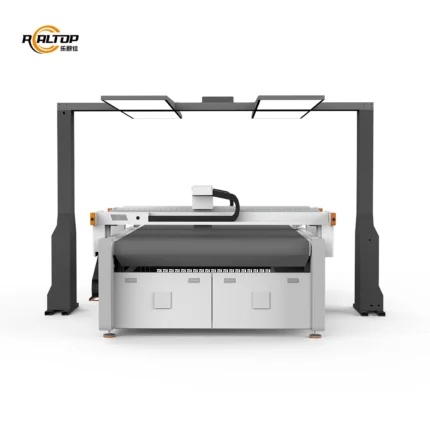
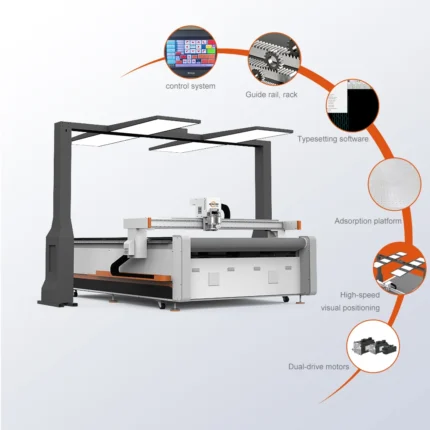
Oscillating Knife Leather Cutter CNC 2026
Product Introduction
Oscillating Knife Leather Cutter CNC 2026 is a precision cutting solution for leather materials, designed for efficient and accurate fabrication in manufacturing settings. Ideal for leather processing with advanced CNC technology.Product Parameters
| Model | Oscillating Knife Leather Cutter CNC 2026 |
| Cutting Type | Oscillating Knife |
| Application | Leather Materials |
| Control System | CNC |
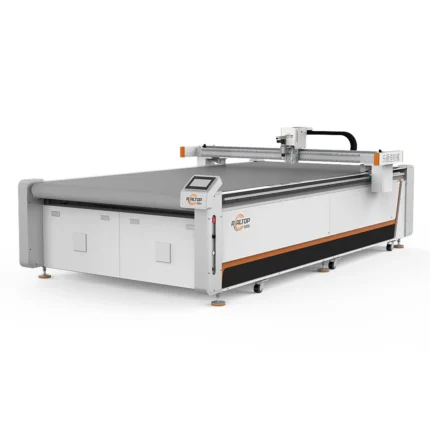
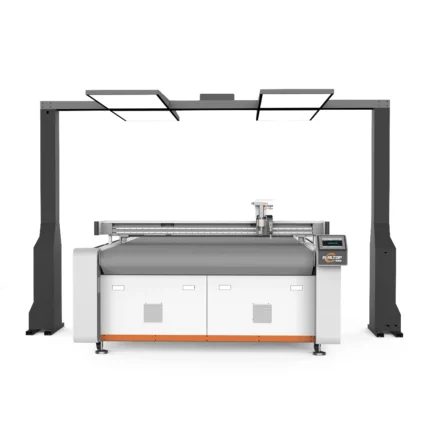
Realtop CNC Leather Cutter Auto Vibrating Knife
Product Introduction
Realtop CNC Cutter with Auto Vibrating Knife, ideal for precise leather cutting. Combines CNC technology with auto-vibrating knife for efficient, accurate material processing, suitable for leather industry applications.Product Parameters
| Type | CNC Cutter |
| Knife Feature | Auto Vibrating |
| Application | Leather Cutting |
| Control System | CNC Technology |
| Manufacturer | Chinese Factory |
商品评价
There are no reviews yet.