



CNC Oscillating Knife Cutting Machine for Wool Cardboard Carton – Manufacturer
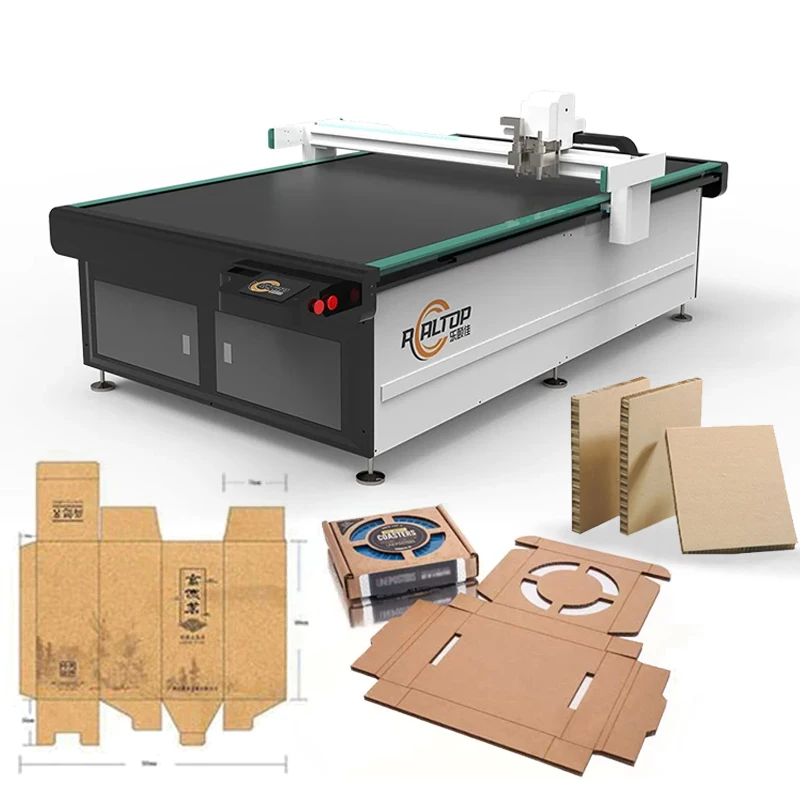
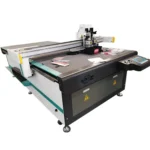
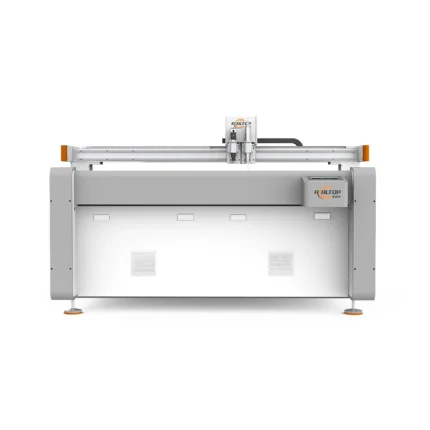
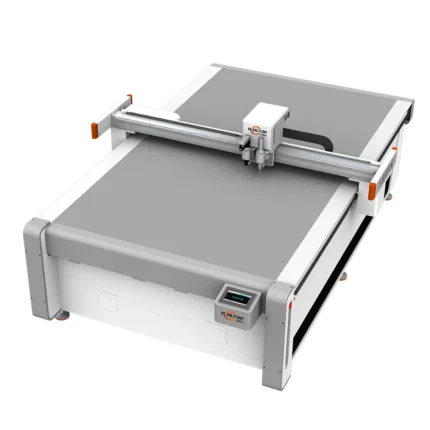
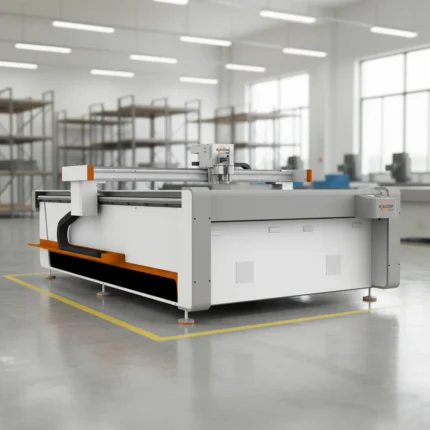
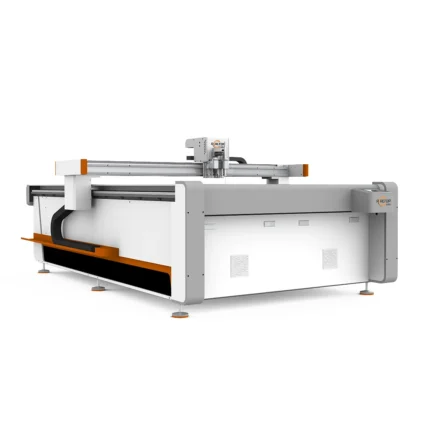
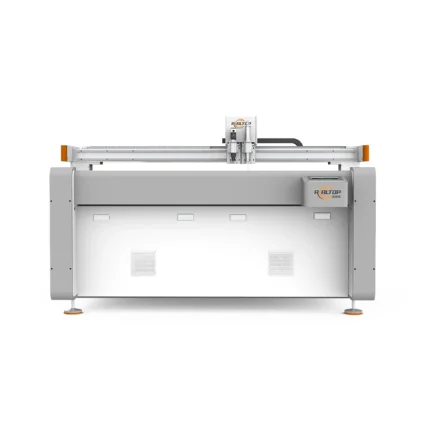
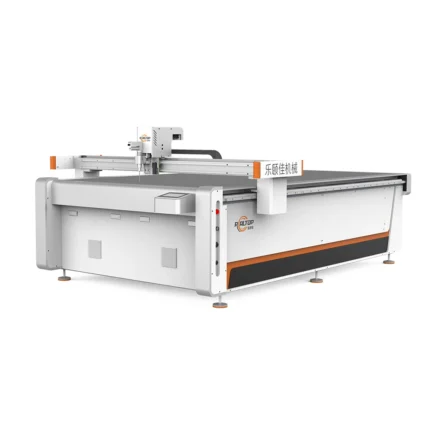
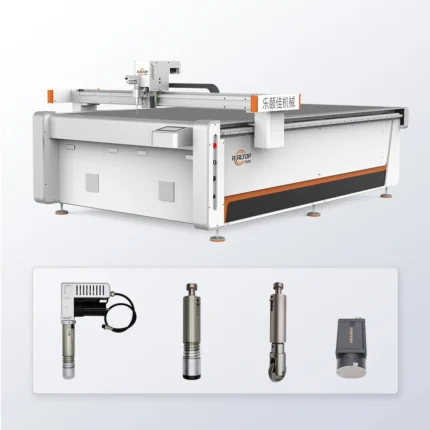
RT-D2516/RT-S2516 CNC Oscillating Knife Cutting Machine, 1600×2500 mm, 9 kW — configured for packaging and carton sample production.
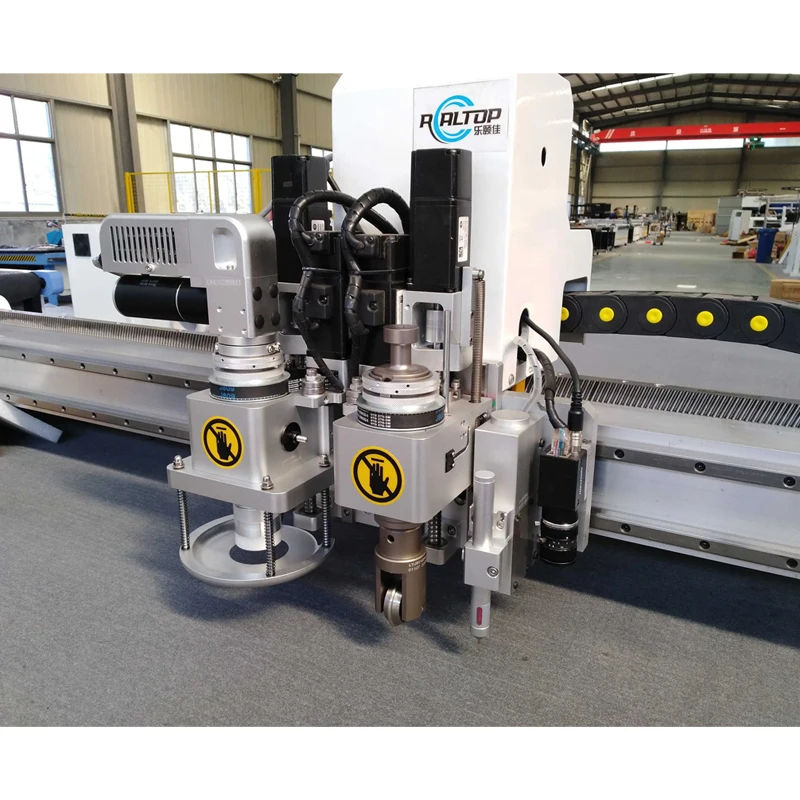
- Swiss oscillating knife head with full cut, half cut and cursor positioning
- Aluminum honeycomb vacuum table for secure flatbed material holding
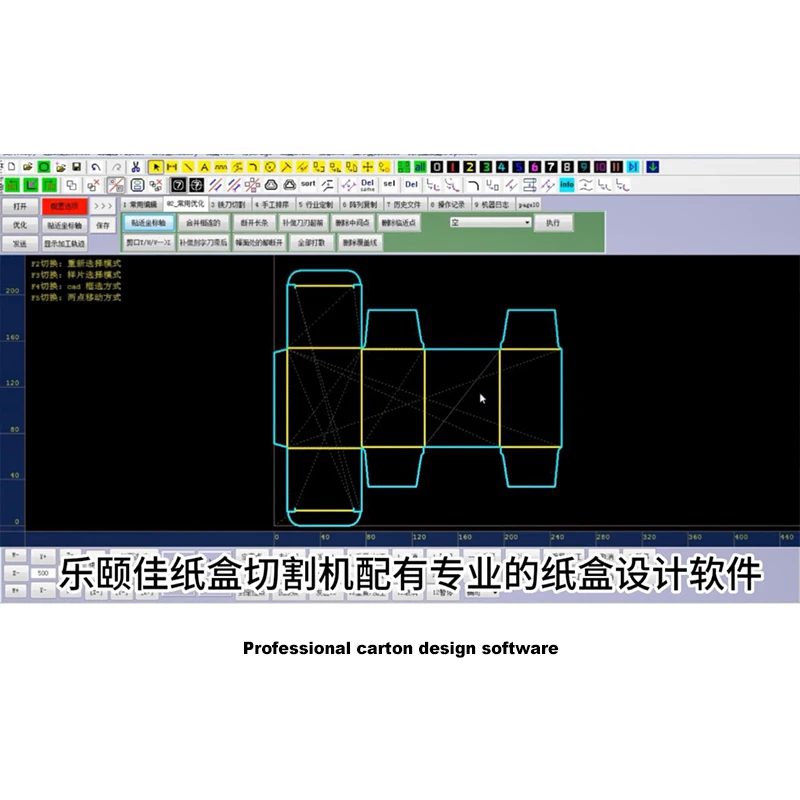
- Professional nesting software with HP-GL compatibility and multi-format import
Unlike CO2 laser cutting, oscillating knife leaves no burn marks on cardboard, stickers or leather — ideal where edge quality and zero smoke matter.
Sample cutting on your own material is provided before order, with voltage, plug and control language confirmed per destination market.
Precision Cutting Without Burn Marks — The RT-D2516/RT-S2516 oscillating knife platform addresses materials that CO2 lasers scorch or melt, giving packaging converters and flexible material fabricators a thermal-free alternative for clean-edge production.
Technical Specifications
| Parameter | Value |
|---|---|
| Model | RT-D2516/RT-S2516 |
| Product Type | CNC Oscillating Knife Cutting Machine |
| Working Area | 1600×2500 mm |
| Machine Size | 3450×2300×1250 mm |
| Rated Power | 9 kW |
| Voltage | 380V±10% |
| Cutting Speed (Translational) | 800-1200 mm/s |
| Cutting Speed (Material Dependent) | 200-800 mm/s (basis not stated in source — confirm material type / thickness) |
| Cutting Thickness | ≤100 mm (varies with material) |
| Repeatability | ≤0.1 mm |
| Tool Head | Swiss imported oscillating knife (vibration full cut, half cut, cursor location) |
| Transmission System | Digital servo motor, linear guide, synchronous belt, ball screw |
| Servo Motor Brand | Taiwan Delta |
| Guide Rail | Taiwan Hiwin |
| Conveyor Belt | Germany imported |
| Vacuum Pump | 7.5 kW |
| Working Table | Aluminum alloy honeycomb vacuum adsorption flatbed |
| Safety Device | Infrared sensors and emergency stop |
| Control System | HP-GL compatible |
| Software | Professional carton nesting (free), multi-format import, auto positioning for cut/crease/mark |
| Language Options | English, Russian, Italian, Chinese (customizable) |
| Assembly State | Fully assembled |
| Certification | CE (declaration where applicable) |
Application Suitability
| Application | Material or Output |
|---|---|
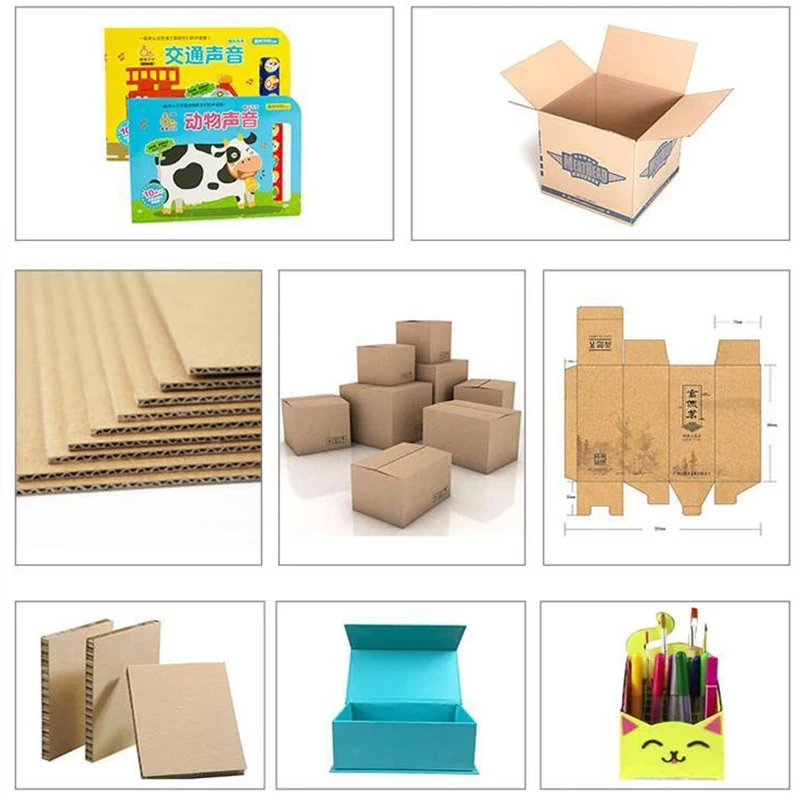
| Packaging carton manufacturing & sample making | Corrugated board, cardboard, paperboard |
| Sticker and label contour cutting | Printed vinyl, adhesive paper with registration marks |
| Electrical appliance carton & express shipping box | Honeycomb cardboard, heavy-duty corrugated |
| High-end gift box & snack packaging | Grey board, art paper, foam insert |
| Leather and flexible composite cutting | Genuine leather, PU, sponge composite leather, PVC |
| Soft glass, silicon and rubber gasket cutting | Soft glass sheets, silicone rubber, industrial rubber |
Why the Laser Process Fails on Some Packaging Substrates
When a laser cutting and engraving machine manufacturer fields requests for corrugated carton or sticker cutting, the honest answer is that thermal cutting often produces the wrong result. An oscillating knife removes the heat variable entirely.
CO2 lasers excel on acrylic, MDF and engraving tasks, but corrugated board chars along the cut path, honeycomb cores collapse under concentrated heat, and adhesive-backed vinyl releases fumes that require extraction infrastructure. I once watched a packaging house run corrugated samples on a CO2 table — the edges sealed fine, but the smell in the workshop was enough to make operators open every window in winter. For packaging sample making and sticker contour work, a blade-based system simply avoids those thermal side effects [NEED_CITE: thermal effects of laser on corrugated and adhesive materials]. The laser cutting and engraving machine manufacturer worth talking to will point you toward knife cutting when the material demands it.
Thermal-Free Cutting for Corrugated and Honeycomb Board
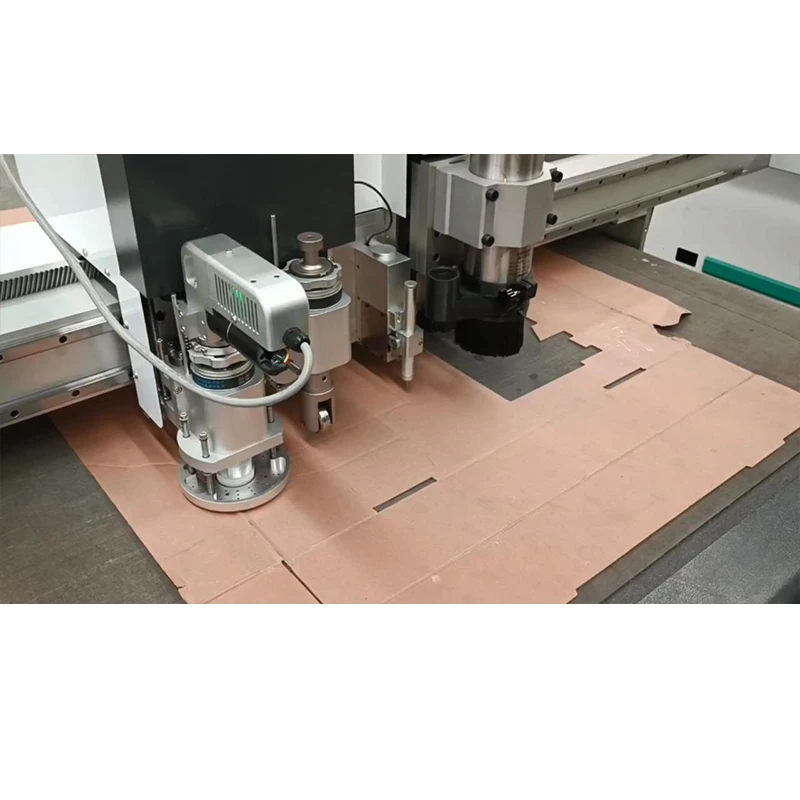
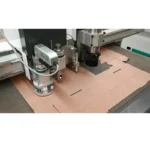
The Swiss imported oscillating knife head on the RT-D2516/RT-S2516 vibrates at high frequency to slice through corrugated flutes and honeycomb cells without crushing or melting the core structure. The full-cut and half-cut modes allow operators to perforate fold lines without severing the sheet — a function that lasers handle less predictably on layered board. Because no heat enters the material, there is no char to clean off and no ventilation system to install alongside the machine.
Printed Contour Recognition for Sticker and Label Runs
Sticker converters need the blade to follow printed registration marks rather than a pre-set path. The cursor location function on this tool head tracks those marks and adjusts the cut trajectory accordingly, so a misaligned print run does not become scrap. This matters on short-run label jobs where print registration drifts between sheets, and it is a workflow that laser tables can replicate only with additional camera hardware and software licensing.
What the Speed Numbers Actually Mean on Different Substrates
The 800-1200 mm/s translational velocity represents the maximum travel speed of the head with no material engagement — useful for gauging how quickly the machine repositions between cuts. Once the knife contacts material, effective cutting speed drops to the 200-800 mm/s range, and where a job actually lands inside that band depends on board density and flute profile [NEED_CITE: cutting speed variables for corrugated grades]. A single-wall B-flute runs faster than double-wall BC-flute, and the 7.5 kW vacuum pump must hold the sheet firmly enough that the knife does not drag or lift the material. Repeatability of ≤0.1 mm keeps nested carton outlines within tolerance across a full 1600×2500 mm sheet, which is where nesting software pays for itself by reducing board waste. The Taiwan Delta servo and Hiwin linear guide combination provides the positional control required for that tolerance to hold over long production runs.
The Hidden Cost of Skipping a Material Sample Test
Specifying a knife cutting table on working area alone is how workshops end up with a machine that handles single-wall corrugated perfectly but stalls on honeycomb or composite leather. The oscillating frequency, blade angle, vacuum zoning and downward pressure all interact with material structure, and a 5 mm difference in board thickness can change the result from a clean cut to a ragged tear that ruins the entire sheet. I have seen buyers sign off on a purchase after watching a vendor cut the vendor’s own sample stock, only to discover their specific honeycomb board — sourced locally with a different adhesive — behaves completely differently [NEED_CITE: material variability in corrugated and composite substrates]. That is why a sample cutting report on the buyer’s own material should be a non-negotiable document before any order goes to production.
Why Procurement Starts with the Right Process Choice
The in-house design capability covers both knife and laser cutting technologies, so the recommendation is based on material behavior rather than pushing one method. The RT-D2516/RT-S2516 tool head and table configuration are specified per the buyer’s material and production volume, not quoted from a standard catalogue page. CCD camera positioning is available for printed contour work when sticker or label applications require it. Software compatibility is confirmed before order — file format and nesting workflow are tested against the buyer’s existing design pipeline. Voltage, language and specification customization are standard, with English, Russian, Italian and Chinese available and special languages configurable on request. Sample cutting on the buyer’s own material takes place before commitment, so there are no surprises when the machine arrives on the workshop floor.
Documentation & Verification
- Machine specification sheet with confirmed RT-D2516/RT-S2516 configuration per your material
- Electrical schematic and voltage confirmation matching your facility supply
- Tool head and table configuration list matched to your board thickness range
- Sample cutting report on your own corrugated or sticker stock before dispatch
- Factory test record documenting repeatability and cut quality on your material
- Software licence and file format compatibility note for your design workflow
Installation, Commissioning & Support
- Floor space planning around the 3450×2300×1250 mm machine footprint with service clearance
- Dedicated 380V±10% circuit with sufficient capacity for the combined 9 kW machine and 7.5 kW vacuum pump load
- Machine arrives fully assembled, requiring only leveling, power connection and vacuum hose routing
- First-run parameter tuning on your specific corrugated grade and sticker stock at commissioning
- Operator training covering nesting software, tool head changeover and HP-GL file import workflow
- Spare parts list with blade consumables and belt replacement intervals documented
What to Prepare Before Requesting a Quote
Send the exact corrugated grade, flute profile and board thickness you run most often, along with a sample sheet for test cutting. Specify your local voltage and frequency standard and the control language your operators need. If you are cutting printed stickers or labels, include a sample print sheet so registration mark tracking can be verified. Let us know your existing nesting software and file formats so compatibility is confirmed before the machine enters production.
Frequently Asked Questions
Q: When should I choose oscillating knife cutting over a laser process for my material?
A: Corrugated board, honeycomb cardboard, adhesive vinyl and flexible composites generally cut cleaner with a blade because there is no thermal damage, charring or fume generation. Lasers perform better on acrylic, MDF engraving and thin textile sealing. The correct choice depends on whether your material reacts badly to heat concentration along the cut path.
Q: What board thickness can this platform handle, and how is the tool head selected?
A: The system cuts up to 100 mm depending on material density, but effective thickness varies by substrate — corrugated board and foam behave differently at the same measurement. The oscillating knife head is selected based on your specific material sample, and the blade angle and frequency are matched during the pre-order cutting test.
Q: Will the nesting software work with my existing design files?
A: The professional carton nesting software supports multiple format imports and is compatible with HP-GL instruction sets. Before the order is finalized, your existing file formats and nesting workflow are tested to confirm import and positioning accuracy, and a software licence and compatibility note is provided with documentation.
Q: Can the voltage and control language be configured for my country?
A: Yes. The standard configuration is 380V±10%, and the control interface is available in English, Russian, Italian and Chinese, with special languages customizable. Electrical schematics and voltage confirmation documents are issued before production so your facility electrical team can prepare the correct supply and circuit protection.
Q: Can I receive a cutting sample made from my own material before ordering?
A: A sample cutting report on the buyer’s own material is standard procedure. You send your actual corrugated board, sticker stock or composite sheet, and the test is run on the same machine configuration being quoted, so the cut quality, edge finish and cycle behavior reflect what you will see in production.


Related products
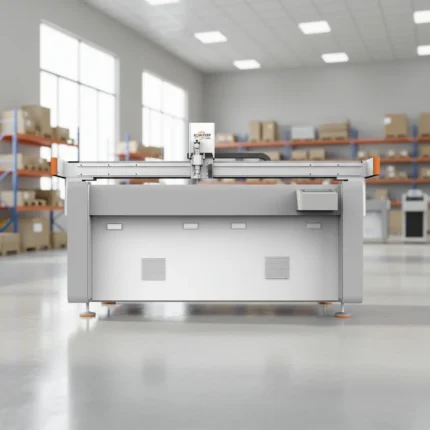
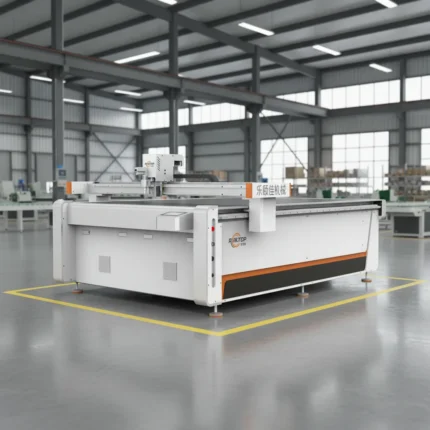
Automatic Die-less Cardboard Vibrating Knife Cutter 2026
Product Introduction
Automatic Die-less Cardboard Vibrating Knife Cutter 2026, a precision cutting solution for cardboard materials, featuring advanced die-less technology for efficient and flexible cutting operations. Ideal for various cardboard processing needs in manufacturing and packaging industries.Key Specifications
| Model | 2026 |
| Type | Automatic Die-less Cutter |
| Cutting Tool | Vibrating Knife |
| Material | Cardboard |
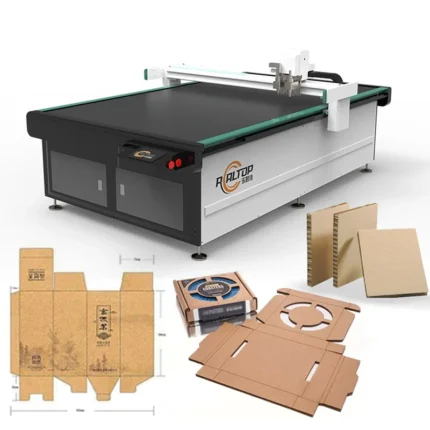
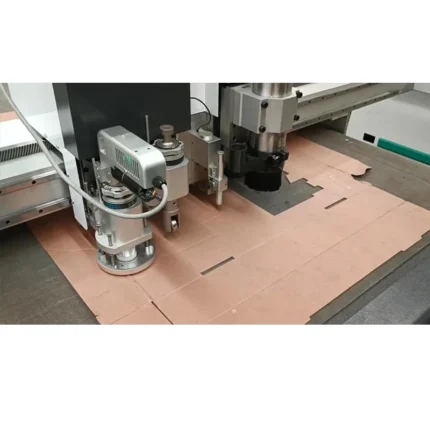
Automation CNC Pizza Box Machine 2026 Rotary Die Cutting
Product Parameters
| Type | Automation CNC Pizza Box Machine |
| Model Year | 2026 |
| Cutting Technology | Rotary Die Cutting |
| Operation | Automated CNC Control |
Introduction
This 2026 Automation CNC Pizza Box Machine features advanced rotary die cutting technology, ensuring precise and efficient pizza box production. With automated CNC control, it offers high productivity and accuracy for professional manufacturing needs.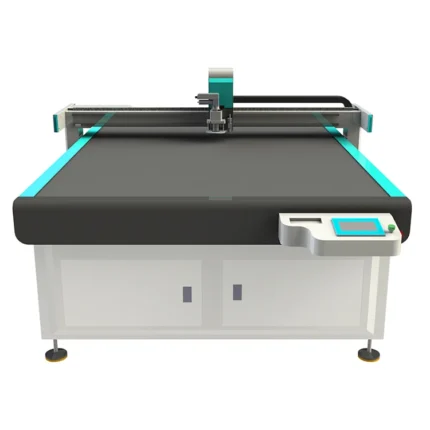
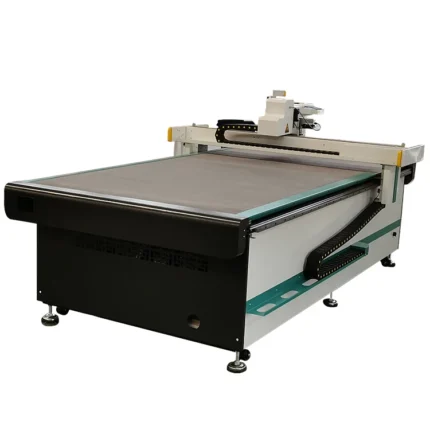
CNC Oscillating Knife Cutting Machine 2026 for Corrugated Cardboard & Honeycomb
Product Introduction
2026 CNC Oscillating Knife Cutting Machine, ideal for corrugated cardboard and honeycomb materials, offering precise and efficient cutting solutions for your production needs.Specifications
| Model | 2026 |
| Type | CNC Oscillating Knife Cutting Machine |
| Applicable Materials | Corrugated Cardboard, Honeycomb |
| Cutting Method | Oscillating Knife |

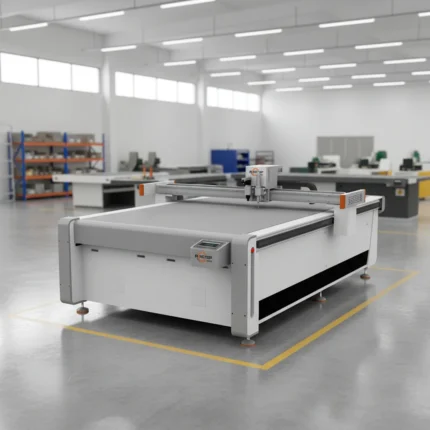
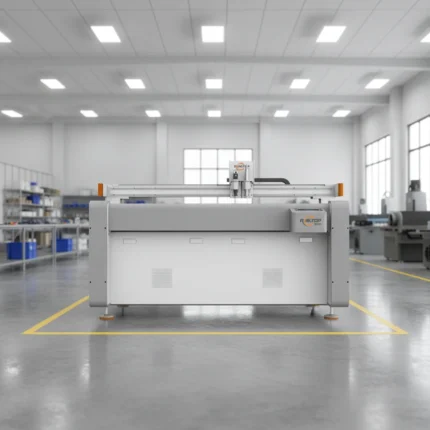
Digital Box Cutter 2026 Oscillating Knife Cardboard Cutter
Product Parameters
| Model | Digital Box Cutter 2026 |
| Cutting Type | Oscillating Knife |
| Material | Corrugated Cardboard |
Introduction
Professional oscillating knife cutting machine for corrugated cardboard. Ideal for precise, efficient cutting in packaging production. Reliable performance from China's leading welding & cutting equipment manufacturer.
商品评价
There are no reviews yet.