


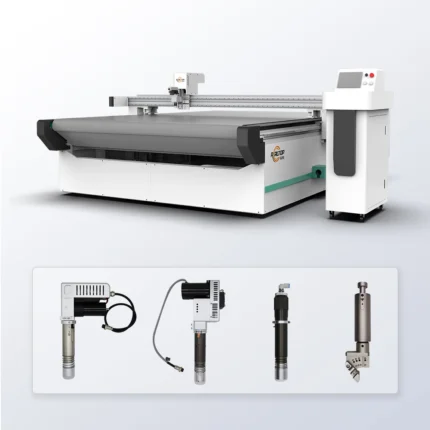
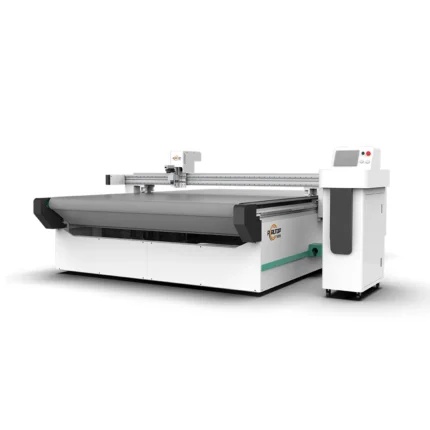
Factory Supply CNC Fabric Cutting Machine – Flatbed
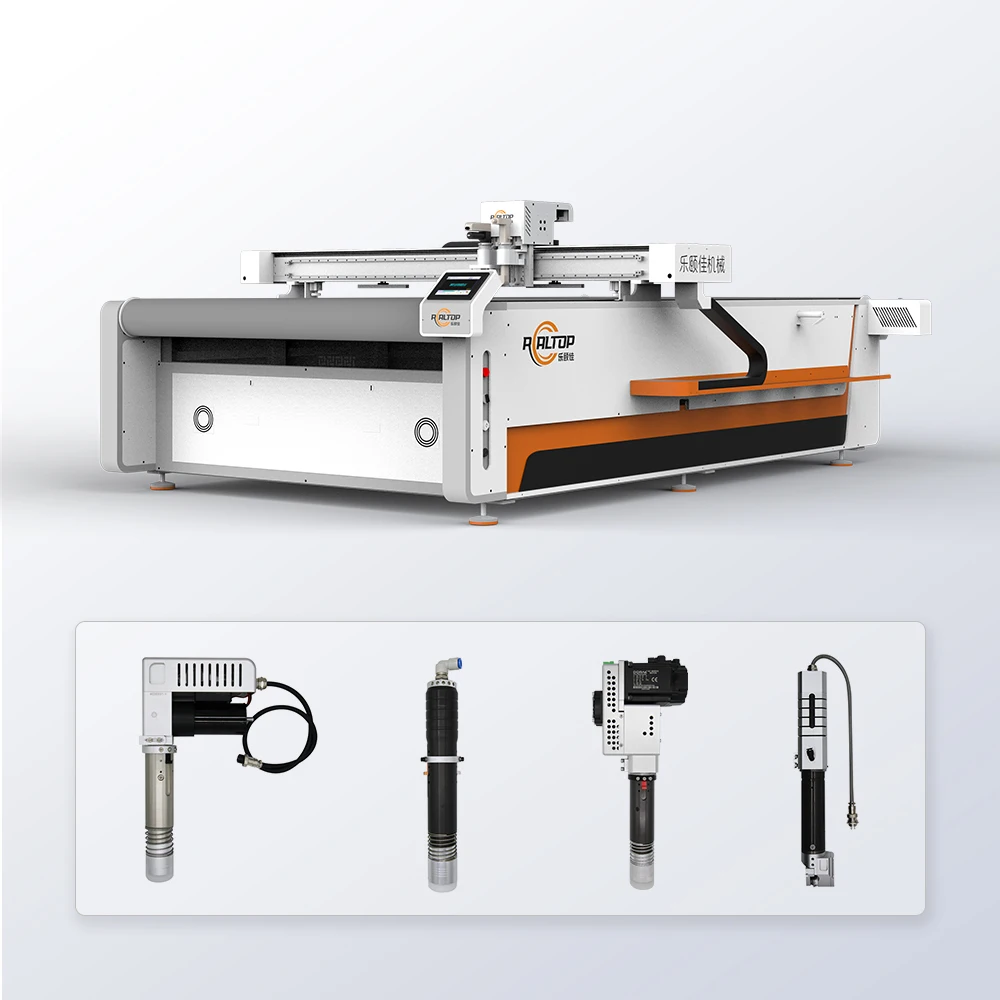
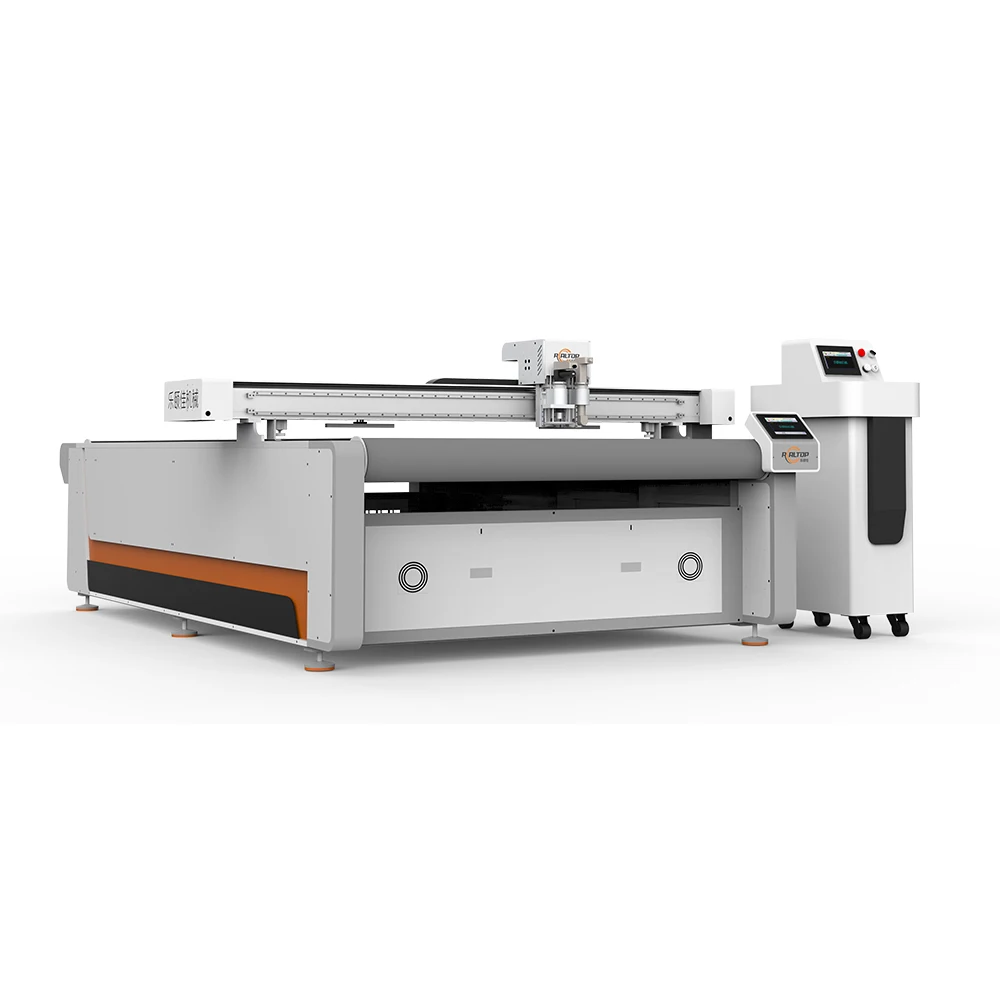
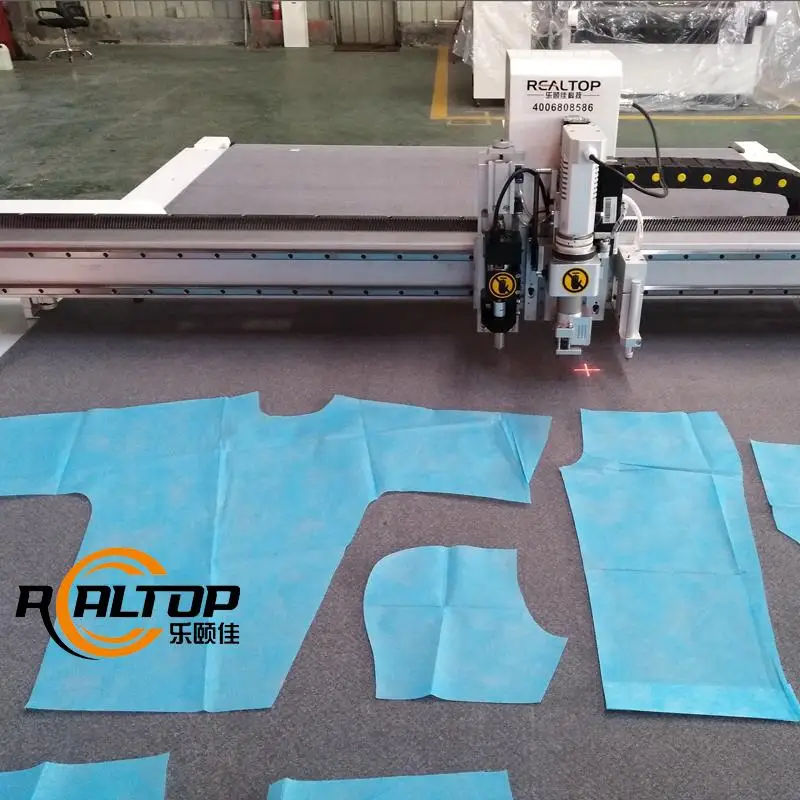
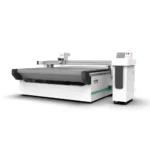
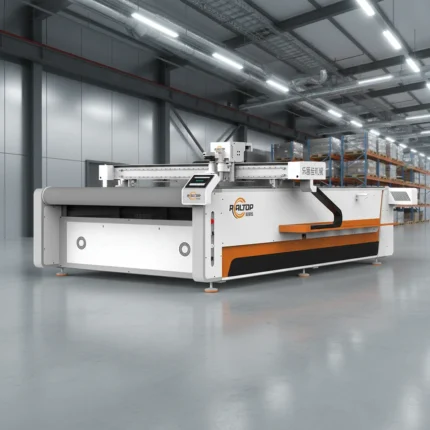
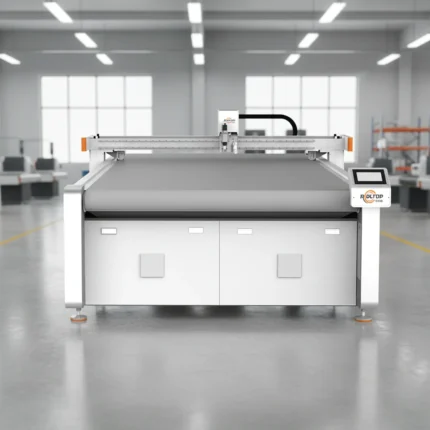
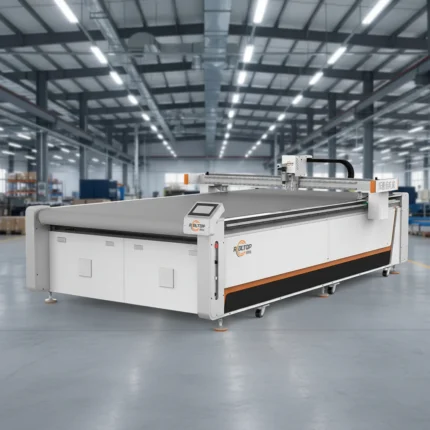
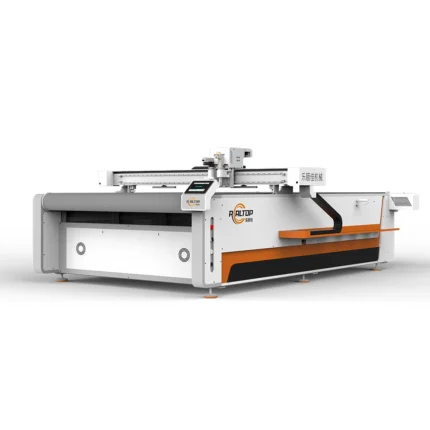
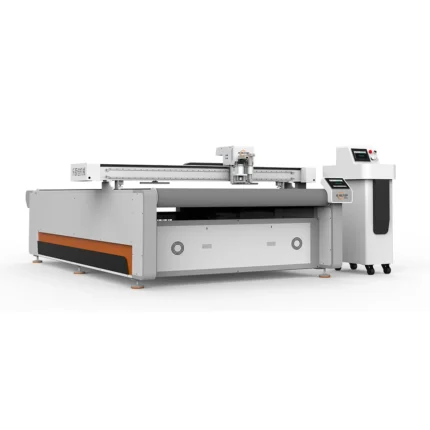
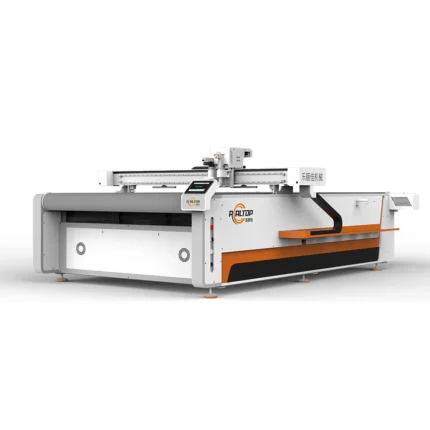
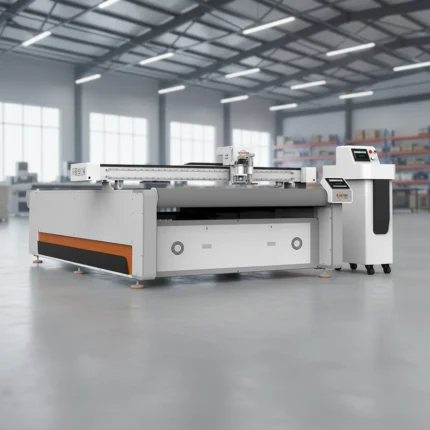
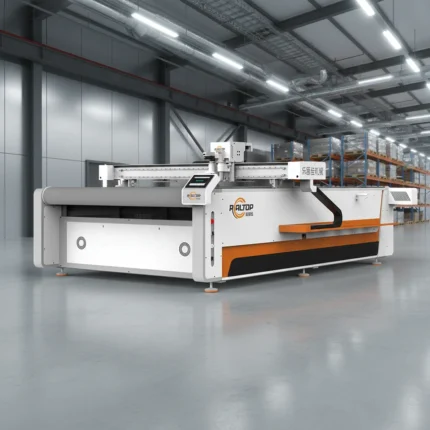
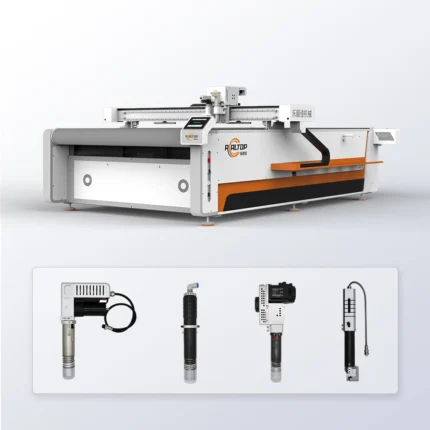
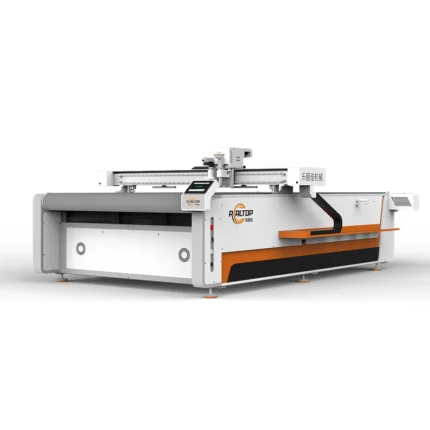
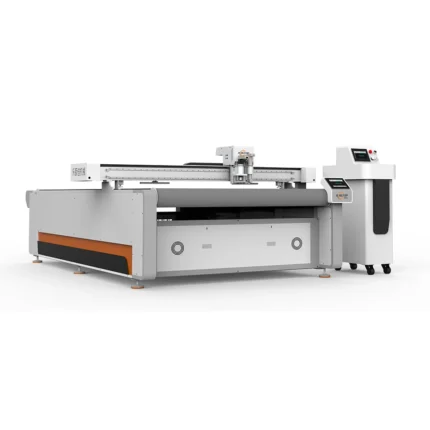
RT-D2516/RT-S2516 CNC Oscillating Knife Cutting Machine, 1600×2500mm, 9kW — configured with multi-tool heads and CCD camera positioning for precise contour cutting on fabric, leather and composite materials.
Laser process leaves burnt edges on synthetics; this flatbed knife table delivers clean, burr-free cuts at 200–800mm/s with zoned vacuum holding and no fumes. Oscillating knife, drag knife, circular knife and creasing wheel available per material requirement.
Sample cutting on your own fabric confirms edge quality, thickness capability and real cutting speed before commitment.
Precision-Matched Tooling — Every oscillating knife, drag knife, and creasing wheel on this flatbed is selected against your actual fabric sample before the configuration is locked, not guessed from a catalog chart.
Technical Specifications
| Parameter | Value |
|---|---|
| Product Type | CNC Oscillating Knife Cutting Machine |
| Model | RT-D2516/RT-S2516 |
| Working Area | 1600×2500 mm |
| Machine Overall Dimensions | 3450×2300×1250 mm |
| Rated Power | 9 kW |
| Voltage | 380V ±10% |
| Transmission System | Digital servo motor, linear guide, synchronous belt, ball screw |
| Servo Motor Option | Delta (China) or Panasonic (Japan) |
| Control / Instruction System | HP-GL compatible format |
| Translational Velocity | 800–2000 mm/s |
| Cutting Speed | 200–800 mm/s (varies with material) |
| Repeated Accuracy | ≤0.1 mm |
| Cutting Thickness | ≤100 mm (varies with material) |
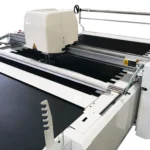
| Multifunctional Head | Swiss imported knife — vibration full cutting, half cutting, cursor location |
| Tool Head Options | Oscillating knife, pneumatic knife, high-power vibrating knife, circular knife, V-cutting knife, drag knife, creasing wheel, dotted line knife, punching, brush |
| Visual Positioning Options | Small CCD camera mark point, panoramic camera recognition, projection positioning |
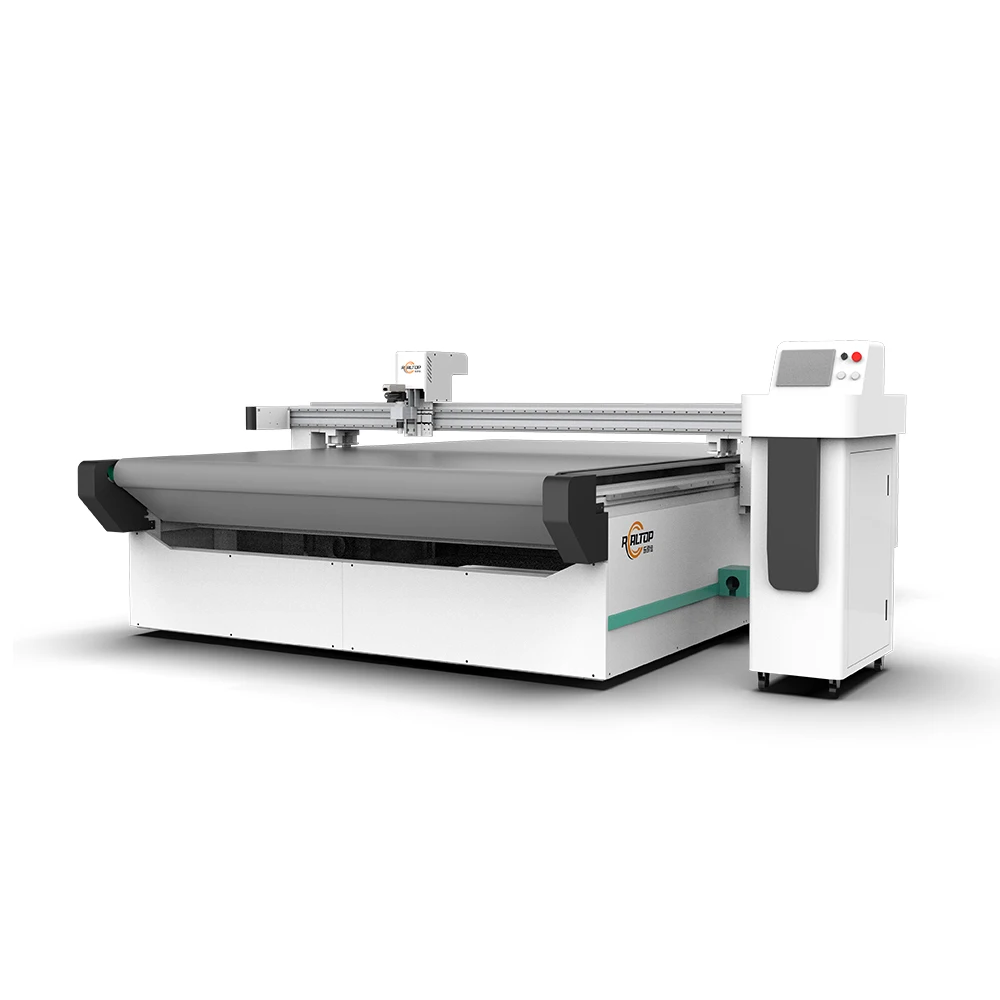
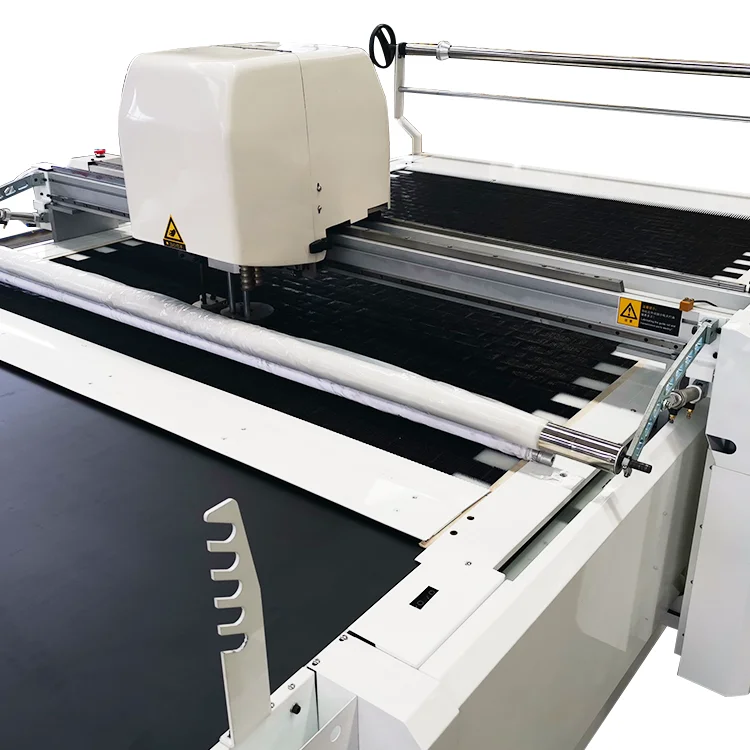
| Table Type | Flat working table or auto-feeding conveyor table |
| Vacuum Pump | 7.5 kW, integrated aviation aluminum shell, built-in silencer sponge |
| Vacuum Table Surface | Magnesium-aluminum alloy, fluorocarbon PVDF powder spraying, anodic and hard oxidation |
| Air Box Platform | Integrated box adsorption platform; split box option for transport |
| Conveyor Belt | Germany imported |
| Linear Rail | Taiwan Hiwin |
| Safety Devices | Infrared sensor stop, beam anti-collision, emergency stop button |
| Software | Auto typesetting and nesting; supports PLT, DXF, AI |
| Touch Screen Language | English, Russian, Italian, Chinese; special languages customizable |
| Assembly State | Fully assembled (split box platform option for transport) |
| CE Declaration | Applicable (verify against manufacturer catalog) |
Application Suitability
| Application | Material or Output |
|---|---|
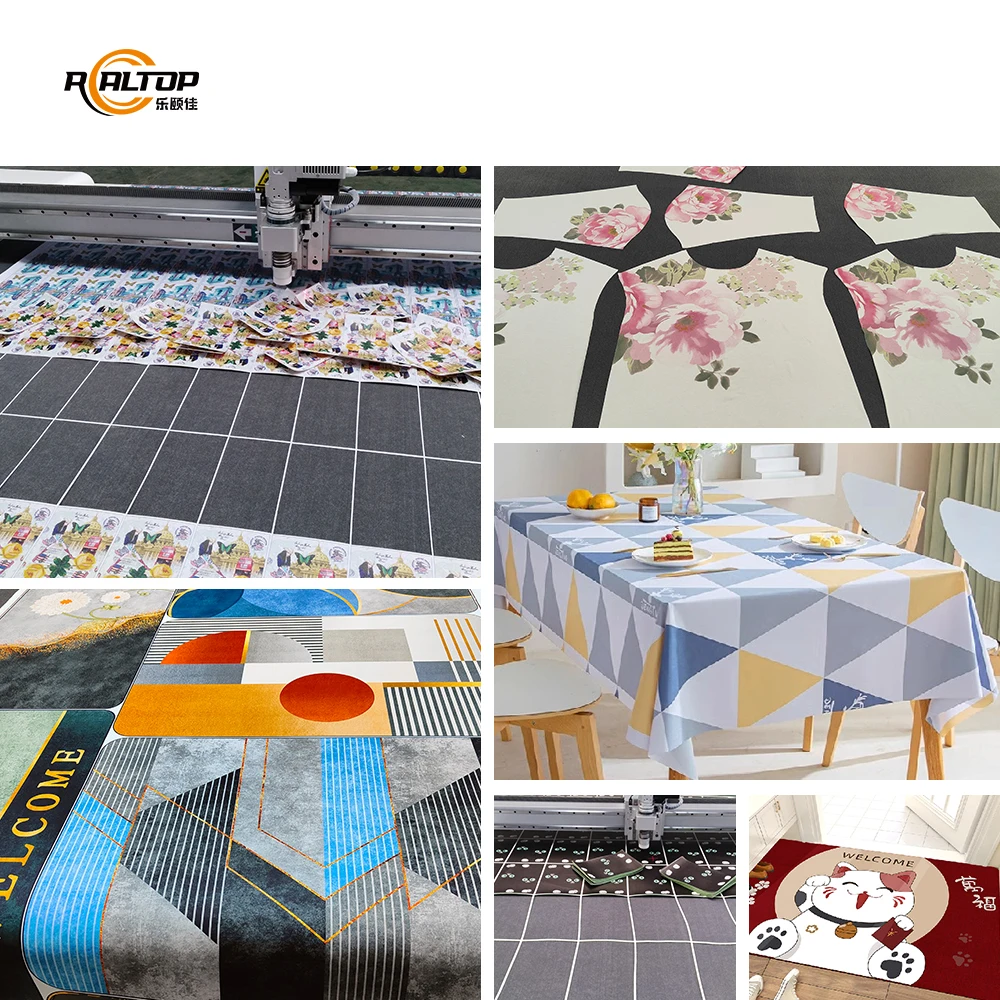
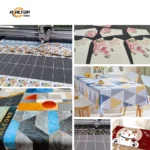
| Garment and footwear production | Single- and multi-layer fabric, lining, shoe upper material, non-woven interlining |
| Automotive interior trimming | Carpet, sponge composite leather, PU and EVA foam, sealing gasket material |
| Soft home furnishing | Upholstery fabric, curtain textile, non-woven fill, carpet |
| Luggage and bag manufacturing | PU leather, PVC composite, nylon webbing, reinforcement panels |
| Packaging sample making | Cardboard, corrugated board, plastic box stock, sticker film |
| Industrial gasket and seal | PTFE, ETFE, rubber sheet, fiberglass, carbon fiber prepreg |
Why Specified Cutting Depth Often Disappoints on the Shop Floor
A CNC fabric cutting machine that lists a maximum thickness on the nameplate but never demonstrates it on your actual roll of composite textile will underperform the moment production starts. We verify cutting depth per material with a sample report before the order is confirmed.
I have seen buyers specify a working area and assume the knife will handle whatever they load. When a composite fabric with a hard adhesive interlayer meets a standard oscillating blade, the edge delaminates and the blade dulls within hours. The cutting speed drops, and the operator is forced to slow the head down to a fraction of the rated translational velocity. [NEED_CITE: material-specific cutting performance verification standards]
Laser Process Limitations on Synthetic Textiles
CO2 laser cutting produces sealed edges on polyester and nylon, but the thermal process leaves a hardened bead that feels rough against skin and can discolor light-colored fabric. Fume extraction requirements add cost and floor space. A CNC fabric cutting machine with an oscillating knife avoids burnt edges entirely, keeping the hand-feel and color of the original textile intact. The RT-D2516/RT-S2516 delivers mechanical cuts with no heat-affected zone, which matters when the end product is a car seat cover or a garment lining that touches the user.
Contour Accuracy on Printed Fabric at Line Speed
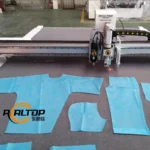
When fabric arrives pre-printed with registration marks, the cutting path must follow the print, not the nominal pattern piece. The CCD camera mark-point positioning and panoramic camera recognition options on the RT-D2516/RT-S2516 read printed marks and adjust the cut path in real time. This prevents the drift that accumulates over a long production run when the material stretches or skews on the vacuum table. [NEED_CITE: CCD vision positioning accuracy in textile cutting applications]
What the Specs Mean for Your Daily Output
The 1600×2500 mm working area accommodates standard textile roll widths without re-folding, reducing material handling between cuts. Repeated accuracy of ≤0.1 mm keeps pattern pieces within tolerance for downstream sewing operations, where even small deviations cause misalignment at seams. The 7.5 kW vacuum pump with zoned adsorption platform holds small pieces that would otherwise lift during high-speed oscillation — a common problem when cutting intricate collar or cuff shapes. Servo motor selection between Delta and Panasonic allows buyers to match component availability in their local service market. The HP-GL compatible control system accepts PLT, DXF, and AI files directly, so existing nesting workflows carry over without software translation steps.
The Cost of Skipping Material-Specific Tool Selection
Choosing a drag knife for a dense foam composite because it works on vinyl will crush the core layer and leave ragged edges that fail lamination inspection. A circular knife on tightly woven canvas can pull threads instead of severing them, creating visible defects in upholstery panels. These mismatches are not apparent in the supplier’s demonstration video because the demo material was chosen to suit the tool, not the other way around. [NEED_CITE: tool head and material compatibility in oscillating knife cutting]
Why This Machine Is Built the Way It Is
The design team covers both knife and laser cutting technologies in-house, so the RT-D2516/RT-S2516 exists because fabric and textile cutting genuinely requires a mechanical edge, not because a knife table was easier to build. Every tool head and vacuum table configuration is specified against the buyer’s material sample before production begins. The magnesium-aluminum alloy table with PVDF coating and anodic oxidation resists corrosion from humid dye-house environments. CCD camera positioning is offered as an option, not a promise — if your material has no printed marks, you skip it and save cost. Voltage, plug type, and control language are confirmed before shipment, not discovered at customs.
Documentation & Verification
- Machine specification sheet listing confirmed tool head and table configuration for your material
- Electrical schematic with voltage and frequency matched to your facility supply
- Sample cutting report on your own fabric showing edge quality and achieved thickness
- Factory test record documenting cutting speed and repeated accuracy on your pattern files
- Software license and file format compatibility note for PLT, DXF, and AI workflows
- Spare parts list with Swiss knife, vacuum pump seals, and conveyor belt sections identified
Installation, Commissioning & Support
- 380V ±10% three-phase supply with dedicated 9 kW circuit required at the installation point
- Fully assembled delivery with split box platform option for narrow doorways or container transport
- Vacuum pump integrated with built-in silencer sponge reducing operational noise at the workcell
- Touch screen control panel configured to your language before dispatch — English, Russian, Italian, Chinese, or custom
- First-run commissioning includes vacuum zoning calibration for your specific smallest pattern piece
- One-year warranty covering parts replacement with free engineer dispatch available in the first year
What We Need to Quote Accurately
Send a sample roll or sheet of the actual material you will cut, including any composite layers, adhesive interlining, or backing. Tell us the maximum sheet size you receive from your supplier and your target daily piece count. Confirm the voltage and frequency at your facility, the language your operators prefer on the control panel, and whether your patterns include printed registration marks that require camera tracking.
Frequently Asked Questions
Q: How is cutting thickness verified for my specific fabric or composite material?
A: We ask you to send a sample of your actual material before the order is confirmed. Our workshop runs it on the RT-D2516/RT-S2516 with the proposed tool head, measures the achieved depth, edge quality, and cutting speed, and sends you a written sample cutting report. You review the results and approve the configuration before production begins.
Q: Which tool head is right for my material — oscillating, drag, circular or creasing?
A: It depends on your material structure. Oscillating knives suit woven fabric and foam, drag knives handle thin vinyl and sticker film, circular knives work on single-ply textiles, and creasing wheels score cardboard without cutting through. We test your material sample with the candidate tool heads and recommend the one that delivers the cleanest edge at production speed.
Q: Can the CCD camera track printed contour marks at full production speed?
A: Yes, when the mark contrast and spacing meet minimum thresholds. The small CCD camera handles mark-point positioning for registered patterns, while the panoramic camera recognition option covers larger printed areas. We verify tracking reliability on your printed material during the sample test so you know before commitment whether camera positioning suits your workflow.
Q: How are voltage, plug, and software language configured for my country?
A: Standard voltage is 380V ±10%, but we confirm your facility supply before building. The plug type matches your local standard. The touch screen control panel supports English, Russian, Italian, and Chinese, with other languages customizable. All electrical documentation ships in your chosen language.
Q: What does the sample cutting test cover before I commit to the order?
A: The test runs your actual material through the proposed configuration — tool head, vacuum zoning, cutting speed, and file format. We document edge quality, achievable thickness, cutting speed, and pattern accuracy in a report. If your files are PLT, DXF, or AI, we test compatibility with your nesting workflow so there are no surprises at installation.


Related products
2026 Flatbed Oscillating Knife Cutter 1600x3500mm Auto-Feeding Textile
Product Overview
Flatbed Oscillating Knife Cutting Machine 2026 is a high-precision textile fabric cutter with auto-feeding function, ideal for efficient and accurate cutting tasks in textile manufacturing. It combines advanced oscillating knife technology with a large working area to meet industrial production needs.Key Specifications
| Model | 2026 |
| Working Area | 1600x3500mm |
| Feeding System | Auto-Feeding |
| Cutting Type | Oscillating Knife |
| Application | Textile Fabric |
Automatic Multi-Layer Vibrating Knife Cutter 2026
Product Introduction
Automatic Multi-Layer Vibrating Knife Cutter 2026, ideal for precise cutting of various materials with multi-layer processing capability, enhancing production efficiency.
Key Specifications
| Type | Automatic Vibrating Knife Cutter |
| Layer Capacity | Multi-Layer |
| Model | 2026 |
| Function | Precision Cutting |
CNC Oscillating Knife Cutting Machine 2026 3000¡Á1600mm High-Speed
Product Parameters
| Model | CNC Oscillating Knife Cutting Machine 2026 |
| Working Area | 3000mm¡Á1600mm |
| Cutting Type | Oscillating Knife |
| Application | Fabric Cutting |
| Feature | High-Speed |
Introduction
High-performance CNC oscillating knife cutting machine with 3000mm¡Á1600mm working area, ideal for high-speed fabric cutting. Precision and efficiency for professional textile processing needs.

Electric Fabric Rotary Cutter 2026 12V Auto-Cut Industrial
Product Introduction
Industrial-grade Electric Fabric Rotary Cutter designed for precise cutting of scan-printed cloth. Features 12V auto-cut functionality for efficient, automated operation, ideal for professional textile processing.Product Parameters
| Power Supply | 12V |
| Function | Auto-Cut |
| Application | Scan-Printed Cloth |
| Type | Industrial Electric Rotary Cutter |

Jinan Realtop PVC Cutting Machine 2026 CE Certified
Product Introduction
Jinan Realtop PVC Cutting Machine 2026 is a CE-certified cutting solution, ideal for precise PVC material processing. Designed for efficiency and reliability in industrial applications.Product Parameters
| Model | 2026 |
| Certification | CE Certified |
| Application | PVC Cutting |
| Manufacturer | Jinan Realtop |
商品评价
There are no reviews yet.