


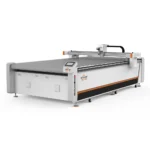
Leather CNC Cutting Machine for PU Fabric – Technical Guide
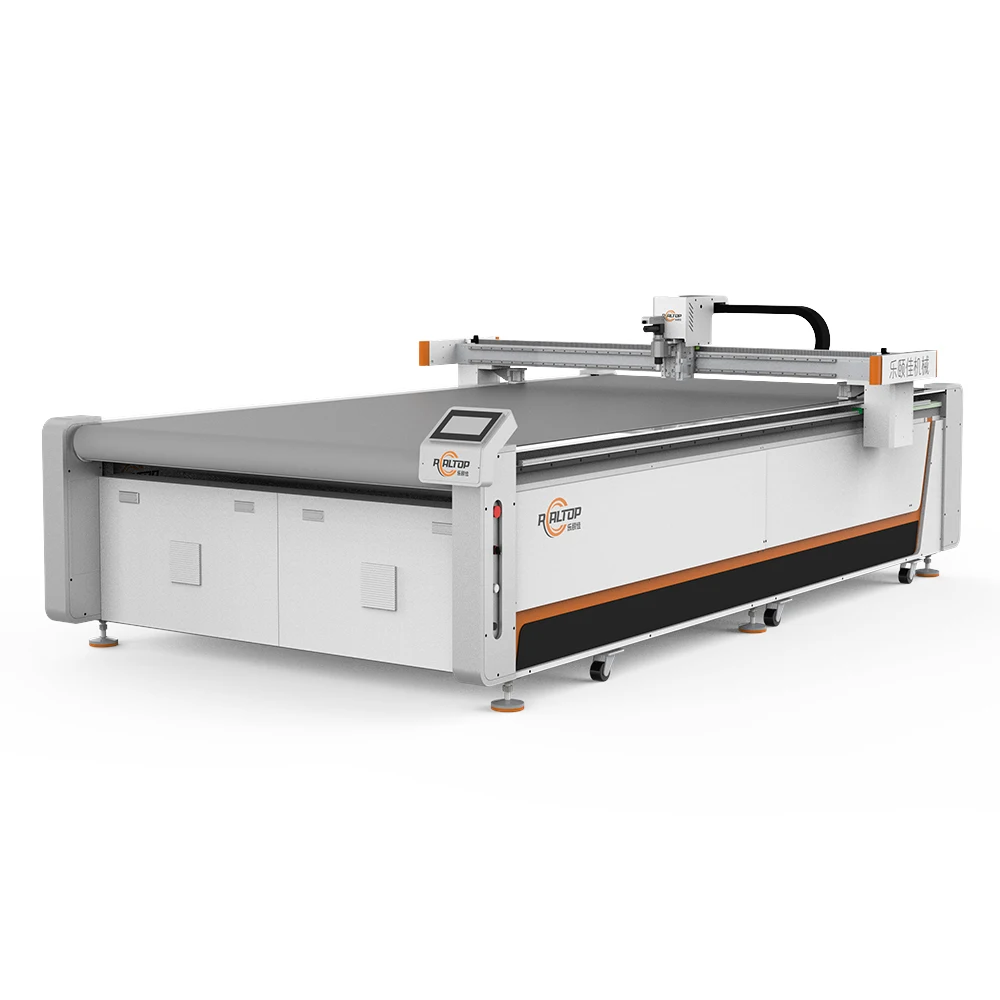
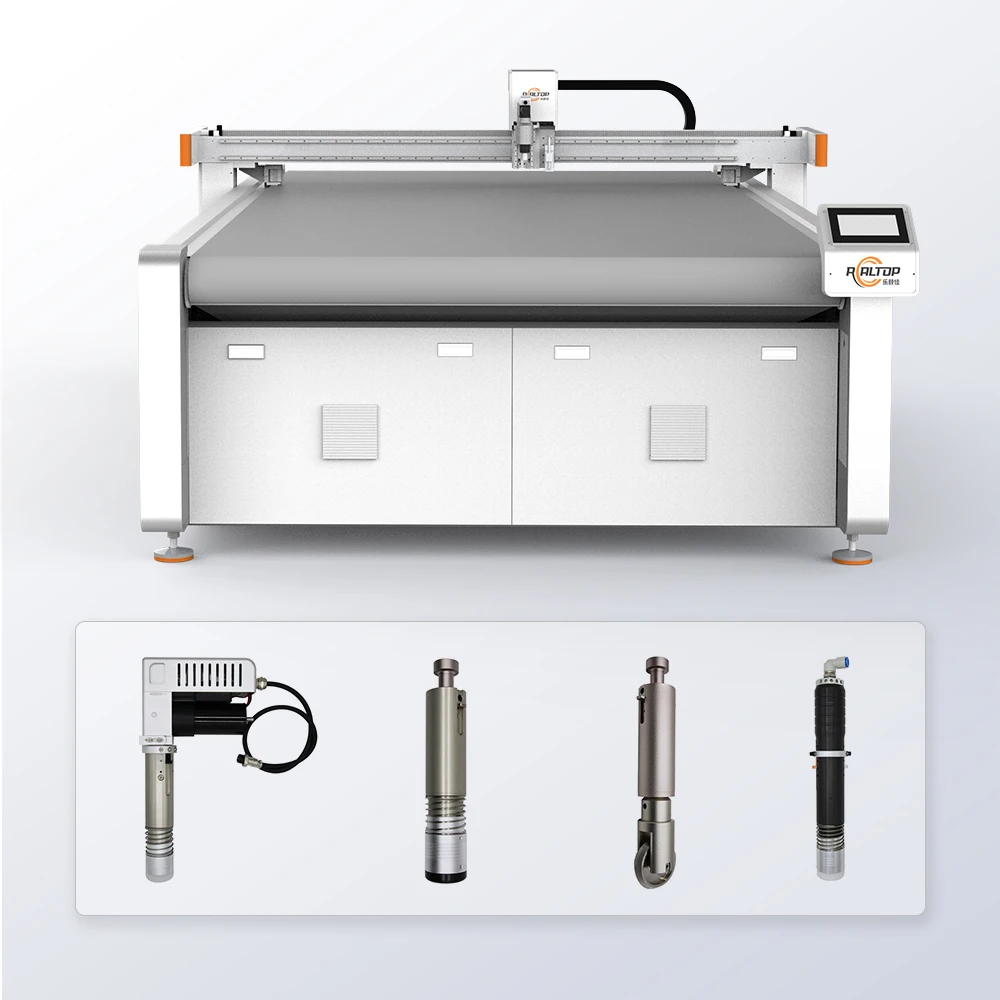
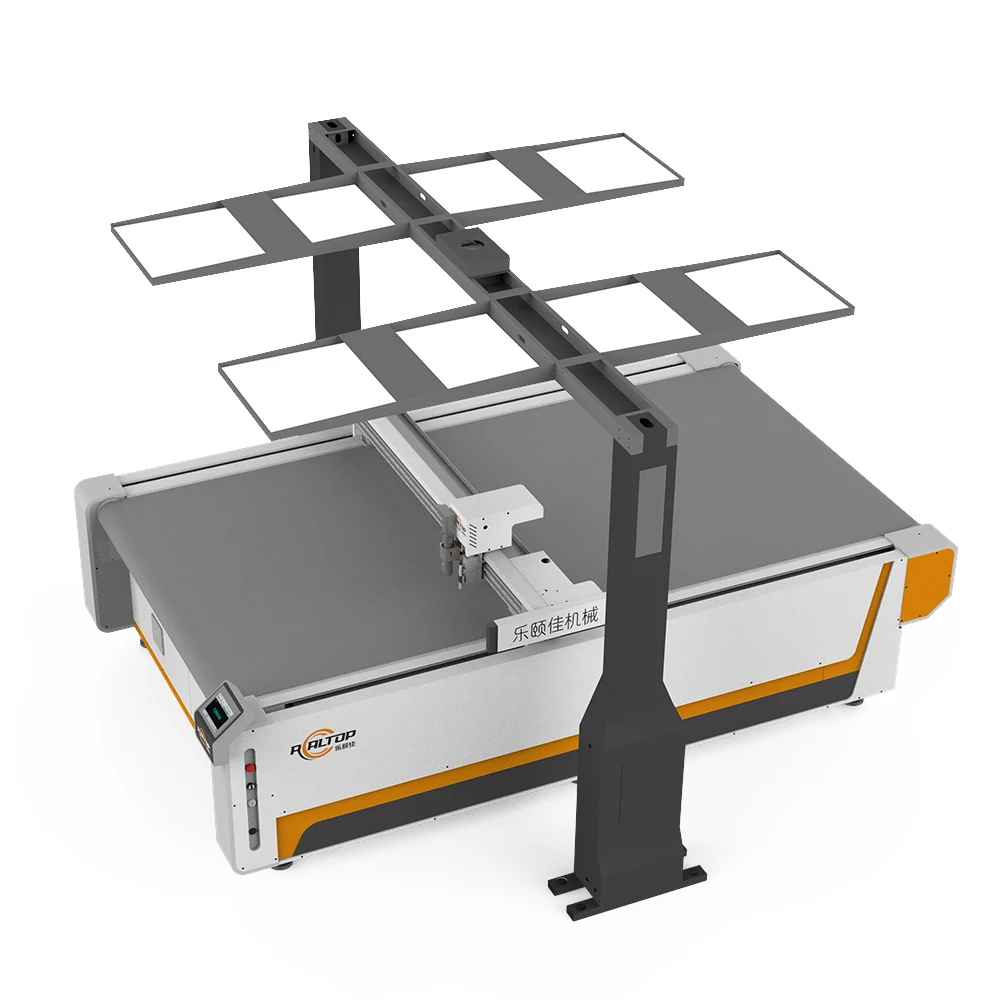
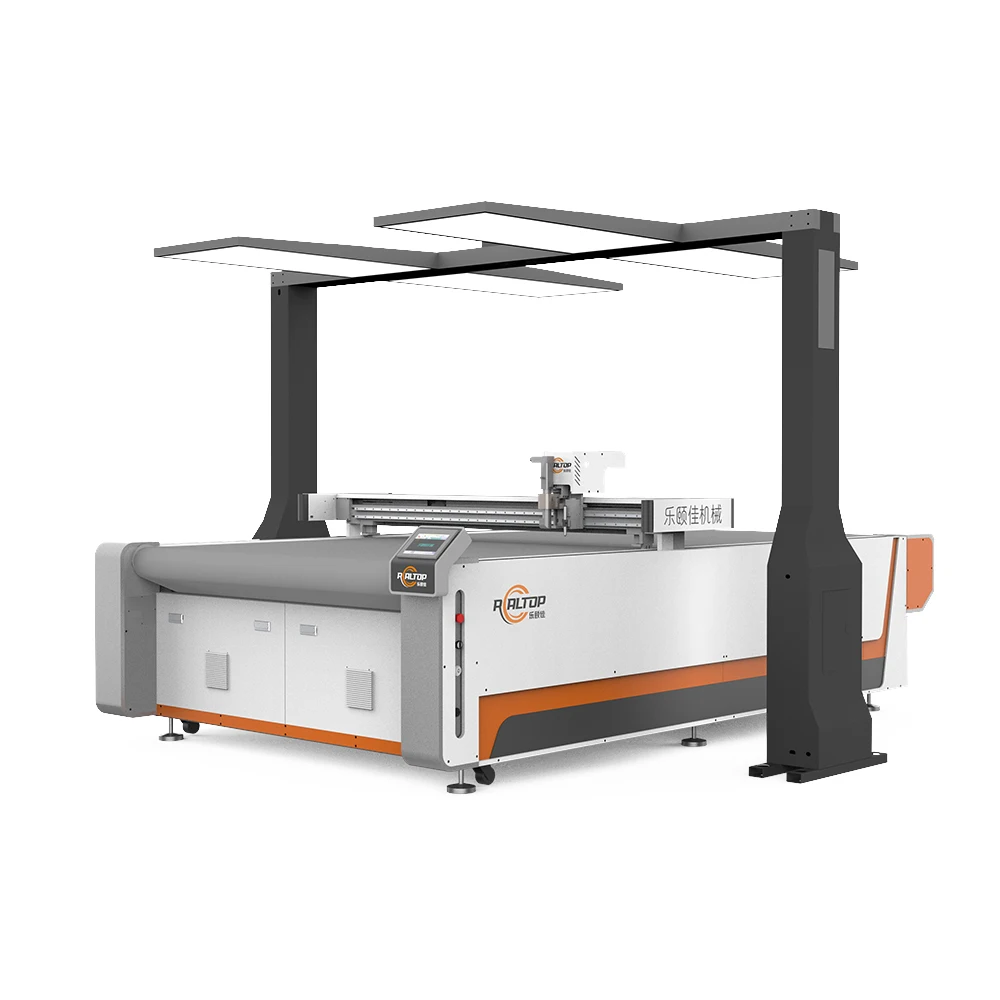
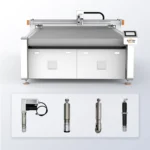
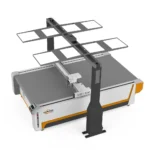
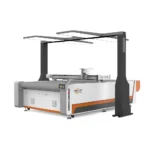
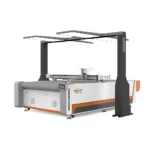
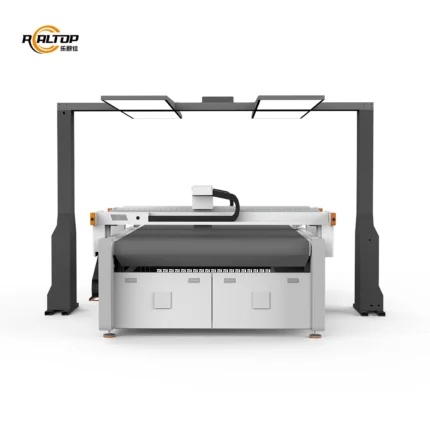
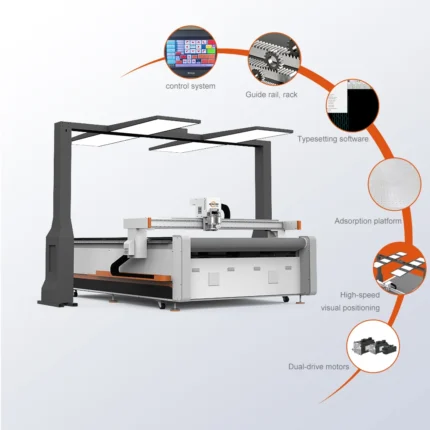
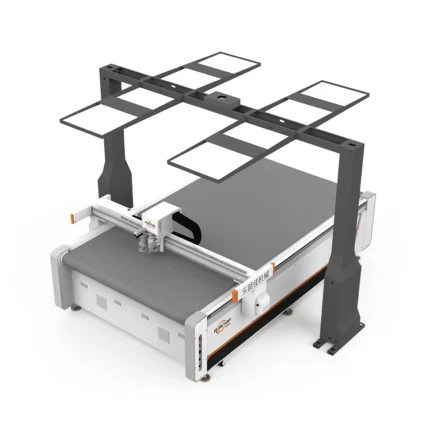
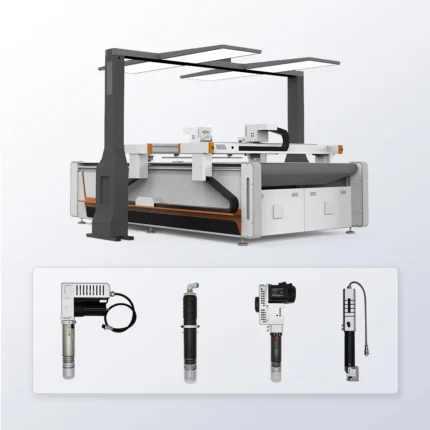
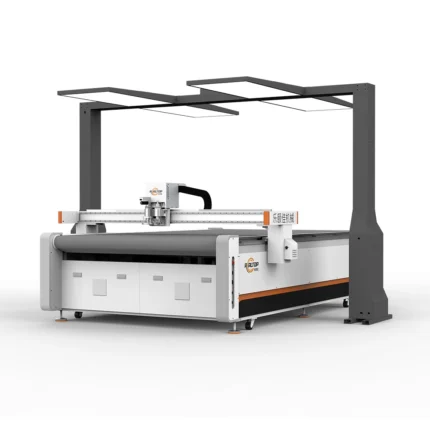
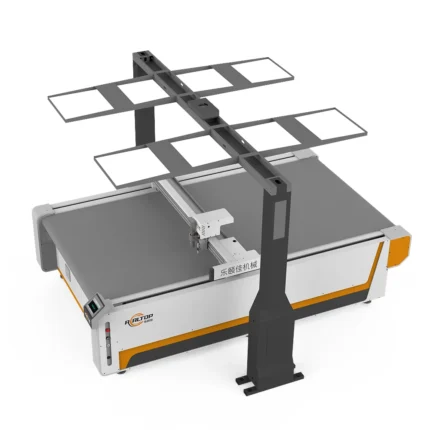
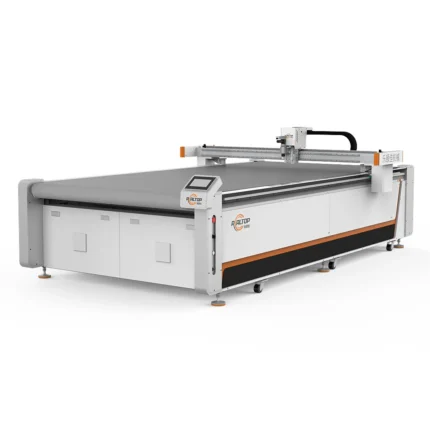
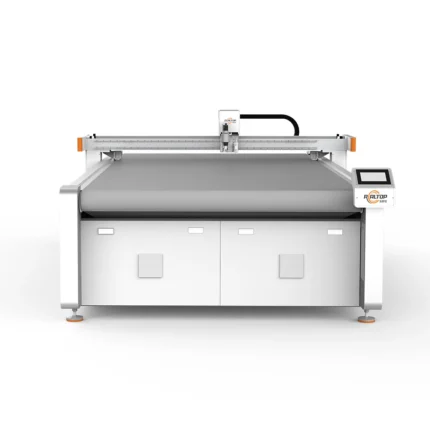
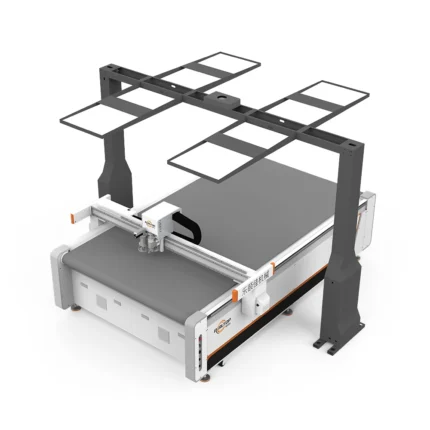
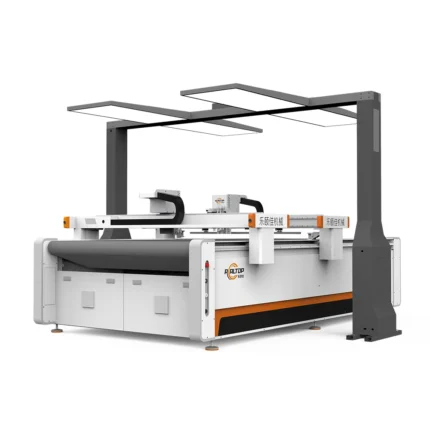
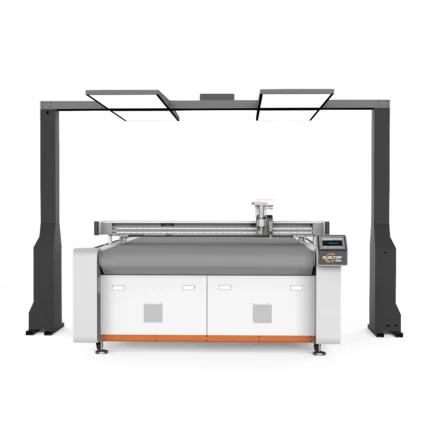
1625 CNC Oscillating Knife Cutting Machine, 1600×2500mm Working Area, ≤30mm Cutting Thickness — configured with oscillating knife, driven rotary knife, creasing wheel and milling tool heads for leather, PU, EVA and composite materials. Aluminum bellows vacuum table with 9kW pump ensures small-part stability during high-speed contour cutting. CCD camera positioning supports printed mark recognition for precise nesting. PLC control panel accepts PLT, DXF, AI and PDF file formats with multi-language display options. Sample cutting performed on buyer’s own material before order confirmation, with full tool head configuration list and electrical schematic provided.
Precision Cold-Cutting — In-house knife tooling configured per material thickness and composite structure, validated on your actual leather or EVA stock before shipment.
Technical Specifications
| Parameter | Value |
|---|---|
| Model | 1625 |
| Product Type | CNC Oscillating Knife Cutting Machine |
| Working Area | 1600 × 2500 mm |
| Tool Head Options | Oscillating knife, Driven rotary knife, Creasing wheel, Kiss cutting tool, Pneumatic knife, Milling tool, V groove knife |
| Cutting Speed | 0 – 2000 mm/s |
| Cutting Thickness | ≤ 30 mm (basis to be confirmed — depends on material density and tool head) |
| Cutting Accuracy | ± 0.1 mm |
| Repeat Positioning Accuracy | ≤ 0.1 mm |
| Vacuum Pump Power | 9 kW |
| Vacuum Table | Aluminum bellows vacuum table |
| Control System | PLC control panel |
| Servo Motor Options | Panasonic, Delta, Dorna |
| Voltage Options | 110V, 220V, 380V |
| Display Language | English, Russian, Italian, Chinese (custom languages available) |
| Software File Formats | PLT, DXF, AI, PDF |
| Auto-Nesting | Camera-based defect detection |
| Safety Device | Infrared sensor device and emergency stop device |
| Machine Size | 3300 × 2100 × 1350 mm |
Application Suitability
| Application | Material or Output |
|---|---|
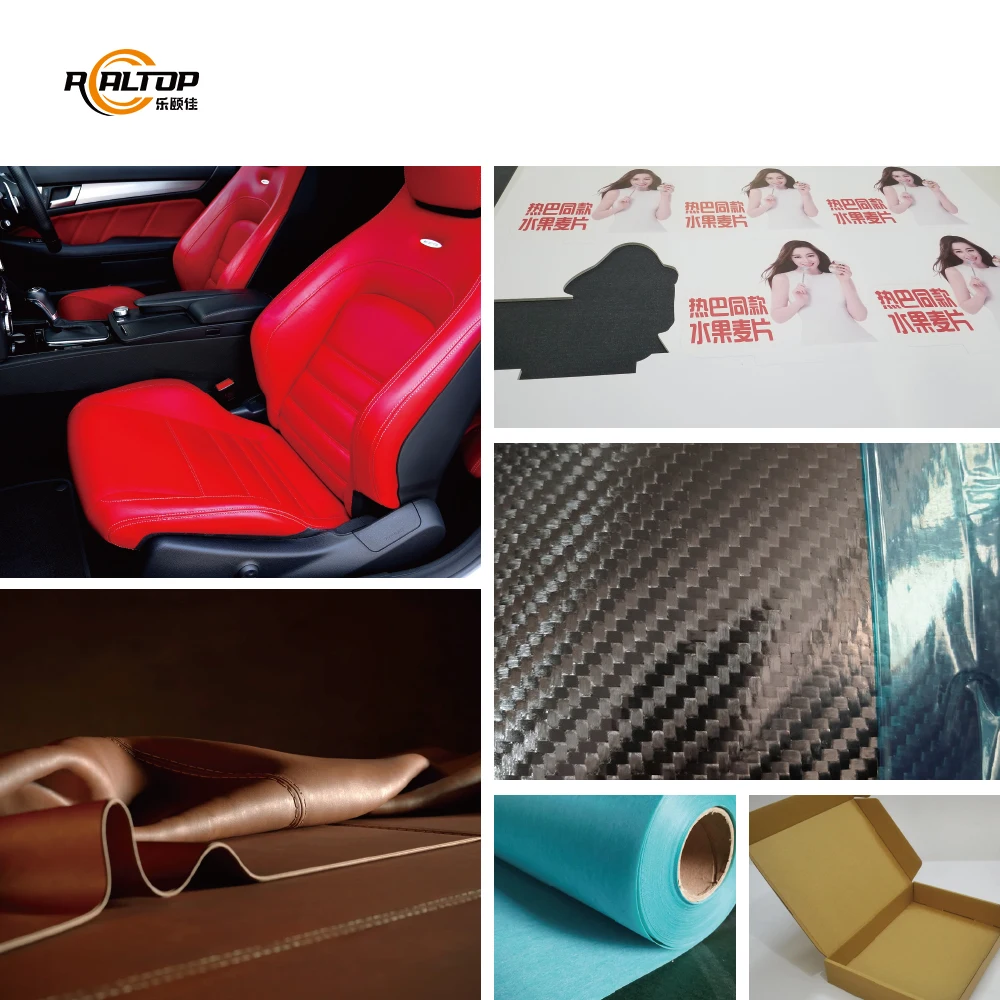
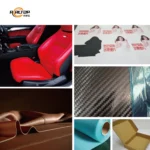
| Automotive floor mats | Leather-EVA composite, tufted fabric with rubber backing |
| Seat covers and cushions | Genuine leather and PU irregular contour cutting, multi-layer foam sectioning |
| Steering wheel covers | Leather and silicone composite wraps |
| Dashboard mats and carpets | Non-woven and needle-punched textile laminates |
| Footwear uppers and insoles | PU leather, synthetic suede, EVA foam |
| Bags and garments | PU, PVC, coated fabric, textile layers |
| Packaging sample making | Corrugated carton, cardboard, foam board |
| Gasket and seal production | PTFE, rubber, composite sheet |
Why "Same as the Sample" Fails on PU Leather with Flame-Retardant Coatings
CO2 laser cutting and engraving machine specifications look clean on paper, but thermal processes behave unpredictably the moment a coated composite enters the beam path.
I once set up a CO2 line for an automotive interior shop cutting PU leather. Parameters dialed in on their sample ran perfectly — clean edges, no discoloration. Then the real production roll arrived: a flame-retardant coated PU composite. Within minutes the edges were yellowed and carbonized, the shop floor filled with acrid fumes, and the line went down for four days while we rebuilt the parameter library from scratch. That experience is why I always ask buyers to send actual production material before we talk numbers [NEED_CITE: VOC emission standards for automotive interior materials].
Cold-Cutting Eliminates the Thermal Damage Problem Entirely
The 1625 CNC oscillating knife cutting machine removes heat from the equation. A high-frequency vibrating blade slices through PU, genuine leather, and multi-layer EVA composites without melting, charring, or generating volatile organic compounds. This matters for automotive interiors where cabin air quality standards prohibit off-gassing from heat-affected edges. Where a laser cutting machine manufacturer might quote peak power that falls short on coated materials, cold-cutting delivers consistent edge quality across any coating formulation.
Tool Head Selection Dictates Edge Quality More Than Cutting Speed
A driven rotary knife glides through genuine leather without snagging the grain surface, while an oscillating knife handles dense EVA foam stacks with vertical walls. Creasing wheels score fold lines on carton blanks without penetrating the face stock. Switching between these heads is a mechanical changeover, not a software reconfiguration. Selecting the wrong tool head for a given composite produces ragged edges or crushes foam layers — a problem that no amount of parameter tuning can fix [NEED_CITE: tool head selection criteria for composite materials].
Reading the Specs That Actually Affect Production
The ± 0.1 mm cutting accuracy and repeat positioning accuracy of ≤ 0.1 mm determine whether seat cover panels align at the stitching line, not whether the machine can hold a tolerance. For automotive floor mats, this tolerance window keeps the seat rail cutout tight to the vehicle floor contour. The 9 kW vacuum pump paired with the aluminum bellows vacuum table provides hold-down force across the 1600 × 2500 mm bed — essential when cutting small gasket pieces or steering wheel cover segments that would otherwise lift under knife drag. Camera-based defect detection identifies natural leather scars and grain variations before nesting, routing the cutter path around unusable zones to maximize hide yield. The PLC control panel accepts DXF, PLT, AI, and PDF files directly, which means your pattern department does not need to learn proprietary CAD software [NEED_CITE: DXF and PLT file compatibility across CAD platforms].
The Hidden Cost of Wrong Configuration Choices
A vacuum table with insufficient zoning leaves small parts unanchored; the knife drags them off position and the entire batch is scrapped. A CCD system that looks good in a demonstration but cannot track printed registration marks at production speed forces operators back to manual alignment. Quoting a machine on working area alone while ignoring material thickness leads to a knife that stalls mid-cut through a 20 mm EVA stack. Every one of these failures is preventable with upfront specification work [NEED_CITE: vacuum table zoning requirements for small-part cutting].
Why Buyers Source This Machine From Jinan
The design team builds both knife and laser platforms in-house, so the cutting method is matched to the material rather than forced into whichever technology the sales catalog happens to emphasize. Tool head and table configurations are specified against each buyer’s material sample, not chosen from a generic menu. Sample cutting runs on the buyer’s actual PU, leather, or composite stock generate a cutting report before the order is confirmed. Voltage, plug type, and control language are documented and verified prior to shipment — not discovered when the crate arrives. The in-house design team means configuration changes happen at the engineering level, not through third-party integrators.
Documentation & Verification
- Machine specification sheet listing all tool head options and servo motor brand confirmed at order
- Electrical schematic with voltage and frequency matching your facility supply
- Sample cutting report generated on your submitted PU leather or composite material
- Factory test record covering cutting accuracy and repeat positioning before dispatch
- Software license note with confirmed DXF, PLT, AI, and PDF file format compatibility
- Packing photographs documenting machine condition and accessory inventory at crating
Installation, Commissioning & Support
- Foundation must accommodate 3300 × 2100 × 1350 mm footprint with level floor and clear access for material loading
- Dedicated circuit required matching confirmed voltage option (110V, 220V, or 380V) and local frequency
- Machine ships assembled; vacuum table and tool head carriage require on-site alignment and calibration
- First-article runs validate cutting accuracy on your material using confirmed PLC control parameters
- Operator training covers tool head changeover, vacuum zoning adjustment, and camera-based nesting setup
- Spare parts list includes oscillating knife blades, rotary knife discs, and vacuum pump consumables
Before You Send an Inquiry
Share the specific material composition — whether it is PU-coated polyester, genuine split leather, or a flame-retardant laminate — along with the maximum thickness and daily volume you plan to run. Confirm your facility voltage and frequency, and tell us which file format your pattern department currently uses. If you can send a sample roll of your actual production material, we will run a cutting test and return a report before we discuss lead time.
Frequently Asked Questions
Q: Which tool head should I use for 8 mm PU leather with a foam backing?
A: An oscillating knife handles the dense foam backing with clean vertical walls, while a driven rotary knife is better for the PU face layer if edge finish is the priority. We test both on your submitted sample and document which head — or combination — delivers the edge quality your downstream stitching or bonding process requires.
Q: Can the camera system track printed marks on patterned leather at full cutting speed?
A: The camera-based defect detection system identifies grain variations, scars, and printed registration marks on the hide surface. However, tracking reliability depends on mark contrast and size relative to the camera resolution. We validate this during the sample cutting phase at production-speed settings before confirming the configuration.
Q: What material density and tool head combination does the 30 mm cutting thickness assume?
A: The ≤ 30 mm cutting thickness applies to softer materials like EVA foam at standard densities using the oscillating knife head. Denser composites, layered genuine leather, or rubber gasket stock reduce the effective cutting depth. We determine the working thickness for your specific material during sample testing.
Q: Will the vacuum table hold small gasket pieces in place during cutting?
A: The aluminum bellows vacuum table with the 9 kW pump provides distributed suction across the 1600 × 2500 mm bed. For very small parts, vacuum zoning concentrates hold-down force in the cutting area. We confirm zoning adequacy during the sample cutting stage using parts at your minimum production size.
Q: How do you handle voltage differences and control language for export orders?
A: Voltage options include 110V, 220V, and 380V, and we confirm the exact supply specification along with plug type before production begins. The PLC control panel supports English, Russian, Italian, and Chinese as standard, with custom language files available. All electrical documentation reflects the confirmed configuration.


Related products

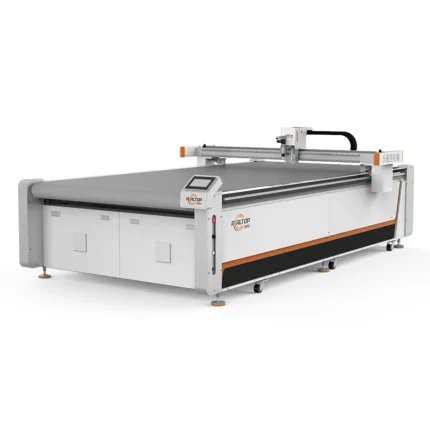
Oscillating Knife Leather Cutter CNC 2026
Product Introduction
Oscillating Knife Leather Cutter CNC 2026 is a precision cutting solution for leather materials, designed for efficient and accurate fabrication in manufacturing settings. Ideal for leather processing with advanced CNC technology.Product Parameters
| Model | Oscillating Knife Leather Cutter CNC 2026 |
| Cutting Type | Oscillating Knife |
| Application | Leather Materials |
| Control System | CNC |
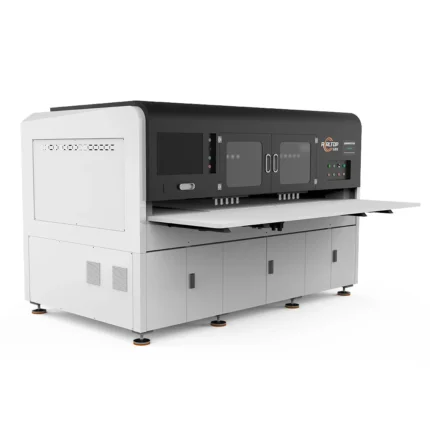
Realtop 2026 Auto Vibration Knife Leather Cutting Machine
Product Introduction
Realtop 2026 Leather Cutting Machine features auto vibration knife technology, ideal for precise cutting of PU and genuine leather materials with efficient performance.
Specifications
| Model | 2026 |
| Cutting Technology | Auto Vibration Knife |
| Material Compatibility | PU & Genuine Leather |
| Type | Leather Cutting Machine |
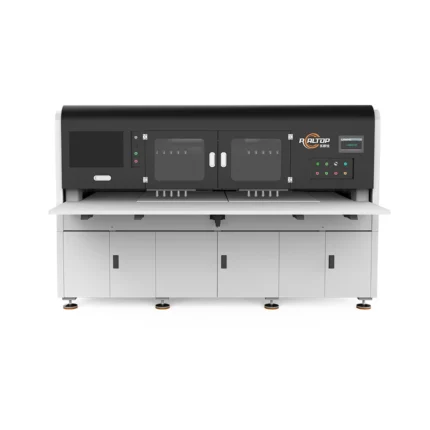
Realtop 2026 Digital Leather Cutting Machine
Product Introduction
Realtop Digital Leather Cutting Machine 2026 is a professional equipment designed for precise leather cutting, ideal for manufacturing applications. It integrates advanced digital technology to ensure efficient and accurate cutting performance, suitable for various leather processing needs.
Product Parameters
| Model | Realtop 2026 |
| Type | Digital Leather Cutting Machine |
| Application | Leather Processing |
| Core Feature | Precision Cutting Technology |
商品评价
There are no reviews yet.