

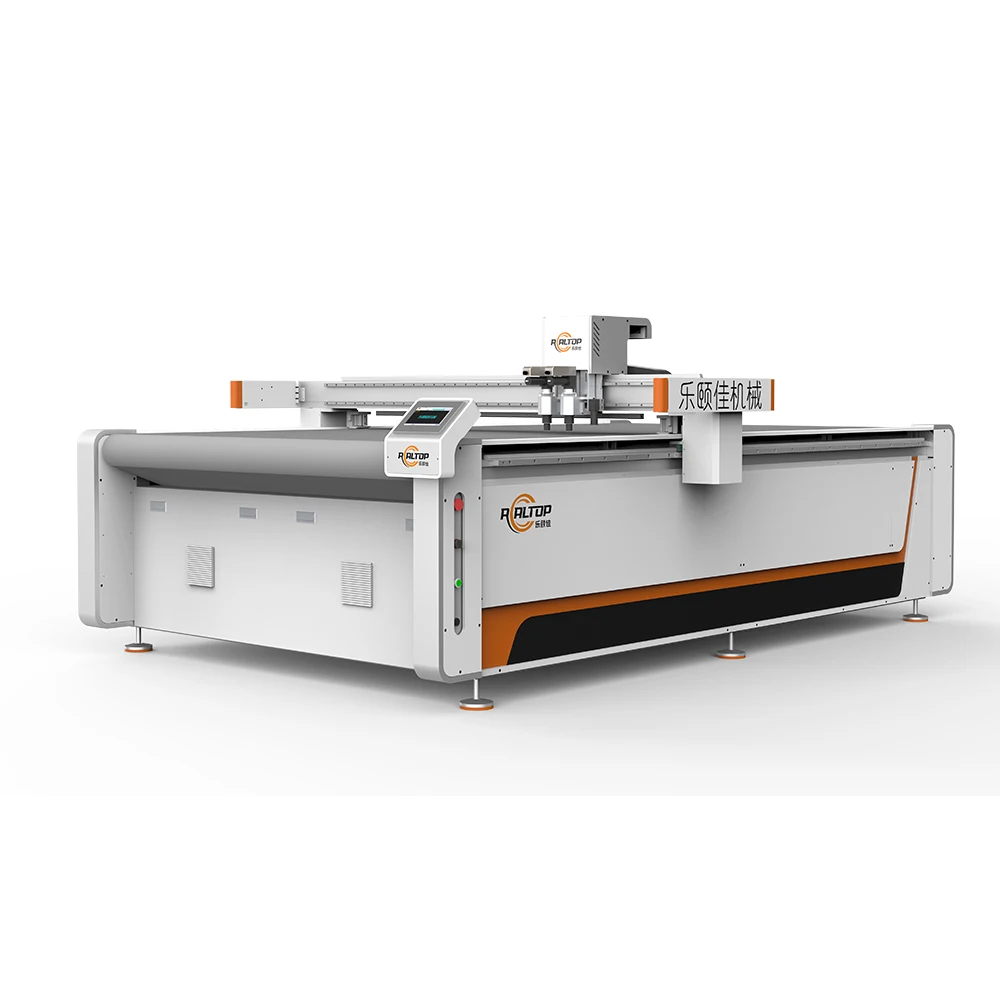
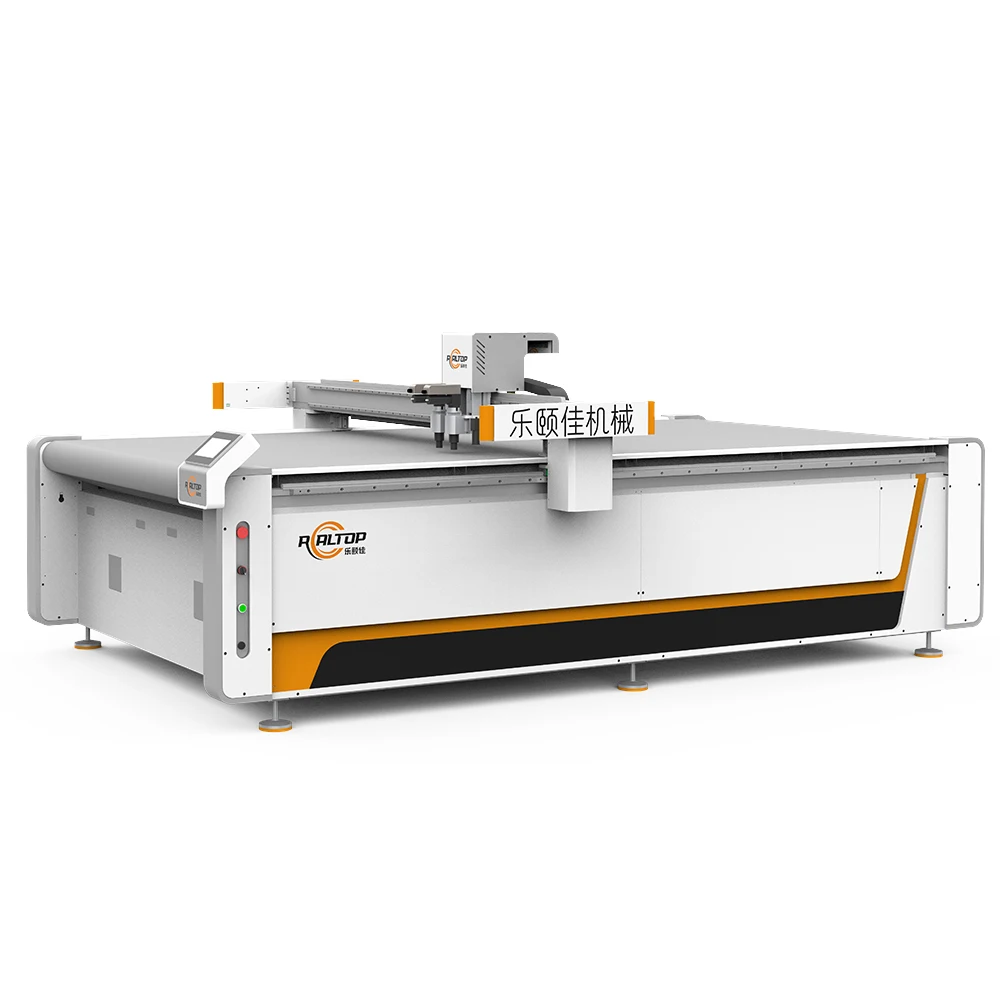
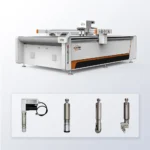
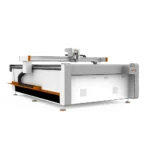
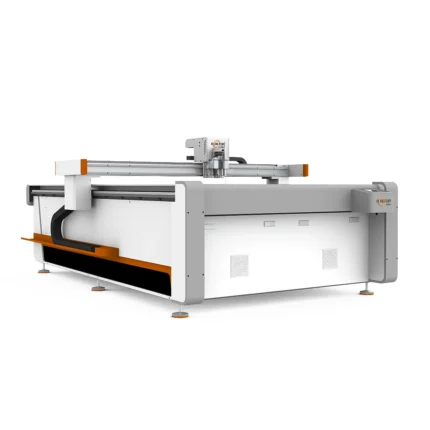
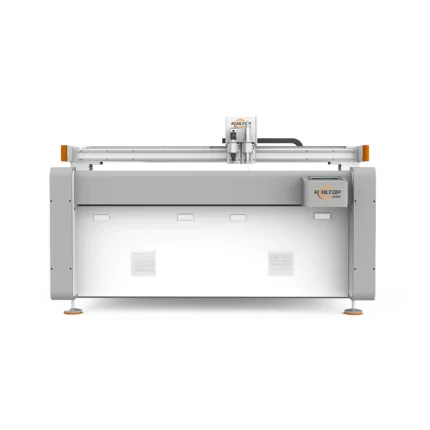
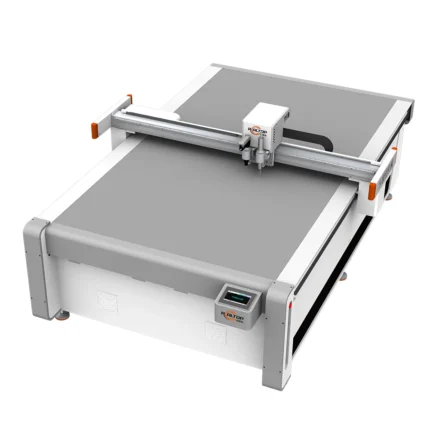
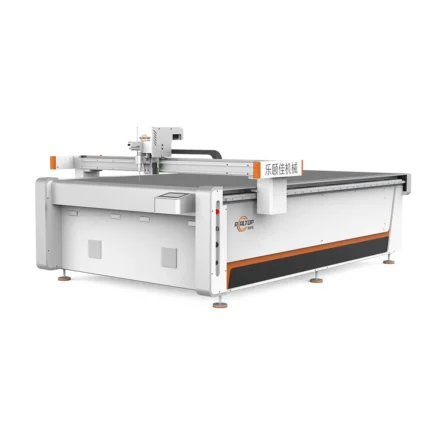
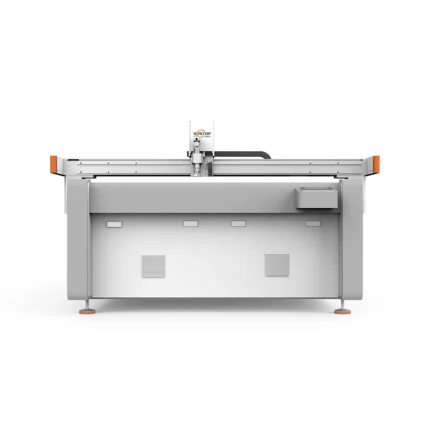
Model Selection Oscillating Knife Cutting Machine with CCD Camera
Sample cutting on your own packaging board is completed before commitment, ensuring tool head and vacuum configuration match your exact flute profile and material weight.
Laser versus knife cutting process clarity — We specify cutting method matched to material behavior rather than quoting peak power that fails on the shop floor, verified through sample runs on your actual corrugated board stock.
Technical Specifications
| Parameter | Value |
|---|---|
| Product Type | CNC Oscillating Knife Cutting Machine |
| Model | 1625 |
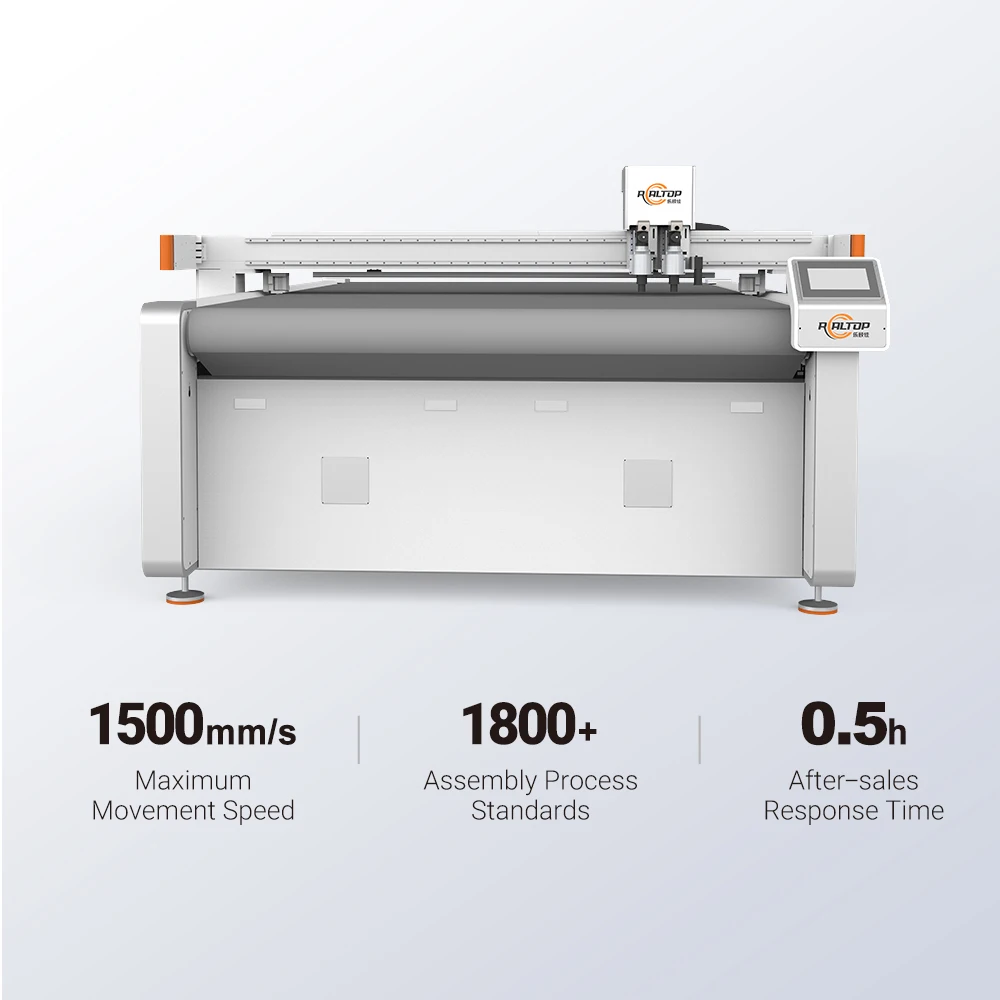
| Working Area | 1600 × 2500 mm |
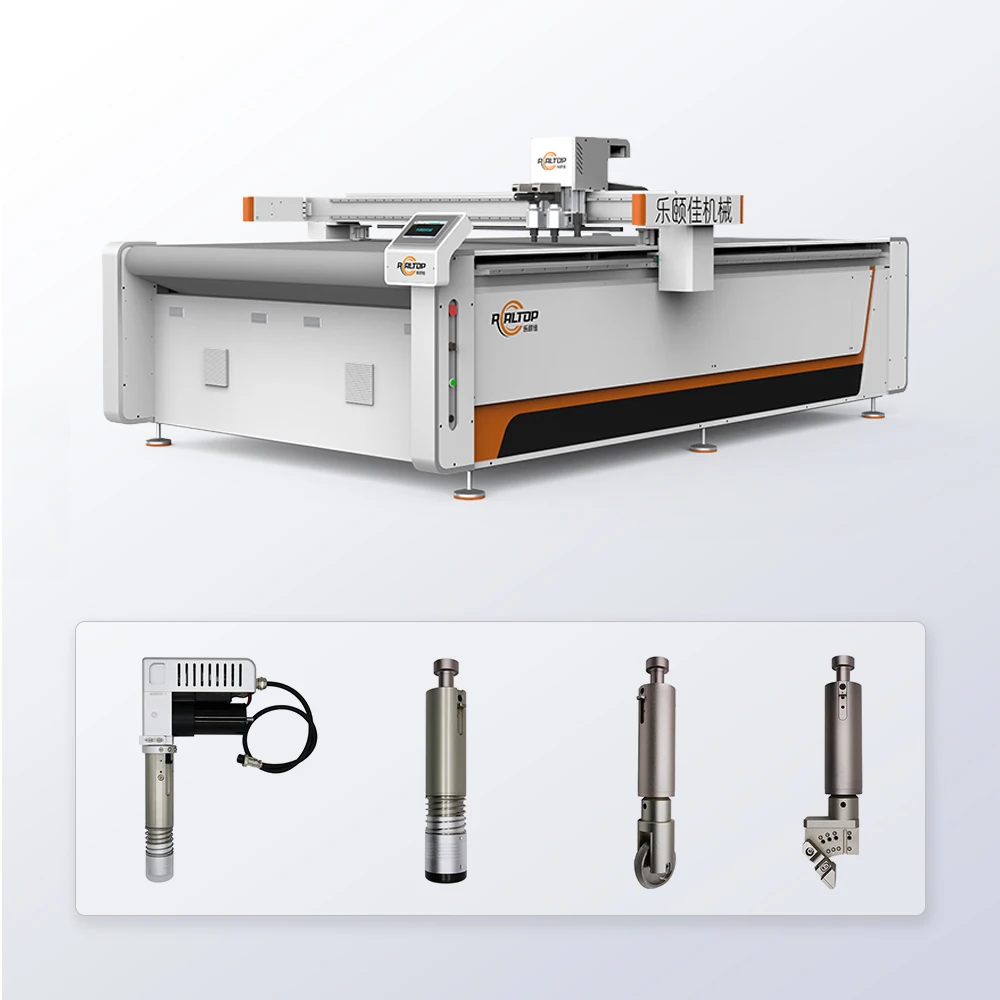
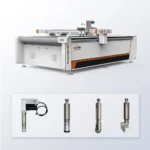
| Tool Head Options | Oscillating knife, Driven rotary knife, Creasing wheel, Kiss cutting tool, Pneumatic knife, Milling tool, V groove knife |
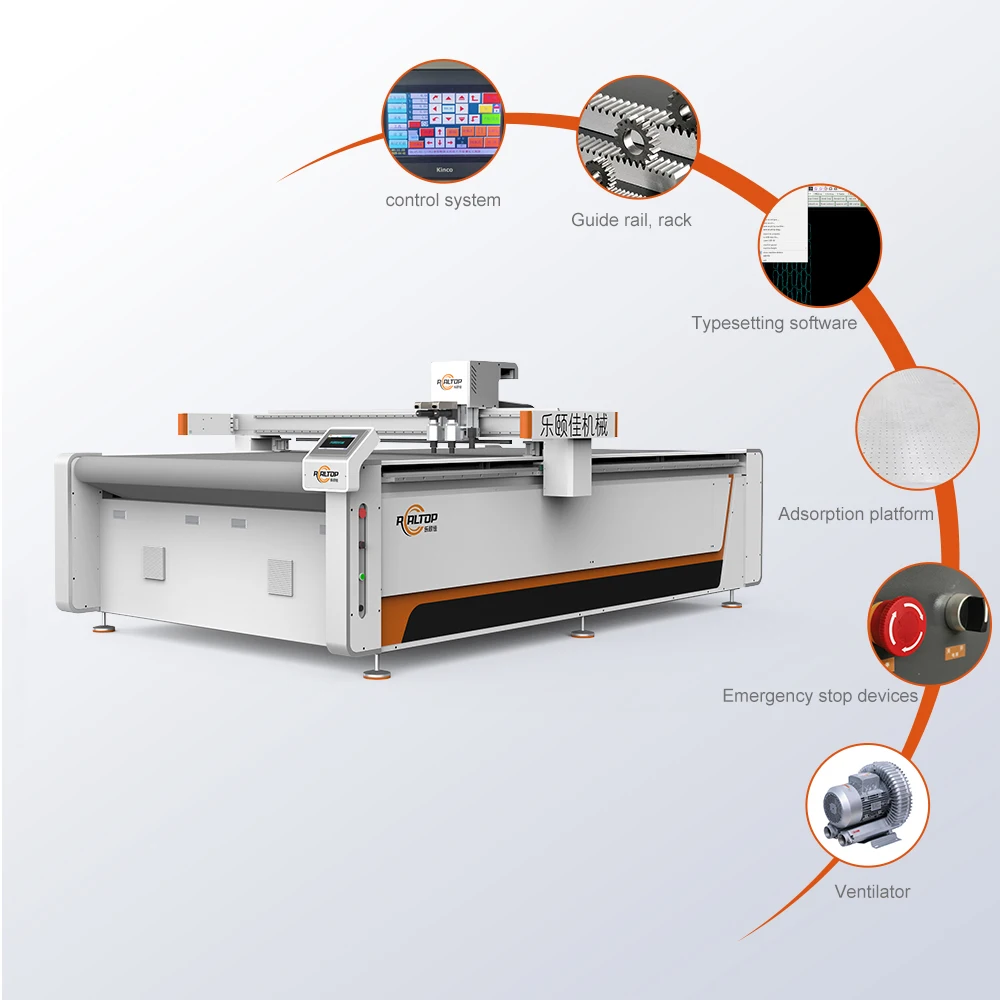
| Positioning System | CCD camera for printed contour recognition |
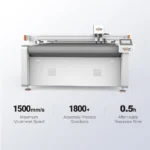
| Cutting Speed Range | 0–1500 mm/s |
| Cutting Thickness Capacity | Up to 40 mm (basis not stated in source — confirm block format, material and thickness) |
| Positioning Accuracy | ±0.1 mm |
| Vacuum Pump Rating | 9 kW |
| Vacuum Table Construction | Aluminum bellows vacuum table |
| Servo Drive Options | Panasonic, Delta, Dorna |
| Control System | PLC control panel with optional display languages |
| Voltage Options | 110V, 220V, 380V (configurable to target market) |
| File Format Compatibility | PLT, DXF, AI, PDF and others |
| Included Software | Dedicated packaging box structure design software |
| Safety Devices | Infrared sensor device and emergency stop device |
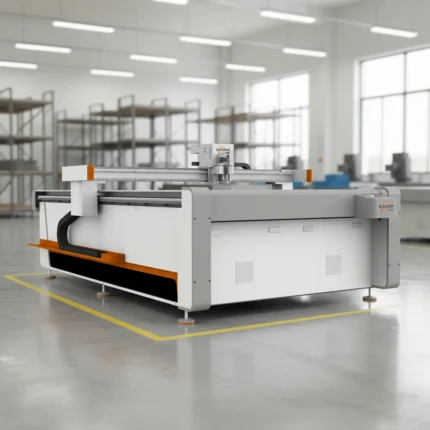
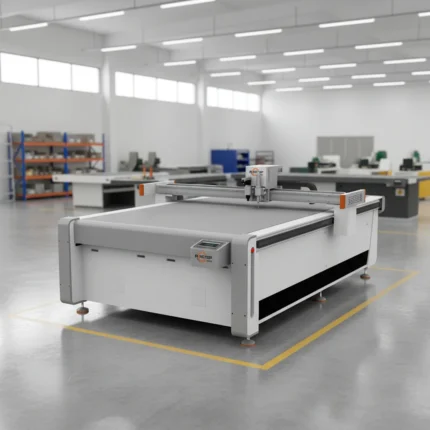
| Machine Dimensions | 3300 × 2100 × 1350 mm |
| Language Options | English, Russian, Italian, Chinese and others; special languages customizable |
| Certification | CE |
Application Suitability
| Application | Material or Output |
|---|---|
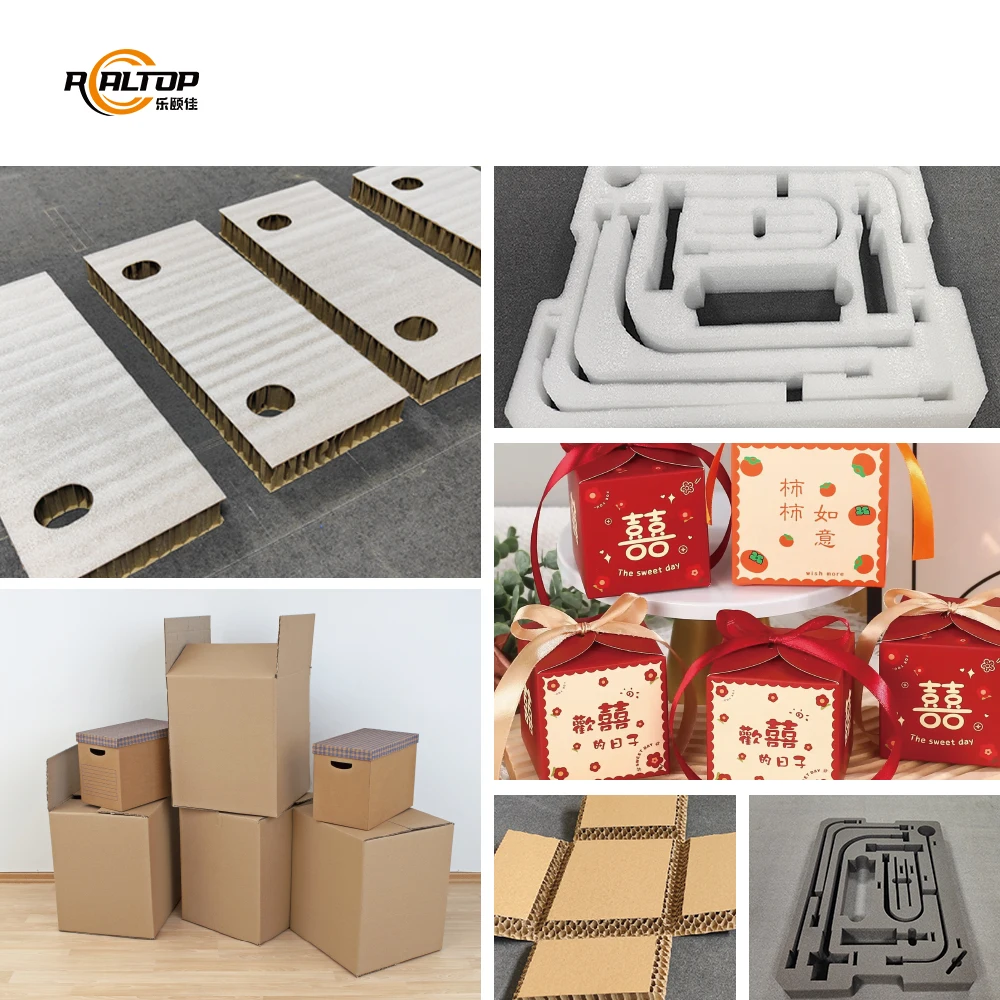
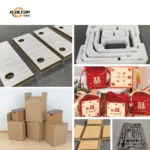
| Corrugated packaging sample making | E-flute, B-flute and BC-flute corrugated board |
| Greyboard and art paper prototyping | Greyboard, cardstock, specialty paper |
| Protective packaging insert cutting | EVA foam, EPE foam, Coroplast, PU foam |
| Folding carton and display work | Laminated carton stock with printed registration marks |
| Gasket and seal cutting for industrial packaging | Rubber mats, PTFE, non-woven fabric |
| Short-run production of custom boxes | Thin plastic sheets (PVC, PET), leather, composite materials |
Why the "Peak Laser Power" Quotation Fails Your Packaging Line
Laser power quoted at peak rather than continuous output routinely produces cutting depth that falls short when the material actually hits the bed — a laser cutting and engraving machine manufacturer should always validate real cutting capacity on your stock before any commitment is made.
Real cutting capacity must be proven on your actual material, not quoted from a spec sheet based on ideal laboratory conditions.
When a packaging converter switches from standard E-flute to B-flute with lamination, the energy density required changes fundamentally. I have watched first batches turn to scrap because blade pressure and registration assumptions were carried over from a different board profile without re-testing. The same principle applies to laser process specifications: a quoted wattage number without the material context is a guess, not a guarantee [NEED_CITE: thermal cutting process validation standards for packaging substrates]. Buyers who skip the sample cutting stage end up absorbing the cost of mis-specified equipment through wasted material and delayed deliveries.
Process Match: Knife Cutting for Packaging Board Profiles
Packaging board demands a cutting process that handles variable thickness, layered construction and printed registration without crushing flute structure or delaminating surface coatings. The 1625 supports an oscillating knife, driven rotary knife, creasing wheel and V groove knife on the same table, allowing a single machine to handle cutting, creasing and bevel operations within one workflow. A laser cutting and engraving machine manufacturer typically serves acrylic, wood and textile applications where thermal edge sealing is an advantage — but for corrugated board and laminated carton stock, mechanical knife cutting preserves the structural integrity that packaging performance depends on.
CCD Registration at Production Speed
The CCD camera positioning system on this machine tracks printed marks on your packaging stock to enable contour cutting of pre-printed sheets. This is essential for short-run production where die-cut tooling cost cannot be justified. The camera must reliably read registration marks across varying print qualities and board colors at full cutting speed. When the printed mark contrast is low or the board surface is highly reflective from lamination, recognition performance can degrade — which is why sample testing on your actual printed stock is a non-negotiable step before specification is finalized [NEED_CITE: CCD contour recognition performance variables on printed packaging substrates].
Reading the Specification Sheet Beyond the Headline Numbers
The 1600 × 2500 mm working area accommodates full-size packaging board sheets common in sample making and short-run production. The ±0.1 mm positioning accuracy ensures that creasing lines align precisely with cut edges, which directly affects fold quality and box assembly. The 9 kW vacuum pump paired with an aluminum bellows vacuum table provides the holding force needed to keep corrugated and foam materials flat during cutting — but vacuum zoning must be evaluated against your smallest part dimensions, because large-zone tables can allow small packaging components to lift at the edges. The PLC control panel with dedicated packaging box structure design software means file import from PLT, DXF, AI and PDF formats should be confirmed against your existing design workflow before order placement.
The Hidden Cost of Skipping Material-Specific Configuration
Choosing a tool head based on material category alone rather than testing on the buyer’s actual board weight, flute profile and lamination status is one of the most common specification errors in packaging equipment procurement. An oscillating knife that performs well on single-face E-flute may crush double-wall BC-flute or produce ragged edges on laminated B-flute if the blade angle and oscillation frequency are not adjusted. Vacuum table zoning that holds large carton blanks securely may be entirely inadequate for small die-cut inserts, causing material lift that ruins cut accuracy. Software that imports standard DXF files may still fail to handle the nesting workflow your production planning depends on [NEED_CITE: packaging board cutting tool head selection by flute profile and lamination].
Why Procurement Through This Channel Works
In-house design and production covering both knife and laser cutting technologies means the cutting method is matched to your material rather than forced into one process category. Tool head and table configurations are specified per material type and production volume, not sold as a one-size-fits-all package. CCD camera positioning is validated on your printed stock before the machine is built. Software compatibility with your file formats and nesting workflow is confirmed before order. Voltage, control language and plug configuration are locked in to your facility’s requirements. Sample cutting on your actual packaging material is completed before any financial commitment, so you see real results on real board before the machine is built.
Documentation & Verification
- Machine specification sheet matching your confirmed tool head and table configuration
- Electrical schematic with voltage and frequency locked to your facility standard
- Sample cutting report produced on your actual packaging board stock
- Tool head and configuration list matched to your board weight and flute type
- Software licence with file format compatibility confirmed against your design workflow
- Factory test record on your material before dispatch
Installation, Commissioning & Support
- Foundation and floor space planning based on 3300 × 2100 × 1350 mm machine footprint
- Dedicated power circuit sized for 9 kW vacuum pump plus servo drive and control load
- Machine arrives requiring on-site assembly of table frame and gantry components
- First-run commissioning includes vacuum zoning calibration for your part size range
- Operator training covers PLC panel navigation in your confirmed control language
- Spare parts list covering blades, creasing wheels and vacuum table seals included
Before You Request a Quotation
Send your actual packaging board samples — including the specific flute profile, board weight and any lamination or coating — along with your typical sheet size and daily volume requirement. Specify your facility voltage, frequency and preferred control panel language. If you are working from existing packaging design files, provide a sample file in your production format so software compatibility can be verified before the specification is finalized.
Frequently Asked Questions
Q: How do I match tool head selection to my packaging board weight and flute profile?
A: Tool head selection depends on board thickness, flute type and whether the surface is laminated. An oscillating knife suits most single-wall corrugated profiles, while a driven rotary knife handles thicker double-wall stock. A creasing wheel is added for fold lines. The correct combination is confirmed by sample cutting on your actual board before specification is locked in.
Q: Can the CCD camera track printed registration marks at full production speed?
A: CCD camera performance depends on mark contrast, board surface reflectivity and print quality. On standard printed corrugated stock with clear registration marks, the system tracks contours reliably at production speed. Low-contrast marks or highly reflective laminated surfaces may require adjustment. We test on your printed material to confirm performance before building the machine.
Q: Is vacuum table zoning sufficient for small packaging parts to prevent lift?
A: The aluminum bellows vacuum table with the 9 kW pump provides strong holding force, but zoning must match your smallest part dimensions. If your production mix includes very small die-cut inserts alongside full-size carton blanks, zone configuration should be reviewed during specification to ensure adequate hold-down across all part sizes.
Q: Will the software import my existing packaging design files?
A: The dedicated packaging box structure design software supports PLT, DXF, AI and PDF formats. However, file compatibility depends on how your design software exports geometry and layer information. We request a sample file from your current workflow to verify import, nesting and toolpath generation before the order is confirmed.
Q: Are voltage, plug type and control language confirmed before shipment?
A: Yes. Voltage options include 110V, 220V and 380V, configurable to your facility standard. Plug type and control panel language — including English, Russian, Italian, Chinese and other customizable options — are confirmed and locked before production begins so the machine arrives ready for your workshop environment.


Related products
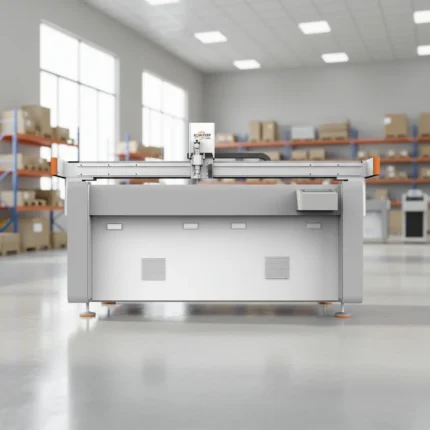
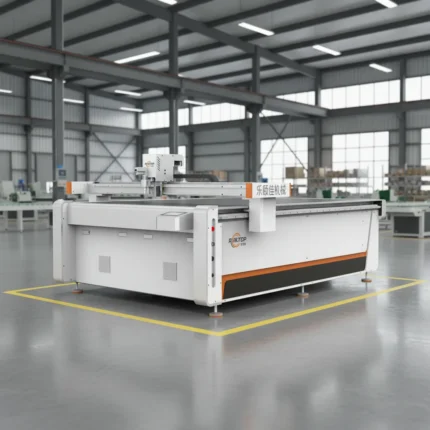
2026 Digital Flatbed Cutting Plotter Auto Corrugated Box Die Cutter
Product Introduction
Digital Flatbed Cutting Plotter 2026, ideal for auto corrugated box die cutting, offering precision and efficiency for professional packaging production.Specifications
| Type | Digital Flatbed Cutting Plotter |
| Model | 2026 |
| Application | Auto Corrugated Box Die Cutting |
| Function | Precision Cutting & Plotting |
Automatic Die-less Cardboard Vibrating Knife Cutter 2026
Product Introduction
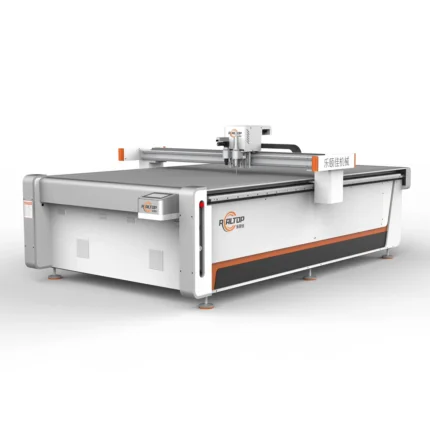
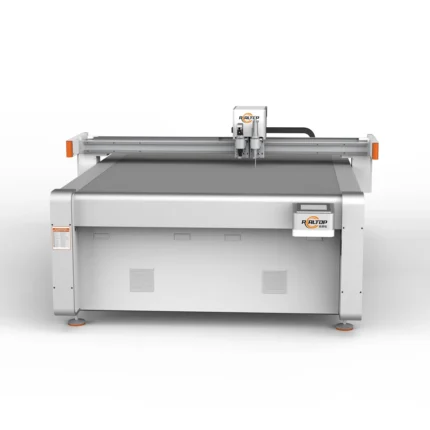
Automatic Die-less Cardboard Vibrating Knife Cutter 2026, a precision cutting solution for cardboard materials, featuring advanced die-less technology for efficient and flexible cutting operations. Ideal for various cardboard processing needs in manufacturing and packaging industries.Key Specifications
| Model | 2026 |
| Type | Automatic Die-less Cutter |
| Cutting Tool | Vibrating Knife |
| Material | Cardboard |
Automatic Digital Cardstock Cutter 2026 CNC Cutter
Product Introduction
Automatic Digital Cardstock Cutter 2026 is a CNC cutting machine ideal for white cardboard and kraft paper. It offers precise and efficient cutting performance, suitable for various paper processing needs in manufacturing and craft applications.Key Specifications
| Type | CNC Digital Cutting Machine |
| Material Compatibility | White Cardboard, Kraft Paper |
| Operation | Automatic |
| Application | Paper Cutting & Processing |
CNC Flatbed Cutter 2026 Digital Corrugated Box Making Machine
Product Introduction
High-precision CNC flatbed cutter designed for efficient cardboard box production. Ideal for 2026 digital corrugated box manufacturing, offering precise cutting and reliable performance for professional packaging solutions.
Key Specifications
| Type | CNC Flatbed Cutter |
| Application | Cardboard Box Production |
| Technology | 2026 Digital System |
| Material | Corrugated Board |


Digital CNC Cardboard Cutting Machine 2026
Product Introduction
High-precision Digital CNC Cardboard Cutting Machine 2026, ideal for efficient cardboard processing with advanced CNC technology, ensuring precise and fast cutting performance for various packaging and craft applications.
Key Specifications
| Model | 2026 |
| Type | Digital CNC Cutting Machine |
| Material | Cardboard |
| Feature | High Precision, Efficient Cutting |
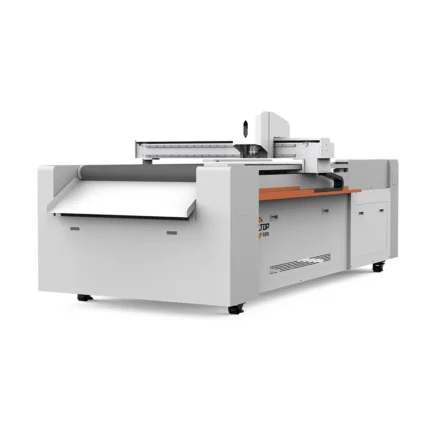
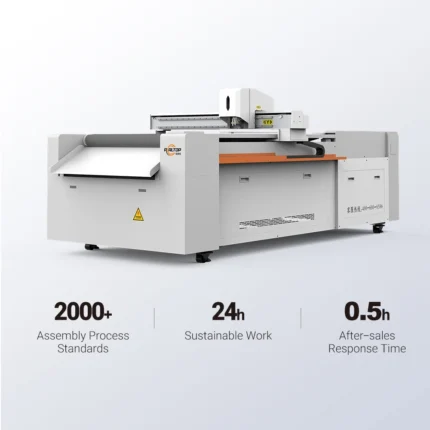

Realtop 2026 Digital Box Cutter High-Speed Corrugated Board
Product Introduction
Realtop Digital Box Cutting Machine 2026 is a high-speed solution for corrugated board cutting, designed for efficient and precise box production in manufacturing settings.Key Specifications
| Model | 2026 |
| Type | Digital Box Cutting Machine |
| Application | Corrugated Board |
| Feature | High-Speed Cutting |
商品评价
There are no reviews yet.