


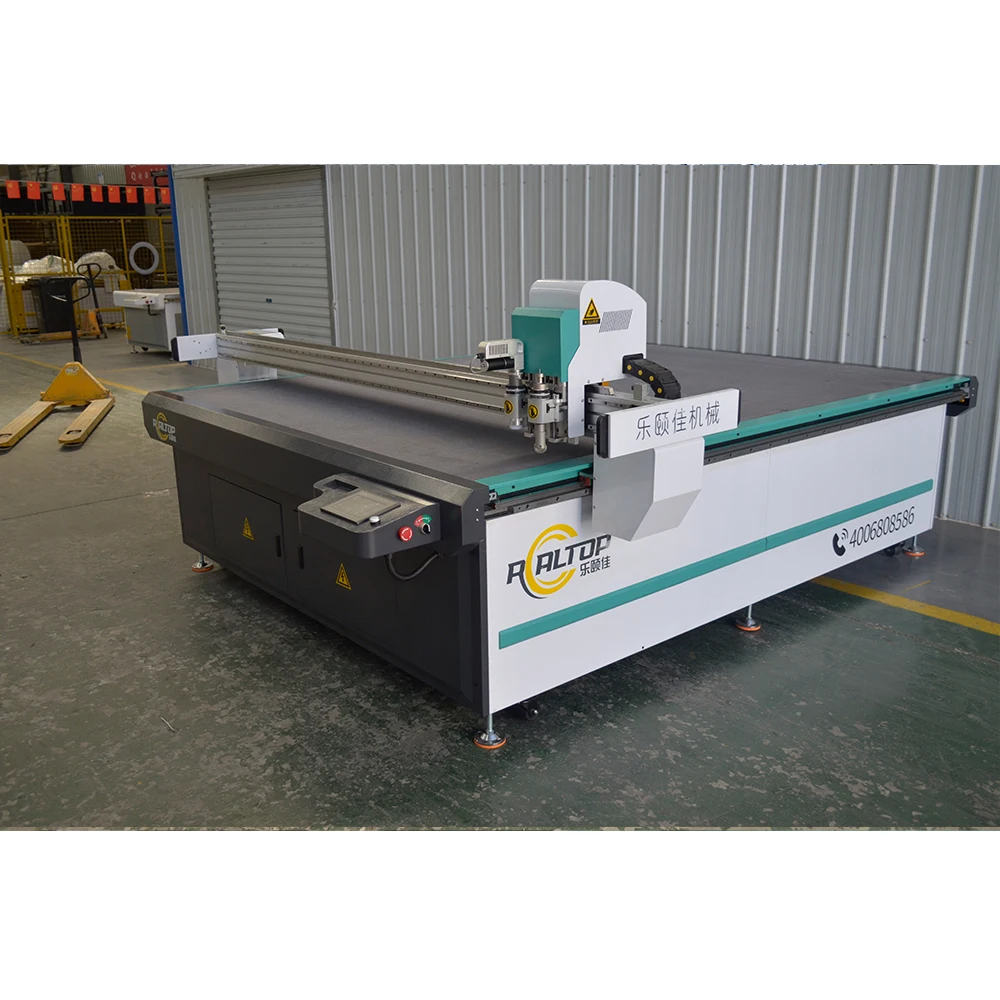


RT-D2516/RT-S2516 CNC Oscillating Knife Cutter for Rubber, PTFE & Gasket – Technical Guide
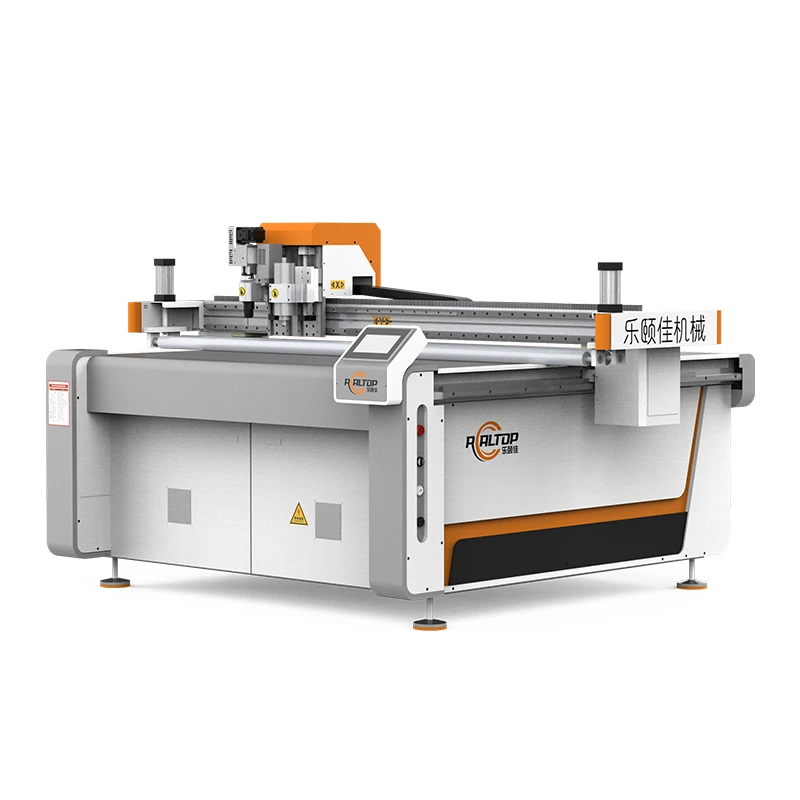
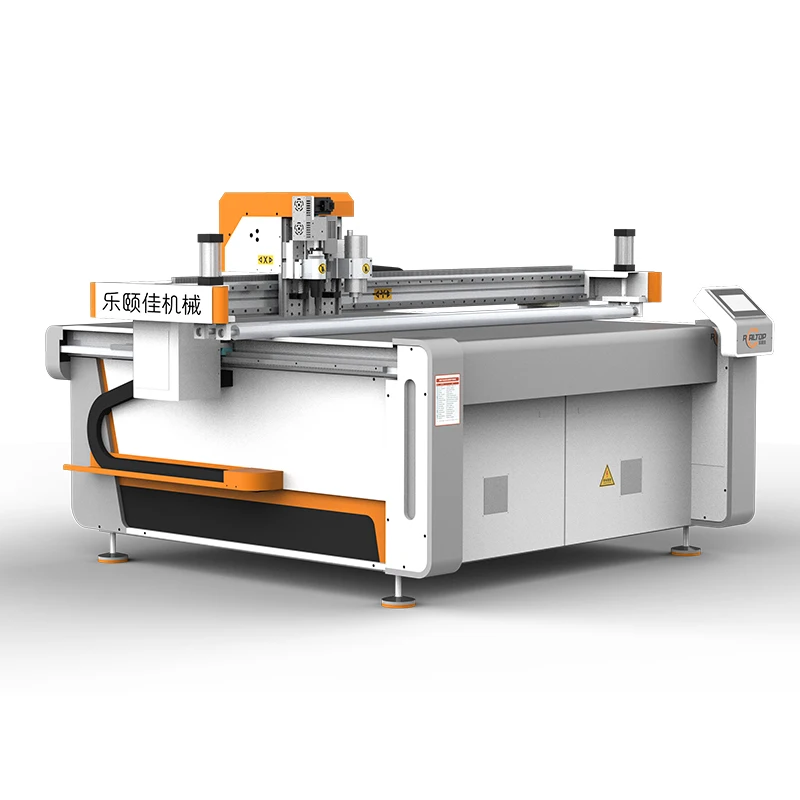
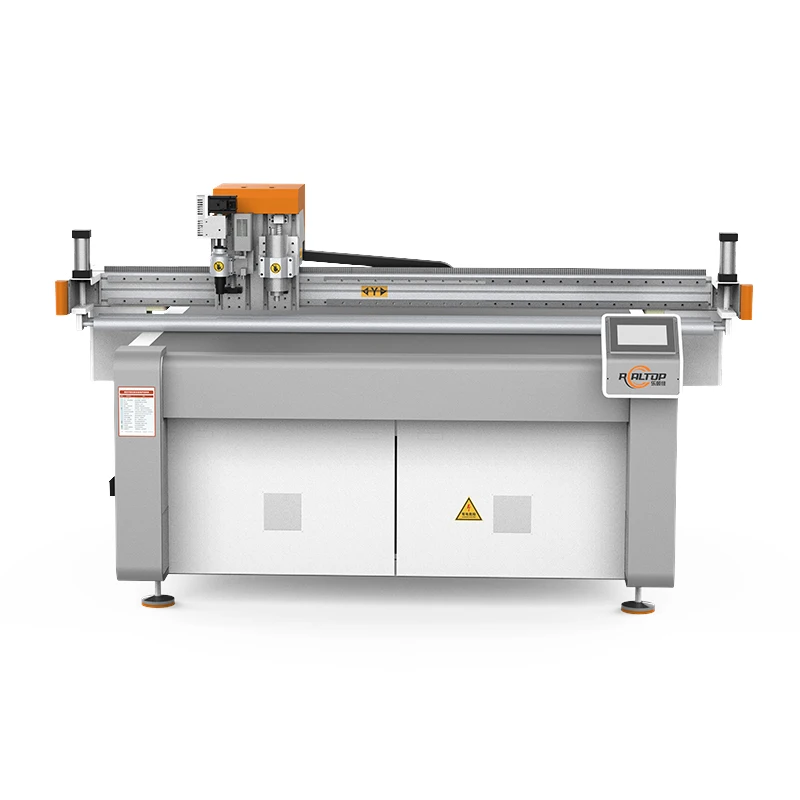
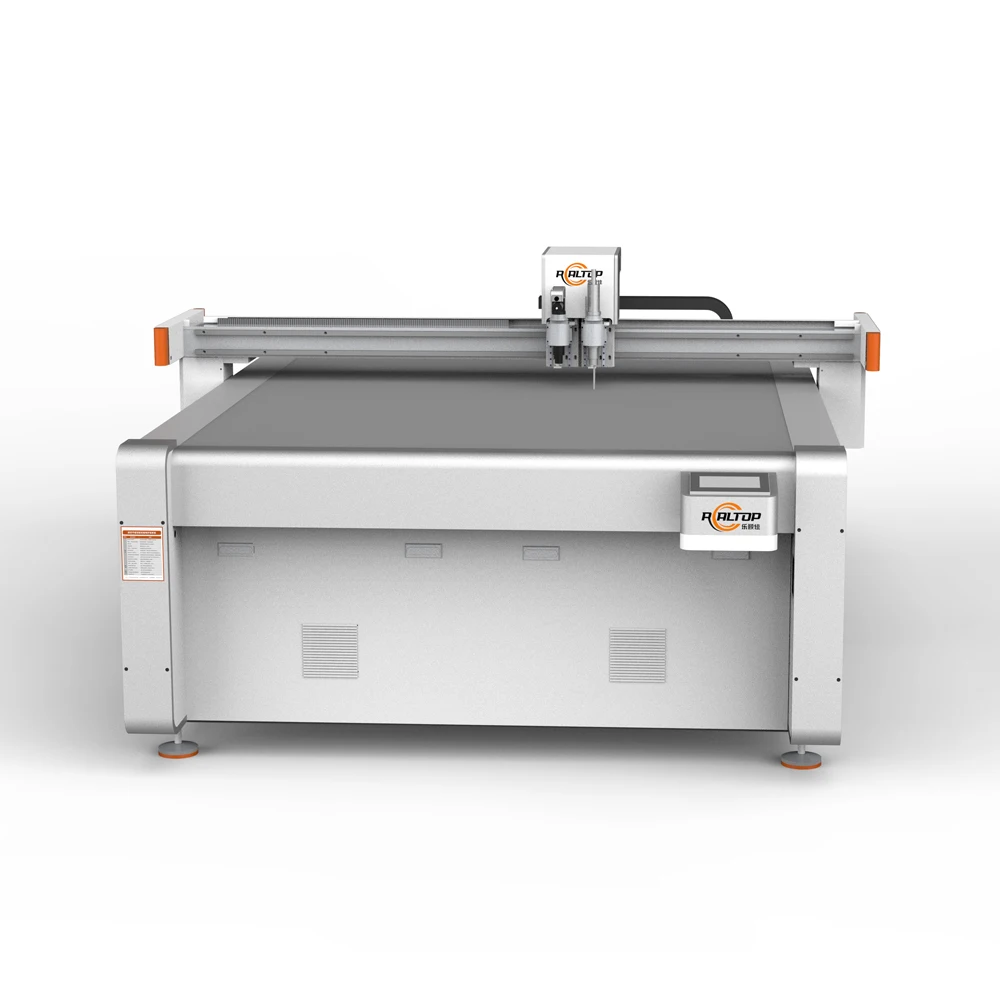
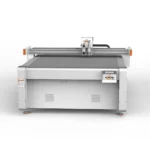
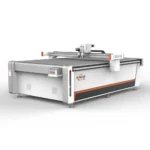
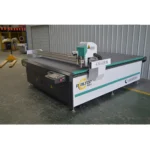
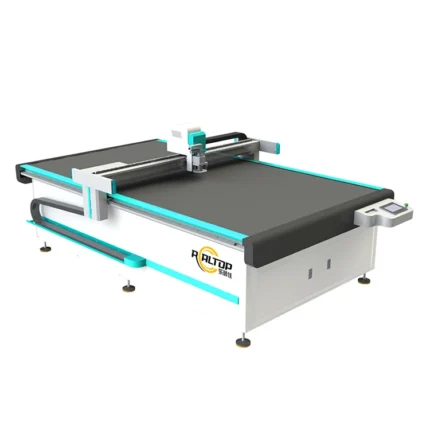
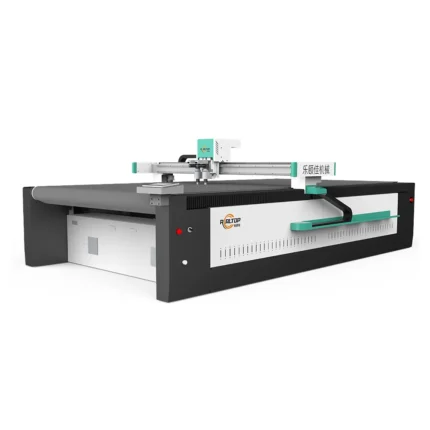
RT-D2516/RT-S2516 CNC Oscillating Knife Gasket Cutting Machine, 1600×2500 mm Working Area, 9 kW, ≤0.1 mm Repeatability — engineered for rubber, PTFE, silicone and composite gasket materials up to 80 mm thick.
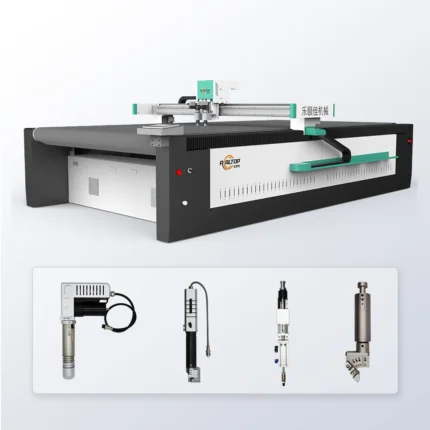
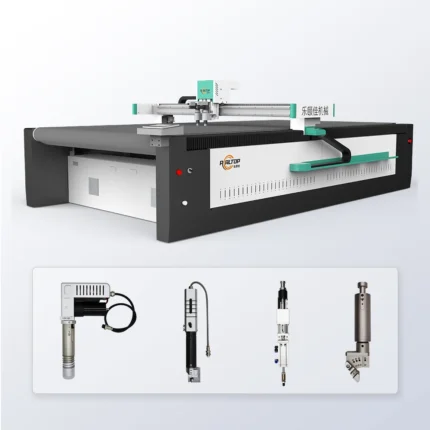
- Swiss-imported oscillating knife with full-cut, half-cut and cursor-location functions, matched to material density and durometer
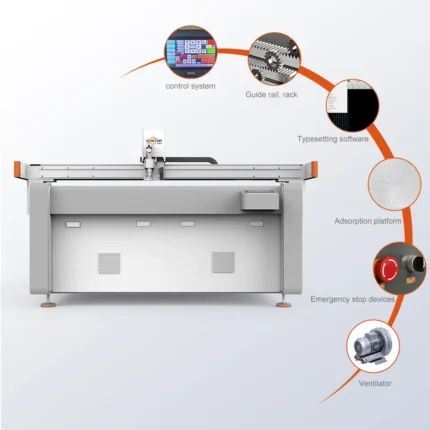
- Magnesium-aluminum alloy vacuum table with PVDF coating and 7.5 kW pump for uniform hold-down across the cutting bed
- CCD contour recognition and HP-GL file compatibility for printed gasket profile workflows
Sample cutting on your own gasket stock confirms edge quality, cutting depth and cycle time before order commitment.
Precision Tooling — Tool head and vacuum zoning specified per gasket material durometer, with sample cutting on your exact stock before order commitment.
Technical Specifications
| Parameter | Value |
|---|---|
| Product Type | CNC Oscillating Knife Gasket Cutting Machine |
| Model | RT-D2516/RT-S2516 |
| Working Area | 1600 × 2500 mm |
| Machine Size | 3450 × 2300 × 1250 mm |
| Rated Power | 9 kW |
| Voltage | 380V ± 10% |
| Working Table | Flat vacuum adsorption table, magnesium-aluminum alloy with PVDF coating and hard oxidation treatment |
| Tool Head Options | Swiss imported oscillating knife (vibration full cutting, half cutting, cursor location), pneumatic knife, high-power vibrating knife, circular knife, V-cutting knife, drag knife, creasing wheel, dotted-line knife, punch, brush |
| Cutting Thickness | 20–80 mm (basis not stated in source — confirm material type, density and durometer) |
| Translational Speed | 800–1200 mm/s |
| Repeatability | ≤ 0.1 mm |
| Transmission System | Digital servo motor (Delta or Panasonic optional, IP67), Taiwan Hiwin linear guide, synchronous belt, ball screw |
| Vacuum Pump | 7.5 kW, aviation aluminum shell with built-in silencer sponge |
| Safety Devices | Infrared induction blocking, dual-side anti-collision sensors, emergency stop with in-situ resume |
| Visual Positioning | Small CCD camera mark-point positioning, panoramic camera recognition, projection positioning (optional) |
| Instruction System | HP-GL compatible format |
| Conveyor Belt | Germany imported (source value — verify against manufacturer catalog) |
| Control Language | English, Russian, Italian, Chinese; custom languages available |
| Assembly State | Fully assembled, factory tested before shipment |
| Warranty | 1 year parts free; buyer covers shipping; engineer dispatch available with buyer covering travel |
| Certification | CE declaration where applicable |
Application Suitability
| Application | Material or Output |
|---|---|
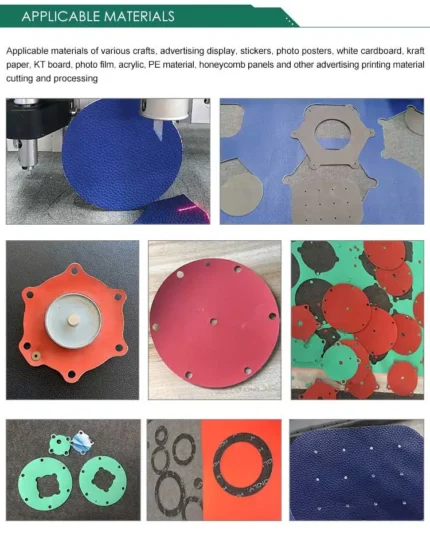
| Industrial gasket production | Rubber, PTFE, silicone, PVC soft glass, composite gasket sheets |
| Automotive sealing components | Cylinder-head gasket material, automotive interior composites |
| Flexible material fabrication | Leather, fabric, fiberglass, PU, EVA, XPE, non-woven fabric |
| Packaging and signage cutting | Corrugated board, cardboard, foam board, sponge, sticker, film |
Why Material Thickness Specs Often Mislead Gasket Buyers
The number on the brochure means nothing without the durometer and density behind it.
A gasket cutting machine listed for 80 mm depth might slice clean through soft silicone foam at that thickness yet stall halfway through a dense PTFE sheet of the same dimension. We have seen production floors accept a quotation based purely on working area and maximum stated thickness, only to discover on delivery that the oscillating knife frequency and blade geometry were matched to a softer material entirely. The result is ragged edges, delaminated composite layers, or excessive blade wear forcing unplanned downtime [NEED_CITE: tool head and blade selection criteria for elastomeric and composite sealing materials].
Oscillating Knife Frequency Meets Gasket Density
The Swiss imported oscillating knife on this CNC oscillating knife gasket cutting machine delivers full-cut and half-cut vibration cycles, selectable depending on whether the material compresses under blade pressure or resists it. Dense rubber compounds require high-frequency short-stroke oscillation to fracture the material cleanly, while PTFE and silicone respond to different amplitude settings. The pneumatic knife option handles thicker composite stacks where pure oscillation alone cannot penetrate the full depth in a single pass.
Vacuum Hold-Down and Small Gasket Geometry
Gasket profiles often include narrow bolt-hole surrounds and thin flange strips that lift off the table the moment the blade exits the material. The magnesium-aluminum alloy vacuum table addresses this with zoned suction, and the 7.5 kW pump provides sufficient negative pressure across the 1600 × 2500 mm surface. The integrated silencer sponge in the pump housing reduces ambient noise during continuous production runs, which matters when operators work beside the machine throughout a shift [NEED_CITE: vacuum adsorption requirements for small-profile flatbed cutting].
Servo Repeatability and Gasket Dimensional Tolerance
The ≤ 0.1 mm repeatability specification is driven by IP67-rated Delta or Panasonic servo motors paired with Taiwan Hiwin linear guides and ball-screw transmission. For automotive gasket applications where a cylinder-head sealing profile must match bolt patterns within tight tolerances, this motion system maintains positional accuracy across long production runs. Synchronous belt drive on the secondary axis complements the ball-screw primary axis, balancing speed and precision for both large gasket outlines and fine internal cutouts.
What Happens When Vacuum Zoning Is Undersized
A buyer who neglects vacuum table zoning specification may find small gasket components migrating during the final cut passes. Once the blade severs a narrow flange strip from the surrounding skeleton, unsealed vacuum zones lose suction and the part shifts — producing a scrapped piece and potentially damaging the blade against the table surface. This failure mode is rarely visible during factory demonstrations that use large, full-sheet test cuts [NEED_CITE: vacuum table zoning best practices for nested small-part cutting].
Why We Build the Configuration Around Your Material
Tool head selection happens only after your raw material is physically cut on our floor, producing a sample report that documents edge quality, cycle time and blade wear. Voltage, frequency, plug type and control language are confirmed in writing before production begins, eliminating arrival-side electrical surprises. The software file format — HP-GL compatibility in this case — is tested against your existing nesting workflow before the order is finalized. In-house design covers both knife and vacuum system engineering, so one team resolves any configuration conflict rather than bouncing you between vendors. Documentation ships with the machine, not after repeated follow-up requests.
Documentation & Verification
- Factory test record cut on your gasket material with measured edge quality and cycle time
- Electrical schematic confirming voltage, frequency and plug type for your destination market
- Tool head and table zoning configuration list matched to your material specification
- Software licence and HP-GL file format compatibility note verified against your CAD system
- Operation and maintenance manual in your confirmed control language
- Spare parts list with blade and wear component reorder identifiers
Installation, Commissioning & Support
- 3450 × 2300 mm footprint requires level concrete floor with anchor provisions for stable operation
- 9 kW rated power demands dedicated 380V circuit with proper overcurrent protection at the panel
- Machine ships fully assembled; placement and utility connection handled on arrival
- First-run calibration of servo axes and vacuum zones performed against your gasket stock
- Operator training covers blade change procedure, tool head selection and nesting file import
- One-year parts warranty with engineer dispatch available for on-site troubleshooting
Preparing Your Inquiry
Send us your gasket material type, durometer or density, sheet dimensions and typical profile complexity. Confirm your local voltage, frequency and the control language your operators need. If your workflow relies on specific nesting software or HP-GL output from an existing CAD station, include a sample file so we verify compatibility before quotation.
Frequently Asked Questions
Q: How is the correct tool head chosen for my gasket material?
A: We cut samples from your actual raw material using multiple tool head options — oscillating knife, pneumatic knife, drag knife — and document edge quality, cutting depth and blade wear for each. The configuration that produces clean edges without crushing or delamination is specified in your order. This sample report ships with your machine for reference.
Q: Can CCD contour recognition track printed marks on gasket stock at production speed?
A: The optional CCD camera system reads mark-points on printed gasket sheets for contour-accurate cutting. Performance depends on mark contrast, print quality and ambient lighting in your facility. We test your printed stock during the sample phase to confirm reliable tracking before the vision system is included in your configuration.
Q: How does vacuum table zoning prevent small gasket parts from lifting?
A: The flat vacuum table is divided into zones so that suction concentrates under the area being cut. When small flange strips or bolt-hole surrounds are severed from the skeleton, active zones hold them flat. Your zone layout is specified during configuration based on the smallest part geometry in your gasket profile library.
Q: What electrical and language options are confirmed before shipment?
A: Voltage, frequency, plug type and control language are confirmed in writing before production. The machine supports 380V ± 10% standard, with control interfaces available in English, Russian, Italian, Chinese or custom languages. The electrical schematic reflecting your confirmed specification is included in the documentation package.
Q: Is sample cutting done on my material before I commit?
A: Yes. You send or specify your exact gasket material, and we run cutting tests to verify edge quality, achievable depth and cycle time. The sample cutting report becomes part of your order documentation, so the configuration you receive matches what was demonstrated on your stock.


Related products
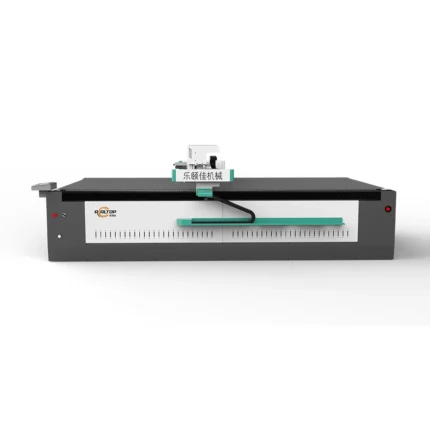
2026 CNC Gasket Cutter Pneumatic Knife Asbestos Rubber
Product Introduction
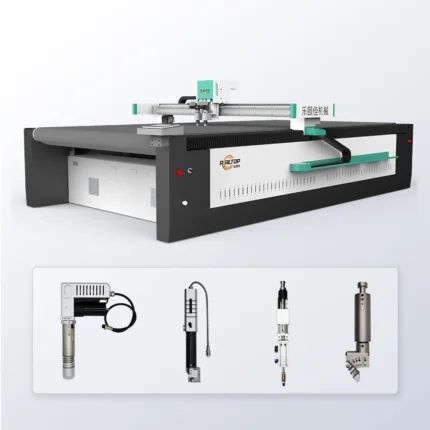
CNC Gasket Cutter Machine 2026 with pneumatic knife, ideal for cutting asbestos, non-asbestos, cork, PTFE, and rubber materials. Precision-engineered for efficient gasket production.
Key Specifications
| Cutting Material | Asbestos, Non-Asbestos, Cork, PTFE, Rubber |
| Knife Type | Pneumatic |
| Control System | CNC |
| Model | 2026 |
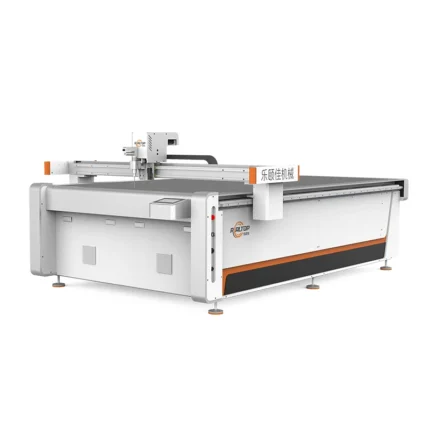
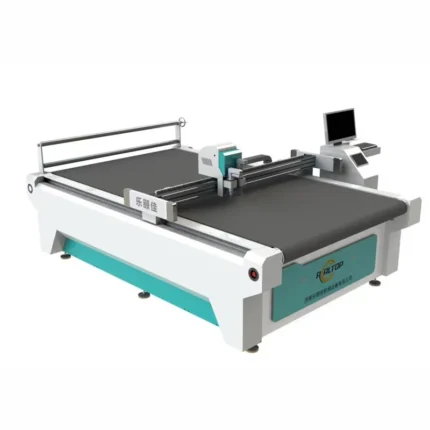
2026 Full Automatic CNC Rubber Gasket Cutting Machine
Product Introduction
Full Automatic CNC Rubber Gasket Cutting Machine 2026, a blade-based plastic cutter designed for precise and efficient cutting of rubber gaskets and plastic materials with automated CNC control.Technical Parameters
| Type | Full Automatic CNC Cutting Machine |
| Cutting Method | Blade-Based |
| Application | Rubber Gaskets, Plastic Materials |
| Control System | CNC |
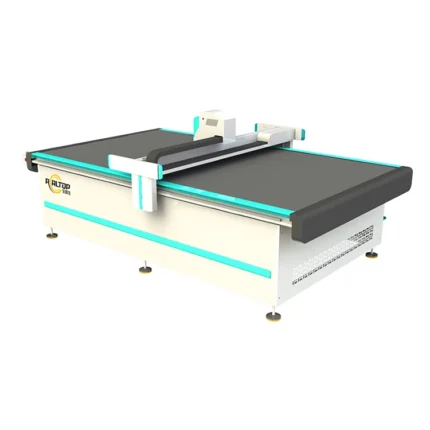
2026 Rubber CNC Cutting Machine High-Precision Auto-Feeding Gasket
Product Introduction
High-precision 2026 model Rubber CNC Digital Cutting Machine designed for gasket production with auto-feeding functionality, ensuring efficient and accurate cutting performance.
Key Specifications
| Model | 2026 |
| Type | Rubber CNC Digital Cutting Machine |
| Application | Gasket Production |
| Feature | High-Precision |
| Function | Auto-Feeding |
Realtop 2026 CNC Gasket Cutter 1200¡Á2400mm Auto Rubber Cutter
Product Parameters
| Model | Realtop CNC Sealing Gasket Cutter 2026 |
| Working Area | 1200¡Á2400mm |
| Type | Auto Rubber Cutting Machine |
Introduction
Realtop CNC Sealing Gasket Cutter 2026 is an advanced auto rubber cutting machine with a 1200¡Á2400mm working area, ideal for precise and efficient gasket production, manufactured by a leading Chinese welding & cutting equipment factory.
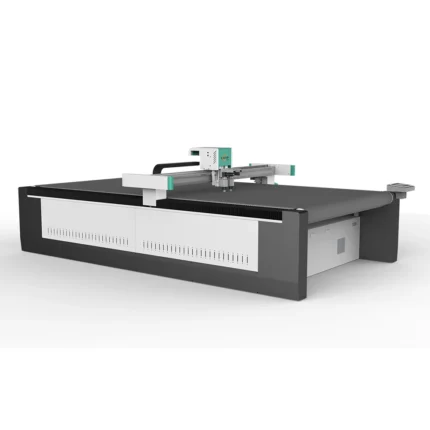
Realtop 2026 CNC Gasket Cutter High-Precision Vibrating Knife
Product Introduction
Realtop CNC Gasket Cutting Machine 2026 with high-precision vibrating knife, ideal for cutting rubber and cylinder head gaskets with accuracy and efficiency.
Key Specifications
| Model | Realtop CNC Gasket Cutting Machine 2026 |
| Cutting Tool | High-Precision Vibrating Knife |
| Applicable Materials | Rubber, Cylinder Head Gaskets |
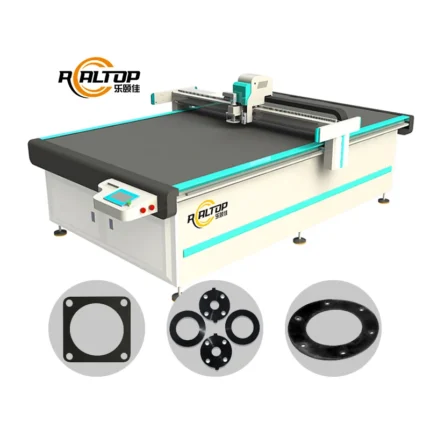
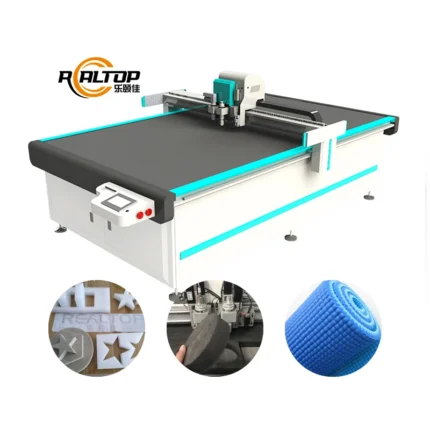
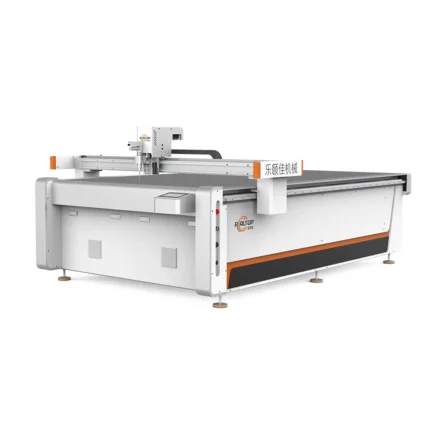
Realtop Gasket Cutter 2026 Digital Oscillating Machine
Product Introduction
Realtop Gasket Cutter 2026 is a digital oscillating machine designed for precise cutting of silicone, asbestos, and non-asbestos felt materials, ideal for industrial gasket production.Product Parameters
| Model | Realtop Gasket Cutter 2026 |
| Type | Digital Oscillating Machine |
| Material Compatibility | Silicone, Asbestos, Non-Asbestos Felt |
| Operation | Digital Control |

商品评价
There are no reviews yet.