


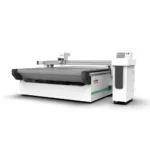
AO-Knife CNC Leather Cutter for Cloth Fabric Cutting – Laser Cutting and Engraving Machine Manufacturer
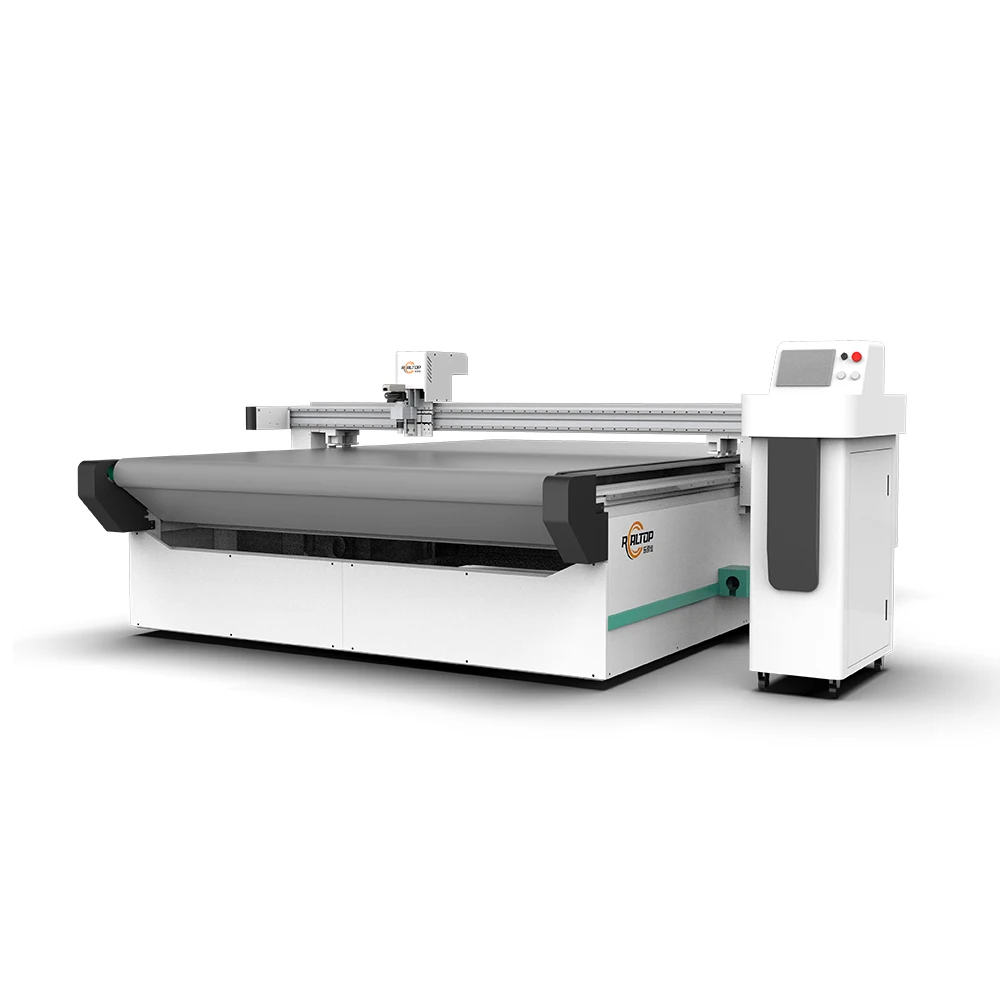
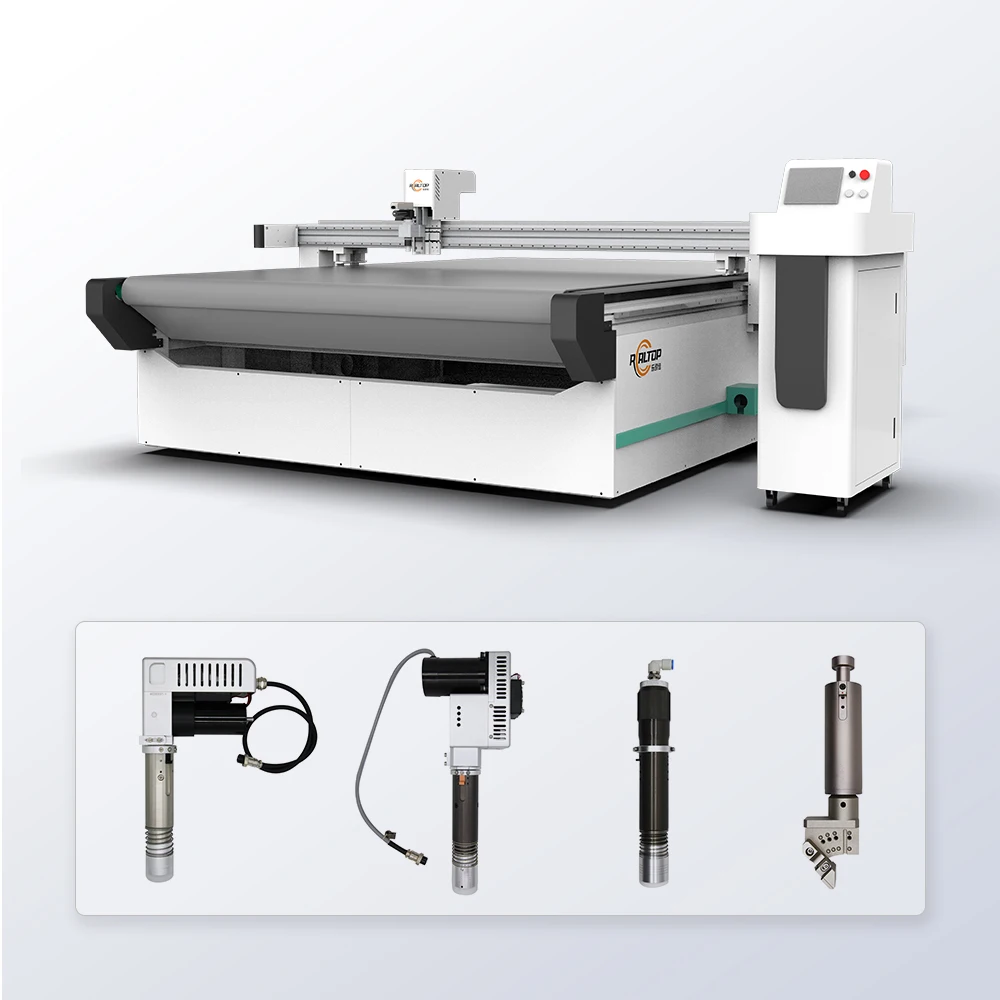
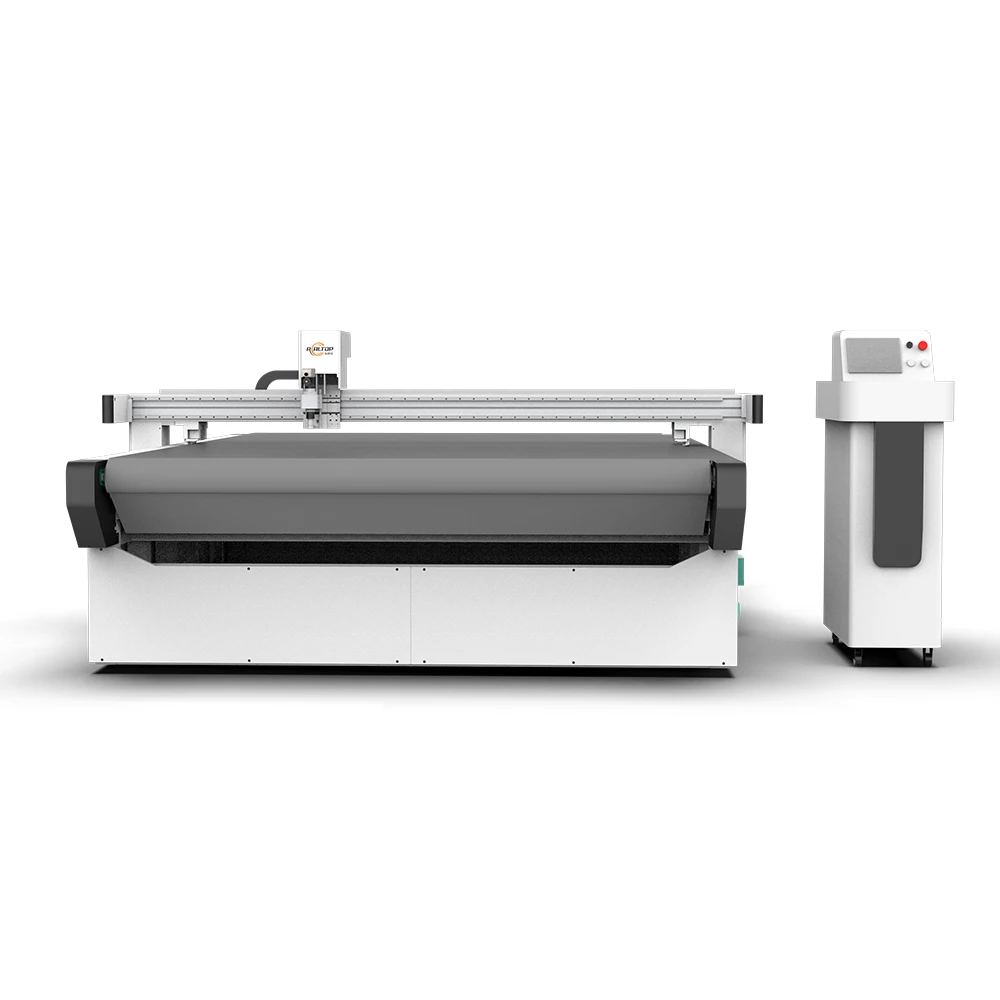
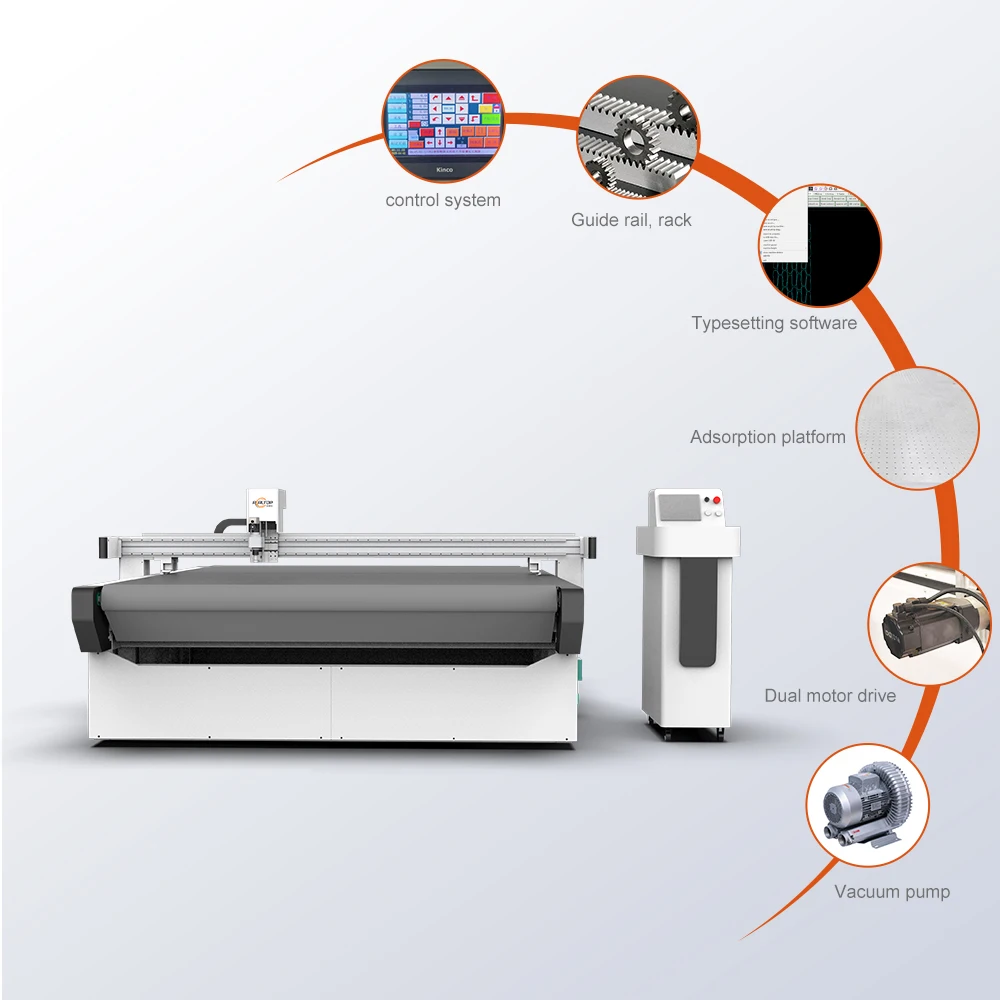
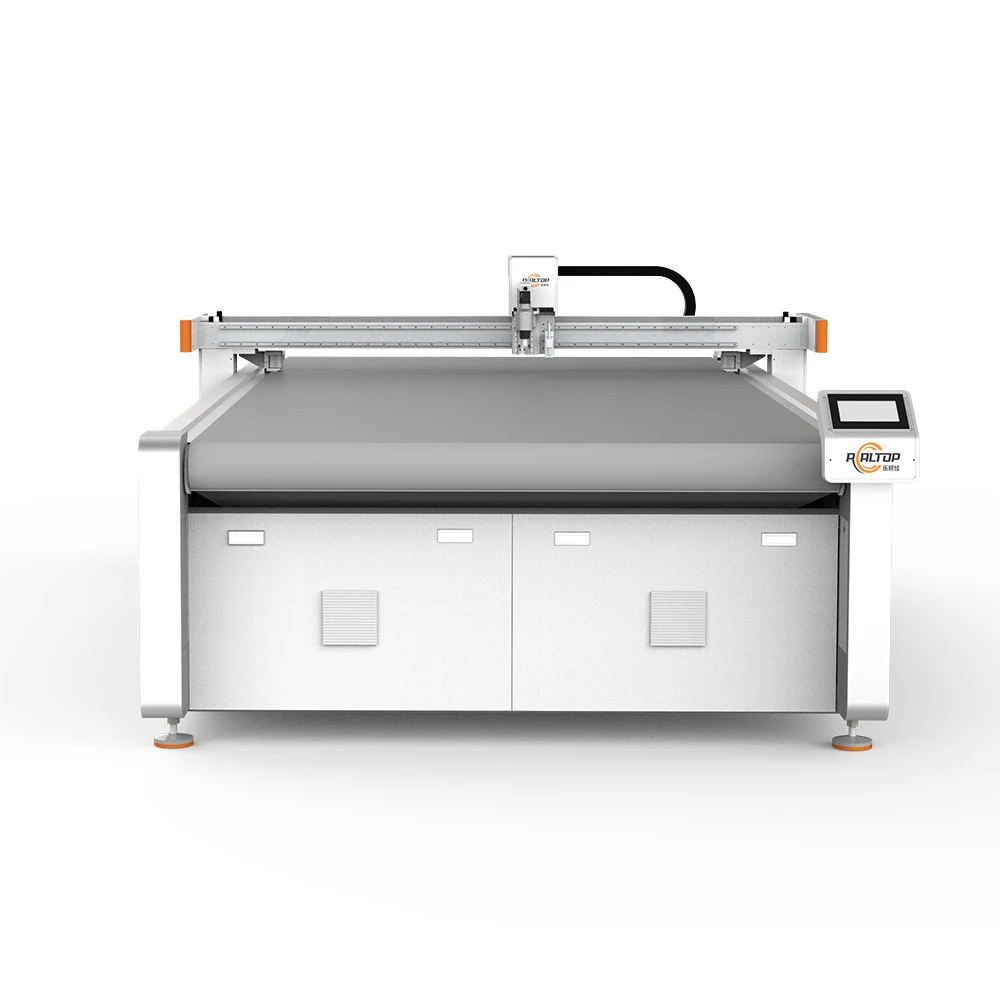
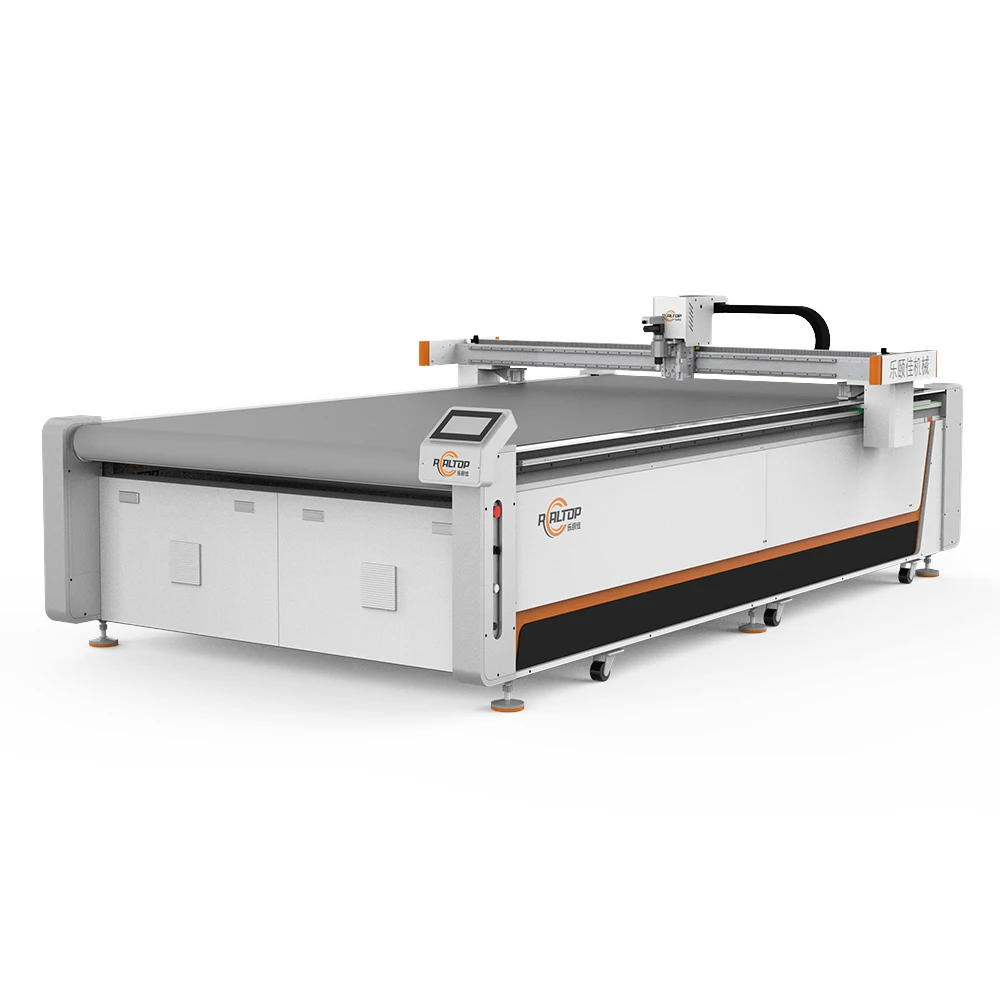
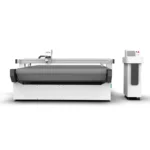
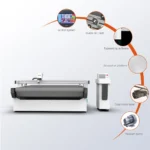
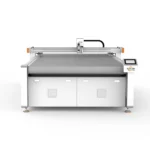
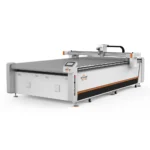
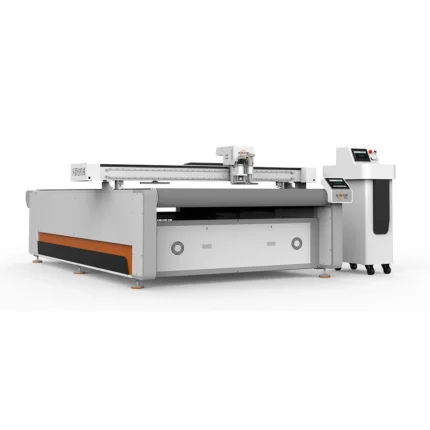
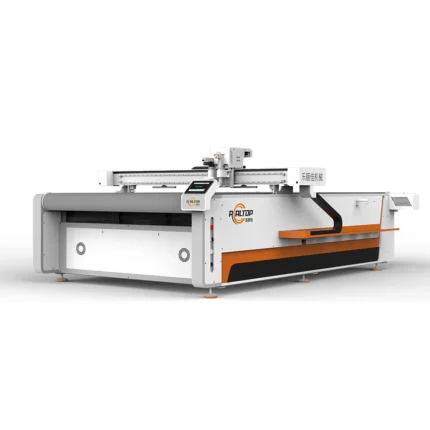
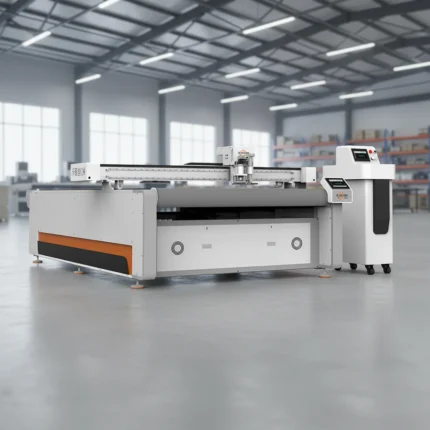
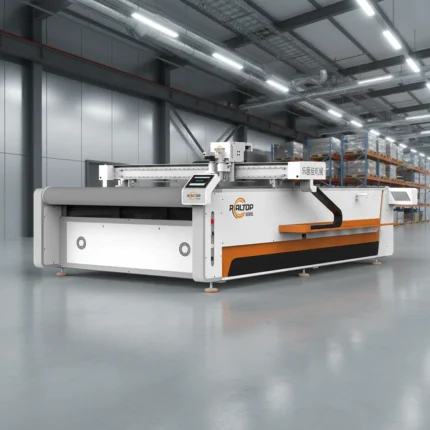
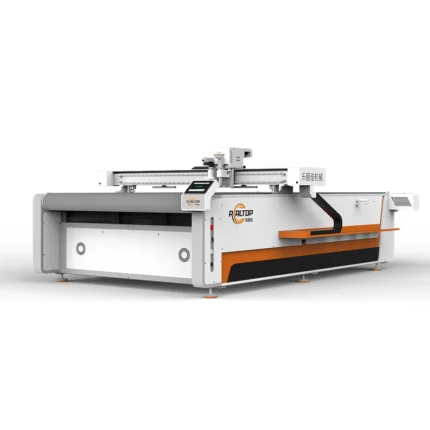
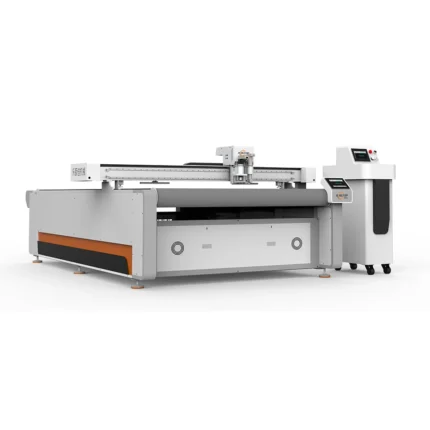
AO-Knife CNC Oscillating Knife Cutting Machine, 1600×2500 mm, 7-Tool Head — configured for fabric, leather and composite cold cutting with driven rotary, creasing, kiss cutting, pneumatic, milling and V-groove options. Aluminum bellows vacuum table with 9 kW pump holds small parts flat; ±0.1 mm positioning accuracy delivers edges requiring no secondary trimming. Accepts PLT, DXF, AI, PDF files with intelligent nesting and PLC control in multiple languages.
- Sample cutting on buyer’s material with full cutting report before order commitment
- Voltage, plug type and control language confirmed in writing to match destination market
- Software licence and file format compatibility verified against existing nesting workflow
Material-Matched Configuration — Every AO-Knife unit ships with a cutting report run on the buyer’s actual fabric, leather or composite sample, ensuring the tool head, vacuum zoning and blade specification are validated before the crate is sealed.
Technical Specifications
| Parameter | Value |
|---|---|
| Model | AO-Knife 1625 |
| Product Type | CNC Oscillating Knife Cutting Machine |
| Working Area | 1600 × 2500 mm |
| Tool Head Options | Oscillating knife, Driven rotary knife, Creasing wheel, Kiss cutting tool, Pneumatic knife, Milling tool, V-groove knife |
| Cutting Speed | 0 – 2000 mm/s |
| Positioning / Cutting Accuracy | ±0.1 mm |
| Vacuum Pump | 9 kW |
| Vacuum Table | Aluminum bellows vacuum table |
| Voltage Options | 110V / 220V / 380V (frequency to be confirmed per market) |
| Control System | PLC control panel |
| Servo Drive Options | Panasonic, Delta, Dorna (source value — verify against manufacturer catalog) |
| Software File Formats | PLT, DXF, AI, PDF |
| Safety Devices | Infrared sensor, Emergency stop |
| Machine Dimensions (L×W×H) | 3300 × 2100 × 1350 mm |
| Language Options | English, Russian, Italian, Chinese; custom languages available |
| Certification | CE |
Application Suitability
| Application | Material or Output |
|---|---|
| Apparel and garment manufacturing | Suits, knitwear, lace, layered woven and knit fabrics |
| Automotive interior trimming | Seat fabrics, carpets, PVC mats, headliner material |
| Home textile production | Sofa upholstery fabrics, curtains, rugs, drapery panels |
| Composite material processing | Carbon fiber prepreg, aramid weaves, specialty laminates |
| Leather goods and footwear | Natural leather, PU and PVC synthetic uppers, linings |
| Packaging sample making | Cardboard, carton, corrugated board, foam inserts |
Why a Machine Rated for 30 mm Still Fails on Your Material
Cutting depth means nothing without the right tool head matched to your material density and compression behavior.
I once watched a buyer lose two weeks of production because the oscillating knife they received was specified for woven polyester but was tasked with cutting dense EVA foam. The blade deflected, edges crushed, and the vacuum zones could not hold the thicker stock flat. The working area was correct; the tool configuration was not. When evaluating any laser cutting and engraving machine or CNC flatbed cutter, the single most expensive mistake is specifying by table size alone [NEED_CITE: industrial cutting tool head selection by material type and density].
Process Selection: Cold Knife Cutting for Textile and Composite Integrity
The AO-Knife 1625 operates as a CNC oscillating knife cutting machine, using mechanical blade action rather than thermal energy. For textile, leather and composite producers, this cold cutting process preserves fiber structure and prevents edge melting or delamination that heat-based methods can introduce. The seven interchangeable tool heads — from oscillating knife for mid-weight fabrics to driven rotary knife for continuous textile runs and pneumatic knife for heavier stock — allow a single flatbed to handle the material range that most garment and automotive interior workshops encounter daily. Selecting the correct laser cutting and engraving machine alternative for non-metal materials often starts here, with the blade type and oscillation frequency tuned to the substrate.
Vacuum Hold-Down and Small-Part Stability
The aluminum bellows vacuum table paired with a 9 kW pump addresses one of the most frequent complaints in digital cutting: small parts lifting off the bed mid-cut, especially at higher traverse speeds. The bellows construction provides even suction distribution across the 1600 × 2500 mm surface, and the table flatness supports accurate nesting of irregular garment or gasket patterns [NEED_CITE: vacuum table zoning requirements for small-part CNC cutting]. When cutting multi-layer fabric stacks or thin leather hides, consistent hold-down pressure directly affects edge straightness and dimensional repeatability.
Reading the Specification Sheet Beyond Working Area
The ±0.1 mm positioning accuracy matters most when cutting interlocking pattern pieces for apparel or automotive seat panels, where cumulative error across a nested layout wastes material and forces manual trimming downstream. The 0 – 2000 mm/s speed range gives the PLC control panel room to decelerate on tight corners without losing path fidelity — critical for lace and complex contour work. File format support for PLT, DXF, AI and PDF means the intelligent nesting system can ingest patterns from most mainstream CAD environments, reducing the file-conversion friction that stalls production on the first day. Multi-language control display options — English, Russian, Italian, Chinese and custom languages — eliminate the operator confusion that arises when a machine arrives with a hard-coded interface in an unfamiliar script.
The Hidden Cost of Skipping the Sample-Cut Step
Buyers who commit to a CNC knife cutter without sending actual production material for a test run often discover problems only after the machine is bolted to their floor. A blade that slices cleanly through single-layer cotton may shred multi-layer aramid prepreg. A vacuum zone that holds a full hide of leather may fail on small die-cut gasket shapes. These mismatches are not machine defects — they are specification gaps. The remedy is a documented sample cutting report that records tool head, blade angle, feed rate and edge quality on the buyer’s own stock, reviewed before the order is confirmed [NEED_CITE: pre-shipment sample cutting protocol for CNC digital cutting equipment].
Why Source This Cutter From Realtop
Realtop’s in-house design team covers both knife and laser cutting technologies, so a buyer comparing processes gets an honest recommendation on whether a CNC oscillating knife or a CO2 laser cutting and engraving machine fits the material — rather than being steered toward whichever technology is in stock. Every AO-Knife 1625 is configured against the buyer’s material sample, with the tool head list, vacuum table zoning and blade specification documented in writing. Voltage, plug type and control panel language are confirmed before the machine enters production, avoiding the arrival-day surprises that idle an entire cutting line. The factory test record accompanies the shipment, giving the buyer a baseline for their own acceptance inspection.
Documentation & Verification
- Factory sample cutting report on buyer’s fabric or leather with tool head and blade data recorded
- Electrical schematic with confirmed voltage, frequency and plug type for destination market
- Tool head and vacuum table configuration list matched to specified material range
- Software licence documentation with supported file format compatibility note
- CE declaration and machine-specific factory test record before dispatch
Installation, Commissioning & Support
- Floor space of approximately 3300 × 2100 mm with clearance for material loading on all accessible sides
- Dedicated electrical circuit matching confirmed voltage option (110V / 220V / 380V) with proper grounding
- 9 kW vacuum pump requires separate breaker sizing and exhaust duct routing to maintain suction performance
- PLC control panel calibration and language setting performed on-site during first-day commissioning
- Oscillating knife and rotary knife blade replacement training included in operator session
- Spare blade inventory and vacuum seal kits recommended at order to match local procurement gaps
Start the Conversation With the Right Data
To move from a general inquiry to a firm configuration, share the material type, nominal thickness, sheet or roll dimensions, and estimated daily cutting volume. Include a sample of the actual substrate — or authorize a representative swatch — so the tool head and blade selection can be locked before production begins. Confirm your facility’s voltage, frequency, plug standard and preferred control panel language so the electrical build matches your site from day one.
Frequently Asked Questions
Q: Which tool head works best for my specific fabric or composite material?
A: The AO-Knife 1625 offers seven tool head options including oscillating knife, driven rotary knife, creasing wheel, kiss cutting, pneumatic knife, milling and V-groove tools. The recommendation depends on your material type, thickness, layer count and required edge quality. We run a sample cut on your actual material and document the selected configuration before the order is finalized.
Q: Can I send my own material for a test cut before committing to a purchase?
A: Yes. Buyers are encouraged to ship production material to the factory for a sample cutting session. The resulting report records tool head choice, blade specification, cutting speed, edge quality and vacuum hold-down performance, giving you verifiable data to evaluate before signing off on the configuration.
Q: How are voltage and control panel language confirmed before shipment?
A: Voltage (110V / 220V / 380V), plug type, frequency and control panel language are agreed in writing during the specification confirmation stage. The electrical schematic is provided for your review, ensuring the machine matches your facility’s power supply and operator requirements before it leaves the factory.
Q: Will the software accept my existing DXF, AI or PLT pattern files?
A: The control system supports PLT, DXF, AI and PDF file imports for automatic path generation. During the pre-order phase, we verify compatibility with your existing CAD files and nesting workflow so that no file-conversion obstacles remain when production starts.
Q: What spare parts should I stock locally for continuous operation?
A: Blade replacement cycles vary by material abrasiveness and daily cutting hours. We recommend stocking an initial set of oscillating and rotary knife blades, vacuum table seals and drive belts based on your production volume. The spare parts list provided with each machine details part numbers and recommended reorder intervals.


Related products
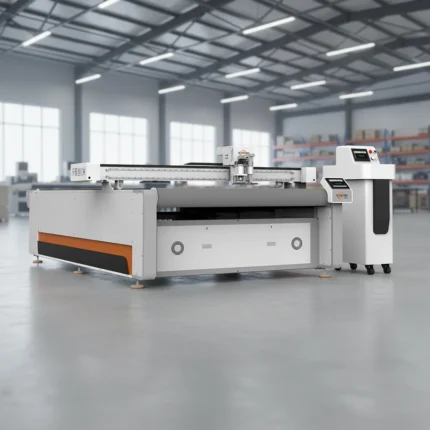
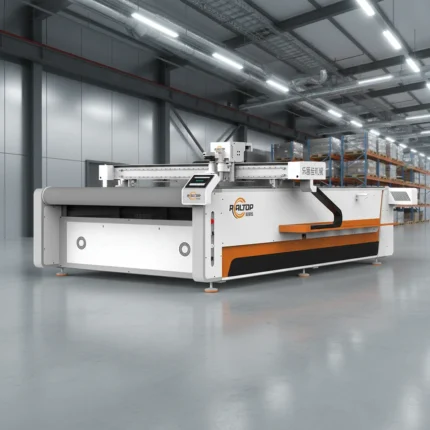
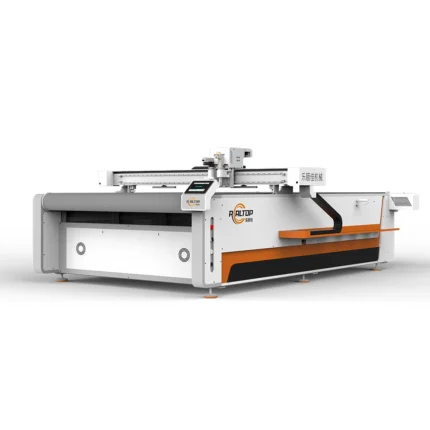
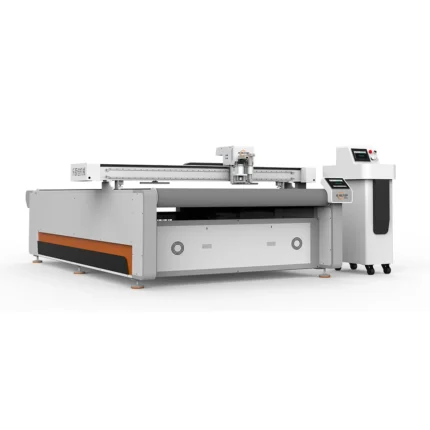
CNC Oscillating Knife Cutting Machine 2026 3000¡Á1600mm High-Speed
Product Parameters
| Model | CNC Oscillating Knife Cutting Machine 2026 |
| Working Area | 3000mm¡Á1600mm |
| Cutting Type | Oscillating Knife |
| Application | Fabric Cutting |
| Feature | High-Speed |
Introduction
High-performance CNC oscillating knife cutting machine with 3000mm¡Á1600mm working area, ideal for high-speed fabric cutting. Precision and efficiency for professional textile processing needs.
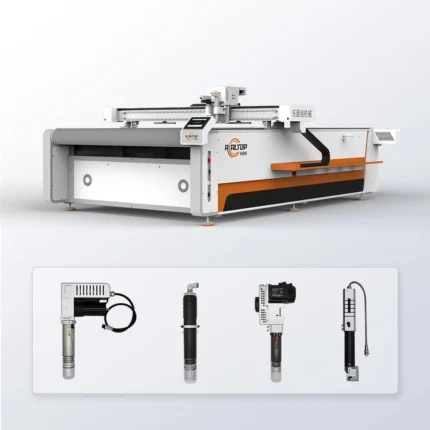
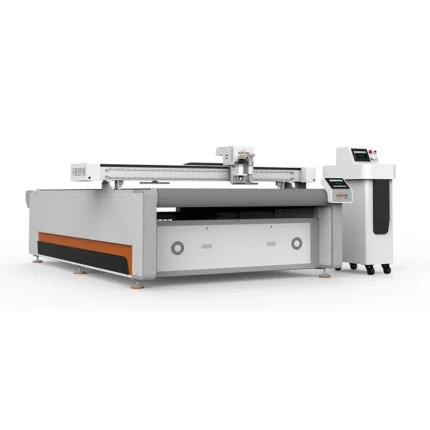
CNC Vibration Knife System 2026 for Polyester Nylon Non-Woven Prepreg
Product Introduction
CNC Vibration Knife System 2026 is ideal for cutting polyester, nylon, non-woven fabrics, and prepreg materials with precision and efficiency, suitable for industrial manufacturing needs.Product Parameters
| Model | 2026 |
| Cutting Technology | CNC Vibration Knife |
| Materials | Polyester, Nylon, Non-Woven, Prepreg |
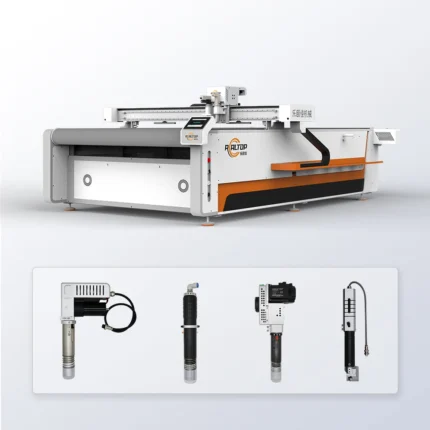
Custom CNC Shirt Fabric Cutting Machine 2026
Product Introduction
Custom CNC Shirt Fabric Cutting Machine 2026, ideal for precise fabric cutting in garment manufacturing, offering efficient and accurate cutting solutions.
Product Parameters
| Model | Custom CNC Shirt Fabric Cutting Machine 2026 |
| Type | CNC Fabric Cutting Machine |
| Application | Shirt Fabric Cutting |
| Year | 2026 |

Electric Fabric Rotary Cutter 2026 12V Auto-Cut Industrial
Product Introduction
Industrial-grade Electric Fabric Rotary Cutter designed for precise cutting of scan-printed cloth. Features 12V auto-cut functionality for efficient, automated operation, ideal for professional textile processing.Product Parameters
| Power Supply | 12V |
| Function | Auto-Cut |
| Application | Scan-Printed Cloth |
| Type | Industrial Electric Rotary Cutter |
商品评价
There are no reviews yet.