


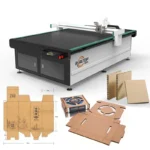
Carton CNC Corrugated Cutter Flatbed | Industrial Application
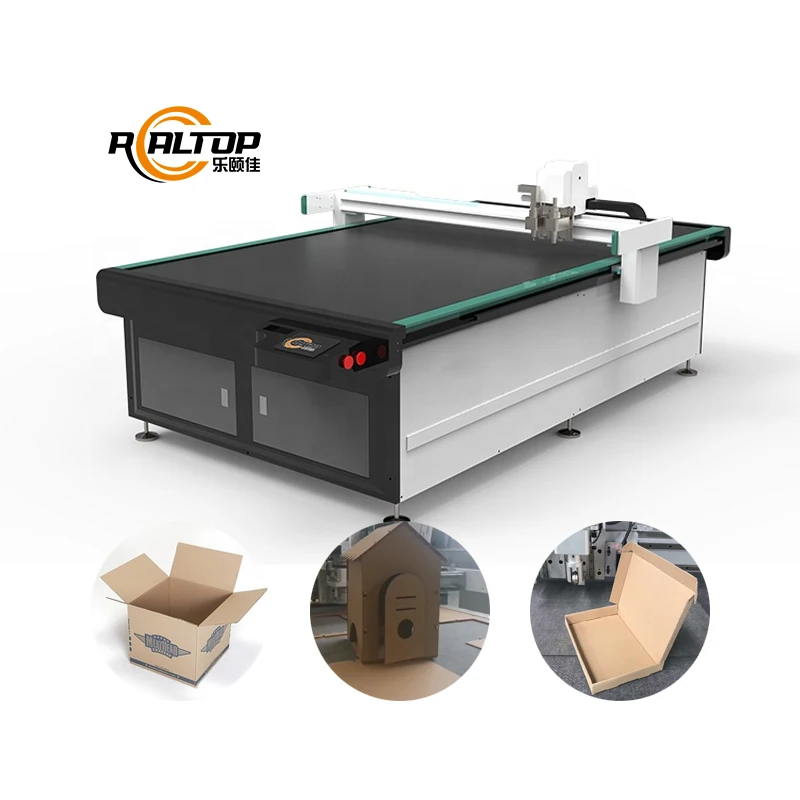
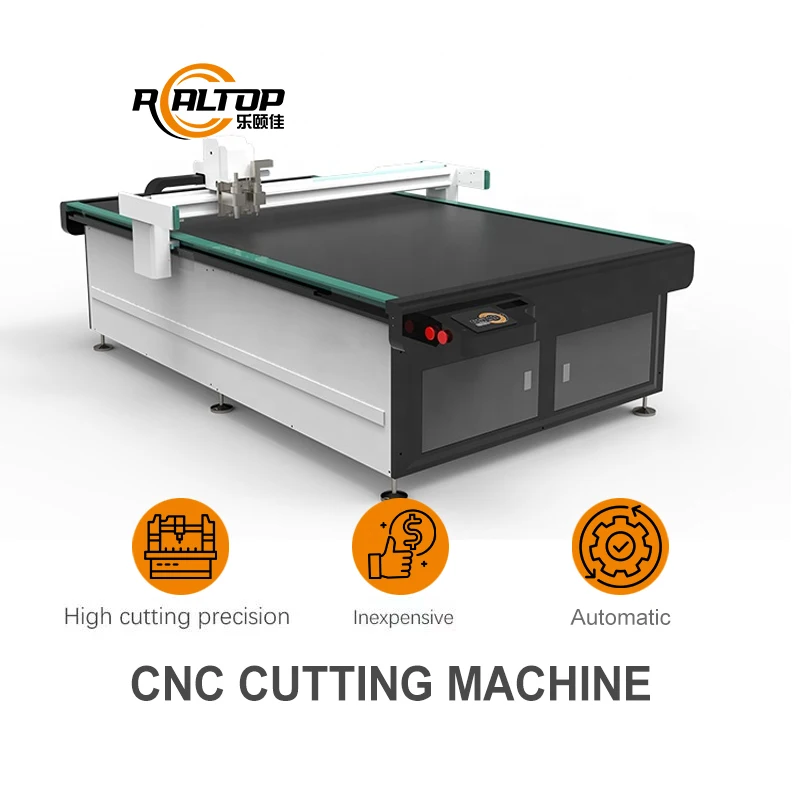
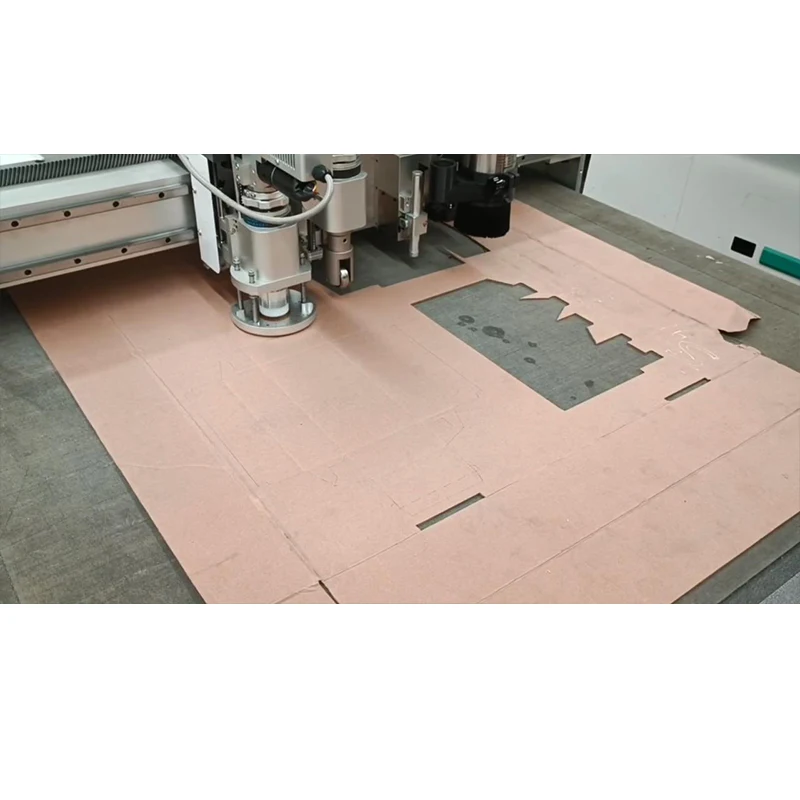
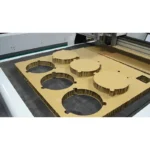
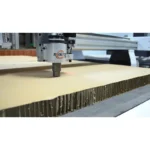
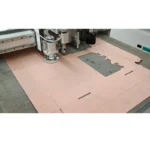
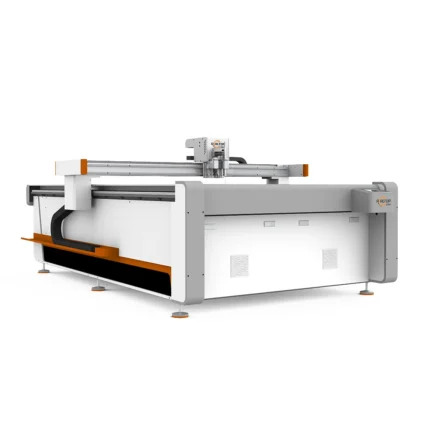
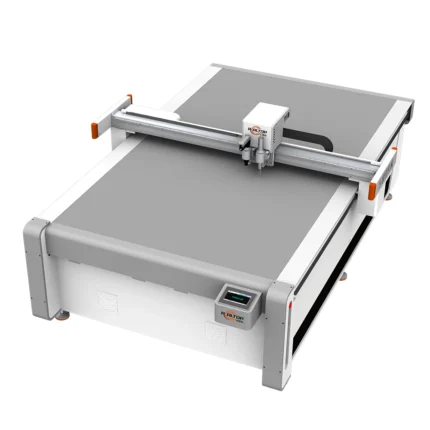
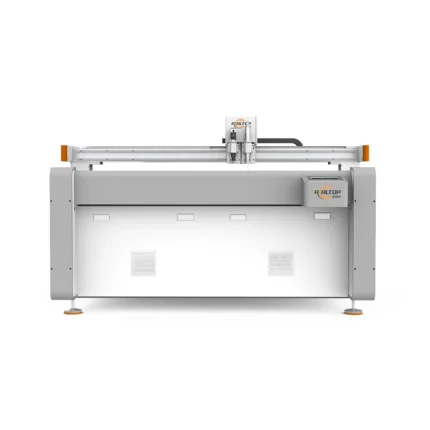
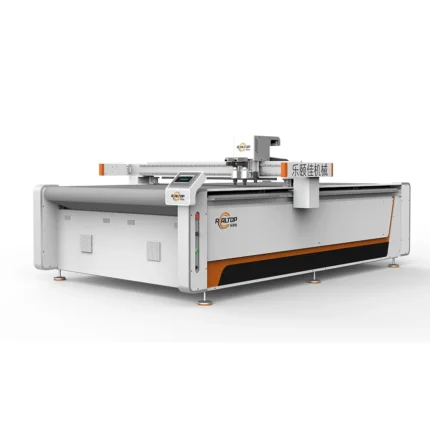
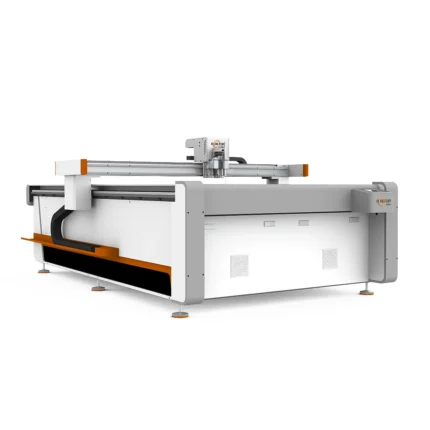
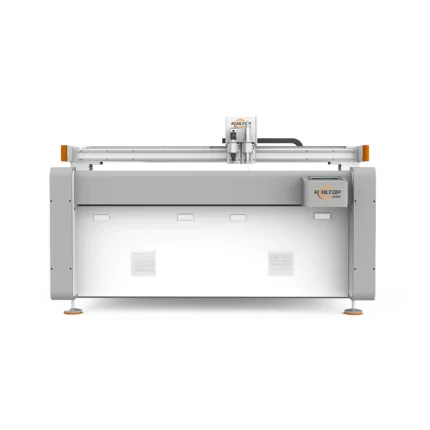
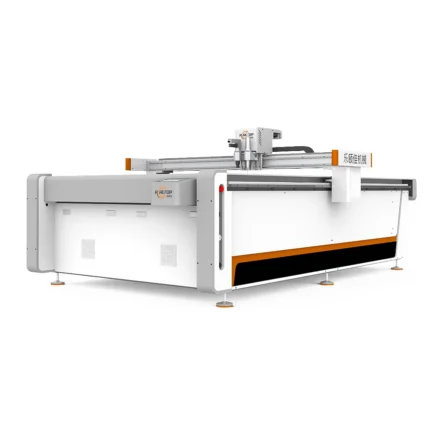
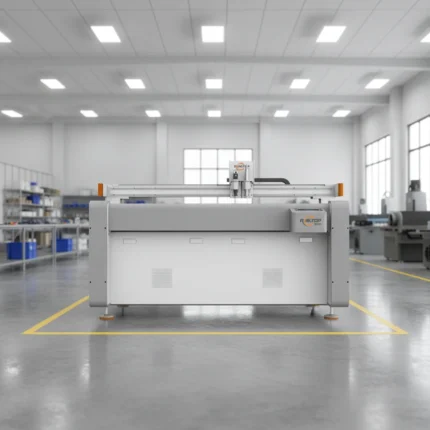
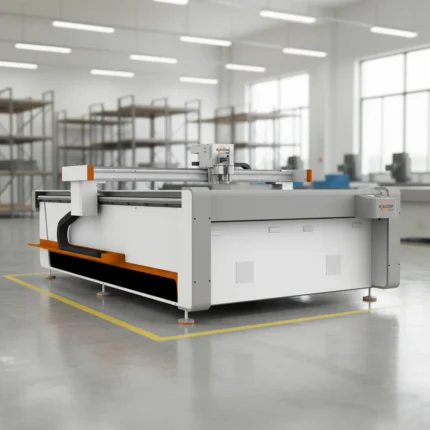
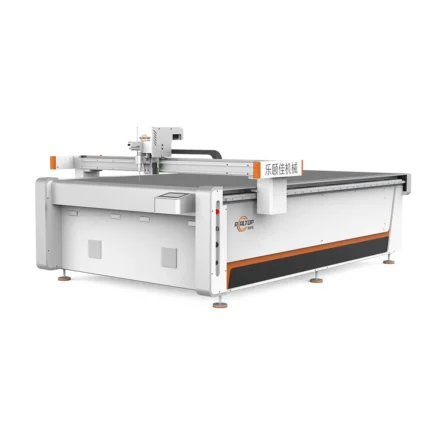
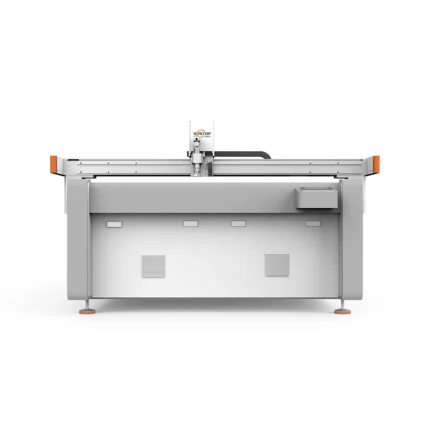
RT-D2516/RT-S2516 Packaging CNC Cutting Machine, 1600×2500mm Working Area, 9kW, Delta Servo — designed for corrugated board, cardboard and sticker sample production with Swiss oscillating knife delivering full-cut, half-cut and creasing in one pass.
- Delta servo with Taiwan Hiwin linear guide ensures ≤0.1mm repeatability across the flatbed table
- 7.5kW vacuum pump holds small and large-format parts flat without lift at production speed
- HP-GL compatible system imports DXF/PLT/AI files with nesting for material yield
Sample cutting on your own corrugated or sticker stock confirms edge quality and throughput before order commitment.
Cutting Method Matched to Material — oscillating knife and drag knife heads are specified per corrugated flute profile and sticker adhesive layer, not forced into one thermal process.
Technical Specifications
| Parameter | Value |
|---|---|
| Product Type | CNC Flatbed Digital Cutting Machine |
| Working Area | 1600 × 2500 mm |
| Machine Size | 3450 × 2300 × 1250 mm |
| Rated Power | 9 kW |
| Table Type | Flatbed working table with 7.5 kW vacuum pump |
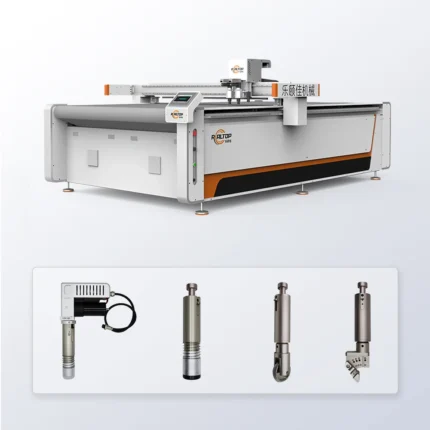
| Multifunctional Head | Swiss imported knife with vibration full cutting, vibration half cutting and cursor location function |
| Safety Device | Infrared sensors |
| Translational Velocity | 800–1200 mm/s |
| Cutting Speed | 200–800 mm/s (according to different cutting materials) |
| Cutting Thickness | ≤100 mm (varies with material — basis not stated in source, confirm by material type) |
| Repeated Accuracy | ≤0.1 mm |
| Transmission System | Digital servo motor, linear guide, synchronous belt, ball screw |
| Instruction System | HP-GL compatible format |
| Voltage | 380V ± 10% |
| Servo Motor | Delta |
| Conveyor Belt | Germany imported |
| Auto Feeding | Yes |
| Guide Rail | Taiwan Hiwin |
| Frame Structure | Welded thick square seamless steel, high temperature treated |
| Language Options | English, Russian, Italian, Chinese (customization available) |
| Software | Professional carton cutting software included, supports multiple format file imports |
Application Suitability
| Application | Material or Output |
|---|---|
| Carton and packaging sample making | Corrugated board, card stock, grey board |
| Express paper box packaging | Single, double and triple-wall corrugated |
| High-end gift box packaging | Rigid board, laminated stock, magnetic closure blanks |
| Sticker and label cutting | Self-adhesive vinyl, printed label sheets, kiss-cut stock |
| Signage and billboard production | Foam board, PVC sheet, honeycomb panel |
| Large electrical carton packaging | Heavy-flute corrugated for appliance transit |
| Snack food packaging | Folding carton, coated board |
Why "Cutting Depth" Claims Can Mislead Packaging Buyers
Every CNC Oscillating Knife Cutting Machine for packaging and carton sample making carries a headline thickness figure, yet flute crush and ragged edges appear long before the stated maximum is reached.
Match the tool head to the flute profile and board GSM, not to the headline cutting depth. [NEED_CITE: corrugated flute types and crush resistance standards]
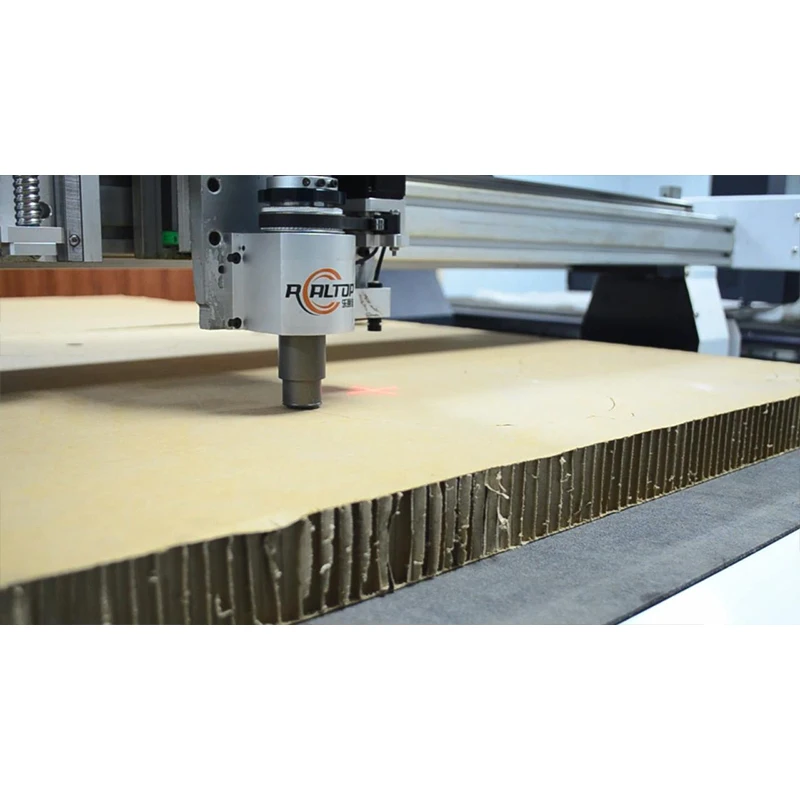
I have seen buyers take a maximum thickness number at face value, then discover their double-wall corrugated blanks produce crushed B-flute at the crease line and torn liners at the cut edge. The issue is rarely the machine’s travel — it is whether the oscillating frequency, blade geometry and vacuum hold-down are set for that specific board weight and moisture content. This is why sample cutting on your actual stock matters before a purchase order is signed.
Blade Selection Across Corrugated Flutes and Sticker Laminates
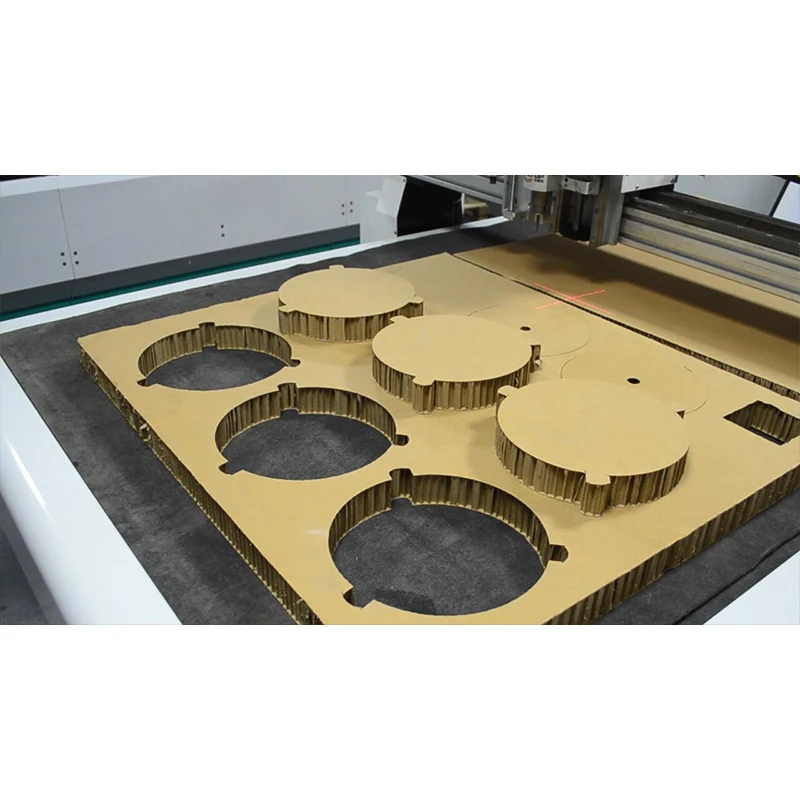
The Swiss imported oscillating knife head handles full-cut, half-cut and cursor location from a single station, removing the need to swap tools mid-job when a packaging sample requires both a kiss-cut window and a through-cut perimeter. For corrugated board, oscillation amplitude and frequency determine whether the blade shears cleanly through the liner or tears the flute structure. Sticker stock presents a different problem: the adhesive layer can gum a drag knife, while an oscillating blade keeps the cut path free of residue buildup.
Edge Quality Where Thermal Processes Leave Burn Marks
Laser cutters seal synthetic edges but leave visible burn lines on cellulose-based corrugated and card stock — unacceptable on gift box faces and printed packaging samples. The knife-based approach produces a mechanical shear with no thermal discolouration, no fume extraction requirement and no ventilation infrastructure in the workshop. [NEED_CITE: thermal versus mechanical cutting edge quality on cellulose materials] For short-run sample rooms sharing space with printing and finishing equipment, the absence of laser exhaust ductwork simplifies the floor layout considerably.
What the Spec Sheet Numbers Actually Mean on the Floor
The Delta servo motors paired with Taiwan Hiwin linear guides hold repeated accuracy within 0.1 mm — critical when a packaging dieline has registration marks that must align to printed graphics after cutting. A 0.5 mm drift across a 2500 mm travel length would throw a glue flap out of tolerance on a folded carton. The 7.5 kW vacuum pump on the flatbed table must overcome the air permeability of corrugated board; without adequate suction, a light card stock lifts off the table during high-speed traversal, and the blade snags. The HP-GL compatible instruction system and professional carton cutting software accept DXF and PLT files directly from packaging CAD platforms, avoiding the re-drawing step that introduces human error into dieline geometry. [NEED_CITE: HP-GL compatibility with packaging CAD file export formats]
The Hidden Cost of Skipping the Material Trial
When a packaging converter orders a flatbed cutter based on working area alone and skips the sample cutting step, the first week of production usually reveals the gap: creasing wheels that dent but do not score, kiss-cuts that penetrate the release liner, or corrugated edges that delaminate under blade pressure. These are not machine faults — they are configuration mismatches that a pre-shipment test on the buyer’s own material would have surfaced. Reworking tool head settings after installation costs production days that a sample report would have prevented. [NEED_CITE: buyer material sample testing protocols for CNC cutting equipment]
Why Source This CNC Knife Cutter Here
In-house design covers both knife and laser platforms, so a packaging buyer discussing corrugated sample work is not steered toward a laser unit just because it sits in the same showroom. The tool head and table configuration list is written against your specific flute type and board weight, not copied from a generic template. Software compatibility is confirmed against your existing CAD file format before the order is placed. Voltage, plug type and control panel language are verified for the destination market so the machine arrives ready to power on. Sample cutting on your corrugated or sticker material is completed and a cutting report shared before you commit.
Documentation & Verification
- Machine specification sheet listing configured tool head and vacuum pump rating for your material
- Electrical schematic with 380V ± 10% confirmation and target market plug type
- Sample cutting report on your corrugated flute type or sticker stock with edge photographs
- Factory test record documenting repeated accuracy and cutting speed on your material
- Software licence and file format compatibility note matching your packaging CAD workflow
- Spare parts list covering blades, creasing wheels and vacuum table seals
Installation, Commissioning & Support
- Floor space allocation based on 3450 × 2300 mm machine footprint plus material staging clearance
- Dedicated 380V ± 10% circuit rated for the 9 kW total draw including the 7.5 kW vacuum pump
- Frame arrives fully welded; table levelling and guide rail alignment verified on site
- First-run calibration uses your corrugated board to confirm crease depth and cut-through settings
- Operator training covers tool head changeover, nesting layout and HP-GL file import workflow
- Maintenance schedule lists blade replacement intervals and linear guide lubrication cycles
Before You Send an Enquiry
Share the corrugated flute type and board GSM, or the sticker laminate structure and adhesive thickness you run most often. Tell us your local voltage and frequency, the control language your operators need, and which CAD file format your design team exports. If you can mail a stack of your standard stock, we will cut samples and return a report before any commercial discussion.
Frequently Asked Questions
Q: How is cutting thickness verified for each corrugated flute type and sticker material?
A: We run your actual board or label stock through the RT-D2516/RT-S2516 and measure edge quality, flute crush and kiss-cut depth on the sample piece. The cutting report documents the blade type, oscillation setting and vacuum pressure used, so you can compare the result against your quality standard before signing off on the configuration.
Q: Is the vacuum table zoned for small packaging parts, and what pump capacity is specified?
A: The flatbed table is paired with a 7.5 kW vacuum pump and uses zoning to hold small carton blanks and sticker labels flat during high-speed traversal. Zoning prevents air bleed on sections of the table that are uncovered, maintaining consistent suction where the material sits.
Q: Can the software import my existing DXF and PLT dieline files for nesting?
A: The included professional carton cutting software accepts DXF, PLT and other standard vector formats, and the instruction system is HP-GL compatible. We confirm file import and nesting workflow against your specific CAD output before order confirmation so there are no format surprises at commissioning.
Q: What is the edge quality difference between oscillating knife and laser on corrugated board?
A: An oscillating knife produces a mechanical shear with no thermal discolouration on cellulose-based board, while a laser leaves visible burn lines and requires fume extraction. For printed packaging samples and gift box faces where edge appearance matters, the knife process avoids secondary cleaning or edge sealing steps.
Q: How are voltage, plug type and control language confirmed before shipment?
A: We collect your local voltage and frequency specification, plug standard and preferred control panel language during the enquiry stage. The electrical schematic is updated and sent to you for written confirmation before the RT-D2516/RT-S2516 enters final assembly, ensuring the machine matches your workshop’s power supply on arrival.


Related products
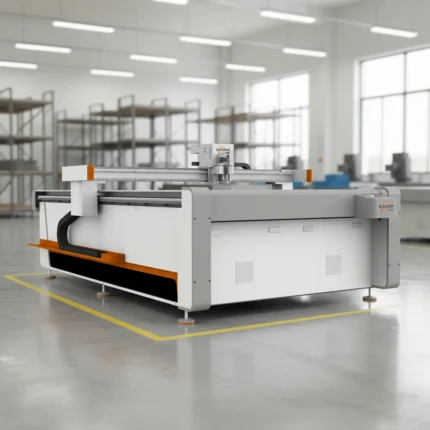
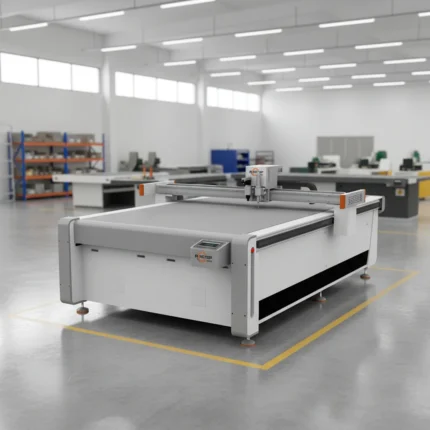
2026 Digital Flatbed Cutting Plotter Auto Corrugated Box Die Cutter
Product Introduction
Digital Flatbed Cutting Plotter 2026, ideal for auto corrugated box die cutting, offering precision and efficiency for professional packaging production.Specifications
| Type | Digital Flatbed Cutting Plotter |
| Model | 2026 |
| Application | Auto Corrugated Box Die Cutting |
| Function | Precision Cutting & Plotting |
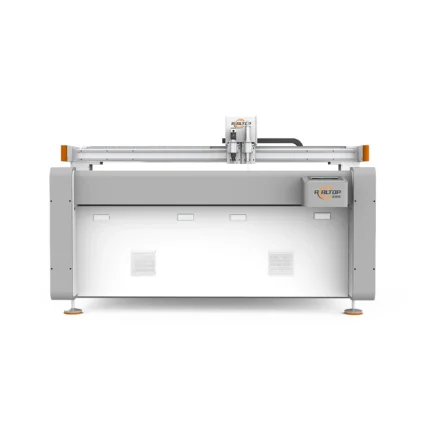
Automatic CNC Cutter Plotter 2026 Flat Bed Cardboard Cutter
Product Introduction
Automatic CNC Cutter Plotter 2026 is a flat bed cardboard cutting machine designed for precise and efficient cutting tasks. Ideal for various cardboard processing needs, it combines advanced CNC technology to deliver accurate results, suitable for manufacturing and packaging applications.Product Parameters
| Type | Automatic CNC Cutter Plotter |
| Model | 2026 |
| Design | Flat Bed |
| Application | Cardboard Cutting |
CNC Flatbed Cutter 2026 Digital Corrugated Box Making Machine
Product Introduction
High-precision CNC flatbed cutter designed for efficient cardboard box production. Ideal for 2026 digital corrugated box manufacturing, offering precise cutting and reliable performance for professional packaging solutions.
Key Specifications
| Type | CNC Flatbed Cutter |
| Application | Cardboard Box Production |
| Technology | 2026 Digital System |
| Material | Corrugated Board |

CNC Flatbed Oscillating Knife Cutting Machine 2026
Product Introduction
High-performance CNC Flatbed Oscillating Knife Cutting Machine 2026, ideal for precision cutting of various materials with advanced oscillating knife technology, ensuring efficient and accurate operations for industrial manufacturing needs.Specifications
| Model | 2026 |
| Type | CNC Flatbed Oscillating Knife Cutting Machine |
Realtop 2026 Digital Box Cutter High-Speed Corrugated Board
Product Introduction
Realtop Digital Box Cutting Machine 2026 is a high-speed solution for corrugated board cutting, designed for efficient and precise box production in manufacturing settings.Key Specifications
| Model | 2026 |
| Type | Digital Box Cutting Machine |
| Application | Corrugated Board |
| Feature | High-Speed Cutting |
商品评价
There are no reviews yet.