

Cloth CNC Cutting Machine for Curtains Blankets Carpets – Custom Build
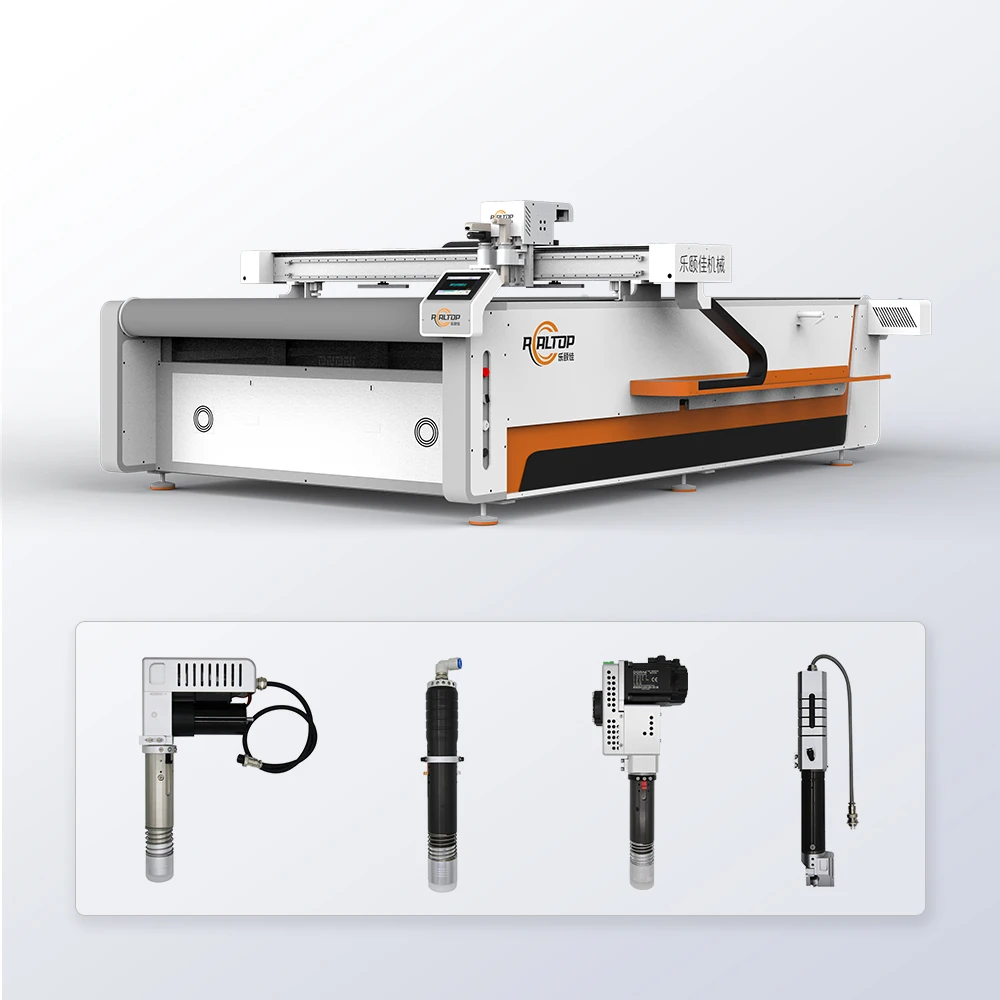
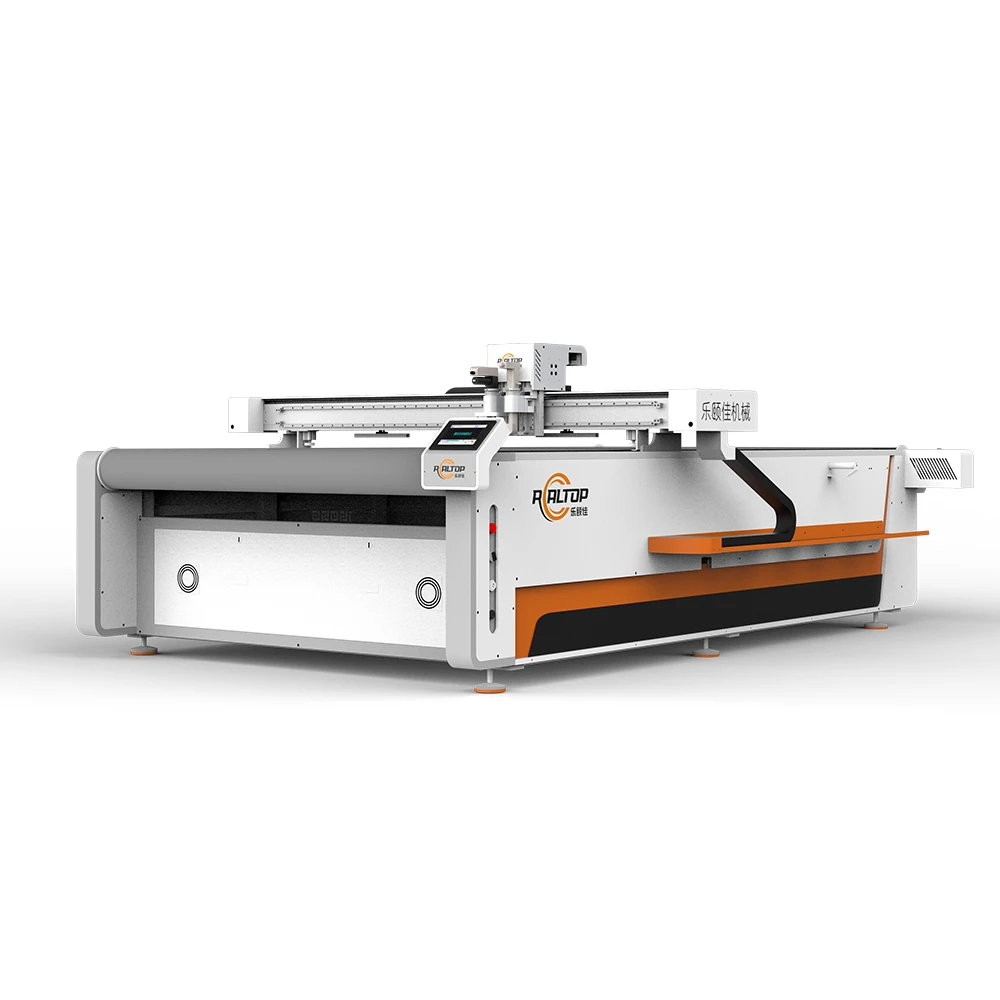
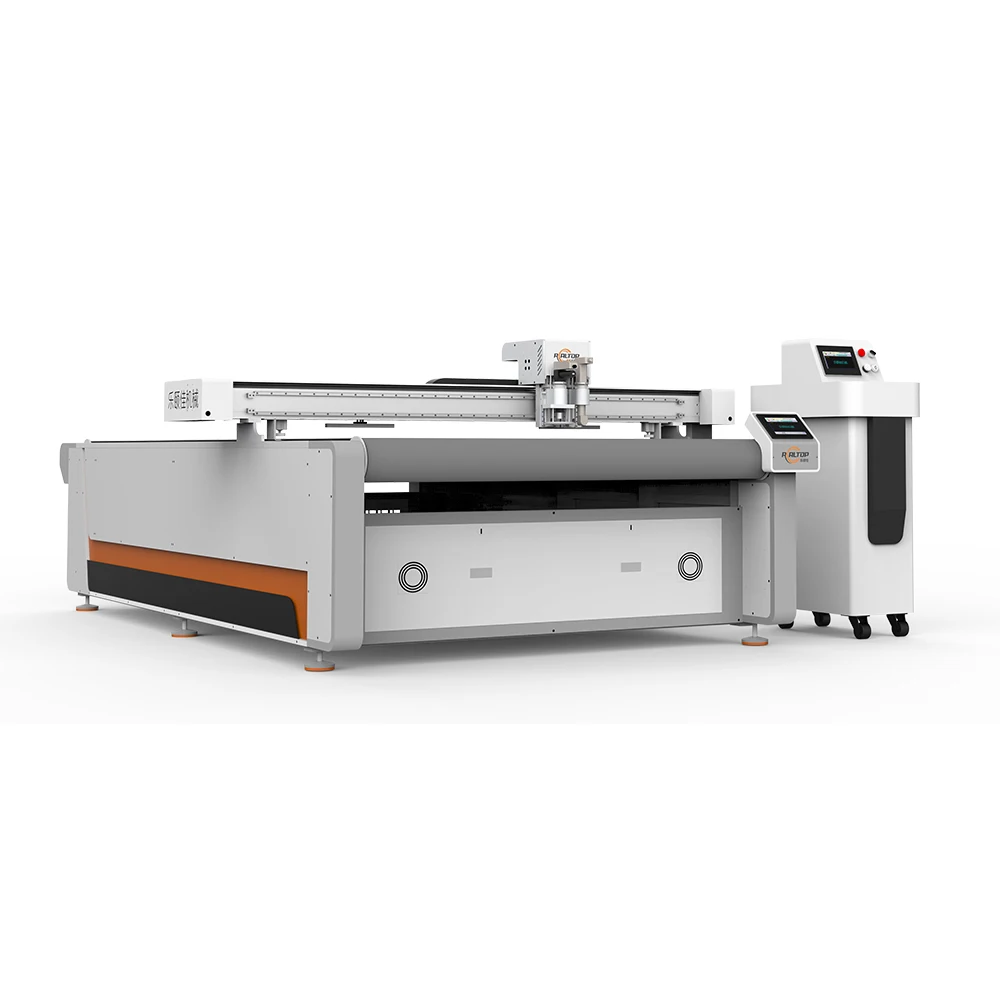
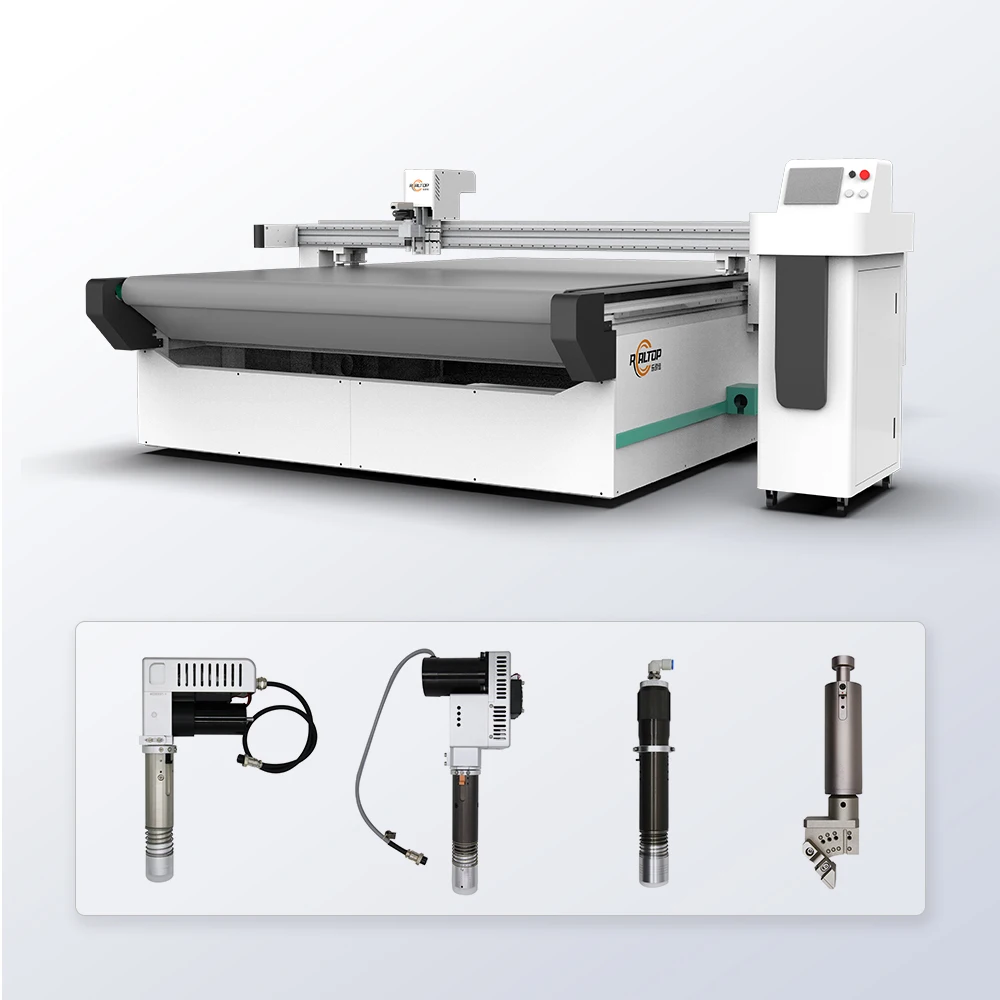
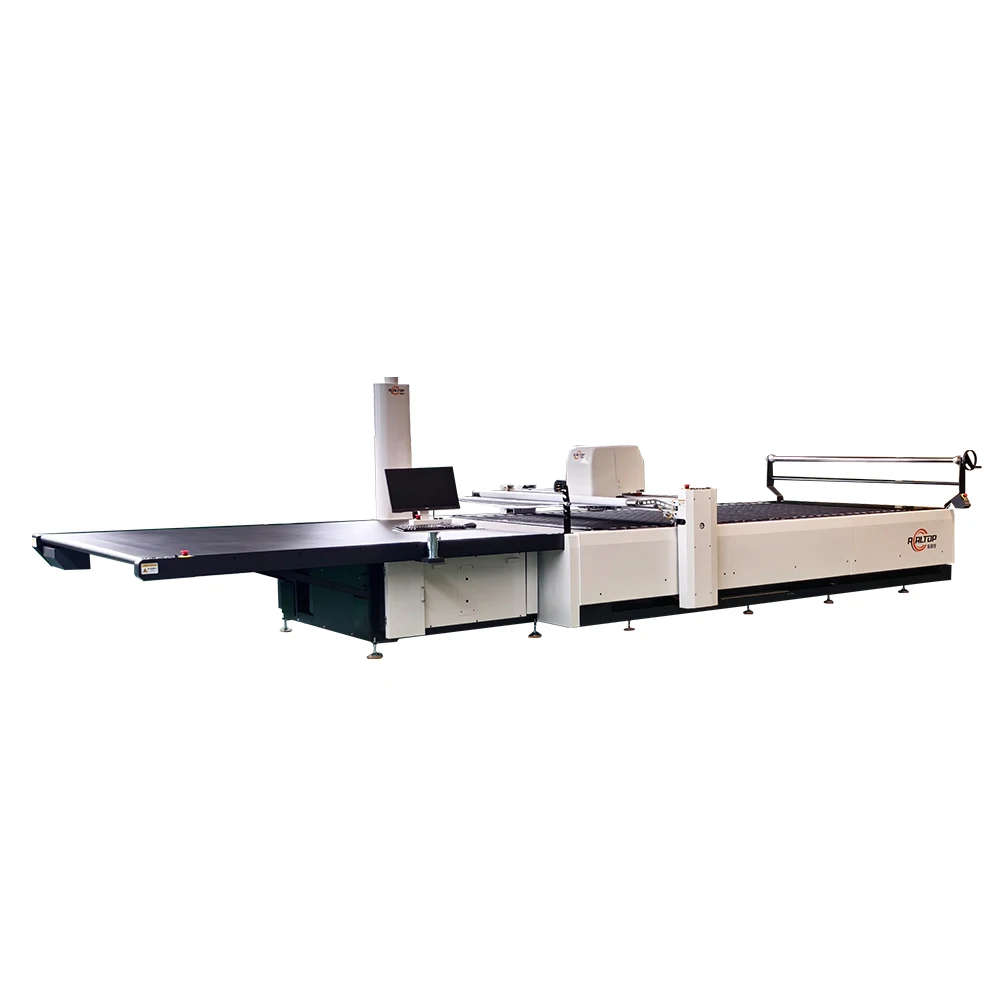
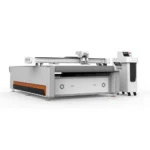
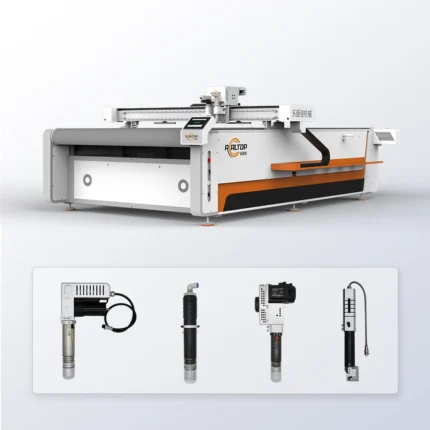
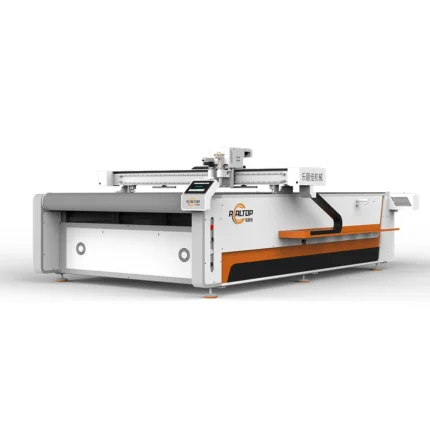
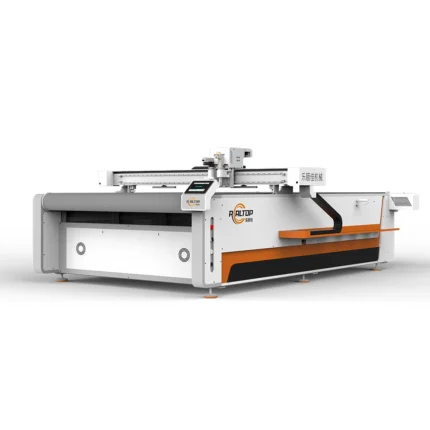
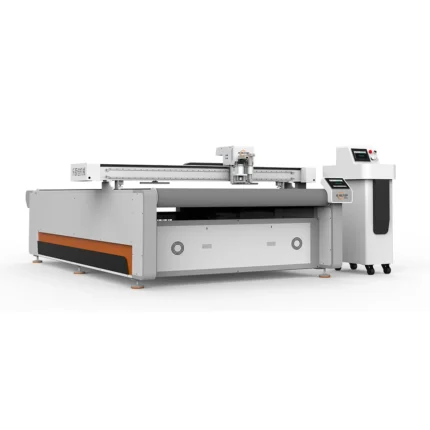
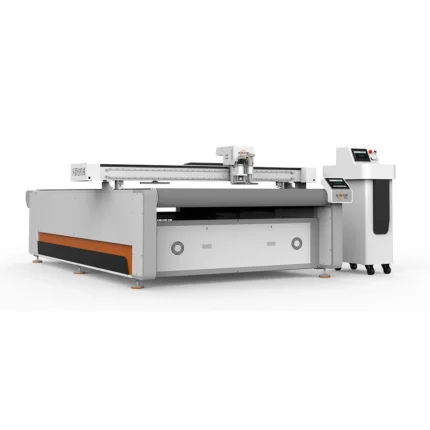
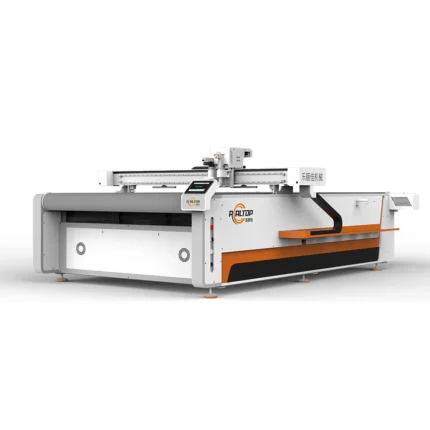
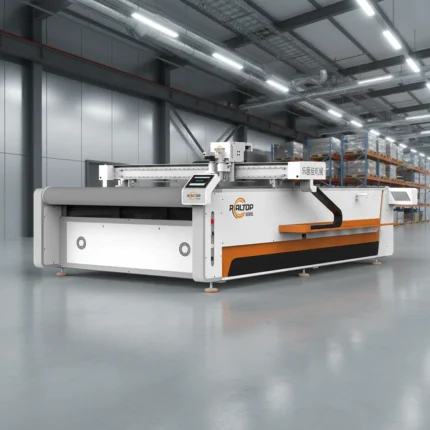
RT-D2516/RT-S2516 Cloth CNC Cutting Machine, 1600×2500mm, 9kW, Oscillating Knife — configured for textile and soft furnishing production with multi-tool head and CCD camera contour recognition.
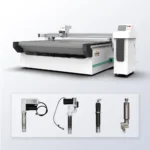
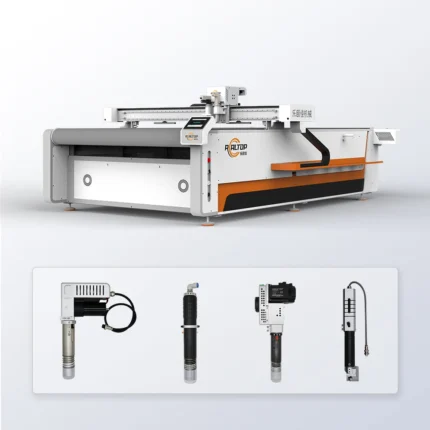
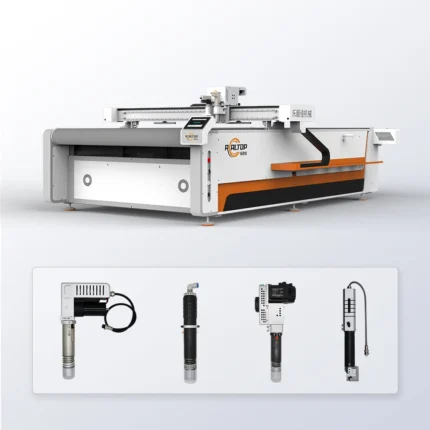
- Swiss imported vibrating knife with drag knife, creasing wheel and punching options matched to fabric thickness and edge quality
- Magnesium-aluminum vacuum table with 7.5kW pump and zoned adsorption to prevent material lift on small carpet or curtain parts
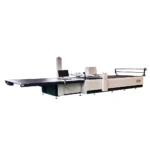
- Auto-feeding conveyor with Germany-imported belt for continuous roll-to-cut workflow
Sample cutting on your own carpet pile or curtain fabric is completed before order commitment, confirming edge quality and cutting speed against your real material.
Tool-First Material Matching — in-house design covering both knife and laser means the cutting method is selected for your fabric, not forced onto a single platform.
Technical Specifications
| Parameter | Value |
|---|---|
| Model | RT-D2516 / RT-S2516 |
| Product Type | CNC Oscillating Knife Cutting Machine |
| Working Area | 1600 × 2500 mm |
| Machine Size | 3450 × 2300 × 1250 mm |
| Rated Power | 9 kW |
| Voltage | 380V ±10% |
| Translational Velocity | 800–2000 mm/s |
| Cutting Speed | 200–800 mm/s (varies with material type and density) |
| Cutting Thickness | Up to 100 mm (basis to be confirmed per material) |
| Repeated Accuracy | ≤0.1 mm |
| Table Type | Flat working table or auto-feeding conveyor |
| Vacuum Pump | 7.5 kW |
| Tool Head Options | Swiss imported knife (vibration full/half cutting), oscillating knife, pneumatic knife, circular knife, drag knife, creasing wheel, punching, brush |
| Visual Positioning | Small CCD mark point, panoramic camera recognition, projection positioning |
| Transmission | Digital servo motor, linear guide, synchronous belt, imported ball screw |
| Servo Motor | Delta or Panasonic (IP67 optional) |
| Guide Rail | Taiwan Hiwin |
| Conveyor Belt | Germany imported |
| Table Construction | Magnesium-aluminum alloy with PVDF coating and hard oxidation |
| Safety Devices | Infrared induction blocking, anti-collision sensors, emergency stop |
| Software Formats | PLT, DXF, AI, HP-GL compatible |
| Language Options | English, Russian, Italian, Chinese (customizable) |
Application Suitability
| Application | Material or Output |
|---|---|
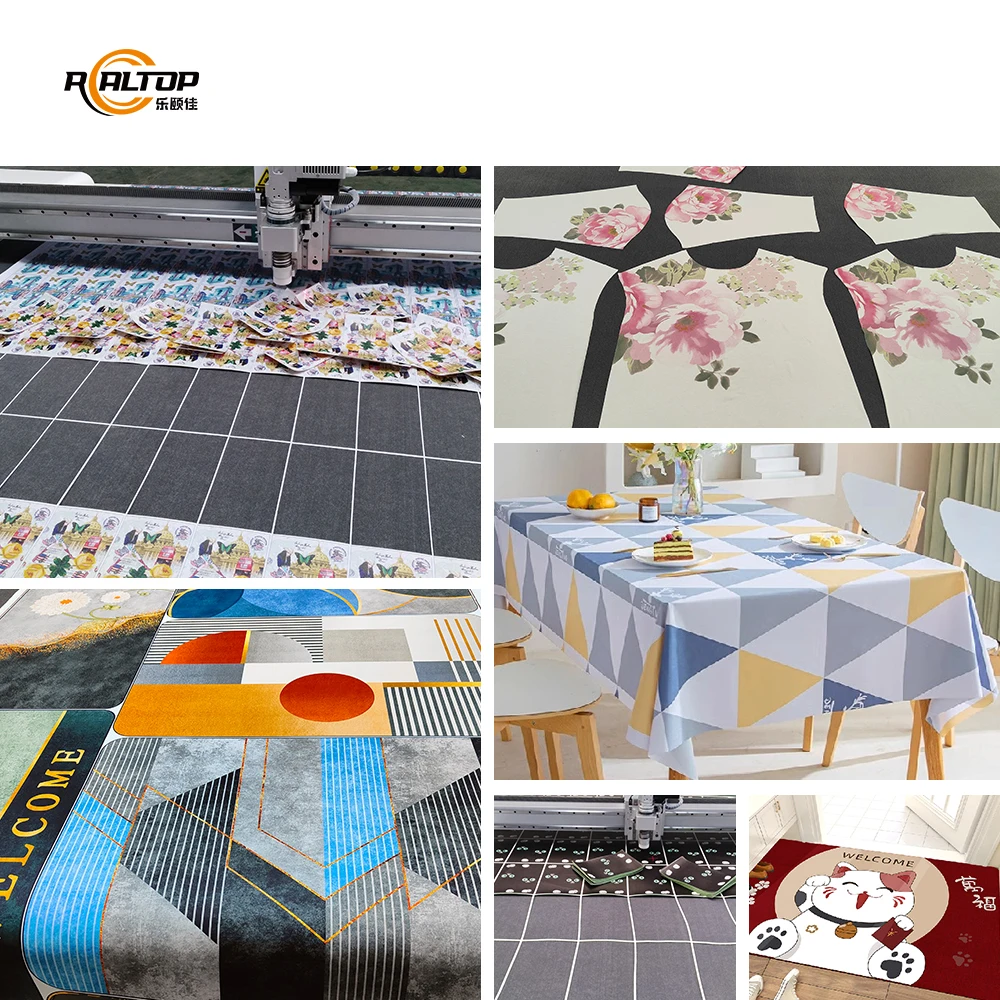
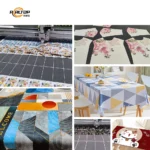
| Carpet and floor mat cutting | Woven, tufted and thick-pile carpet with oscillating knife hold-down |
| Curtain and drapery production | Blackout lining, sheer fabric and heavy drapery cloth on conveyor feed |
| Multi-layer garment cutting | Stacked apparel cloth and shoe uppers with high-power vibrating knife |
| Automotive interior trimming | Floor mat, headliner and upholstery fabric with contour recognition |
| Soft home furnishing | Sofa fabric, blanket and cushion cover panels from roll stock |
Why "Max Thickness" on a Cloth CNC Cutting Machine Misses the Point
The real question is which tool head holds the edge at your actual fabric weight and density.
When I first started specifying cutting lines for textile mills, buyers would ask for the maximum cutting thickness number and stop there. The problem is that 100 mm on a dense foam block behaves completely differently from 100 mm of loosely stacked curtain cloth. [NEED_CITE:] A machine quoted on thickness alone, without matching the knife type to the fabric structure, produces frayed edges on wovens and crushed pile on carpets. I have walked into workshops where the operator was making three passes on material the supplier promised would cut in one, simply because a standard oscillating knife was shipped where a high-frequency vibrating head was needed.
Tool Head Selection Dictates Edge Quality on Textiles
The RT-D2516/RT-S2516 platform offers a Swiss imported vibrating knife alongside oscillating, pneumatic, drag and circular knife options. For tightly woven curtain cloth and garment fabric, the high-frequency vibrating knife produces a clean severed edge without pulling the yarn. On tufted carpet and thick pile materials, the oscillating knife with a longer stroke clears the fibers without matting them down. Selecting the wrong head does not just slow you down — it creates rework on every panel that leaves the table.
Vacuum Zoning and Conveyor Alignment for Continuous Fabric Runs
The 7.5 kW vacuum pump sits under a magnesium-aluminum alloy table coated with PVDF and hard-anodized for flatness. Zoned adsorption matters when you are cutting small carpet tiles or curtain tie-backs from a large sheet; a single-zone table loses grip on parts that sit away from the center plenum. The Germany-imported conveyor belt, paired with panoramic camera recognition, tracks printed registration marks across continuous roll feeds — provided the print contrast and mark size match the camera’s detection threshold at your operating feed rate. [NEED_CITE:]
Reading the Specs That Actually Affect Your Cutting Line
Working area at 1600 × 2500 mm sets the maximum single-sheet footprint, but daily throughput depends on how the nesting software arranges patterns within that envelope. Translational velocity of 800–2000 mm/s describes head travel between cuts, while the 200–800 mm/s cutting speed range reflects actual blade engagement — the lower end applies to dense multi-layer stacks, the upper to single-ply synthetics. Repeated accuracy at ≤0.1 mm ensures pattern edges meet across nested pieces, which is critical when garment panels must align at the seam. The IP67-rated servo option from Delta or Panasonic addresses workshops where fabric dust and humidity compromise standard motor encoders over time.
The Cost of Skipping a Material Trial Before Shipment
I once configured a line for a carpet manufacturer who sent samples from their standard range. The machine was built, shipped, and installed — only to discover their current season included a long-pile shag carpet the knife head could not penetrate cleanly. Production capacity dropped sharply because the tool specification did not match the actual product mix. [NEED_CITE:] A sample cutting report on your heaviest carpet weight and your lightest sheer fabric, run before the machine leaves the factory, catches this mismatch when the fix still costs days instead of weeks.
What Separates This Build from a Generic Table Order
The design team specifies tool head, vacuum zone layout and conveyor width against your material list rather than shipping a default configuration. CCD camera positioning, whether small-mark or panoramic, is tested against your actual print registration system. Voltage at 380V ±10% is confirmed against your facility supply, and the control panel language is set before crating — not discovered on arrival. Software file format compatibility with PLT, DXF and AI imports is verified with your existing nesting workflow so there is no gap between your CAD system and the machine controller.
Documentation & Verification
- Machine specification sheet listing configured tool heads and vacuum zone layout
- Electrical schematic confirming 380V ±10% and local plug type
- Sample cutting report on your carpet pile weight and curtain fabric density
- Software licence with PLT, DXF, AI format compatibility confirmation
- Factory test record at rated translational and cutting speeds before dispatch
Installation, Commissioning & Support
- Floor space of 3450 × 2300 mm footprint plus operator clearance on three sides
- Dedicated 380V ±10% circuit sized for 9 kW machine load plus 7.5 kW vacuum pump
- Magnesium-aluminum table sections assembled and leveled on-site with Hiwin rail alignment check
- First-run parameter tuning of oscillating knife stroke and vacuum zone mapping to your material
- Operator training on CCD mark recognition and conveyor feed rate synchronization
- Spare knife blades, conveyor belt segments and vacuum seals stocked for first-year maintenance
Before You Request a Quotation
Send the actual fabrics from your current production — not a catalog reference. Specify your typical roll width, the maximum stack height you run, and whether your patterns rely on printed marks or projection alignment. Confirm your workshop voltage and frequency, the language your operators need on the touch screen, and whether the machine feeds into an existing nesting software or requires its own workflow.
Frequently Asked Questions
Q: How do you confirm cutting thickness for my specific carpet or curtain fabric?
A: Maximum thickness capability changes with material density and fiber structure. We run a sample cutting test on your actual carpet pile weight or curtain cloth before order confirmation, documenting edge quality, number of passes required, and achievable speed. This report travels with the machine so your operators have a baseline reference from day one.
Q: Which tool head works best for my mix of woven cloth and thick carpet?
A: Woven apparel fabric typically needs a high-frequency vibrating knife for clean severed edges, while thick tufted carpet requires an oscillating knife with longer stroke to clear the pile. The RT-D2516/RT-S2516 supports multiple heads on one carriage, so we configure the combination that matches your actual material range rather than a single default tool.
Q: Can the panoramic CCD camera keep up with my conveyor feed rate on printed fabric?
A: Camera tracking speed depends on mark size, print contrast and the feed rate you set for production. We test the panoramic recognition system against your actual printed fabric at your target conveyor speed during the factory trial. If the marks fall below detection threshold, we adjust mark specifications or camera settings before shipment.
Q: How is the vacuum table configured to hold small curtain or carpet tile pieces?
A: A single large vacuum zone loses suction on parts positioned away from the plenum center. The table is divided into selectable zones so that small pieces hold flat without the full 7.5 kW pump running across the entire surface. Zone layout is matched to your typical part dimensions during configuration, not left as a generic grid.
Q: What do I need to confirm before the machine ships to my country?
A: We lock down three items before crating: your local voltage and plug type against the 380V ±10 system, the control panel and software language your operators require, and file format compatibility with your existing CAD output. All three appear on the pre-shipment specification sign-off document so nothing is left to assumption.


Related products
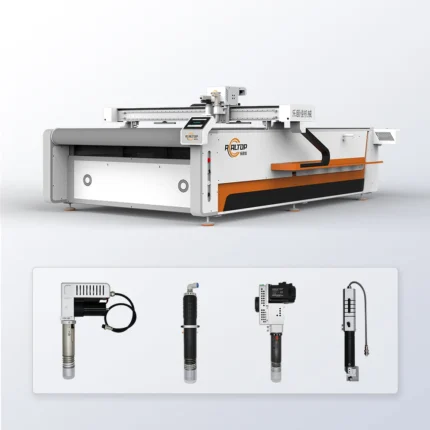
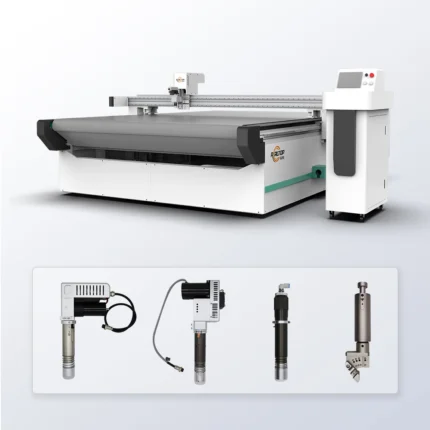
Automatic Fabric Cutting Machine 1200mm Delta Servo 2026
Product Parameters
| Cutting Width | 1200mm |
| Servo System | Delta Servo |
| Model Year | 2026 |
Introduction
High-performance Automatic Fabric Cutting Machine with 1200mm cutting width, equipped with Delta Servo for precision. Ideal for efficient fabric processing in textile industry, ensuring accurate and fast cutting operations.
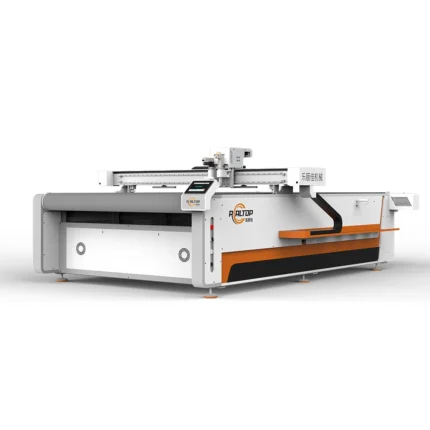
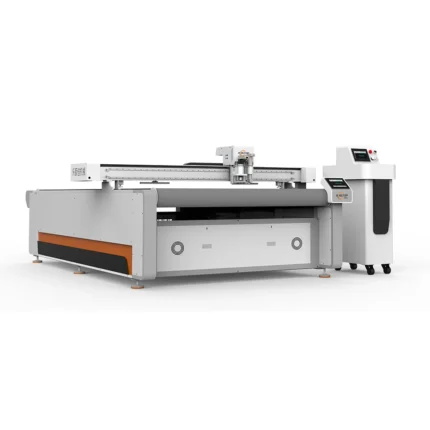
CNC Oscillating Knife Cutting Machine 2026 3000¡Á1600mm High-Speed
Product Parameters
| Model | CNC Oscillating Knife Cutting Machine 2026 |
| Working Area | 3000mm¡Á1600mm |
| Cutting Type | Oscillating Knife |
| Application | Fabric Cutting |
| Feature | High-Speed |
Introduction
High-performance CNC oscillating knife cutting machine with 3000mm¡Á1600mm working area, ideal for high-speed fabric cutting. Precision and efficiency for professional textile processing needs.
Custom CNC Shirt Fabric Cutting Machine 2026
Product Introduction
Custom CNC Shirt Fabric Cutting Machine 2026, ideal for precise fabric cutting in garment manufacturing, offering efficient and accurate cutting solutions.
Product Parameters
| Model | Custom CNC Shirt Fabric Cutting Machine 2026 |
| Type | CNC Fabric Cutting Machine |
| Application | Shirt Fabric Cutting |
| Year | 2026 |

Electric Fabric Rotary Cutter 2026 12V Auto-Cut Industrial
Product Introduction
Industrial-grade Electric Fabric Rotary Cutter designed for precise cutting of scan-printed cloth. Features 12V auto-cut functionality for efficient, automated operation, ideal for professional textile processing.Product Parameters
| Power Supply | 12V |
| Function | Auto-Cut |
| Application | Scan-Printed Cloth |
| Type | Industrial Electric Rotary Cutter |
High Speed Fabric Cutting Machine 2026 Round Oscillating Knife
Product Overview
High Speed Fabric Cutting Machine 2026 with round and oscillating knife for efficient fabric cutting. Ideal for textile manufacturing and related industries.Key Specifications
| Cutting Type | Round & Oscillating Knife |
| Model Year | 2026 |
| Application | Fabric Cutting |
| Feature | High Speed Performance |
商品评价
There are no reviews yet.