

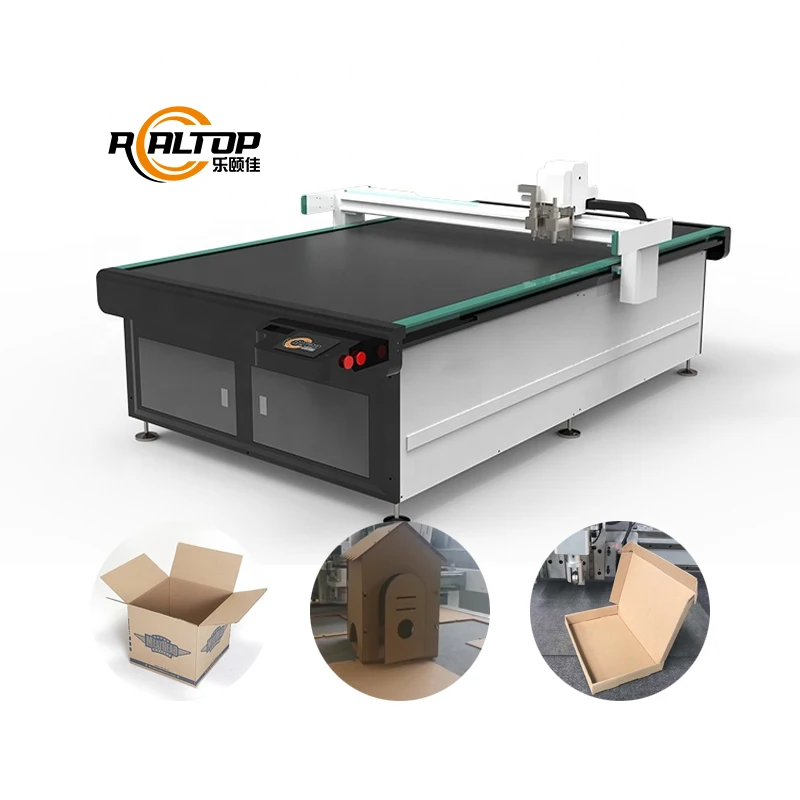
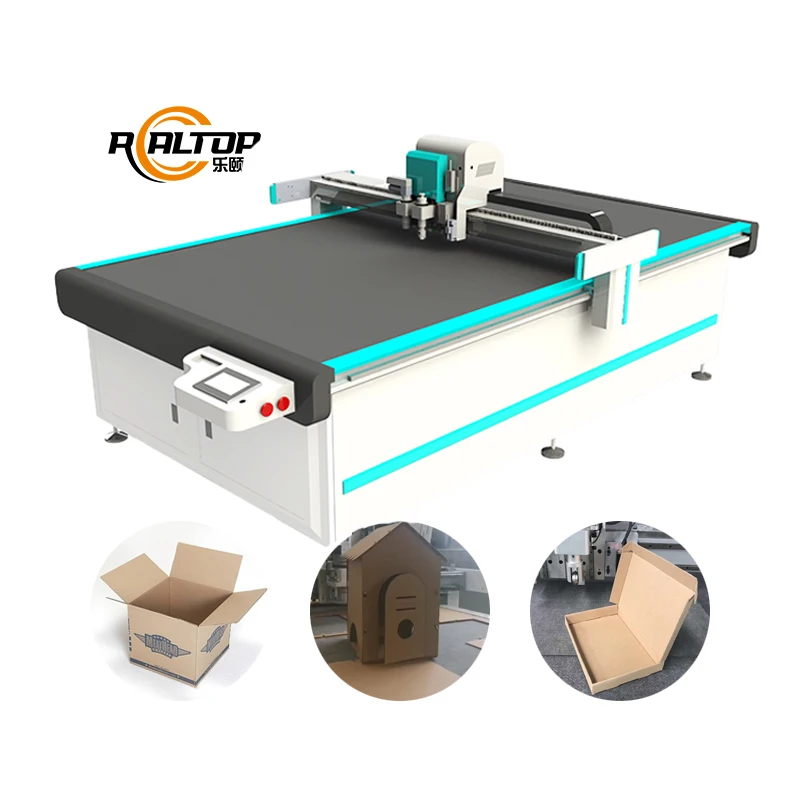

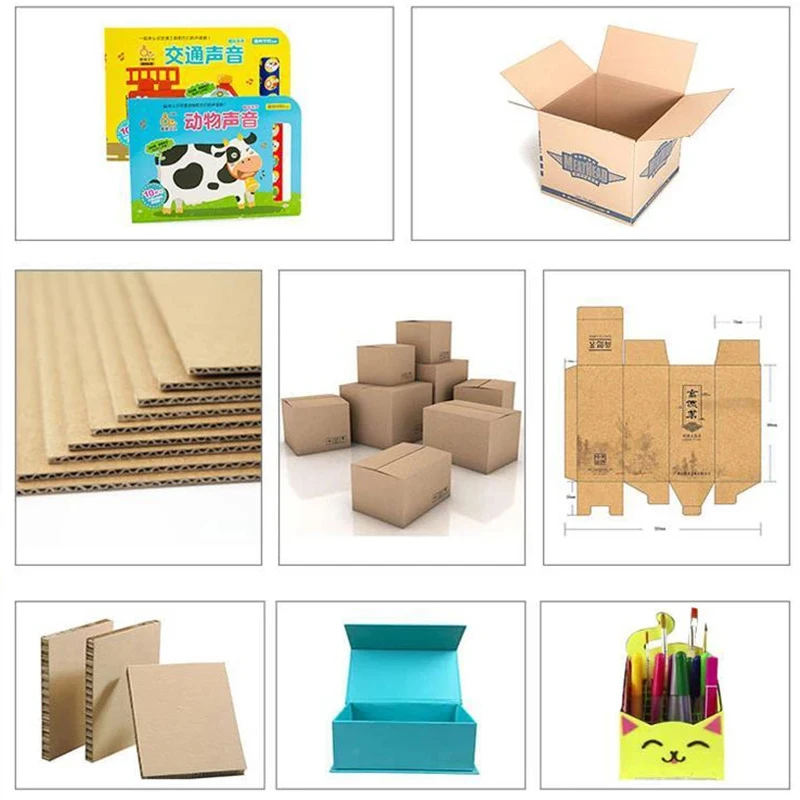




Factory Supply CNC Corrugated Box Cutting Machine for Packaging
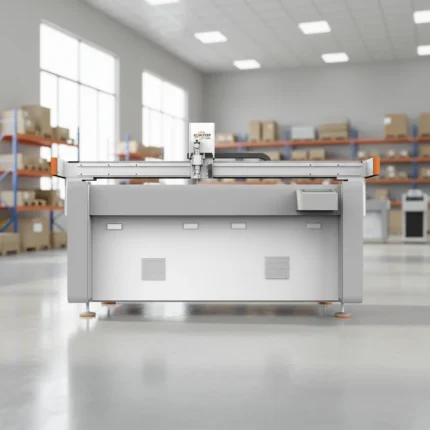
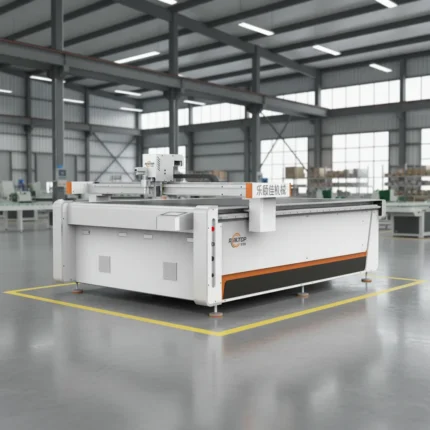
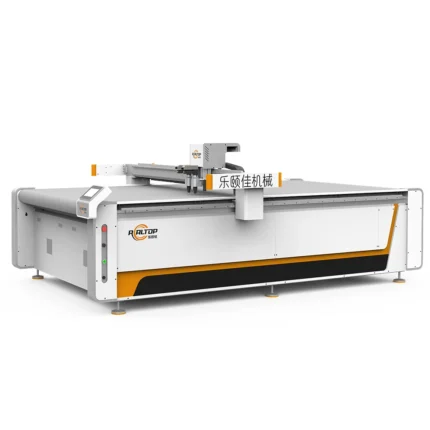
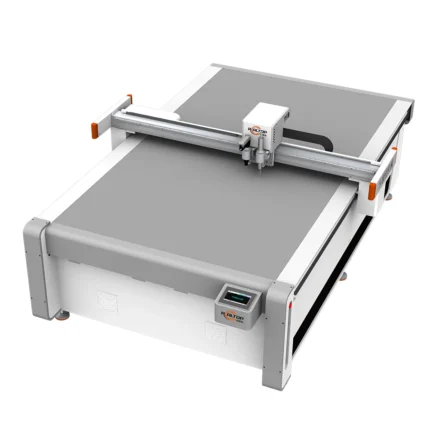
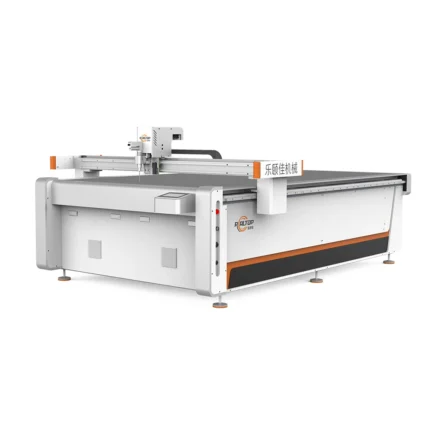
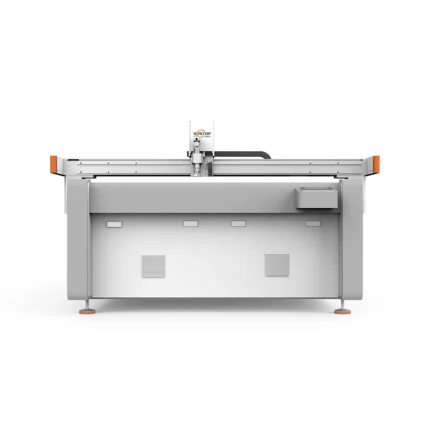
RT–R2513 CNC Corrugated Box Cutting Machine, 2500×1300 mm, 9KW, Oscillating Knife + Creasing Tool — delivers precise cutting and folding line creation for corrugated cardboard, stickers, and packaging materials up to 18mm thick.
- Multi-tool head configuration handles diverse packaging and signage jobs in one setup
- Aluminum honeycomb vacuum platform with auto zone following ensures stable material holding
- Compatible with DXF, OLT, PDF, AI formats; customizable voltage and control language
Laser versus knife cutting evaluation available to match your exact material and throughput needs, with sample testing on your own stock before commitment.
Tool Head Matched to Material — Every RT–R2513 configuration is specified against the buyer’s actual board flute, sticker stock, or composite sheet before the order is locked, not quoted from a generic brochure line.
Technical Specifications
| Parameter | Value |
|---|---|
| Model | RT–R2513 |
| Product Type | CNC Corrugated Box Cutting Machine |
| Working Area | 2500 × 1300 mm |
| Machine Size | 3550 × 1910 × 1400 mm |
| Rated Power | 9 kW |
| Voltage | 380 V (configurable for target market) |
| Cutting Thickness Capacity | Up to 18 mm (basis not stated in source — confirm material) |
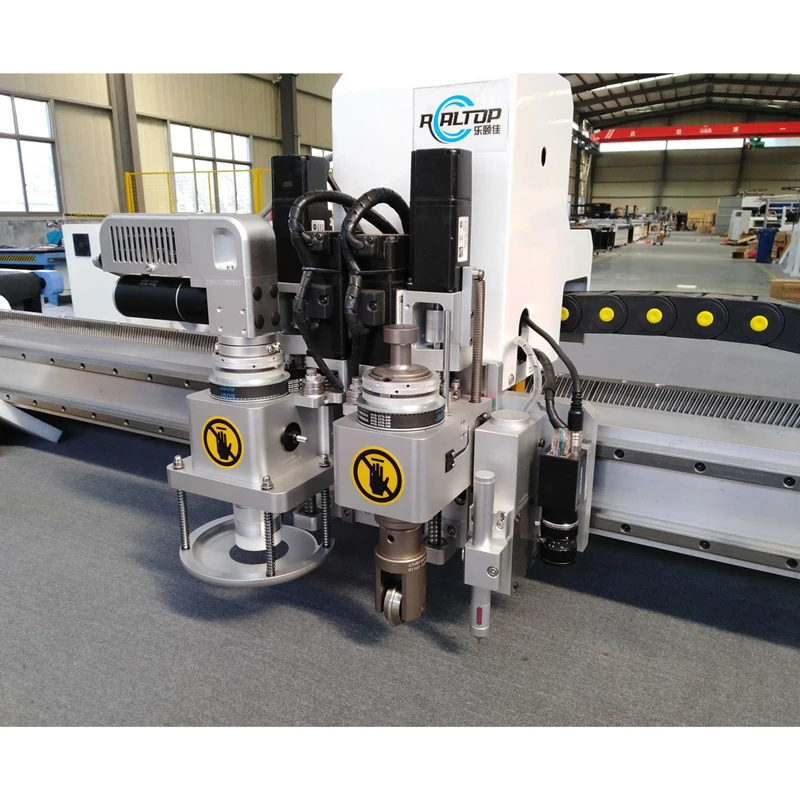
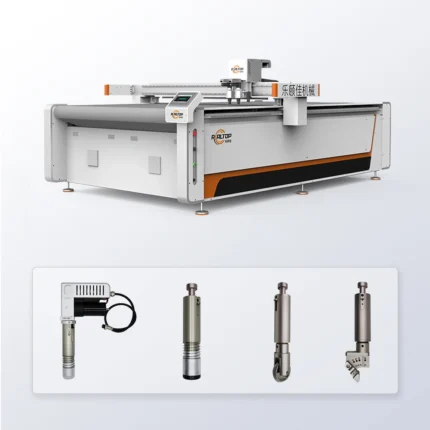
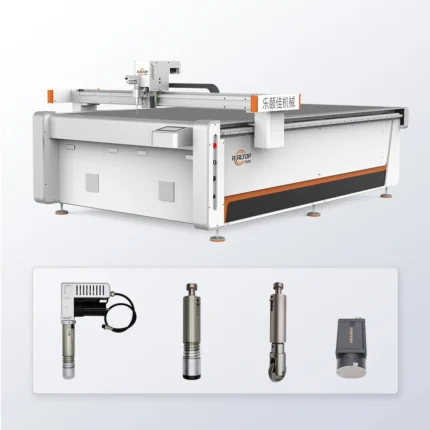
| Tool Heads Included | Oscillating Knife, Creasing Tool, Kiss-Cut Knife, Round Punch |
| Fixing Method | Vacuum table with zoned suction |
| Vacuum Pump | 7.5 kW |
| Repeated Positioning Accuracy | < 0.05 mm |
| Transmission Interface | Ethernet port |
| Accepted File Formats | DXF, OLT, PDF, AI |
| Servo System | Dongling servo (Delta servo motor available as option) |
| Linear Motion | Taiwan Hiwin guide rail |
| Conveyor Belt | Germany-imported belt with auto-feeding |
| Safety System | Infrared sensors with emergency stop |
| Blade Supply | 10 oscillating blades included |
| Language Options | English, Russian, Italian, Chinese, and others on request |
| Delivery Lead Time | Under 30 working days |
| Assembly State | Fully assembled at factory |
| Warranty | 1 year (excluding felt and knife blades) |
Application Suitability
| Application | Material or Output |
|---|---|
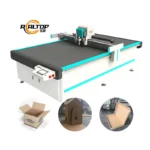
| Corrugated carton sample making | Single, double, and triple-wall flute board up to the machine’s thickness capacity |
| Gift box and premium packaging short runs | Greyboard, art board, and coated carton stock |
| Sticker and label contour cutting | Vinyl, PP paper, self-adhesive films |
| Advertising signage and billboard blanks | Foam board, corrugated plastic, display board |
| Business card and hang tag production | Coated paper, card stock, laminated sheets |
Why the Wrong Tool Head Ruins the Edge Before You See It
A CNC Corrugated Box Cutting Machine manufacturer often quotes oscillating knife as a blanket solution, yet corrugated flute, self-adhesive vinyl, and greyboard each demand a different cutting action to avoid crushed edges, ragged corners, or delaminated liners.
Specify the tool head against your thickest daily material, not the thinnest.
On a packaging line in Jeddah I watched a cutter rated for 1.5 mm flute choke on 3 mm double-wall because the knife stroke and vacuum zoning had never been matched to the real board running through the plant. Output fell to half, and the upstream printer kept feeding faster than the table could clear. Re-mapping the tool paths and re-zoning the vacuum took two weeks on-site. [NEED_CITE: vacuum zoning requirements for corrugated board thickness ranges]
Laser Process Detail Is Not Relevant Here
The RT–R2513 is a knife-based digital cutting platform. It does not carry a CO2 or fiber laser source. For buyers whose work involves acrylic edge sealing, textile laser perforation, or sheet metal profiling, a separate laser system should be evaluated on its own power rating, focal length, and assist gas configuration. This page stays focused on the knife cutting, creasing, and kiss-cut processes that define packaging and signage finishing.
How the Four Tool Heads Divide the Workload
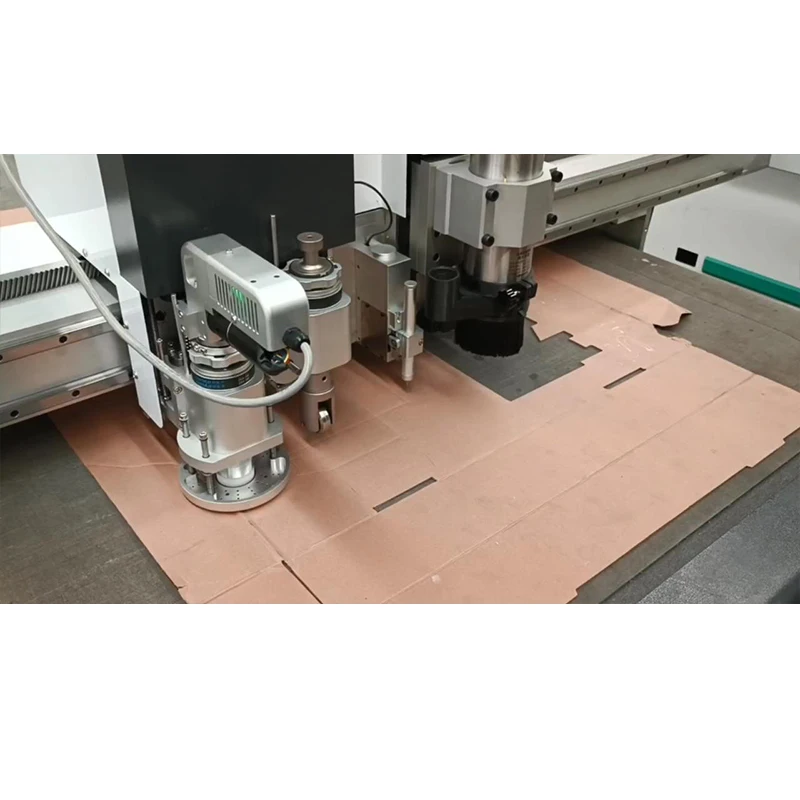
The oscillating knife handles straight and curved cuts through corrugated board and foam without crushing the flute structure, because the blade vibrates at high frequency to slice rather than drag. The creasing tool presses a defined fold line into carton stock so that downstream folding produces clean, predictable bends instead of cracked surfaces. The kiss-cut knife scores through the face layer of sticker and label material while leaving the backing sheet intact, allowing the matrix to be stripped cleanly. The round punch removes registration holes and ventilation cutouts in a single stroke. Together they let a single workstation handle a full packaging sample from flat blank to folded prototype without moving the sheet to a second machine. [NEED_CITE: tool head selection criteria for digital flatbed cutting]
What the Specs Actually Mean on the Shop Floor
The 2500 × 1300 mm working area accommodates most standard corrugated sheet sizes used in carton sample making, but the usable cutting envelope depends on how the vacuum zones are mapped. A 7.5 kW vacuum pump provides enough suction to hold large boards flat, yet small sticker nests can still lift at the edges if the zoning is not configured for the part footprint. The < 0.05 mm repeated positioning accuracy keeps registration marks aligned across long production runs, which matters when CCD contour recognition is added to track printed fiducials at speed. Ethernet-based file transmission avoids the bottleneck of USB transfer when the design office is pushing large nesting layouts with hundreds of parts. Taiwan Hiwin rails and the Dongling or Delta servo combination maintain positional accuracy across the full travel range, even when the table is loaded near its 18 mm thickness capacity.
What Happens When Configuration Is Skipped
Buyers who specify working area alone and ignore tool head, vacuum zoning, and software format often discover the problems only after the machine is installed. A kiss-cut tool set for the wrong depth slices through the sticker backing, turning every label sheet into scrap. Insufficient vacuum zoning on small parts causes material lift during cutting, producing dimensional errors that compound across a nesting layout. Software that cannot import the buyer’s existing DXF or AI files forces a manual redraw of every template, adding hours to each job changeover. [NEED_CITE: common digital cutting machine commissioning issues]
Why Buyers Source This Machine Here
The design and production of both knife and laser cutting systems under one roof means the cutting method is matched to the material, not forced into a single technology. Tool head and table configurations are specified per material type and daily production volume rather than sold as a fixed package. Software compatibility with the buyer’s existing nesting workflow and file formats is confirmed before the order is placed. Voltage, plug type, and control language are customized to the destination market before shipment. Sample cutting on the buyer’s own material is conducted before commitment, providing a physical report rather than a promise.
Documentation & Verification
- Machine specification sheet with tool head and table configuration listed per material
- Electrical schematic confirming voltage and phase for the destination market
- Sample cutting report run on your corrugated board, sticker stock, or carton sheet
- Factory test record documenting positional accuracy and vacuum hold before dispatch
- Software licence with confirmed DXF, OLT, PDF, and AI file format compatibility
- Spare parts list covering oscillating blades, felt pads, and vacuum seals
Installation, Commissioning & Support
- Floor space must accommodate the 3550 × 1910 mm machine footprint plus conveyor infeed clearance
- Dedicated 380 V circuit required for the 9 kW rated load and 7.5 kW vacuum pump
- Machine ships fully assembled; rigging plan needed for doorway and overhead clearance
- First-run commissioning includes vacuum zone mapping to your sheet sizes and part nests
- Operator training covers tool head changeover, creasing depth setting, and file import workflow
- Ten oscillating blades included; replacement blades and felt pads available through spares programme
What to Include in Your Inquiry
Send the material type, thickness range, and maximum sheet size you plan to run, along with the daily volume you need to clear. Confirm your local voltage, frequency, and plug standard so the electrical system is built for your market before assembly begins. Specify the control language your operators need and whether your existing design files are in DXF, AI, PDF, or another format so software compatibility can be verified early.
Frequently Asked Questions
Q: How do I choose between oscillating knife and kiss-cut tooling for my material mix?
A: Oscillating knife is used for through-cutting corrugated board, foam, and thick carton where a clean edge without flute crush is required. Kiss-cut tooling is specified for labels, stickers, and self-adhesive films where only the face layer is cut and the backing stays intact. If your production runs both, the RT–R2513 carries both heads and tool changeover is handled in software.
Q: Can the voltage be built for markets outside China?
A: Yes. The standard configuration is 380 V, but the electrical system can be wound and wired for the destination market’s voltage and frequency before the machine leaves the factory. Plug type, phase configuration, and control panel language are confirmed during the order review so no rewiring is needed on arrival.
Q: Will my existing nesting files work with the control software?
A: The system accepts DXF, OLT, PDF, and AI formats natively. If you use a proprietary nesting platform, compatibility is verified during the pre-order stage by running one of your actual production files through the software. Any import issues are resolved before the machine is built, not discovered during commissioning.
Q: Can I see a sample cut on my own material before placing the order?
A: Yes. Send a representative sheet of your corrugated board, sticker stock, or carton material to the factory. A sample cutting report is produced documenting edge quality, creasing depth, and dimensional accuracy across the tool heads you plan to use, giving you a physical reference before commitment.
Q: What are the main consumables and how are they supplied?
A: The primary consumables are oscillating knife blades and vacuum table felt pads. Ten blades ship with the machine. A spare parts list is provided at delivery, and replacement blades and felt can be ordered in batches to match your production schedule. The warranty covers one year but excludes felt and blades as wear items.


Related products
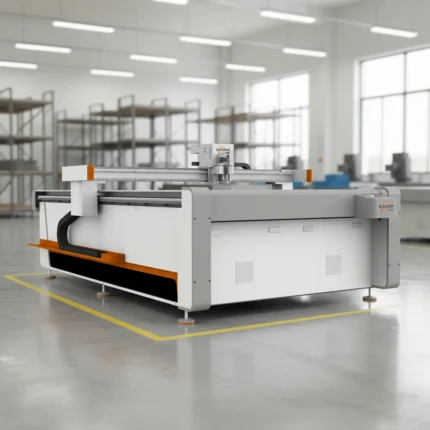
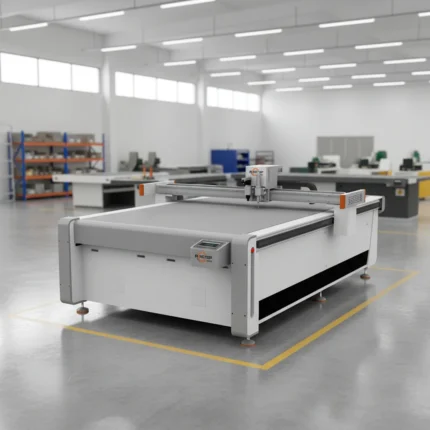
2026 Digital Flatbed Cutting Plotter Auto Corrugated Box Die Cutter
Product Introduction
Digital Flatbed Cutting Plotter 2026, ideal for auto corrugated box die cutting, offering precision and efficiency for professional packaging production.Specifications
| Type | Digital Flatbed Cutting Plotter |
| Model | 2026 |
| Application | Auto Corrugated Box Die Cutting |
| Function | Precision Cutting & Plotting |
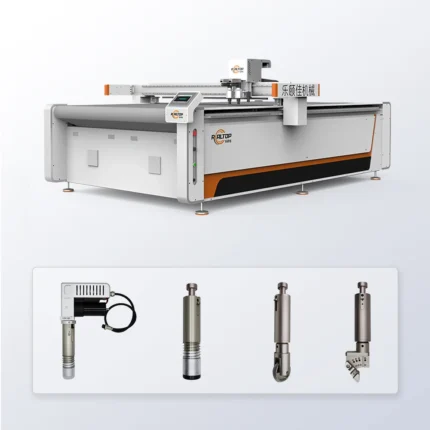


Digital CNC Cardboard Cutting Machine 2026
Product Introduction
High-precision Digital CNC Cardboard Cutting Machine 2026, ideal for efficient cardboard processing with advanced CNC technology, ensuring precise and fast cutting performance for various packaging and craft applications.
Key Specifications
| Model | 2026 |
| Type | Digital CNC Cutting Machine |
| Material | Cardboard |
| Feature | High Precision, Efficient Cutting |

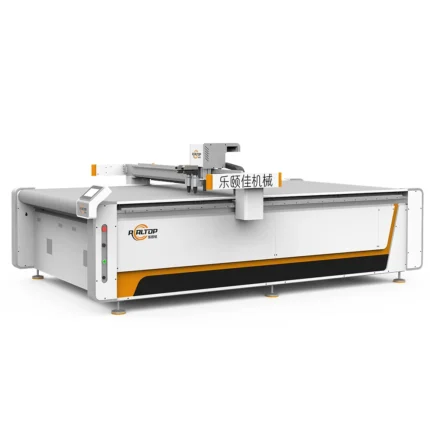
Realtop 2026 Digital Box Cutter High-Speed Corrugated Board
Product Introduction
Realtop Digital Box Cutting Machine 2026 is a high-speed solution for corrugated board cutting, designed for efficient and precise box production in manufacturing settings.Key Specifications
| Model | 2026 |
| Type | Digital Box Cutting Machine |
| Application | Corrugated Board |
| Feature | High-Speed Cutting |
商品评价
There are no reviews yet.