

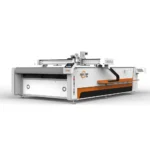
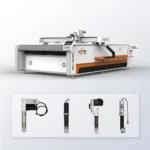
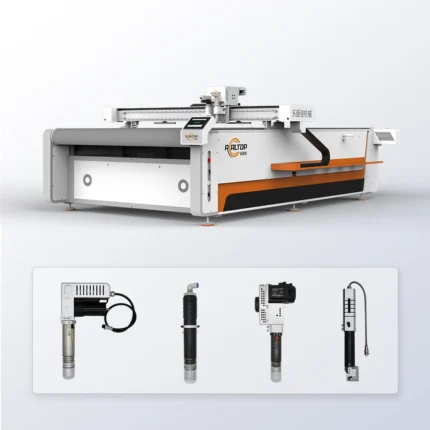
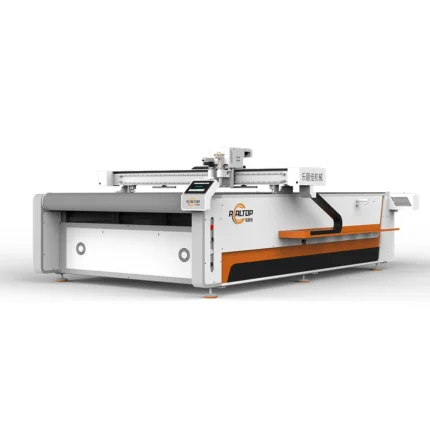
Industrial Application CNC Oscillating Knife Cutting Machine for Fabric and Leather
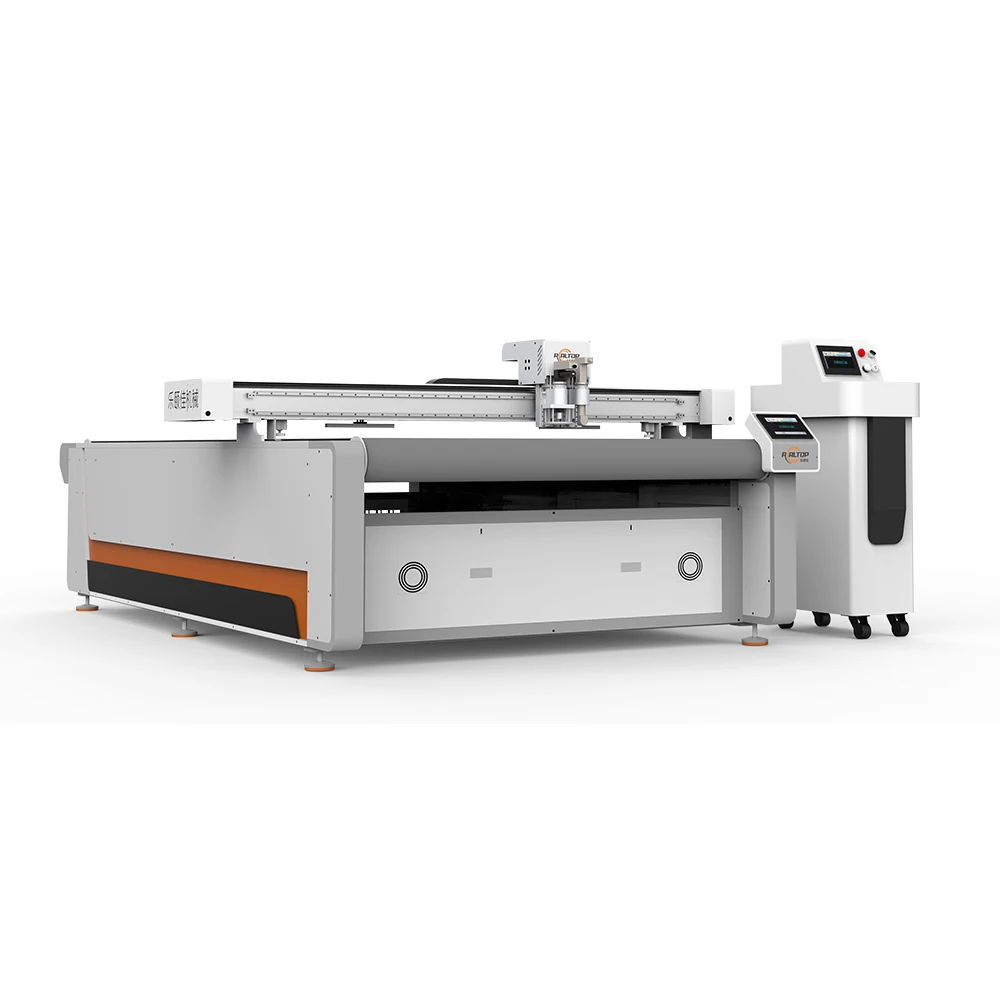
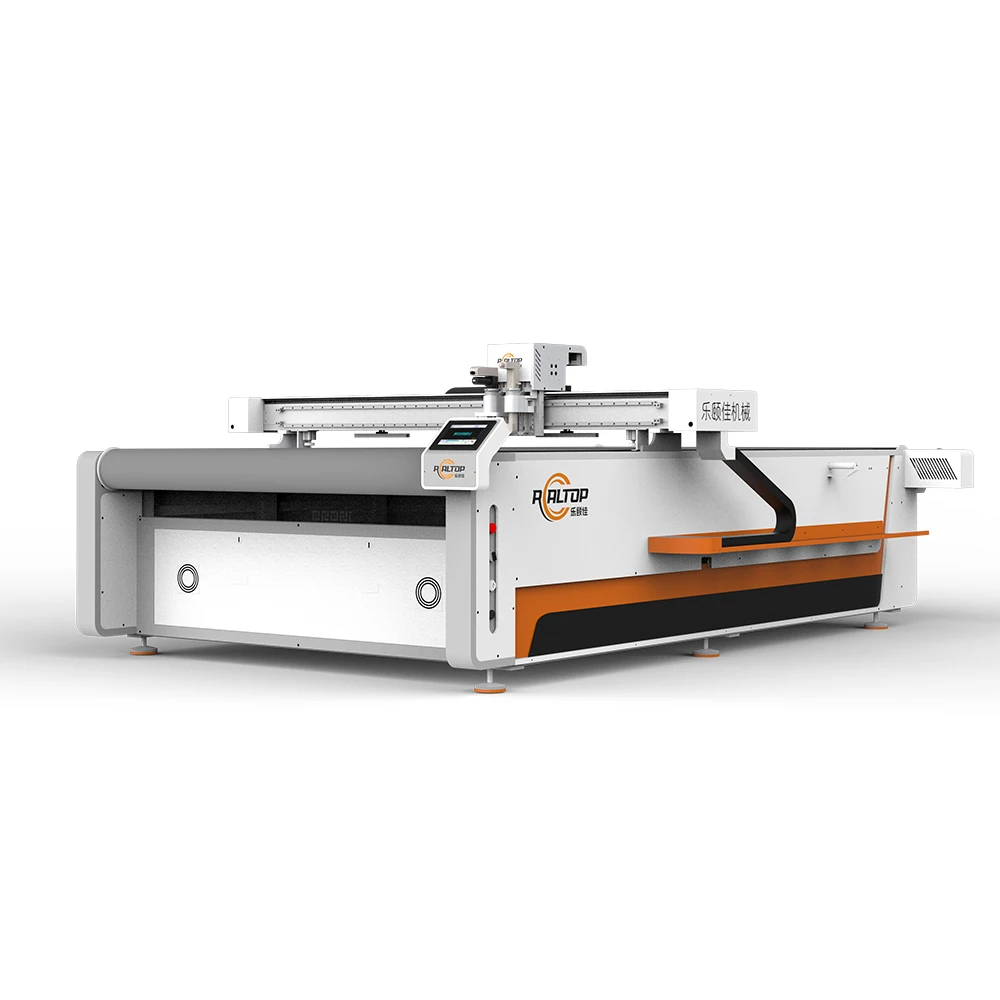
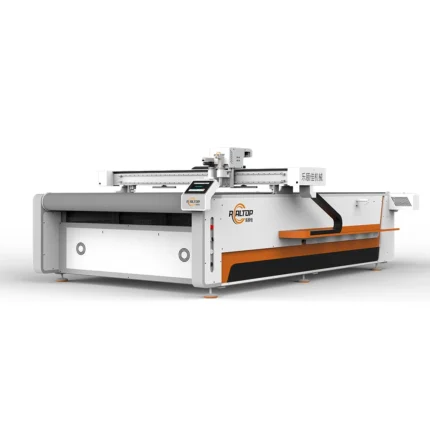
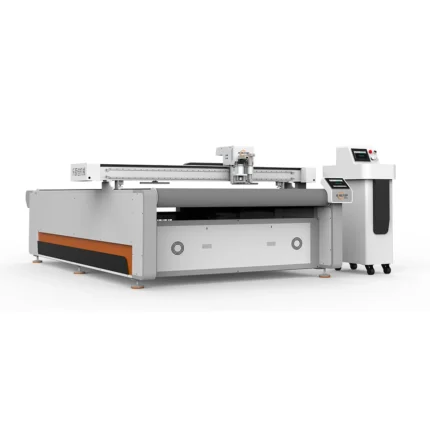
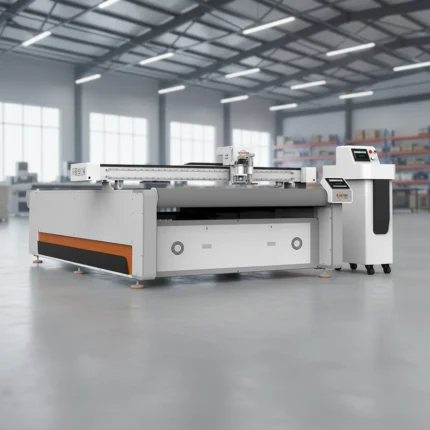
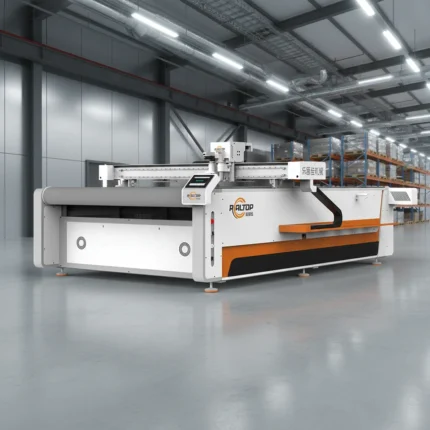
CNC Oscillating Knife Cutting Machine, 1600×2500mm Working Area, ±0.1mm Accuracy — delivers scorch-free cold cutting for fabric, leather and composite materials without dark edges or toxic fumes.
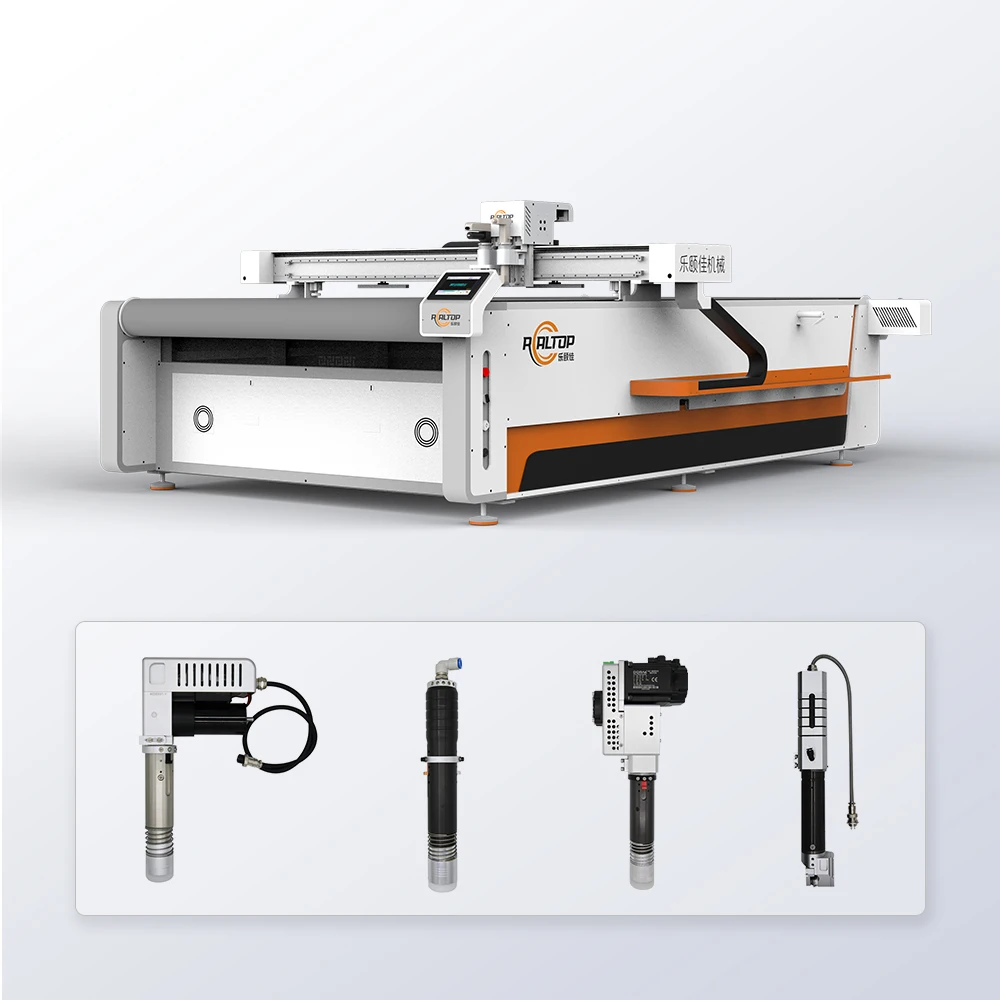
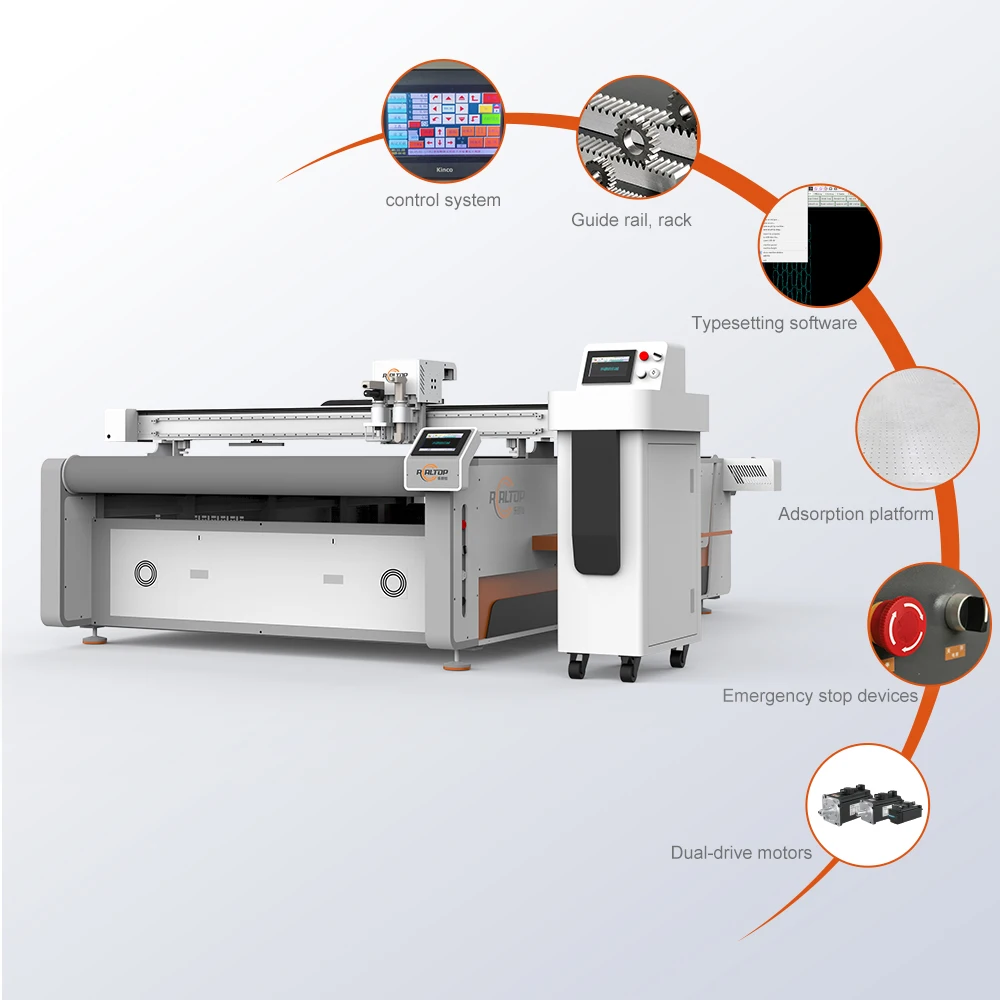
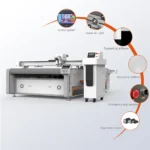
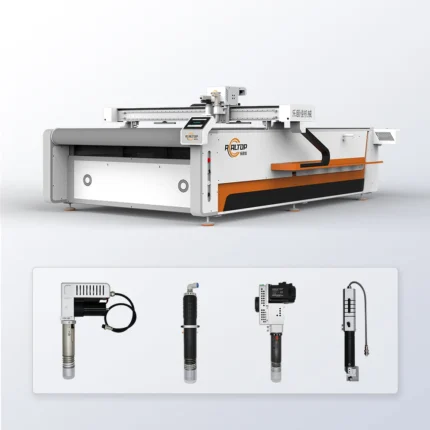
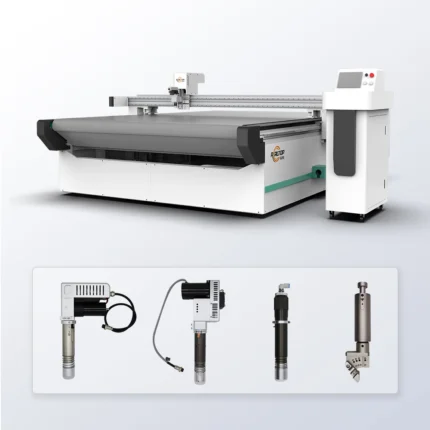
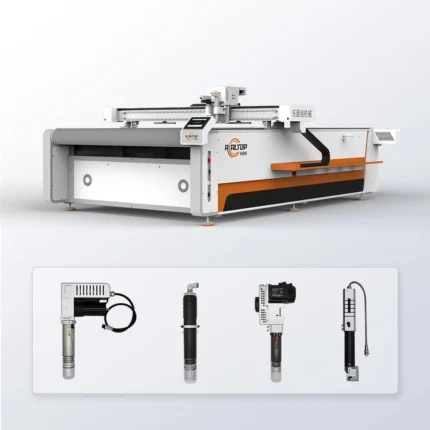
- Interchangeable tool heads (oscillating knife, rotary knife, creasing wheel) matched to material type and thickness
- 9KW vacuum pump with aluminum bellows table for secure hold-down on flexible textiles
- PLC control with English, Russian, Italian and Chinese language options
Sample cutting on your own material is performed before commitment, with software file format compatibility confirmed to fit your existing nesting workflow.
Thermal-Free Textile Cutting — When synthetics and coated fabrics cannot tolerate the heat of a laser beam, cold oscillating knife technology preserves edge integrity without scorching, fumes or delamination.
Technical Specifications
| Parameter | Value |
|---|---|
| Product Type | CNC Oscillating Knife Cutting Machine |
| Working Area | 1600 × 2500 mm |
| Tool Head Options | Oscillating knife, Driven rotary knife, Creasing wheel, Kiss cutting tool, Pneumatic knife, Milling tool, V groove knife |
| Cutting Speed Range | 0 – 2000 mm/s |
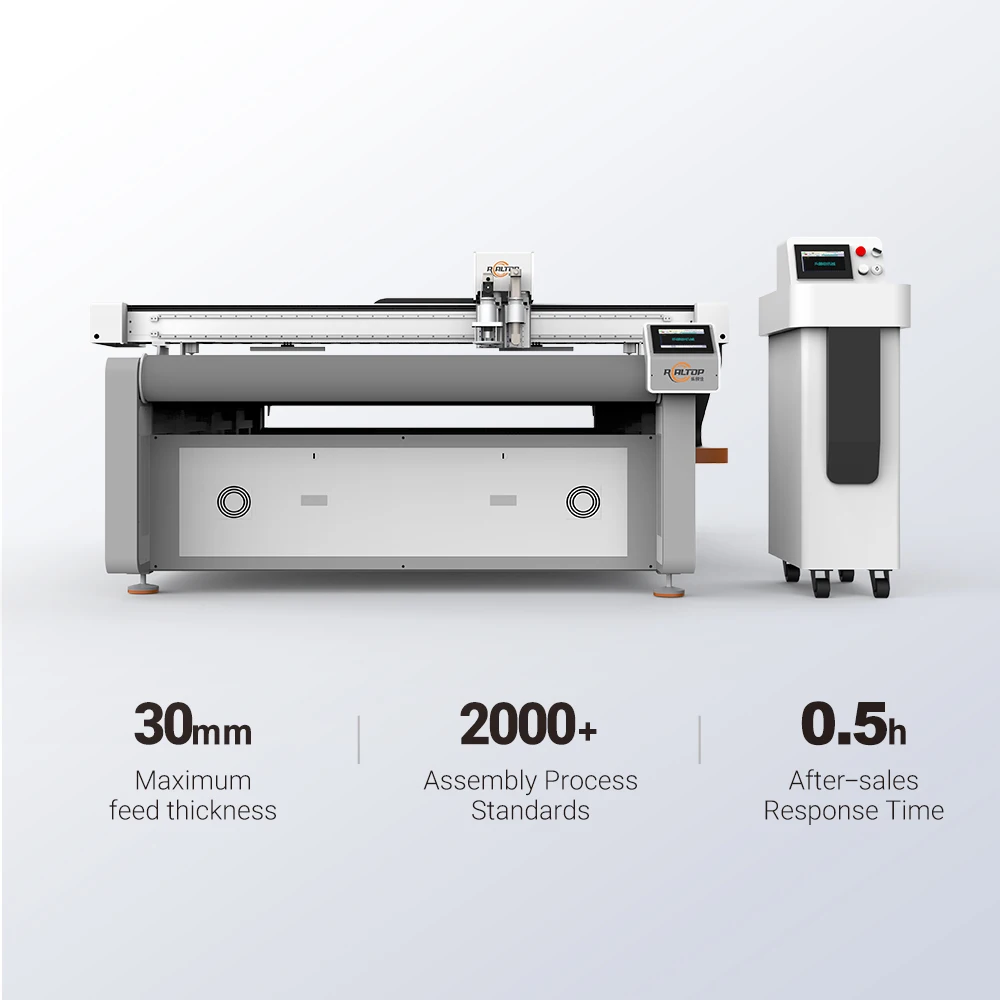
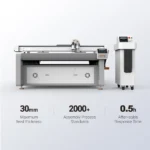
| Maximum Cutting Thickness | ≤ 30 mm |
| Cutting Accuracy | ±0.1 mm |
| Vacuum Pump Power | 9 kW |
| Vacuum Table Type | Aluminum bellows vacuum table |
| Servo Drive Options | Panasonic, Delta, Dorna |
| Control System | PLC control panel with intuitive interface |
| Supported File Formats | PLT, DXF, AI, PDF |
| Voltage Options | 110V, 220V, 380V |
| Control Language Options | English, Russian, Italian, Chinese (special languages customizable) |
| Safety Devices | Infrared sensor device and emergency stop device |
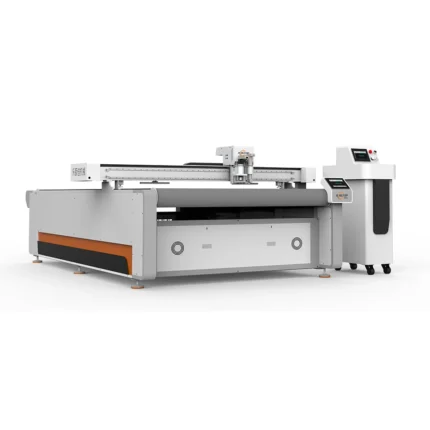
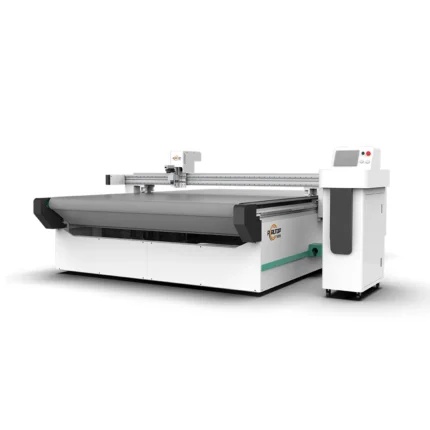
| Machine Dimensions | 3300 × 2100 × 1350 mm |
| Compliance | CE declared |
Application Suitability
| Application | Material or Output |
|---|---|
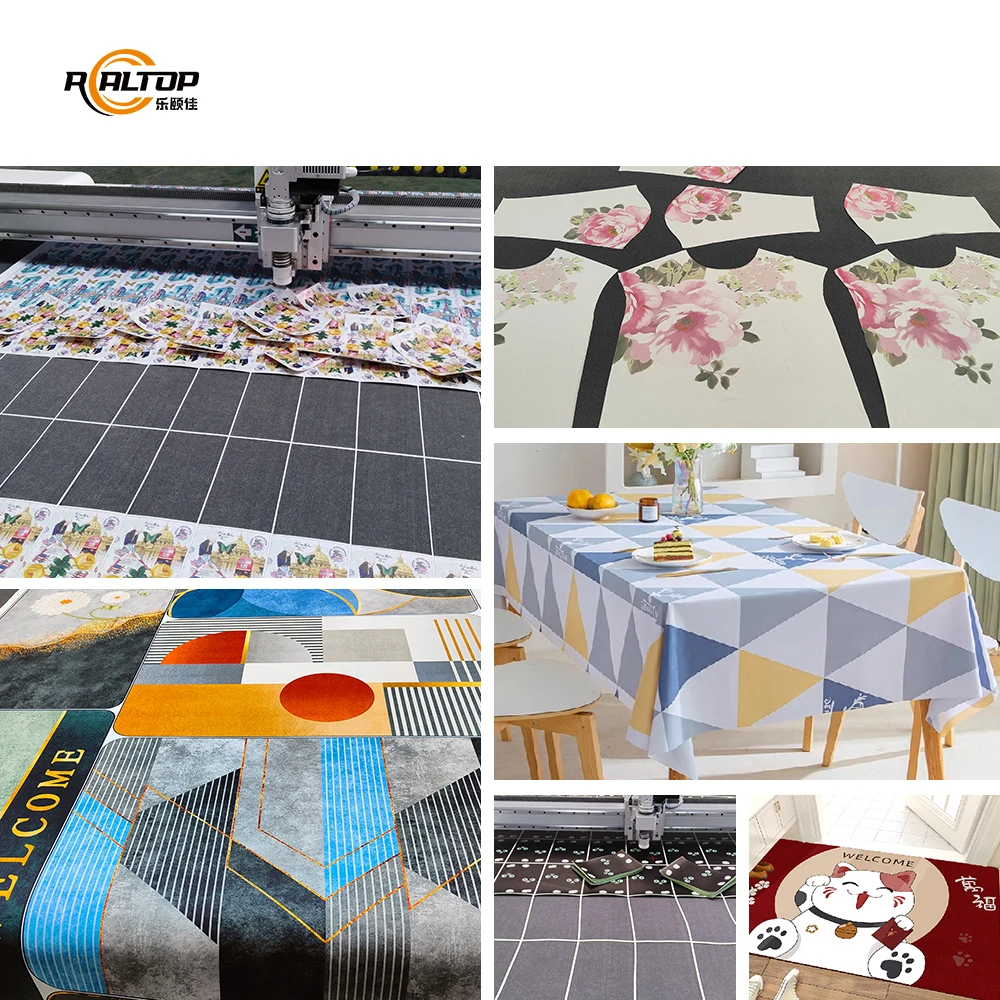
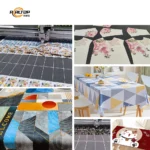
| Apparel and garment manufacturing | Suits, knitwear, lace, complex woven and knitted fabrics |
| Automotive interior fabrication | Seat fabrics, carpets, PVC floor mats |
| Home textile production | Sofa upholstery fabrics, curtains, area rugs |
| Composite material processing | Carbon fiber prepreg, aramid laminates |
| Leather goods and footwear | Natural and synthetic leather uppers, insoles |
| Gasket and seal production | PTFE, rubber, foam sheets |
Why Edge Discoloration Should Be Your First Question, Not Your Last
A laser cutting and engraving machine seals synthetic edges with heat, but that same thermal process can yellow coated fabrics, melt elastane blends and release fumes from PVC-backed textiles — problems that only appear once production starts.
I worked on a textile cutting line last year where the buyer specified a laser cutter based solely on working area. The sample ran perfectly on plain cotton. Once they switched to their actual production material — a PU-coated waterproof fabric — the edges turned brittle and yellowed, and two full rolls were scrapped before anyone questioned the cutting method. A cold knife process like oscillating knife cutting avoids thermal damage entirely, which matters when edge appearance and material integrity are non-negotiable [NEED_CITE: thermal degradation thresholds for common coated textiles]. The laser cutting and engraving machine remains the right choice for many non-metal applications, but the decision must start with the actual production material, not a generic sample.
Cold Cutting Eliminates the Thermal Problems Laser Cannot Solve
Synthetic and coated textiles react unpredictably to concentrated heat. An oscillating knife cuts through fabric, foam and composite layers at ambient temperature, leaving edges clean without melt-back, discoloration or hardened margins. For garment producers running elastane blends or automotive suppliers cutting multi-layer seat assemblies, this cold process removes the risk of thermal deformation that a laser cutting and engraving machine would introduce. The driven rotary knife option handles continuous contour work on knit fabrics, while the oscillating knife manages denser woven materials and thicker foam stacks.
Tool Head Selection Determines Edge Quality More Than Machine Speed
The seven available tool heads on this platform are not interchangeable accessories — each serves a distinct material behavior. The oscillating knife handles rigid and semi-rigid sheets up to 30 mm thick, while the kiss cutting tool scores vinyl and adhesive-backed materials without penetrating the liner. The creasing wheel produces fold lines on carton and packaging stock. The pneumatic knife drives through dense rubber and gasket materials that would stall a standard oscillating blade [NEED_CITE: tool head selection criteria for flexible material cutting]. Choosing the wrong head does not just slow production down — it damages material and generates rejects that compound across a full shift.
Reading the Specifications Against Your Actual Production Requirements
The 1600 × 2500 mm working area accommodates full-width fabric rolls and large-format leather hides, but the vacuum table zoning is equally important. The aluminum bellows table paired with a 9 kW pump must hold small pattern pieces flat during high-speed contour cuts — insufficient vacuum zoning causes material lift and dimensional drift. The ±0.1 mm accuracy figure is meaningful only when the vacuum hold-down is matched to the piece size and material porosity. Servo drive options from Panasonic, Delta and Dorna allow buyers to align motion components with existing maintenance inventories and local service availability. The supported file formats — PLT, DXF, AI, PDF — must integrate with the buyer’s existing nesting software workflow; confirming this before order prevents costly post-delivery software workarounds.
The Cost of Specifying the Wrong Cutting Method
When a buyer selects a cutting process based on speed claims or working area alone, the real losses show up downstream. Scorched edges on coated fabric require manual trimming that was never budgeted for. Melted synthetic fibers harden along the cut line, causing problems during sewing or welding in the next production step. Fumes from laser-cut PVC release compounds that require extraction systems the workshop may not have [NEED_CITE: workplace ventilation requirements for thermal cutting of PVC-coated materials]. These consequences are not equipment failures — they are specification failures that could have been caught with a material sample test before the order was placed.
Why Buyers Source This Equipment Through Our Process
In-house design and production across both knife and laser cutting technologies means the cutting method is matched to the material rather than forced into one process. Tool head and table configurations are specified per material type and production volume, not selected from a default package. Sample cutting on the buyer’s own material runs before commitment, revealing edge quality, hold-down behavior and file format compatibility in advance. Voltage, plug type and control language are confirmed before shipment, preventing on-site commissioning delays. Software compatibility with the buyer’s nesting workflow is verified at the quotation stage, not discovered during installation.
Documentation & Verification
- Machine specification sheet with confirmed tool head and vacuum table configuration
- Electrical schematic showing voltage, phase and circuit breaker requirements
- Sample cutting report on buyer-supplied material with edge quality photographs
- Factory test record documenting accuracy verification before crating
- Software licence and file format compatibility confirmation note
- Operation and maintenance manual in confirmed control language
Installation, Commissioning & Support
- Floor space allocation based on 3300 × 2100 mm footprint plus material feed clearance
- Dedicated power circuit matching confirmed voltage option at 110V, 220V or 380V
- Vacuum pump commissioning with zone-by-zone hold-down verification on buyer material
- PLC control panel parameter setup and tool head calibration per material type
- Operator training on tool change procedure and file import workflow
- Spare parts list covering blades, rotary knife consumables and vacuum table seals
What to Prepare Before Requesting a Quotation
Send a representative sample of the actual production material — including any coatings, laminations or adhesive backing — along with typical pattern dimensions and daily volume targets. Specify the local voltage and frequency standard, preferred control language and the file format currently used in your nesting workflow. If your existing cutting process generates edge quality issues, describe the defect so the correct tool head and cutting method can be evaluated against your requirements.
Frequently Asked Questions
Q: Knife cutting vs. laser — which process suits my textile or flexible material?
A: Cold knife cutting preserves edge integrity on coated, laminated and heat-sensitive fabrics without scorching or fume generation. Laser cutting seals edges on synthetics, which benefits materials prone to fraying but damages temperature-sensitive coatings. The correct process depends on your specific material composition and edge quality requirement — sample testing on your actual production material confirms the right choice before commitment.
Q: How should cutting speed claims be evaluated for my material?
A: Published speed ranges describe maximum travel velocity under ideal conditions. Real throughput depends on material thickness, layer count, contour complexity and the specific tool head engaged. Request a sample cutting report on your own material at your target production speed so you can verify edge quality and dimensional accuracy under conditions that reflect your actual workflow.
Q: Which tool head configuration fits my specific fabric type?
A: The oscillating knife handles dense woven fabrics and foam up to 30 mm thick. The driven rotary knife suits continuous contour cutting on knits and stretch fabrics. The kiss cutting tool scores adhesive-backed vinyl without penetrating the backing liner. Your material sample determines which head — or combination — is specified for your production order.
Q: Will the software accept my existing DXF, AI or PLT nesting files?
A: The control system supports PLT, DXF, AI and PDF formats, but file structure, layer naming conventions and nesting parameters vary between software packages. Compatibility is confirmed during the quotation stage by importing a sample file from your existing workflow, preventing format conversion issues after the machine arrives at your facility.
Q: What voltage and language options are available and how are they confirmed?
A: Voltage options include 110V, 220V and 380V configurations with plug types matched to the destination market. Control panel language is selectable from English, Russian, Italian and Chinese, with additional languages available on request. Both specifications are documented and confirmed before production begins to ensure the machine arrives ready for immediate commissioning.


Related products
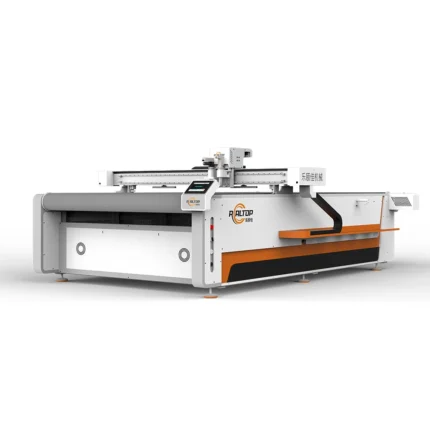
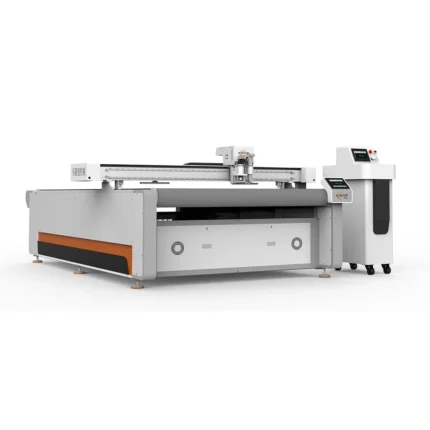
2026 Automatic PVC Tarpaulin Cutter Machine
Product Introduction
High-performance Automatic PVC Tarpaulin Cutter Machine 2026, ideal for precise and efficient cutting of PVC tarpaulin materials, designed for industrial manufacturing needs with reliable operation and user-friendly control.Product Parameters
| Model | 2026 |
| Type | Automatic PVC Tarpaulin Cutter |
| Application | PVC Tarpaulin Cutting |
| Feature | Precise & Efficient Cutting |
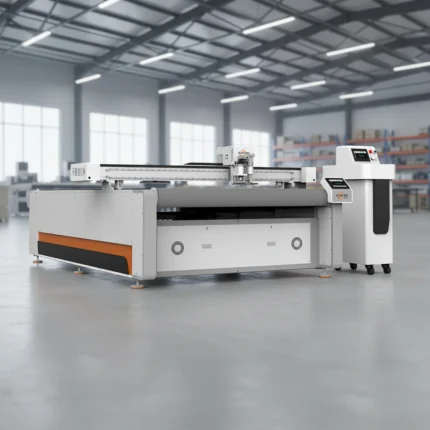
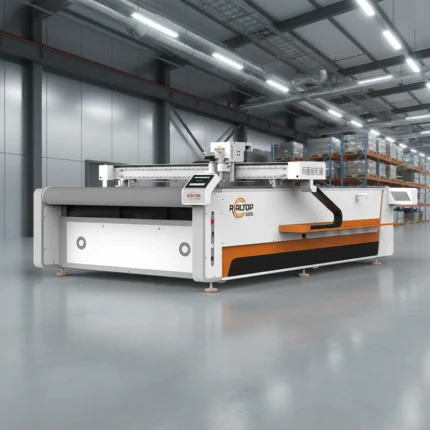
2026 CNC Knife Cutting Machine for Fabric Leather PVC Hot Sale
Product Introduction
2026 Hot Sale CNC Knife Cutting Machine for Fabric, Leather, PVC. Ideal for precise cutting of various materials with advanced CNC technology, perfect for manufacturing needs.
Product Parameters
| Application | Fabric, Leather, PVC |
| Type | CNC Knife Cutting Machine |
| Feature | Precision Cutting |
| Year | 2026 Model |
2026 Flatbed Oscillating Knife Cutter 1600x3500mm Auto-Feeding Textile
Product Overview
Flatbed Oscillating Knife Cutting Machine 2026 is a high-precision textile fabric cutter with auto-feeding function, ideal for efficient and accurate cutting tasks in textile manufacturing. It combines advanced oscillating knife technology with a large working area to meet industrial production needs.Key Specifications
| Model | 2026 |
| Working Area | 1600x3500mm |
| Feeding System | Auto-Feeding |
| Cutting Type | Oscillating Knife |
| Application | Textile Fabric |
2026 Inflatable Surf SUP Board Cutting Machine
Product Introduction
Ideal for inflatable surf SUP board production, this 2026 cutting machine ensures precise and efficient cutting, tailored for manufacturers seeking reliable performance in water sports equipment manufacturing.
Specifications
| Application | Inflatable Surf SUP Board |
| Type | Cutting Machine |
| Model Year | 2026 |
CNC Vibration Knife System 2026 for Polyester Nylon Non-Woven Prepreg
Product Introduction
CNC Vibration Knife System 2026 is ideal for cutting polyester, nylon, non-woven fabrics, and prepreg materials with precision and efficiency, suitable for industrial manufacturing needs.Product Parameters
| Model | 2026 |
| Cutting Technology | CNC Vibration Knife |
| Materials | Polyester, Nylon, Non-Woven, Prepreg |
商品评价
There are no reviews yet.