






Industrial CNC Textile Cutting Machine – Laser Cutting and Engraving
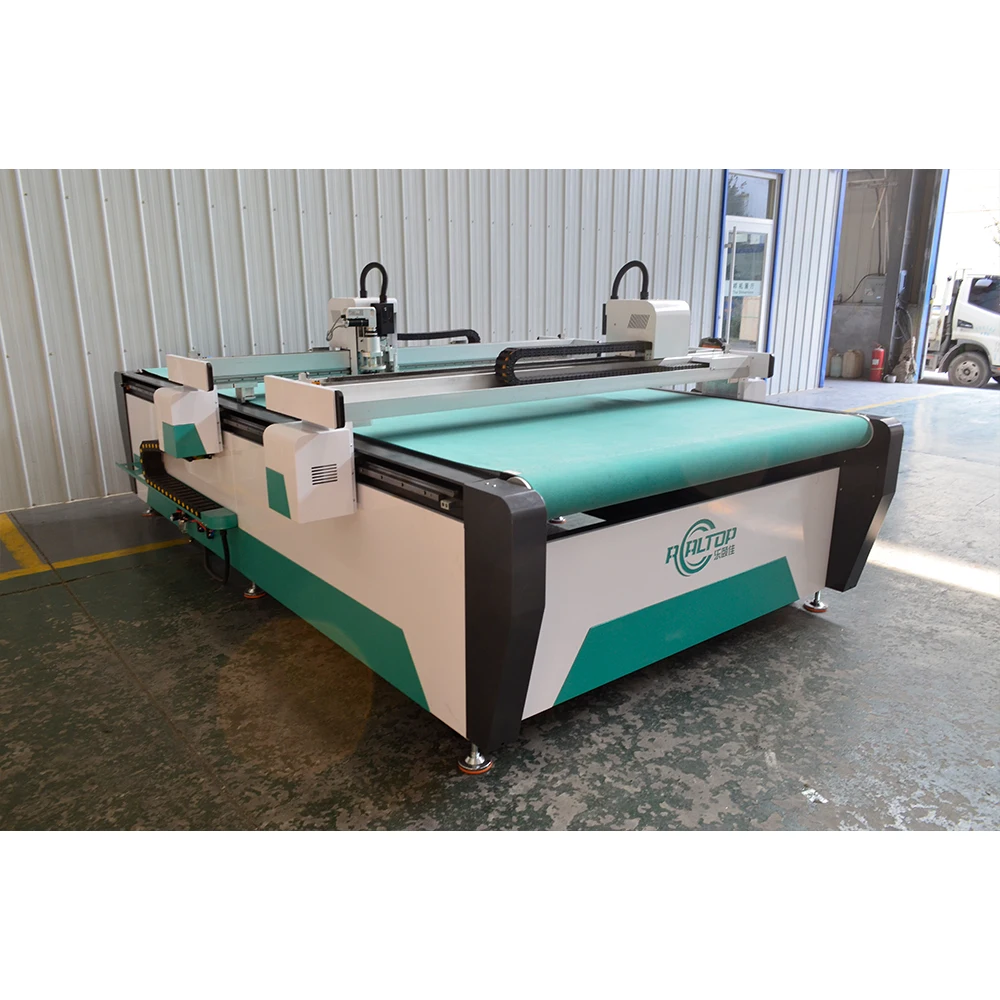
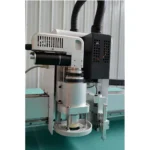
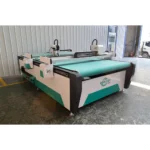
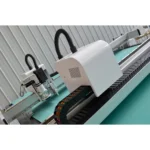
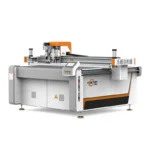
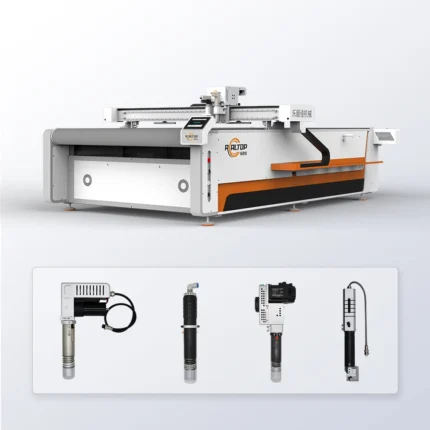
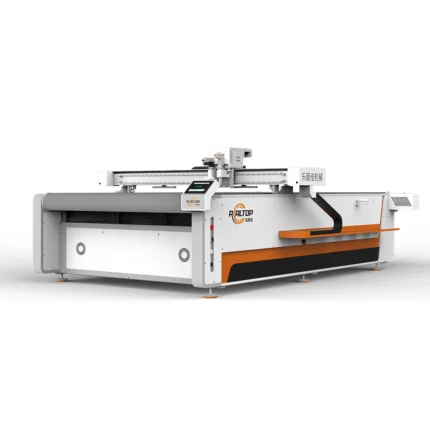
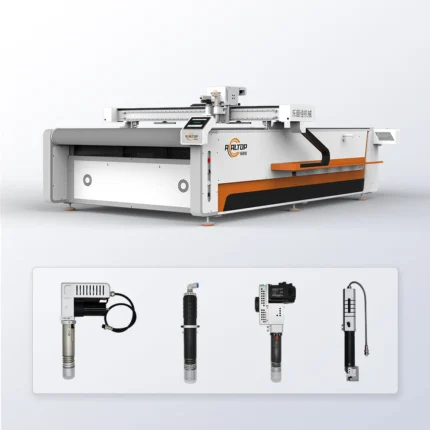
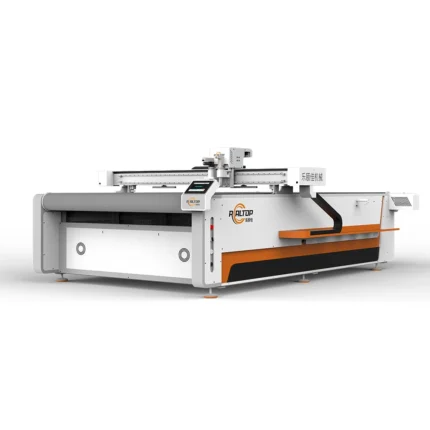
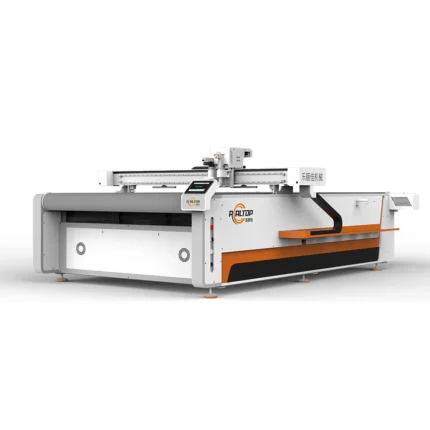
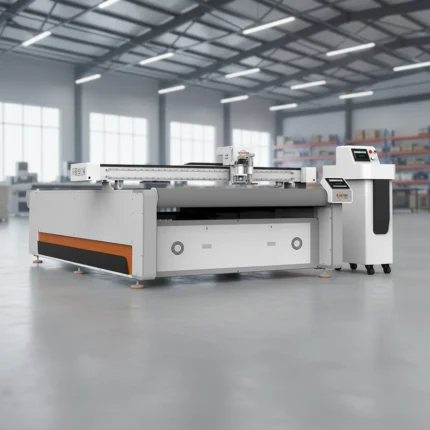
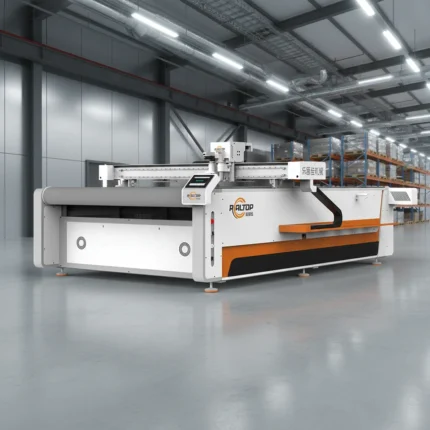
RT-D2516/RT-S2516 Cloth CNC Cutting Machine, 1600×2500mm Working Area, 9kW — configured for textile and flexible material processing with oscillating knife, CO₂ laser, and CCD camera positioning options.
- Match cutting method to fabric type — knife for multi-layer without edge burn, laser for synthetic edge sealing
- CCD contour recognition tracks printed marks; software accepts PLT, DXF, AI formats for nesting workflows
- Voltage, control language and tool head specified per destination market before production
Buyers receive sample cutting reports on their own textile material, electrical schematics confirming destination voltage, and factory test records before shipment.
Cutting Method Matched to Material — We specify knife or laser based on your textile’s actual thickness and edge requirements, not a one-size catalog push.
Technical Specifications
| Parameter | Value |
|---|---|
| Product Type | CNC Oscillating Knife Cutting Machine |
| Model | RT-D2516/RT-S2516 |
| Working Area | 1600 × 2500 mm |
| Machine Size | 3450 × 2300 × 1250 mm |
| Rated Power | 9 kW |
| Max Cutting Thickness | Up to 100 mm (varies with material density and tooling) |
| Translational Velocity | 800 – 2000 mm/s |
| Cutting Speed | 200 – 800 mm/s (dependent on material and tool head) |
| Repeated Accuracy | ≤ 0.1 mm |
| Table Options | Flat working table or auto feeding conveyor table |
| Servo Motor Options | Delta (China) or Panasonic (Japan) |
| Vacuum Pump | 7.5 kW |
| Conveyor Belt | German-imported material |
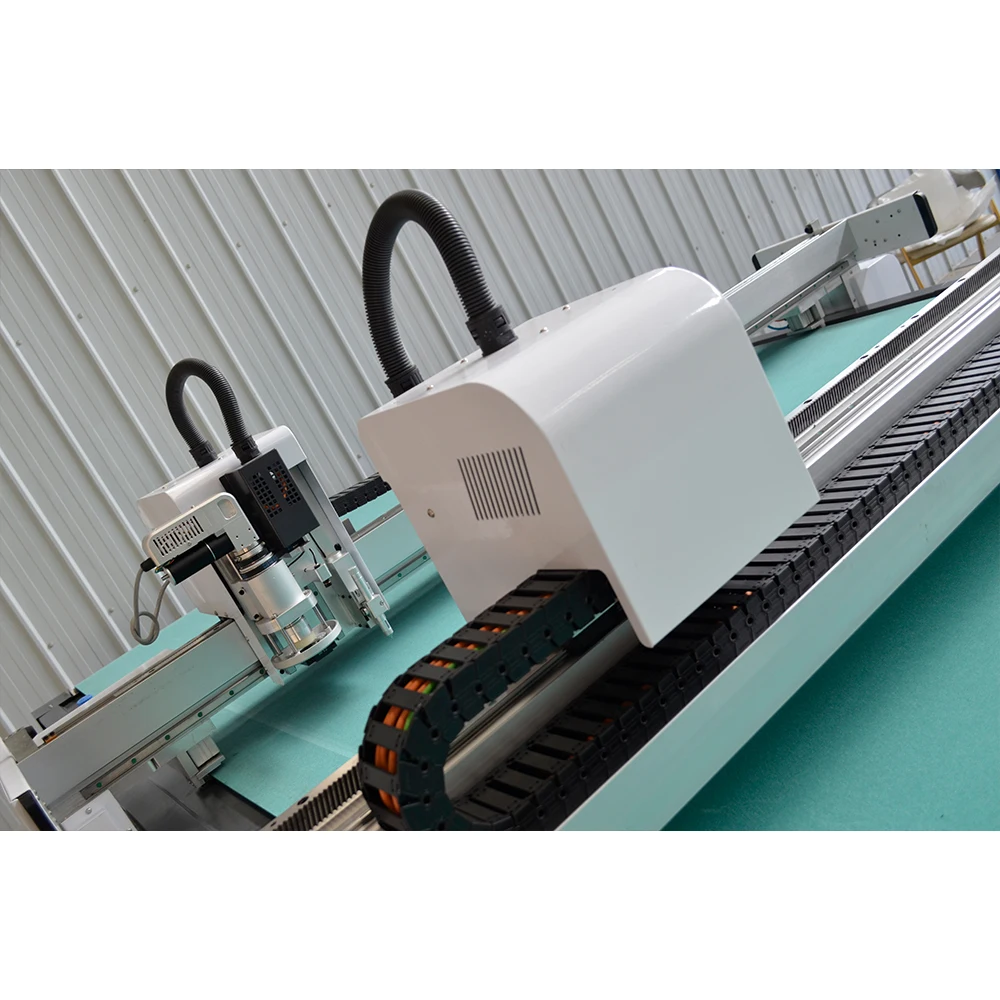
| Linear Guide | Taiwan Hiwin rail |
| Control Panel | Touch screen, multiple language supported |
| Software File Formats | PLT, DXF, AI |
| Positioning Options | Small CCD mark point, panoramic camera recognition, projection |
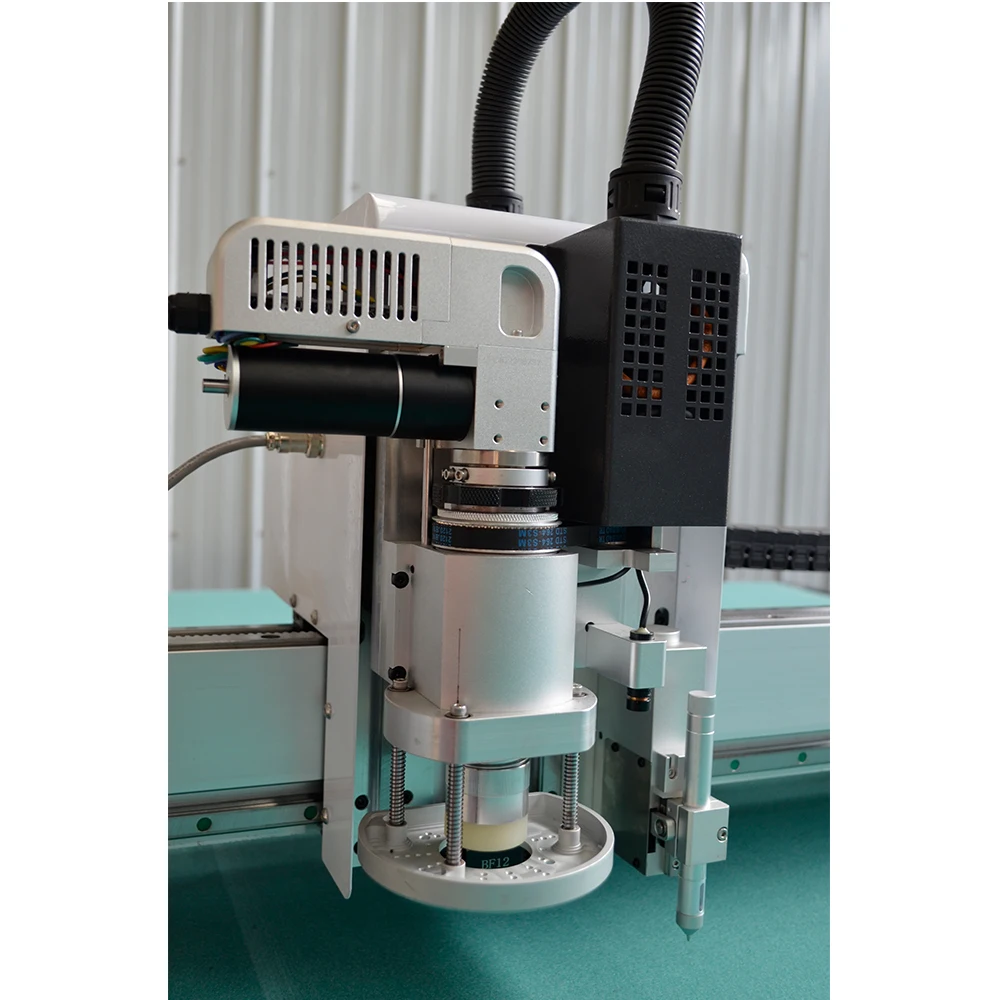
| Tool Head Options | Oscillating knife, pneumatic knife, high-power vibrating knife, circular knife, V-cutting knife, drag knife, creasing wheel, dotted line knife, punching, brush |
| Voltage | 380V ± 10% |
| Safety Device | Infrared sensors |
Application Suitability
| Application | Material or Output |
|---|---|
| Garment and footwear production | Multi-layer woven fabric, non-woven fabric, PU and EVA foam |
| Automotive interior trimming | Carpet, sponge composite leather, fiberglass reinforcement mat |
| Soft home furnishings and upholstery | Leather, textile, cloth, sponge, composite materials |
| Sports and outdoor gear | PVC sheet, soft glass, silicon, rubber, carbon fiber prepreg |
| Sealing and gasket fabrication | PTFE, ETFE, rubber, non-asbestos gasket sheet |
| Packaging and sample making | Corrugated cardboard, cardboard, sticker, film, foam board |
Why Laser Power Claims Often Disappoint Textile Buyers
When buyers source a laser cutting and engraving machine manufacturer for textile work, the most common frustration is discovering that the quoted wattage reflects peak output rather than continuous cutting capability — leaving the machine unable to hold a clean cut through coated or layered fabric at production speed. The spec sheet must state continuous power alongside the material thickness it was tested on, otherwise the number means nothing in your workshop.
I have watched garment shops invest in CO2 fiber laser cutting machine systems based on a peak wattage figure, only to find the beam struggles through a double layer of coated composite cloth once the duty cycle rises. The edges scorch, the kerf widens, and operators slow the feed rate until throughput collapses [NEED_CITE: CO2 laser continuous versus peak power rating standards for non-metal cutting]. The issue is rarely the machine itself — it is a mismatch between the way power was quoted and the way the fabric actually behaves under a sustained beam.
Knife Versus Laser: Picking the Right Process for Your Textile
Choosing between an oscillating knife and a CO2 beam depends on what the fabric will do after cutting. Knives leave a raw edge that suits garments destined for overlock stitching, while a laser seals synthetics and prevents fraying on technical textiles. A laser cutting and engraving machine manufacturer that builds both platforms can advise honestly rather than forcing one technology onto every fabric.
The RT-D2516/RT-S2516 platform supports a full range of oscillating and drag knife heads alongside optional laser integration, so buyers can match the cutting method to the downstream sewing or bonding step instead of adapting the product to the machine.
Contour Recognition on Printed Textile at Line Speed
Printed contour cutting is where many textile operations lose yield. A small CCD camera can locate registration marks, but panoramic camera recognition covers the full 1600 × 2500 mm bed in fewer passes, reducing repositioning errors on large-format garment panels [NEED_CITE: CCD positioning accuracy standards for textile digital cutting]. Confirming the camera type against your print repeat size before order prevents a situation where the system technically "has CCD" but cannot keep up with the nesting density your workflow demands.
Reading the Specs That Actually Shape Textile Output
Cutting speed on this platform spans 200 – 800 mm/s, but the usable rate depends on the tool head and the material’s resistance to the blade. A high-power vibrating knife pushes through dense sponge composite leather at the lower end of that range, while a drag knife on single-ply woven fabric can sustain the upper end without edge drift.
The 7.5 kW vacuum pump paired with a zoned flat table or German-imported conveyor belt holds small garment pieces that would otherwise lift during high-speed knife travel. Vacuum zoning matters because a full-bed pull on a small cut piece wastes energy and still allows edge lift if the zone is not isolated.
Repeated accuracy of ≤ 0.1 mm is maintained by Taiwan Hiwin linear rails and digital servo motors — Delta or Panasonic depending on the buyer’s preference. In nested garment panels, that tolerance keeps notch positions aligned so downstream sewing operators do not chase misaligned pieces [NEED_CITE: linear rail tolerance classes for CNC flatbed cutting tables].
Software compatibility with PLT, DXF, and AI formats means the machine accepts files directly from most textile nesting suites, eliminating a manual re-draw step that otherwise introduces geometry errors into pattern pieces.
What Happens When the Wrong Tool Head Meets Your Fabric
Selecting a circular knife for a material that needs an oscillating knife produces compressed edges on foam-backed textiles, and the damage is often not visible until the fabric is separated from the lay. I once traced a batch of rejected automotive headliner panels back to a tool head swap that was supposed to speed things up — the foam layer was crushed rather than sheared, and the adhesive in the lamination step could not bond to the deformed surface [NEED_CITE: oscillating knife versus circular knife edge quality on composite textiles]. The cost was not the blade change; it was the scrapped composite material and the line stoppage.
Why Buyers Source This Platform from Realtop
Realtop designs and produces both knife and laser cutting systems in-house, so the recommendation is driven by your material rather than limited to a single technology. Tool head and table configurations are specified per fabric type and daily volume, confirmed with a sample cutting report on your own textile before any commitment is made. CCD camera positioning, voltage, control language, and software format compatibility are all verified at order stage, not discovered during commissioning.
Documentation & Verification
- Machine specification sheet listing continuous cutting capacity on your textile type
- Electrical schematic with voltage and frequency confirmed for your destination market
- Tool head and table configuration list matched to your material and lay height
- Sample cutting report produced on your fabric before shipment approval
- Software licence and PLT, DXF, AI file format compatibility confirmation
- Factory test record documenting accuracy on your nesting pattern
Installation, Commissioning & Support
- Dedicated 380V ± 10% circuit required; confirm local frequency before production
- 3450 × 2300 mm footprint with clearance for auto feeding conveyor table loading
- Vacuum pump 7.5 kW requires independent breaker separate from the 9 kW main drive
- Touch screen language set to operator preference during commissioning on site
- First-run parameter tuning on your textile using the selected tool head configuration
- Spare blade and conveyor belt wear parts list provided with recommended replacement intervals
What We Need from You to Quote Accurately
Send a sample of the textile you cut most often, including any coating or lamination, along with the maximum lay height and your typical daily panel count. Tell us the voltage and frequency at your facility, the preferred control language, and whether your existing nesting software exports PLT, DXF, or AI. If contour cutting on printed fabric is part of your workflow, share a print repeat file so we can confirm camera selection.
Frequently Asked Questions
Q: How do I verify the real cutting capacity versus the quoted power?
A: Ask the laser cutting and engraving machine manufacturer for a continuous power rating tested on your specific textile thickness, not a peak figure measured at idle. Request a sample cutting report that documents the feed rate, number of passes, and edge quality on your own material. This report is the only reliable basis for comparing machines.
Q: Should I choose knife or laser for my garment fabric?
A: Knives leave a raw edge suited to overlock-stitched garments, while laser seals synthetic edges and prevents fraying on technical textiles. The choice depends on downstream sewing requirements and whether the fabric contains coatings that discolor under heat. A sample cut on your actual material resolves this faster than any general rule.
Q: Will the CCD camera keep up with high-speed printed contour cutting?
A: Small CCD mark point positioning works for widely spaced registration marks, but panoramic camera recognition covers the full 1600 × 2500 mm bed in fewer repositioning moves. Share your print repeat file before ordering so the system is configured for your nesting density and production speed.
Q: How are voltage and control language confirmed before shipment?
A: Your destination market voltage and frequency are documented in the electrical schematic before production begins. The touch screen control panel is loaded with your chosen language — English, Russian, Italian, Chinese, or a custom option — and verified during the factory test witnessed or reviewed by video call.
Q: Can I test my own textile on the machine before committing?
A: Yes. A sample cutting report on your fabric is standard procedure, documenting cutting speed, tool head used, edge quality, and dimensional accuracy on your nesting pattern. Review the report and approve the configuration before the machine enters final assembly.


Related products
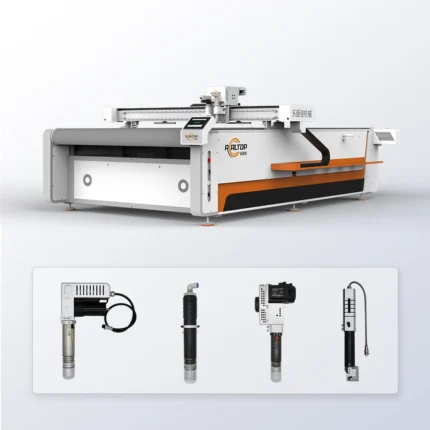
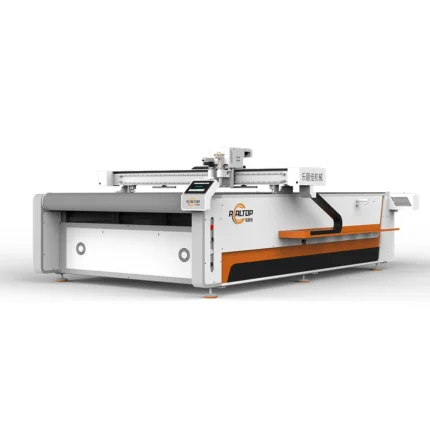
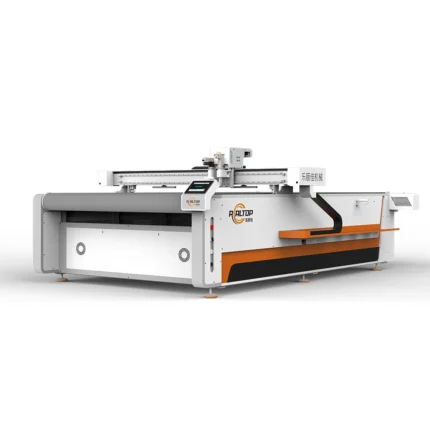
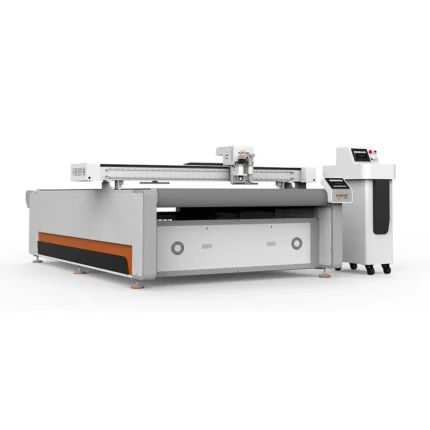
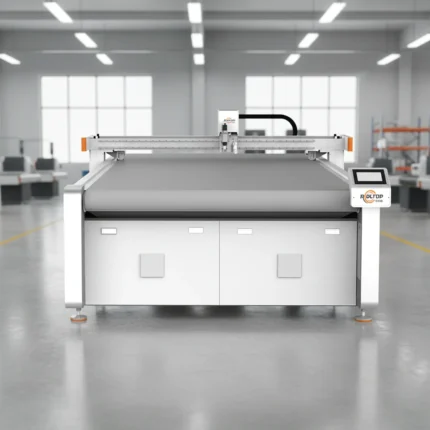
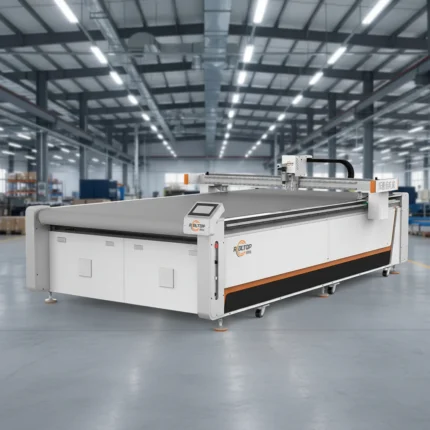
2026 Auto CNC Cloth Cutting Machine High-Precision Fabric Leather Plotter
Product Introduction
2026 Auto CNC Cloth Cutting Machine, a high-precision fabric & leather plotter designed for efficient cutting. Ideal for textile and leather industries with advanced CNC technology.
Key Specifications
| Model | Auto CNC Cloth Cutting Machine 2026 |
| Application | Fabric & Leather |
| Precision | High-Precision Cutting |
| Type | CNC Plotter |
Automatic Multi-Layer Vibrating Knife Cutter 2026
Product Introduction
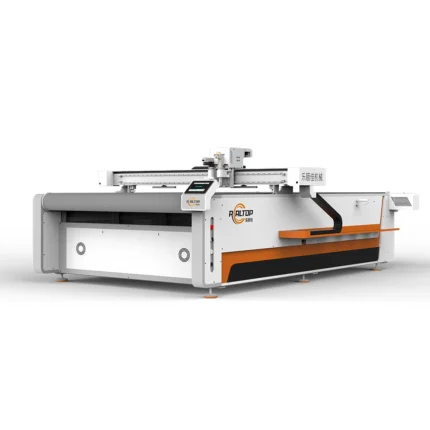
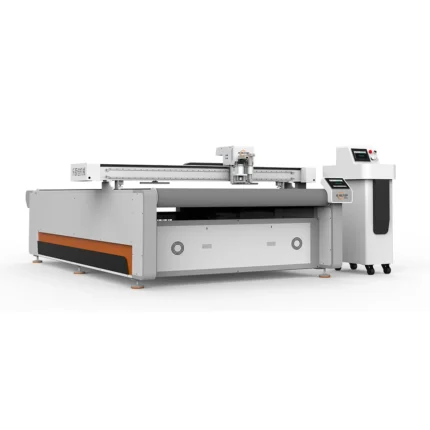
Automatic Multi-Layer Vibrating Knife Cutter 2026, ideal for precise cutting of various materials with multi-layer processing capability, enhancing production efficiency.
Key Specifications
| Type | Automatic Vibrating Knife Cutter |
| Layer Capacity | Multi-Layer |
| Model | 2026 |
| Function | Precision Cutting |
CNC Oscillating Knife Cutting Machine 2026 3000¡Á1600mm High-Speed
Product Parameters
| Model | CNC Oscillating Knife Cutting Machine 2026 |
| Working Area | 3000mm¡Á1600mm |
| Cutting Type | Oscillating Knife |
| Application | Fabric Cutting |
| Feature | High-Speed |
Introduction
High-performance CNC oscillating knife cutting machine with 3000mm¡Á1600mm working area, ideal for high-speed fabric cutting. Precision and efficiency for professional textile processing needs.

Electric Fabric Rotary Cutter 2026 12V Auto-Cut Industrial
Product Introduction
Industrial-grade Electric Fabric Rotary Cutter designed for precise cutting of scan-printed cloth. Features 12V auto-cut functionality for efficient, automated operation, ideal for professional textile processing.Product Parameters
| Power Supply | 12V |
| Function | Auto-Cut |
| Application | Scan-Printed Cloth |
| Type | Industrial Electric Rotary Cutter |
商品评价
There are no reviews yet.