


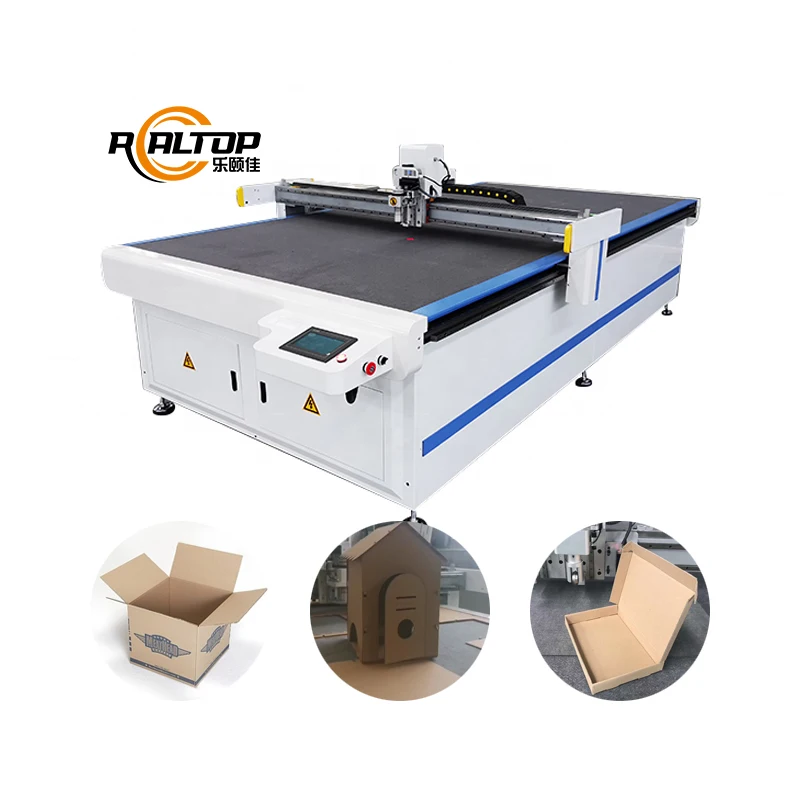





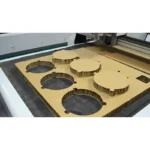
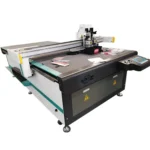

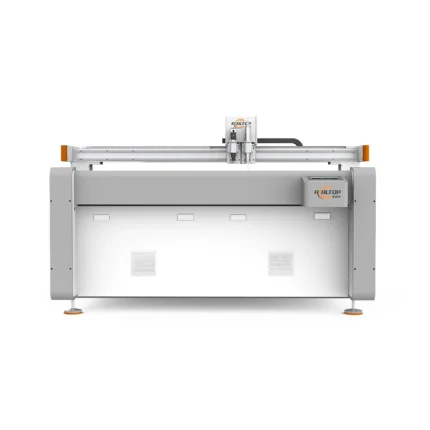
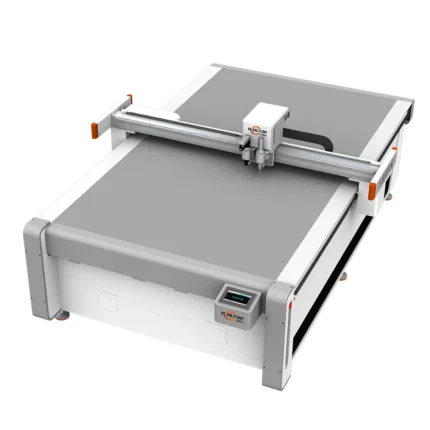
Realtop-2516 CNC Flatbed Cutter for Packaging Carton – OEM Available
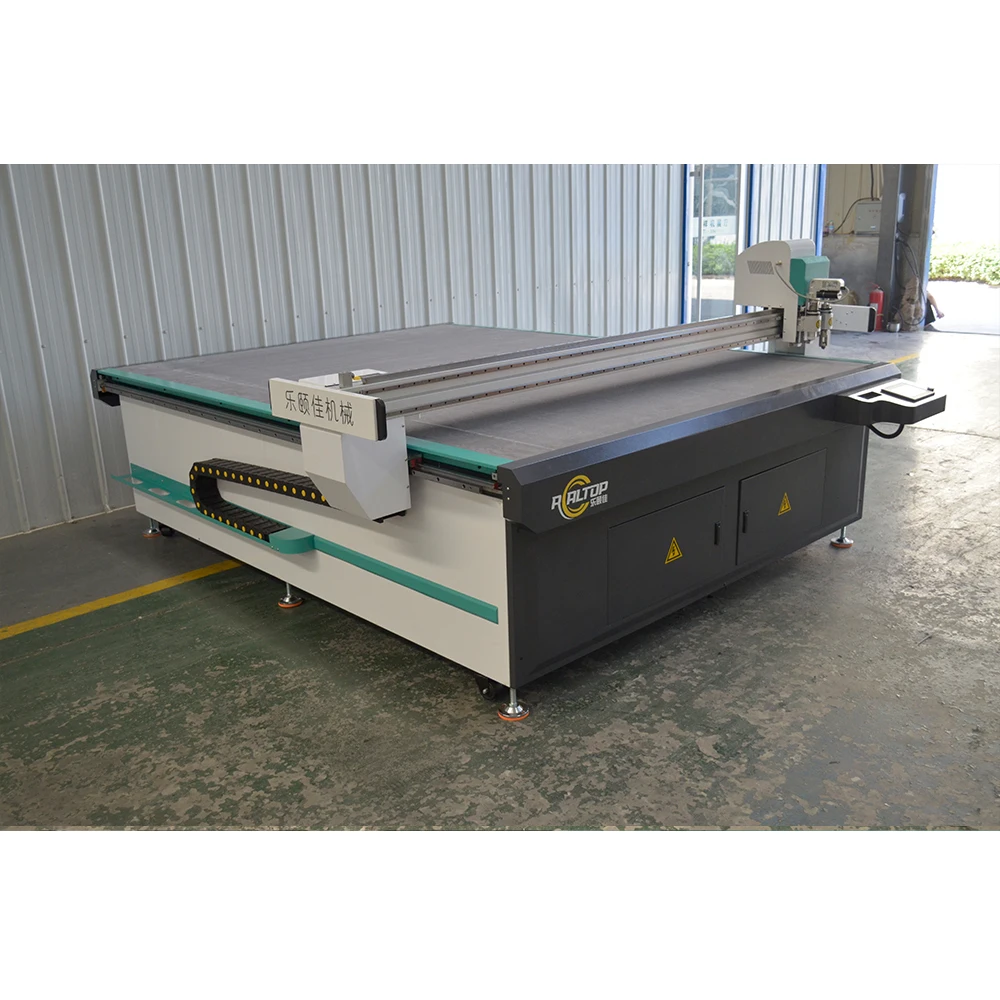
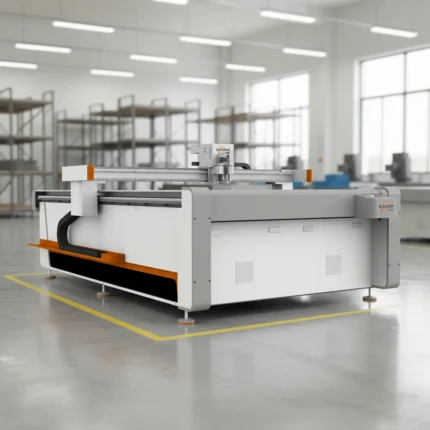
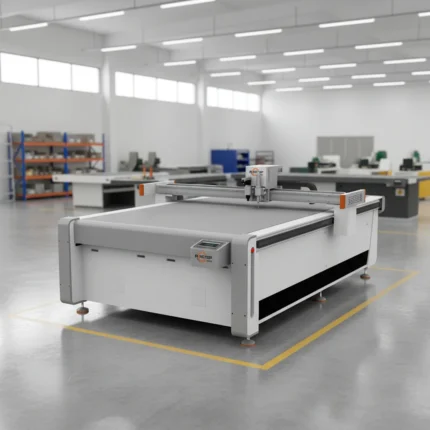
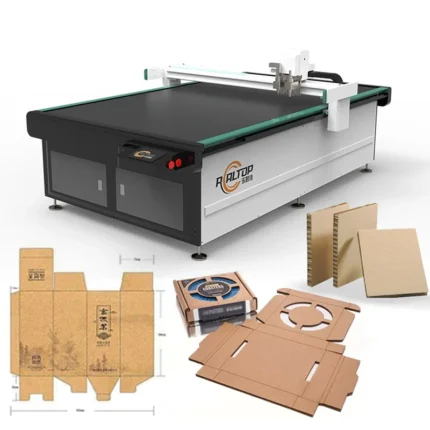
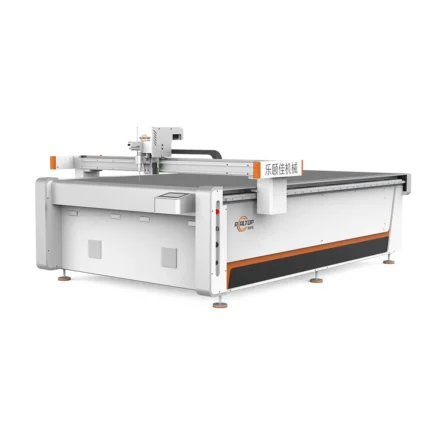
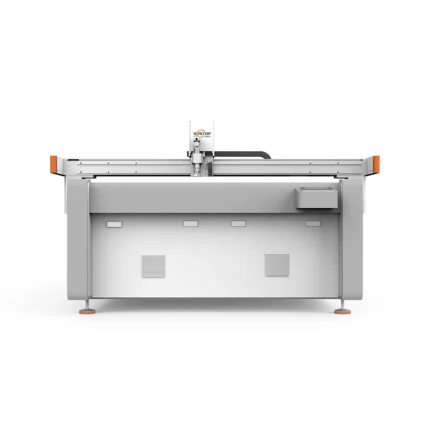
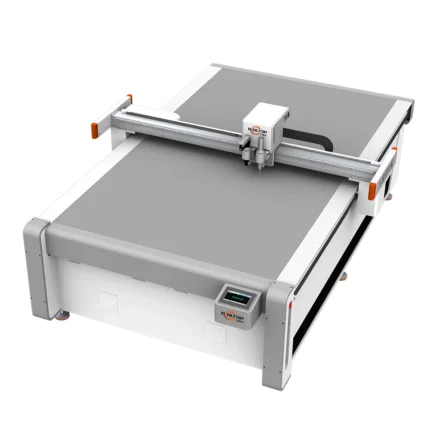
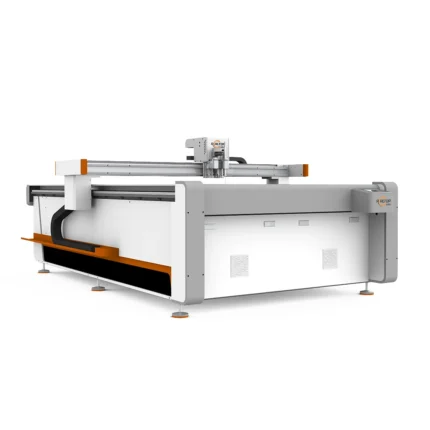
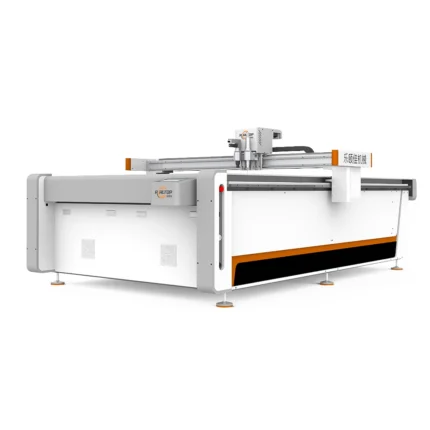
RT-D2516/RT-S2516 CNC Flatbed Digital Cutting Machine, 2500×1600mm, 9kW, Oscillating Knife & Creasing Tools — engineered for packaging carton sample making, corrugated board processing and sticker contour cutting.
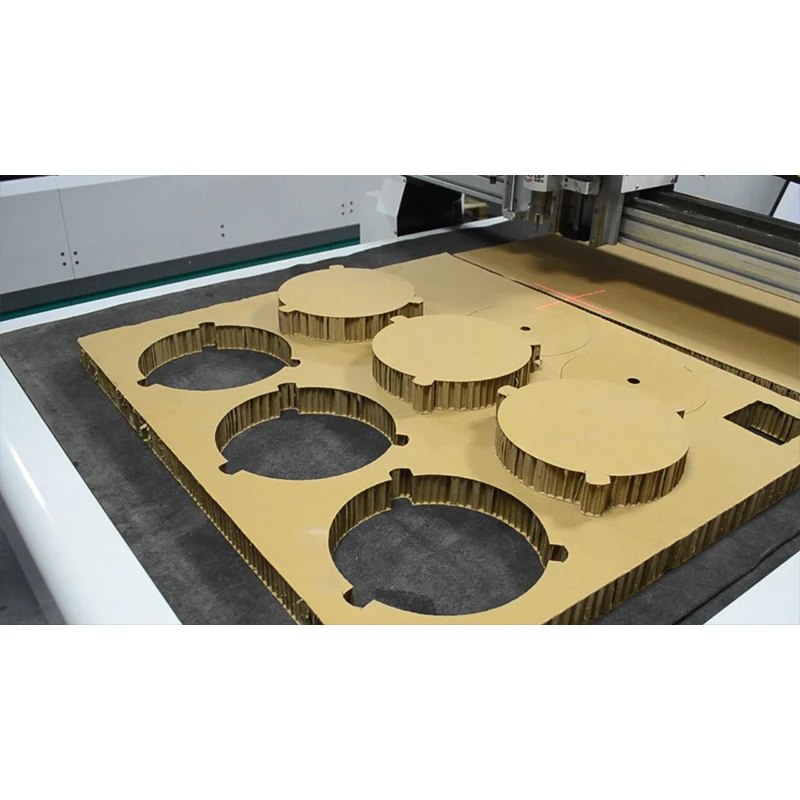
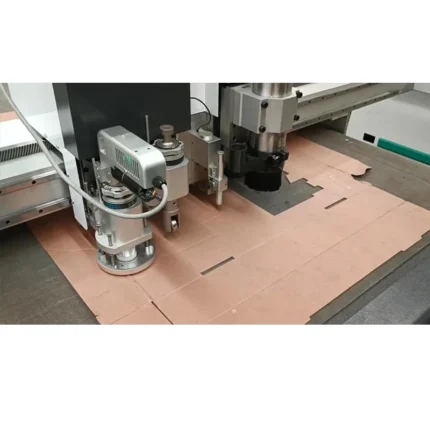
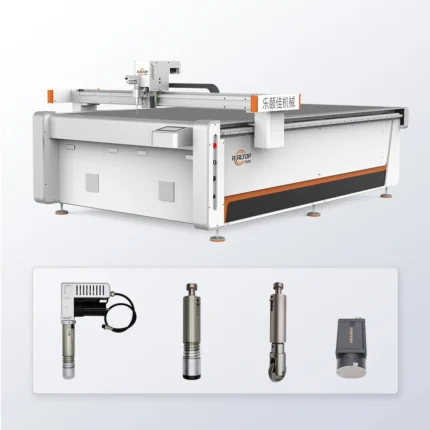
- Multi-tool head combines oscillating knife, creasing wheel, kiss-cut blade and round punch in a single work cycle
- Aluminum honeycomb vacuum table with zoned adsorption secures both full sheets and small cut parts during high-speed runs
- Taiwan Hiwin linear rails and servo drive deliver <0.05mm repeated positioning accuracy across the full 18mm cutting depth range
Sample cutting on your own cardboard grade, tool head configuration matched to your material stack, and full voltage-language-software confirmation before shipment — all backed by our in-house design and production team.
Multi-Tool Head Integration — oscillating knife, creasing wheel, kiss-cut blade and round punch execute in a single work cycle, eliminating tool change downtime on packaging sample runs.
Technical Specifications
| Parameter | Value |
|---|---|
| Model | RT-D2516 / RT-S2516 |
| Product Type | CNC Flatbed Digital Cutting Machine |
| Working Area | 2500 × 1600 mm (L×W) |
| Machine Dimensions | 3450 × 2300 × 1250 mm |
| Rated Power | 9 kW |
| Voltage | 380V (frequency and plug type to be confirmed per market) |
| Vacuum Pump | 7.5 kW with zoned adsorption |
| Table Construction | Aluminum alloy honeycomb structure |
| Cutting Tools | Oscillating knife, creasing tool, kiss-cut knife, round punch |
| Repeated Positioning Accuracy | <0.05 mm |
| Transmission | Ethernet port |
| Guide Rail | Taiwan Hiwin linear rail |
| Servo System | Dongling servo (Delta servo motor available as configuration option) |
| Safety Device | Infrared sensors |
| Compatible Formats | DXF, OLT, PDF, AI |
| Control Software | Professional carton nesting software with multi-language interface |
| Blade Supply | 10 pieces oscillating blades included |
| Language Options | English, Russian, Italian, Chinese (other languages customizable) |
| Delivery Time | Less than 30 working days |
Application Suitability
| Application | Material or Output |
|---|---|
| Packaging carton sample making | Corrugated board, folding carton stock, grey board up to confirmed thickness |
| Sticker and label contour cutting | Self-adhesive vinyl, PP paper, coated label stock with kiss-cut depth control |
| Advertising signage production | Foam board, PVC sheet, printed corrugated display panels |
| Box and carton prototype iteration | Cardboard grades from single-wall to double-wall flute profiles |
Why the Vacuum Zoning Question Matters More Than Working Area
Zoned adsorption on the aluminum honeycomb table determines whether small label parts stay flat or lift mid-cut — working area alone does not guarantee hold-down.
I have walked into packaging workshops where a CO2 laser cutting and engraving machine manufacturer sized a vacuum bed for full-sheet corrugated boards, then the operator switched to sticker runs and watched small vinyl pieces flutter into the knife path. The vacuum system on the RT-D2516/RT-S2516 divides the table into independently controlled zones, so suction concentrates under the active cutting area rather than bleeding across an empty 2500×1600 mm surface. When the shop cuts full packaging cartons one hour and die-cut labels the next, zoning is what keeps both jobs running without re-fixturing. [NEED_CITE: vacuum hold-down requirements for digital flatbed cutting of flexible substrates]
Laser Process Integration on Multi-Substrate Packaging Lines
While this platform runs as a CNC knife cutting table, packaging sample shops often pair it with a CO2 laser cutting and engraving machine manufacturer upstream for acrylic signage blanks and wood display stands. The knife table handles the cardboard, corrugated, and adhesive layers that a laser would scorch or leave charred edges on, while the laser processes rigid non-paper substrates in the same production cell. Operators move cut carton blanks to the laser station for engraved acrylic inserts without reprogramming nesting layouts, since both machines accept the same DXF and AI file imports. This division keeps each process inside its strength zone rather than forcing one machine to cut every material the sample department touches.
Edge Quality and Creasing Precision in Folding Carton Prototypes
Packaging designers evaluate sample quality by the fold line. A blunt creasing wheel or insufficient vacuum hold produces a crease that wanders off the score line, and the assembled box shows visible misalignment at the glue flap. The creasing tool on this platform works in the same head as the oscillating knife, so the cut outline and the fold score reference the same coordinate system — positional drift between a separate creasing station and a cutting table is removed. With repeated positioning accuracy below 0.05 mm and Hiwin linear rails guiding the gantry, the crease lands where the DXF file placed it, and the prototype folds square. [NEED_CITE: dimensional tolerance expectations in packaging sample making workflows]
Reading the Specs That Actually Affect Your Daily Output
The 9 kW rated power covers the servo drives, vacuum pump engagement, and control electronics running simultaneously — it is not a cutting power figure in the way a laser wattage describes beam delivery. Buyers moving from a smaller table should verify their workshop has a dedicated 380V circuit with enough headroom for the 7.5 kW vacuum pump starting surge, which can trip a shared breaker during morning startup. The Ethernet transmission replaces older USB or serial file transfer, letting the nesting software push jobs directly from the design workstation without walking a flash drive to the machine. Format support for DXF, OLT, PDF, and AI means the shop’s existing artwork pipeline feeds the nesting software without an intermediate conversion step, which is where registration errors typically enter the workflow.
What Happens When Tool Head Selection Is Left to the Quotation Stage
I have seen packaging sample rooms specify a flatbed cutter by working area and price, then discover on delivery day that the oscillating knife blade crushes the flute structure on their double-wall corrugated instead of slicing through it cleanly. The ragged edge forces the designer to add a manual trimming step, and the prototype no longer represents what the production die will produce. Worse, when the kiss-cut tool is absent or incorrectly calibrated, label stock cuts through the release liner, ruining the backing sheet and wasting the entire roll. Confirming tool head selection against your actual material stack before the machine ships avoids these mismatches. [NEED_CITE: tool head selection criteria for oscillating knife cutting of corrugated and adhesive materials]
Why Buyers Source This Platform from Realtop
Realtop designs and manufactures both knife and laser cutting systems in-house, so when a packaging sample department needs to cross-reference knife cutting results against laser-processed acrylic or wood components, the engineering team can recommend the process split rather than forcing everything onto one table. Tool head and vacuum table configurations are specified against the buyer’s actual material samples, not a generic catalog page. Voltage, plug type, and control interface language are confirmed before production begins, so the machine arrives ready to run on the local electrical grid. Sample cutting reports on the buyer’s own cardboard grade and label stock are provided before commitment, giving the production manager physical evidence of edge quality and creasing accuracy. The professional carton nesting software ships with the machine, including file format compatibility documentation, so there is no gap between what the sales quote promised and what the operator opens on the screen.
Documentation & Verification
- Machine specification sheet matching the confirmed tool head and vacuum zone configuration
- Electrical schematic with voltage, frequency, and plug type locked to your market
- Sample cutting report on your cardboard grade and label stock before dispatch
- Software licence and file format compatibility note for DXF, PDF, AI, and OLT workflows
- Operation and maintenance manual with multi-language control interface documentation
- Spare parts list identifying oscillating blades, creasing wheels, and wear components
Installation, Commissioning & Support
- Dedicated 380V circuit with breaker rated above the 9 kW continuous and 7.5 kW vacuum pump surge draw
- Level floor pad supporting the 3450 × 2300 mm footprint with clearance for sheet loading on the 2500 × 1600 mm table
- Ethernet connection from design workstation to machine for direct nesting software job transfer
- First-run calibration of oscillating knife depth and creasing wheel pressure on your actual material stock
- Operator training covering tool change procedure, vacuum zone activation, and infrared sensor safety response
- Ten oscillating blades supplied at delivery with reorder part numbers documented in the spare parts list
Before You Request a Quote
Send the material types you run most often — corrugated flute profile, cardboard GSM, label stock thickness, and whether kiss-cut or through-cut is needed on adhesive layers. Confirm your workshop voltage, frequency, and plug standard, plus the control interface language your operators require. If your design team works in a specific CAD environment, share a sample file so we verify format compatibility with the nesting software before the order is placed.
Frequently Asked Questions
Q: How do I confirm whether the ≤18 mm cutting thickness applies to my corrugated board grade?
A: The thickness capacity depends on material density and flute structure, not a single universal figure. Send a sample of your actual board — single-wall, double-wall, or solid fiber — and we run a cutting test on the RT-D2516/RT-S2516 at your required speed. The sample cutting report documents edge quality and achievable depth so you know the result before ordering.
Q: How are voltage, plug type, and control language confirmed before the machine ships?
A: During the specification confirmation stage after quotation, we lock your local voltage and frequency, plug standard, and the operator interface language into the production documents. The electrical schematic reflects these choices, and the control software is loaded with the selected language before factory testing, so no field reconfiguration is needed on arrival.
Q: Which tool head do I need for combined carton cutting and creasing in one pass?
A: The standard multi-tool configuration includes the oscillating knife for through-cutting board outlines, the creasing wheel for fold score lines, and optionally the kiss-cut knife and round punch for label and window work. We specify the combination based on the material stack and box structure you send us, so the tool head matches your production rather than a default setup.
Q: Is the vacuum suction sufficient for small sticker parts, or only full-sheet carton blanks?
A: The aluminum honeycomb table uses zoned adsorption, meaning vacuum concentrates under the active cutting area instead of spreading across the entire 2500 × 1600 mm surface. Small label and sticker parts receive the same hold-down pressure as large carton sheets, preventing lift during kiss-cut and contour cutting operations.
Q: Does the included nesting software work with our existing CAD and PDF artwork files?
A: The professional carton nesting software accepts DXF, OLT, PDF, and AI formats directly, so your current design files load without intermediate conversion. File format compatibility is verified during the pre-order sample stage using your actual artwork, and a compatibility note is included in the documentation package.


Related products
2026 Digital Flatbed Cutting Plotter Auto Corrugated Box Die Cutter
Product Introduction
Digital Flatbed Cutting Plotter 2026, ideal for auto corrugated box die cutting, offering precision and efficiency for professional packaging production.Specifications
| Type | Digital Flatbed Cutting Plotter |
| Model | 2026 |
| Application | Auto Corrugated Box Die Cutting |
| Function | Precision Cutting & Plotting |
Automation CNC Pizza Box Machine 2026 Rotary Die Cutting
Product Parameters
| Type | Automation CNC Pizza Box Machine |
| Model Year | 2026 |
| Cutting Technology | Rotary Die Cutting |
| Operation | Automated CNC Control |
Introduction
This 2026 Automation CNC Pizza Box Machine features advanced rotary die cutting technology, ensuring precise and efficient pizza box production. With automated CNC control, it offers high productivity and accuracy for professional manufacturing needs.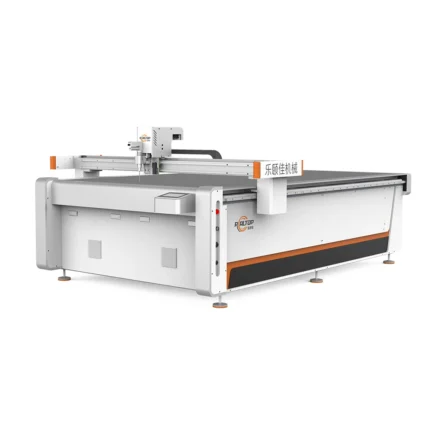
Realtop 2026 Digital Box Cutter High-Speed Corrugated Board
Product Introduction
Realtop Digital Box Cutting Machine 2026 is a high-speed solution for corrugated board cutting, designed for efficient and precise box production in manufacturing settings.Key Specifications
| Model | 2026 |
| Type | Digital Box Cutting Machine |
| Application | Corrugated Board |
| Feature | High-Speed Cutting |

REALTOP 2026 Digital Industrial Cardboard Box Cutter
Product Introduction
REALTOP Digital Industrial Cardboard Box Cutter Machine 2026 is a professional industrial-grade cutting equipment designed for efficient cardboard box processing, ideal for manufacturing and packaging applications.
Product Parameters
| Model | 2026 |
| Type | Digital Industrial Cardboard Box Cutter |
| Application | Cardboard Box Processing |
| Feature | Industrial-grade, Efficient Cutting |

Realtop CNC Carton Box Cutter 2026 CCD Camera Honeycomb Cutting
Product Introduction
Realtop CNC Carton Box Cutter 2026 is a professional cutting solution featuring CCD Camera and Honeycomb Cutting technology, ideal for precise carton box processing with efficient performance.Product Parameters
| Model | Realtop CNC Carton Box Cutter 2026 |
| Vision System | CCD Camera |
| Cutting Technology | Honeycomb Cutting |

商品评价
There are no reviews yet.