




– Realtop2516 1825 CNC Knife Cutter Foam Asbestos Rubber 2026
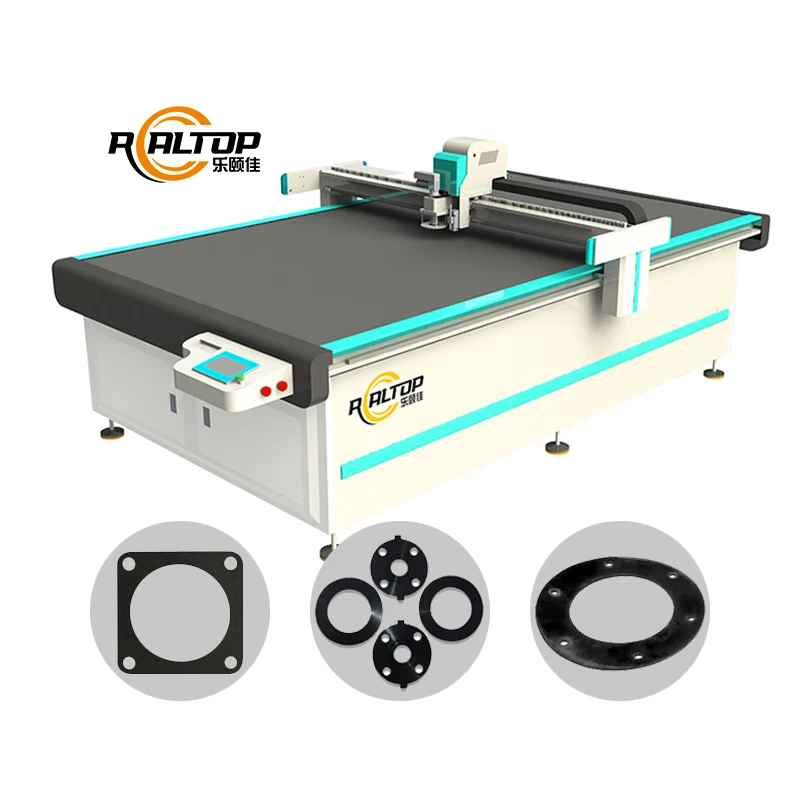
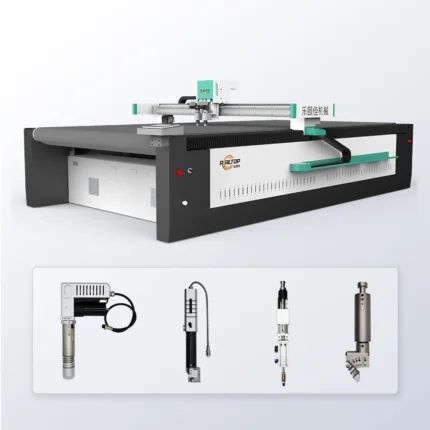
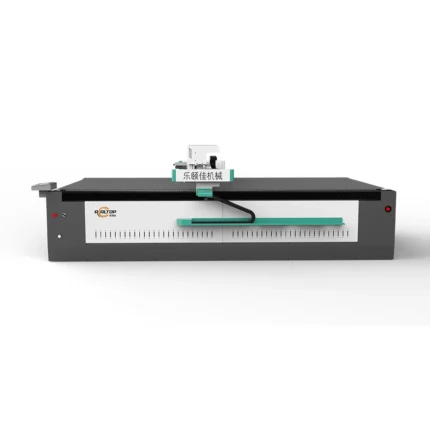
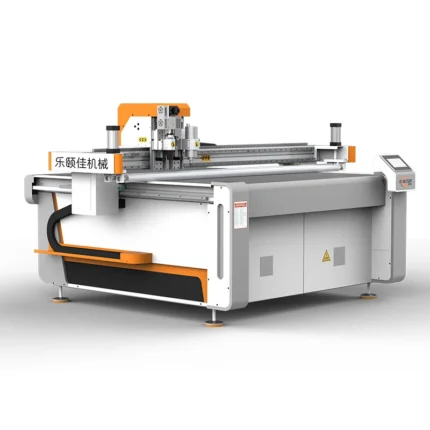
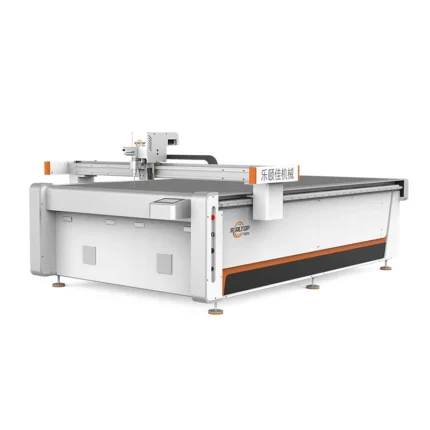
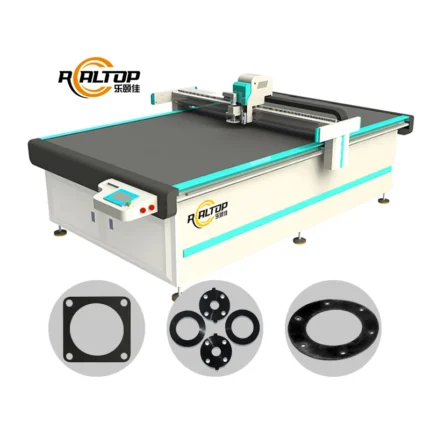
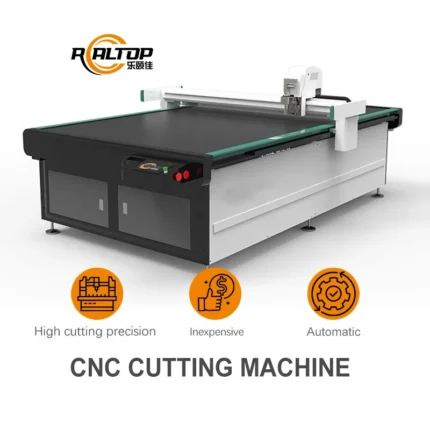
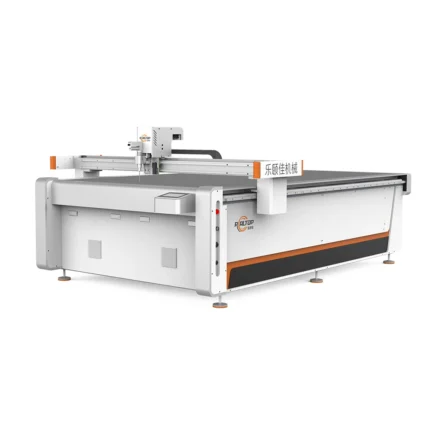
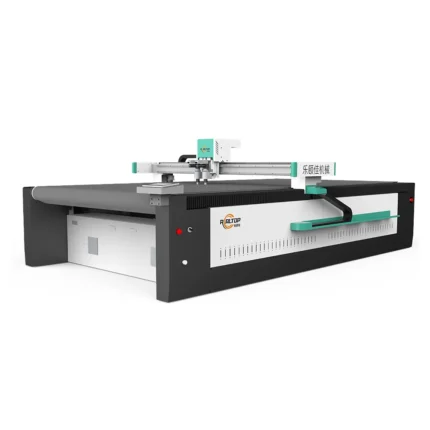
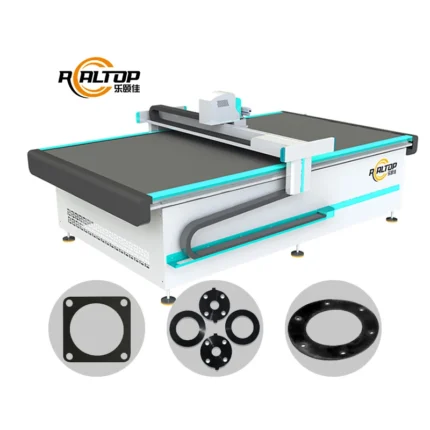
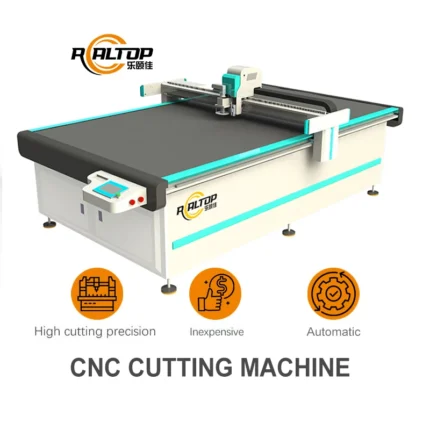
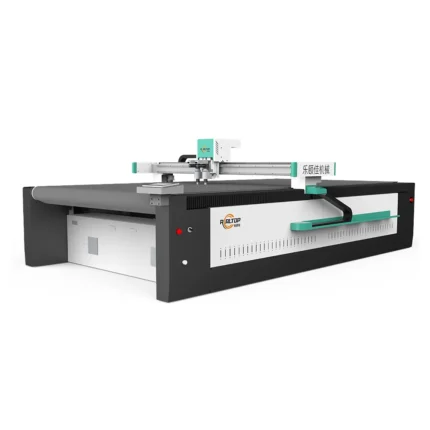
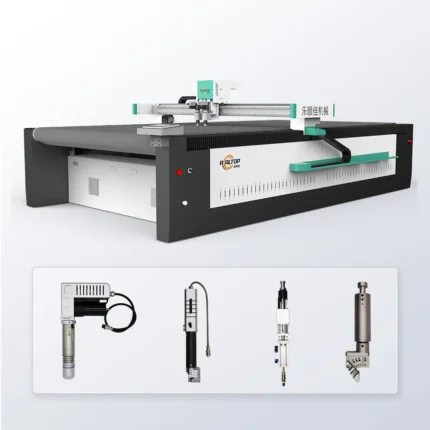
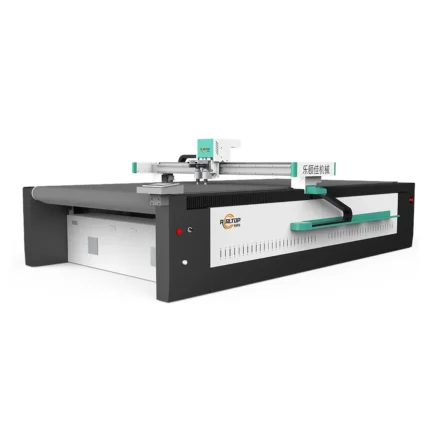
CNC Oscillating Knife Gasket Cutting Machine, 1600×2500mm, 20–80mm Thickness, 9kW — configured for rubber, PTFE, silicone and composite sealing materials. Oscillating knife and drag knife tool heads selected per gasket stock density, with magnesium-aluminum vacuum table providing uniform hold-down on small sealing parts. CCD camera positioning available for printed contour work. – Sample cutting on your own gasket material before commitment – Voltage, plug and control language confirmed before shipment – Tool head matched to your material rather than one method forced
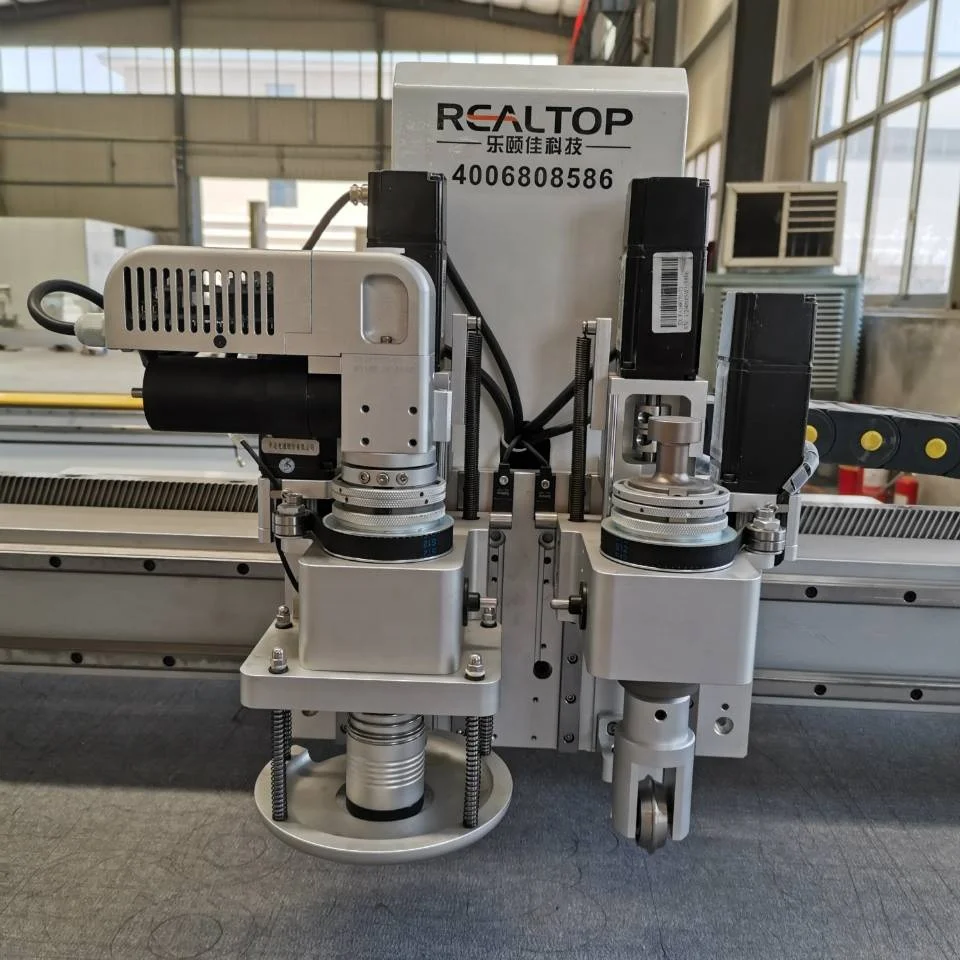
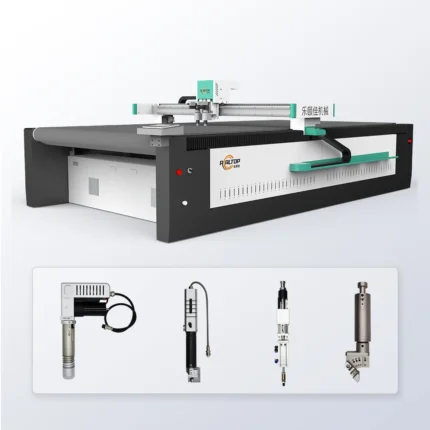
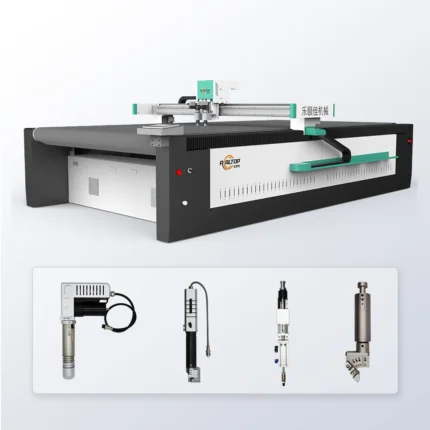
Tool head configurability — Matching oscillating, drag, and punch heads to your specific gasket density and profile eliminates thermal damage and ragged edges common in laser or fixed-blade setups.
Technical Specifications
| Parameter | Value |
|---|---|
| Product Type | CNC Oscillating Knife Cutting Machine for Gasket and Sealing Materials |
| Working Area | 1600×2500 mm |
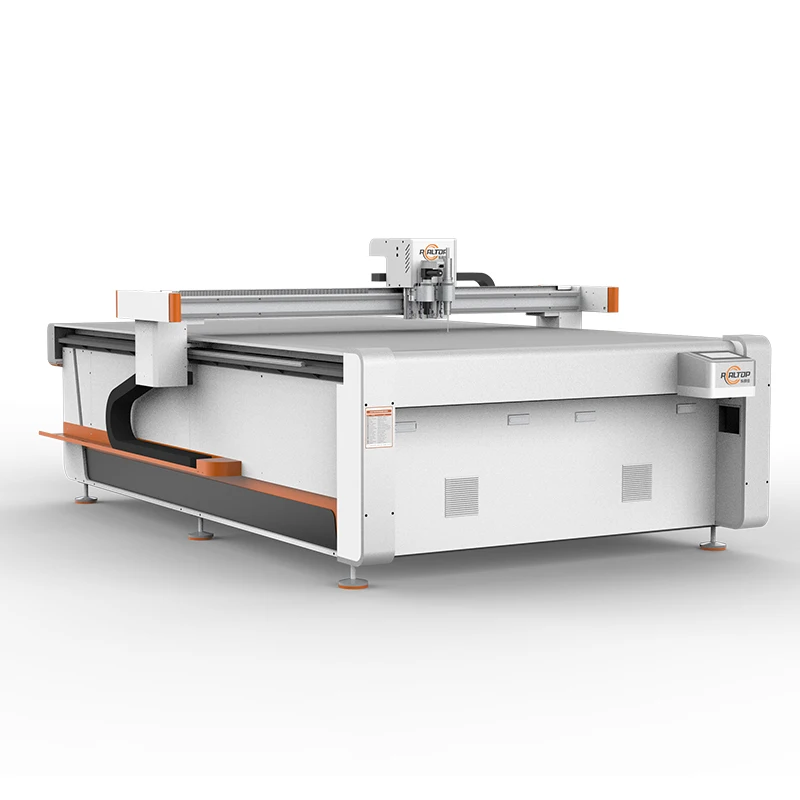
| Machine Overall Dimensions | 3450×2300×1250 mm |
| Rated Power | 9 kW |
| Voltage | 380V ±10% (frequency to be confirmed by market) |
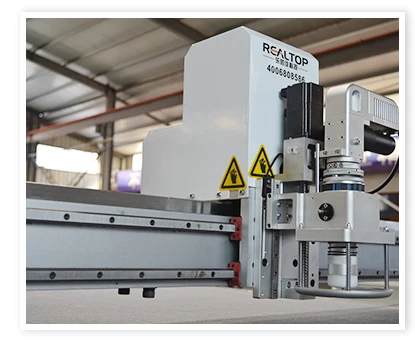
| Transmission System | Digital servo motor (Delta or Panasonic), linear guide, synchronous belt, ball screw |
| Linear Rail | Taiwan Hiwin |
| Translational Velocity | 800–1200 mm/s |
| Cutting Thickness | 20–80 mm (varies by gasket material composition) |
| Repeated Accuracy | ≤0.1 mm |
| Tool Head Options | Oscillating knife, pneumatic knife, high-power vibrating knife, circular knife, V-cutting knife, drag knife, creasing wheel, dotted line knife, punching, brush, Swiss imported knife (full cut / half cut / cursor location) |
| Visual Positioning Options | Small CCD camera mark point positioning, panoramic camera recognition positioning, projection positioning |
| Working Table | Magnesium-aluminum alloy vacuum adsorption table with PVDF fluorocarbon powder spraying, anodic oxidation, hard oxidation |
| Vacuum Pump | 7.5 kW, integrated aviation aluminum shell with built-in silencer sponge |
| Conveyor Belt | Germany imported |
| Auto Feeding | Available |
| Safety Devices | Infrared induction blocking, anti-collision sensors on both sides of beam, emergency stop button (in-situ resume after stop) |
| Instruction System | HP-GL compatible format |
| Control Language Options | English, Russian, Italian, Chinese (custom languages available) |
| Assembly State | Fully assembled |
| Warranty | 1 year (parts supplied free; buyer covers shipping and engineer local expenses) |
Application Suitability
| Application | Material or Output |
|---|---|
| Automotive gasket and sealing pad production | Rubber, silicone, composite sheet, cork-rubber blends |
| Industrial sealing fabrication | PTFE, ETFE, fiber-reinforced gasket stock, graphite composite |
| Aftermarket custom gasket short runs | Asbestos and non-asbestos fiber sheet, aramid fiber, compressed non-asbestos |
| Flange and pipe sealing components | Nitrile rubber, EPDM, neoprene, Viton sheet |
| Heat and exhaust system sealing | Ceramic fiber, high-temperature silicone, graphite laminate |
Why Cutting Depth Claims Fail on Dense Gasket Stock
When a gasket cutting machine specifications sheet quotes a maximum thickness, it rarely tells you which material that figure was measured on — and a 20–80 mm range on soft foam means something very different on compressed fiber or PTFE. The only valid cutting depth is the one verified on your actual material, at your production speed, with your chosen tool head.
I spent days on a shop floor where the standard test sample cut perfectly, but the customer’s asbestos-heavy stock shredded the blade and produced unusable edges. The vacuum hold-down was adequate for full sheets but let small flange gaskets drift as the knife exited the cut. These issues do not appear in a brochure. They surface when the machine meets the real material, which is why a sample cutting report on the buyer’s own stock is the first document that matters [NEED_CITE: CNC knife cutting performance variance across gasket material compositions].
Knife Versus Laser: Selecting the Right Process for Sealing Materials
A gasket cutting machine specifications comparison often omits the fundamental process choice. Laser cutting melts or vaporizes material, which seals edges on synthetics but creates thermal degradation on PTFE, releases hazardous fumes from asbestos-containing stock, and leaves a hardened edge on rubber that compromises sealing performance. Oscillating knife cutting produces a clean mechanical shear with no heat-affected zone, preserving the gasket material’s compressibility and chemical resistance.
For fiber-reinforced and composite gasket sheets, the knife process avoids delamination at the cut edge. The oscillating action of the blade handles the varying density within a single sheet — moving from a softer binder region to a harder fiber cluster — without the stalling or edge tearing that a static drag knife produces on the same transition.
Vacuum Table Zoning and Its Effect on Small Sealing Parts
The vacuum adsorption table on this system uses a magnesium-aluminum alloy base with PVDF fluorocarbon coating and anodic oxidation for flatness. What matters in daily gasket production, however, is how the table is zoned. A single-zone vacuum table pulls uniformly across the full 1600×2500 mm surface, which holds a large sheet well but provides insufficient localized suction when the remaining material around a small cut part becomes too narrow to seal the vacuum.
Multi-zone configuration allows the operator to activate only the section under the current cut path, concentrating hold-down force where it is needed. For a run of small O-ring profiles or narrow flange gaskets, correct zoning prevents the part from lifting into the knife path during the final cuts, which is the primary cause of dimensional drift and scrap in short-run gasket work [NEED_CITE: vacuum table zoning impact on small part cutting accuracy].
Reading the Specifications That Actually Matter
The repeated accuracy figure of ≤0.1 mm depends directly on the Taiwan Hiwin linear rail and digital servo drive combination — this is the tolerance you can expect on hole-to-hole distance across a large gasket sheet, not just on a short test cut. For multi-bolt flange gaskets, this positional accuracy determines whether the cut gasket seats correctly without field trimming.
The 9 kW rated power covers the drive system, vacuum pump, and control electronics together. The separate 7.5 kW vacuum pump ensures that suction is not compromised when the knife drive is under peak load during a thick-section cut. The translational velocity range of 800–1200 mm/s applies to travel moves; actual cutting speed depends on material density, blade type, and depth of cut, and should be established during the sample test.
The HP-GL compatible instruction system accepts standard nesting output from most gasket design software. Confirming file format compatibility before the order prevents the situation where the machine arrives and the buyer’s existing DXF or PLT workflow cannot feed it directly without an intermediate conversion step that loses layer information.
The Hidden Cost of a Mismatched Tool Head
Selecting a tool head based on price rather than material is the most common specification error in gasket cutting. A drag knife handles thin, uniform sheet well but crushes and tears fiber-reinforced stock above a few millimeters. An oscillating knife handles dense rubber and composite material but may chatter on very thin PTFE if the amplitude is not adjusted. A circular knife slices through soft foam gasket stock cleanly but cannot follow the tight internal radii of a complex flange profile.
When the wrong tool head meets the wrong material, the result is not just edge quality degradation — it is accelerated blade wear, increased vacuum pump load from material lift, and operator time spent re-cutting parts that fail dimensional inspection. These costs accumulate across every shift and are rarely traced back to the initial configuration choice [NEED_CITE: tool head selection impact on gasket production consumable costs].
Why Procurement Through This Channel Works
In-house design covering both knife and laser technology means the cutting method is matched to the gasket material rather than limited to whatever process the seller happens to manufacture. If a buyer’s material is better suited to mechanical cutting, that recommendation is made without commercial pressure to push a laser solution.
Tool head and table configuration are specified per the buyer’s material sample and production volume before the order is finalized. The sample cutting test on the actual gasket stock is not an optional extra — it is the step that determines blade type, oscillation frequency, vacuum zoning, and feed rate.
Software compatibility is confirmed against the buyer’s existing file format and nesting workflow. Voltage, plug type, and control language are locked down before shipment, with an electrical schematic provided for local compliance verification. The documentation package travels with the machine so that installation does not depend on email exchanges across time zones.
Documentation & Verification
- Machine specification sheet listing confirmed tool head and vacuum table configuration
- Electrical schematic with voltage and frequency matching your facility supply
- Sample cutting report produced on your gasket material at your production thickness
- Tool head and blade compatibility list for each material in your production range
- Software licence and file format compatibility note for your nesting workflow
- Spare parts list with blade types, vacuum seals, and consumable intervals
Installation, Commissioning & Support
- Fully assembled delivery at 3450×2300×1250 mm requires clear floor space and overhead clearance for uncrating
- 9 kW rated power plus 7.5 kW vacuum pump require dedicated circuit with confirmed 380V ±10% supply
- First-run parameter calibration performed on buyer’s gasket material to establish cutting speed and blade depth
- Vacuum table zoning configured and tested with buyer’s smallest gasket profile to verify hold-down
- Operator training covers tool head changeover, blade replacement, and file import from nesting software
- One-year warranty supplies replacement parts; buyer covers shipping and local engineer expenses if on-site visit required
Before You Request a Quotation
To get a configuration that works on arrival rather than requiring weeks of on-site adjustment, the inquiry should include your gasket material type, sheet thickness range, and the largest and smallest part dimensions in your typical production mix. Specify your local voltage and frequency, the control language your operators need, and the file format your current nesting software outputs. If you have a specific gasket profile that has been problematic on previous equipment, include a drawing or sample so that the tool head recommendation accounts for internal radii and cut complexity.
Frequently Asked Questions
Q: How is cutting thickness verified for my specific gasket material?
A: The 20–80 mm range varies by material composition. We cut samples from your actual stock at multiple thicknesses, record blade type, oscillation settings, and edge quality, and provide a sample cutting report. This report becomes the baseline parameter set for your machine, not a generic factory default.
Q: Which tool head works for dense rubber versus PTFE versus composite stock?
A: Dense rubber and fiber-reinforced composites typically require an oscillating knife with adjustable amplitude. PTFE and softer materials may suit a drag knife or circular knife depending on profile complexity. The correct head is determined during the sample test on your material, not assumed from a catalog table.
Q: How does vacuum table zoning affect small gasket part hold-down?
A: The magnesium-aluminum alloy table can be configured with multiple vacuum zones. For small flange gaskets or narrow sealing profiles, activating only the zone under the current cut path concentrates suction and prevents the part from lifting. Zone layout is confirmed during the configuration stage based on your smallest part dimensions.
Q: How do I confirm my nesting software will work with this machine?
A: The control system accepts HP-GL compatible format. Before order confirmation, we verify compatibility with your specific file format — DXF, PLT, or other — and document any required export settings. This note ships with the machine so your operators can load files directly on day one.
Q: What documentation arrives with the machine?
A: The package includes a specification sheet with your confirmed configuration, electrical schematic for your voltage, sample cutting report on your material, operation and maintenance manual, software licence note, and spare parts list. CE declaration is provided where applicable to your market requirements.


Related products
2026 CNC Gasket Cutter Pneumatic Knife Asbestos Rubber
Product Introduction
CNC Gasket Cutter Machine 2026 with pneumatic knife, ideal for cutting asbestos, non-asbestos, cork, PTFE, and rubber materials. Precision-engineered for efficient gasket production.
Key Specifications
| Cutting Material | Asbestos, Non-Asbestos, Cork, PTFE, Rubber |
| Knife Type | Pneumatic |
| Control System | CNC |
| Model | 2026 |
2026 Spiral Wound Gasket Cutter CE Hot Sale
Product Introduction
Hot Sale 2026 Spiral Wound Gasket Cutter with CE certification, ideal for precise gasket cutting in industrial applications. Made by a leading Chinese manufacturer of welding and cutting equipment.Product Parameters
| Model | 2026 |
| Certification | CE |
| Type | Spiral Wound Gasket Cutter |
| Application | Industrial Gasket Cutting |
CNC Gasket Cutting Machine 2026 Auto Oscillating Silicone/Asbestos/Felt
Product Introduction
2026 CNC Gasket Cutting Machine with auto oscillating function, ideal for cutting silicone, asbestos, and felt materials. Precision-engineered for efficient gasket production in industrial settings.
Key Specifications
| Type | CNC Gasket Cutting Machine |
| Year | 2026 |
| Function | Auto Oscillating |
| Material Compatibility | Silicone/Asbestos/Felt |
Oscillator Knife CNC Cutter 1625 for Gaskets Rubber Asbestos Graphite PTFE
Product Introduction
Oscillator Knife CNC Cutter 1625, ideal for precision cutting of rubber, asbestos, graphite, PTFE gaskets. Efficient 2026 model from China's leading welding & cutting equipment manufacturer.Key Specifications
| Model | 1625 |
| Cutting Technology | Oscillator Knife |
| Material Compatibility | Rubber, Asbestos, Graphite, PTFE Gaskets |
| Type | CNC Cutter |
Realtop 2026 CNC Gasket Cutter 1200¡Á2400mm Auto Rubber Cutter
Product Parameters
| Model | Realtop CNC Sealing Gasket Cutter 2026 |
| Working Area | 1200¡Á2400mm |
| Type | Auto Rubber Cutting Machine |
Introduction
Realtop CNC Sealing Gasket Cutter 2026 is an advanced auto rubber cutting machine with a 1200¡Á2400mm working area, ideal for precise and efficient gasket production, manufactured by a leading Chinese welding & cutting equipment factory.
Realtop Graphite Gasket Making Machine 2026 – Advanced Flexible Material Cutter
Product Introduction
Realtop Graphite Gasket Making Machine 2026 is a professional equipment for graphite gasket production, ideal for manufacturing high-quality gaskets with precision and efficiency, suitable for industrial sealing applications.Product Parameters
| Model | Graphite Gasket Making Machine 2026 |
| Brand | Realtop |
| Application | Graphite Gasket Production |
| Feature | Precision Manufacturing |
商品评价
There are no reviews yet.