


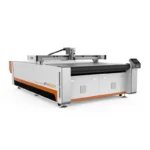
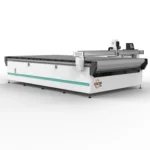
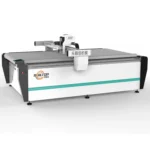
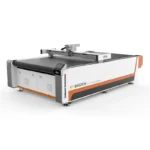
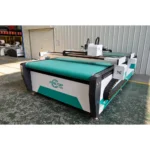
Apparel Textile Cutting Machine for Cloth – Laser Process
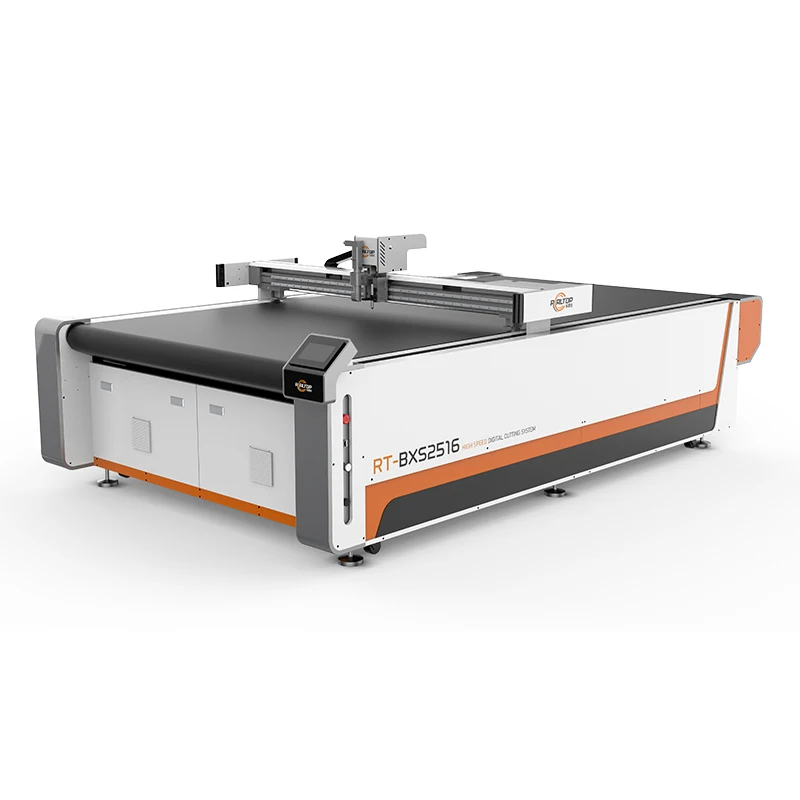
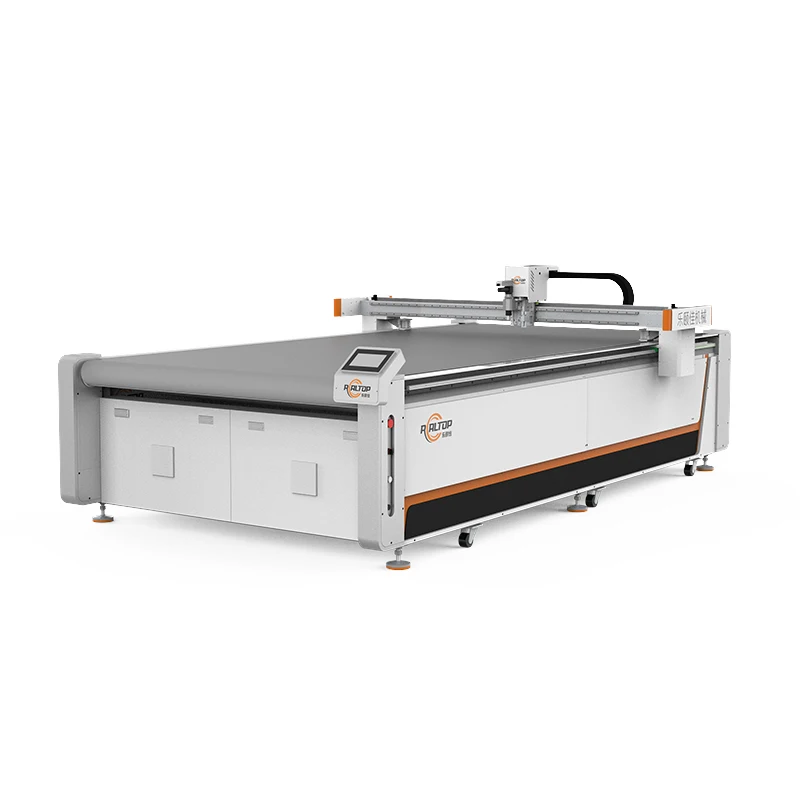
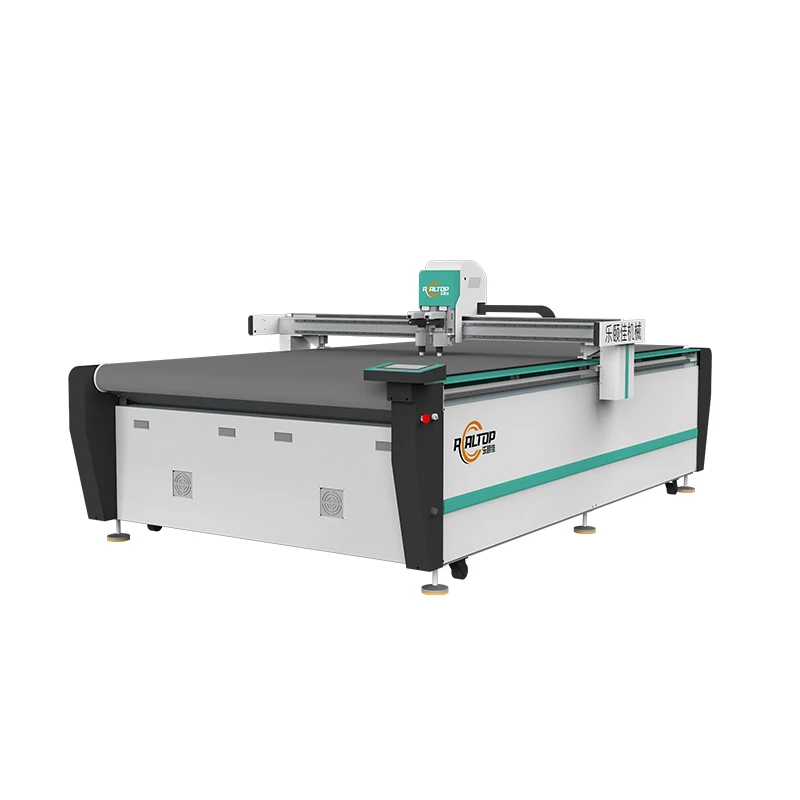
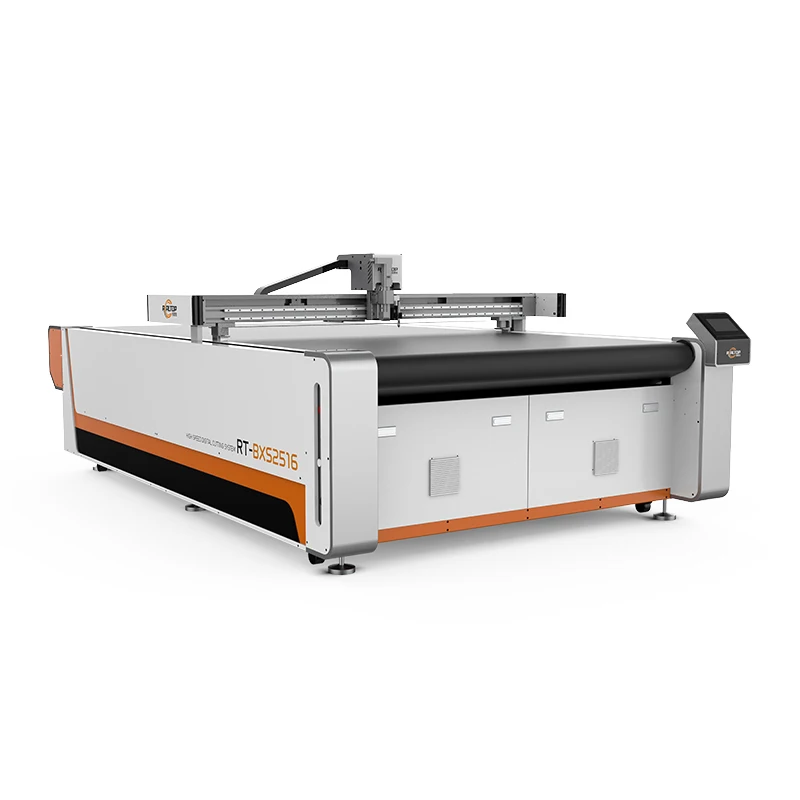
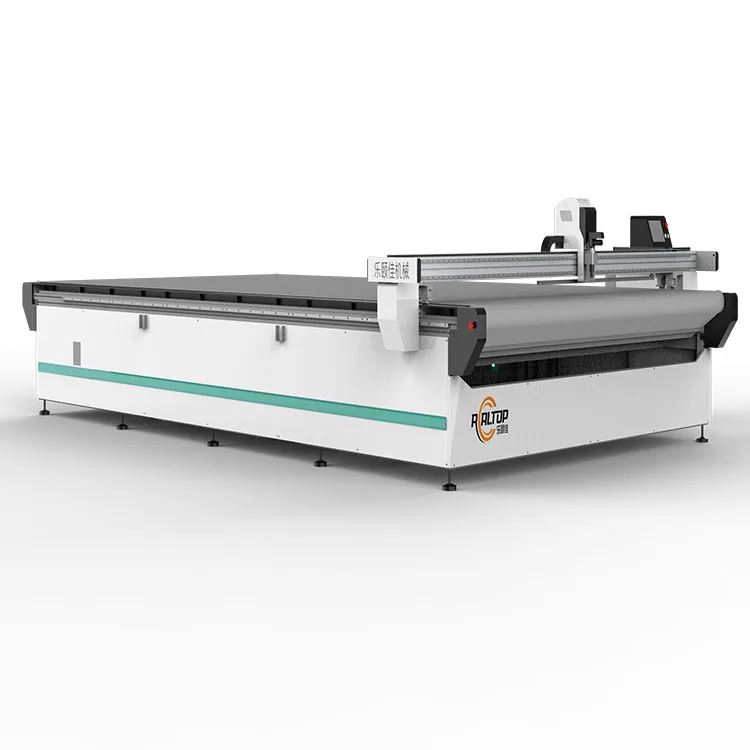
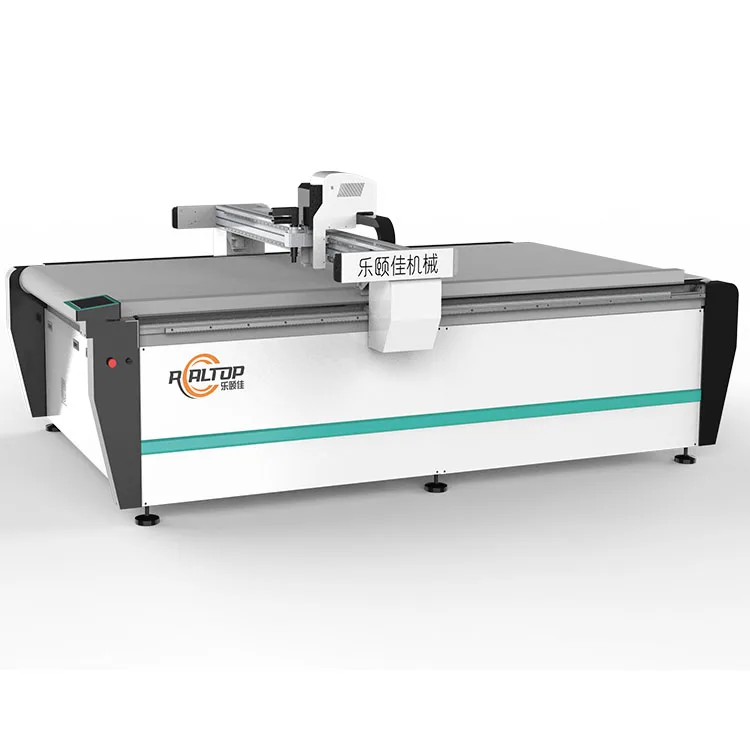
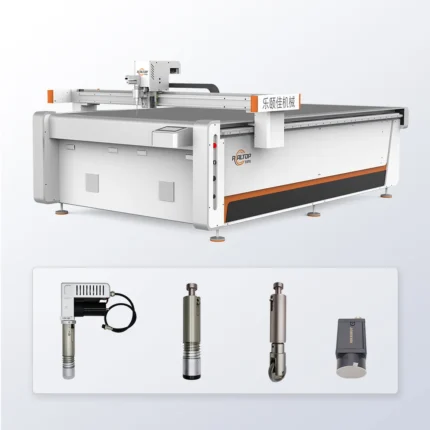
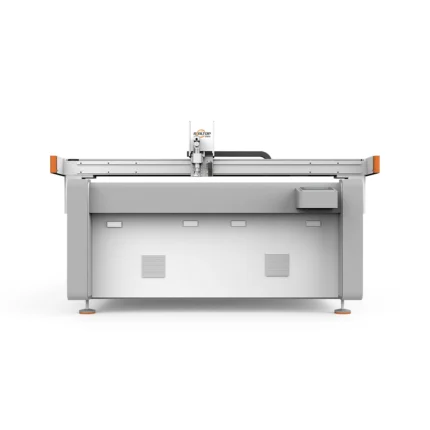
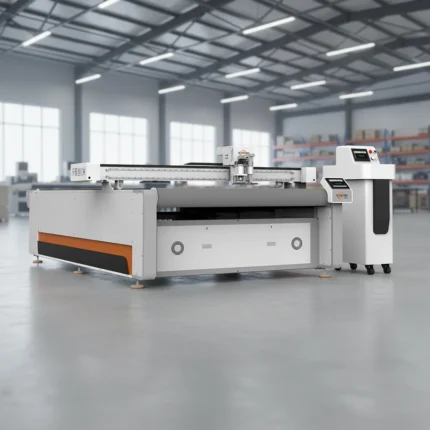
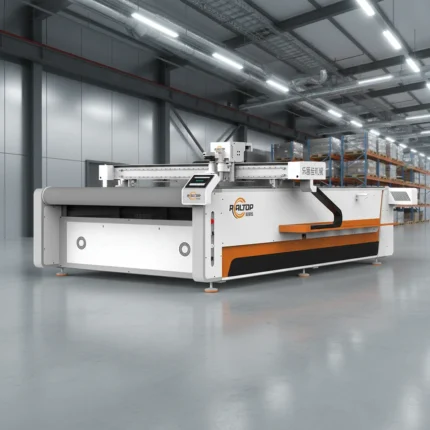
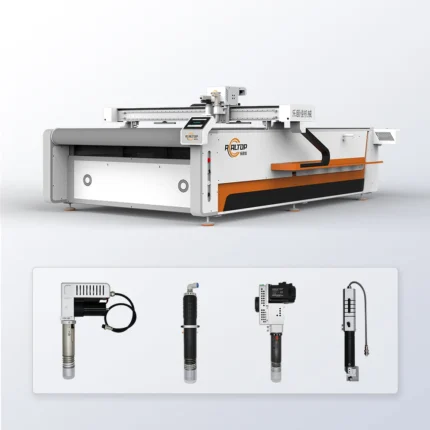
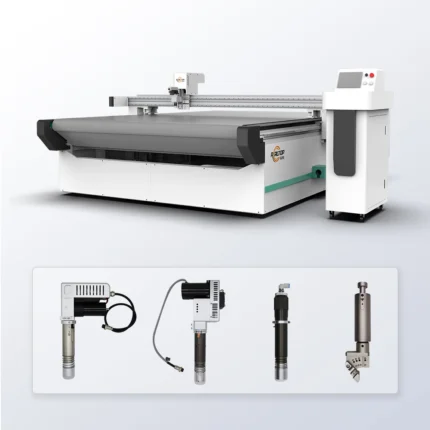
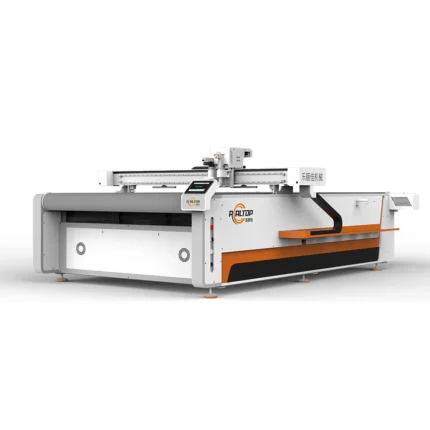
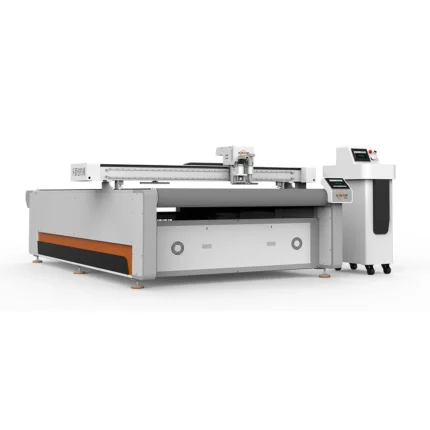
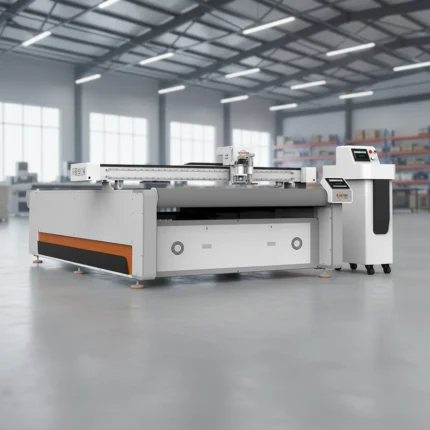
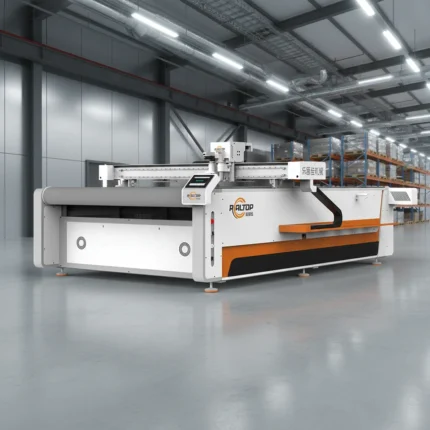
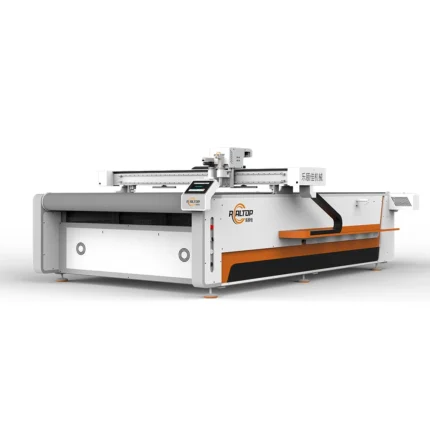
RT-D2516/RT-S2516 Cloth CNC Cutting Machine, 1600×2500mm Working Area, 9kW Rated Power — equipped with Swiss imported oscillating knife and multifunctional tool heads for fabric, textile and flexible composite materials.
- Designed for garment and footwear production, this system pairs CCD camera contour recognition with auto-feeding conveyor and vacuum zoning to hold lightweight cloth flat during high-speed cutting at 200–800mm/s.
- Delta or Panasonic servo motors and Taiwan Hiwin linear guides deliver ≤0.1mm repeated accuracy across nested pattern layouts.
Sample cutting on your own textile material is completed before order confirmation, ensuring edge quality and throughput match your production requirements.
Power rating transparency — every laser source on this RT-D2516/RT-S2516 cloth cutting platform is documented with continuous output data rather than peak claims, so buyers see real cutting depth on their own fabric rolls before shipment.
Technical Specifications
| Parameter | Value |
|---|---|
| Model | RT-D2516/RT-S2516 |
| Product Type | CNC Oscillating Knife Cutting Machine |
| Working Area | 1600×2500 mm |
| Machine Size | 3450×2300×1250 mm |
| Rated Power | 9 kW |
| Vacuum Pump | 7.5 kW |
| Table Type | Flat working table or auto feeding table (configurable) |
| Cutting Thickness | ≤100 mm (varies with material; basis not stated in source) |
| Translational Velocity | 800–2000 mm/s |
| Cutting Speed | 200–800 mm/s (according to different cutting materials) |
| Repeated Accuracy | ≤0.1 mm |
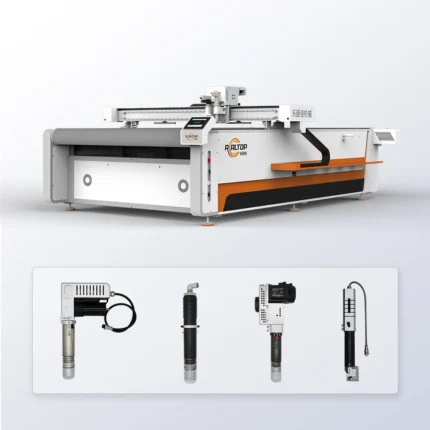
| Multifunctional Head | Swiss imported knife (vibration full cutting, vibration half cutting, cursor location function) |
| Tool Head Options | Oscillating knife, pneumatic knife, high-power vibrating knife, circular knife, V cutting knife, drag knife, creasing wheel, dotted line knife, punching, brush |
| Transmission System | Digital servo motor, linear guide, synchronous belt, ball screw |
| Servo Motor Options | Delta (made in China) or Panasonic (made in Japan) |
| Linear Guide | Taiwan Hiwin rail |
| Conveyor Belt | Germany imported |
| Vacuum Table Surface | Magnesium-aluminum alloy with fluorocarbon PVDF powder spraying, anodic oxidation, hard oxidation |
| Visual Positioning Options | Small CCD camera mark point positioning, panoramic camera recognition positioning, projection positioning |
| Control Panel | Touch screen, multiple language supported |
| Language Options | English, Russian, Italian, Chinese (special languages customizable) |
| Voltage | 380V ± 10% |
| Instruction System | HP-GL compatible format |
| Software | Auto typesetting, supports PLT, DXF, AI formats |
| Safety Device | Infrared sensors |
| Assembly State | Fully assembled |
Application Suitability
| Application | Material or Output |
|---|---|
| Garment pattern cutting | Woven fabric, knitted textile, non-woven fabric |
| Footwear upper production | Leather, PU, EVA, shoe material |
| Luggage and bag panels | Composite leather, sponge composite leather, PVC sheet |
| Automotive interior trim | Carpet, floor mat, foam board, gasket material |
| Soft home furnishings | Cloth, textile, sponge, carpet |
| Sports and outdoor gear | Carbon fiber, fiberglass, composite materials |
| Packaging sample making | Cardboard, corrugated cardboard, sticker, film |
| Sealing pad fabrication | Silicon, rubber, PTFE, ETFE |
Why Quoted Power Ratings Often Disappoint on the Shop Floor
When a textile processor receives a cloth cutting system whose laser source is rated at peak output rather than continuous output, the real cutting depth on multi-layer synthetic fabric can fall well short of the quoted figure. Always verify whether the power rating refers to continuous or peak output before committing to a purchase. I have stood next to machines of this class where the operator had to slow the feed rate dramatically just to get through coated polyester — a problem that surfaced only because the specification sheet listed a peak number without context. Buyers who skip this question often discover the gap during their first production week, when cutting speed drops and edge quality degrades on thicker material batches [NEED_CITE: laser power rating standards for industrial textile cutting].
Continuous Output Versus Peak Claims in Fabric Cutting
The distinction between continuous and peak laser power is not a minor footnote — it dictates whether a machine can hold production speed on your actual material. A CO2 laser cutting and engraving machine manufacturer that quotes only peak wattage may deliver a source that overheats during sustained runs, forcing the controller to throttle power mid-job. On the RT-D2516/RT-S2516 platform, the 9 kW rated system power is documented alongside the cutting speed range of 200–800 mm/s, so a buyer can match throughput expectations to the fabric weight they process daily.
Assist Gas and Focal Configuration for Textile Edges
Synthetic fabrics like polyester and nylon melt and re-seal at the cut edge, which can be an advantage or a defect depending on the garment specification. Proper focal length and assist gas flow determine whether that sealed edge remains flexible or turns into a brittle bead that cracks during sewing. On this cloth cutting platform, the tool head options — including oscillating knife, circular knife, and drag knife — let a buyer choose a cold mechanical cut for natural fibers or a thermal process for synthetics, keeping edge behavior within the tolerance the downstream sewing line requires.
Decoding the Specs That Matter for Your Material
The working area of 1600×2500 mm accommodates a full lay-up spread for garment panels, but width alone does not guarantee flat holding. The vacuum table uses a magnesium-aluminum alloy base with fluorocarbon PVDF powder spraying and hard oxidation, providing consistent suction across porous woven cloth as well as non-breathable PVC and PU sheets. When cutting small pattern pieces — collar stays, pocket flaps, gussets — zone isolation on the table prevents lift at the edges, a frequent complaint [NEED_CITE: vacuum hold-down requirements for small textile parts]. The repeated accuracy of ≤0.1 mm, driven by Taiwan Hiwin linear rails and a ball screw transmission, keeps nested pieces within tolerance so that automated sewing stations receive panels that align without manual re-trimming. Servo motor selection between Delta and Panasonic lets a buyer balance cost against the positional stability needed for high-density nesting layouts.
The Hidden Cost of a Mis-Matched Tool Head
Choosing the wrong tool head for your material is the most common specification error I encounter on installation visits. A factory cutting sponge composite leather with a standard drag knife will see crushed foam cores and ragged top layers, while the same material under a high-power vibrating knife produces a clean vertical face. When the CCD contour recognition option is specified but the camera mark point is printed in a low-contrast ink, the system hunts for registration marks at full traverse speed and misses them, wasting the first several sheets before the operator intervenes [NEED_CITE: CCD registration accuracy on low-contrast print marks].
Why Buyers Source This Platform
Buyers who evaluate the RT-D2516/RT-S2516 typically stay because the configuration conversation starts with their material sample, not a catalog page. The in-house design team covers both knife and laser cutting technologies, meaning a buyer can match the cutting method to the fabric rather than force a single process onto every textile. Tool head and table zoning are specified per production volume, so a high-mix garment factory receives a different setup than a single-style automotive carpet line. Voltage, control language, and software file format compatibility are confirmed before the order is released to the production floor. A sample cutting report on the buyer’s own material accompanies the quotation, showing edge quality and cutting speed under documented conditions.
Documentation & Verification
- Machine specification sheet distinguishing continuous versus peak power ratings
- Electrical schematic confirming 380V ± 10% wiring before dispatch
- Tool head and vacuum table zoning list matched to your fabric type
- Sample cutting report on buyer-supplied material showing edge quality
- Software licence with PLT, DXF, AI file format compatibility note
- CE declaration where applicable to destination market requirements
Installation, Commissioning & Support
- Floor space of 3450×2300 mm required with clearance for auto feeding table conveyor
- Dedicated 380V ± 10% circuit rated for the 9 kW system plus 7.5 kW vacuum pump
- Machine ships fully assembled; rigging plan must account for 1250 mm height
- First-run parameter tuning on your fabric weight and cutting speed within the 200–800 mm/s range
- Operator training on touch screen control in the confirmed language option
- Spare parts list covering Swiss imported knife blades, conveyor belt segments, and vacuum seals
What to Prepare Before Requesting a Quotation
Send a representative sample of the cloth you intend to cut, along with the maximum lay-up thickness and the daily volume of panels you need to produce. Confirm your workshop voltage, frequency, and the control language your operators use. If your existing nesting software exports in PLT, DXF, or AI format, provide a sample file so that software compatibility can be verified before the machine is configured.
Frequently Asked Questions
Q: How is laser power rated — continuous or peak output?
A: On this platform the specification sheet distinguishes continuous output from peak claims. Continuous output is the figure that determines sustained cutting speed and depth on your material. Always request the continuous rating and verify it against your production sample before accepting a quotation.
Q: What assist gas is required for different materials and thicknesses?
A: Natural fibers like cotton generally need no assist gas when cut with an oscillating knife. Synthetic fabrics such as polyester may benefit from low-pressure air to manage melt residue. The tool head selection determines whether a thermal or cold mechanical cut is applied, which changes gas requirements entirely.
Q: How does focal length adjustment affect cutting depth and edge quality?
A: A shorter focal length concentrates energy into a smaller spot, improving edge sealing on thin synthetics but limiting penetration on thick composite leather. A longer focal length increases depth of cut but widens the kerf. The correct setting depends on your material thickness and the edge behavior your sewing line requires.
Q: What extraction system capacity is needed for the quoted cutting volume?
A: Extraction capacity depends on the material being cut and the daily running hours. Synthetic fabrics produce finer particulate and fume than natural fibers. Provide your material type and shift pattern so that an extraction specification can be matched to the 7.5 kW vacuum pump and table zoning configuration.
Q: Can sample cutting be performed on my specific material before commitment?
A: Yes. Send a roll or sheet of your actual production material. A sample cutting report is generated documenting the tool head used, cutting speed, edge quality, and vacuum hold-down performance under the conditions your machine will be configured to replicate.


Related products
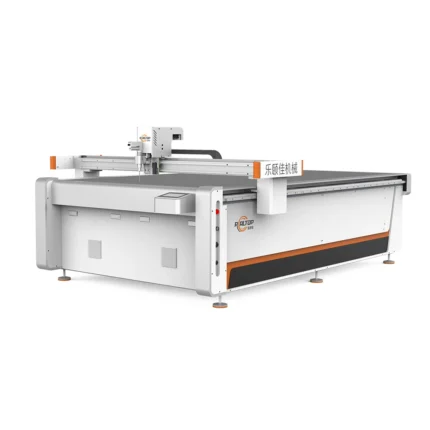
2026 Cortador de Tela Automático de Cuchilla Circular de Alta Eficiencia
Product Introduction
High Efficiency 2026 Auto Fabric Cutter with Round Knife is a professional cutting equipment designed for fabric processing. It features advanced automation and high cutting efficiency, suitable for various fabric materials in industrial production.Product Parameters
| Model | 2026 |
| Type | Auto Fabric Cutter |
| Blade Type | Round Knife |
| Feature | High Efficiency |
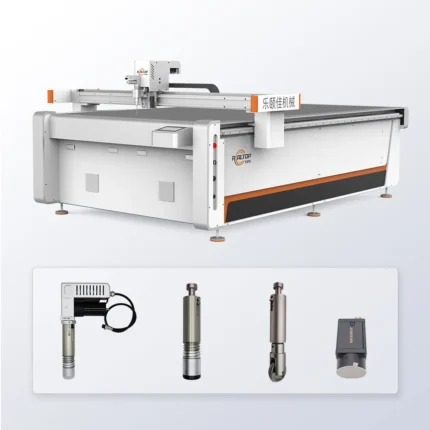
2026 Carbon Fiber Cloth Cutting Machine – China Manufacturer
Product Introduction
Fabric Sample Cutter Pillow Machine ¨C 2026 Carbon Fiber Cloth Cutting Machine, ideal for precise cutting of carbon fiber cloth and fabric samples, suitable for pillow production and related textile applications.Product Parameters
| Name | Fabric Sample Cutter Pillow Machine |
| Model | 2026 |
| Material | Carbon Fiber Cloth |
| Application | Pillow Fabric Cutting |
Máquina de corte automático de tela 1200mm Delta Servo 2026
Product Parameters
| Cutting Width | 1200mm |
| Servo System | Delta Servo |
| Model Year | 2026 |
Introduction
High-performance Automatic Fabric Cutting Machine with 1200mm cutting width, equipped with Delta Servo for precision. Ideal for efficient fabric processing in textile industry, ensuring accurate and fast cutting operations.

Cortadora rotativa eléctrica de tela 2026 12V Auto-Cut Industrial
Product Introduction
Industrial-grade Electric Fabric Rotary Cutter designed for precise cutting of scan-printed cloth. Features 12V auto-cut functionality for efficient, automated operation, ideal for professional textile processing.Product Parameters
| Power Supply | 12V |
| Function | Auto-Cut |
| Application | Scan-Printed Cloth |
| Type | Industrial Electric Rotary Cutter |
Jinan Realtop CNC Cortadora de Cuchilla Oscilante 2026
Product Introduction
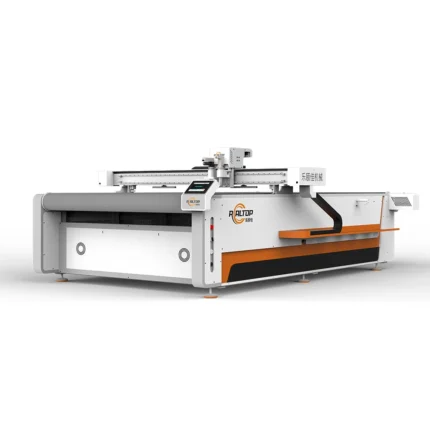
Jinan Realtop CNC Oscillating Knife Cutter 2026, a precision cutting solution from China's leading welding & cutting equipment manufacturer, ideal for efficient material processing with advanced CNC technology.
Key Specifications
| Model | 2026 |
| Type | CNC Oscillating Knife Cutter |
| Manufacturer | Jinan Realtop |
商品评价
There are no reviews yet.