


CNC Acoustic Panel Cutter 2026 Oscillating Carbon Fiber – Industrial Application
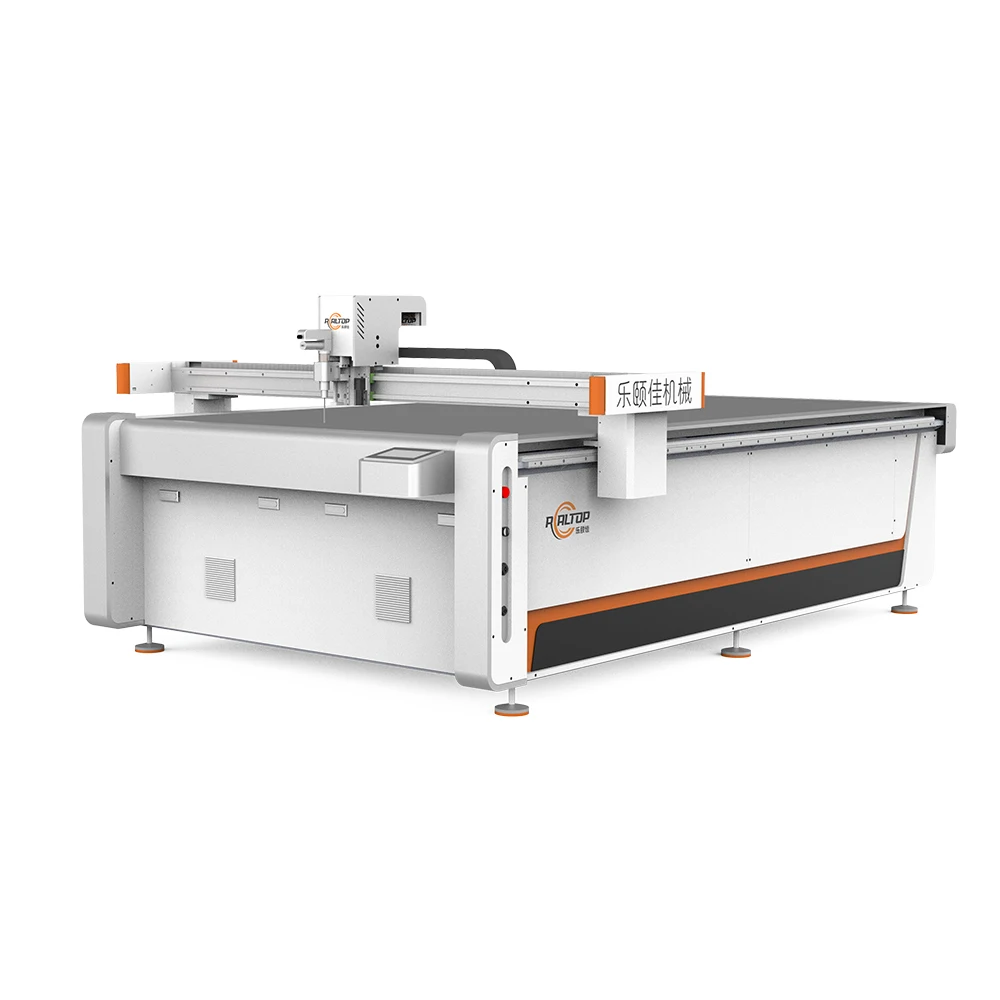
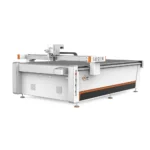
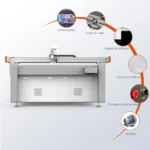
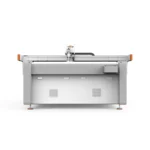
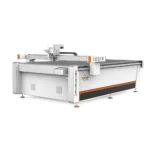
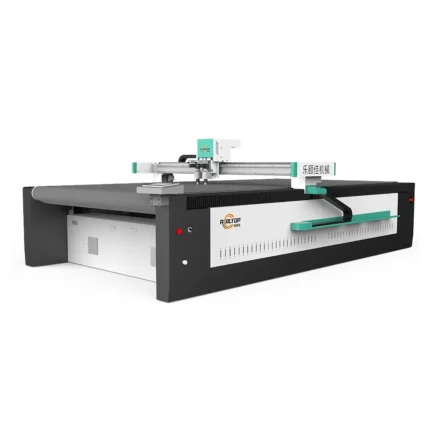
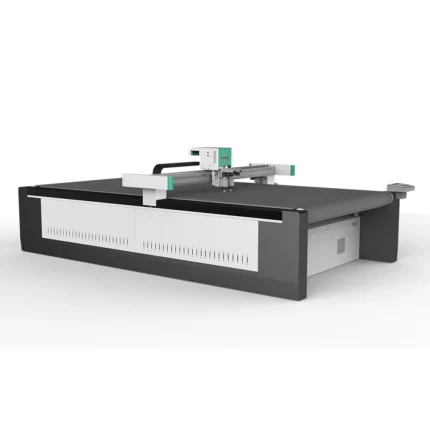
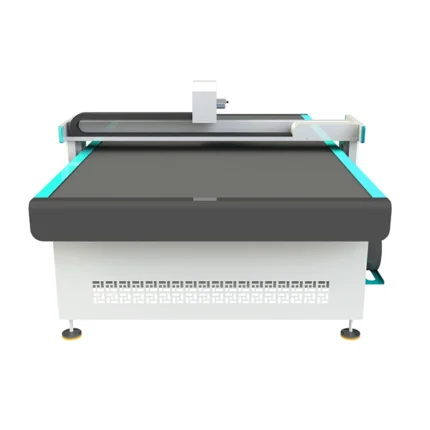
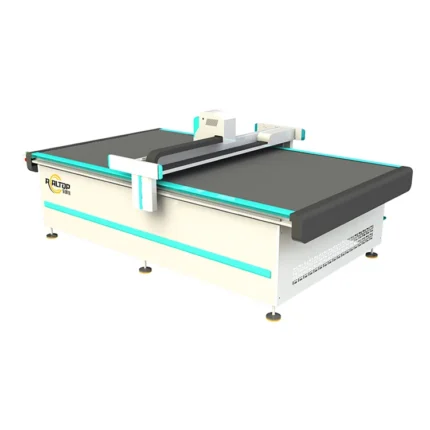
CNC Oscillating Knife Cutting Machine, 1600×2500mm, ±0.1mm Accuracy — engineered for cold cutting carbon fiber, aramid honeycomb and composite panels without thermal damage or toxic fume generation. High-frequency oscillating knife delivers burr-free edges while preserving resin integrity. 9kW vacuum pump with aluminum bellows table secures flexible sheets during high-speed cutting. Supports PLT, DXF, AI, PDF file formats for nesting workflows.
- Sample cutting on your composite material before order commitment
- Tool head configured per material type and thickness
- Voltage, plug and control language customized to your market
Precision Cutting Method Matched to Composite Structure — We specify cold-cutting oscillating knife technology for resin-based composites where thermal degradation would compromise material integrity, avoiding the charring and toxic fumes that laser processes generate on carbon fiber and aramid honeycomb.
Technical Specifications
| Parameter | Value |
|---|---|
| Product Type | CNC Oscillating Knife Cutting Machine for Composites |
| Working Area | 1600×2500 mm |
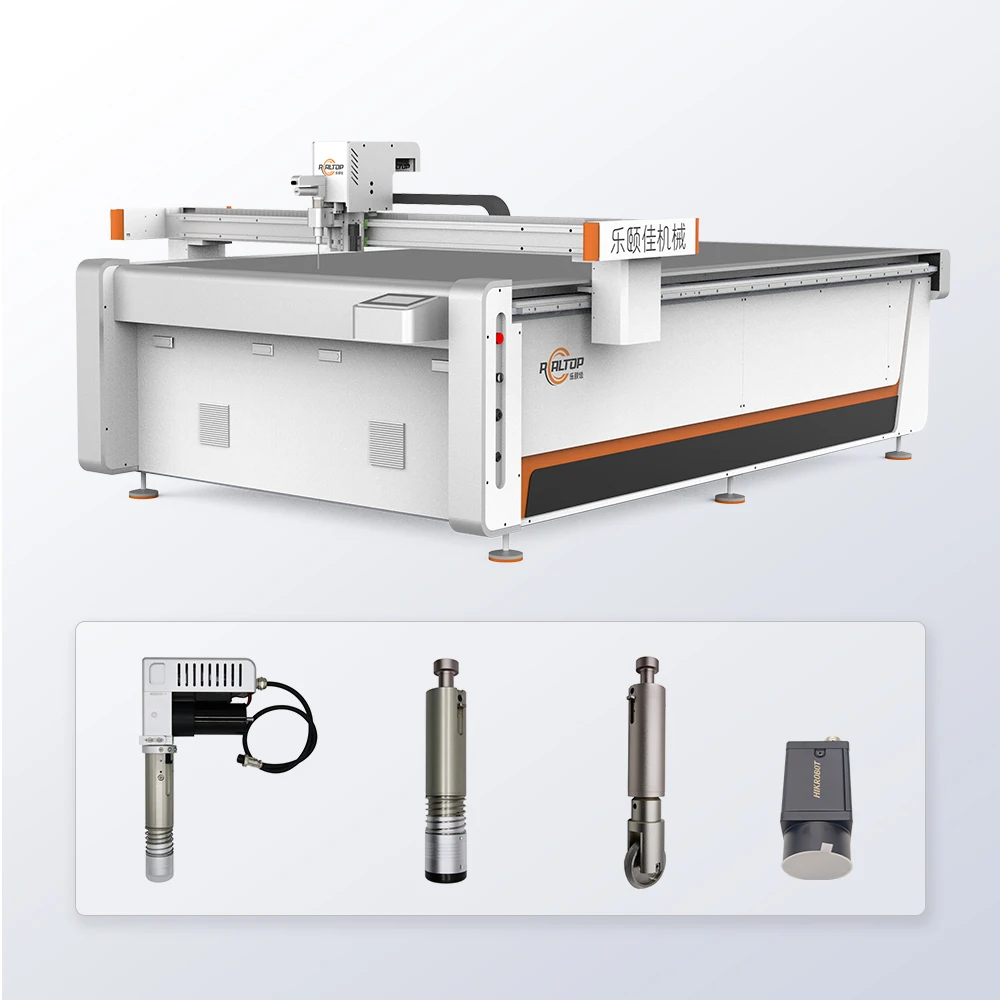
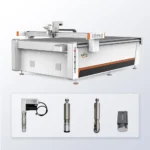
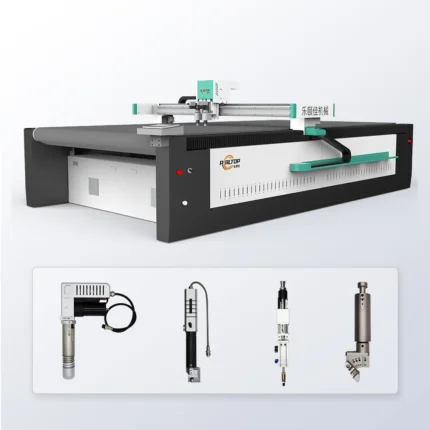
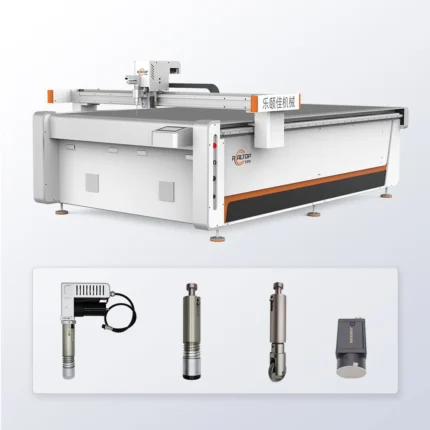
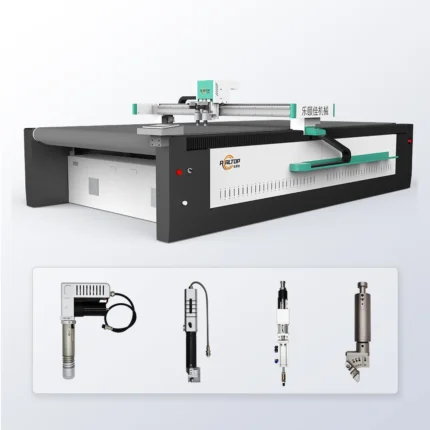
| Tool Head Options | Oscillating knife, Driven rotary knife, Creasing wheel, Kiss cutting tool, Pneumatic knife, Milling tool, V groove knife |
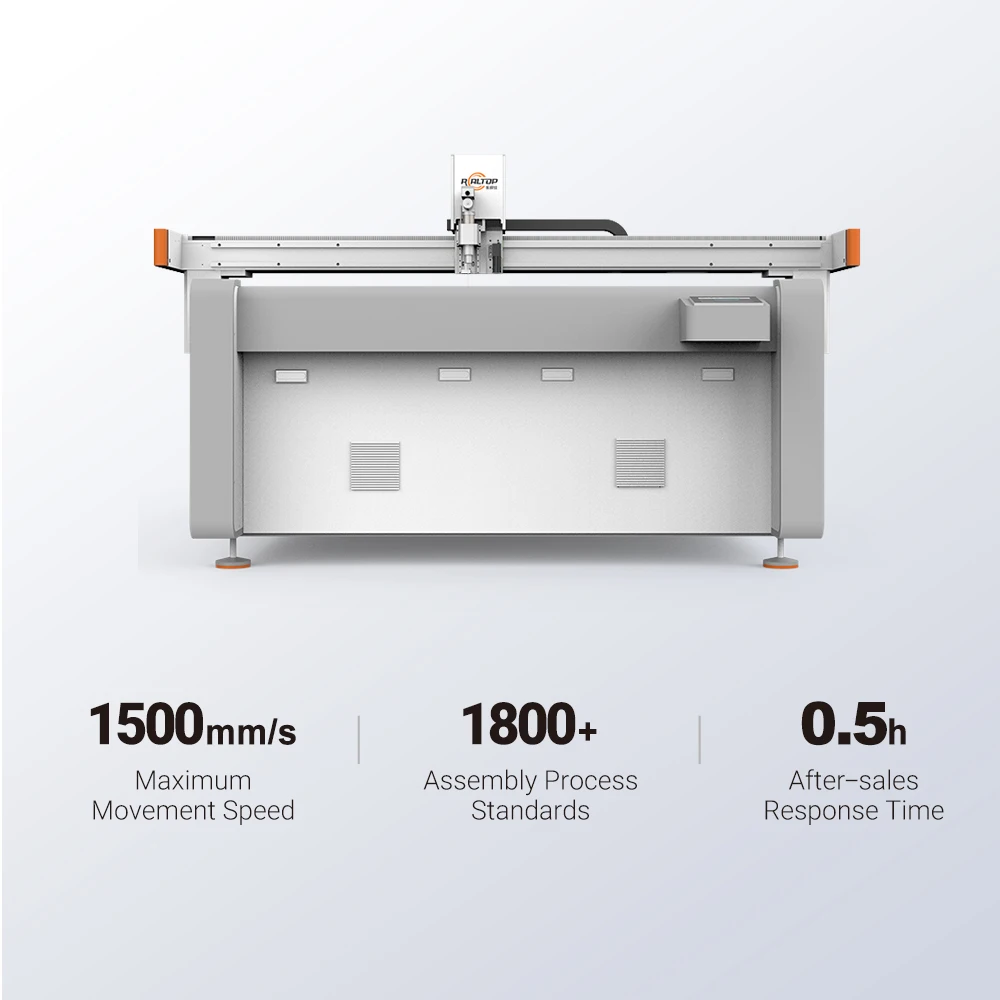
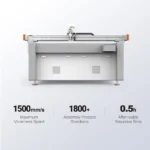
| Cutting Speed Range | 0-2000 mm/s |
| Cutting Thickness | ≤ 30mm (basis to be confirmed by material type and density) |
| Cutting Accuracy | ±0.1 mm |
| Vacuum Pump Power | 9 kW |
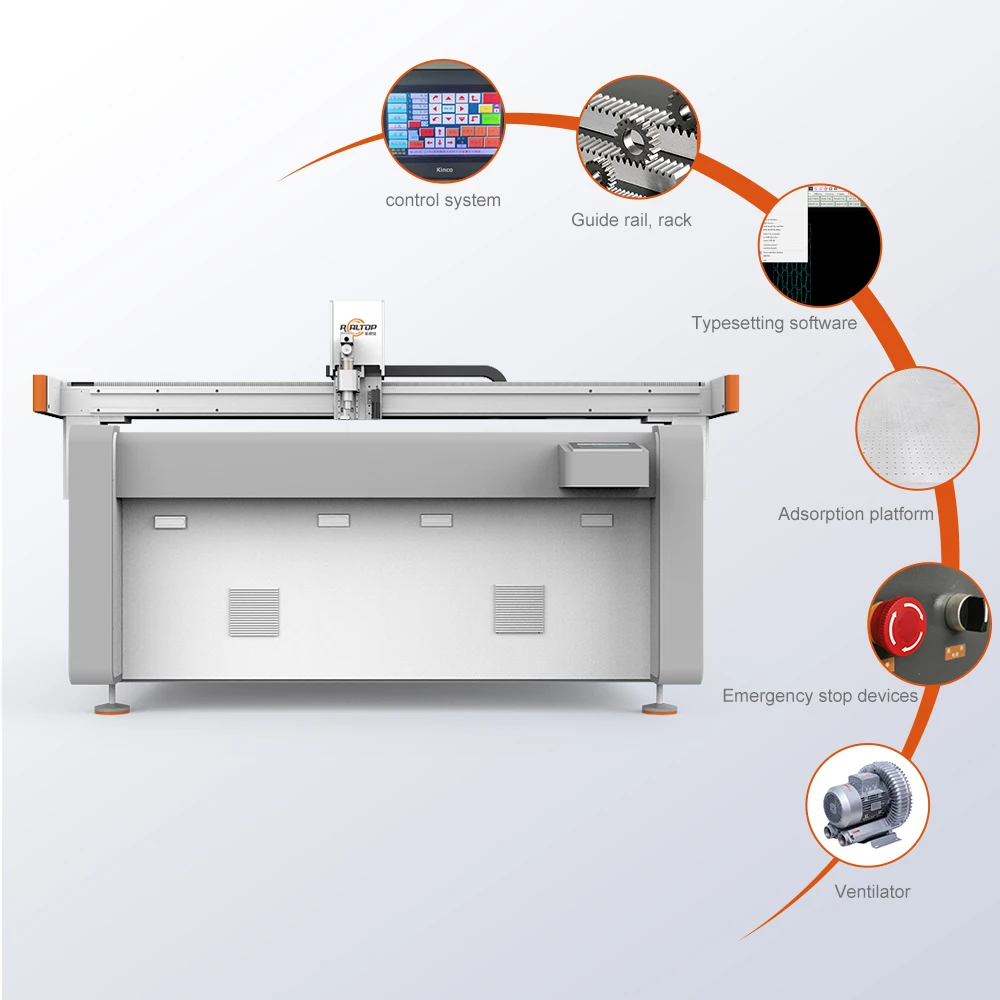
| Vacuum Table | Aluminum bellows vacuum table |
| Voltage Options | 110V, 220V, 380V |
| Control System | PLC control panel |
| Servo Motor Options | Panasonic, Delta, Dorna |
| Supported File Formats | PLT, DXF, AI, PDF |
| Safety Devices | Infrared sensor device and emergency stop device |
| Machine Size | 3300×2100×1350 mm |
| Language Options | English, Russian, Italian, Chinese, custom languages available |
| Assembly State | Fully assembled |
| Standards | CE declaration available |
Application Suitability
| Application | Material or Output |
|---|---|
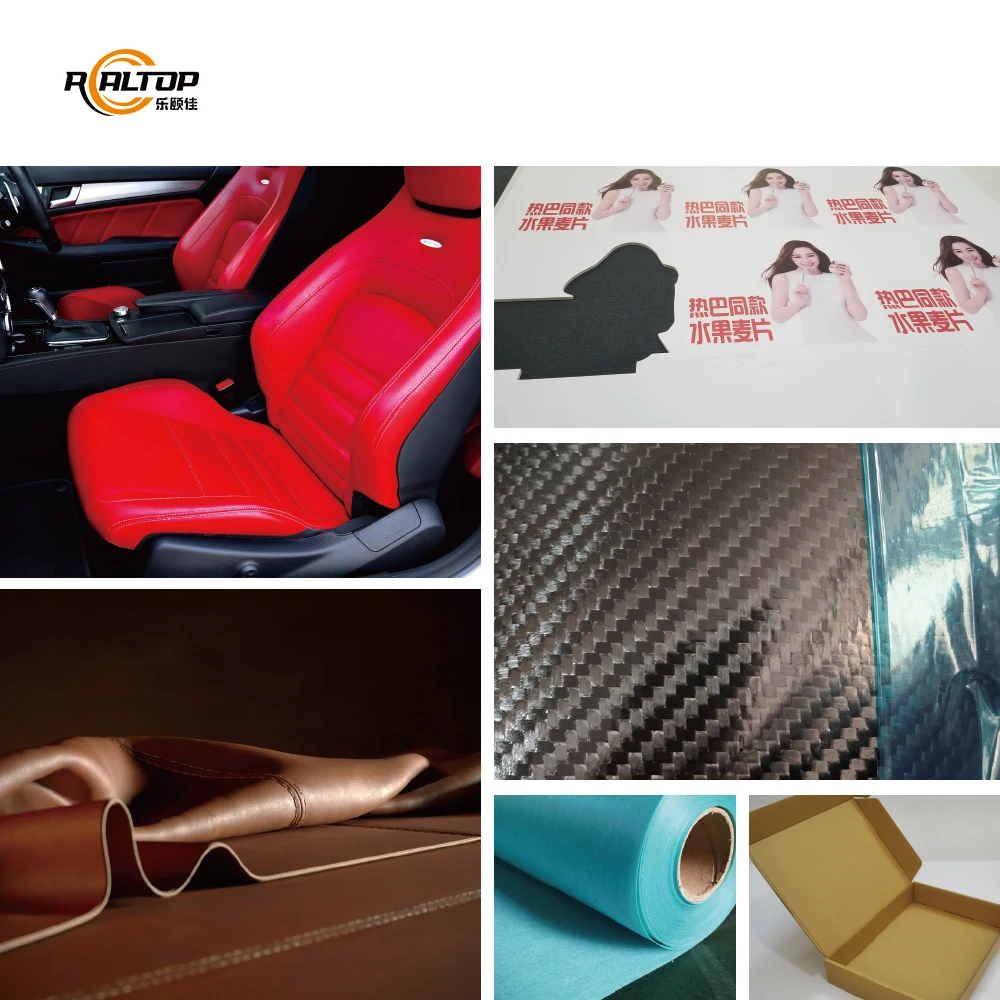
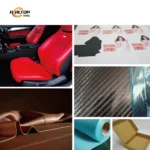
| Aerospace composite trimming | Carbon fiber prepreg, aramid honeycomb core, fiberglass cloth, ceramic fiber blankets |
| Automotive and rail interior components | Carbon fiber covers, FRP panels, acoustic felt, damping pads |
| Wind power and new energy fabrication | Fiberglass cloth, carbon fiber cloth, vacuum infusion mesh, PET and PVC foam core |
| Sporting goods manufacturing | Carbon fiber sheets, Kevlar panels, high-performance foam, composite fabrics |
Why "Cutting Speed" Means Nothing Without Material Validation
A 2000 mm/s travel rate is irrelevant if the blade delaminates your layup on the first pass.
I spent three days on a factory floor in Surabaya watching an oscillating knife tear through carbon fiber prepreg because the resin content in the production roll was different from the sample. The CNC oscillating knife cutting machine for composites ran fine on the sample stock, but the buyer’s actual layup had extra resin pooling between layers. Every cut left frayed edges that failed visual inspection [NEED_CITE: composite cutting edge quality standards in aerospace and automotive supply chains]. Speed dropped to a crawl until we swapped blade geometry and adjusted oscillation frequency. That is why sample cutting on the buyer’s actual production material is a non-negotiable step before any order confirmation.
Cold Cutting Preserves Resin Integrity Where Thermal Processes Fail
Laser cutting burns through resin matrices, leaving charred edges that compromise structural bonds on carbon fiber and Kevlar components. The oscillating knife process on this CNC oscillating knife cutting machine for composites keeps the blade temperature at ambient levels, eliminating the thermal degradation zone that forces secondary edge cleanup. Aerospace gaskets and battery insulation pads require edges that pass strict visual and dimensional inspection without post-processing.
Blade Configuration Dictates Edge Quality Across Densities
Soft fiberglass cloth and rigid carbon fiber board demand entirely different tool head setups. A driven rotary knife handles flexible woven materials without pulling fibers, while a high-frequency oscillating knife manages stiffer prepreg and honeycomb core [NEED_CITE: oscillation frequency requirements for cutting aramid honeycomb versus fiberglass mat]. The seven available tool heads allow switching between material types within the same production shift, reducing the need for dedicated machines per material family.
Reading the Specs That Actually Govern Composite Output
The 9 kW vacuum pump paired with an aluminum bellows vacuum table addresses a problem specific to composite cutting: large-format flexible sheets lift off the bed during high-speed knife travel. Standard vacuum zoning often fails on thin fiberglass cloth or vacuum infusion mesh, where material permeability defeats suction. The aluminum bellows design maintains consistent hold-down across the full 1600×2500 mm working area. Cutting accuracy of ±0.1 mm matters when aerospace interior trim panels must fit into molded assemblies with tight tolerances [NEED_CITE: dimensional tolerance requirements for CNC-cut composite components in aerospace interiors]. The PLC control panel processes PLT, DXF, AI, and PDF files directly, avoiding format conversion errors that shift cut paths. Servo motor selection between Panasonic, Delta, and Dorna options allows matching the motion control response to the cutting speed profile your material requires.
The Cost of Skipping Material-Specific Tool Head Selection
Buyers who specify a working area and skip tool head configuration end up with ragged edges on honeycomb core or crushed foam on acoustic damping pads. The wrong blade geometry generates delamination on carbon fiber prepreg that no amount of speed adjustment can fix [NEED_CITE: common tooling mismatch failures in composite CNC cutting operations]. Production stops while replacement blades are sourced, and the material waste from failed cuts on expensive prepreg rolls compounds the loss.
Why Production Buyers Source This Equipment Here
In-house design covers both knife and laser cutting processes, so we recommend cold cutting for composites based on material behavior rather than pushing a single technology. Tool head and table configuration is specified per composite type and production volume, not selected from a default package. CCD camera positioning is available for printed contour work on composite skins where cut paths must align with printed registration marks. Voltage, plug type, and control language are confirmed before production begins, eliminating the 380V-to-220V conversion surprises that delay installation [NEED_CITE: voltage mismatch incidents in industrial equipment imports to Southeast Asian markets]. Sample cutting on the buyer’s actual composite stock runs before any commitment, documenting edge quality and cycle time on the specific layup you will produce.
Documentation & Verification
- Factory test record cutting your composite material at specified thickness before dispatch
- Tool head and blade configuration list matched to your material type and density
- Electrical schematic confirming voltage, frequency, and plug type for your facility
- Software license and file format compatibility note for PLT, DXF, AI, PDF workflows
- Operation manual with blade change procedures for each tool head option
- Spare parts list with oscillating knife blades and vacuum table seals
Installation, Commissioning & Support
- Fully assembled 3300×2100×1350 mm frame requires level concrete floor with adequate clearance for material feed
- 9 kW vacuum pump requires dedicated circuit matching confirmed voltage option (110V, 220V, or 380V)
- PLC control panel language set to your specified option before shipment
- First-run calibration includes vacuum hold-down verification on your composite sheet dimensions
- Blade geometry and oscillation frequency tuned to your material during on-site commissioning
- Spare oscillating knife blades and vacuum seals included in initial parts kit
What We Need to Recommend the Right Configuration
Send us your composite material type, layup structure, sheet dimensions, and daily cutting volume. Specify your facility voltage and frequency, and confirm the control panel language your operators need. If your nesting software exports in a format outside PLT, DXF, AI, and PDF, share a sample file so we verify compatibility before quotation.
Frequently Asked Questions
Q: How does cold cutting compare to laser cutting for carbon fiber and resin-based composites?
A: Laser cutting generates thermal degradation on resin matrices, producing charred edges and toxic fumes on carbon fiber and aramid materials. The oscillating knife cold-cutting process maintains ambient blade temperature, preserving the mechanical properties of the composite without edge charring or fume extraction requirements.
Q: Which blade type suits my specific composite material and thickness?
A: Soft fiberglass cloth typically requires a driven rotary knife, while rigid carbon fiber board and honeycomb core need a high-frequency oscillating knife. We configure blade type based on your material sample test before finalizing the tool head package.
Q: What voltage and control language options are available for my market?
A: The machine supports 110V, 220V, and 380V configurations with plug types matching your local standard. Control panel language options include English, Russian, Italian, Chinese, and custom languages confirmed before production.
Q: How is vacuum table zoning configured to prevent material lift on small composite parts?
A: The aluminum bellows vacuum table maintains consistent suction across the 1600×2500 mm bed. We configure zoning based on your smallest part dimensions to prevent thin composite sheets and infusion mesh from lifting during high-speed cutting passes.
Q: Can you run a sample cut on my composite material before I commit?
A: We cut your actual production stock and document edge quality, cutting speed, and blade performance in a sample report. This test confirms the tool head configuration and vacuum hold-down effectiveness on your specific layup before order commitment.


Related products
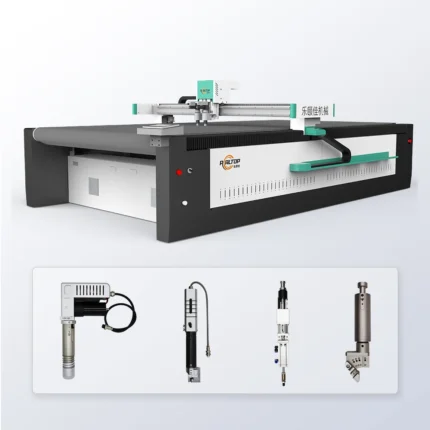
Máquina de corte con cuchilla oscilante CNC automática 2026
Product Introduction
Auto CNC Oscillating Knife Cutting Machine 2026 is a high-precision cutting solution from a leading Chinese welding & cutting equipment manufacturer, ideal for efficient and accurate material processing across various industrial applications.Key Specifications
| Type | Auto CNC Oscillating Knife Cutting Machine |
| Model | 2026 |
| Manufacturer | Chinese Leading Welding & Cutting Equipment Factory |
| Core Feature | High-precision CNC Control |
| Application | Industrial Material Cutting |
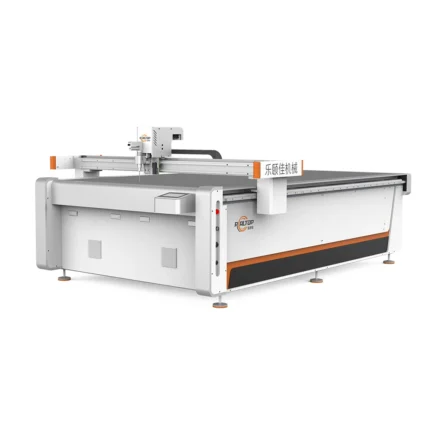
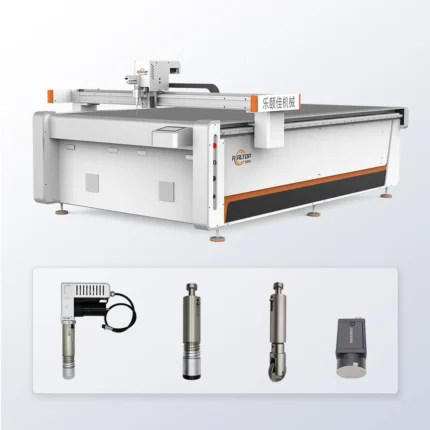
Cortadora de Paneles Acústicos CNC 2026 de Fibra de Carbono Oscilante
Product Introduction
High-performance CNC Acoustic Panel Cutter 2026 with oscillating carbon fiber flatbed, ideal for precise acoustic panel cutting applications.
Key Specifications
| Model | CNC Acoustic Panel Cutter 2026 |
| Oscillating | |
| Bed Material | Carbon Fiber |
| Bed Type | Flatbed |
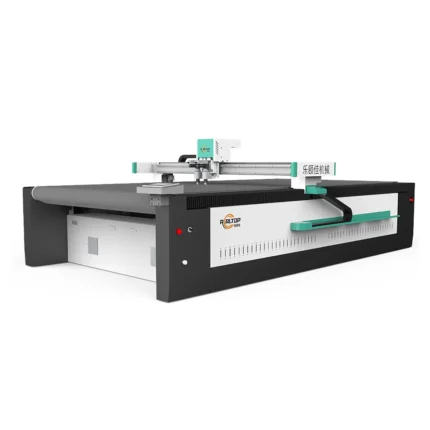
Cortadora de cuchillo oscilante 2500x1600mm cortadora de materiales compuestos
Product Introduction
Designed for composite materials processing, this oscillating knife cutter features a large 2500x1600mm working area, ensuring efficient handling of various composite material cutting tasks with precision and reliability.Product Parameters
| Working Area | 2500x1600mm |
| Cutting Type | Oscillating Knife |
| Application | Composite Materials |
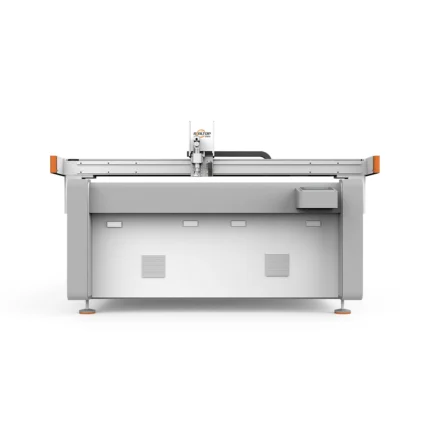
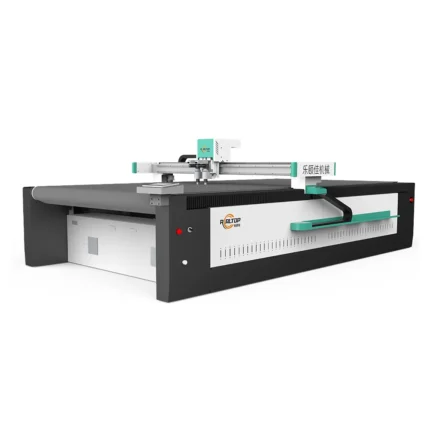
Máquina de corte CE de mat de fibra de carbono y vidrio Realtop CNC 2026
Product Introduction
High-performance Realtop CNC Cutting Machine 2026, ideal for carbon fiber and glass mat cutting. CE certified for quality and safety, perfect for precision manufacturing needs.
Key Specifications
| Carbon Fiber, Glass Mat | |
| Certification | CE Certified |
| Type | CNC Cutting Machine |
| Model | 2026 |
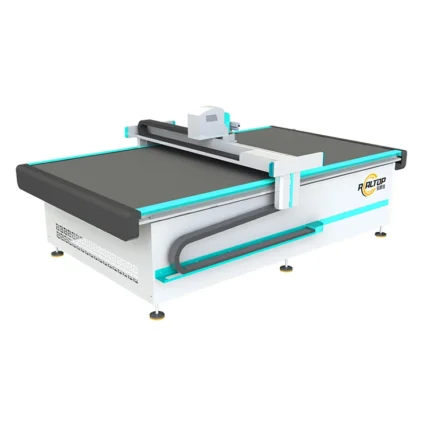
Cortadora de Paneles de Fieltro CNC Realtop 2026 Cortadora de PET Digital Automática de Cama Plana
Product Introduction
Realtop CNC Felt Panel Cutter 2026 is an auto digital flatbed designed for precise cutting of PET acoustic sheets, ideal for efficient and accurate fabrication in acoustic panel production.Key Specifications
| Model | Realtop CNC Felt Panel Cutter 2026 |
| Type | Auto Digital Flatbed Cutter |
| Application | PET Acoustic Sheets |
| Function | Precision Cutting |

商品评价
There are no reviews yet.