





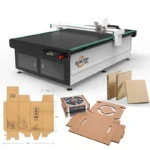
CNC Cutter Oscillating Kiss Knife for Packaging Carton and Sticker – OEM Available
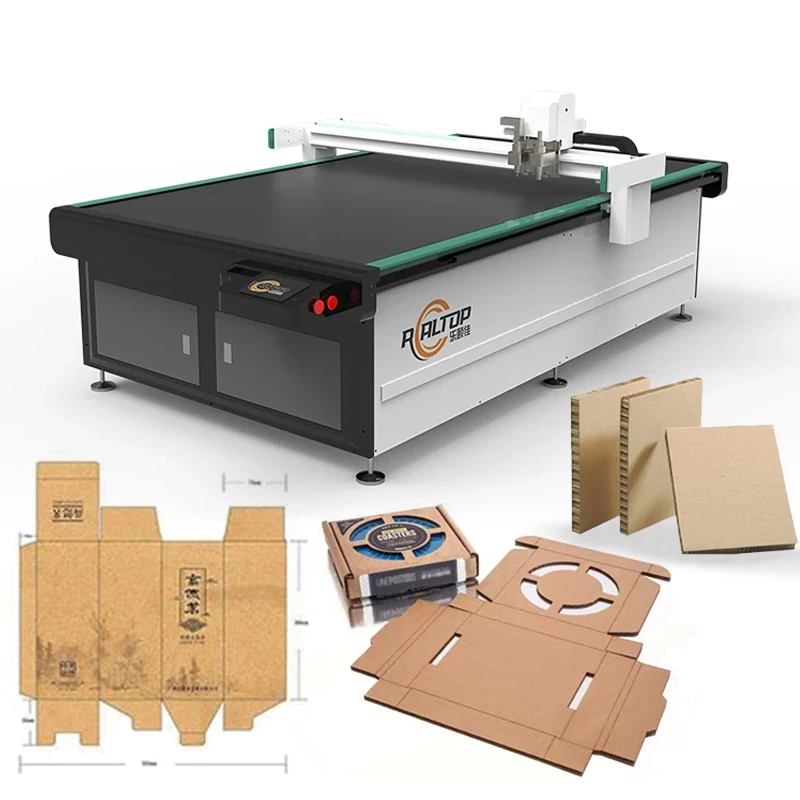
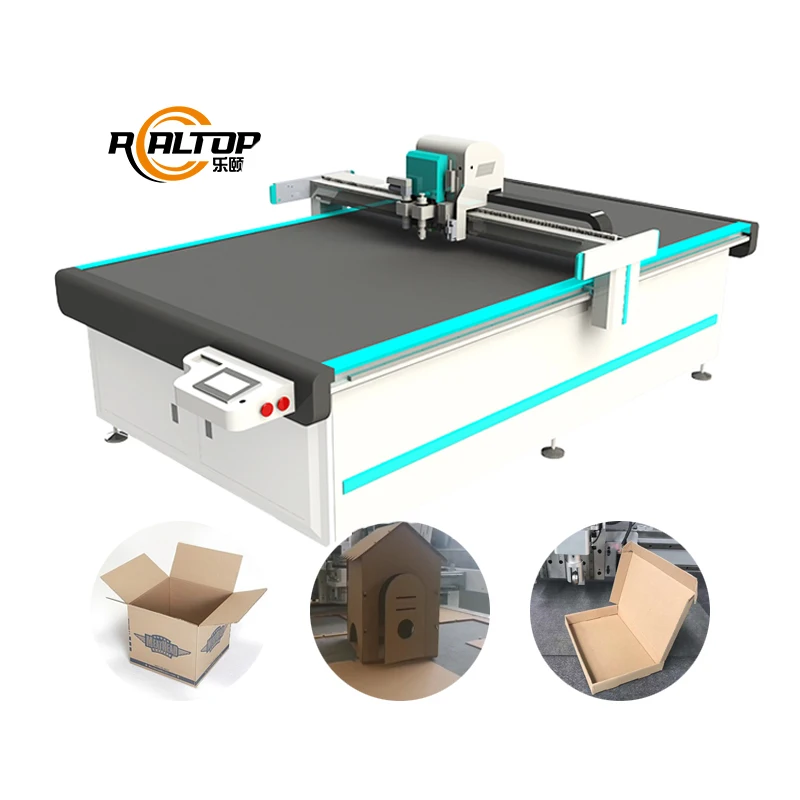
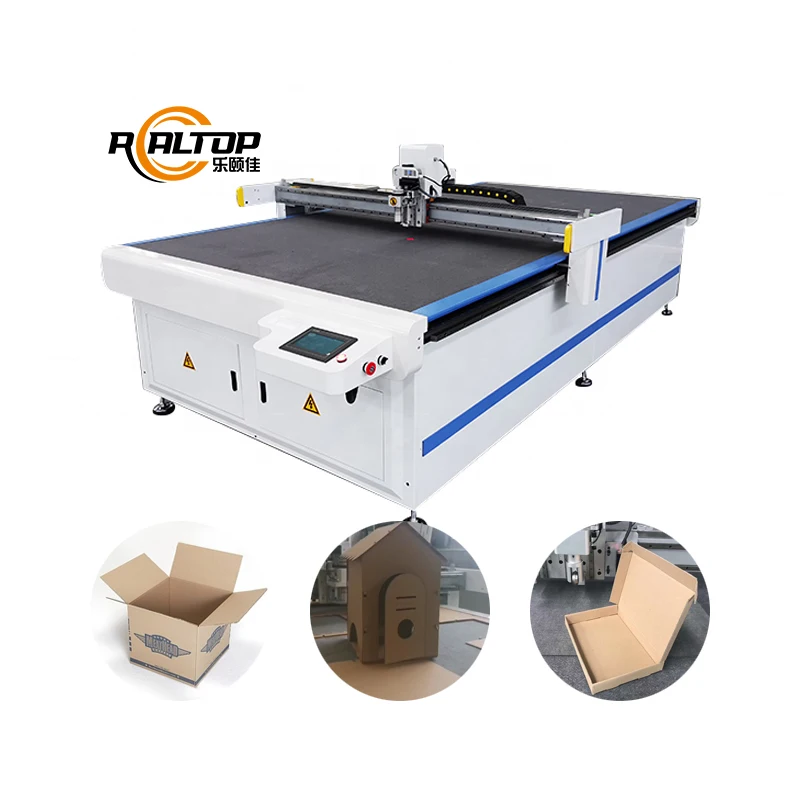
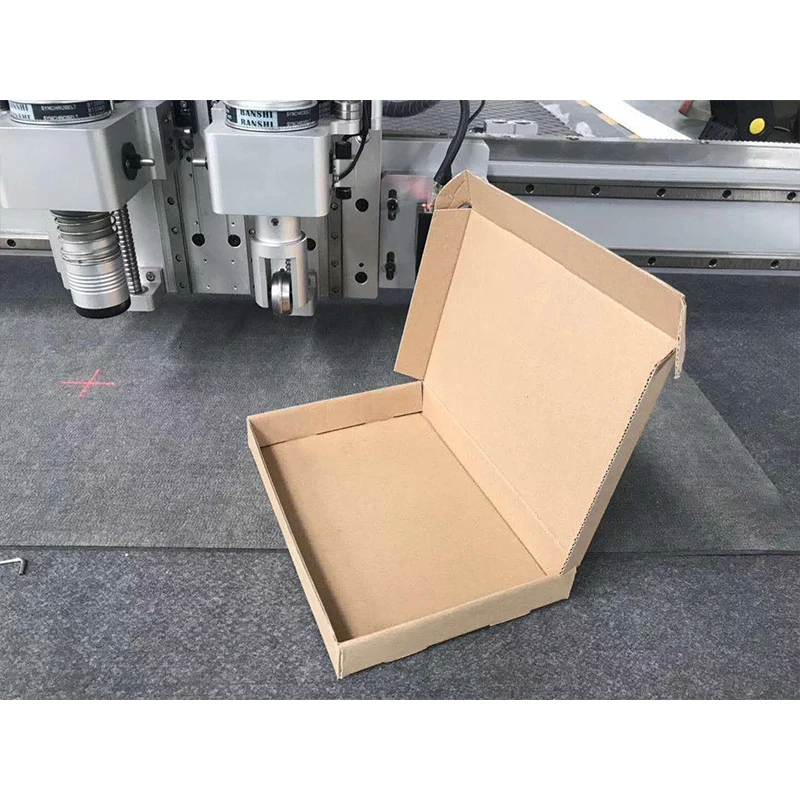
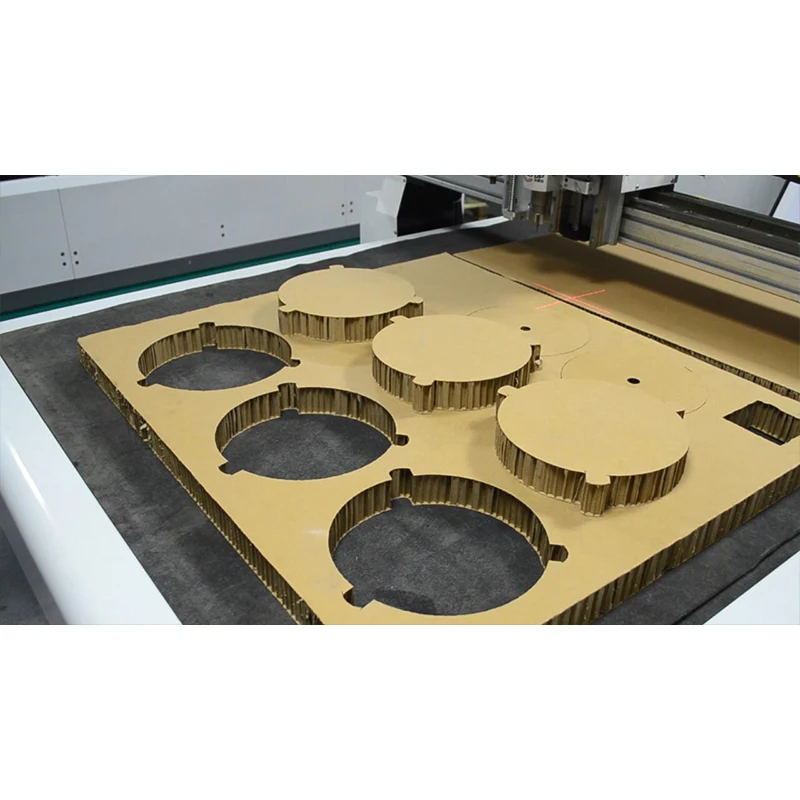
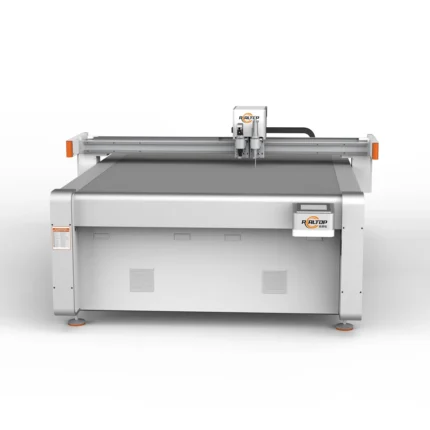
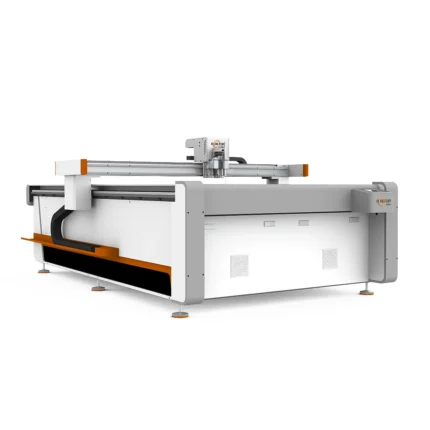
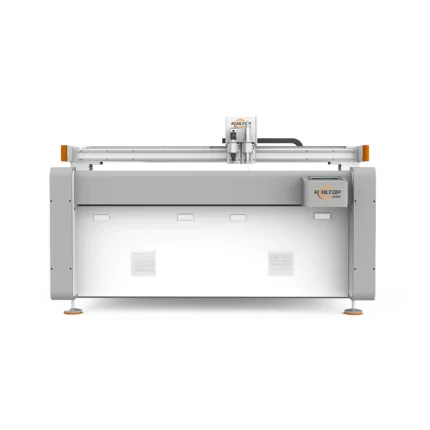
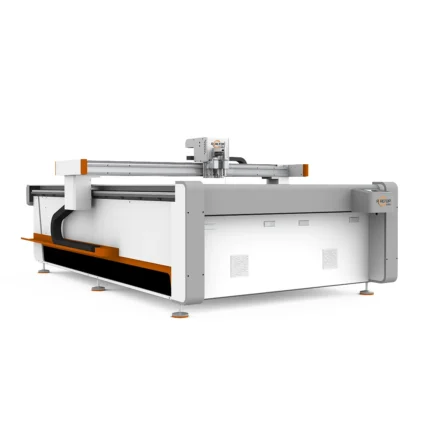
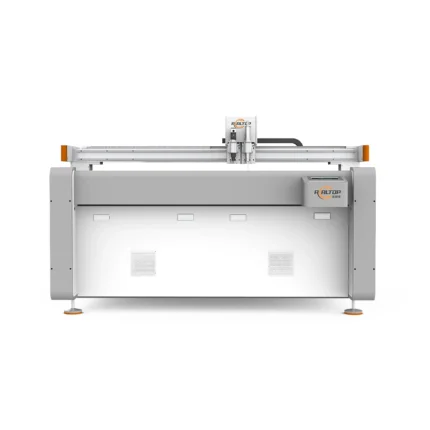
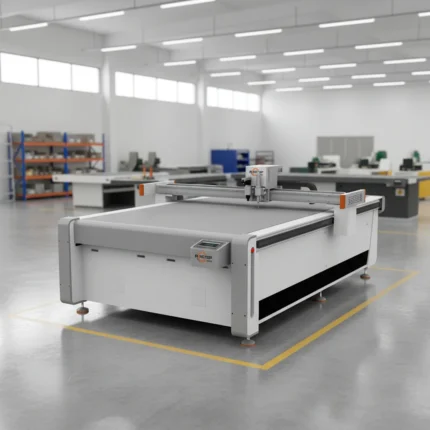
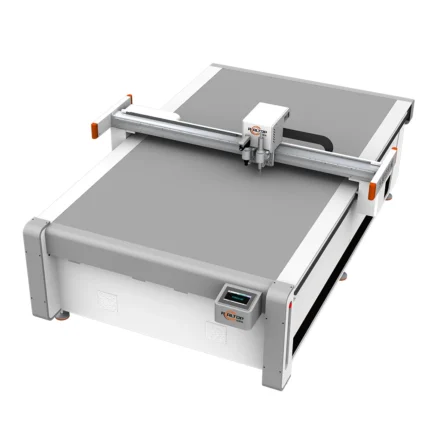
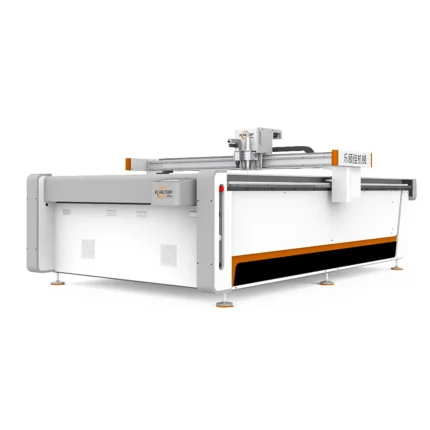
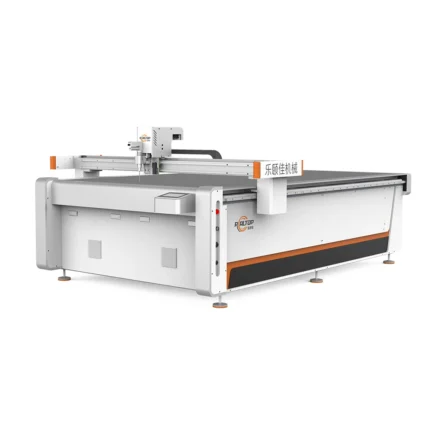
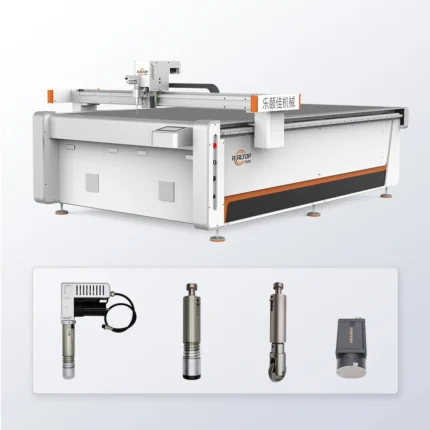
RT–R2513 CNC Oscillating Knife Cutting Machine, 2500×1300mm Working Area, 9KW, ≤18mm Cutting Thickness — engineered for packaging carton, sticker and label production with oscillating knife, creasing tool and kiss-cut knife head options.
- Aluminum honeycomb vacuum table ensures secure hold-down on corrugated board and thin vinyl during contour cutting
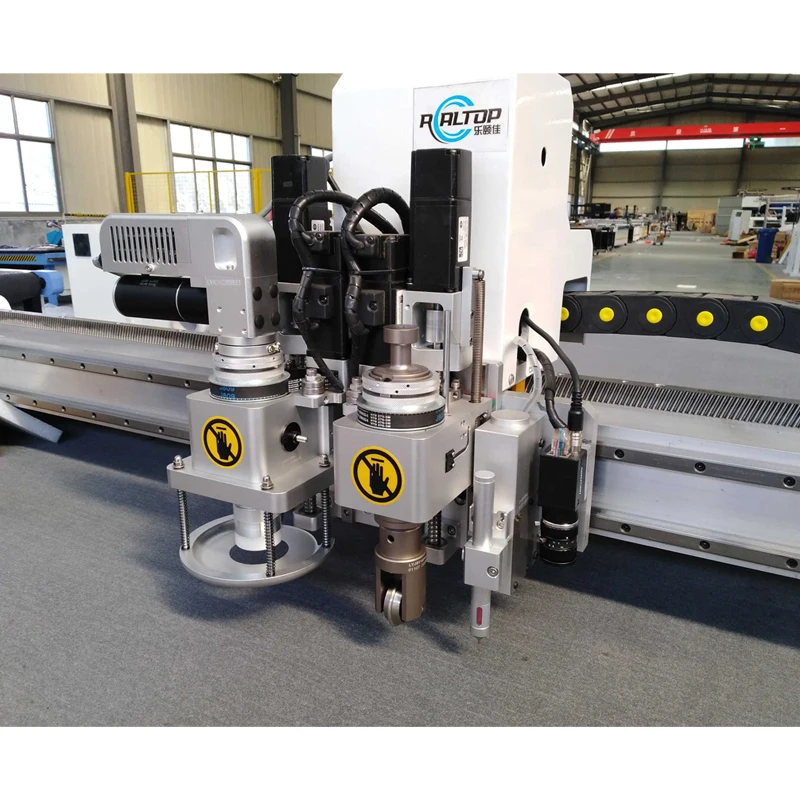
- CCD camera positioning and DXF/AI/PDF file compatibility support printed sticker and carton sample workflows
- Sample cutting on your own material before order commitment, with voltage, control language and software configuration confirmed prior to shipment
In-house design and production covering both knife and laser cutting technologies — this listing contrasts CO2 and fiber laser capabilities against oscillating knife performance, helping packaging converters match the right thermal or mechanical process to their substrate and edge-quality requirements.
Technical Specifications
| Parameter | Value |
|---|---|
| Product Type | CNC Oscillating Knife Cutting Machine |
| Working Area | 2500×1300 mm (RT–R2513) / 1600×2500 mm (RT-D2516 / RT-S2516) |
| Machine Size | 3550×1910×1400 mm (RT–R2513) / 3450×2300×1250 mm (RT-D2516 / RT-S2516) |
| Cutting Tools | Oscillating knife, creasing tool, kiss-cut knife tool, round punch |
| Rated Power | 9 kW |
| Cutting Thickness | ≤18 mm |
| Repeated Accuracy | <0.05 mm |
| Voltage | 380 V (50 Hz / 60 Hz to be confirmed) |
| Fixing Method | Vacuum system with aluminum alloy honeycomb table |
| Frame Structure | Welded thick square seamless steel, high temperature treated |
| Transmission | Rack transmission with imported straight-line square guide rail |
| Servo Motor | Dongling servo (Delta servo available as option) |
| Safety Device | Infrared sensors |
| File Formats | DXF, OLT, PDF, AI |
| Data Transfer | Ethernet port |
| Control Language | English, Russian, Italian, Chinese (special languages customizable) |
| Blade Supply | 10 pieces of oscillating blades included |
| Warranty | 1 year (excluding felt and knife blades) |
| Delivery Time | <30 working days |
| Other Options | Germany imported conveyor belt, auto feeding, Taiwan Hiwin rail, 7.5 kW vacuum pump |
Application Suitability
| Application | Material or Output |
|---|---|
| Carton and corrugated packaging sample making | Single-face, double-wall, and triple-wall corrugated board up to 18 mm |
| Folding carton and gift box prototyping | Coated paperboard, kraft board, grey board |
| Sticker and label contour cutting | Self-adhesive vinyl, PP paper, synthetic label stock |
| Signage and billboard cutting | Foam board, honeycomb paperboard, corrugated plastic |
| Business card and tag production | Laminated card stock, coated paper |
| Automotive gasket and interior trimming | Non-metal composite sheets, leather, foam |
When "Cutting Speed 5–8 Times Faster Than Laser" Needs a Closer Look
The claim depends entirely on which material, which thickness, and which laser you are comparing against. A CO2 laser cutting and engraving machine manufacturer will always quote cutting speed on a specific substrate at a specific wattage; the same applies to knife cutting.
In my years sourcing equipment across Southeast Asian packaging workshops, I have seen buyers take a headline speed figure at face value, only to discover their actual five-layer corrugated board required two passes. The knife table handled it, but not at the brochure rate. A fiber laser cutting machine for sale listing might show a similar gap between quoted and real throughput when the buyer switches from mild steel to reflective alloys [NEED_CITE: material-dependent cutting speed variations in laser and knife processes]. Always request a sample cut on your exact stock before committing to a production benchmark.
Laser Edge Sealing Versus Knife-Cut Edge Quality on Synthetics
When packaging converters run self-adhesive vinyl or PP synthetic labels, the CO2 laser process melts and seals the cut edge, preventing adhesive bleed and fraying during dispensing. This thermal seal is a distinct advantage for roll-to-roll label finishing. However, on thicker corrugated board, that same thermal process chars the flute edges, leaving soot marks that compromise print quality on the finished carton.
The oscillating knife on the RT–R2513 avoids thermal damage entirely, leaving a clean mechanical shear through fluted substrates. Buyers weighing a CO2 laser cutting and engraving machine manufacturer against a knife table must map each substrate to its preferred process rather than force one technology across the entire material library.
Extraction and Fume Management Across Both Processes
Laser cutting corrugated board and synthetic labels generates particulate smoke and volatile organic compounds that require a dedicated extraction and filtration system sized to the laser wattage and cutting bed area. Inadequate extraction leaves residue on the workpiece and degrades the lens over time [NEED_CITE: fume extraction sizing for CO2 laser cutting of paper and synthetic substrates].
Knife cutting produces no fumes, only dust and small offcuts that the vacuum table manages through the aluminum honeycomb plenum. Workshops without existing extraction infrastructure often find the knife route simpler to install, though they trade away the edge-sealing benefit that laser provides on synthetics.
How Board Thickness, Tool Selection, and Vacuum Zoning Intersect
The 18 mm maximum cutting thickness is governed by the oscillating knife stroke and the downward force the tool head can apply without deflecting the blade. Five-layer double-wall corrugated sits near this ceiling; pushing harder risks blade fracture rather than a clean through-cut. Creasing tools compress flute structure along fold lines without penetrating the liner, which is essential for folding carton sample work.
The aluminum alloy honeycomb vacuum table distributes suction across the bed, but small sticker nests and narrow carton flaps can lift if the vacuum zone is larger than the part footprint. A 7.5 kW vacuum pump option increases hold-down force for porous corrugated stock, though the real variable is how many independent zones the table provides and whether the software lets the operator activate only the zones under the current cut path. Repeated accuracy below 0.05 mm keeps kiss-cut depth consistent across a full sheet of label stock, preventing liner puncture that would jam automated dispensers downstream.
The Cost of Choosing the Wrong Process for Your Substrate Mix
A packaging converter running both corrugated board and synthetic labels on a single machine faces a trade-off that neither technology resolves alone. Sending corrugated through a CO2 laser chars the flutes and triggers smoke alarm thresholds in enclosed workshops. Running kiss-cut label stock on a knife table without adequate vacuum zoning causes small parts to shift, producing registration errors that waste entire sheets [NEED_CITE: substrate-process mismatch losses in packaging converting operations].
Buyers who skip the sample-cutting step and specify equipment on working area alone often discover these failures only after installation, when changeover scrap rates climb and rework erodes the throughput gains they expected.
Why Source Both Processes from One Manufacturer
In-house design covering both knife and laser platforms means the cutting method is matched to the material rather than forced into one technology. Tool head and table configuration are specified per substrate type and daily volume, not selected from a fixed catalogue page. CCD camera positioning for printed contour work is available where the buyer’s workflow requires registration to pre-printed marks.
Software compatibility is confirmed before the order is placed, avoiding file-format surprises at commissioning. Voltage, plug type, and control language are locked in before shipment, reducing the customs and electrical delays I have repeatedly seen stall installations in Indonesian and Vietnamese factories. Sample cutting on the buyer’s own material runs before any commitment, providing documented edge-quality and throughput data specific to that substrate.
Documentation & Verification
- Machine specification sheet listing every tool head and vacuum zone configuration confirmed for your material range.
- Electrical schematic and voltage confirmation matching your facility’s 380 V supply and local frequency.
- Sample cutting report on your actual corrugated board and label stock with measured edge quality and cycle time.
- Software licence and file format compatibility note covering DXF, OLT, PDF, and AI import validation.
- Spare parts list with oscillating blade part numbers and felt replacement intervals.
- Packing photographs documenting crate condition and tool head protection before container loading.
Installation, Commissioning & Support
- Floor loading assessment for the 3550×1910 mm footprint of the RT–R2513, confirming level tolerance for rack transmission alignment.
- Dedicated 380 V circuit sized for 9 kW continuous draw plus 7.5 kW vacuum pump startup surge.
- Machine arrives partially assembled; gantry and tool head require on-site mounting to the welded steel frame.
- First-run parameter setting includes vacuum zone mapping, oscillating knife stroke calibration, and creasing wheel pressure adjustment.
- Operator training covers file import from DXF and AI formats, tool offset entry, and nest layout for maximum sheet yield.
- Ten oscillating blades included; felt belt and blade replacement schedule documented in the maintenance manual.
What to Prepare Before Requesting a Quotation
Share the specific board grades and label materials you run, including flute profile and caliper for corrugated stock and adhesive type for label film. Provide your standard sheet size, daily volume, and whether printed contour registration is required. Confirm your facility voltage, frequency, and the control language your operators need.
Frequently Asked Questions
Q: When should a packaging converter choose laser over knife cutting?
A: Laser edge sealing suits synthetic labels and adhesive films where fraying and adhesive bleed cause downstream dispensing failures. Knife cutting avoids char marks on corrugated flutes and handles thicker board up to 18 mm without thermal damage. Map each substrate in your mix to the process that preserves its functional edge quality.
Q: How do continuous and peak laser power ratings differ in real cutting depth?
A: Peak wattage describes short-burst output, while continuous rating reflects sustained thermal delivery during a full cut path. A CO2 laser cutting and engraving machine manufacturer quoting only peak power may show cutting depths that drop during prolonged runs. Always request cut samples at continuous rating on your actual material thickness.
Q: What extraction system is needed for laser cutting corrugated board?
A: Corrugated board generates fine particulate and combustible dust when cut with a CO2 laser. Extraction must match the laser wattage and bed area, with spark arrestors and regular filter cleaning schedules. Knife cutting eliminates fume extraction entirely, leaving only dust collection from the vacuum table system.
Q: Does kiss-cut knife performance match laser contour cutting on printed labels?
A: Kiss-cut knives score the face material without penetrating the liner, which is essential for automated label dispensing. Laser cutting can achieve the same depth control but risks thermal damage to adhesive layers. A fiber laser cutting machine for sale is typically not used for this work; CO2 or knife remains the practical choice.
Q: Which details must be confirmed before the machine ships?
A: Voltage and frequency must match the destination facility to avoid transformer retrofits. Control language, plug type, and software file format compatibility are locked in at order confirmation. Sample cutting on the buyer’s material provides a documented baseline for edge quality and throughput before dispatch.


Related products
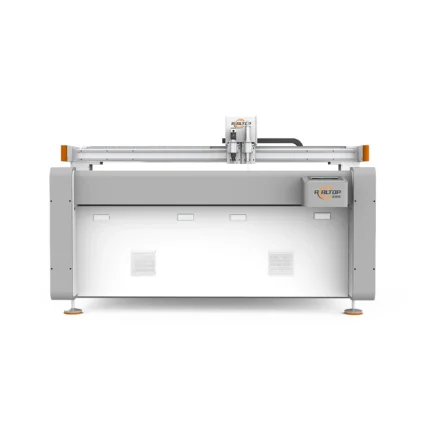
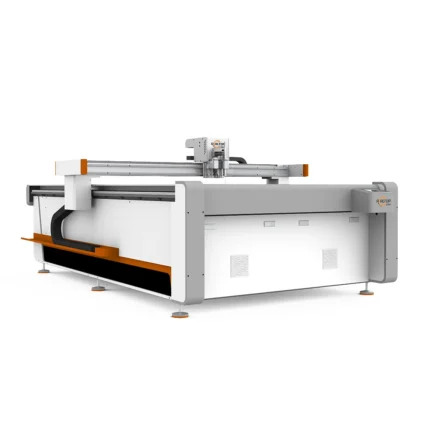
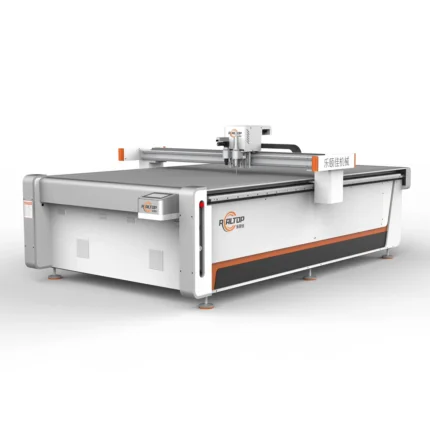
Automatic Digital Cardstock Cutter 2026 CNC Cutter
Product Introduction
Automatic Digital Cardstock Cutter 2026 is a CNC cutting machine ideal for white cardboard and kraft paper. It offers precise and efficient cutting performance, suitable for various paper processing needs in manufacturing and craft applications.Key Specifications
| Type | CNC Digital Cutting Machine |
| White Cardboard, Kraft Paper | |
| Operation | Automatic |
| Application | Paper Cutting & Processing |
CNC Flatbed Cutter 2026 Digital Corrugated Box Making Machine
Product Introduction
High-precision CNC flatbed cutter designed for efficient cardboard box production. Ideal for 2026 digital corrugated box manufacturing, offering precise cutting and reliable performance for professional packaging solutions.
Key Specifications
| Type | CNC Flatbed Cutter |
| Application | Cardboard Box Production |
| Technology | 2026 Digital System |
| Material | Corrugated Board |

CNC Vibrating Knife Cutter 2026 Custom Cartons Packaging
Product Introduction
CNC Vibrating Knife Cutter 2026 is ideal for custom cartons & packaging, offering precise cutting solutions for various materials. Engineered by a leading Chinese welding & cutting equipment manufacturer, it ensures efficiency and accuracy for packaging production needs.Key Specifications
| Model | 2026 |
| Type | CNC Vibrating Knife Cutter |
| Application | Custom Cartons & Packaging |
| Manufacturer | Chinese Leading Factory |

REALTOP 2026 Digital Industrial Cardboard Box Cutter
Product Introduction
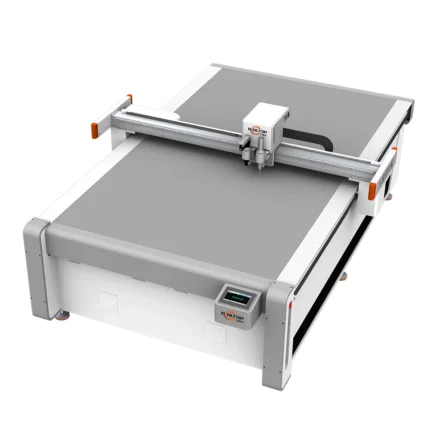
REALTOP Digital Industrial Cardboard Box Cutter Machine 2026 is a professional industrial-grade cutting equipment designed for efficient cardboard box processing, ideal for manufacturing and packaging applications.
Product Parameters
| Model | 2026 |
| Type | Digital Industrial Cardboard Box Cutter |
| Application | Cardboard Box Processing |
| Feature | Industrial-grade, Efficient Cutting |
商品评价
There are no reviews yet.