



CNC Digital Cardboard Box Cutter 1600×1200mm Automatic | Manufacturer
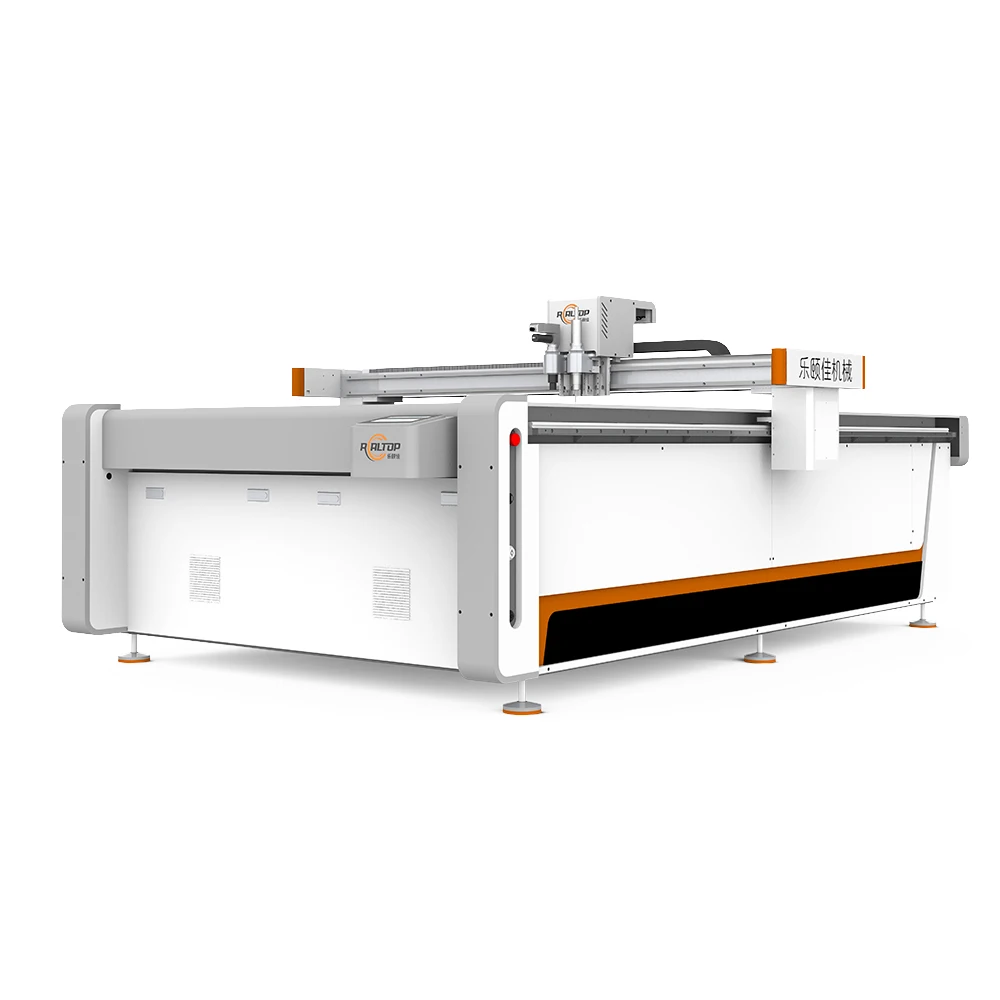
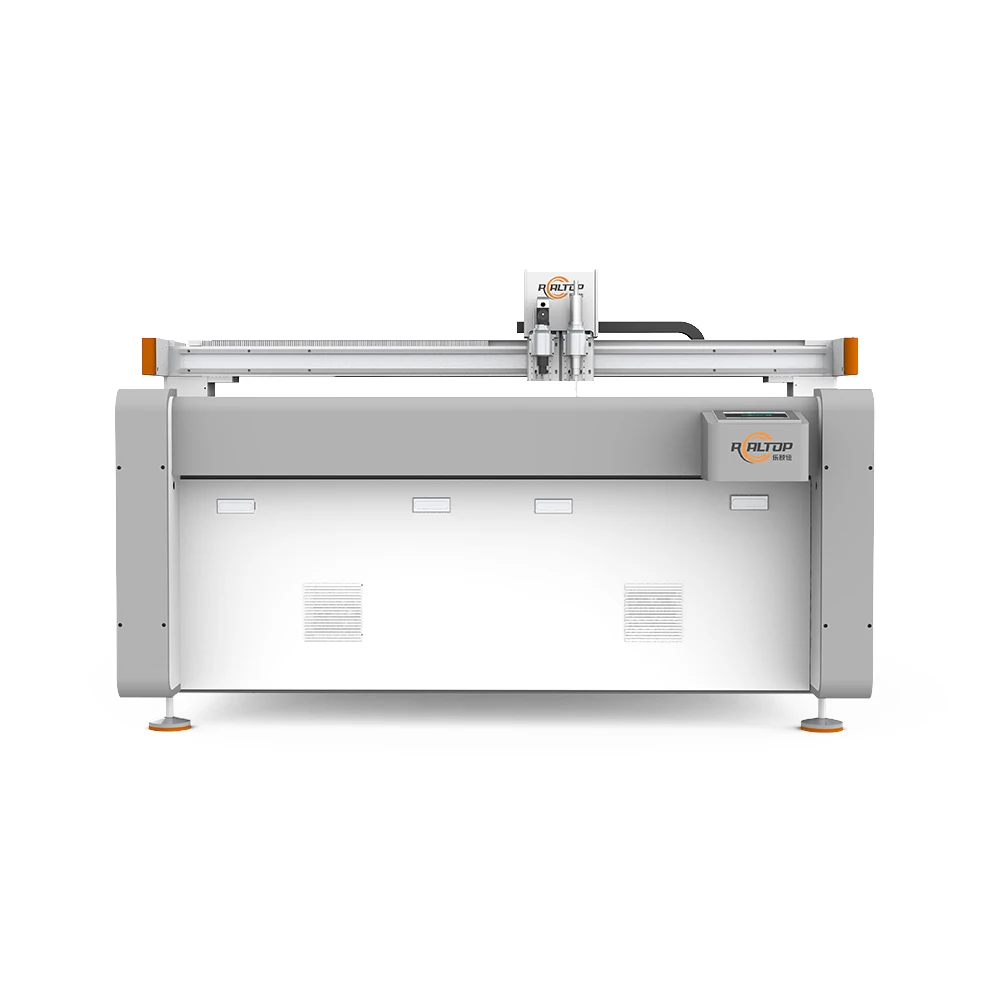
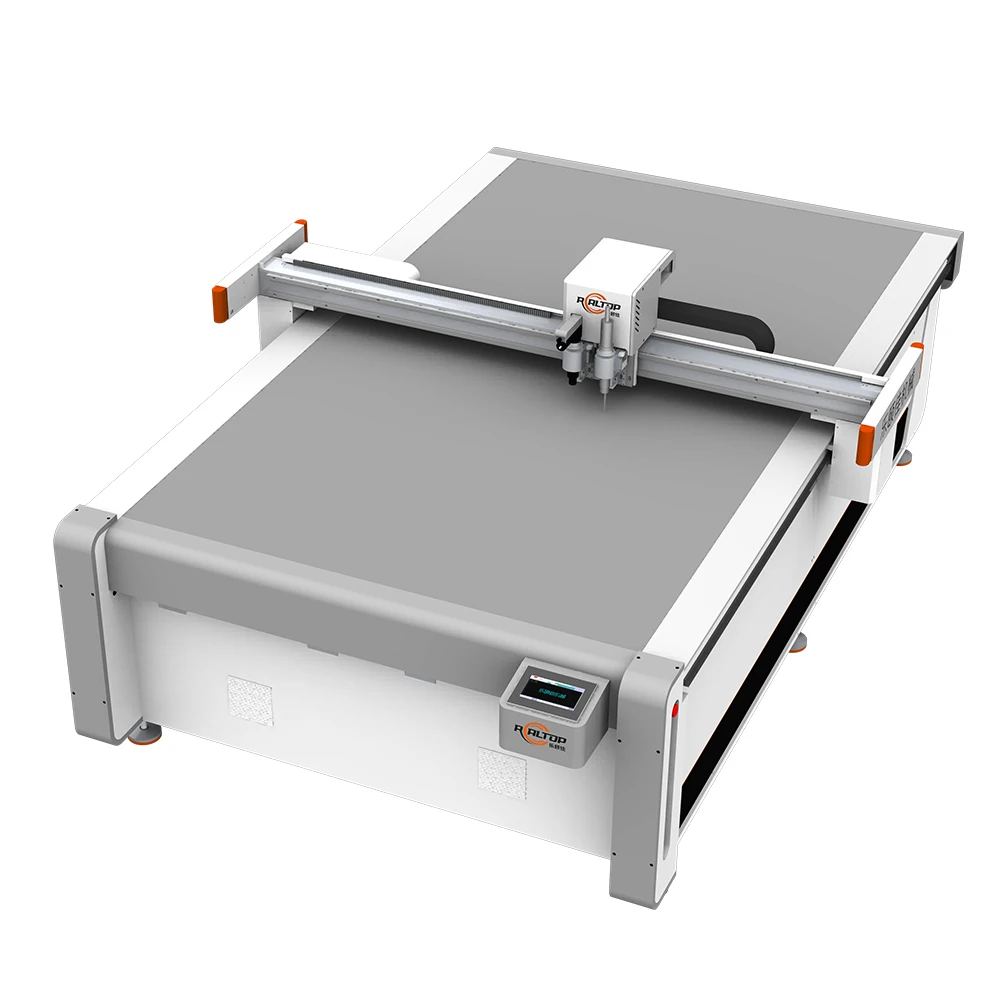
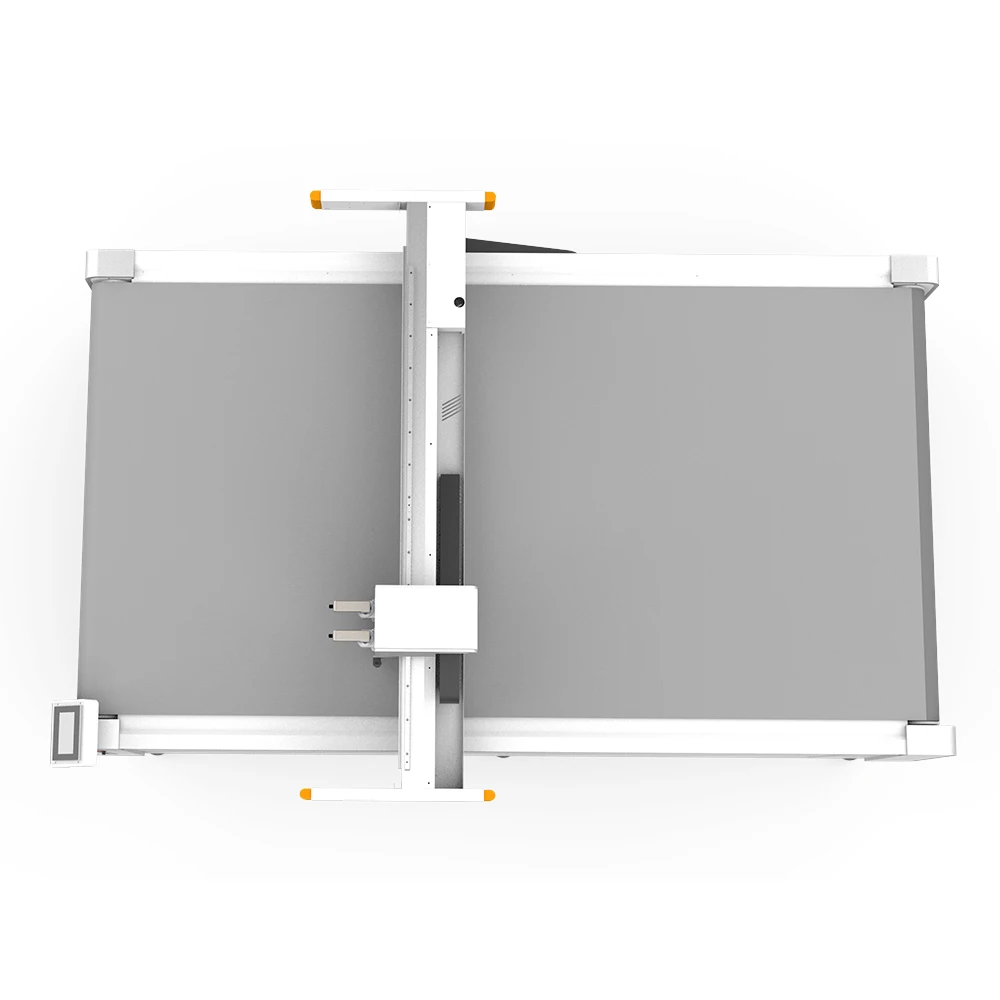
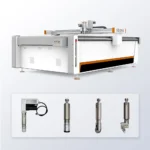
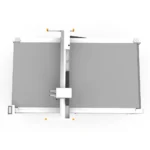
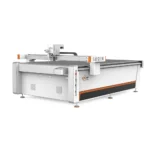
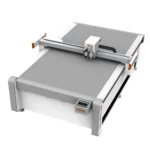
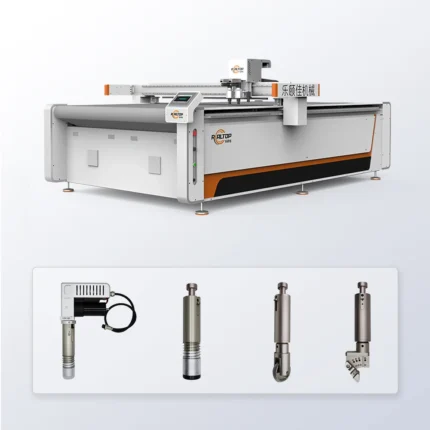
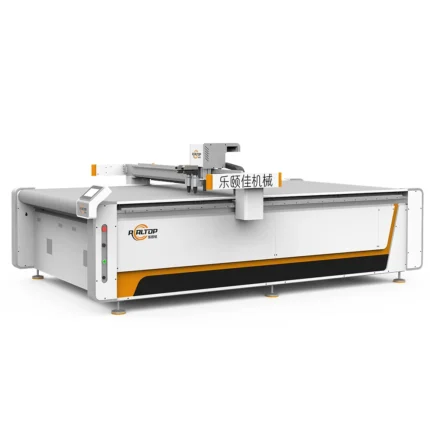
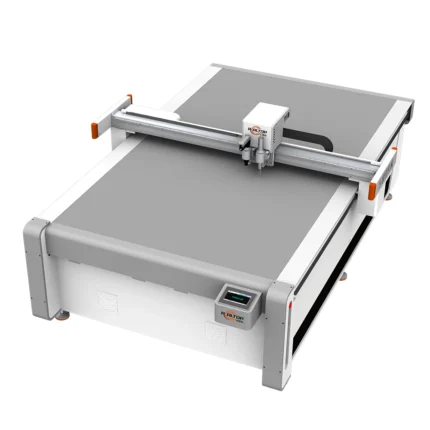
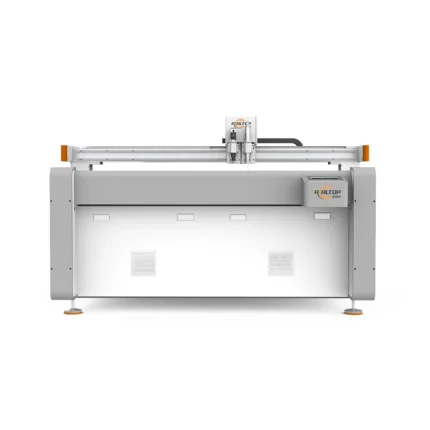
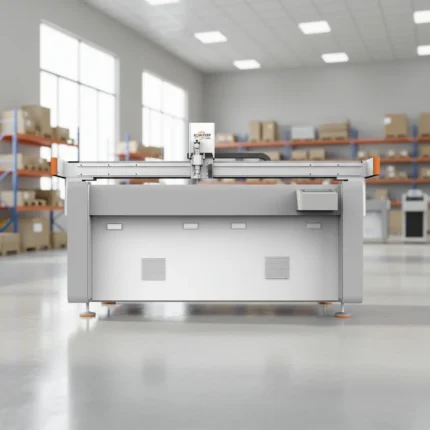
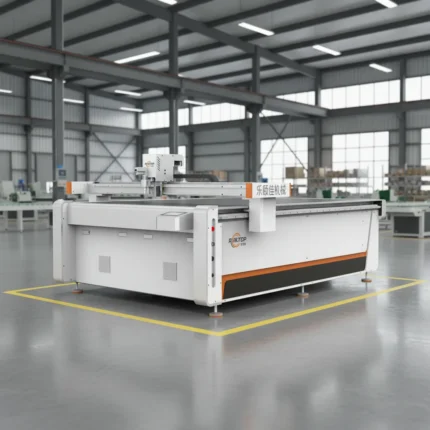
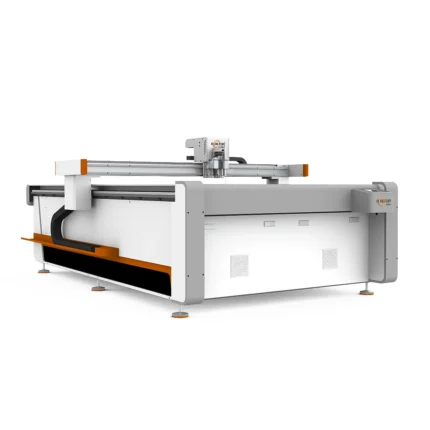
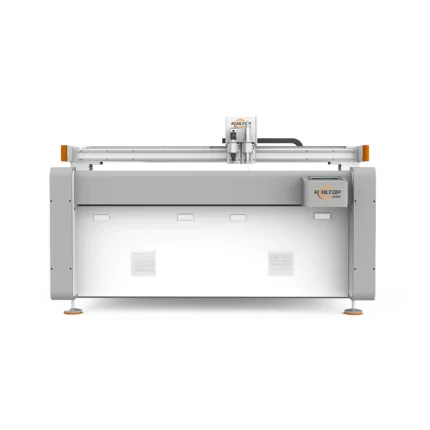
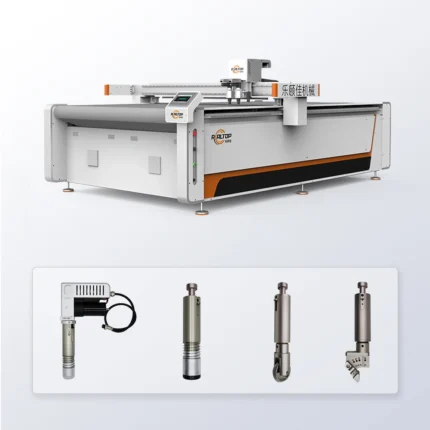
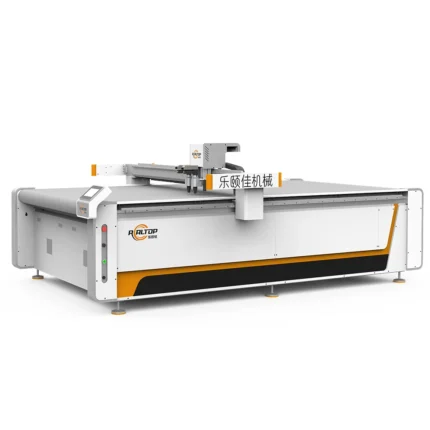
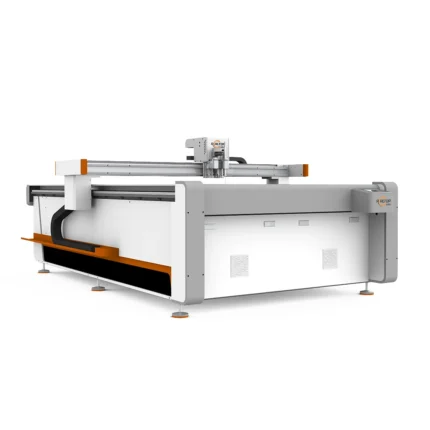
CNC Digital Cardboard Box Cutter, 1600×2500mm Working Area, Oscillating Knife — configured for packaging sample making and short-run carton production without die-cut tooling. Multi-tool head supports oscillating knife, creasing wheel and V-groove knife on one carriage, switching per job. Aluminum bellows vacuum table with 9 kW pump holds corrugated board and foam inserts flat across the full surface. ±0.1 mm cutting accuracy via servo drive suits registered die-line work on printed packaging.
Sample cutting on your own material provided before commitment, with cutting report confirming edge quality and cycle time against your specific board flute and thickness.
Material-matched cutting method — in-house design covers both knife and laser technologies, so a buyer can match the cutting method to the material rather than force one method.
Technical Specifications
| Parameter | Value |
|---|---|
| Product Type | CNC Oscillating Knife Cutting Table |
| Working Area | 1600×2500 mm |
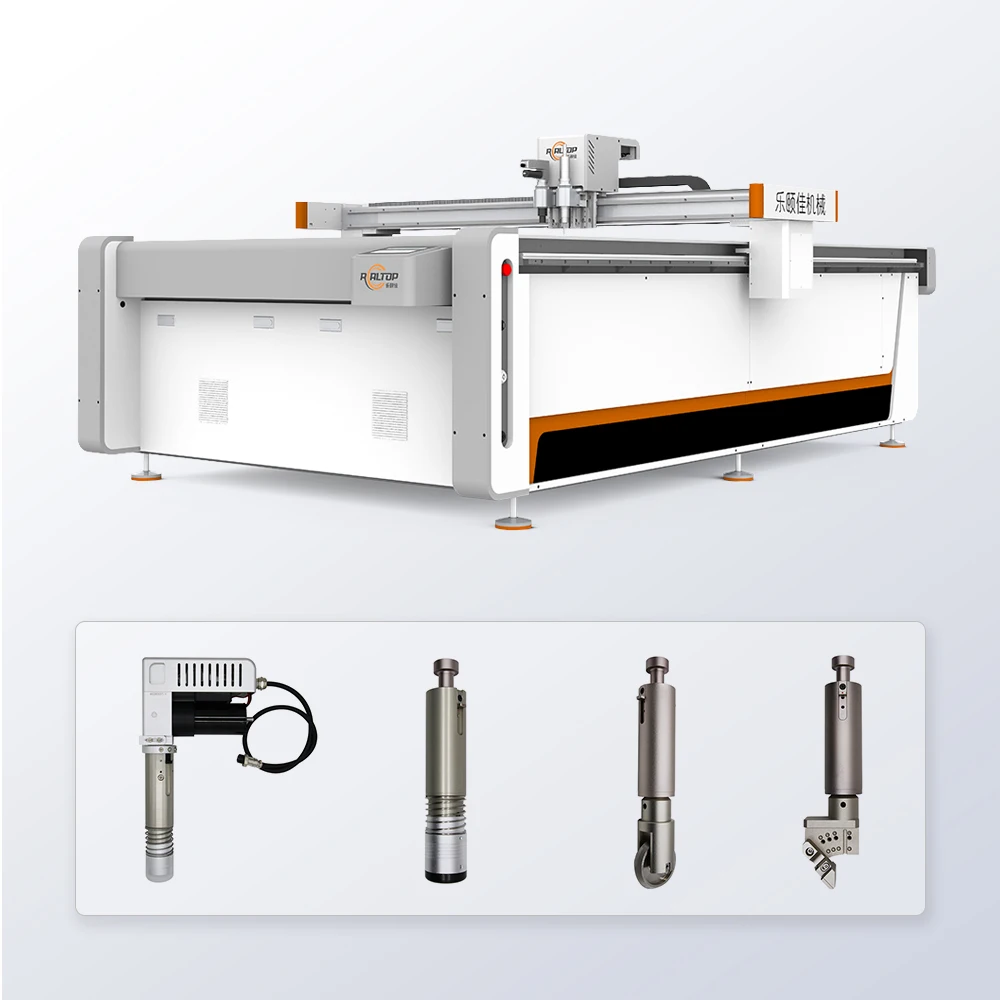
| Tool Head Options | Oscillating knife, Driven rotary knife, Creasing wheel, Kiss cutting tool, Pneumatic knife, Milling tool, V groove knife |
| Cutting Speed | 0–1500 mm/s |
| Cutting Thickness | ≤ 40 mm (basis not stated in source — confirm material type / flute profile / density) |
| Cutting Accuracy | ±0.1 mm |
| Vacuum Pump Power | 9 kW |
| Voltage Options | 110V / 220V / 380V (frequency not specified in source) |
| Control System | PLC control panel with optional display languages |
| Supported File Formats | PLT, DXF, AI, PDF |
| Safety Device | Infrared sensor and emergency stop |
| Overall Dimensions (L×W×H) | 3300×2100×1350 mm |
| Servo Motor Options | Panasonic, Delta, Dorna |
| Vacuum Table | Aluminum bellows vacuum table with full-surface adsorption |
| Language Options | English, Russian, Italian, Chinese, custom language available |
| Certification | CE (confirm certificate scope and validity) |
Application Suitability
| Application | Material or Output |
|---|---|
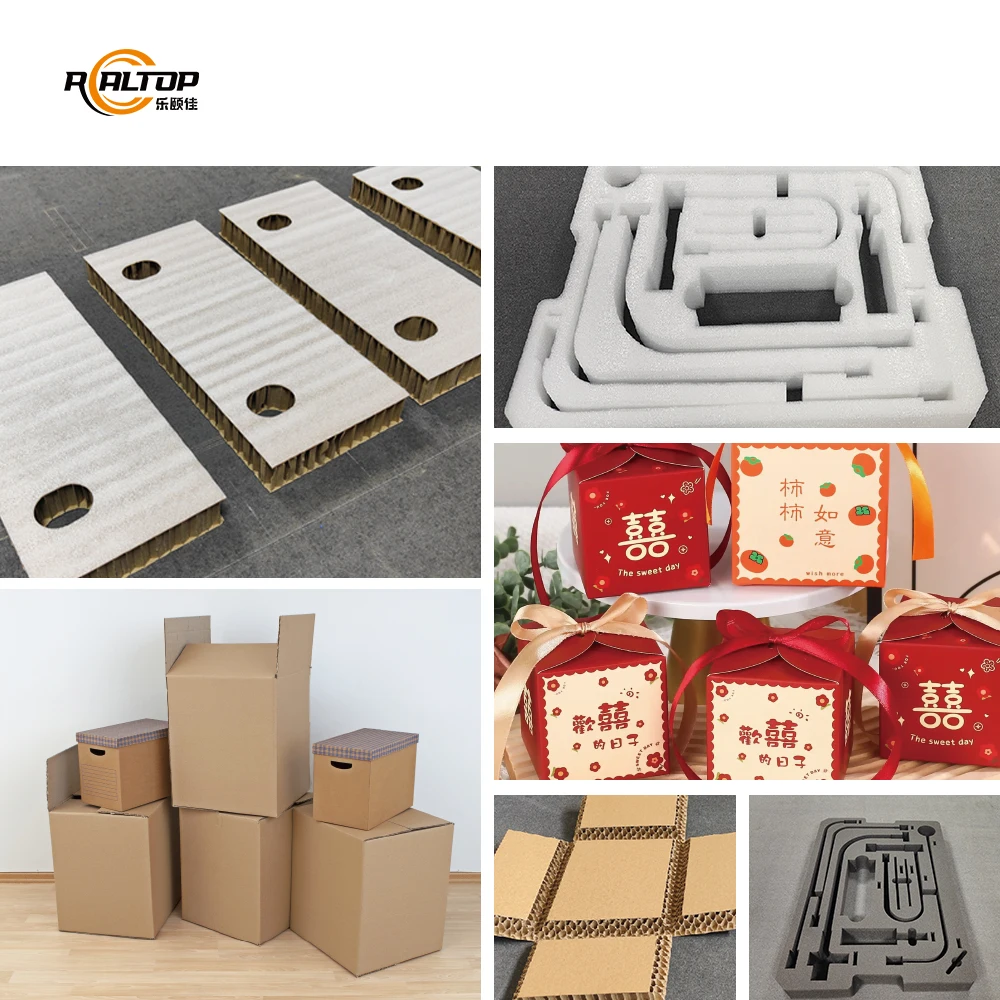
| Packaging sample making and short-run carton production | Corrugated cardboard across E-flute, B-flute, BC-flute weights and ply counts |
| Greyboard and specialty paper cutting | Greyboard, cardstock, art paper, specialty paper |
| Protective foam insert fabrication | EVA foam, EPE foam, PU foam |
| Gasket and non-metal flat cutting | Rubber mats, velvet/fleece fabric, non-woven fabric |
| Thin plastic and leather processing | PVC, PET sheets, leather and synthetic leather |
| Composite and adhesive-backed materials | Composite panels and adhesive-backed substrates |
Why "Working Area" Alone Will Not Tell You If This Machine Fits Your Material
A flatbed cutting table rated by table size can still fail on your substrate if the tool head and vacuum configuration are not matched to actual board density and flute profile.
I have seen packaging sample makers order a machine that matched their sheet dimensions perfectly, only to discover on day one that the standard drag knife could not hold an edge on high-density greyboard. The result was ragged edges, crushed flute cores, and throughput falling well below what was discussed during the quotation stage. With this CNC oscillating knife cutting table, the working area of 1600×2500 mm is only the starting point. The real question is whether the oscillating knife stroke frequency and the vacuum hold-down are sufficient for the specific corrugated weight, ply count, and board density you run daily. [NEED_CITE: corrugated flute profile standards and cutting resistance by material density]
Matching Tool Head to Substrate on a Single Carriage
The laser cutting and engraving machine buyer often focuses on wattage, but for a CNC oscillating knife cutting table the critical decision is which tool head contacts the material. This platform supports oscillating knife, driven rotary knife, creasing wheel, kiss cutting, pneumatic knife, milling, and V-groove knife heads on one carriage. A packaging shop cutting E-flute carton samples in the morning can switch to creasing wheels for fold lines on heavy greyboard by afternoon, without leaving the control panel.
What the Aluminum Bellows Vacuum Table Actually Does
Vacuum hold-down is the difference between a clean cut and a lifted edge on small carton pieces. The 9 kW pump feeding an aluminum bellows table provides full-surface adsorption across the 1600×2500 mm area. For short-run packaging work where the sheet is not fully covered with nested parts, zoning becomes important — without it, vacuum bleeds away from the actual cutting zone and lightweight cardstock shifts mid-cycle. [NEED_CITE: vacuum table zoning principles for flatbed digital cutting systems]
Reading the Specs That Matter for Packaging Work
The ±0.1 mm cutting accuracy is driven by the servo system, with options including Panasonic, Delta, and Dorna motors. On printed packaging where die-lines must register against pre-printed graphics, this tolerance window keeps crease lines aligned with printed borders. The 0–1500 mm/s cutting speed range covers both delicate art paper scoring and full-depth cuts through BC-flute corrugated board. The dedicated packaging box structure design software accepts PLT, DXF, AI, and PDF files, which means most existing CAD or structural design workflows can feed the machine without a format conversion step. Voltage is configurable across 110V, 220V, and 380V, but frequency confirmation must happen before the machine enters production — a detail easily overlooked during the quotation stage.
The Hidden Cost of Skipping the Material Test
When a buyer specifies a cutting machine based on table size and quoted speed without sending actual production material for a sample cut, the mismatch usually surfaces after the machine is installed. Wrong tool head selection produces crushed foam cores or frayed fabric edges. Insufficient vacuum zoning causes small carton blanks to lift during the final passes. Voltage and plug type confirmed verbally but not in writing leads to transformer costs or panel rewiring on arrival. These are not warranty issues — they are specification gaps. [NEED_CITE: industrial equipment commissioning failures due to specification gaps]
Why Source This Platform from REALTOP
REALTOP designs and builds both knife and laser cutting systems under one roof, so the cutting method is selected based on material behavior rather than limited to whatever technology one factory produces. Tool head and table configuration are specified per the buyer’s material and production volume before the order is locked. Sample cutting on the buyer’s own substrate is standard procedure — not an optional courtesy. Voltage, control language, and plug type are confirmed in writing before production begins. Software compatibility with the buyer’s existing file formats is verified so there are no surprises when the first DXF or AI file is loaded.
Documentation & Verification
- Machine specification sheet with confirmed tool head and table configuration for your material
- Electrical schematic with voltage and frequency locked to your facility standard
- Sample cutting report on your own corrugated flute or greyboard before commitment
- Factory test record with photographic evidence of cut quality on your substrate
- Operation manual and software licence with confirmed file format compatibility note
- Spare parts list matched to your selected servo and tool head configuration
Installation, Commissioning & Support
- Floor space of approximately 3300×2100 mm required with clearance for sheet loading on the 1600×2500 mm table
- Dedicated circuit matching confirmed voltage (110V/220V/380V) with frequency verified before power connection
- Machine arrives with vacuum pump and servo system pre-mounted; leveling and belt tension checked on-site
- First-run parameter tuning for your specific flute profile and board density during commissioning
- Operator training on tool head changeover, nesting software, and PLC language settings
- Wear parts inventory aligned to your selected oscillating knife and creasing wheel configuration
What to Prepare Before Requesting a Quotation
To get a configuration that actually fits your production, share your primary material type, typical flute profile or board density, maximum sheet thickness, and daily cut volume. Confirm your facility voltage and frequency, preferred control panel language, and whether your current design workflow uses PLT, DXF, AI, or PDF output. If possible, send sample sheets to the factory for a test cut before the order is placed.
Frequently Asked Questions
Q: How do I choose between oscillating knife, driven rotary, and pneumatic knife for my packaging material?
A: The choice depends on your board flute, thickness, and density. Oscillating knives handle most corrugated grades cleanly. Driven rotary suits continuous long cuts on thinner cardstock. Pneumatic knives manage thicker foam inserts. We run a sample cut on your actual material before recommending the final tool head configuration.
Q: What voltage and language details must be confirmed before this machine ships?
A: Voltage is available at 110V, 220V, or 380V, but frequency (50 or 60 Hz) and plug type must be confirmed in writing. Control panel language options include English, Russian, Italian, Chinese, or a custom language. Locking these details before production avoids on-site rewiring or interface confusion.
Q: Can I test my specific corrugated board on this machine before placing an order?
A: Yes. Send your production material to the factory and we run a sample cut covering edge quality, cutting depth, and cycle time. The sample cutting report documents the tool head used, vacuum setting, and results on your exact flute profile and board density.
Q: Will my existing DXF and AI design files work with the included packaging software?
A: The dedicated packaging structure design software imports PLT, DXF, AI, and PDF formats. We verify file format compatibility against your existing nesting or CAD workflow before the order is finalized, so your design files load correctly from day one.
Q: Does the vacuum table hold small carton blanks securely without material lift?
A: The aluminum bellows vacuum table with a 9 kW pump provides full-surface adsorption across the 1600×2500 mm area. For small-format carton pieces, zoning configuration must be confirmed during the specification stage to ensure vacuum concentration in the active cutting zone.


Related products
Automatic CNC Cutter Plotter 2026 Flat Bed Cardboard Cutter
Product Introduction
Automatic CNC Cutter Plotter 2026 is a flat bed cardboard cutting machine designed for precise and efficient cutting tasks. Ideal for various cardboard processing needs, it combines advanced CNC technology to deliver accurate results, suitable for manufacturing and packaging applications.Product Parameters
| Type | Automatic CNC Cutter Plotter |
| Model | 2026 |
| Design | Flat Bed |
| Application | Cardboard Cutting |
Automatic Die-less Cardboard Vibrating Knife Cutter 2026
Product Introduction
Automatic Die-less Cardboard Vibrating Knife Cutter 2026, a precision cutting solution for cardboard materials, featuring advanced die-less technology for efficient and flexible cutting operations. Ideal for various cardboard processing needs in manufacturing and packaging industries.Key Specifications
| Model | 2026 |
| Type | Automatic Die-less Cutter |
| Cutting Tool | Vibrating Knife |
| Material | Cardboard |
CNC Flatbed Cutter 2026 Digital Corrugated Box Making Machine
Product Introduction
High-precision CNC flatbed cutter designed for efficient cardboard box production. Ideal for 2026 digital corrugated box manufacturing, offering precise cutting and reliable performance for professional packaging solutions.
Key Specifications
| Type | CNC Flatbed Cutter |
| Application | Cardboard Box Production |
| Technology | 2026 Digital System |
| Material | Corrugated Board |
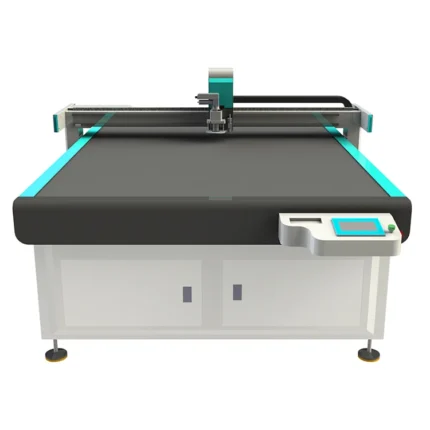
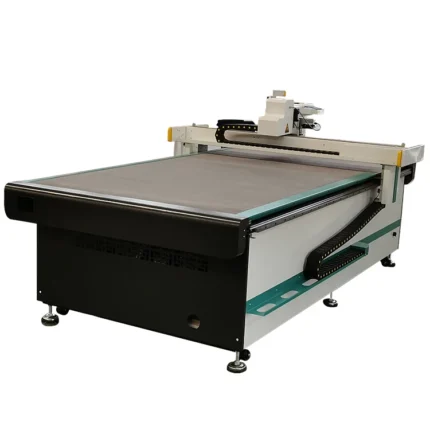
CNC Oscillating Knife Cutting Machine 2026 for Corrugated Cardboard & Honeycomb
Product Introduction
2026 CNC Oscillating Knife Cutting Machine, ideal for corrugated cardboard and honeycomb materials, offering precise and efficient cutting solutions for your production needs.Specifications
| Model | 2026 |
| Type | CNC Oscillating Knife Cutting Machine |
| Applicable Materials | Corrugated Cardboard, Honeycomb |
| Cutting Method | Oscillating Knife |
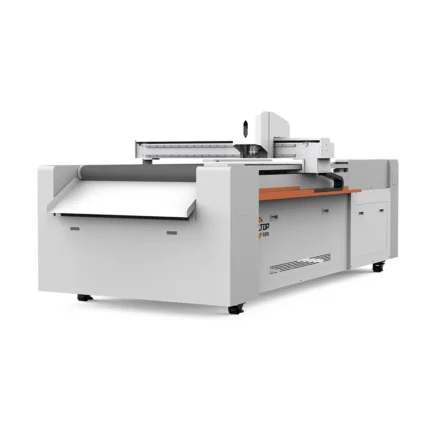
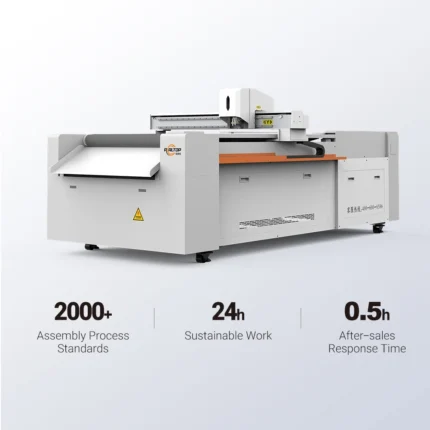

Realtop CNC Carton Box Cutter 2026 CCD Camera Honeycomb Cutting
Product Introduction
Realtop CNC Carton Box Cutter 2026 is a professional cutting solution featuring CCD Camera and Honeycomb Cutting technology, ideal for precise carton box processing with efficient performance.Product Parameters
| Model | Realtop CNC Carton Box Cutter 2026 |
| Vision System | CCD Camera |
| Honeycomb Cutting |
商品评价
There are no reviews yet.