


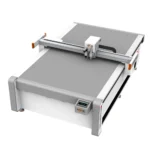

Corrugated Box Cutter with Oscillating Knife – Manufacturer
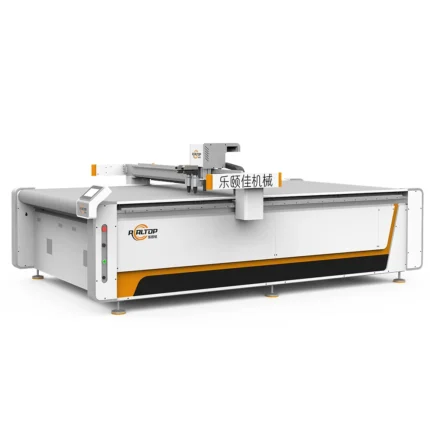
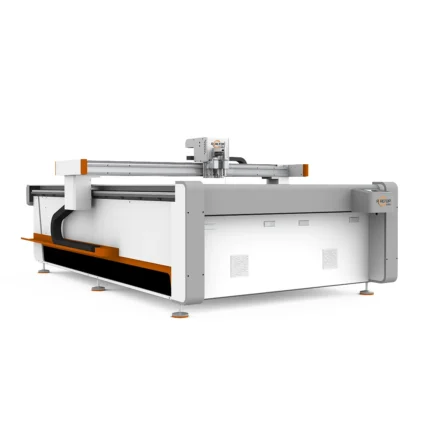
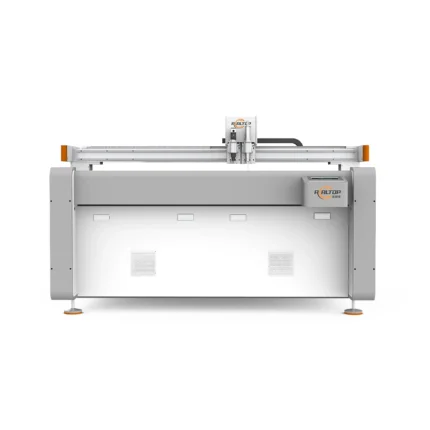
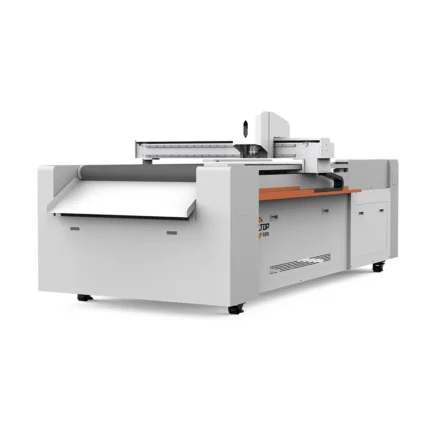
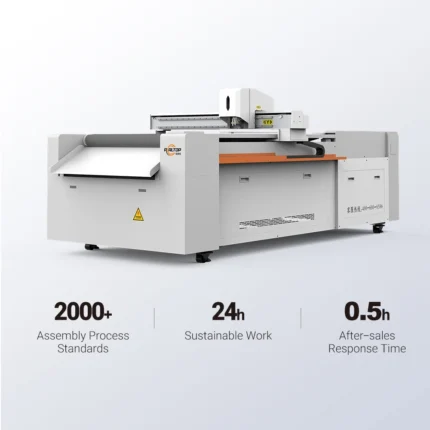
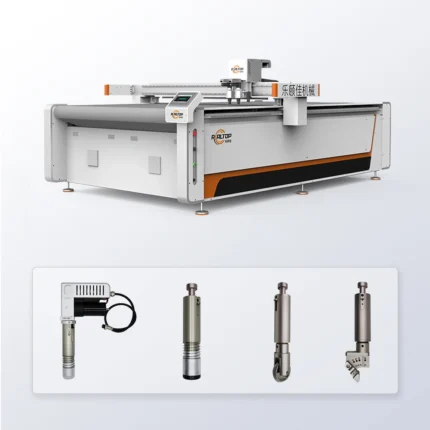
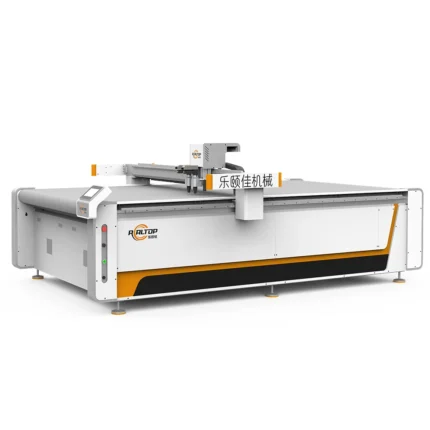
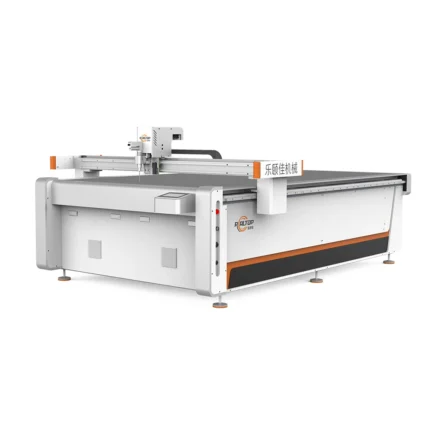
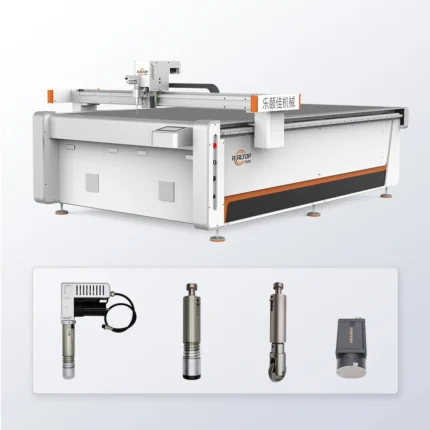
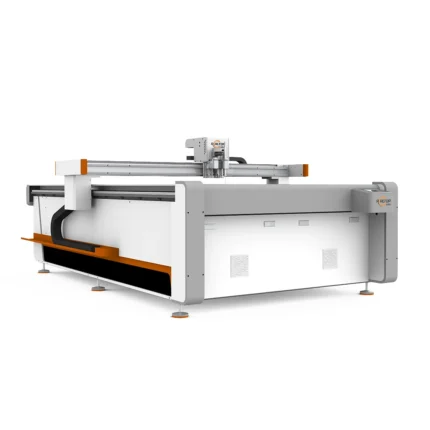
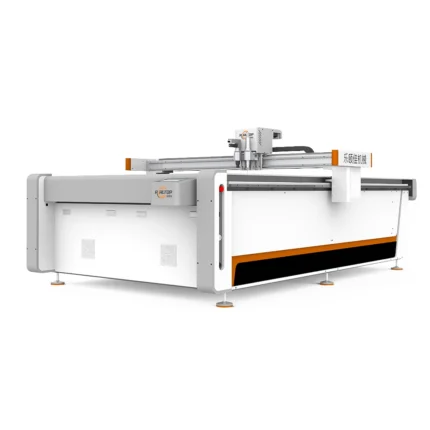
CNC Oscillating Knife Cutting Machine for Packaging, 1600×2500mm Working Area, ±0.1mm Accuracy, ≤40mm Cutting Thickness — configured with oscillating knife, creasing wheel, V-groove and kiss cutting tools on a single table. Aluminum bellows vacuum table holds corrugated sheets flat during cold-cutting, avoiding thermal edge damage common with laser on cardboard and foam. PLC control supports multiple languages and accepts PLT, DXF, AI, PDF files.
- Sample cutting on your own corrugated or foam material before order commitment
- Tool head and table configuration matched to your specific material and ply count
- Voltage, control language and software compatibility confirmed before shipment
Cold-cutting precision — Oscillating knife technology handles corrugated, foam and composite packaging materials that burn or discolor under thermal laser processes, delivering clean edges without sealed kerfs.
Technical Specifications
| Parameter | Value |
|---|---|
| Product Type | CNC Oscillating Knife Cutting Machine for Packaging |
| Working Area | 1600 x 2500 mm |
| Tool Head Options | Oscillating knife, driven rotary knife, creasing wheel, kiss cutting tool, pneumatic knife, milling tool, V-groove knife |
| Cutting Speed | 0–1500 mm/s (basis to be confirmed based on material density and ply) |
| Maximum Cutting Thickness | 40 mm |
| Cutting Accuracy | ±0.1 mm |
| Vacuum Table Type | Aluminum bellows vacuum table |
| Vacuum Pump | 9 kW |
| Voltage Options | 110V / 220V / 380V |
| Control System | PLC control panel with intuitive interface |
| Language Options | English, Russian, Italian, Chinese, custom languages |
| Accepted File Formats | PLT, DXF, AI, PDF |
| Machine Dimensions | 3300 x 2100 x 1350 mm |
| Safety Devices | Infrared sensor device and emergency stop device |
| Assembly State | Fully assembled |
Application Suitability
| Application | Material or Output |
|---|---|
| Packaging sample making and carton prototyping | Corrugated cardboard (E-flute, B-flute, BC-flute), greyboard, cardstock, art paper |
| Custom short-run box production | Specialty paper, adhesive-backed materials, synthetic leather |
| Foam insert and protective packaging fabrication | EVA foam, EPE foam, PU foam |
| Gasket and seal cutting for industrial packaging | Rubber mats, PTFE, thin plastic sheets (PVC, PET) |
| Interior trim and display packaging | Velvet, fleece fabric, non-woven fabric, composite materials |
Why Voltage Confirmation Beats Price Negotiation Every Time
A machine specified on working area alone can become dead weight the moment it is plugged into the wrong electrical grid.
I once shipped a vibrating knife cutter configured for 380V/50Hz to a European packaging shop running 400V/60Hz. The machine tripped its main breaker on first power-up. By the time a replacement frequency converter arrived three weeks later, the buyer had missed their entire Christmas packaging run. That laser cutting and engraving machine order taught me that electrical parameters deserve a video call with the nameplate, not just a checkbox on a proforma invoice [NEED_CITE: voltage and frequency standards by export market]. When sourcing a laser cutting and engraving machine or any CNC cutting table for export, the voltage, frequency, and plug type must be confirmed against the facility’s actual supply before production begins.
Thermal Versus Mechanical Cutting for Packaging Substrates
Laser cutting excels at sealing synthetic edges on acrylic and textiles, but corrugated cardboard and closed-cell foam respond poorly to concentrated heat. The oscillating knife approach removes material mechanically at high frequency, leaving the flute structure intact and the cut edge free of carbonization. This matters for packaging sample makers who present prototypes to brand clients — a burned edge on a luxury carton signals poor process control, not craftsmanship.
Multi-Tool Workflow on a Single Table Surface
The real production advantage is tool head versatility on one flatbed. A packaging operator can run an oscillating knife for the outer contour, switch to a creasing wheel for fold lines, then use a V-groove knife for rigid box corners — all within the same digital file and without moving the sheet. This eliminates the registration errors that accumulate when a job passes through multiple machines, and it removes the lead time and storage cost associated with physical die-cut molds [NEED_CITE: die-cut mold lead times in short-run packaging].
How Core Parameters Translate to the Shop Floor
The 1600 x 2500 mm working area accommodates standard full-size corrugated sheets, reducing the need to pre-slit stock before loading. Cutting accuracy of ±0.1 mm ensures that crease lines align with cut contours across long production runs, which is essential when folded carton panels must register within tight assembly tolerances. The 9 kW vacuum pump paired with an aluminum bellows table provides sufficient hold-down force across the full bed, though operators cutting many small packaging components should verify vacuum zone configuration to prevent part lift at 1500 mm/s traverse speeds. Accepted file formats including PLT, DXF, AI, and PDF mean the machine integrates with standard packaging CAD outputs without requiring an additional file conversion step.
The Cost of Choosing the Wrong Configuration
Specify a single oscillating knife head when the job requires creasing and kiss-cutting, and the operator ends up running multiple passes or hand-finishing fold lines — negating the digital workflow advantage entirely. Undersized vacuum zoning causes small carton blanks to shift mid-cut, producing scrap that only reveals itself at the folding and gluing stage. Skipping voltage confirmation before shipment turns a production asset into a warehouse fixture until the correct transformer arrives [NEED_CITE: industrial equipment commissioning delays from electrical mismatch]. These are not theoretical failures; they repeat across packaging shops that treat the machine specification as a commodity checklist.
Why Buyers Consolidate Here
In-house design covers both knife and laser cutting technologies, so a packaging manufacturer can match the cutting method to the material rather than forcing one process across incompatible substrates. Tool head and table configuration are specified per material and production volume, not sold as a one-size-fits-all package. Software compatibility with the buyer’s existing CAD workflow is confirmed before the order is released to production. Voltage, control language, and documentation are customized to the destination market. Sample cutting on the buyer’s own corrugated or foam stock is conducted before commitment, providing a physical benchmark rather than a catalog promise.
Documentation & Verification
- Machine specification sheet listing confirmed tool heads and vacuum zone layout
- Electrical schematic and voltage confirmation matched to destination facility supply
- Sample cutting report produced on buyer’s own corrugated or foam material
- Tool head and table configuration list tied to specified material and ply count
- Software licence and file format compatibility note for PLT, DXF, AI, PDF workflows
Installation, Commissioning & Support
- Fully assembled delivery requires adequate workshop door clearance for 3300 mm machine length
- Dedicated electrical circuit matching confirmed 110V, 220V, or 380V supply before energizing
- Vacuum pump commissioning includes zone-by-zone suction test on buyer’s typical sheet stock
- PLC control panel configured with operator’s preferred display language during first power-up
- Tool head calibration and cutting depth setting performed on buyer’s packaging material samples
- Spare parts list provided covering oscillating knife blades, creasing wheels, and vacuum table seals
Preparing a Technical Inquiry
Share the specific corrugated flute type, foam density, or composite layup you intend to cut, along with the maximum sheet size and thickness range your production runs demand. Confirm the facility voltage and frequency at the installation point, and indicate which control language your operators require. If you have existing CAD files in PLT, DXF, AI, or PDF format, note the nesting software currently in use so file compatibility is verified before quotation.
Frequently Asked Questions
Q: How does oscillating knife cutting compare to laser cutting for corrugated and foam packaging materials?
A: Laser cutting produces heat that can scorch corrugated flutes and melt closed-cell foam, leaving discolored or fused edges. Oscillating knife cutting removes material mechanically, preserving flute structure and delivering clean edges suitable for client-facing packaging prototypes. The choice depends on substrate composition and whether edge sealing is required or detrimental.
Q: What tool head configuration is recommended for my specific packaging material and thickness?
A: Corrugated cardboard up to BC-flute typically uses an oscillating knife for cutting and a creasing wheel for fold lines. Foam inserts above 20 mm may require a pneumatic knife for clean penetration. The correct combination depends on material density, ply count, and whether kiss-cutting or through-cutting is needed for the job.
Q: How is the vacuum table zoned for small packaging parts to prevent lift during cutting?
A: The aluminum bellows vacuum table can be divided into zones so that suction concentrates under the active cutting area. For nests containing many small carton blanks, zone configuration must be specified before production so that vacuum distribution holds each part firmly at full cutting speed without requiring a full-bed overlay.
Q: What voltage and control language options are confirmed before shipment?
A: The machine supports 110V, 220V, and 380V configurations, with the PLC control panel available in English, Russian, Italian, Chinese, and custom languages. The exact voltage, frequency, plug type, and display language are confirmed against the buyer’s facility specifications and documented in the electrical schematic before dispatch.
Q: Can I send my material for sample cutting before placing the order?
A: Yes. Buyers are encouraged to send representative corrugated, foam, or composite material for sample cutting on the actual machine configuration being quoted. A sample cutting report documenting edge quality, cutting speed, and tool head performance is provided so the buyer can evaluate results physically before committing to production.


Related products
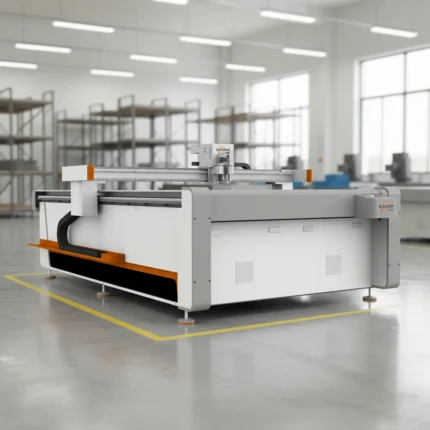
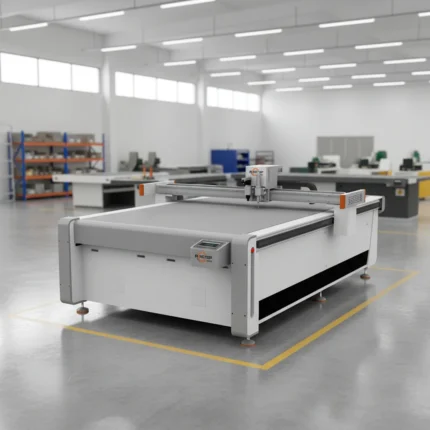
2026 Digital Flatbed Cutting Plotter Auto Corrugated Box Die Cutter
Product Introduction
Digital Flatbed Cutting Plotter 2026, ideal for auto corrugated box die cutting, offering precision and efficiency for professional packaging production.Specifications
| Type | Digital Flatbed Cutting Plotter |
| Model | 2026 |
| Application | Auto Corrugated Box Die Cutting |
| Function | Precision Cutting & Plotting |
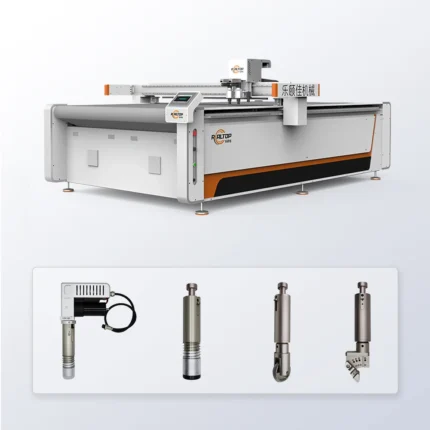

Realtop CNC Carton Box Cutter 2026 CCD Camera Honeycomb Cutting
Product Introduction
Realtop CNC Carton Box Cutter 2026 is a professional cutting solution featuring CCD Camera and Honeycomb Cutting technology, ideal for precise carton box processing with efficient performance.Product Parameters
| Model | Realtop CNC Carton Box Cutter 2026 |
| Vision System | CCD Camera |
| Honeycomb Cutting |

商品评价
There are no reviews yet.