

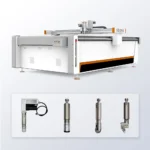
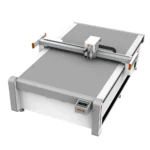
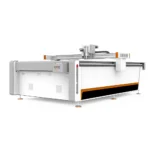

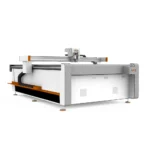
Oscillating Knife Cutter for Corrugated Cardboard – Specifications
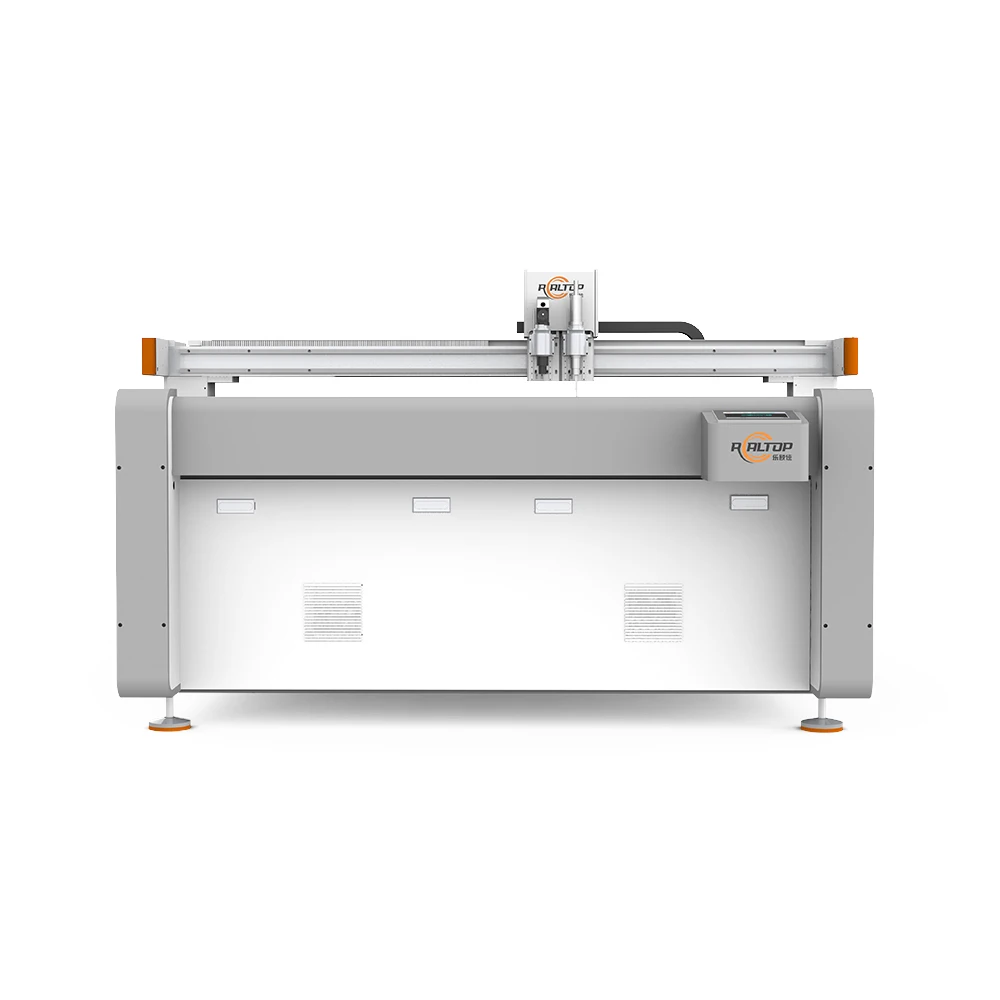
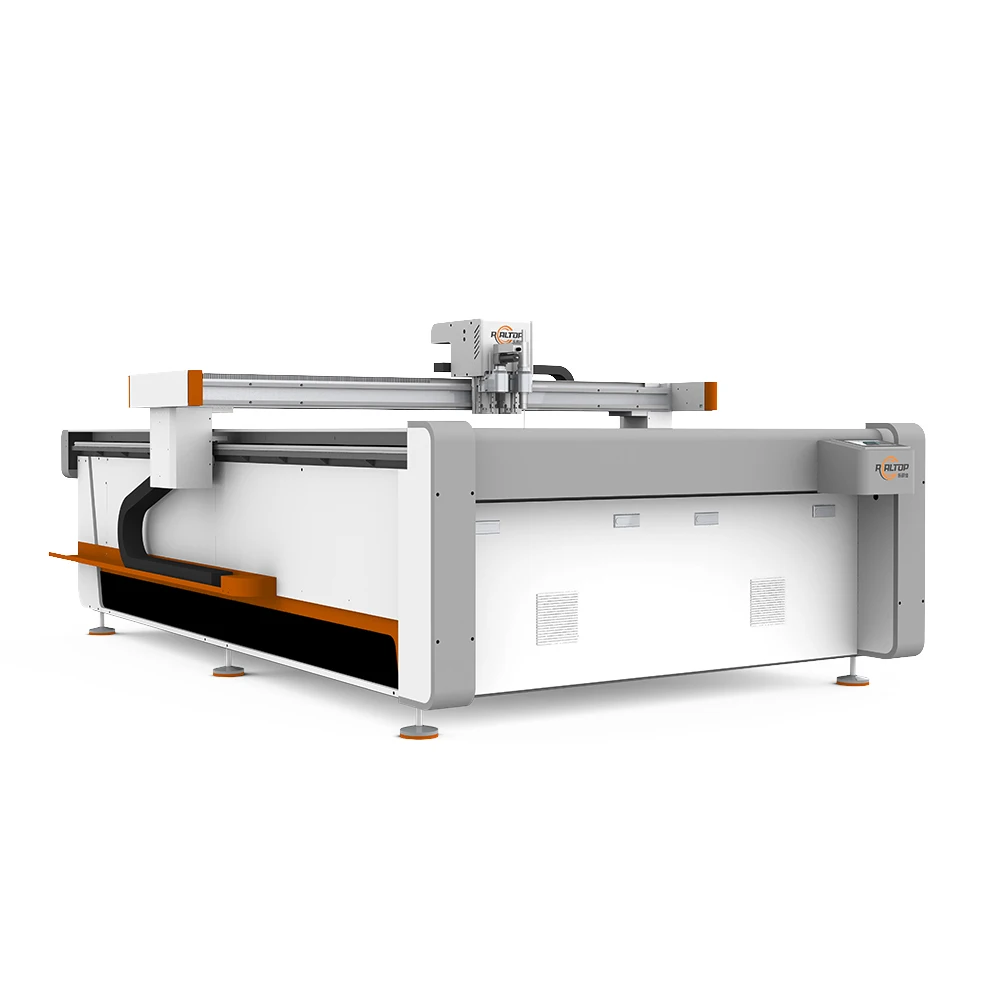
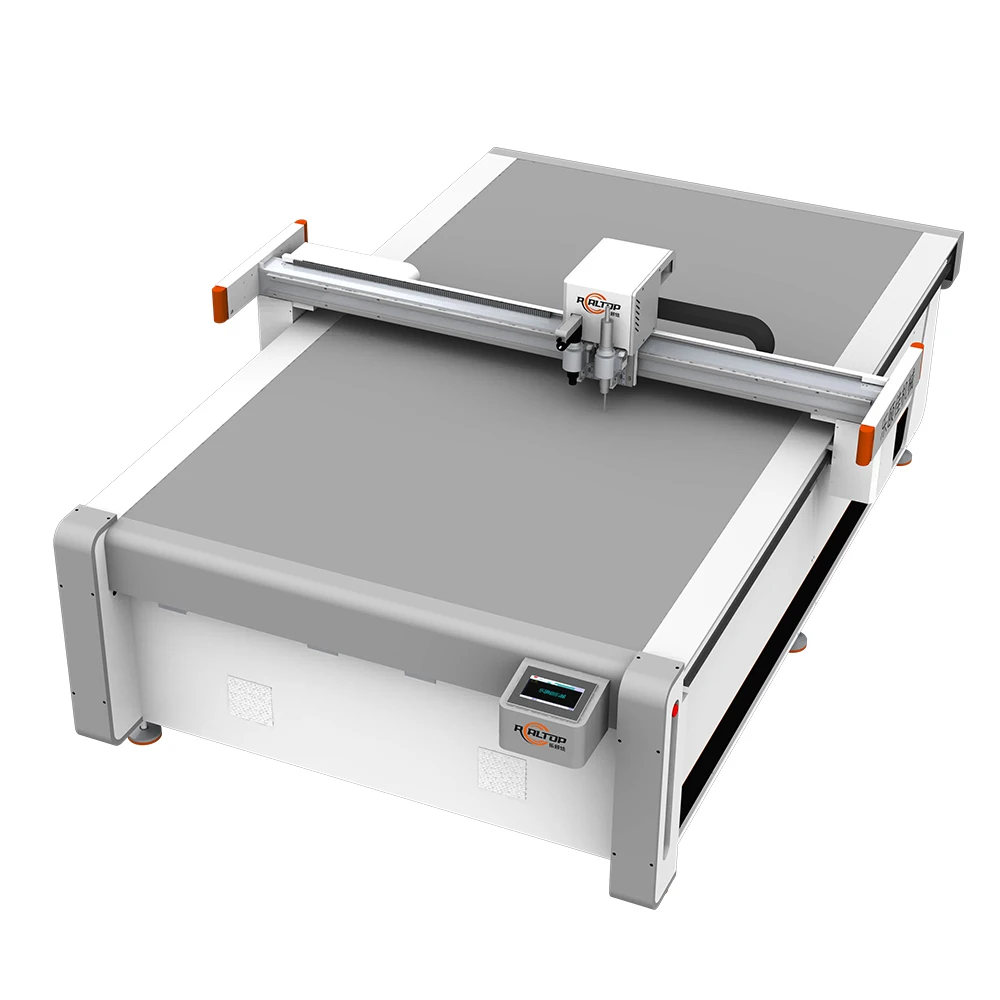
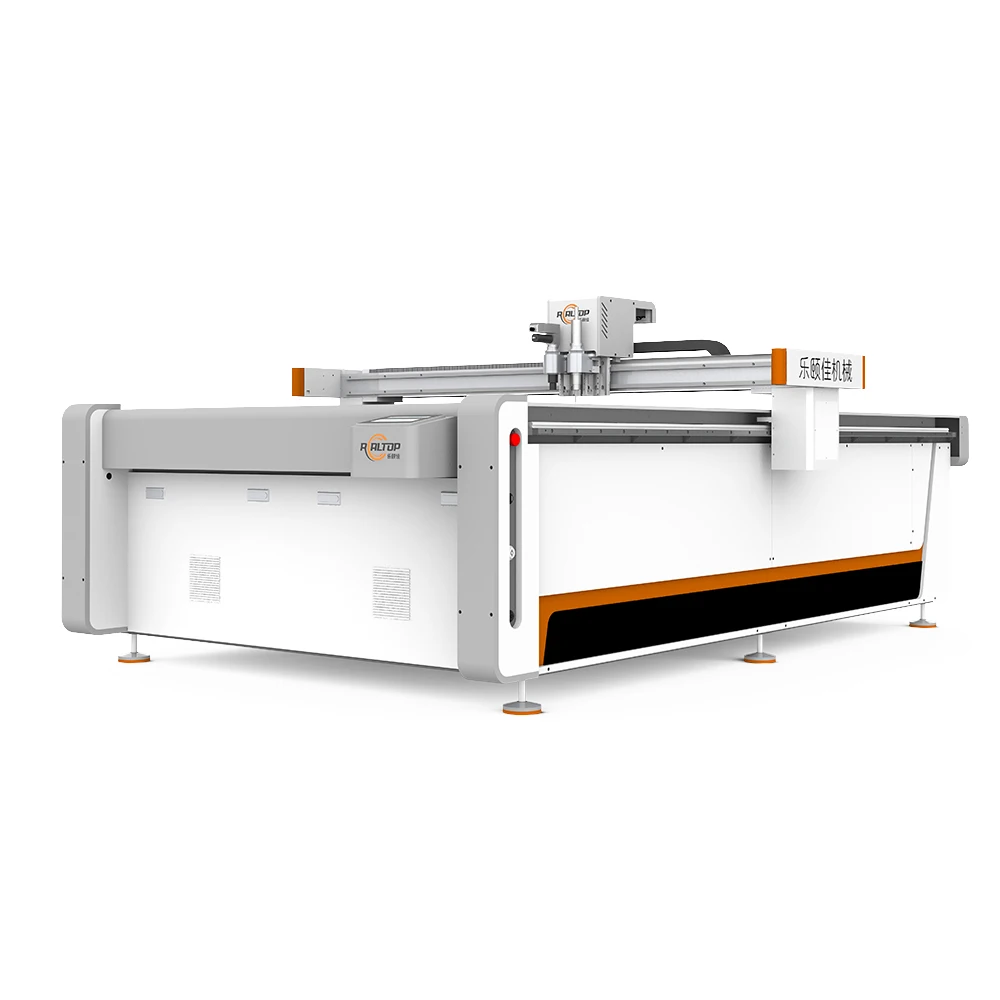
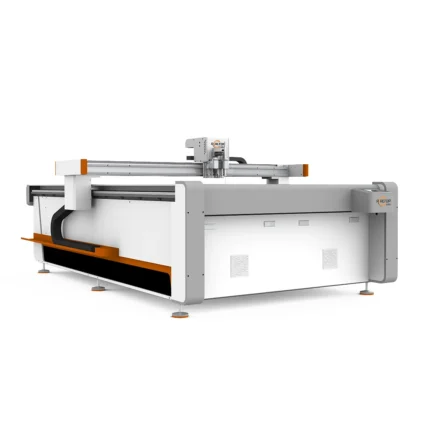
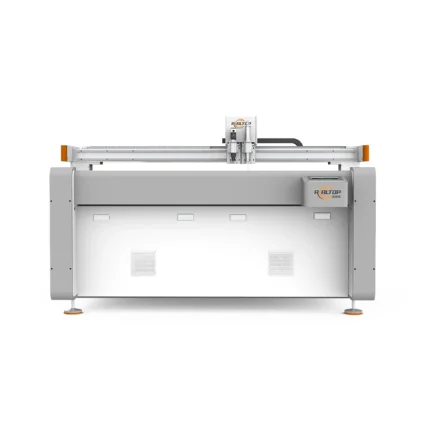
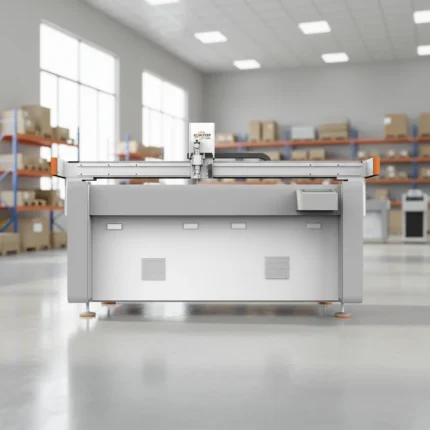
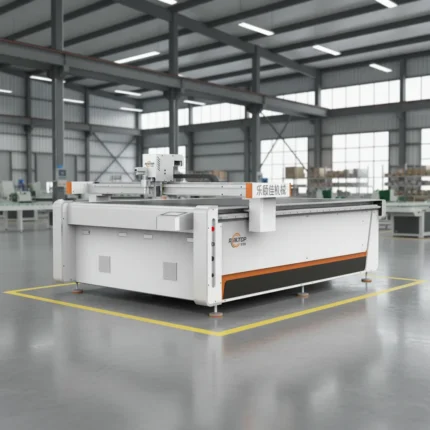
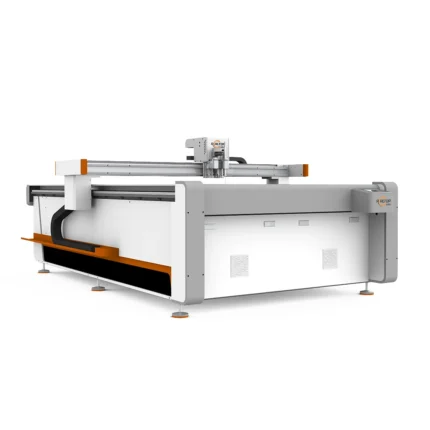
RT-D2516/RT-S2516 CNC Oscillating Knife Cutting Machine, 1600×2500mm Working Area, 9kW, 380V — engineered for corrugated cardboard, honeycomb board and packaging prototype production.
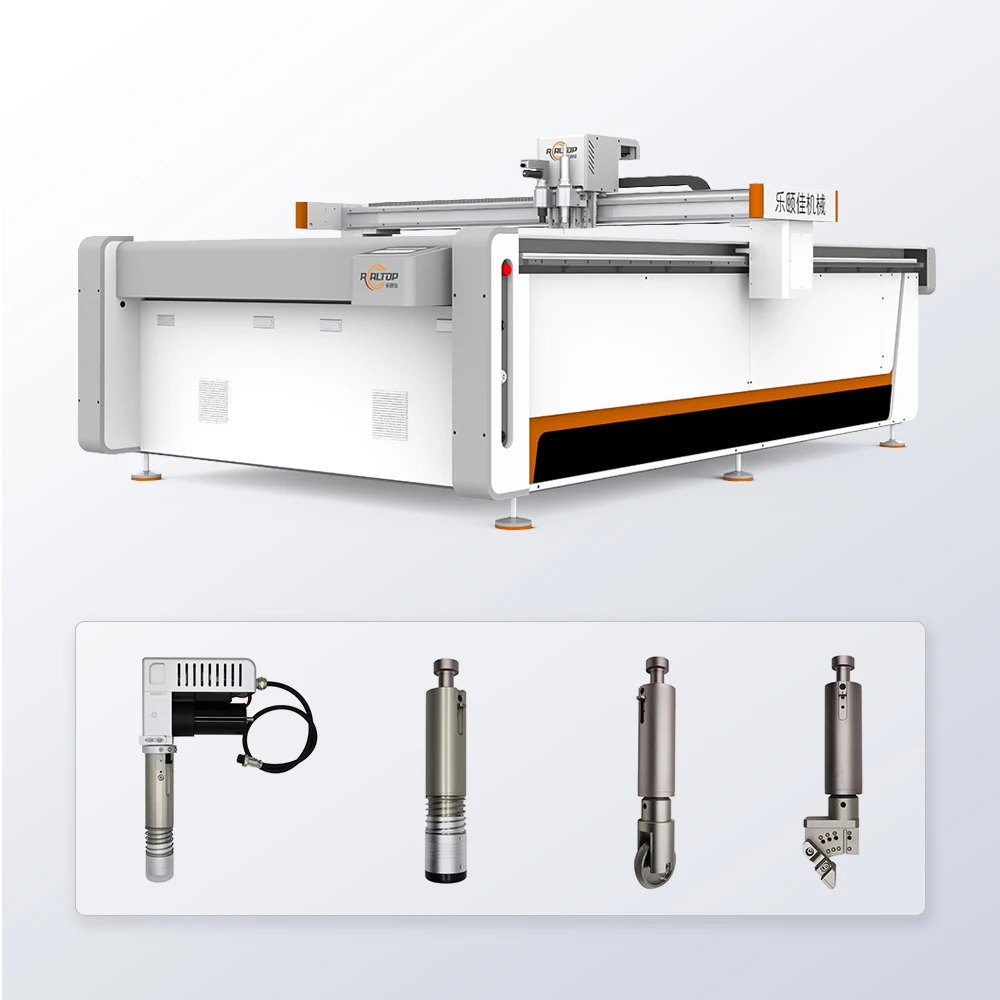
- Multifunctional tool head supports oscillating knife, creasing wheel and V-cutting on one gantry, matched to flute profile and board thickness
- Zoned vacuum adsorption table holds small carton blanks flat during high-speed cutting
- CCD camera positioning for registered contour work on pre-printed packaging
Sample cutting on your own board grade, tool head configuration list and voltage confirmation provided before shipment.
Custom Tooling and Table Configuration — Every RT-D2516/RT-S2516 CNC oscillating knife cutting machine for packaging and carton sample making leaves our Jinan factory with tool heads, vacuum zoning and software formats matched to the buyer’s stated board grade and sample volume, verified by a cutting test on the actual material before shipment.
Technical Specifications
| Parameter | Value |
|---|---|
| Model | RT-D2516/RT-S2516 |
| Product Type | CNC Oscillating Knife Cutting Machine |
| Working Area | 1600 × 2500 mm |
| Machine Size | 3450 × 2300 × 1250 mm |
| Rated Power | 9 kW |
| Vacuum Pump | 7.5 kW |
| Translational Velocity | 800–2000 mm/s |
| Cutting Speed | 200–800 mm/s (basis not stated in source — confirm board grade, flute profile and thickness) |
| Repeated Accuracy | ≤0.1 mm |
| Cutting Thickness | Up to 100 mm (varies with material density and flute structure) |
| Transmission System | Digital servo motor, linear guide, synchronous belt, ball screw |
| Servo Motor | Delta (optional Japan Panasonic) |
| Guide Rail | Taiwan Hiwin |
| Table Type | Flat working table with aluminum air box platform; auto-feeding option available |
| Vacuum Zoning | Integrated box adsorption or split box supported |
| Conveyor Belt | Germany-imported belt (on auto-feeding variant) |
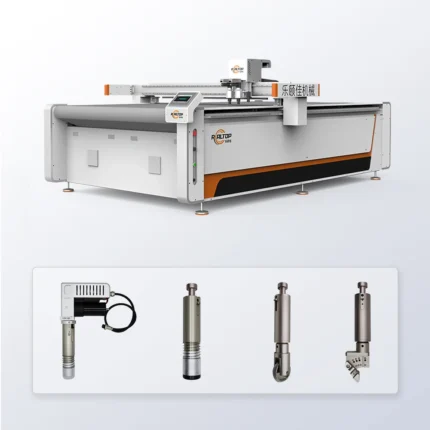
| Tool Head Options | Oscillating knife, pneumatic knife, high-power vibrating knife, circular knife, V-cutting knife, drag knife, creasing wheel, dotted line knife, punching tool, brush |
| Visual Positioning Options | Small CCD camera mark-point positioning, panoramic camera recognition, projection positioning |
| Control Panel | Touch screen, multi-language supported |
| Instruction Format | HP-GL compatible |
| Software | Auto typesetting, supports PLT, DXF, AI formats |
| Voltage | 380V ±10% |
| Frame | Welded thick-walled seamless steel, high-temperature tempering, CNC machining center finished |
| Safety Device | Infrared sensors |
| Language Options | English, Russian, Italian, Chinese; special languages customizable |
| Standards | CE (verify against manufacturer catalog) |
Application Suitability
| Application | Material or Output |
|---|---|
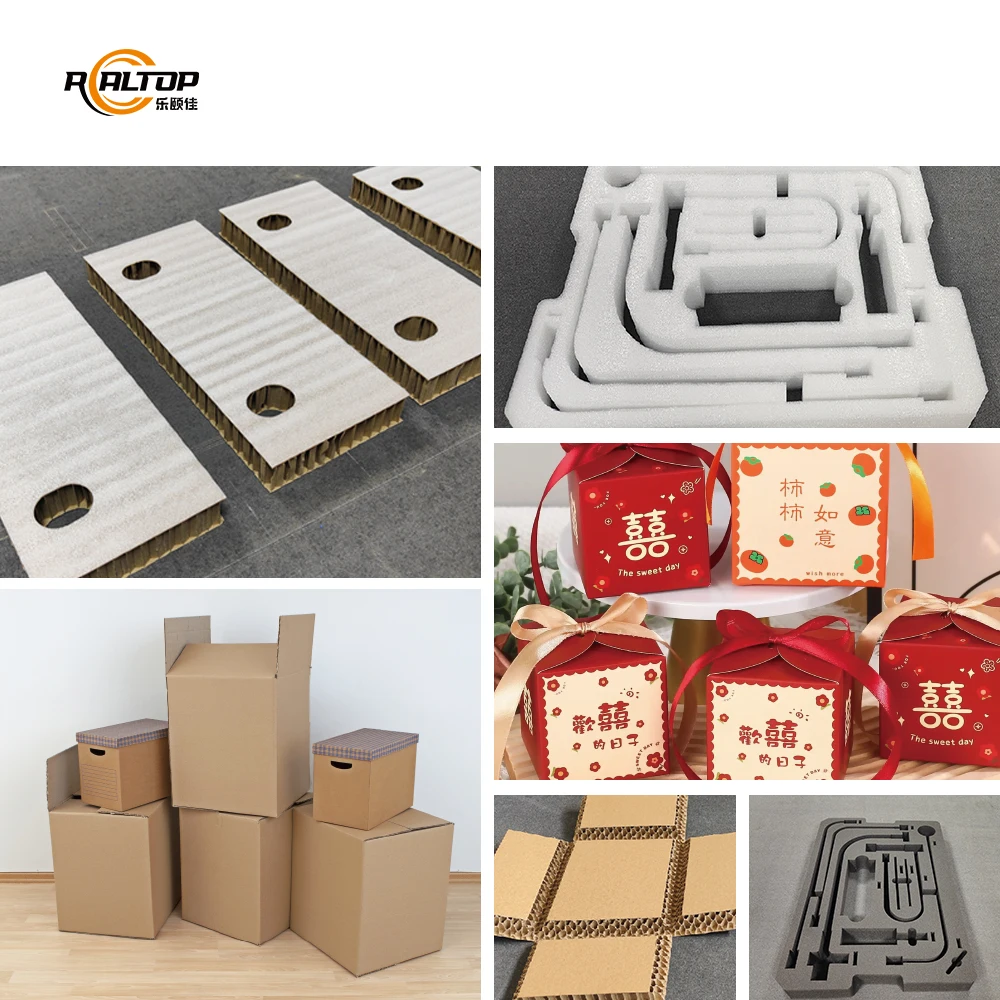
| Packaging sample making | Single-face, double-wall and triple-wall corrugated cardboard across A, B, C, E and F flute profiles |
| Carton prototype and short-run production | Honeycomb cardboard and greyboard up to the machine’s thickness capacity |
| Display and POS packaging | Pre-printed corrugated and plastic box board with CCD contour recognition for registered graphics |
| Gasket and industrial packaging | Foam board, sponge, PU, EVA, XPE and rubber gasket material |
| Protective and cushioning inserts | EPE foam, pearl cotton and composite cushioning layers |
What "Standard Corrugated" on a Purchase Order Actually Hides
A cutting speed figure means nothing until it is proven on the buyer’s specific flute profile and board weight at full traverse.
I once watched a carton plant in Mexico take delivery of a high-speed knife table specified for single-wall A-flute samples. Their daily production actually ran BC double-wall corrugated at heavier grammage. The oscillation frequency could not keep up, the cut faces frayed on every pass, and daily output dropped sharply. That mismatch started with a purchase order that simply said "standard corrugated." [NEED_CITE: corrugated flute profiles and board thickness standards across packaging grades] Today I ask every buyer to send a video of the actual board running through their existing sample table before I confirm a tool head set or a vacuum zoning layout. A CNC oscillating knife cutting machine for packaging and carton sample making must be matched to the real material on the shop floor, not the generic description on an inquiry form.
Matching the Knife to the Flute, Not Just the Board Thickness
Packaging sample departments switch between board grades throughout the day, and each flute profile demands a different cutting action. The multifunctional tool head on the RT-D2516/RT-S2516 carries an oscillating knife for full-depth through-cuts, a creasing wheel for fold lines and a V-cutting knife for slotting — all on the same gantry. A CNC oscillating knife cutting machine for packaging and carton sample making configured this way lets the operator complete a full carton blank in one pass without swapping tooling manually between operations.
Holding Small Blanks Flat at Full Traverse Speed
Corrugated sample boards curl and lift the moment vacuum suction drops below what the material mass requires. The aluminum air box platform on this flatbed table supports either integrated full-surface adsorption or split-box zoning, so the operator can concentrate suction under the area being cut. When small carton blanks and irregular die-cut shapes sit on the table, zoned vacuum keeps the board pinned without requiring a full-sheet sacrificial layer underneath. [NEED_CITE: vacuum hold-down requirements for corrugated board at high traverse speeds]
How Frame Flatness and Rail Grade Affect Crease Alignment
A packaging prototype is rejected the moment the crease line drifts from the printed graphic by a visible margin. The welded thick-walled steel frame of the RT-D2516/RT-S2516 goes through high-temperature tempering and CNC machining center finishing, which removes welding stress before the Taiwan Hiwin rails are mounted. Repeated accuracy of ≤0.1 mm means the creasing wheel returns to the same coordinate across hundreds of cycles, keeping fold lines aligned with print registration marks. The Delta servo system (with Panasonic as an optional upgrade) controls acceleration curves so the gantry does not overshoot at direction changes, which is where most crease drift originates on lighter-framed tables.
The Cost of Skipping the Material Test Before Order Confirmation
Buyers who approve a machine on working area alone often discover after delivery that the specified oscillation frequency struggles with their actual board density, or that the vacuum zoning leaves small parts lifting at the cutting head’s full speed. Ragged cut edges on corrugated flutes force manual trimming on every sample, adding labor that was supposed to be eliminated by the CNC table. In other cases, the software cannot import the buyer’s existing DXF nesting files, so the sample room reverts to manual programming for every new carton shape. [NEED_CITE: common post-delivery disputes in CNC cutting equipment procurement] These issues surface only when the supplier did not run a cutting test on the buyer’s own material at production speed before the order was finalized.
Why Packaging Sample Makers Source This Table Here
In-house design covers both oscillating knife and creasing wheel tooling on one flatbed, so the buyer matches the cutting method to each board grade rather than forcing a single tool to handle every job. Tool head sets, vacuum zoning maps and CCD camera positioning are specified per the buyer’s stated flute range and sample volume, not left as a generic default. Software compatibility is confirmed against the buyer’s PLT, DXF or AI workflow before the machine enters production. Every unit ships with a sample cutting report run on the buyer’s own corrugated or honeycomb board, showing edge quality, crease depth and slot accuracy at production speed. Voltage, plug type and control panel language are locked in on the electrical schematic before the crate is closed, avoiding rewiring costs on arrival. [NEED_CITE: CE machinery directive documentation requirements for export equipment]
Documentation & Verification
- Sample cutting report on your corrugated flute profile and board grammage at full traverse speed
- Tool head and vacuum zoning configuration list matched to your stated board range
- Software licence with PLT, DXF and AI format compatibility note for your nesting workflow
- Electrical schematic with confirmed voltage, plug type and control panel language before dispatch
- Factory test record showing repeated accuracy across a full carton blank cycle
Installation, Commissioning & Support
- 3450 × 2300 mm footprint requires a level concrete floor with clearance for auto-feeding conveyor entry and exit
- 9 kW rated power plus 7.5 kW vacuum pump need a dedicated 380V ±10% three-phase circuit with correct breaker rating
- Touch screen control panel loaded with your confirmed language before crating; additional languages customizable on site
- First-run commissioning includes vacuum zoning calibration and oscillation frequency tuning on your board grade
- Spare oscillating knife blades, creasing wheel inserts and drag knife tips shipped in the initial parts kit
What to Send With Your Inquiry
Tell us the exact corrugated flute profiles and board grammage you run most often, along with the typical carton blank dimensions and your daily sample volume. Share the design software and file format your sample room currently uses so we can confirm import compatibility. If your workshop runs a voltage or frequency outside 380V/50 Hz, state the local supply specification so the electrical package is built accordingly.
Frequently Asked Questions
Q: How do you verify cutting speed for my specific corrugated flute and board thickness?
A: We run your actual board material through a full cutting cycle at the proposed traverse speed and document edge quality, crease depth and slot accuracy in a sample report. This test confirms whether the oscillation frequency and knife type match your flute profile before the order is finalized, not after delivery.
Q: Which tool heads come with the machine and which are optional extras?
A: The tool head set is specified per your board range. Oscillating knife and creasing wheel are standard for corrugated packaging work; V-cutting knife, drag knife and punching tools are added based on the carton shapes you produce. We confirm the full list on the configuration sheet before production begins.
Q: Will the vacuum table hold my smallest carton blank flat at full cutting speed?
A: The aluminum air box platform supports split-box zoning, so suction concentrates under the cutting area rather than spreading across the full 1600 × 2500 mm surface. We verify hold-down performance on your smallest blank geometry during the pre-order sample test.
Q: Does the software integrate with my existing nesting and typesetting workflow?
A: The auto typesetting software imports PLT, DXF and AI files directly. We confirm format compatibility and nesting behavior with your current design files before shipment, so your sample room does not need to rebuild its file library from scratch.
Q: Can voltage, plug type and control language be customized for my market?
A: Yes. The electrical schematic, plug specification and touch screen language are confirmed on the order documentation before the machine is built. Standard options include English, Russian, Italian and Chinese, and special languages can be added to the control panel.


Related products
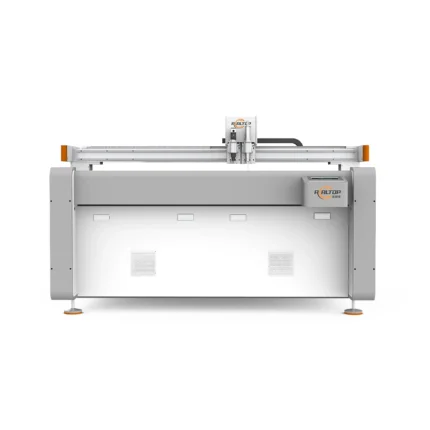

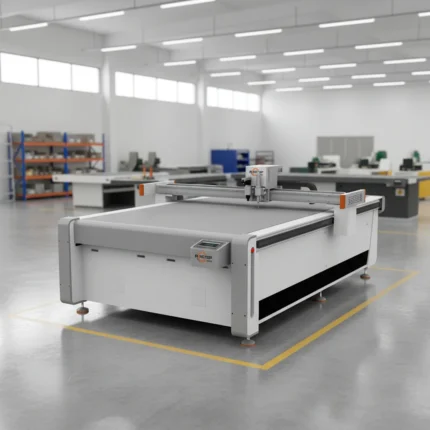
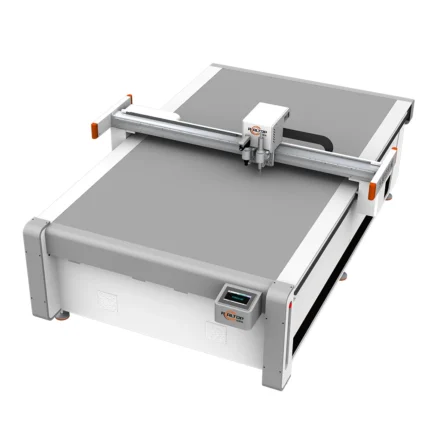
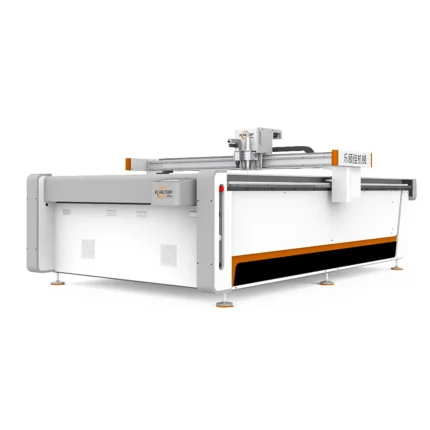
CNC Vibrating Knife Cutter 2026 Custom Cartons Packaging
Product Introduction
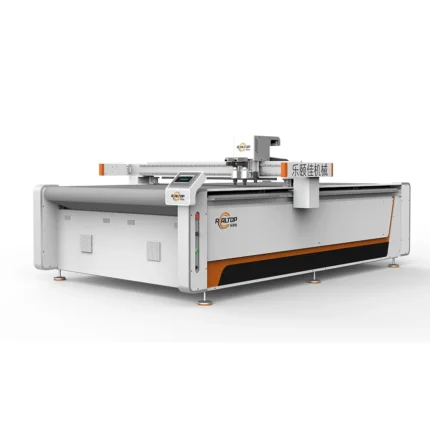
CNC Vibrating Knife Cutter 2026 is ideal for custom cartons & packaging, offering precise cutting solutions for various materials. Engineered by a leading Chinese welding & cutting equipment manufacturer, it ensures efficiency and accuracy for packaging production needs.Key Specifications
| Model | 2026 |
| Type | CNC Vibrating Knife Cutter |
| Application | Custom Cartons & Packaging |
| Manufacturer | Chinese Leading Factory |
Digital Box Cutter 2026 Oscillating Knife Cardboard Cutter
Product Parameters
| Model | Digital Box Cutter 2026 |
| Cutting Type | Oscillating Knife |
| Material | Corrugated Cardboard |
Introduction
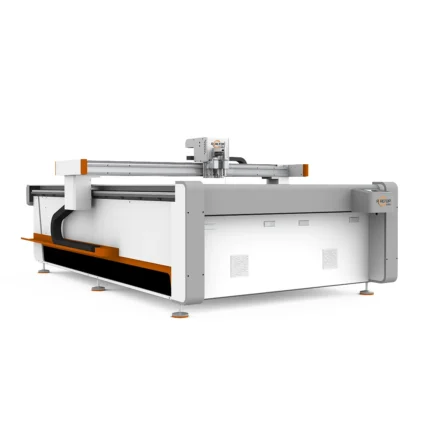
Professional oscillating knife cutting machine for corrugated cardboard. Ideal for precise, efficient cutting in packaging production. Reliable performance from China's leading welding & cutting equipment manufacturer.


Digital CNC Cardboard Cutting Machine 2026
Product Introduction
High-precision Digital CNC Cardboard Cutting Machine 2026, ideal for efficient cardboard processing with advanced CNC technology, ensuring precise and fast cutting performance for various packaging and craft applications.
Key Specifications
| Model | 2026 |
| Type | Digital CNC Cutting Machine |
| Material | Cardboard |
| Feature | High Precision, Efficient Cutting |

Realtop CNC Carton Box Cutter 2026 CCD Camera Honeycomb Cutting
Product Introduction
Realtop CNC Carton Box Cutter 2026 is a professional cutting solution featuring CCD Camera and Honeycomb Cutting technology, ideal for precise carton box processing with efficient performance.Product Parameters
| Model | Realtop CNC Carton Box Cutter 2026 |
| Vision System | CCD Camera |
| Honeycomb Cutting |
商品评价
There are no reviews yet.