

Oscillating Round Knife CNC Cutting Machine for Cloth – Manufacturer
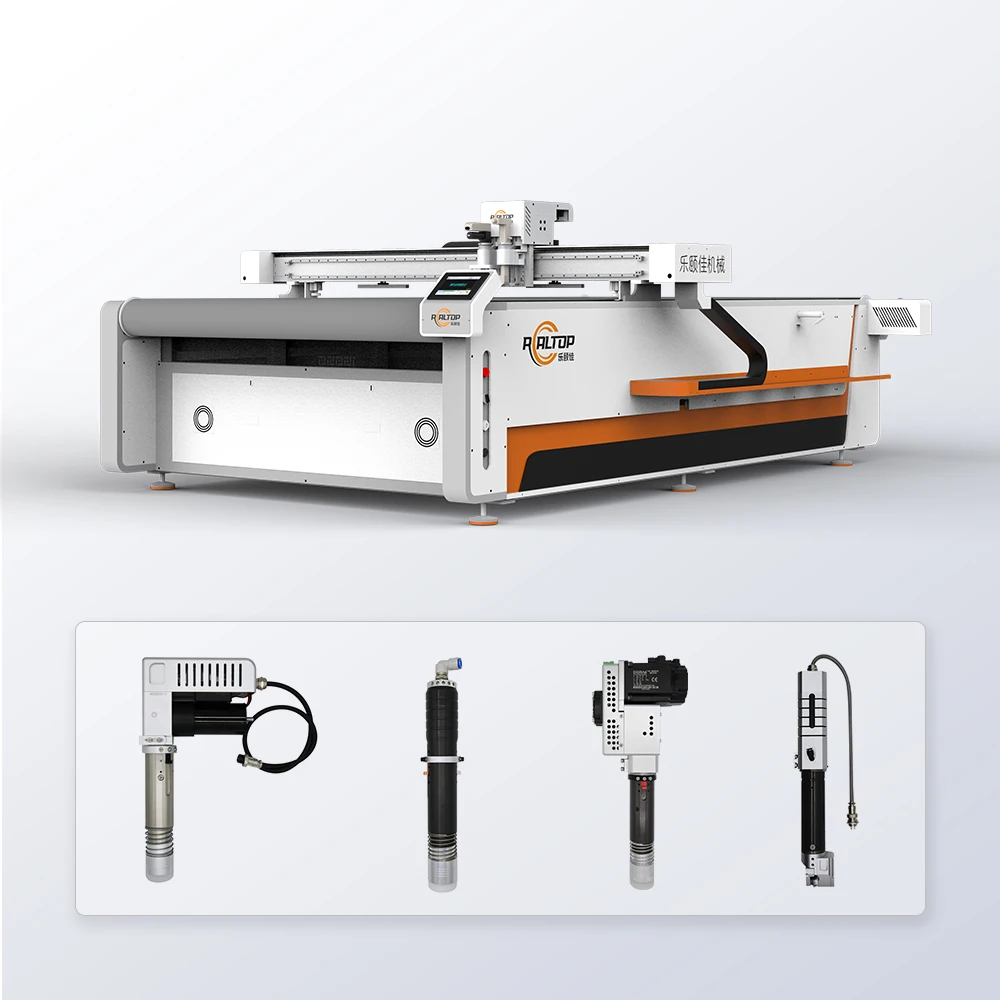
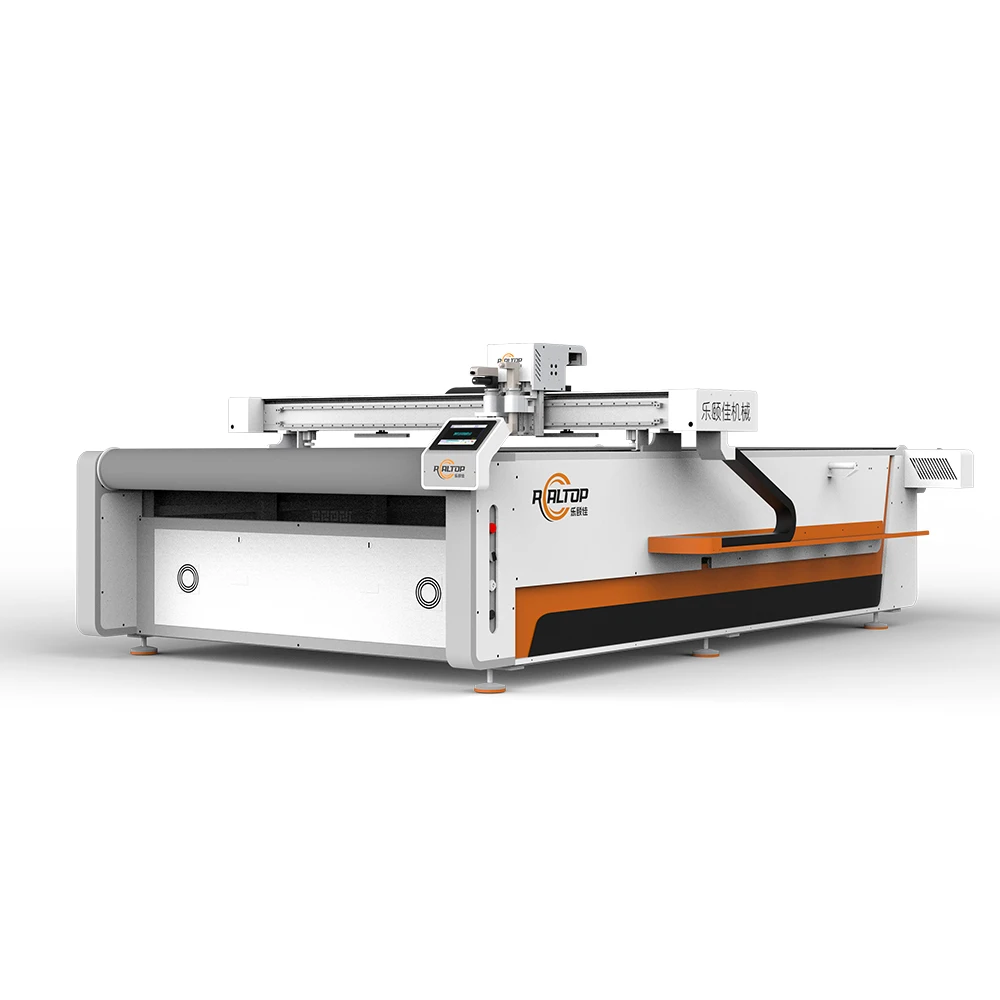
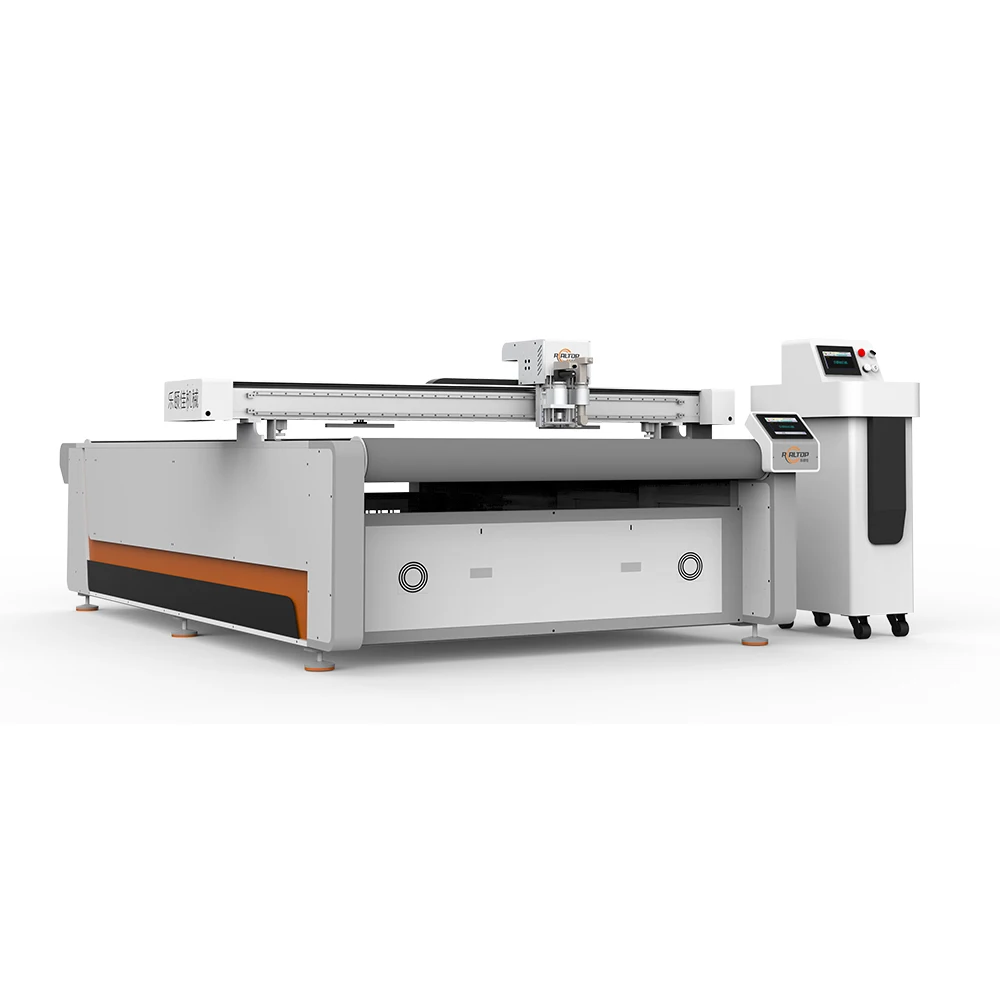
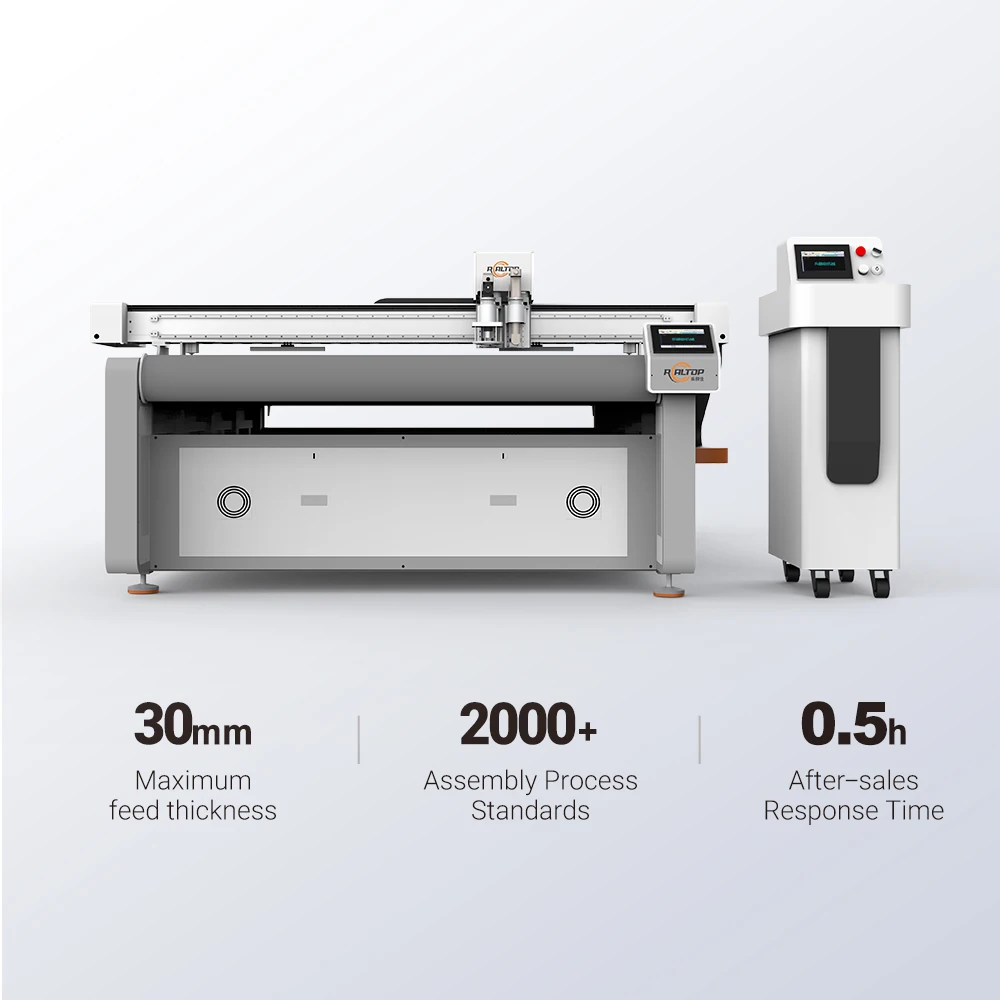
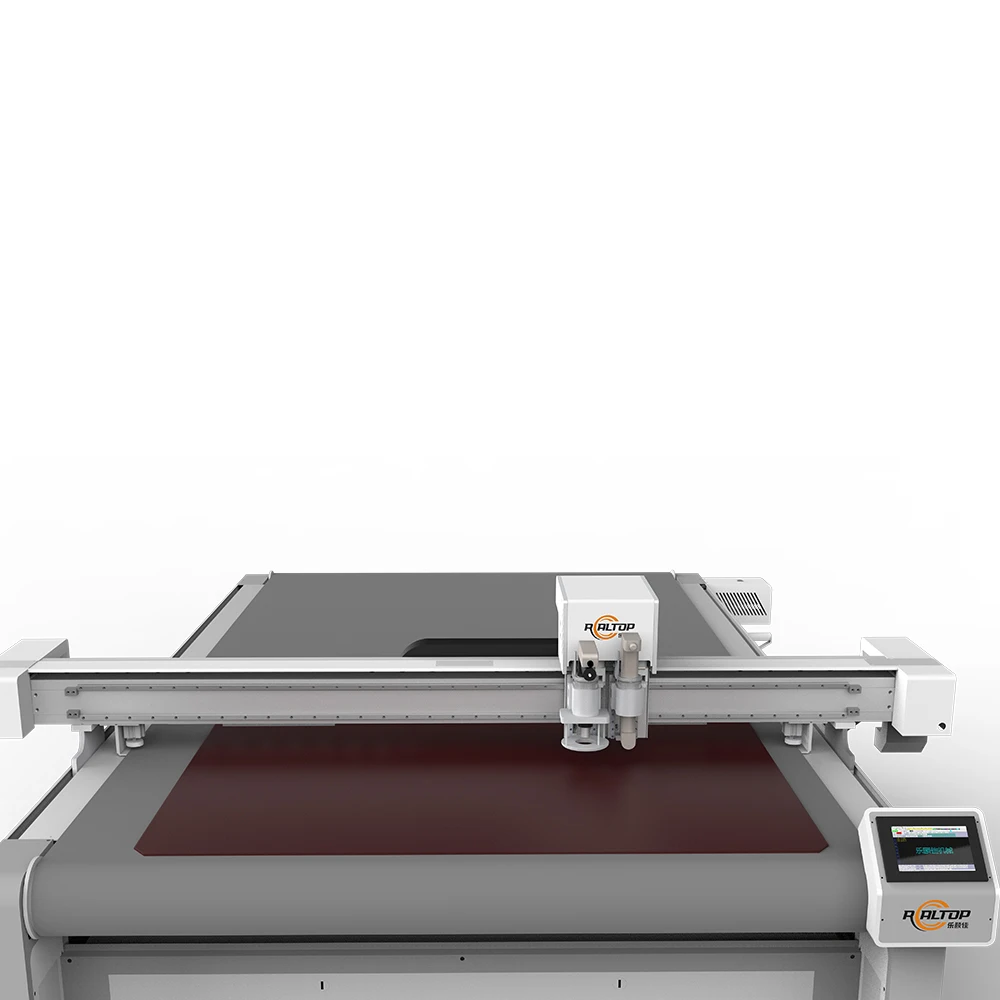
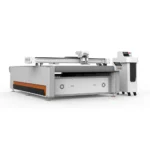
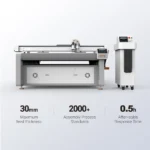
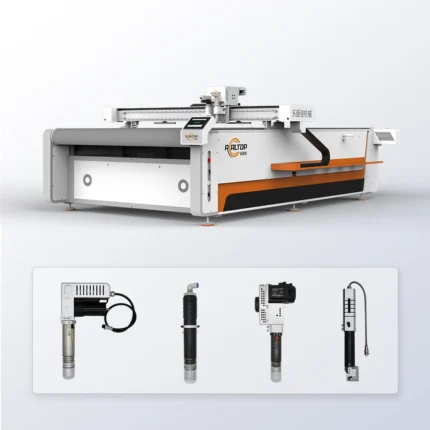
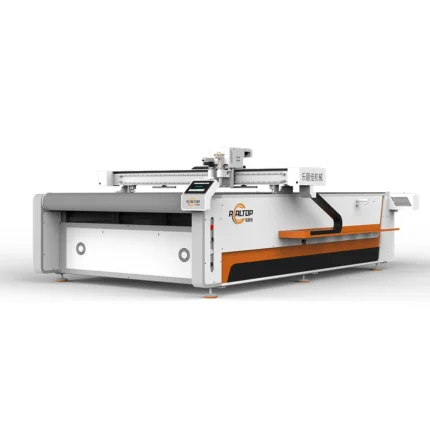
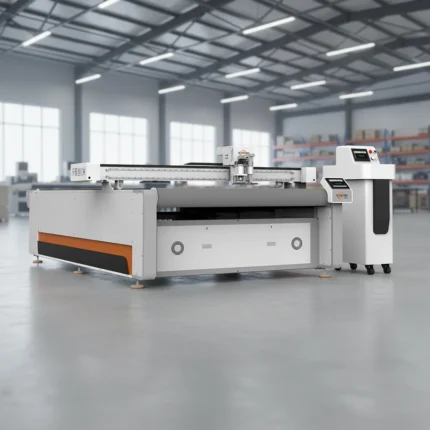
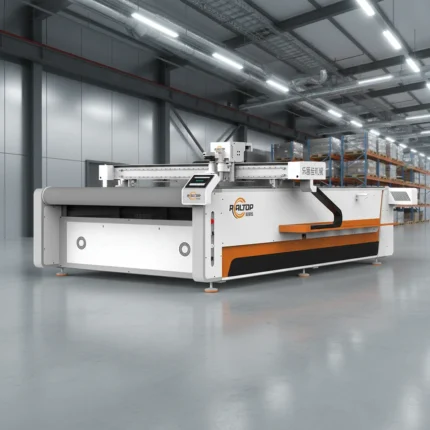
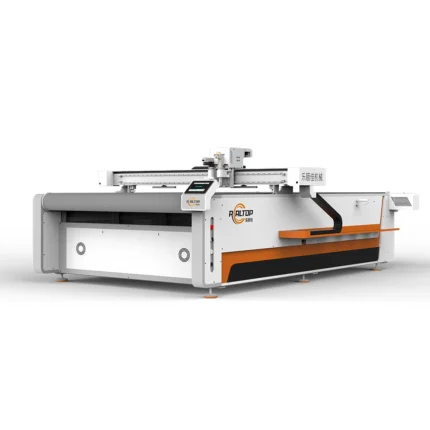
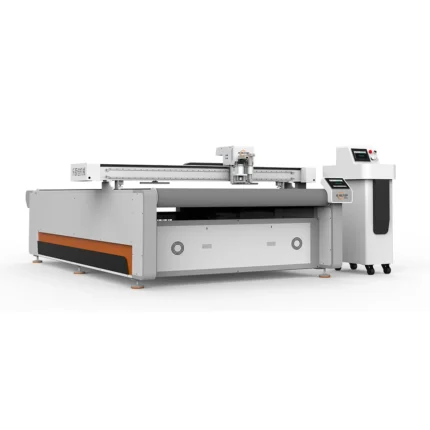
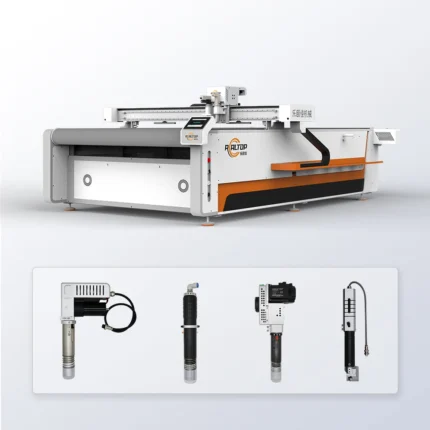
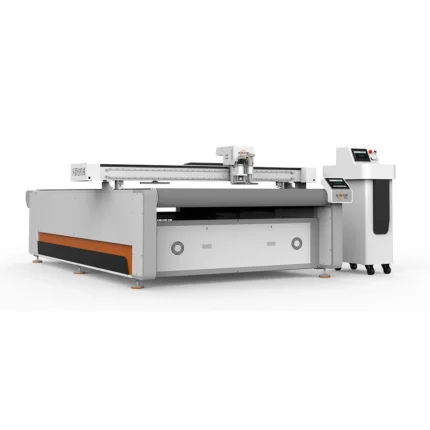
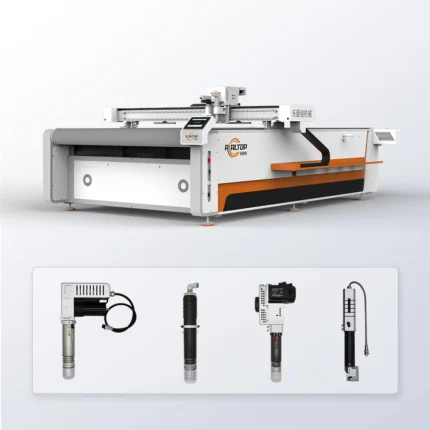
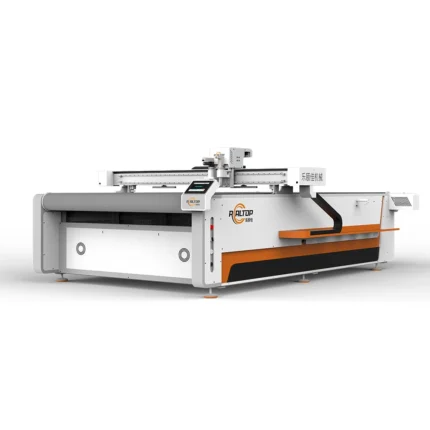
Cloth CNC Cutting Machine, 2500×2200mm Working Area, ±0.1mm Accuracy, ≤30mm Cutting Thickness — configured with oscillating knife, driven rotary knife, and pneumatic knife options for fabric, leather, foam, and automotive mat processing.
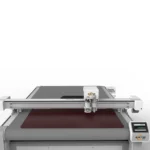
- Aluminum bellows vacuum table ensures small-part retention without lift during high-speed contour cuts
- CCD camera positioning tracks printed marks at production speed for accurate contour recognition
- PLC control panel with multi-language support (English, Russian, Italian, Chinese) and DXF/PLT/AI/PDF file compatibility
Sample cutting on your own material is provided before order commitment, so tool head and table configuration are verified against your actual production requirements.
Material-Matched Configuration — Every oscillating knife cutting setup is specified per fabric density and production volume rather than forcing a single head across all applications.
Technical Specifications
| Parameter | Value |
|---|---|
| Product Type | CNC Oscillating Knife Cutting Machine |
| Working Area | 2500 × 2200 mm |
| Tool Head Options | Oscillating knife, driven rotary knife, creasing wheel, kiss cutting tool, pneumatic knife, milling tool, V groove knife |
| Cutting Speed | 0–1500 mm/s |
| Cutting Thickness | ≤ 30 mm |
| Cutting Accuracy | ±0.1 mm |
| Vacuum Table | Aluminum bellows vacuum table |
| Vacuum Pump | 9 kW |
| Control System | PLC control panel |
| Servo Motors | Panasonic, Delta, or Dorna options |
| Voltage | 110V, 220V, 380V configurable |
| Profile Formats | PLT, DXF, AI, PDF |
| Safety Devices | Infrared sensor and emergency stop |
| Language Options | English, Russian, Italian, Chinese, custom |
| Machine Dimensions | 3300 × 2700 × 1350 mm |
| Standards | CE |
Application Suitability
| Application | Material or Output |
|---|---|
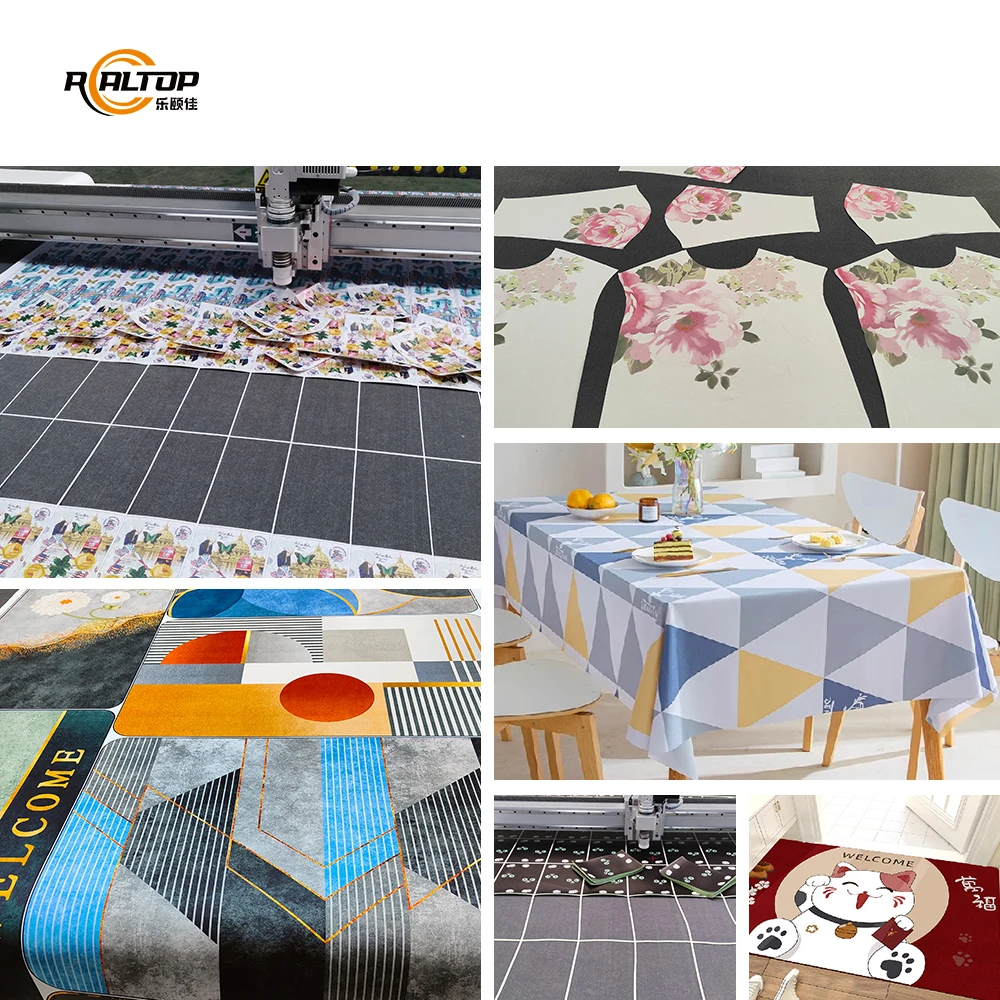
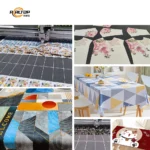
| Automotive floor mats | Full-coverage car mats, loop mats, composite layered materials |
| Home floor mats and non-slip pads | Coral fleece carpets, PVC mats with geometric patterns |
| Yoga and fitness mats | Wave-edge profiling, cut-out designs on EVA and foam |
| Garment and footwear production | Multi-ply fabric, synthetic leather, textile composites |
| Gasket and seal fabrication | PTFE, rubber, and composite fiber sheets |
Why the Wrong Tool Head Costs More Than the Machine Itself
Choosing a cutting head based on material name alone rather than actual layered composition is the most common specification error in fabric and mat production, and the CNC oscillating knife cutting machine laser process configuration must account for what sits between the visible surfaces.
Specify the tool head against the full material cross-section, not just the top layer.
I once supplied an oscillating round knife unit for automotive interior trimming where the sample cuts were clean. Production started, and within a week the blade edge was destroyed. The composite leather had a fiberglass mesh reinforcement layer hidden inside — invisible in the hand sample but devastating to a standard round blade. The entire line stopped while we swapped to a pneumatic knife setup. That downtime cost the buyer far more than the tooling change itself [NEED_CITE: composite reinforcement layers in automotive synthetic leather]. When the material stack is not fully disclosed before configuration, the cutting method is essentially a guess.
Matching the Blade to What the Material Actually Contains
The oscillating knife system on this CNC oscillating knife cutting machine handles materials from lightweight single-ply textile up to 30 mm dense foam, but the correct tool head depends on fiber content, backing layers, and adhesive composition. A driven rotary knife works well on continuous fabric rolls where edge sealing matters, while a V groove knife is necessary when folding lines must be scored into carton or corrugated board without penetrating through. Selecting the wrong head produces frayed edges on woven fabric or crushes foam cells instead of slicing them cleanly.
Vacuum Retention and Small-Part Stability
The aluminum bellows vacuum table paired with a 9 kW pump is designed to hold thin fabric and lightweight PVC flat across the 2500 × 2200 mm work area. Flatness matters because even slight lifting at the edges causes the oscillating blade to drag, producing dimensional drift beyond the ±0.1 mm accuracy rating. For small nested parts — like gaskets or shoe upper pieces — the table zoning must concentrate suction where the material actually sits. A full-table vacuum spread over a large area loses grip on pieces smaller than a hand [NEED_CITE: vacuum table zoning requirements for small-part CNC cutting].
Reading the Spec Sheet Against Real Production Needs
Cutting speed is rated at 0–1500 mm/s, but achievable speed on any given material depends on thickness, blade type, and contour complexity. Tight curves on 3 mm leather run slower than straight cuts on single-ply cotton. The PLC control panel allows operators to store material-specific speed and depth profiles, so switching jobs does not require manual recalibration each time. Servo motor selection — Panasonic, Delta, or Dorna — affects acceleration response on intricate patterns, and the choice should match the complexity of the cutting files the buyer typically runs. The 9 kW vacuum pump must also be matched to the local voltage supply (110V, 220V, or 380V) with correct frequency to maintain rated suction [NEED_CITE: voltage and frequency standards by export market].
The Hidden Cost of Skipping a Material Trial
When a buyer confirms a machine based on working area and price without sending actual production material for trial cutting, the configuration becomes theoretical. Ragged edges on layered composites, incomplete cuts through adhesive-backed foam, and crushed cellular structure on EVA mats all surface only during real production runs. Reworking the tool head after delivery means shipping replacement parts internationally, pausing the line, and re-training operators on new depth and speed settings. The sample cutting report generated before commitment exists specifically to prevent this sequence [NEED_CITE: material trial protocols for CNC knife cutting equipment].
Why Sourcing Directly From the Build Floor Matters
The design and production of both knife and laser cutting systems under one roof means the cutting method is matched to the material rather than limited to whatever one technology can force through. Tool head and table configurations are specified per material type and documented before the order is confirmed. CCD camera positioning is available for printed contour recognition on branded mats and patterned textiles. Software compatibility — accepting PLT, DXF, AI, and PDF — is verified against the buyer’s existing nesting workflow before shipment. Voltage, plug type, and control panel language are confirmed for the destination market, eliminating on-site electrical surprises. Every unit ships with a factory test record run on the buyer’s own material samples.
Documentation & Verification
- Factory test record on buyer-supplied fabric and mat samples before dispatch
- Tool head and vacuum table configuration list matched to declared material stack
- Electrical schematic with voltage and plug confirmation for destination market
- Software licence with file format compatibility note for PLT, DXF, AI, PDF
- Operation and maintenance manual in selected control language
- CE declaration and spare parts list with oscillator blade specifications
Installation, Commissioning & Support
- Dedicated 380V circuit required for the 9 kW vacuum pump alongside PLC control power
- Machine footprint of 3300 × 2700 mm requires level concrete floor with clearance for material feed
- Arrives partially assembled; gantry and vacuum table require on-site alignment and belt tensioning
- First-run parameter setting includes vacuum zone mapping and blade depth calibration per material
- Operator training covers tool head changeover, PLC profile storage, and emergency stop procedures
- Oscillating blade and rotary knife consumables listed with replacement intervals by material type
Before You Request a Quote
Send a physical sample of the actual production material — including all layers, backing, and adhesive — along with the maximum sheet size and daily cutting volume. Specify your local voltage and frequency, preferred control language, and the file formats your design team currently uses. If your workflow includes printed contour cutting, provide a sample printed sheet so CCD tracking can be verified before the configuration is finalized.
Frequently Asked Questions
Q: How do I choose between oscillating knife, rotary knife, and pneumatic knife for my material?
A: The choice depends on material density, layer count, and edge requirement. Oscillating knives handle multi-ply fabric and foam up to 30 mm. Rotary knives suit continuous textile cuts needing sealed edges. Pneumatic knives cut through abrasive composites containing fiberglass or mineral fillers. Send your actual material sample so the correct head is confirmed before build.
Q: What cutting depth is realistic on foam versus rubber versus layered fabric?
A: The system handles up to 30 mm, but achievable depth varies by material density and tool head. Soft EVA foam cuts cleanly near the maximum, while dense rubber and PTFE require reduced depth per pass. Layered fabric with adhesive interlayers may need a different blade type entirely. A sample cutting report documents what your specific material achieves.
Q: Can the software accept my existing nesting files without conversion?
A: The control system accepts PLT, DXF, AI, and PDF formats directly. Before order confirmation, we verify compatibility with your specific nesting software output and confirm that contour data, layer assignments, and tool path information transfer without manual rework. File format compatibility is documented in the software licence note shipped with the machine.
Q: What voltage and language options are available for my market?
A: Voltage is configurable at 110V, 220V, or 380V, and the correct plug type is fitted before shipment. The PLC control panel supports English, Russian, Italian, Chinese, and custom languages. Your destination voltage, frequency, and preferred language are confirmed during the specification stage so no on-site modifications are needed.
Q: Does the vacuum table hold small nested parts securely during high-speed cutting?
A: The aluminum bellows table with the 9 kW pump provides zoned suction that can be concentrated on smaller work areas. For highly nested layouts with many small pieces like gaskets or shoe components, the zone configuration is mapped during the factory test to ensure no part lifts during cutting at production speeds.


Related products
2026 Carbon Fiber Cloth Cutting Machine – China Manufacturer
Product Introduction
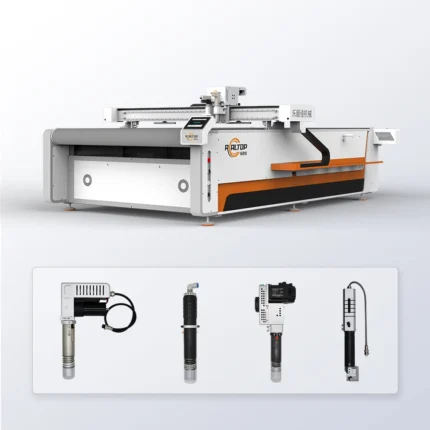
Fabric Sample Cutter Pillow Machine ¨C 2026 Carbon Fiber Cloth Cutting Machine, ideal for precise cutting of carbon fiber cloth and fabric samples, suitable for pillow production and related textile applications.Product Parameters
| Name | Fabric Sample Cutter Pillow Machine |
| Model | 2026 |
| Material | Carbon Fiber Cloth |
| Application | Pillow Fabric Cutting |
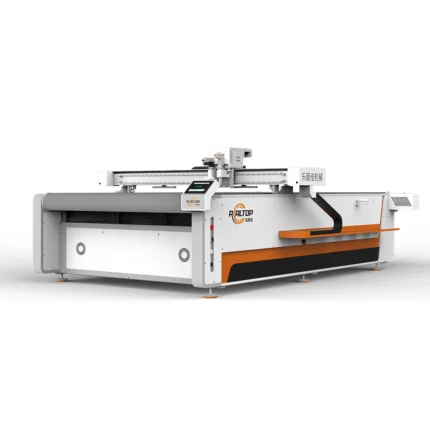
CNC Oscillating Knife Cutting Machine 2026 3000¡Á1600mm High-Speed
Product Parameters
| Model | CNC Oscillating Knife Cutting Machine 2026 |
| Working Area | 3000mm¡Á1600mm |
| Cutting Type | Oscillating Knife |
| Application | Fabric Cutting |
| Feature | High-Speed |
Introduction
High-performance CNC oscillating knife cutting machine with 3000mm¡Á1600mm working area, ideal for high-speed fabric cutting. Precision and efficiency for professional textile processing needs.
Máquina CNC personalizada de corte de tela para camisetas 2026
Product Introduction
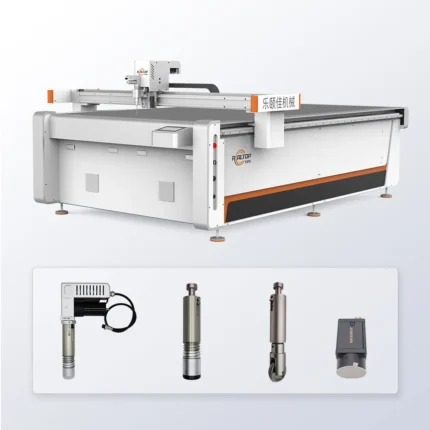
Custom CNC Shirt Fabric Cutting Machine 2026, ideal for precise fabric cutting in garment manufacturing, offering efficient and accurate cutting solutions.
Product Parameters
| Model | Custom CNC Shirt Fabric Cutting Machine 2026 |
| Type | CNC Fabric Cutting Machine |
| Application | Shirt Fabric Cutting |
| Year | 2026 |
Máquina de Corte de Tela CNC Realtop 2026 Certificada CE
Product Introduction
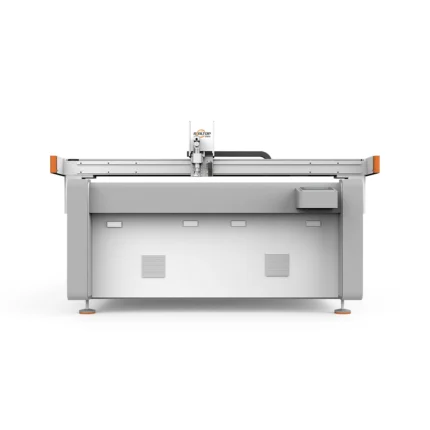
Realtop CNC Fabric Cutting Machine 2026, CE Certified, ideal for precision fabric cutting with advanced CNC technology. Engineered for efficiency and reliability in textile manufacturing processes.Key Specifications
| Model | Realtop CNC Fabric Cutting Machine 2026 |
| Certification | CE Certified |
商品评价
There are no reviews yet.