






Packaging CNC Cutting Machine for Cardboard – Manufacturer
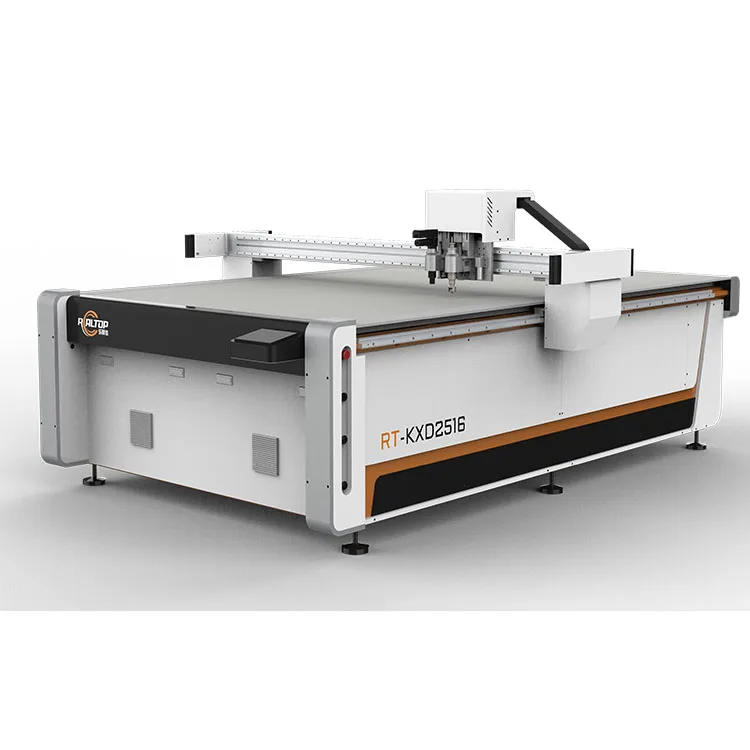
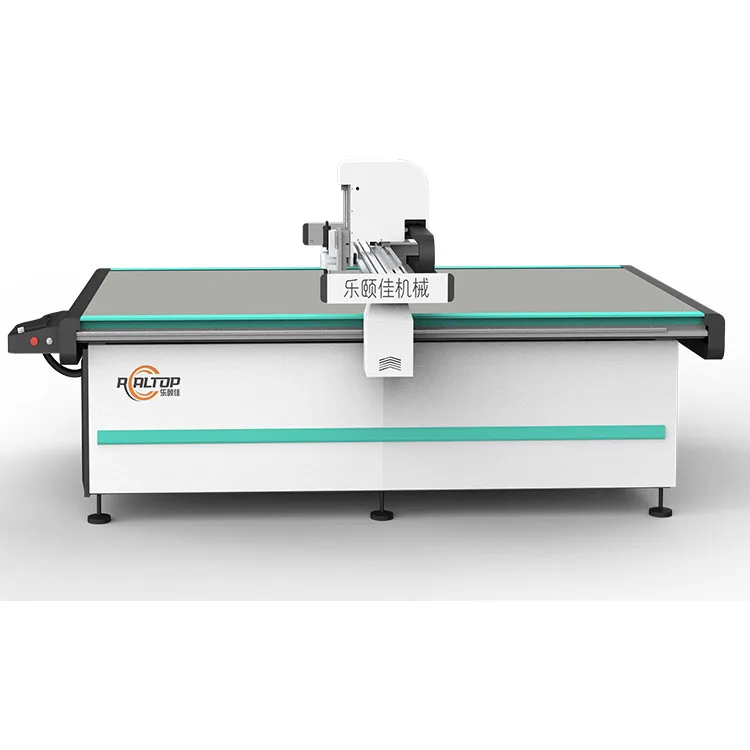
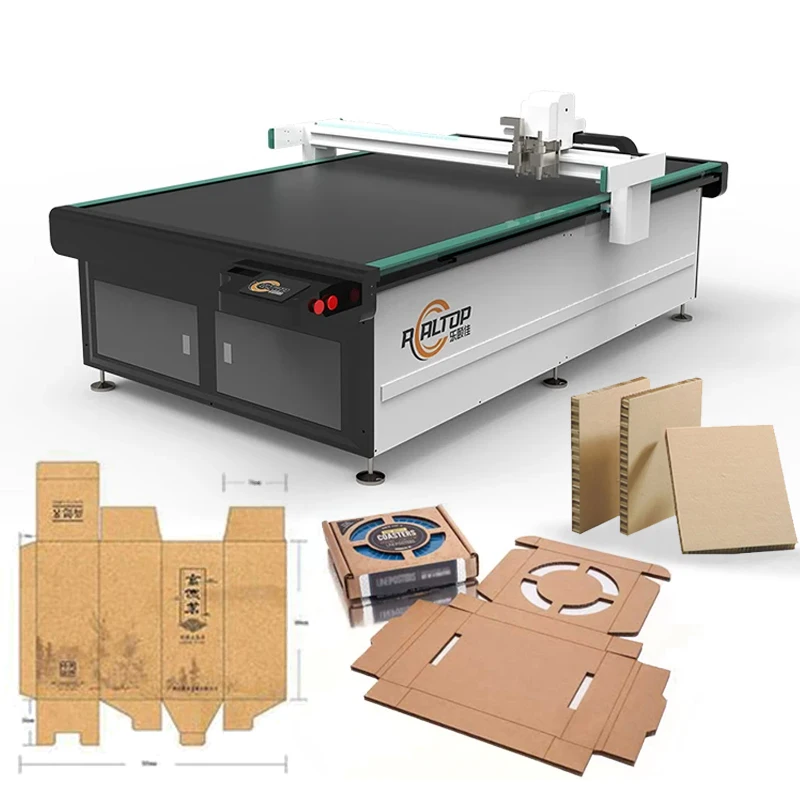
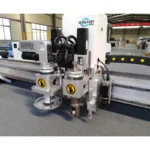
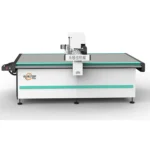
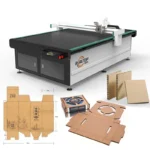
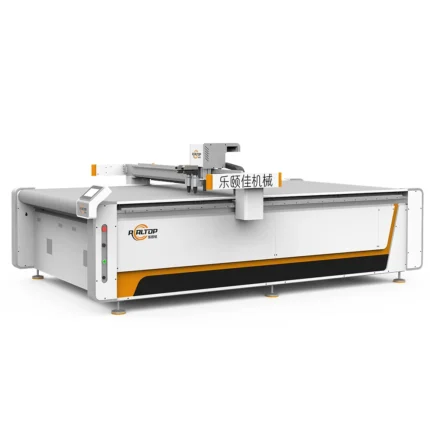
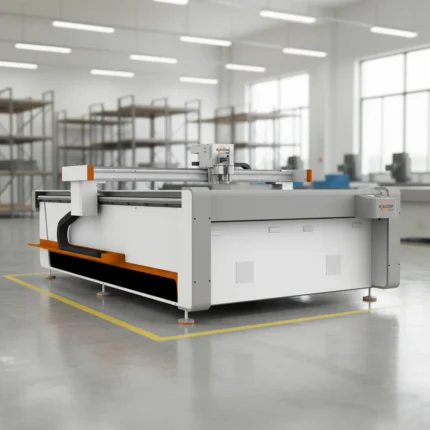
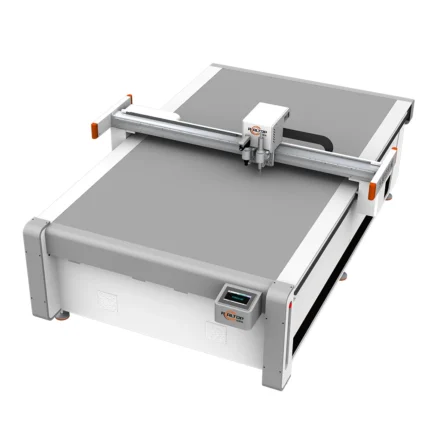
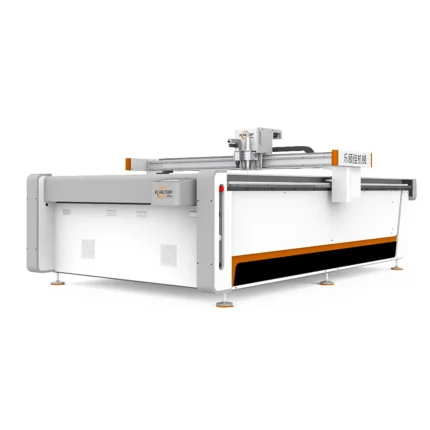
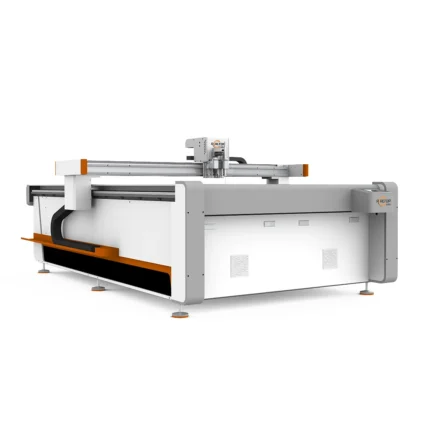
CLD2516 Packaging CNC Cutting Machine, 1600×2500mm Working Area, Swiss Oscillating Knife, 7.5kW Vacuum Adsorption — designed for carton sample making and short-run packaging production.
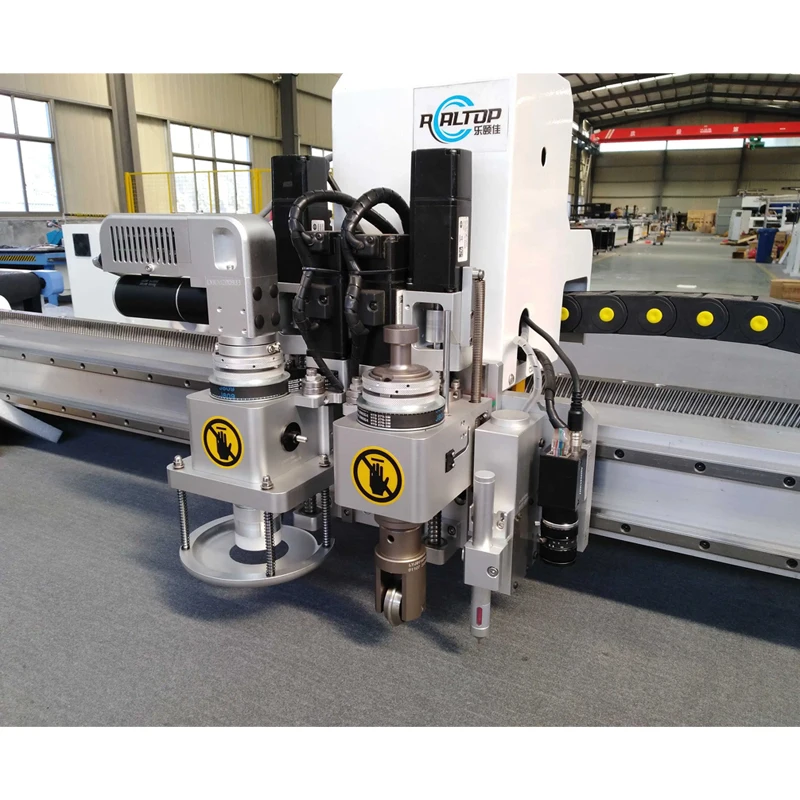
- Swiss imported knife supports vibration full-cut, half-cut and creasing in one pass on corrugated board, paperboard and composite sheets
- Aluminum honeycomb vacuum table with partition zoning holds small carton parts and sticker sheets flat during high-speed cutting at 800–1200 mm/s
- Taiwan Delta servo motors and Hiwin linear guides deliver ≤0.1mm repeated accuracy for precise contour work
Sample cutting on your own cardboard grade and thickness is available before order commitment, ensuring the tool head and vacuum configuration match your material.
Tool Head Configuration Matched to Material — Every CLD2516 leaves the Jinan floor only after the buyer’s actual cardboard grade is cut and the crease depth is signed off.
Technical Specifications
| Parameter | Value |
|---|---|
| Product Type | CNC Oscillating Knife Cutting Machine |
| Model | CLD2516 |
| Working Area | 1600 mm × 2500 mm |
| Machine Dimensions (L×W×H) | 3450 × 2300 × 1250 mm |
| Rated Power | 6.6 kW |
| Voltage | 380V ±10% |
| Tool Head | Swiss imported oscillating knife (vibration full cut, vibration half cut, cursor location) |
| Translational Velocity | 800–1200 mm/s |
| Repeated Positioning Accuracy | ≤0.1 mm |
| Servo Motor | Taiwan Delta |
| Linear Guide | Taiwan Hiwin |
| Drive Elements | Synchronous belt, ball screw |
| Conveyor Belt | Germany imported |
| Vacuum Pump | 7.5 kW |
| Material Fixing | Vacuum partition adsorption (aluminum alloy honeycomb structure) |
| Safety Devices | Infrared sensors, emergency stop |
| Supported File Formats | PLT, DXF, HP-GL compatible |
| Software | Professional carton nesting software, language customizable (EN / RU / IT / ZH) |
| Assembly State | Fully assembled |
| Standards | CE |
Application Suitability
| Application | Material or Output |
|---|---|
| Packaging carton sample making and short-run production | Corrugated cardboard, paperboard, grey board up to specified thickness |
| Corrugated box prototyping | Single, double and triple-wall corrugated flute profiles |
| Express paper box and snack food packaging | Folding carton stock, coated paperboard |
| High-end gift box packaging | Rigid board, laminated paper composite |
| Sticker and label contour cutting | Vinyl, self-adhesive paper, synthetic label stock |
| Signage and billboard cutting | Foam board, corrugated plastic, honeycomb paper panel |
| Business card and hang tag production | Cardstock, coated board |
When the Wrong Tool Head Meets Real Board
Buyers who selected an oscillating knife machine for packaging based solely on working area often discover that ragged edges, crushed flute, or failed creases appear on the first production sheet. The tool head must be specified against the actual material grade and flute profile, not a catalog thickness.
I remember setting up a short-run carton line for a converter outside Nairobi. The sample we tested in Jinan ran on standard three-layer corrugated, and the edges came out clean. When we arrived on site, the customer was running a heavier gram-weight grey board they had sourced locally. The creasing wheel could not penetrate deep enough, and every box cracked along the fold line. We replaced the tool configuration on the spot, but the downtime cost the customer a full day of production. That job changed how I handle every order: I do not sign off on a shipping document until I have the buyer’s real material in my hands. The CNC knife cutting machine for packaging is only as good as the tool head chosen for the actual sheet running on the table [NEED_CITE: material testing protocols for CNC digital cutting equipment].
Cutting Method for Every Packaging Substrate
Thermal cutting methods leave charred edges and require extraction when processing paper-based substrates. The oscillating knife approach on the CLD2516 avoids burning entirely, producing a clean mechanical shear on corrugated flute and coated board. The Swiss imported knife assembly supports both full-cut and half-cut modes in a single pass, which allows crease-and-cut workflows without a secondary creasing station. For packaging converters running mixed short runs, this flexibility means a single machine handles everything from single-wall corrugated to laminated rigid board without retooling between jobs.
Vacuum Partition Adsorption and Small-Part Stability
The aluminum alloy honeycomb table with partition adsorption zones addresses a common failure in packaging sample work: small carton components lifting off the bed mid-cut. The 7.5 kW vacuum pump generates sufficient hold-down force across independently controlled zones, so even lightweight label sheets and narrow hang-tag strips remain flat. When the vacuum zoning is inadequate, small parts shift during the oscillating stroke and the finished piece misses tolerance [NEED_CITE: vacuum hold-down requirements for flatbed digital cutting tables]. This system partitions the surface so that only the active cutting zone draws vacuum, maintaining pressure where the knife is actually working.
Specs That Directly Affect Your Packaging Output
The 1600 × 2500 mm working area accommodates full-size corrugated sheets in standard packaging dimensions, eliminating the need to pre-slit stock before loading. Repeated positioning accuracy of ≤0.1 mm, driven by Taiwan Delta digital servo motors and Hiwin linear guides, ensures that crease lines land precisely where the CAD file specifies — a tolerance that matters when a half-millimeter drift causes a folding carton to glue out of square. The translational velocity range of 800–1200 mm/s governs non-cutting travel speed between cut paths, which affects overall cycle time on jobs with many small contour cuts such as sticker sheets. The professional carton nesting software included with the CLD2516 handles PLT and DXF imports, and the HP-GL compatible instruction system integrates with common packaging CAD platforms, so file format translation does not become a bottleneck at the prepress stage.
The Cost of Skipping Material Verification
A machine ordered on working area alone, without a cutting trial on the buyer’s actual board, frequently fails in one of three ways: the knife crushes the top liner instead of shearing cleanly, the creasing wheel produces a shallow score that cracks on folding, or the vacuum zoning cannot grip small die-cut pieces at production speed. Each of these failures manifests after the machine is installed, when return shipping is not an option. Qualitative edge quality and fold integrity are not visible in a photo; they require physical samples cut from the buyer’s own stock [NEED_CITE: buyer material verification best practices for flatbed cutting systems]. Skipping this step turns a capital investment into a negotiation.
What the Build Covers Beyond the Brochure
The CLD2516 is designed and produced in-house, covering both the mechanical frame and the tool head integration under one roof rather than assembled from sourced sub-systems. The tool head and table configuration are specified per material and production volume, not shipped as a default package. Software compatibility is confirmed before the order is released, so the buyer’s existing nesting workflow is validated against the PLT and DXF pipeline. Voltage and control language are customized to the destination market — 380V ±10% for the standard configuration, with language options across English, Russian, Italian and Chinese. Sample cutting on the buyer’s own material takes place before commitment, which means the crease depth, edge quality, and vacuum hold-down performance are documented before production begins.
Documentation & Verification
- Factory test record cut on your specific cardboard grade and flute profile
- Electrical schematic with confirmed voltage and plug type for your market
- Tool head and vacuum zone configuration list matched to your substrate range
- Software license and file format compatibility note for your CAD platform
- Sample cutting report with measured crease depth and edge quality on your material
Installation, Commissioning & Support
- Requires level concrete floor with clearance for the 3450 × 2300 mm machine footprint plus operator access
- Dedicated 380V ±10% circuit rated for 6.6 kW machine draw plus 7.5 kW vacuum pump
- Ships fully assembled; position with forklift and connect power and vacuum ducting
- First-run parameter calibration including vacuum zone mapping and knife depth setting
- Operator training on nesting software, tool change procedure and file import workflow
- Spare knife blades and wear parts list provided at commissioning
What We Need to Quote Accurately
To configure the CLD2516 correctly, share the specific board grades and flute profiles you run, along with typical sheet dimensions and whether you need kiss-cut capability for label work. Confirm your facility’s available voltage and frequency, the preferred control language, and whether your current CAD software exports PLT or DXF. If you can send a sample of your most demanding material, we will return a physical cutting report before you commit.
Frequently Asked Questions
Q: When should a packaging converter choose knife cutting over laser for carton work?
A: Knife cutting produces clean mechanical edges without burning, smoke or odor, which matters for food-contact packaging and short-run samples where edge appearance is critical. Laser cutting is better suited to synthetic substrates that benefit from thermal edge sealing. For corrugated board and paperboard, the oscillating knife avoids the char and extraction costs associated with thermal processing.
Q: How do you verify cutting capability for a specific corrugated flute profile?
A: We request a sample of your actual board — including the exact flute type and gram weight — and run a cutting trial before order confirmation. The sample report documents crease depth, edge quality, and vacuum hold-down performance on your material, not on a generic test sheet. This is the only reliable way to confirm the tool configuration.
Q: What voltage and language options are available before shipment?
A: The standard configuration runs on 380V ±10%, and voltage customization is available for markets with different supply standards. Control language is selectable from English, Russian, Italian and Chinese, with additional languages configurable on request. Both voltage and language must be confirmed before production begins.
Q: Will the nesting software work with my existing packaging CAD files?
A: The included professional carton nesting software imports PLT and DXF formats and supports HP-GL compatible instruction sets. Before the order is finalized, we verify compatibility with your specific CAD output to ensure file transfer and nesting workflows function without manual rework.
Q: Is the vacuum table adequate for small sticker and label sheets?
A: The honeycomb vacuum table uses partition adsorption with independently controlled zones and a 7.5 kW pump. This configuration concentrates hold-down force on the active cutting area, preventing small label components from lifting during the oscillating stroke even at full translational velocity.


Related products
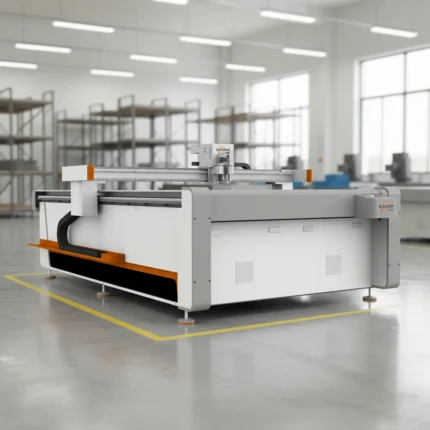
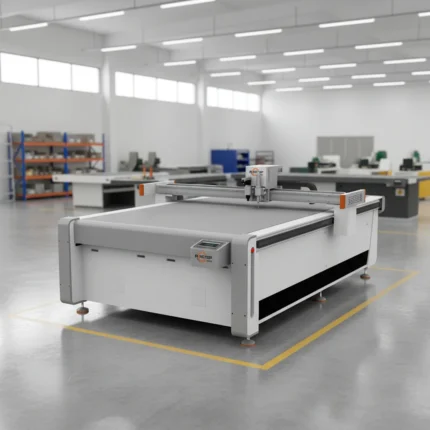
2026 Digital Flatbed Cutting Plotter Auto Corrugated Box Die Cutter
Product Introduction
Digital Flatbed Cutting Plotter 2026, ideal for auto corrugated box die cutting, offering precision and efficiency for professional packaging production.Specifications
| Type | Digital Flatbed Cutting Plotter |
| Model | 2026 |
| Application | Auto Corrugated Box Die Cutting |
| Function | Precision Cutting & Plotting |
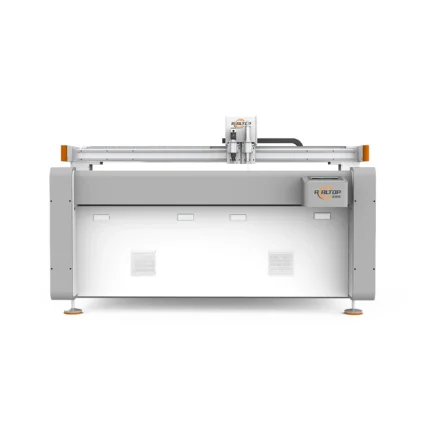
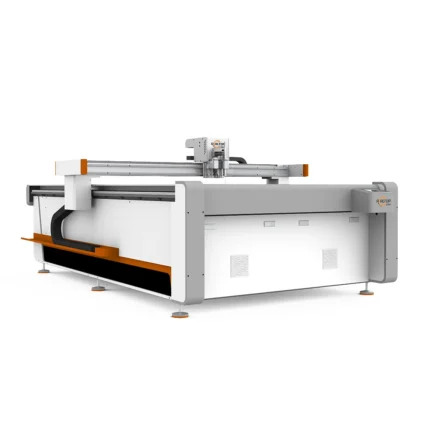
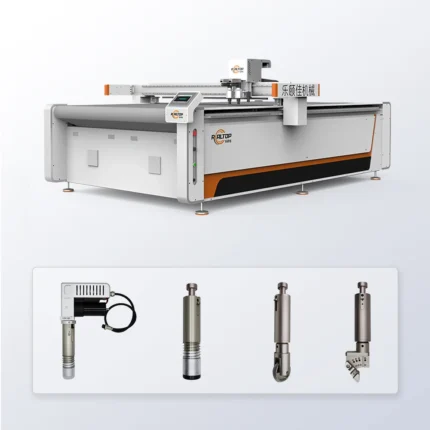
Automatic Die-less Cardboard Vibrating Knife Cutter 2026
Product Introduction
Automatic Die-less Cardboard Vibrating Knife Cutter 2026, a precision cutting solution for cardboard materials, featuring advanced die-less technology for efficient and flexible cutting operations. Ideal for various cardboard processing needs in manufacturing and packaging industries.Key Specifications
| Model | 2026 |
| Type | Automatic Die-less Cutter |
| Cutting Tool | Vibrating Knife |
| Material | Cardboard |
CNC Vibrating Knife Cutter 2026 Custom Cartons Packaging
Product Introduction
CNC Vibrating Knife Cutter 2026 is ideal for custom cartons & packaging, offering precise cutting solutions for various materials. Engineered by a leading Chinese welding & cutting equipment manufacturer, it ensures efficiency and accuracy for packaging production needs.Key Specifications
| Model | 2026 |
| Type | CNC Vibrating Knife Cutter |
| Application | Custom Cartons & Packaging |
| Manufacturer | Chinese Leading Factory |
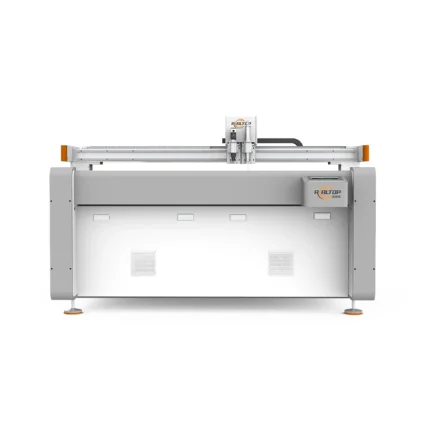
Digital Box Cutter 2026 Oscillating Knife Cardboard Cutter
Product Parameters
| Model | Digital Box Cutter 2026 |
| Cutting Type | Oscillating Knife |
| Material | Corrugated Cardboard |
Introduction
Professional oscillating knife cutting machine for corrugated cardboard. Ideal for precise, efficient cutting in packaging production. Reliable performance from China's leading welding & cutting equipment manufacturer.

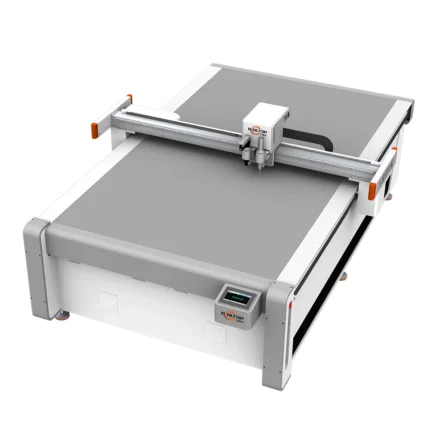
REALTOP 2026 Digital Industrial Cardboard Box Cutter
Product Introduction
REALTOP Digital Industrial Cardboard Box Cutter Machine 2026 is a professional industrial-grade cutting equipment designed for efficient cardboard box processing, ideal for manufacturing and packaging applications.
Product Parameters
| Model | 2026 |
| Type | Digital Industrial Cardboard Box Cutter |
| Application | Cardboard Box Processing |
| Feature | Industrial-grade, Efficient Cutting |
商品评价
There are no reviews yet.