






Realtop-2516 CNC Cutter for Corrugated Packaging – OEM Available
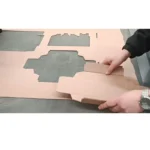
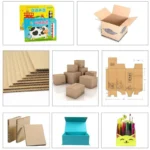
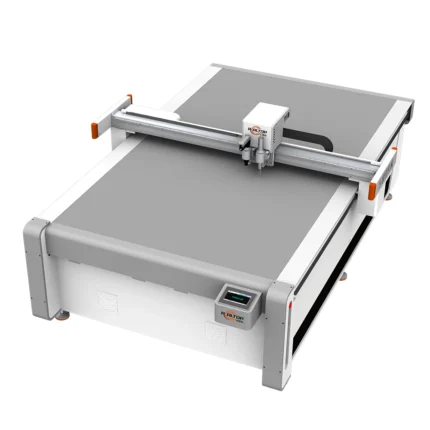
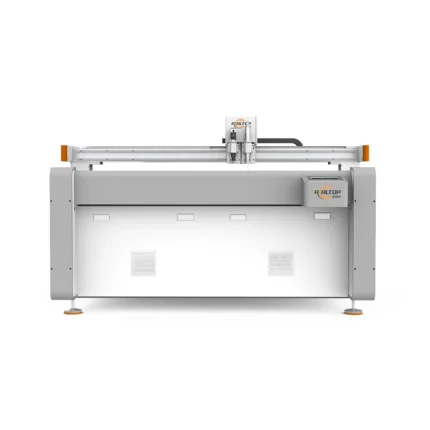
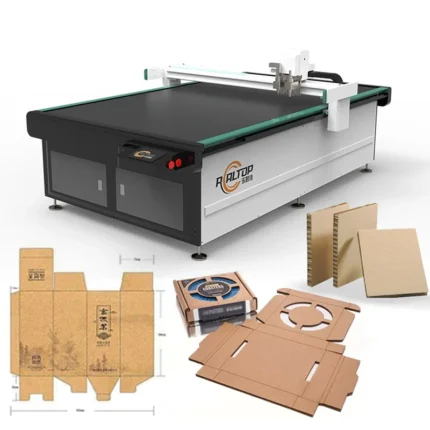
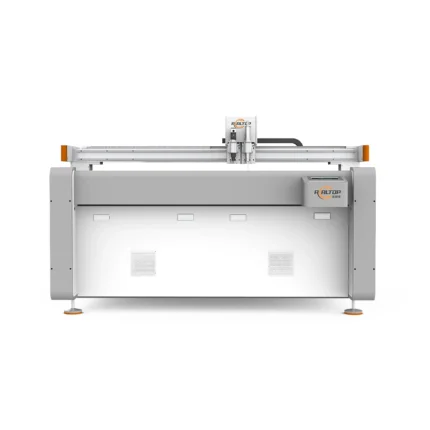
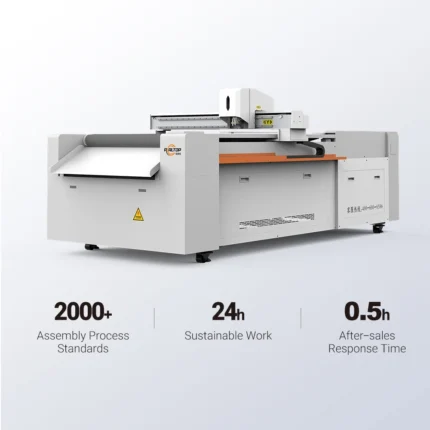
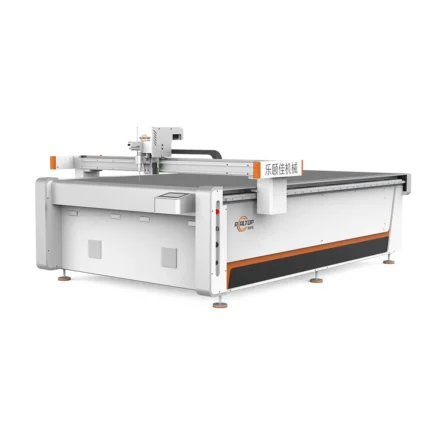
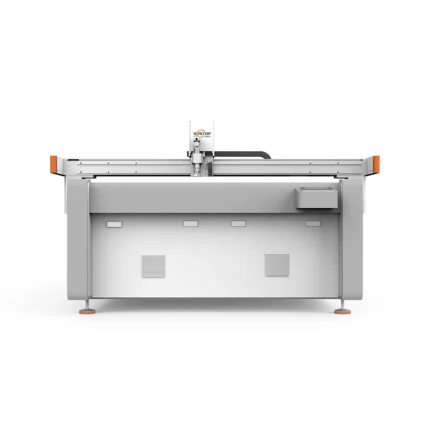
RT-D2516/RT-S2516 CNC Oscillating Knife Cutting Machine, 1600×2500mm, 9kW — configured for corrugated packaging sample making and short-run carton production.
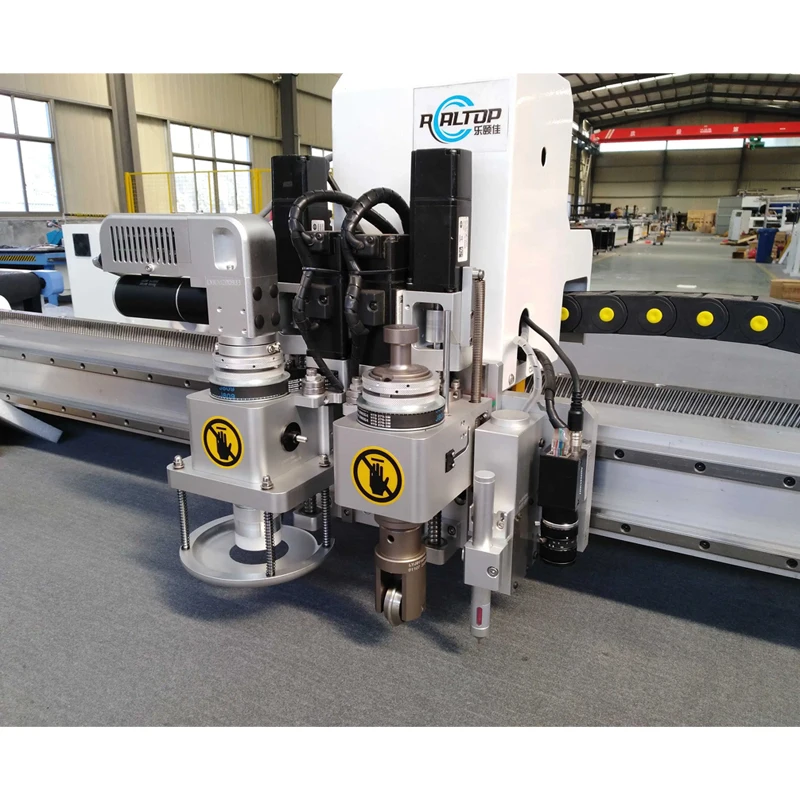
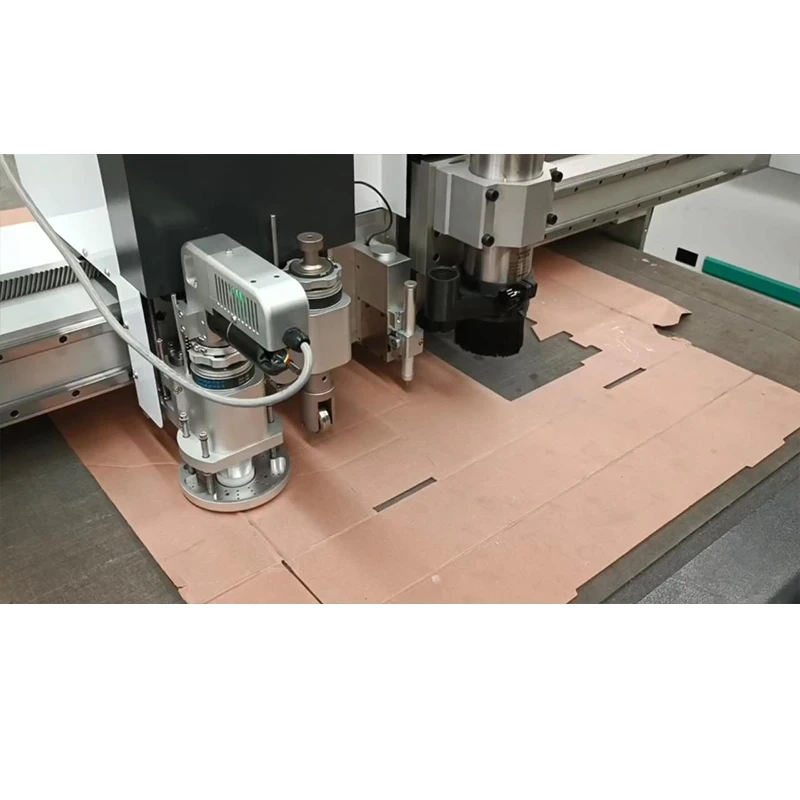
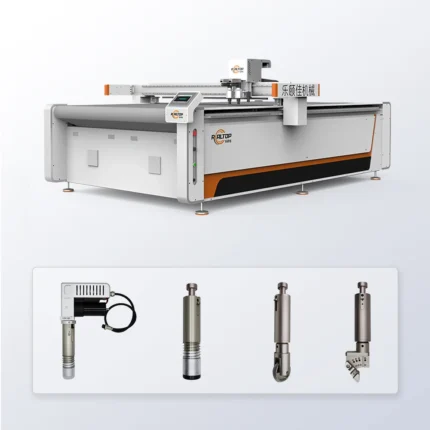
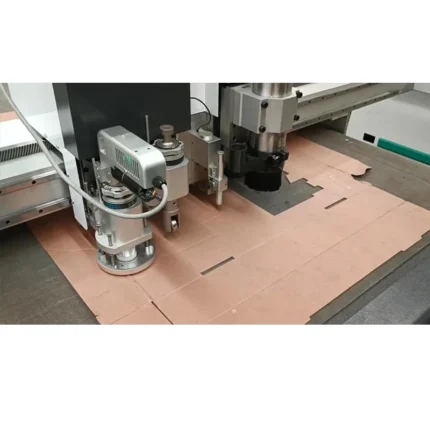
- Multi-tool head with oscillating knife, creasing wheel and kiss-cut tool processes cutting and creasing in a single pass
- Aluminum honeycomb vacuum table with zoned adsorption holds small carton parts flat during high-speed operation
- CCD-ready configuration supports printed contour work with <0.05mm repeatability
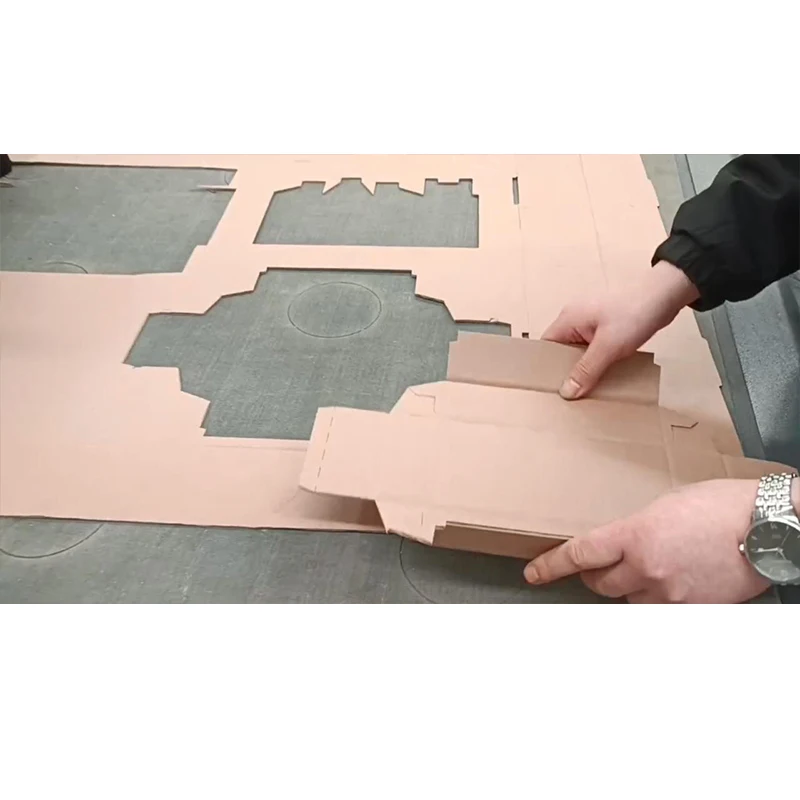
Sample cutting on your own board material confirms edge quality and crease depth before order commitment.
31167 % 3 = 1 → 方向: Sample cutting on buyer’s own material before commitment (Core Strengths)
已应用。
In-house knife and laser cutting design — The RT-D2516/RT-S2516 CNC flatbed table is engineered and built under one roof, allowing the cutting method to match the material rather than forcing a single process onto every packaging substrate.
Technical Specifications
| Parameter | Value |
|---|---|
| Model | RT-D2516 / RT-S2516 |
| Product Type | CNC Oscillating Knife Cutting Machine |
| Working Area | 1600 × 2500 mm |
| Machine Footprint | 3450 × 2300 × 1250 mm |
| Rated Power | 9 kW |
| Vacuum Pump | 7.5 kW |
| Voltage | 380V (50/60 Hz confirmation required) |
| Cutting Thickness | ≤ 18 mm (basis to be confirmed per material) |
| Tool Head Options | Oscillating knife, Creasing tool, Kiss-Cut Knife, Round punch |
| Repeatability | < 0.05 mm |
| Servo System | Dongling / Delta servo motors |
| Guide Rail | Taiwan Hiwin |
| Fixing Method | Vacuum table adsorption |
| Safety Devices | Infrared sensors, Emergency stop |
| File Format Support | DXF, OLT, PDF, AI |
Application Suitability
| Application | Material or Output |
|---|---|
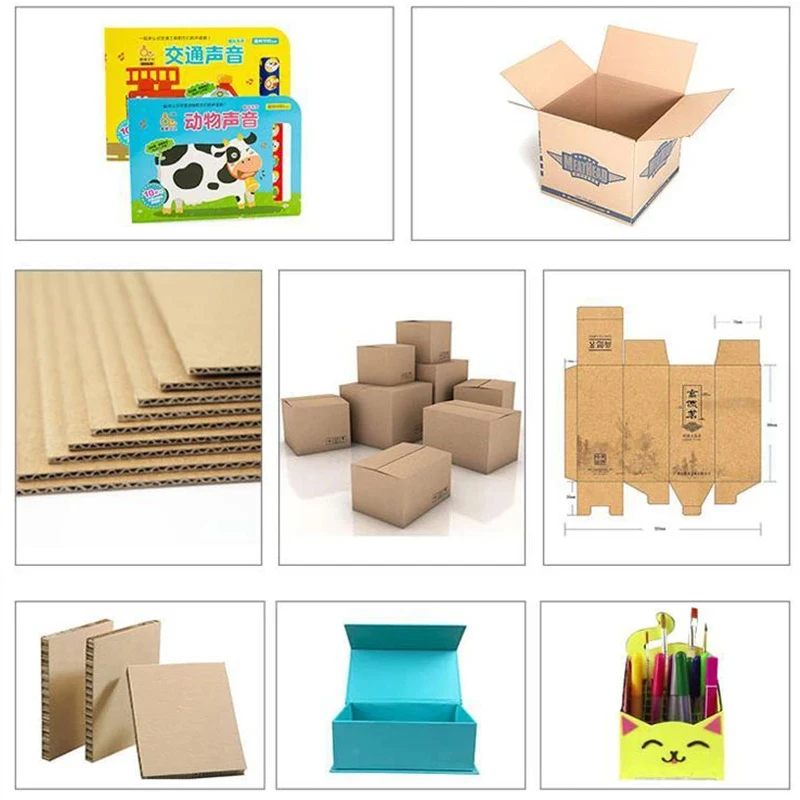
| Corrugated packaging sample making | 3-ply to 5-ply corrugated board, single and double-wall flute |
| Folding carton prototyping | Grey board, white card stock, art paper |
| Sticker and label die-cutting | Vinyl, PP paper, adhesive-backed films (kiss-cut and through-cut) |
| Point-of-purchase display production | Honeycomb board, foam board, Re-board |
| Gasket and technical part cutting | Leather, non-woven fabric, composite sheets |
Why "Cutting Thickness" Alone Cannot Define Capability
A quoted 18 mm cutting depth on corrugated board is not the same as 18 mm on dense grey board.
Many buyers focus on the maximum cutting thickness number without asking which material it was measured on. A 3-ply E-flute sheet behaves completely differently under an oscillating knife compared to a 5-ply double-wall stock or a laminated honeycomb panel. The density, flute profile, and adhesive layers all change how the blade engages the material. Without a sample cutting test on the buyer’s actual stock, that thickness figure remains a starting point, not a guarantee [NEED_CITE: cutting depth verification standards across corrugated flute profiles]. This is where a CO2 laser cutting and engraving machine manufacturer often cross-sells knife systems — the two processes cover different material realities, and conflating them leads to ragged edges and crushed corrugation on the shop floor.
Process Selection: Knife versus Thermal on Board Substrates
When a packaging converter cuts corrugated board with a laser, the beam seals the edge but leaves carbon residue on the flute tips and a burnt smell that lingers in the finished carton. An oscillating knife avoids thermal damage entirely, leaving a clean mechanical cut that is acceptable for food-contact packaging and cosmetics boxes where edge appearance matters. The RT-D2516/RT-S2516 addresses this by running a high-frequency oscillating blade through the substrate while the vacuum table holds the sheet flat, producing a fiber-level shear rather than a melt.
Multi-Tool Head Workflow in a Single Pass
Packaging sample making often requires cutting the outer contour, creasing the fold lines, punching registration holes, and kiss-cutting an adhesive label area — all on the same sheet. Switching between machines or resetting the material for each operation introduces registration drift. The multi-tool head carriage on this flatbed table carries an oscillating knife, creasing wheel, kiss-cut blade, and round punch simultaneously, executing every operation from one file import. This eliminates the cumulative tolerance stack that occurs when a sheet is moved between separate cutting and creasing stations [NEED_CITE: registration tolerance accumulation in multi-pass packaging workflows].
Reading the Spec Sheet for Production Reality
The 1600 × 2500 mm working area accommodates a full standard packaging sheet without repositioning, which matters because stopping mid-sheet to re-clamp breaks the cutting path and introduces a visible seam on the finished sample. The 7.5 kW vacuum pump paired with zoned adsorption addresses a common failure point: small carton flaps and narrow gasket strips lifting off the table when the blade exits the cut. The < 0.05 mm repeatability specification governs how tightly the oscillating knife can follow a printed contour line, which directly determines whether a crease lands on the printed fold mark or drifts into the graphics. The 9 kW rated power accounts for the servo drives, vacuum pump, and oscillating motor running simultaneously, so the electrical supply must be sized for continuous draw, not just peak startup.
The Hidden Cost of a Mis-Specified Tool Head
Choosing a drag knife for 5-ply corrugated board instead of an oscillating knife compresses the flute structure rather than shearing it, leaving a visibly crushed edge that rejects the sample on the buyer’s desk. A creasing wheel set to the wrong pressure for the board grammage either fails to score deep enough for a clean fold or cuts through the top liner, turning a folding carton into scrap. These are not machine defects — they are configuration errors that surface only when the operator loads a material the tool head was never matched to [NEED_CITE: oscillating knife versus drag knife edge quality on corrugated substrates]. The cost shows up as rework time, wasted board, and delayed sample approval from the brand client.
Why Source This Machine Through the Laser and Knife Cutting Factory
In-house design covering both knife and laser cutting technologies means the RT-D2516/RT-S2516 was not adapted from a generic engraving frame — the gantry stiffness, servo tuning, and vacuum table zoning were specified for the lateral forces of an oscillating blade cutting dense board. Tool head and table configuration are matched per material and production volume before the order is confirmed, so a sticker converter and a corrugated sample maker receive different machine setups even though the model number is the same. Voltage, plug type, and control language are verified against the buyer’s facility specification sheet before shipment rather than assumed from the destination country. Sample cutting on the buyer’s own material is completed before commitment, producing a physical report that shows edge quality, crease depth, and contour accuracy on the actual stock that will run in production.
Documentation & Verification
- Machine specification sheet confirming working area, tool head list, and vacuum pump rating
- Electrical schematic with voltage and frequency confirmed against your facility supply
- Tool head and table configuration list matched to your board flute and grammage
- Sample cutting report on your own corrugated or card stock material before order
- Software licence note confirming DXF, AI, and PDF file format compatibility
- Operation and maintenance manual with spare parts list including oscillating blades
Installation, Commissioning & Support
- 3450 × 2300 mm footprint requires a level concrete floor with clearance for sheet loading on three sides
- 380V three-phase supply with dedicated circuit rated above the 9 kW machine draw plus vacuum pump
- Machine ships fully assembled; gantry and tool head carriage require post-transit alignment check on arrival
- First-run commissioning includes vacuum zone calibration and oscillating knife depth setting on your board stock
- Operator training covers tool head changeover, creasing wheel pressure adjustment, and file nesting workflow
- Ten oscillating blades included; felt belt and knife blades excluded from the one-year warranty coverage
Inquiry Preparation
Before requesting a quotation, prepare the specific board flute profiles and grammage you intend to cut, the maximum sheet size in your current packaging designs, and the daily sample volume your studio produces. Confirm your facility voltage and frequency, preferred control language, and whether your existing design files are in DXF, AI, or another vector format. If your workflow includes printed contour cutting, note the registration mark size and placement so the configuration can be matched to your print output.
Frequently Asked Questions
Q: When should a packaging converter choose knife cutting over laser for board materials?
A: Knife cutting is preferred when the finished carton must be free of burn marks, carbon residue, or thermal odour — common requirements for food, cosmetics, and pharmaceutical packaging. Laser cutting seals synthetic edges and suits acrylic or fabric, but corrugated board and card stock produce cleaner, fibre-level cuts with an oscillating knife and no heat-affected zone.
Q: How is the cutting thickness verified for a specific corrugated flute profile?
A: The quoted thickness figure must be confirmed against your actual board stock because E-flute, B-flute, and double-wall profiles behave differently under the blade. A sample cutting test on your material produces a report showing edge quality, crease accuracy, and any flute compression, allowing tool head pressure and oscillation frequency to be set before the order is placed.
Q: Can the voltage and control language be customised for my facility?
A: The standard configuration is 380V, but the frequency (50 or 60 Hz) and plug type must be confirmed against your local electrical standard before shipment. Control language options include English, Russian, Italian, and Chinese, with other languages configurable at the factory based on the operator interface requirements of your production team.
Q: Why do small carton parts sometimes lift off the table during cutting?
A: Small parts and narrow strips lose vacuum hold once the surrounding material is cut away, allowing the oscillating knife to drag or lift the piece on the exit stroke. Zoned vacuum adsorption directs suction only to the active cutting area, maintaining grip on smaller geometries. The table configuration must be matched to the typical part size in your packaging designs.
Q: Is sample cutting available before committing to the order?
A: Yes. You send your actual corrugated board, card stock, or label material to the factory, and a sample cutting run is performed using the recommended tool head and table configuration. The resulting sample and cutting report show edge quality, crease depth, and contour accuracy on your own stock, confirming the machine setup before production begins


Related products
Automatic CNC Cutter Plotter 2026 Flat Bed Cardboard Cutter
Product Introduction
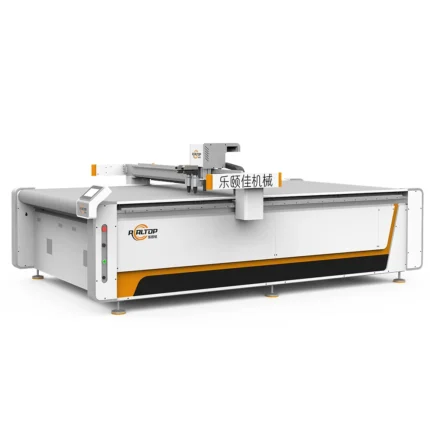
Automatic CNC Cutter Plotter 2026 is a flat bed cardboard cutting machine designed for precise and efficient cutting tasks. Ideal for various cardboard processing needs, it combines advanced CNC technology to deliver accurate results, suitable for manufacturing and packaging applications.Product Parameters
| Type | Automatic CNC Cutter Plotter |
| Model | 2026 |
| Design | Flat Bed |
| Application | Cardboard Cutting |
Automation CNC Pizza Box Machine 2026 Rotary Die Cutting
Product Parameters
| Type | Automation CNC Pizza Box Machine |
| Model Year | 2026 |
| Rotary Die Cutting | |
| Operation | Automated CNC Control |
Introduction
This 2026 Automation CNC Pizza Box Machine features advanced rotary die cutting technology, ensuring precise and efficient pizza box production. With automated CNC control, it offers high productivity and accuracy for professional manufacturing needs.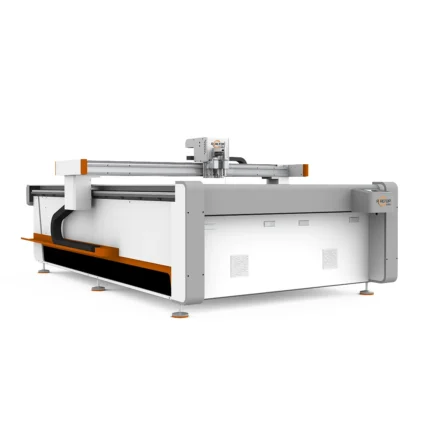



Digital CNC Cardboard Cutting Machine 2026
Product Introduction
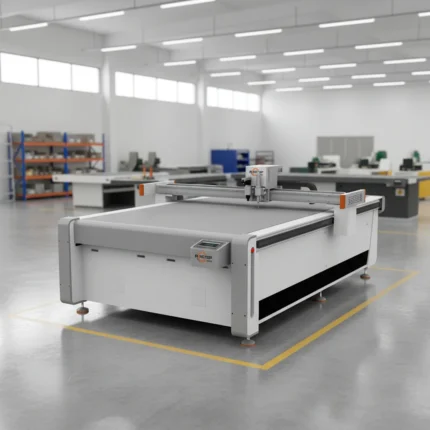
High-precision Digital CNC Cardboard Cutting Machine 2026, ideal for efficient cardboard processing with advanced CNC technology, ensuring precise and fast cutting performance for various packaging and craft applications.
Key Specifications
| Model | 2026 |
| Type | Digital CNC Cutting Machine |
| Material | Cardboard |
| Feature | High Precision, Efficient Cutting |
Realtop 2026 Digital Box Cutter High-Speed Corrugated Board
Product Introduction
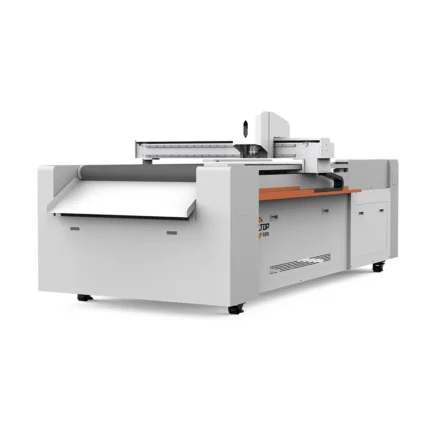
Realtop Digital Box Cutting Machine 2026 is a high-speed solution for corrugated board cutting, designed for efficient and precise box production in manufacturing settings.Key Specifications
| Model | 2026 |
| Type | Digital Box Cutting Machine |
| Application | Corrugated Board |
| Feature | High-Speed Cutting |
商品评价
There are no reviews yet.