

Realtop CNC Gasket Cutter – Oscillating Knife Cutter for Rubber PTFE
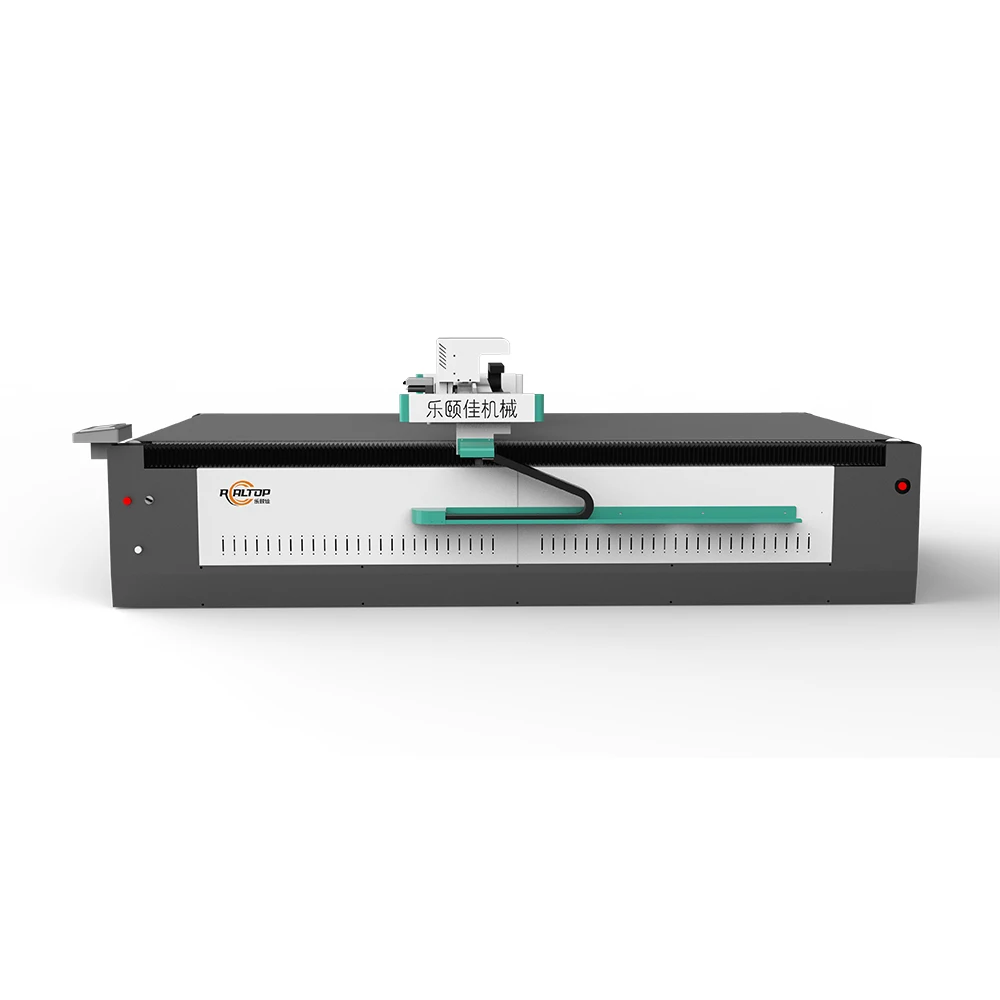
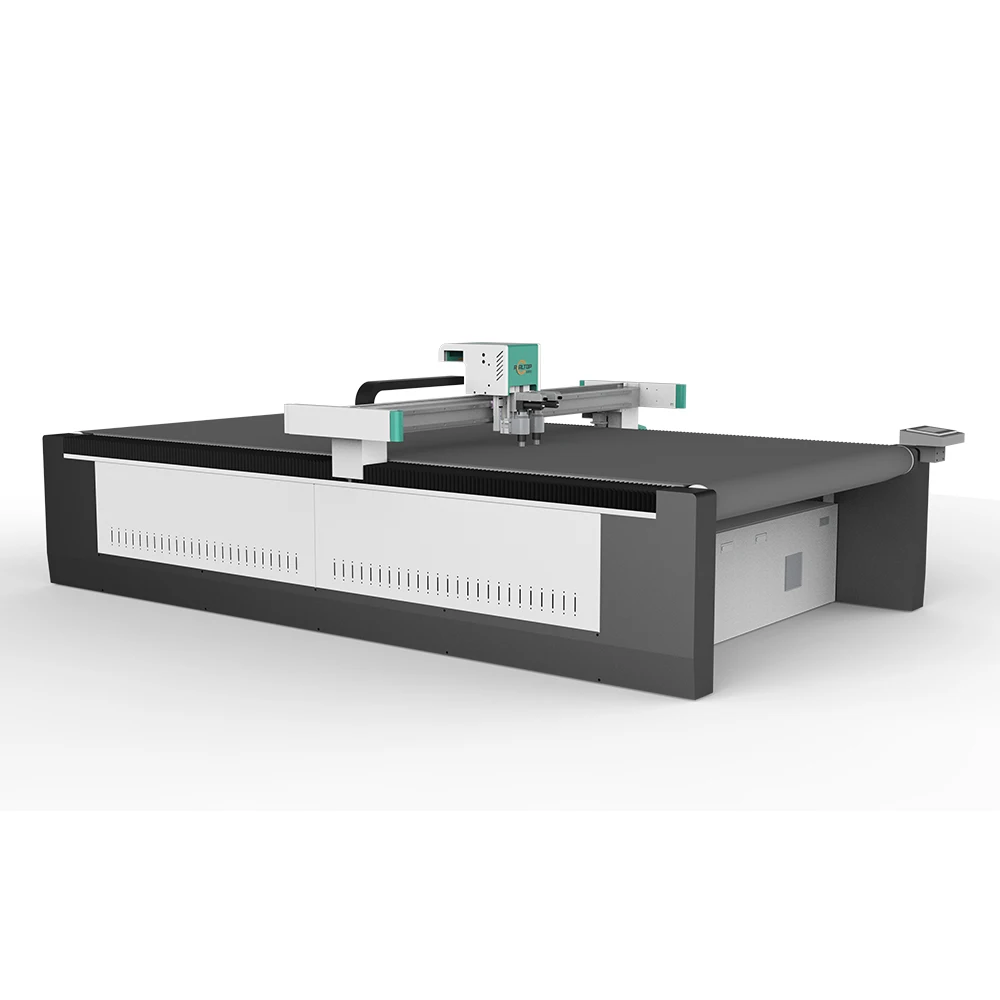
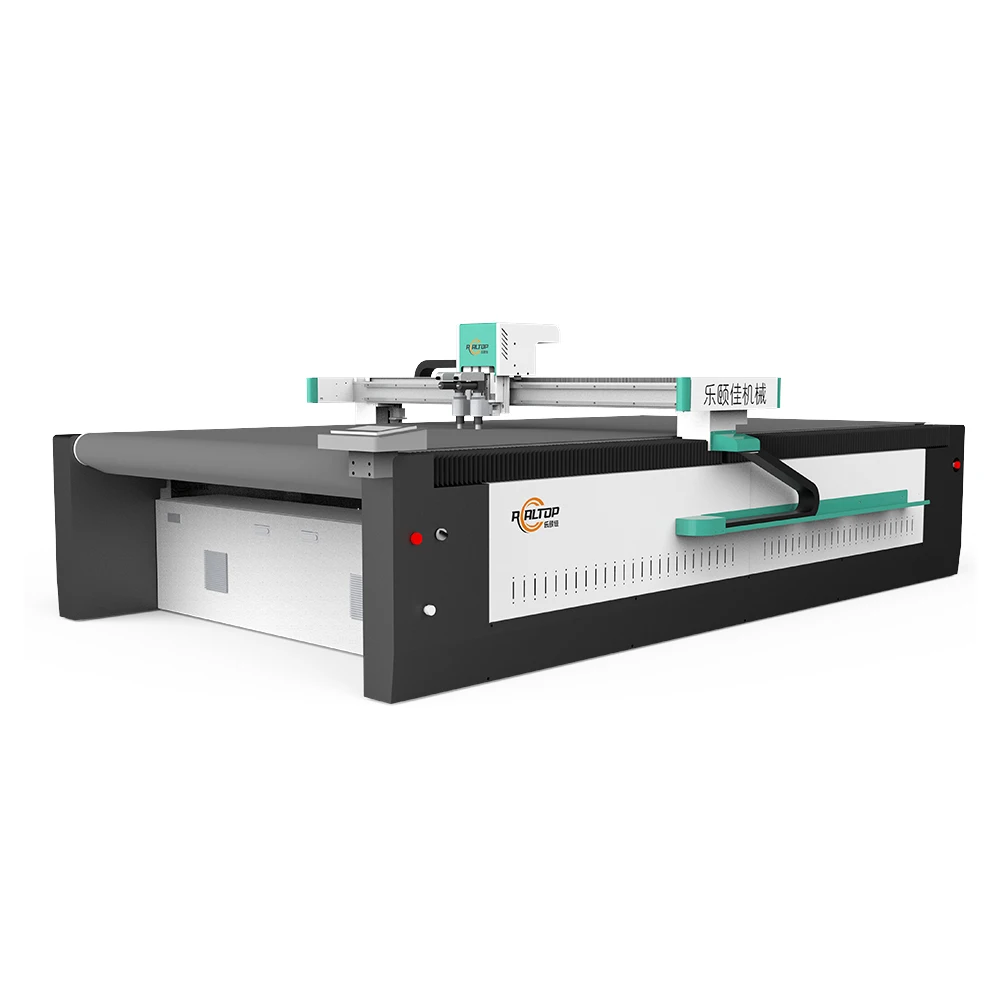
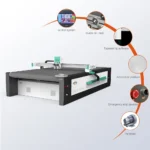
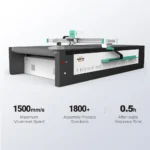
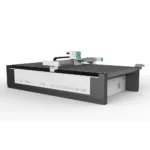
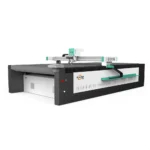
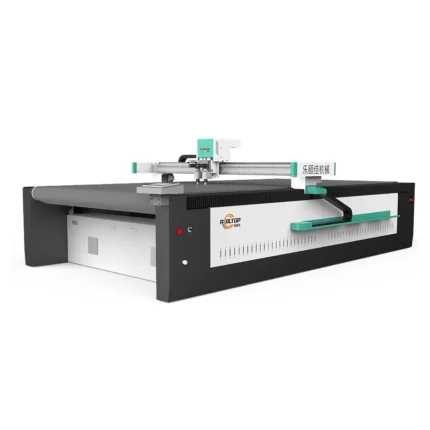
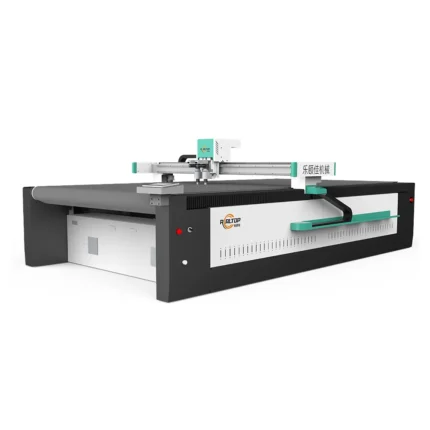
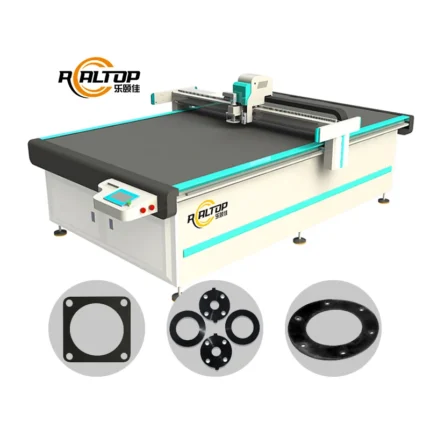
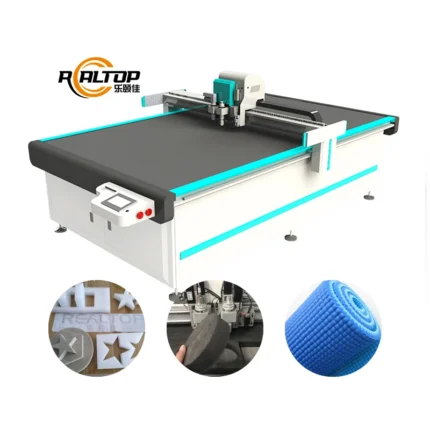
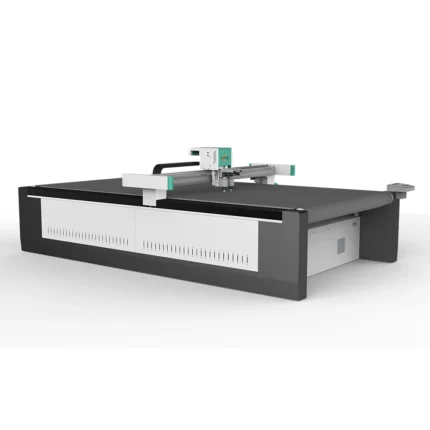
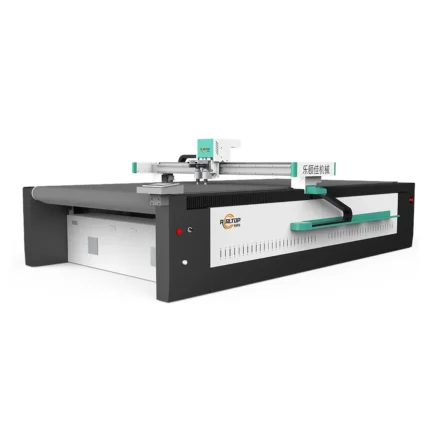
Realtop 1625 CNC Gasket Cutting Machine, 1600×2500mm, Oscillating Knife, ±0.1mm Accuracy — engineered for PTFE, rubber and composite gasket fabrication with cold-cutting technology that avoids thermal damage and charring.
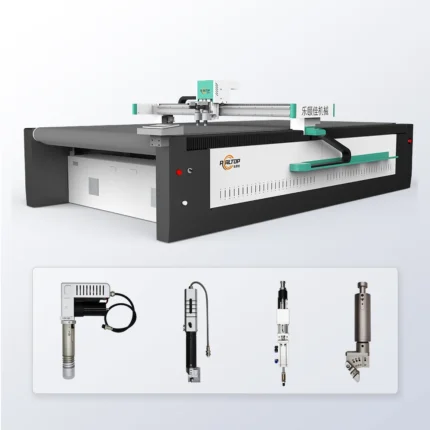
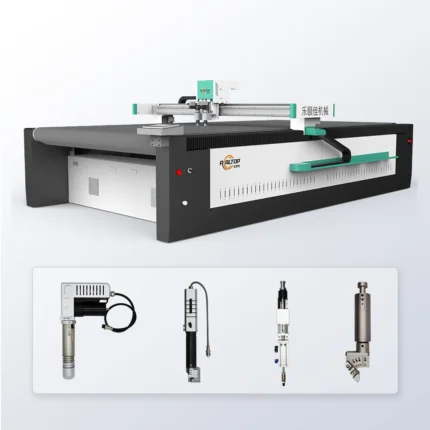
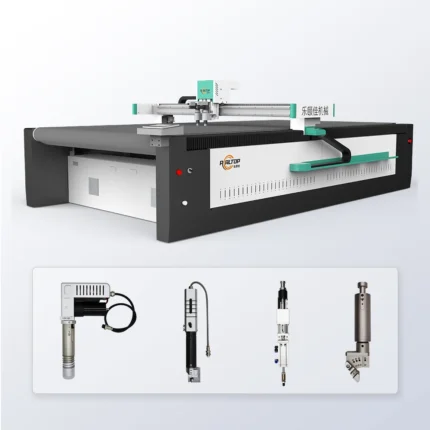
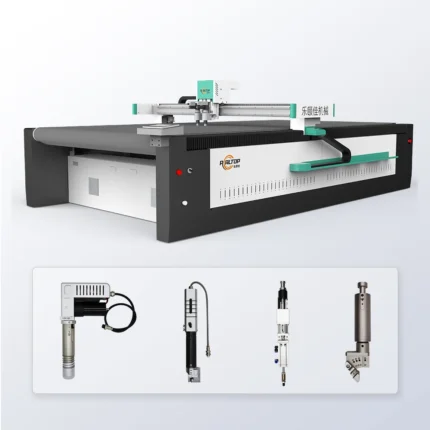
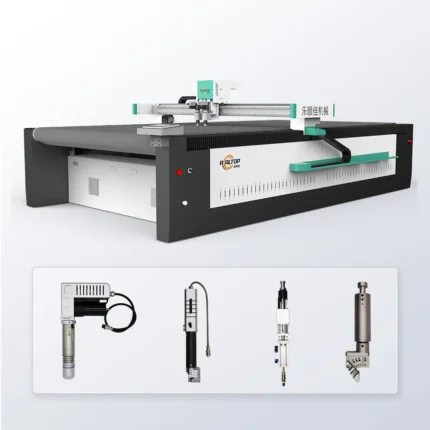
- Multi-tool head system supports oscillating knife, pneumatic knife, V groove and kiss cutting for varied gasket stock
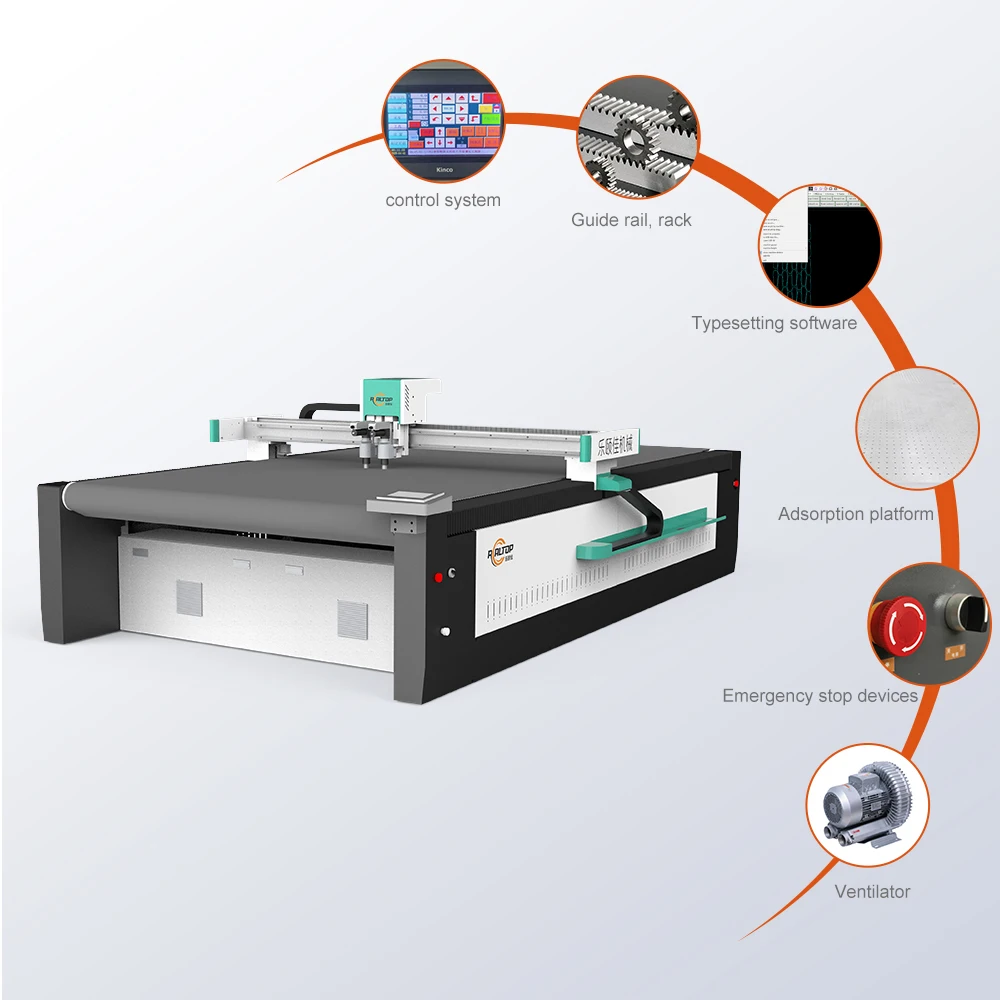
- Aluminum bellows vacuum table provides full-surface adsorption, preventing lift on small gasket parts
- PLC control panel imports PLT, DXF, AI and PDF files directly
Sample cutting on your own gasket material available before commitment.
Tool head matched to material — Every 1625 oscillating knife setup is specified against the buyer’s actual PTFE, rubber, or composite gasket stock, not a generic factory demo sheet.
Technical Specifications
| Parameter | Value |
|---|---|
| Product Type | CNC Oscillating Knife Gasket Cutting Machine |
| Model | 1625 |
| Working Area | 1600×2500 mm |
| Tool Head Options | Oscillating knife, Driven rotary knife, Creasing wheel, Kiss cutting tool, Pneumatic knife, Milling tool, V groove knife |
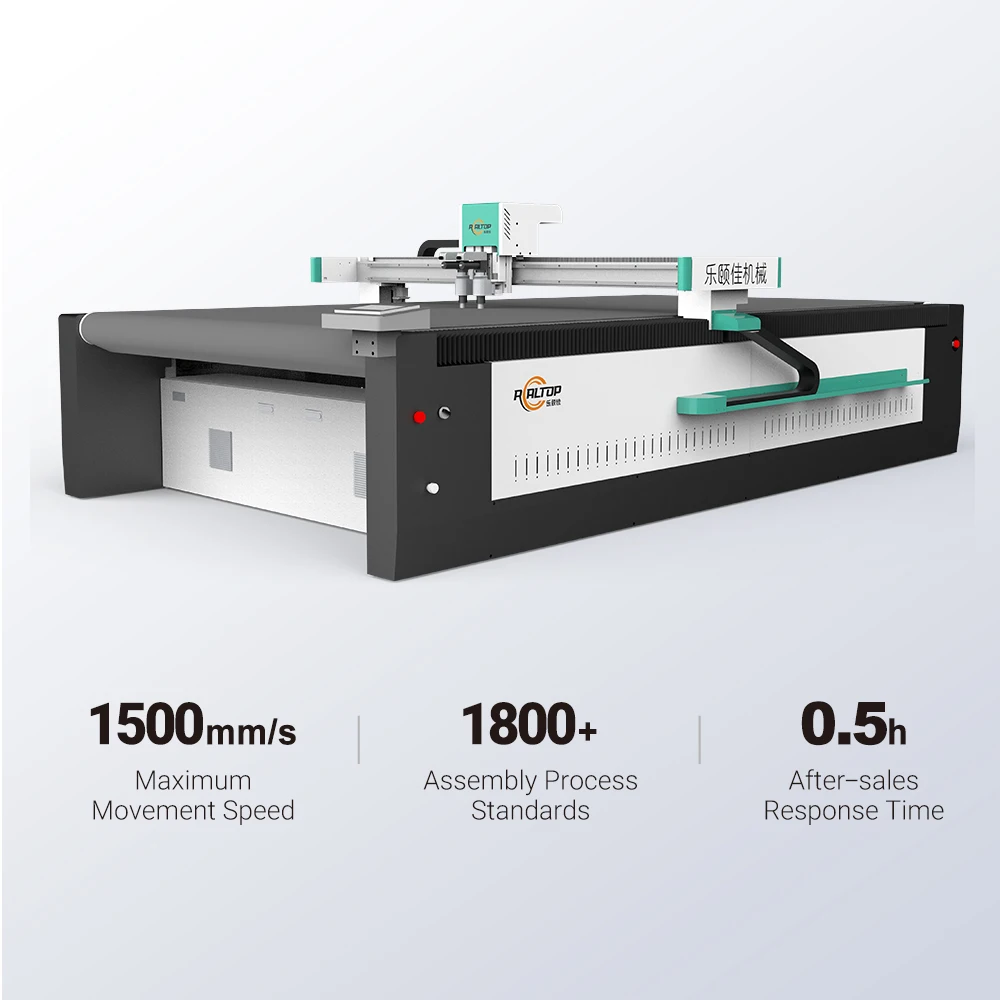
| Cutting Speed | 0–2000 mm/s |
| Cutting Thickness | ≤30 mm (basis not stated in source) |
| Positioning Accuracy | ±0.1 mm |
| Vacuum Pump Power | 9 kW |
| Voltage Options | 110V / 220V / 380V (frequency to be confirmed per market) |
| Control System | PLC control panel with optional display languages |
| File Format Compatibility | PLT, DXF, AI, PDF |
| Safety Device | Infrared sensor device and emergency stop device |
| Machine Dimensions (L×W×H) | 3300×2100×1350 mm |
| Vacuum Table Type | Aluminum bellows vacuum table |
| Servo Motor Options | Panasonic, Delta, Dorna |
| Language Options | English, Russian, Italian, Chinese (special languages customizable) |
| Certification | CE |
Application Suitability
| Application | Material or Output |
|---|---|
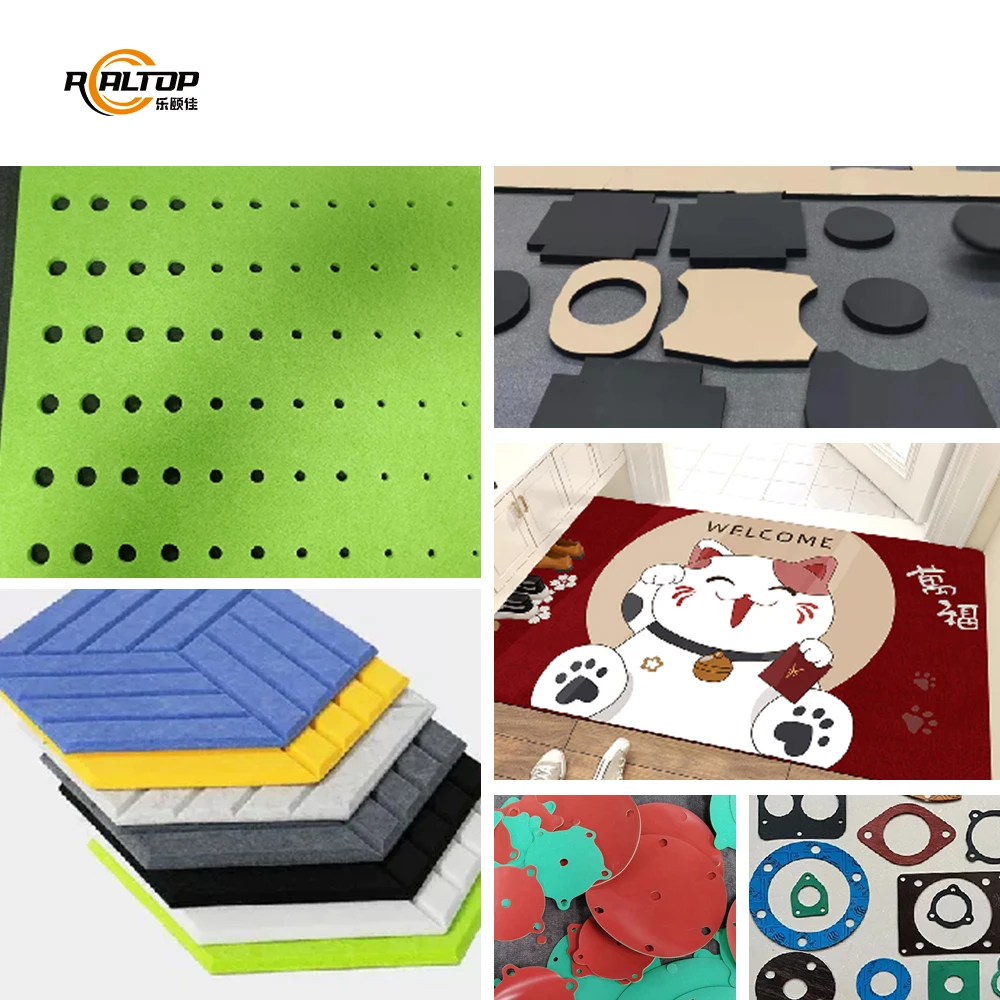
| Industrial gasket and seal fabrication | PTFE, rubber, and composite sealing materials |
| Aerospace seals and insulation pads | High-temperature composite laminates and aramid honeycomb |
| Automotive interior and damping components | Sealing strips, EVA, foam, and vibration-damping pads |
| Wind power blade preforms | Infusion mesh, core materials, and fiberglass cloth |
| Sporting goods composite components | Carbon fiber prepreg, Kevlar, and G10 epoxy boards |
Why Peak Power Ratings Leave Your Gasket Edges Unfinished
Many non-metal cutting purchases start with a single power number that later fails to deliver on actual material thickness. A CNC Gasket Cutting Machine for laser and engraving processor sidesteps this trap entirely — the oscillating knife cuts to a physical blade depth you can measure on your own stock, not a wattage claim that behaves differently at the edge of a 20mm PTFE sheet. I have seen gasket buyers commit to a machine rated for 25mm, only to discover that rating was tested on soft foam, not the dense PTFE board they run every shift. The tool head stalls, edges delaminate, and the shop floor ends up finishing parts by hand. [NEED_CITE: material density and hardness effect on oscillating knife cutting depth capacity]
How Cold Cutting Preserves Gasket Integrity
Thermal cutting methods introduce a heat-affected zone that alters the molecular structure at the edge of PTFE and composite gasket materials. The 1625 oscillating knife operates as a cold-cutting process, leaving the material edge mechanically intact and free from charring, micro-cracks, or toxic fume residue. This matters directly when gasket seals must maintain compression recovery and chemical resistance across their full profile — properties that degrade at the margin when heat enters the cut. The CNC Gasket Cutting Machine for laser and engraving processor delivers edges that meet sealing specifications straight off the table.
Multi-Tool Head Strategy for Mixed Gasket Runs
A gasket shop rarely cuts one material all week. The 1625 platform supports interchangeable tool heads — oscillating knife for dense PTFE and rubber, pneumatic knife for thicker composite stacks, kiss cutting for adhesive-backed seal layers, and V groove knife for fold-line scoring on packaging or insulation boards. Each head mounts to the same gantry, so a single machine covers the full material spectrum without requiring separate capital equipment. Tool head selection is confirmed against the buyer’s material sample before the order is finalized. [NEED_CITE: oscillating knife versus pneumatic knife tool head selection for non-metal materials]
Reading the Specs That Actually Matter for Gasket Work
The ±0.1 mm positioning accuracy governs how tightly the machine can hold tolerance on complex gasket profiles — bolt-hole patterns, stepped flanges, and multi-lobe seals all depend on this repeatability across the 1600×2500 mm working area. The 9 kW vacuum pump paired with the aluminum bellows vacuum table generates the hold-down force necessary to keep thin gasket stock flat; insufficient adsorption lets small seal parts lift during the final cut pass, ruining the edge. Servo motor selection between Panasonic, Delta, and Dorna affects acceleration behavior on intricate contours — higher-response servos reduce corner overshoot on tight gasket geometries. File format compatibility with PLT, DXF, AI, and PDF means most existing gasket nesting workflows import directly without intermediate conversion software.
The Cost of Skipping Material-Specific Calibration
Choosing a tool head based on a brochure rather than a material test is a recurring source of gasket production failure. A blade specified for soft rubber will deflect and fray when it meets a 15mm PTFE sheet, producing ragged edges that fail visual inspection. Vacuum table zoning that works for full-sheet nesting often leaves small gasket parts unsecured near the table perimeter, causing lift marks and dimensional drift. Voltage and plug type confirmed after shipment rather than before can delay commissioning by weeks while the facility sources a transformer. [NEED_CITE: industrial voltage and plug compatibility standards for CNC machinery export]
Why Gasket Producers Source This Machine Here
In-house design covers both knife and laser platforms, so the cutting method is chosen to match the gasket material — not forced into whatever technology the factory happens to build. Every 1625 configuration is specified per the buyer’s material type, thickness, and daily volume, with tool head and vacuum table zoning locked before production begins. Sample cutting on the buyer’s actual PTFE, rubber, or composite stock is completed and documented before any commercial commitment. Software compatibility is verified against the buyer’s existing PLT or DXF nesting files during the pre-order stage. Voltage, control language, and electrical schematics are confirmed in writing to match the destination facility before the machine ships.
Documentation & Verification
- Machine specification sheet listing confirmed tool head and vacuum table zoning for your gasket material
- Electrical schematic and voltage confirmation document matched to your facility supply before shipment
- Sample cutting report on your PTFE, rubber, or composite stock at your specified thickness
- Factory test record documenting positioning accuracy and edge quality on your gasket profile files
- Software license and file format compatibility note for PLT, DXF, AI, and PDF workflows
- Spare parts list covering blades, knife holders, and vacuum table consumables
Installation, Commissioning & Support
- Floor space planning accounting for the 3300×2100×1350 mm machine envelope plus operator access clearance
- Dedicated circuit installation matching the confirmed 110V, 220V, or 380V supply with 9 kW vacuum pump load
- On-site assembly and leveling of the aluminum bellows vacuum table to ensure uniform adsorption
- First-run parameter calibration — oscillation frequency, blade depth, and cutting speed — on your gasket material
- Operator training on tool head changeover, PLC interface navigation, and file import in your confirmed language
- Preventive maintenance schedule covering blade replacement intervals, vacuum pump filter service, and servo inspection
What We Need to Specify Your Machine
To build an accurate 1625 configuration for your gasket production, send your primary material type with thickness range and typical sheet dimensions. Include your local voltage and frequency standard, preferred control panel language, and a sample DXF or PLT gasket file for software compatibility verification. If your smallest gasket part is under 50 mm, flag this so vacuum table zoning can be adjusted accordingly.
Frequently Asked Questions
Q: How is the ≤30 mm cutting thickness verified on my specific gasket material?
A: The thickness rating depends on material density and hardness, not a single universal number. We run sample cuts on your actual PTFE, rubber, or composite stock at your required thickness, then document achievable depth, edge quality, and recommended blade type in a cutting report before you commit to the order.
Q: Which tool head do you recommend for PTFE versus rubber versus fiber composite gaskets?
A: Dense PTFE typically requires the oscillating knife with a high-rigidity blade holder, while softer rubber may suit a pneumatic knife for cleaner through-cuts. Fiber composites often need a driven rotary knife to prevent delamination. We specify the exact head and blade after testing your material sample on our floor.
Q: Can the 1625 import my existing gasket nesting files directly?
A: The control system accepts PLT, DXF, AI, and PDF file formats. We verify compatibility with your specific nesting software output during the pre-order stage by importing your actual files and running a dry-path simulation to confirm contour recognition and toolpath accuracy before shipment.
Q: How are voltage, plug type, and control language confirmed before the machine ships?
A: We issue an electrical schematic and voltage confirmation sheet for your review and signature before production begins. This document locks in your facility’s voltage and frequency, plug standard, and the PLC display language — English, Russian, Italian, Chinese, or a custom language — so no field conversion is needed at arrival.
Q: What does the sample cutting report on my gasket material include?
A: The report documents the material tested, thickness, tool head and blade used, oscillation frequency, cutting speed, and edge quality photographs. It also notes any material-specific observations such as required vacuum hold-down adjustments or recommended blade replacement intervals for your production volume.


Related products
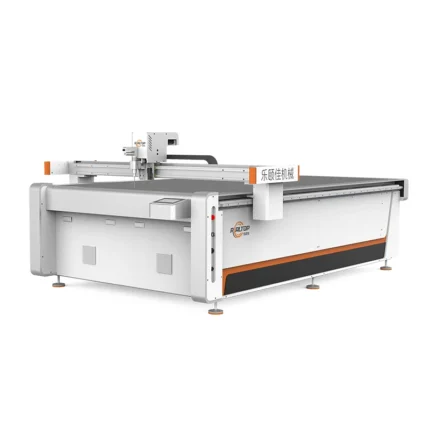
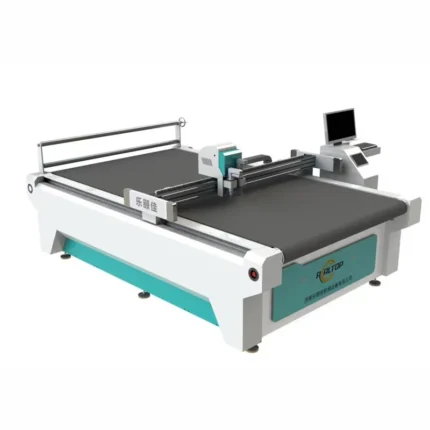
Máquina de corte de juntas de goma CNC totalmente automática 2026
Product Introduction
Full Automatic CNC Rubber Gasket Cutting Machine 2026, a blade-based plastic cutter designed for precise and efficient cutting of rubber gaskets and plastic materials with automated CNC control.Technical Parameters
| Type | Full Automatic CNC Cutting Machine |
| Cutting Method | Blade-Based |
| Application | Rubber Gaskets, Plastic Materials |
| Control System | CNC |
Cortadora de juntas CNC 2026 Certificada ISO de alta calidad
Product Parameters
| Certification | ISO Certified |
| Application | Cylinder Head Gasket Cutting |
| Type | CNC Gasket Cutter |
| Quality | High Quality |
| Year | 2026 |
Introduction
This high-quality CNC Gasket Cutter, ISO certified, is designed for precise cylinder head gasket cutting. Ideal for professional manufacturing, ensuring accuracy and reliability in 2026 production standards.
Cortador CNC de cuchilla oscilante 1625 para juntas de goma, amianto, grafito y PTFE
Product Introduction
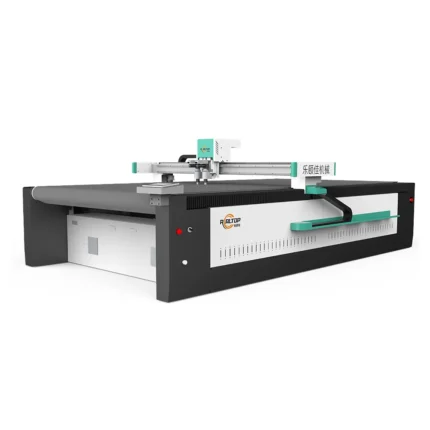
Oscillator Knife CNC Cutter 1625, ideal for precision cutting of rubber, asbestos, graphite, PTFE gaskets. Efficient 2026 model from China's leading welding & cutting equipment manufacturer.Key Specifications
| Model | 1625 |
| Oscillator Knife | |
| Rubber, Asbestos, Graphite, PTFE Gaskets | |
| Type | CNC Cutter |
Cortadora de juntas CNC Realtop 2026 1200¡Á2400mm Cortadora de goma automática
Product Parameters
| Model | Realtop CNC Sealing Gasket Cutter 2026 |
| Working Area | 1200¡Á2400mm |
| Type | Auto Rubber Cutting Machine |
Introduction
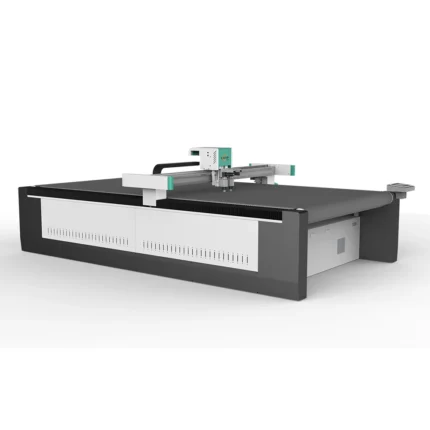
Realtop CNC Sealing Gasket Cutter 2026 is an advanced auto rubber cutting machine with a 1200¡Á2400mm working area, ideal for precise and efficient gasket production, manufactured by a leading Chinese welding & cutting equipment factory.
Cortadora de juntas CNC Realtop 2026 Cuchillo vibrante de alta precisión
Product Introduction
Realtop CNC Gasket Cutting Machine 2026 with high-precision vibrating knife, ideal for cutting rubber and cylinder head gaskets with accuracy and efficiency.
Key Specifications
| Model | Realtop CNC Gasket Cutting Machine 2026 |
| Cutting Tool | High-Precision Vibrating Knife |
| Applicable Materials | Rubber, Cylinder Head Gaskets |
Realtop Graphite Gasket Making Machine 2026 – Advanced Flexible Material Cutter
Product Introduction
Realtop Graphite Gasket Making Machine 2026 is a professional equipment for graphite gasket production, ideal for manufacturing high-quality gaskets with precision and efficiency, suitable for industrial sealing applications.Product Parameters
| Model | Graphite Gasket Making Machine 2026 |
| Brand | Realtop |
| Application | Graphite Gasket Production |
| Feature | Precision Manufacturing |
商品评价
There are no reviews yet.