

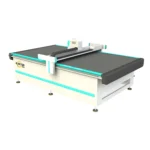
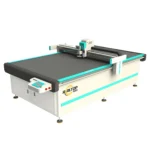
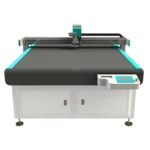
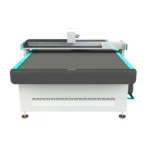
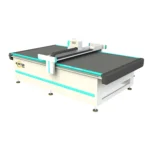
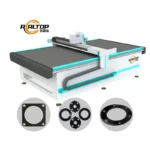
Rubber CNC Cutting Machine for Gasket – OEM Available
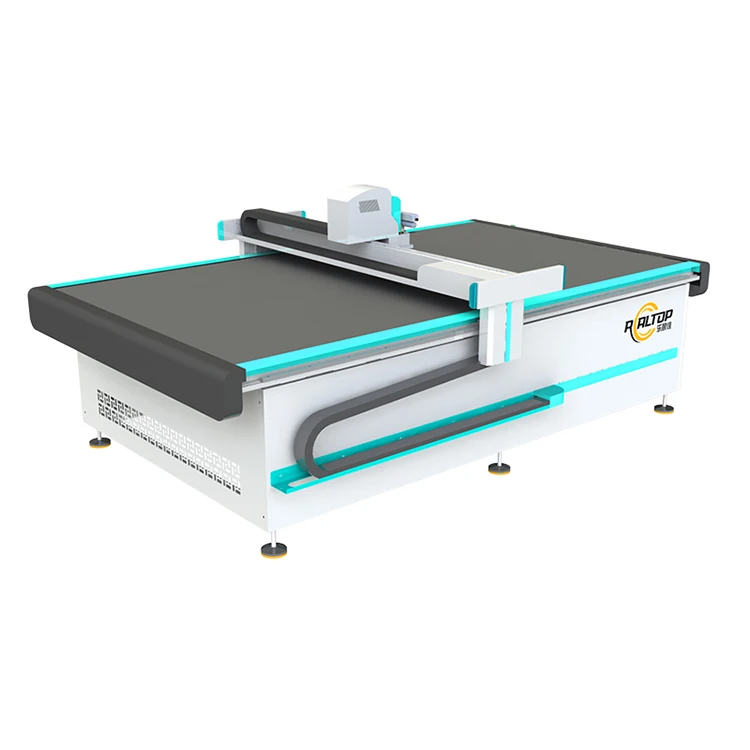
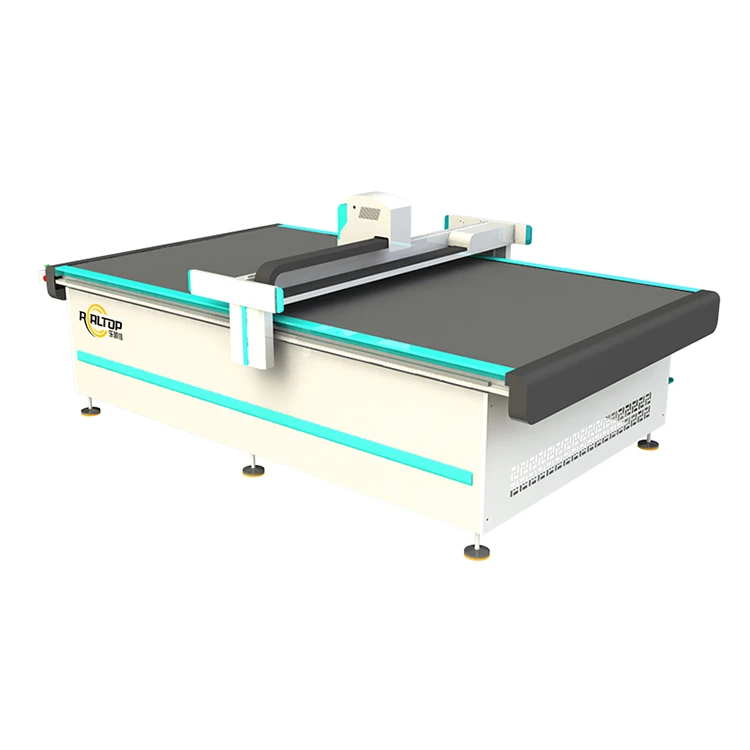
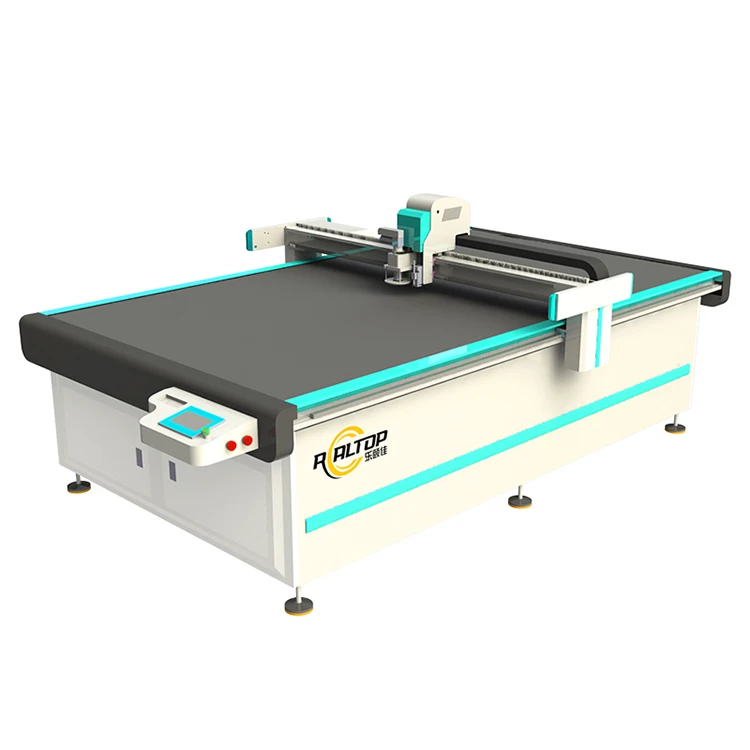
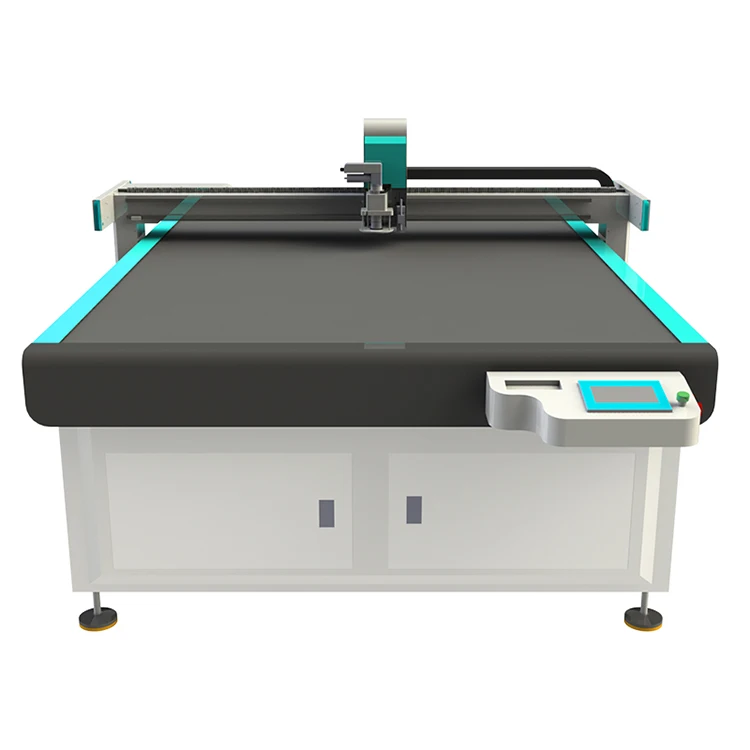
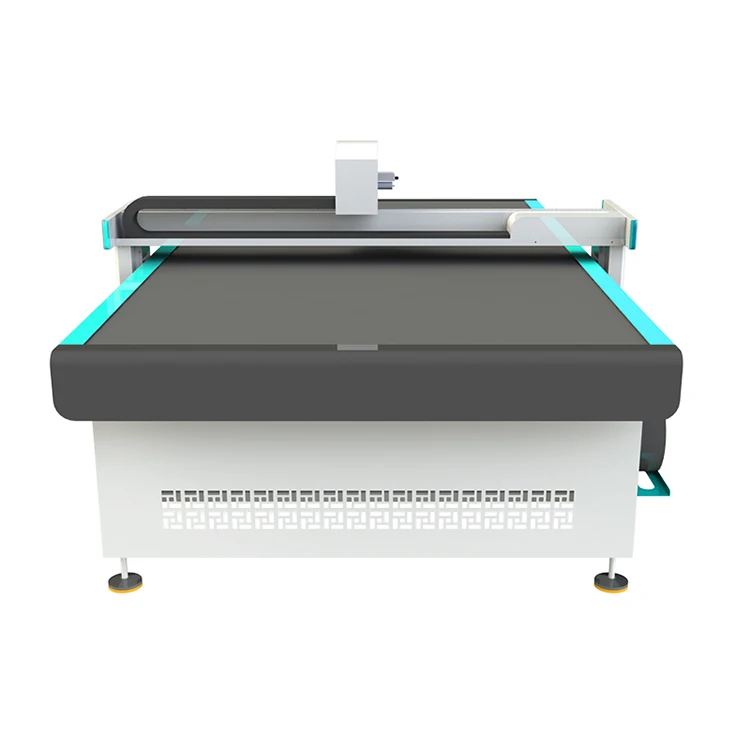
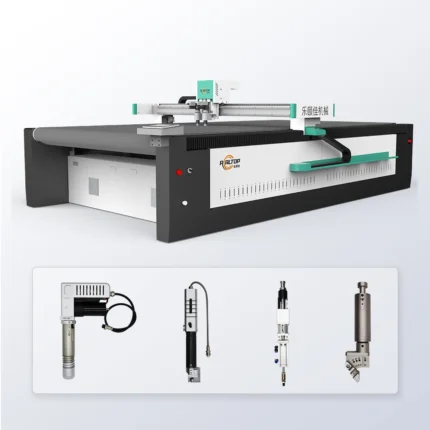
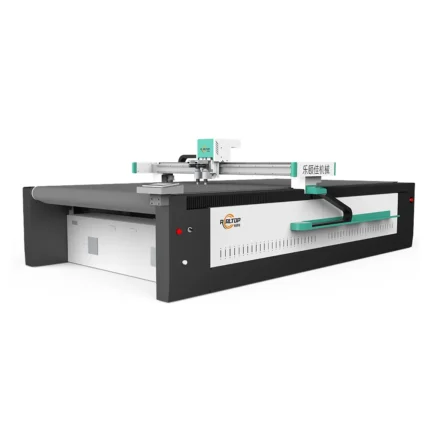
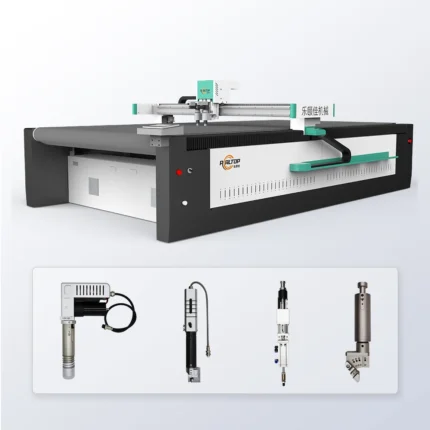
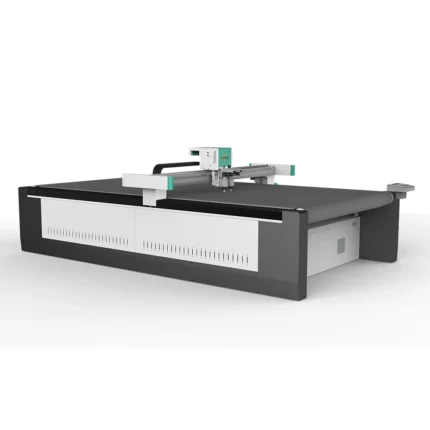
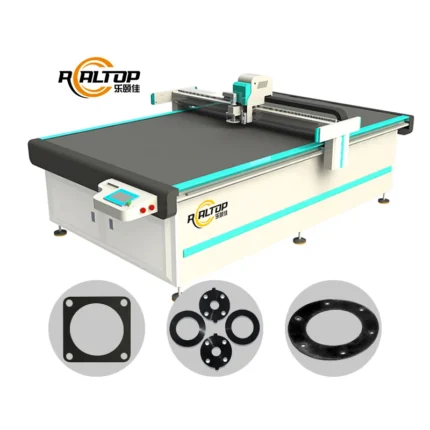
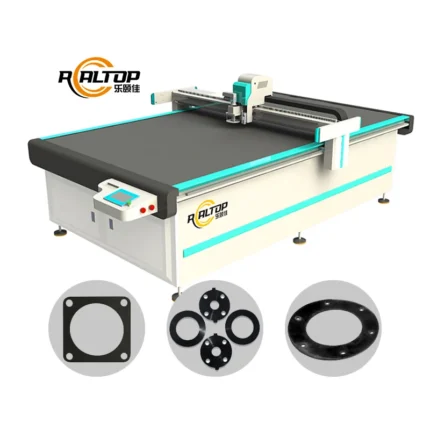
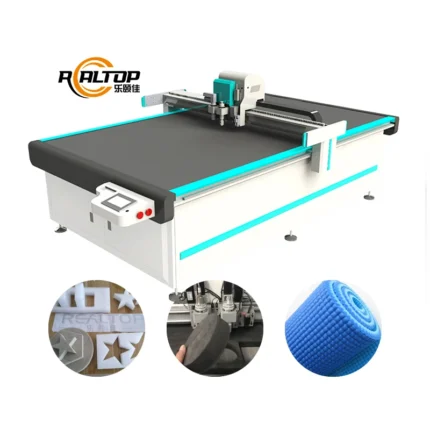
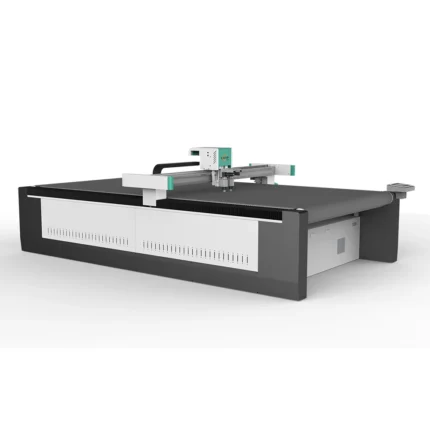
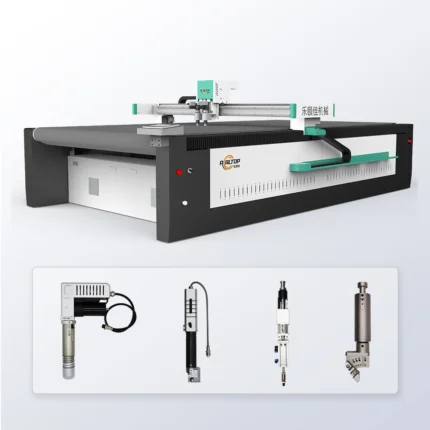
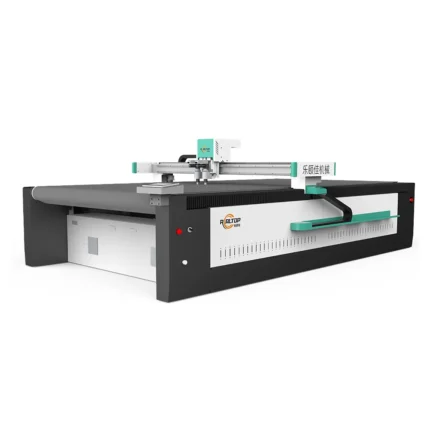
RT-D2516/RT-S2516 CNC Oscillating Knife Cutting Machine, 1600×2500mm Working Area, Swiss Tool Head — engineered for rubber, silicone and gasket sheet processing.
- Multifunctional oscillating head delivers full-cut, half-cut and cursor location modes, producing clean edges on elastomers without thermal distortion
- Yaskawa servo with Hiwin linear rail ensures ≤0.1mm repeatability; auto-feeding conveyor and 7.5kW vacuum table support continuous throughput
- HP-GL compatible control integrates with existing nesting workflows
Sample cutting on your own material is available before commitment, with voltage, plug type and control language confirmed to match your facility prior to shipment.
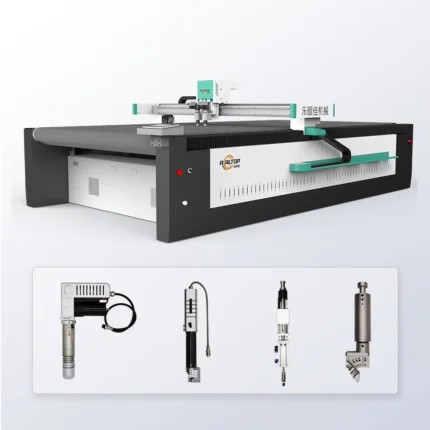
Swiss Oscillating Tool Precision — A multifunctional knife head with imported blade technology cuts rubber and gasket stock without the thermal damage laser processing leaves on elastomers.
Technical Specifications
| Parameter | Value |
|---|---|
| Product Type | CNC Oscillating Knife Cutting Machine |
| Model | RT-D2516/RT-S2516 |
| Working Area | 1600×2500 mm |
| Overall Dimensions | 3450×2300×1250 mm |
| Rated Power | 9 kW |
| Vacuum Pump | 7.5 kW |
| Table Type | Flat working table with vacuum and conveyor belt |
| Tool Head | Multifunctional head with Swiss imported oscillating knife (full cutting, half cutting, cursor location) |
| Translational Velocity | 800–1200 mm/s |
| Cutting Speed | 200–800 mm/s (basis not stated in source) |
| Repeated Accuracy | ≤0.1 mm |
| Transmission System | Digital servo motor, linear guide, synchronous belt, ball screw |
| Servo Motor | Japanese Yaskawa |
| Linear Rail | Taiwan Hiwin |
| Conveyor Belt | Germany imported |
| Instruction System | HP-GL compatible format |
| Voltage | 380V ±10% |
| Safety Device | Infrared sensors |
| Assembly State | Auto-feeding system included |
| Warranty | 12 months for whole machine |
| Standards | CE |
Application Suitability
| Application | Material or Output |
|---|---|
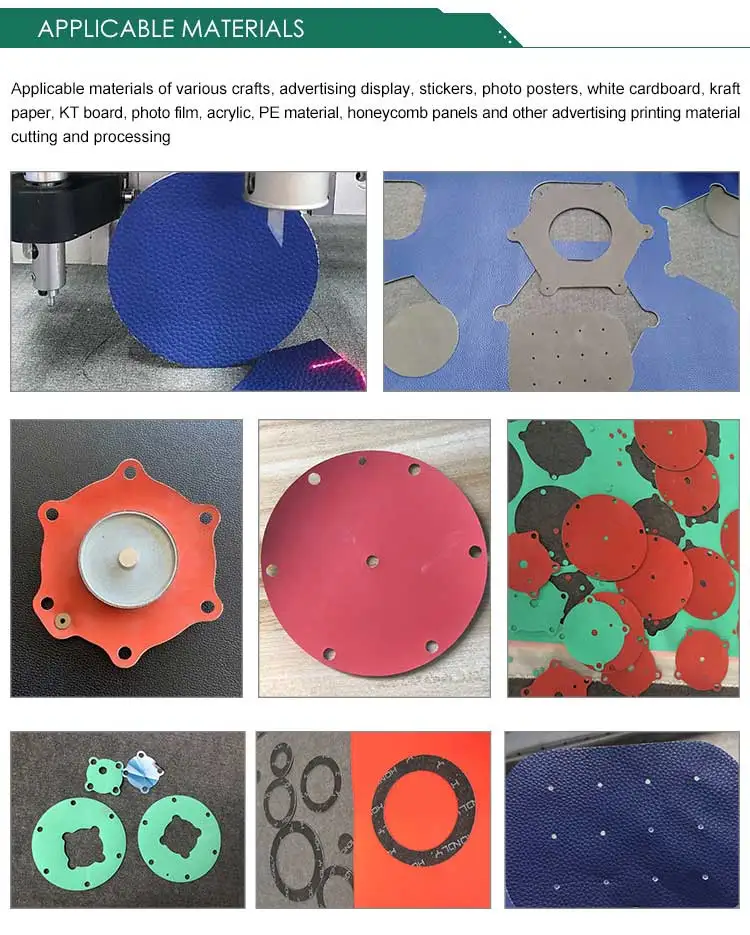
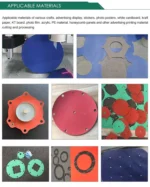
| Industrial Gasket Manufacturing | Rubber, silicone, PTFE, and composite sealing sheets |
| Automotive Interior Components | Sponge composite leather, foam, and flexible laminates |
| Signage and Flexible Media | PVC, soft glass, vinyl, and adhesive films |
| Leather Goods and Footwear | Natural leather, synthetic leather, flexible clothing materials |
Why the Material Test Matters More Than the Spec Sheet
Buyers often specify a CNC cutting equipment for gasket and rubber based on working area and quoted speed, then discover during mass production that the knife cannot handle their actual material structure. A sample cut on single-layer stock proves nothing if your production runs three-layer composites with fiberglass reinforcement.
I spent years visiting sealing factories across Southeast Asia, and the pattern is always the same: the trial sample is clean, the purchase order is signed, and the first real production batch comes off the table with delaminated edges and crushed fibers. The cutting speed drops because the operator has to reduce feed rates to salvage edge quality, and the daily throughput falls well below what was expected [NEED_CITE: common causes of gasket cutting edge delamination in composite materials].
The Knife Advantage on Elastomer Materials
When a buyer considers laser cutting for rubber and silicone gaskets, the immediate problem is thermal edge damage. Lasers melt and burn elastomers, leaving a hardened edge bead that compromises seal integrity and requires secondary trimming. The oscillating knife on the RT-D2516/RT-S2516 slices through rubber and silicone without heat, producing a clean edge that goes straight to assembly. This laser cutting and engraving machine alternative eliminates the need for fume extraction systems that laser processing on elastomers demands, reducing both floor space and operating overhead.
Tool Head Modes and Their Production Roles
The multifunctional head on this machine carries three operating modes: full cutting for complete part separation, half cutting for kiss-cut applications where the backing layer must remain intact, and cursor location for manual alignment tasks. In a gasket workshop, full cutting handles the standard seal profiles, while half cutting is used for adhesive-backed gaskets that ship on a liner. Switching between modes does not require a physical tool change, which keeps downtime between jobs to a minimum and supports mixed-batch production schedules [NEED_CITE: oscillating knife cutting modes in industrial gasket production].
Reading the Specs Through a Gasket Maker’s Lens
The 7.5 kW vacuum pump paired with the flat working table is sized to hold rubber and silicone sheets flat during cutting, but vacuum zoning becomes critical when the gasket parts are small. A full-sheet vacuum zone works for large flange gaskets, yet tiny O-ring profiles can lift off the table if the suction area is not segmented to match part size. The German-imported conveyor belt and auto-feeding system support continuous sheet throughput, moving the next piece into position while the previous nest is cleared. Yaskawa servo motors and Hiwin linear rails maintain the ≤0.1 mm repeated accuracy that multi-bolt gasket patterns require, where a cumulative positioning error across a 2500 mm travel would misalign bolt holes. The HP-GL compatible instruction system accepts nesting files from common gasket design software, though buyers should confirm their specific file format imports correctly before the order is finalized.
When the Wrong Configuration Becomes a Production Liability
A machine specified on working area alone, without verifying the tool head against material thickness and composition, leads to ragged edges on dense rubber and crushed foam on composite gaskets. Small gasket parts lift during cutting when vacuum table zoning is too broad for the piece size, forcing operators to tape or pin sheets manually. If voltage, plug type, and control language are not confirmed before shipment, the machine sits idle while adapters are sourced and software menus are deciphered [NEED_CITE: CE machinery directive requirements for industrial equipment]. These are not warranty issues — they are specification failures that cost weeks of production time.
Why Sourcing This Machine Here Makes Sense
The design and production of both knife and laser cutting systems under one roof means a buyer can match the cutting method to the material rather than forcing one technology across every job. The tool head and table configuration are specified per material type and production volume, so a gasket shop cutting 3 mm silicone runs a different setup than a fabricator processing 15 mm sponge composite. CCD camera positioning is available for printed contour work on signage and packaging applications. Software compatibility is confirmed before the order is placed, preventing file format surprises at commissioning. Voltage, language, and specification customization ensures the machine arrives ready for the local electrical grid and operator skill level. Sample cutting on the buyer’s own material is standard practice before commitment, so edge quality and throughput are validated on the actual production stock.
Documentation & Verification
- Machine specification sheet listing every configured option from tool head to conveyor type
- Electrical schematic with voltage and phase confirmation matching your facility supply
- Tool head and table configuration list detailing oscillating knife mode settings and vacuum zone layout
- Sample cutting report produced on your gasket material with edge quality photographs
- Software licence and HP-GL file format compatibility note for your nesting workflow
- Spare parts list identifying consumable blades and wearable belt components
Installation, Commissioning & Support
- Floor space of at least 4000×3000 mm required to accommodate the 3450×2300 mm footprint with operator clearance
- Dedicated 380V ±10% circuit with appropriate breaker rating to supply the 9 kW rated power plus 7.5 kW vacuum pump
- Machine ships with auto-feeding conveyor pre-assembled; vacuum table and gantry require on-site alignment
- First-run parameter setting includes vacuum zone mapping, oscillating knife frequency tuning, and feed rate calibration for your material
- Operator training covers HP-GL file import, nesting layout, and tool head mode switching procedures
- Consumable spare blades and synchronous belt inspection schedule defined in the operation and maintenance manual
Getting a Meaningful Quotation
To receive a configuration that actually works on your shop floor, share the gasket material type and thickness, the typical sheet dimensions you purchase, and your daily part volume target. Include the voltage and frequency at your facility, the preferred control panel language, and whether your existing nesting software outputs HP-GL or another format. If your production stock includes composite layers or reinforcement meshes, send a sample roll or sheet so the cutting parameters can be tested before the machine is built.
Frequently Asked Questions
Q: Is knife cutting or laser cutting the better choice for rubber and silicone gasket materials?
A: Laser cutting burns elastomers, leaving a hardened edge bead and requiring fume extraction. An oscillating knife slices rubber and silicone without heat, producing a clean edge that meets seal specifications without secondary trimming. For gasket shops, knife cutting avoids the thermal damage and extraction costs that laser processing introduces on these materials.
Q: How can I verify the cutting speed will work for my specific gasket material?
A: The published cutting speed range of 200–800 mm/s depends entirely on material type and thickness. Request a sample cutting test on your actual production stock — including any composite layers or reinforcement — and evaluate both edge quality and the time taken per nest. This test provides a realistic throughput figure for your specific application.
Q: Why do small gasket parts lift off the table during cutting?
A: When vacuum table zoning covers a large area but the gasket parts are small, suction spreads too thin to hold individual pieces. The solution is configuring vacuum zones to match your typical part size, concentrating hold-down force where the knife is cutting. Confirm zoning requirements during specification to prevent lift and edge defects.
Q: What electrical and language details must be confirmed before the machine ships?
A: Voltage, plug type, and control panel language must match your facility before the machine leaves the factory. The RT-D2516/RT-S2516 operates on 380V ±10%, and any mismatch requires costly transformers or delays. Specify these details during order confirmation, not after the crate arrives at your dock.
Q: What should I expect from a sample cutting test before committing to the order?
A: Send your actual production material — not a standard test sheet — and request a report showing edge quality photographs, dimensional accuracy measurements, and the cutting time per part. If your material includes fiberglass reinforcement or multiple bonded layers, the sample must replicate that exact construction to be meaningful.


Related products
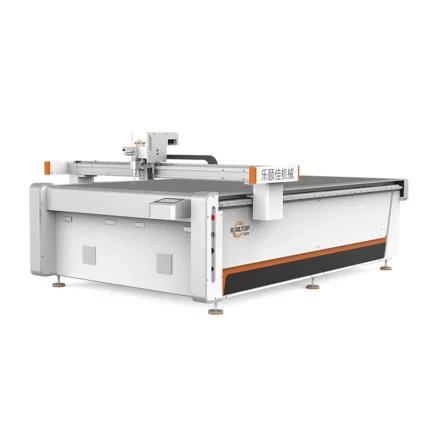
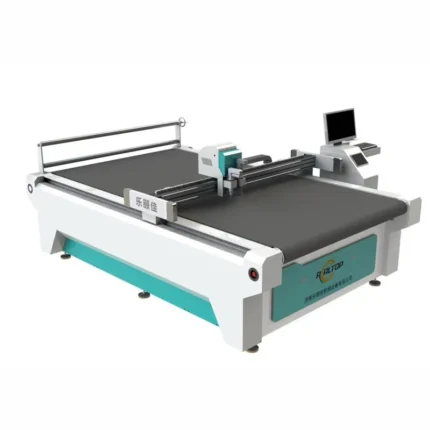
Máquina de corte de juntas de goma CNC totalmente automática 2026
Product Introduction
Full Automatic CNC Rubber Gasket Cutting Machine 2026, a blade-based plastic cutter designed for precise and efficient cutting of rubber gaskets and plastic materials with automated CNC control.Technical Parameters
| Type | Full Automatic CNC Cutting Machine |
| Cutting Method | Blade-Based |
| Application | Rubber Gaskets, Plastic Materials |
| Control System | CNC |
Cortadora de juntas CNC 2026 Certificada ISO de alta calidad
Product Parameters
| Certification | ISO Certified |
| Application | Cylinder Head Gasket Cutting |
| Type | CNC Gasket Cutter |
| Quality | High Quality |
| Year | 2026 |
Introduction
This high-quality CNC Gasket Cutter, ISO certified, is designed for precise cylinder head gasket cutting. Ideal for professional manufacturing, ensuring accuracy and reliability in 2026 production standards.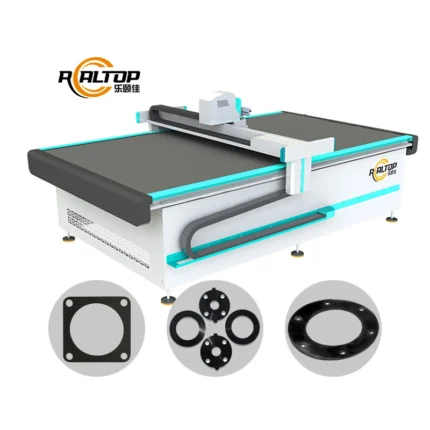
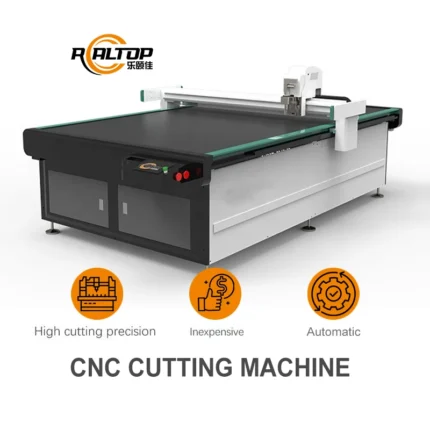
Máquina de corte de juntas automática Realtop 2026
Product Introduction
Realtop Automatic Gasket Cutting Machine 2026 is a high-performance cutting solution designed for efficient gasket production, ideal for industrial manufacturing needs with reliable automatic operation.
Product Parameters
| Model | Realtop 2026 |
| Type | Automatic Gasket Cutting Machine |
| Application | Industrial Gasket Production |
| Operation | Automatic |
Cortadora de juntas CNC Realtop 2026 Cuchillo vibrante de alta precisión
Product Introduction
Realtop CNC Gasket Cutting Machine 2026 with high-precision vibrating knife, ideal for cutting rubber and cylinder head gaskets with accuracy and efficiency.
Key Specifications
| Model | Realtop CNC Gasket Cutting Machine 2026 |
| Cutting Tool | High-Precision Vibrating Knife |
| Applicable Materials | Rubber, Cylinder Head Gaskets |
Realtop 2026 CNC Cortador de Cuchillo por Vibración 1600x3200mm Corte Automático de Juntas
Product Introduction
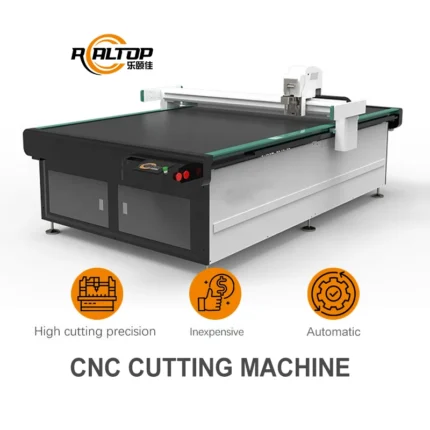
Realtop CNC Vibration Knife Cutter 2026 is an advanced cutting solution ideal for auto gasket cutting, featuring precision and efficiency for industrial applications.Key Specifications
| Model | Realtop CNC Vibration Knife Cutter 2026 |
| Working Area | 1600x3200mm |
| Cutting Type | Vibration Knife |
| Application | Auto Gasket Cutting |
Realtop Graphite Gasket Making Machine 2026 – Advanced Flexible Material Cutter
Product Introduction
Realtop Graphite Gasket Making Machine 2026 is a professional equipment for graphite gasket production, ideal for manufacturing high-quality gaskets with precision and efficiency, suitable for industrial sealing applications.Product Parameters
| Model | Graphite Gasket Making Machine 2026 |
| Brand | Realtop |
| Application | Graphite Gasket Production |
| Feature | Precision Manufacturing |
商品评价
There are no reviews yet.