

Rubber Gasket CNC Oscillating Knife Cutter for Composite Materials – OEM Available
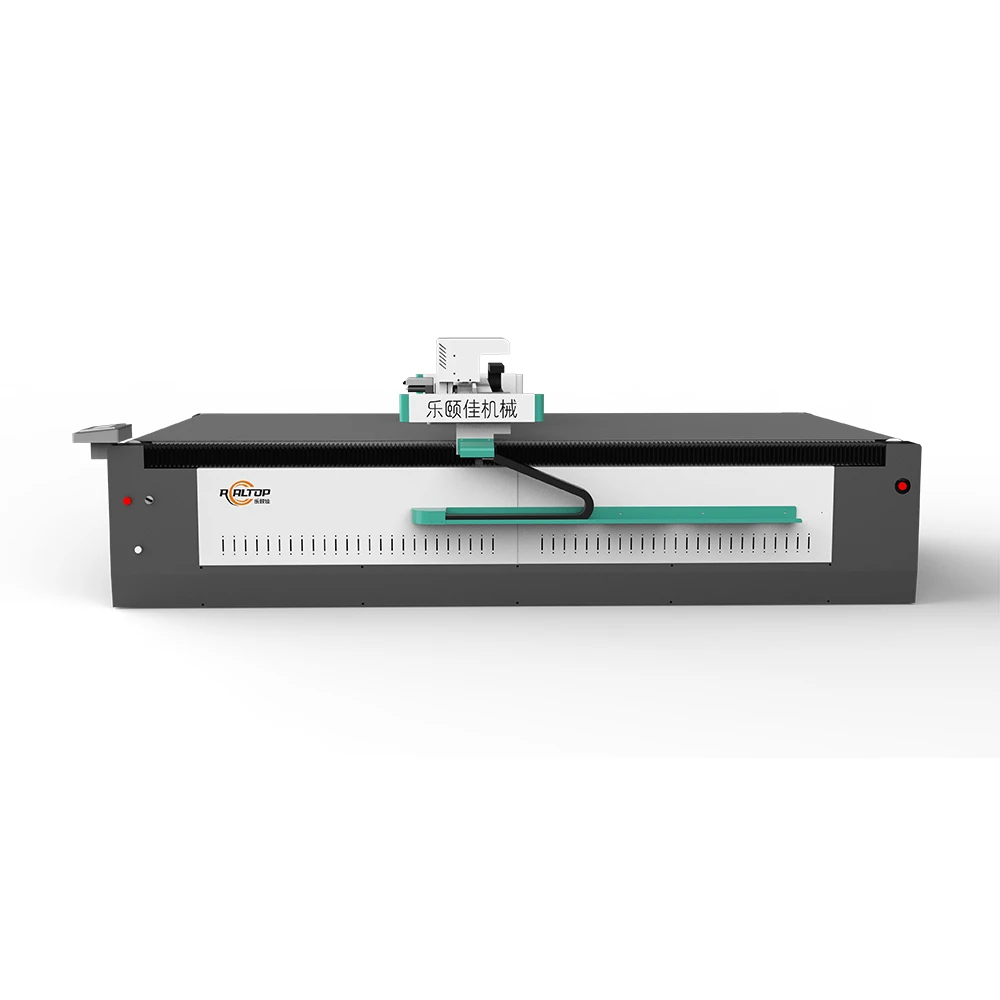
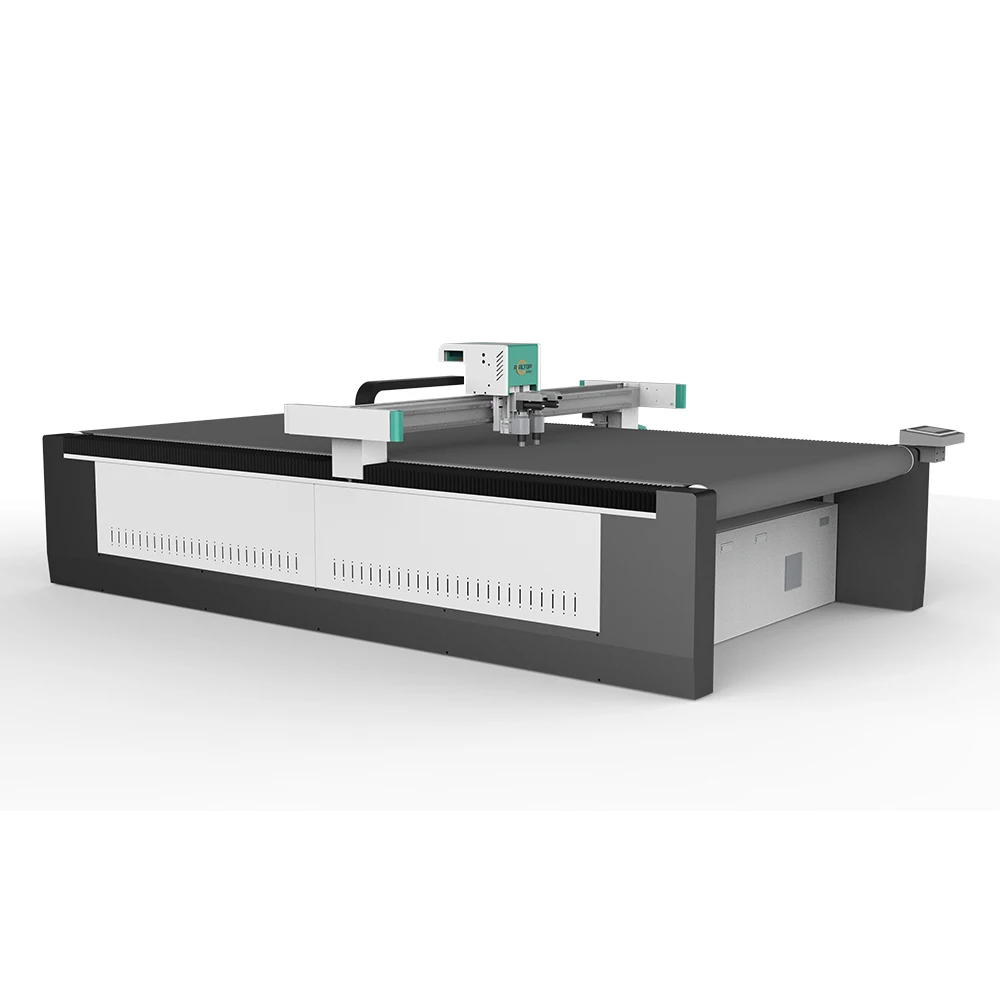
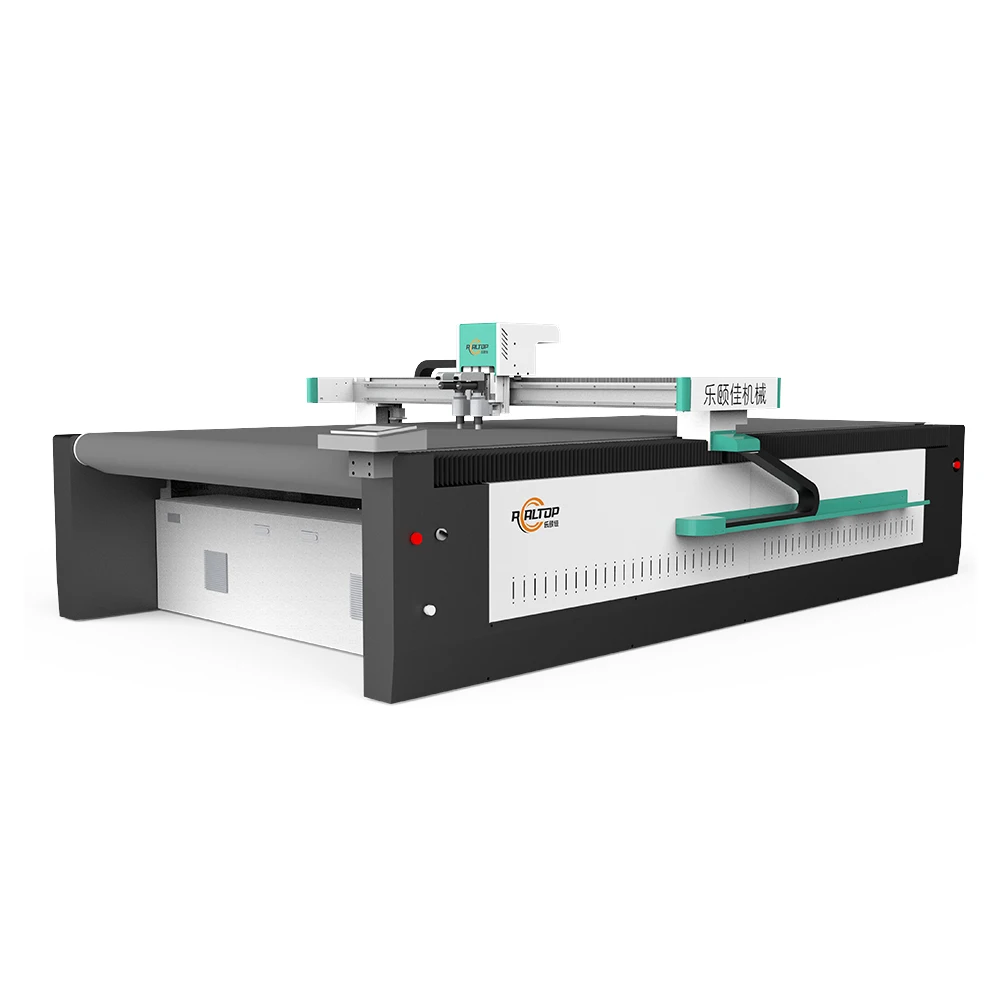
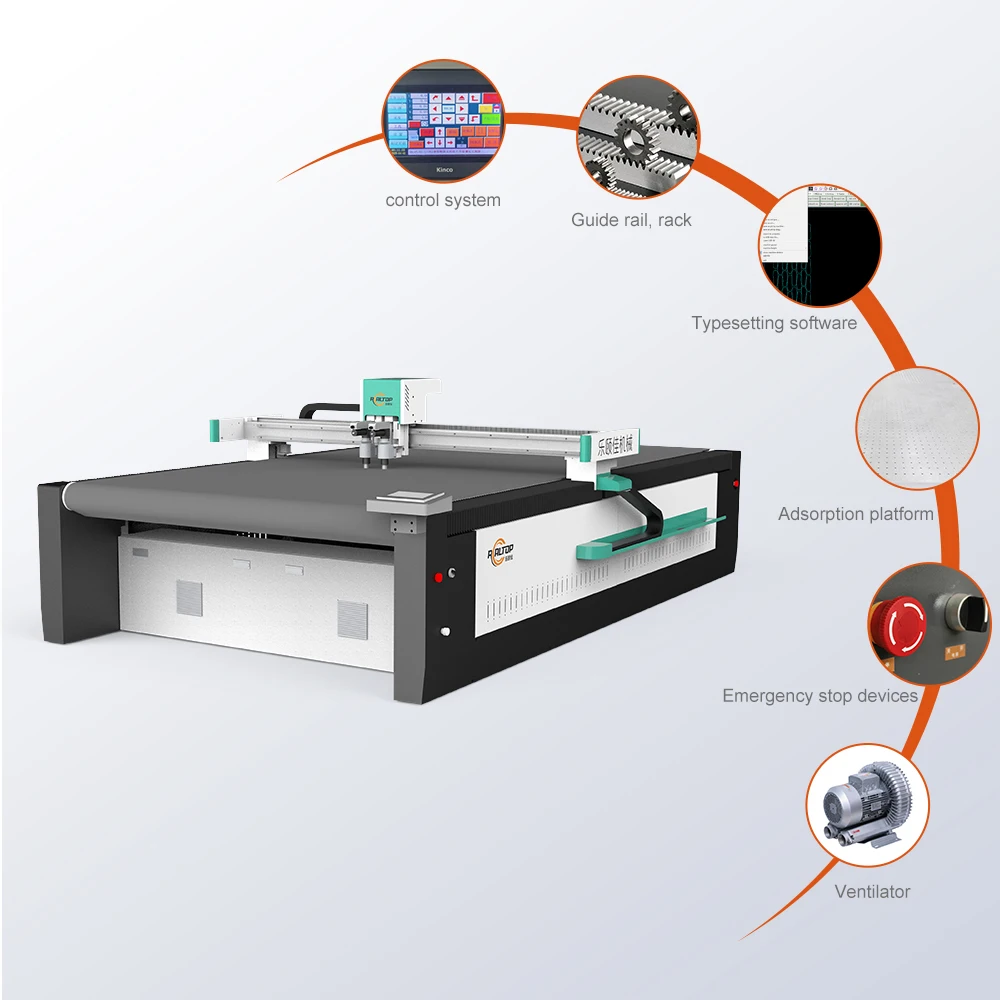
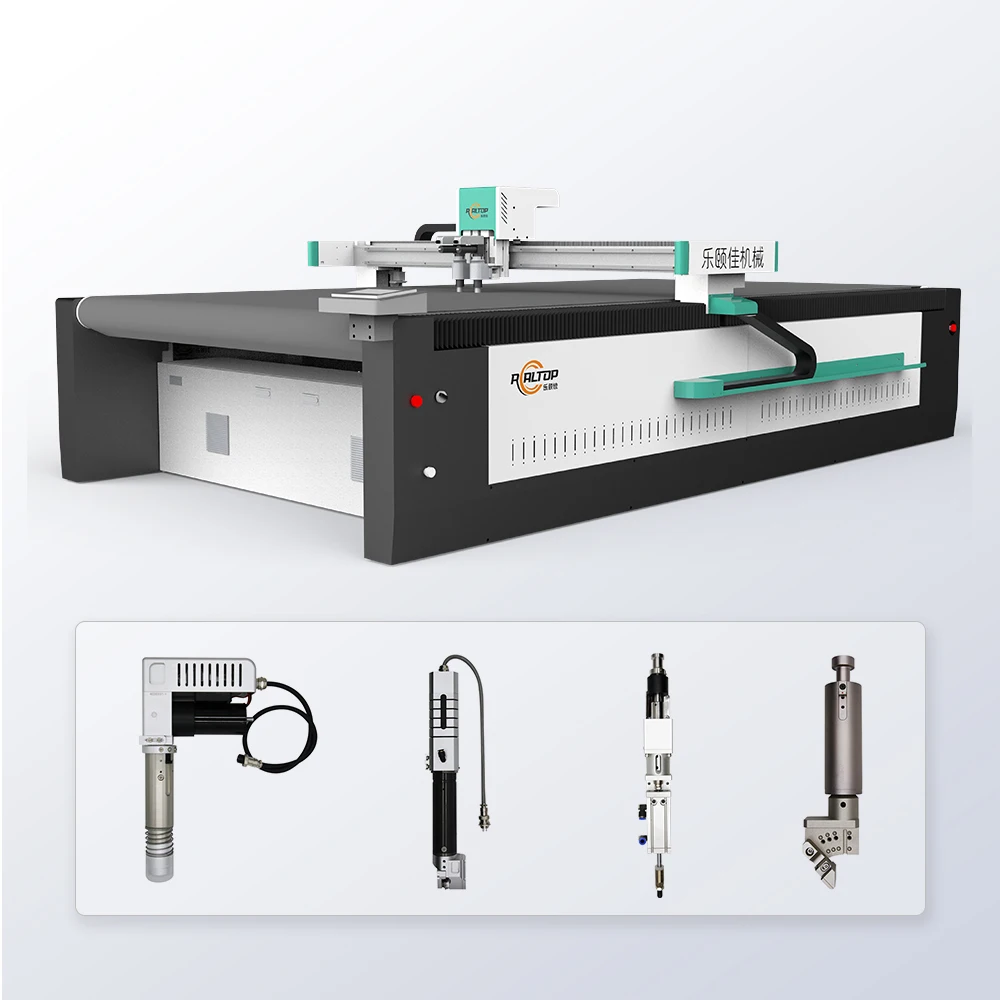
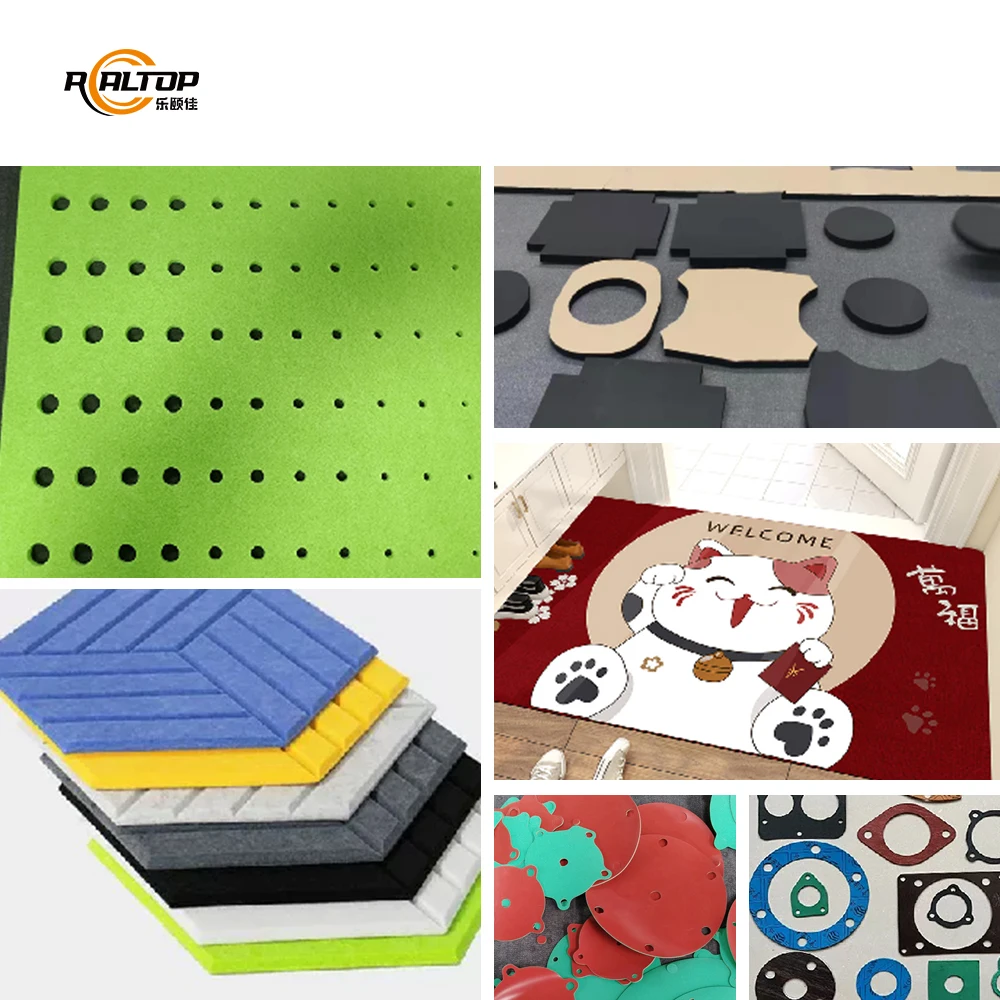
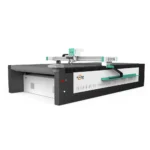
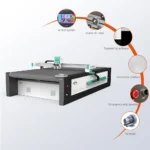
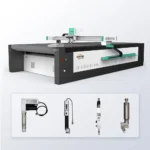
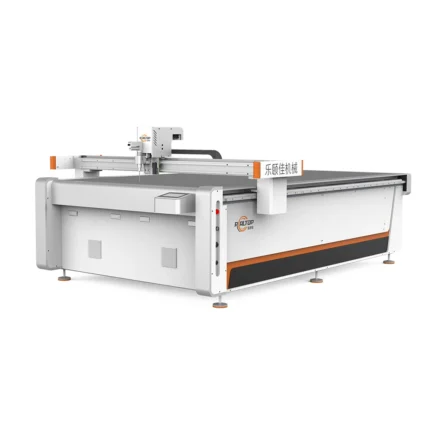
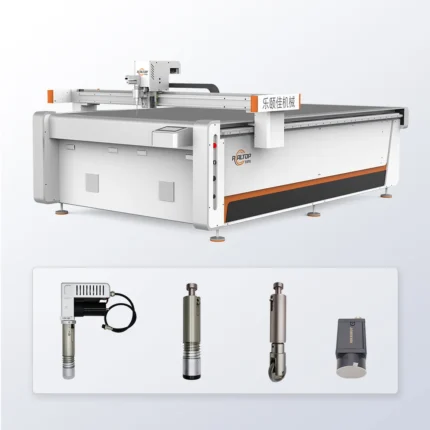
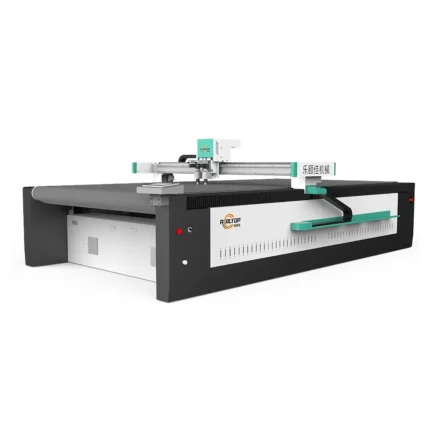
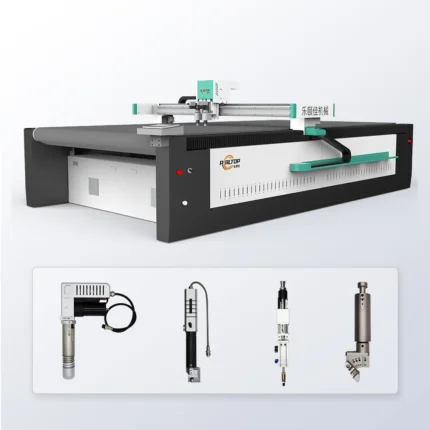
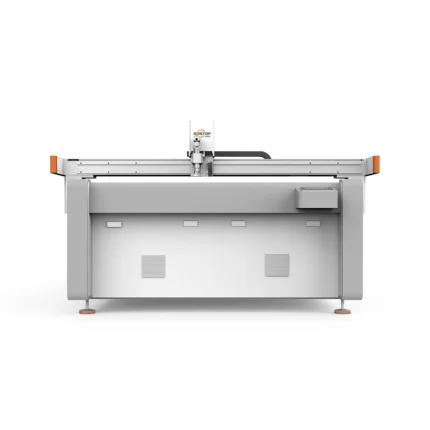
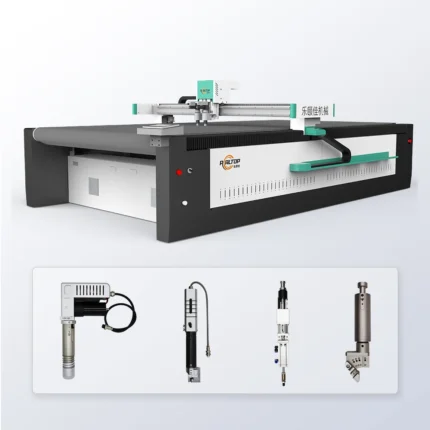
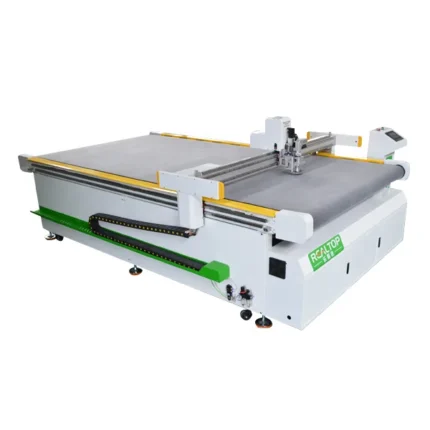
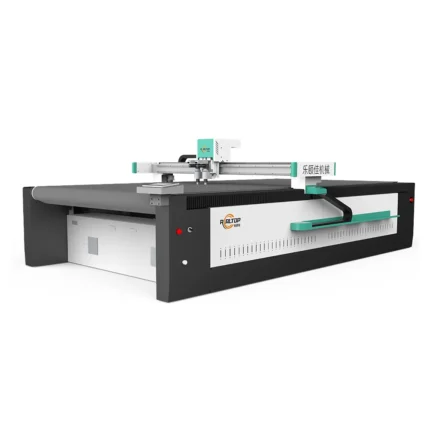
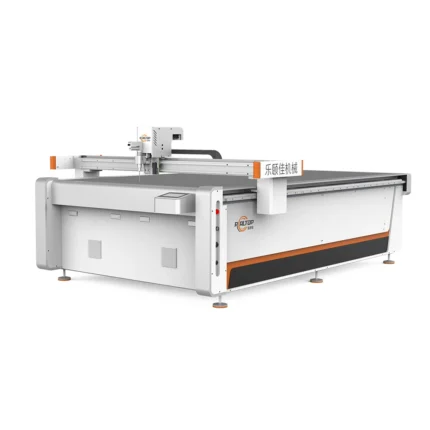
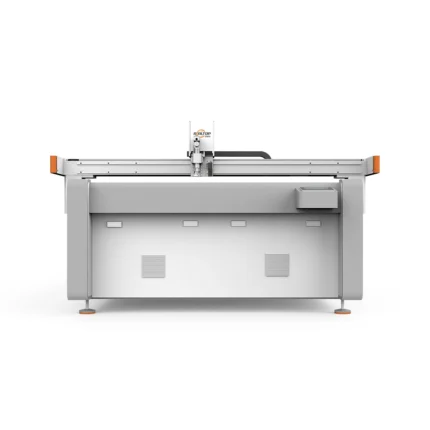
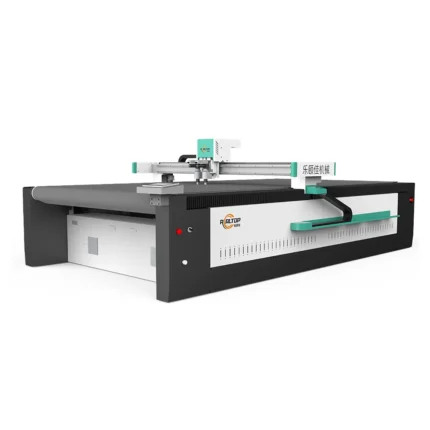
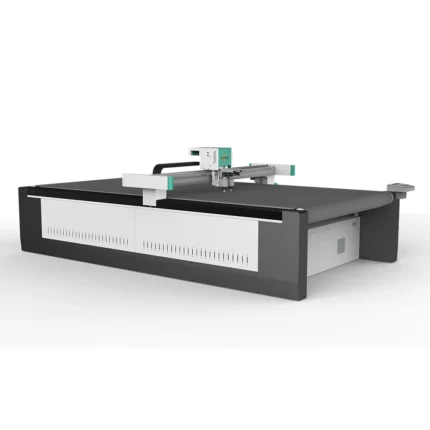
1625 CNC Oscillating Knife Cutting Machine, 1600×2500mm, 9KW Vacuum — configured for composite and gasket materials including PTFE, rubber, fiberglass cloth and carbon fiber prepreg. Tool head options cover oscillating knife, pneumatic knife, V-groove and milling for varied cutting depths up to 30mm. CCD contour recognition and aluminum vacuum table ensure precision on printed or flexible composites. – Sample cutting on your material before commitment, with voltage and language customized to your workshop.
Precision Tooling Match — Every knife and laser configuration is validated against the buyer’s specific composite material and thickness before the order is finalized.
Technical Specifications
| Parameter | Value |
|---|---|
| Model | 1625 |
| Working Area | 1600×2500 mm |
| Tools Available | Oscillating knife, Driven rotary knife, Creasing wheel, Kiss cutting tool, Pneumatic knife, Milling tool, V groove knife |
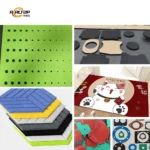
| Applicable Materials | Fabric, Cardboard, Carton, Mats, PVC, EVA, Leather, Acrylic, Foam, PTFE, Rubber, Carbon fiber prepreg, Aramid honeycomb, Fiberglass cloth, G10 epoxy boards |
| Cutting Speed | 0–2000 mm/s |
| Cutting Thickness | ≤ 30 mm |
| Cutting Accuracy | ±0.1 mm |
| Vacuum Pump | 9 kW |
| Voltage Options | 110V, 220V, 380V |
| Profile Format | PLT, DXF, AI, PDF |
| Safety Device | Infrared sensor and emergency stop |
| Machine Size | 3300×2100×1350 mm |
| Control System | PLC control panel |
| Machine Frame | Heavy-duty frame with precision-ground surface |
| Vacuum Table | Aluminum bellows vacuum table |
| Servo Motors | Panasonic, Delta, Dorna options |
| Language Options | English, Russian, Italian, Chinese, customizable |
| Certification | CE |
Application Suitability
| Application | Material or Output |
|---|---|
| Aerospace interior and structural trim | Carbon fiber prepreg, aramid honeycomb, wing skin panels |
| Automotive and rail transit composites | Carbon fiber covers, FRP panels, acoustic felt, damping pads |
| Wind energy and battery insulation | Fiberglass cloth, vacuum infusion mesh, foam core, battery separator sheets |
| Sporting goods and marine components | Carbon fiber sheets, Kevlar layers, helmet liners, surfboard and kayak blanks |
| Industrial gasket and seal production | Rubber, PTFE, silicone, compressed fiber sheets |
Why Continuous Power Matters More Than the Number on the Quote
A laser cutting and engraving machine manufacturer quoting peak wattage without stating continuous output leaves the buyer guessing whether the machine will actually penetrate the material at production speed.
I have stood next to a machine that was sold on a headline power figure, only to watch it struggle through 3 mm carbon fiber prepreg because the sustained output was well below what the cutting depth required. The buyer had specified the material and thickness correctly, but the conversation about continuous versus peak rating never happened before the deposit was paid. When the real cutting depth falls short, operators slow the feed rate, edge quality degrades, and daily throughput drops to a fraction of what was planned. That gap between quoted performance and workshop reality is the single most common complaint I hear from composite fabricators who switched suppliers after a disappointing first machine [NEED_CITE: continuous versus peak laser power in industrial cutting specifications].
Matching the Tool to the Composite Layer Stack
Carbon fiber prepreg, aramid honeycomb, and fiberglass cloth each respond differently to mechanical and thermal cutting. An oscillating knife at the correct frequency cuts through prepreg without delaminating the resin-impregnated layers, while a driven rotary knife handles thicker aramid honeycomb cores without crushing the cell walls. The laser cutting and engraving machine manufacturer must confirm which tool head engages which material before the machine leaves the factory, because swapping heads on the floor costs production time and introduces cut-quality variables that operators cannot always compensate for.
Vacuum Zoning and Small Composite Part Stability
When cutting gaskets or aerospace bracket blanks from 1600×2500 mm sheets, the remaining skeleton often leaves small parts sitting on zones with reduced suction. The aluminum bellows vacuum table on the 1625 addresses this with independent zoning that maintains hold-down force across the working area. Without adequate zoning, thin PTFE or fiberglass cloth pieces lift during the final passes, producing dimensional drift and forcing manual re-cuts. Verifying zone layout against your typical nesting pattern is a step that belongs in the pre-order sample phase [NEED_CITE: vacuum hold-down requirements for thin composite sheets].
Reading the Spec Sheet Against Real Production Needs
The ±0.1 mm cutting accuracy figure means something specific in composite fabrication: aerospace interior panels that must fit into fuselage frames without shimming, and automotive acoustic felt blanks that align with molded cavities. The 9 kW vacuum pump delivers enough suction to keep dense rubber and G10 epoxy boards flat during cutting, but operators working with lightweight infusion mesh should confirm the required pump capacity for their material porosity. Servo motor selection — Panasonic, Delta, or Dorna — affects long-term positional repeatability, particularly when the machine runs multi-shift schedules and thermal drift accumulates across the frame. The heavy-duty frame with precision-ground surface provides the baseline rigidity that keeps the ±0.1 mm tolerance achievable week after week, not just on the first test cut.
The Cost of Skipping the Material Trial
A rubber gasket buyer once sent me a sample that cut cleanly at our recommended oscillation frequency, so we built the configuration around that result. When the machine arrived at their facility, the production rolls of nitrile rubber were significantly harder than the sample, and the knife could not maintain a clean edge through the full thickness. Every gasket came off the table with micro-tears along the cut line, and the reject rate made the machine look like it was underperforming. The lesson was straightforward: the trial must use the exact production material, not a convenience sample from a different batch [NEED_CITE: material batch variation in composite and rubber cutting].
Why Sourcing This Equipment Here Makes Sense
Our in-house design team covers both oscillating knife and laser cutting technology under one roof, so the cutting method is matched to the composite material rather than forced into whichever process the factory happens to specialize in. Tool head and table configurations are specified per material and production volume, documented in a configuration list that ships with the machine. CCD camera positioning is available for printed contour work on decorative composite laminates. Software compatibility with your existing PLT, DXF, AI, or PDF workflow is confirmed before the order is released to production. Voltage, plug type, and control language are customized to the destination market, so the machine arrives ready to connect rather than waiting for a local electrician to resolve a mismatch.
Documentation & Verification
- Machine specification sheet listing all confirmed tool heads and table zones
- Electrical schematic with voltage and frequency match for your facility
- Sample cutting report on your composite material with edge photographs
- Tool head and table configuration list signed off before dispatch
- Factory test record documenting positional accuracy across the working area
- Software license and file format compatibility note for your nesting workflow
Installation, Commissioning & Support
- Foundation must support the 3300×2100×1350 mm footprint and dynamic cutting loads
- Dedicated circuit sized for the selected voltage option and 9 kW vacuum pump
- Machine ships partially assembled; final leveling and belt tension set on site
- First-article cuts run on your material to confirm ±0.1 mm tolerance at production speed
- Operator training covers tool changeover, nesting import, and PLC panel navigation
- Spare knife blades and wear parts list provided with reorder intervals noted
What to Include in Your Inquiry
Send us the specific composite materials you are cutting, including layer composition and total thickness, along with your typical sheet dimensions and daily part count. Tell us your facility voltage and frequency so we can configure the electrical system before production starts. If you have an existing nesting workflow or preferred file format, share a sample file so we can verify software compatibility and confirm that the laser cutting and engraving machine manufacturer configuration meets your line requirements.
Frequently Asked Questions
Q: How do I choose between oscillating knife and laser for my composite material?
A: Oscillating knife suits most prepregs, honeycomb cores, and rubber gaskets where delamination and thermal damage must be avoided. Laser cutting works well on thinner synthetic fabrics and materials that benefit from edge sealing. The correct choice depends on your specific material stack, thickness, and edge quality requirement, confirmed through a sample cut before the order.
Q: What is the difference between continuous and peak laser power ratings?
A: Peak power is the maximum instantaneous output the tube or source can reach, while continuous power is what the machine sustains during an actual cut. Cutting depth and speed depend on continuous output. Always ask the laser cutting and engraving machine manufacturer to document the continuous wattage in the specification sheet before committing to the purchase.
Q: How does vacuum table zoning affect small composite part quality?
A: Independent vacuum zones maintain hold-down pressure even when surrounding material has been cut away. Without proper zoning, lightweight fiberglass cloth or thin PTFE gasket blanks can lift during final passes, causing positional drift and dimensional errors across the remaining nested parts on the table.
Q: What file formats does the control software accept?
A: The system accepts PLT, DXF, AI, and PDF profiles. If your design team works in a different format, share a sample file during the inquiry stage so we can confirm import compatibility and nesting behavior before the machine enters production.
Q: Can the voltage and control language be customized for our country?
A: Yes. The 1625 is configurable for 110V, 220V, or 380V systems, and the PLC control panel language options include English, Russian, Italian, Chinese, with additional languages available on request. Voltage, plug type, and language are confirmed and documented before shipment.


Related products

Máquina de corte por cuchillo vibrante CNC 2516 2026
Product Introduction
2516 CNC Vibrating Knife Cutting Machine 2026, a precision cutting solution from China's leading welding & cutting equipment manufacturer. Ideal for efficient, high-quality material processing with advanced CNC technology.
Key Specifications
| Model | 2516 |
| Type | CNC Vibrating Knife Cutting Machine |
| Year | 2026 |
| Origin | China |
Máquina de corte con cuchilla oscilante CNC automática 2026
Product Introduction
Auto CNC Oscillating Knife Cutting Machine 2026 is a high-precision cutting solution from a leading Chinese welding & cutting equipment manufacturer, ideal for efficient and accurate material processing across various industrial applications.Key Specifications
| Type | Auto CNC Oscillating Knife Cutting Machine |
| Model | 2026 |
| Manufacturer | Chinese Leading Welding & Cutting Equipment Factory |
| Core Feature | High-precision CNC Control |
| Application | Industrial Material Cutting |

Cortadora de hojas de espuma EVA cortadora de contorno de cuchilla oscilante 2026
Product Introduction
Designed for precise cutting of foam sheets and EVA materials, this 2026 oscillating blade contour cutter offers efficient and accurate contour cutting performance, ideal for industrial manufacturing and crafting applications.Key Specifications
| Product Type | Foam Sheet Cutter |
| Blade Type | Oscillating Blade |
| Function | Contour Cutting |
| EVA, Foam Sheets | |
| Model Year | 2026 |
Cortadora de Paneles de Fieltro CNC Realtop 2026 Cortadora de PET Digital Automática de Cama Plana
Product Introduction
Realtop CNC Felt Panel Cutter 2026 is an auto digital flatbed designed for precise cutting of PET acoustic sheets, ideal for efficient and accurate fabrication in acoustic panel production.Key Specifications
| Model | Realtop CNC Felt Panel Cutter 2026 |
| Type | Auto Digital Flatbed Cutter |
| Application | PET Acoustic Sheets |
| Function | Precision Cutting |
Máquina de Corte EPE Realtop 2026 Corte Automático Digital de Alta Velocidad
Product Introduction
Realtop 2026 EPE Cutting Machine features high-speed digital auto-cut technology, designed for efficient and precise cutting operations. Ideal for EPE material processing with automated functionality to enhance productivity.Key Specifications
| Model | Realtop EPE Cutting Machine 2026 |
| Type | High-Speed Digital Auto Cut |
| Operation | Automated |
| Application | EPE Material Cutting |
商品评价
There are no reviews yet.