



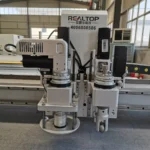

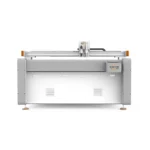

1070PAS4 A1 Vibrating Drag Knife Cutter for Packaging Sample – Laser Process
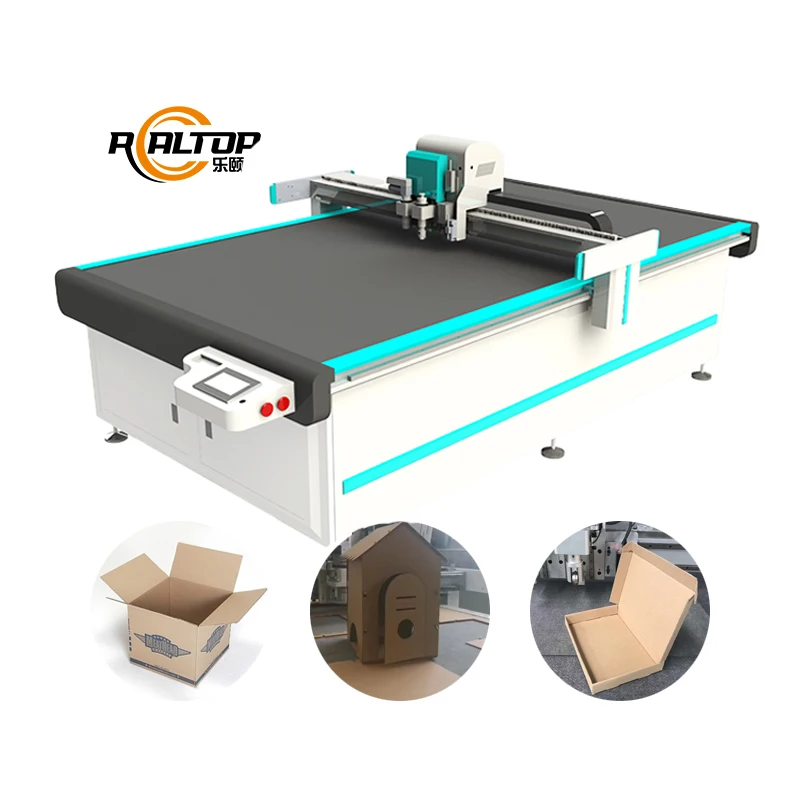
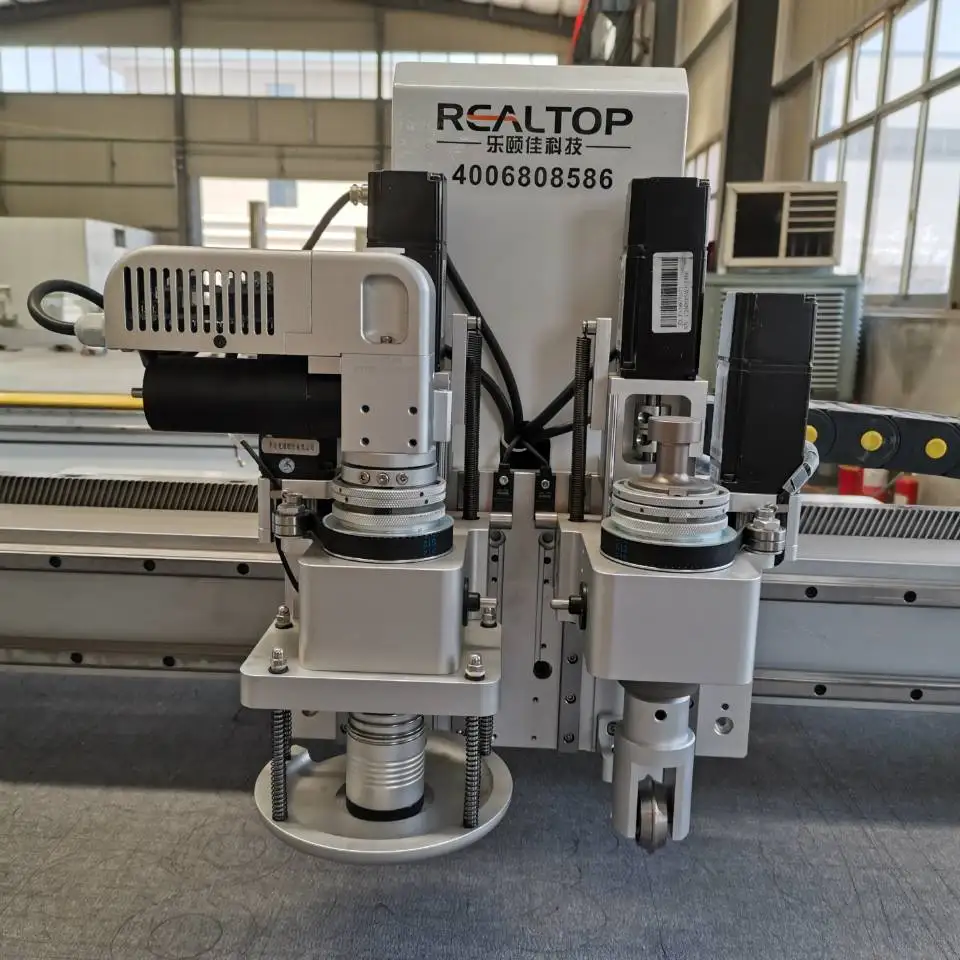
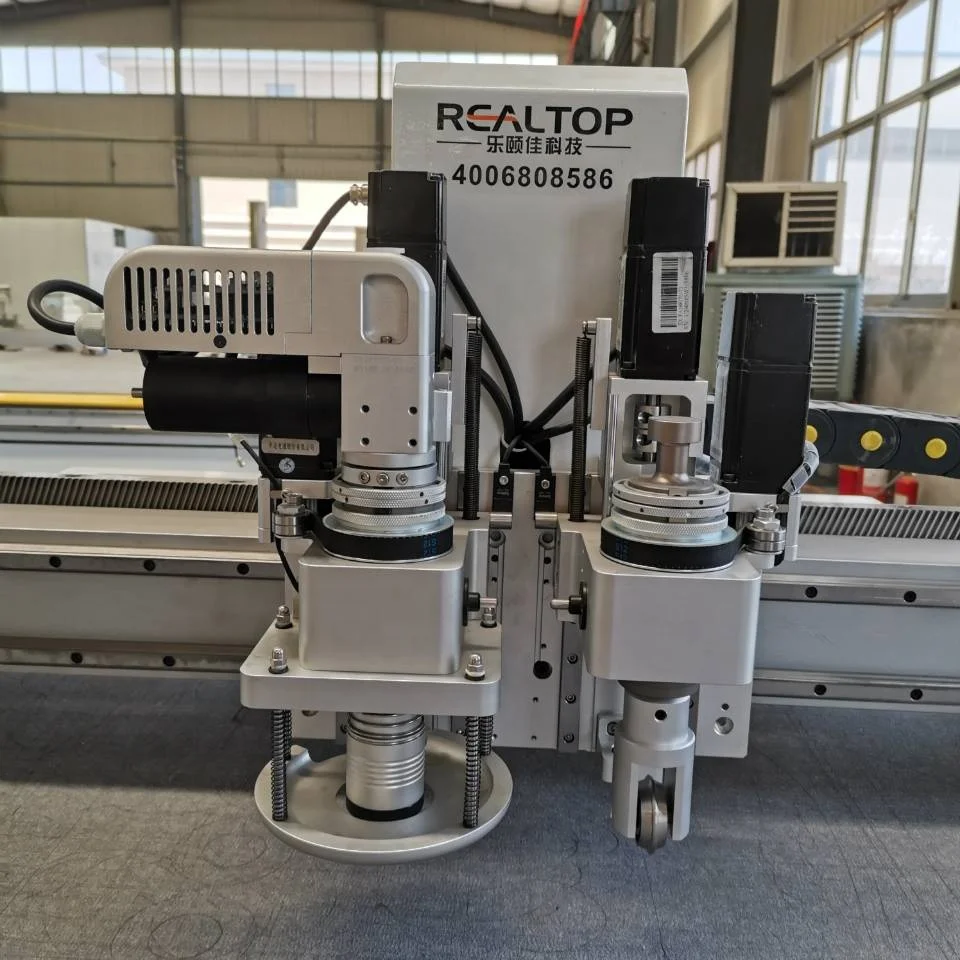
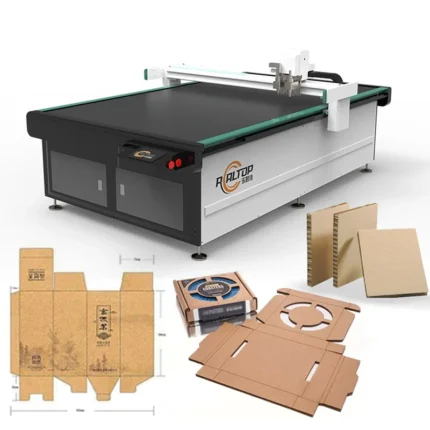
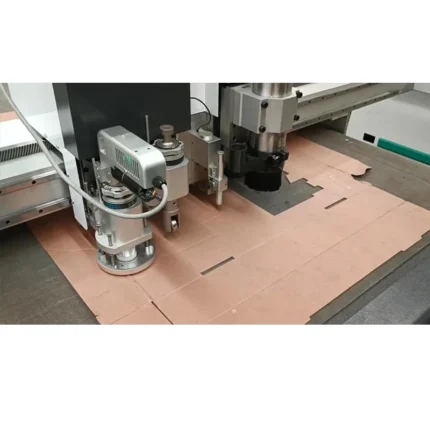
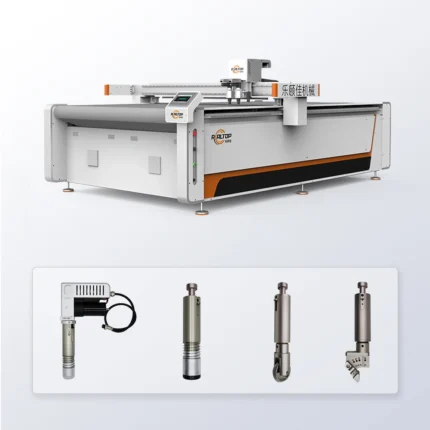
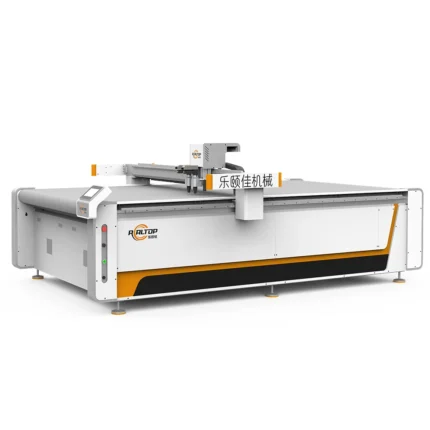
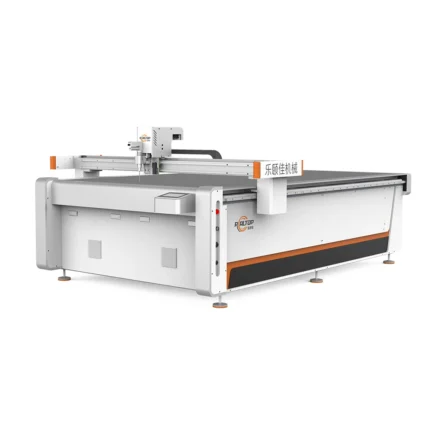
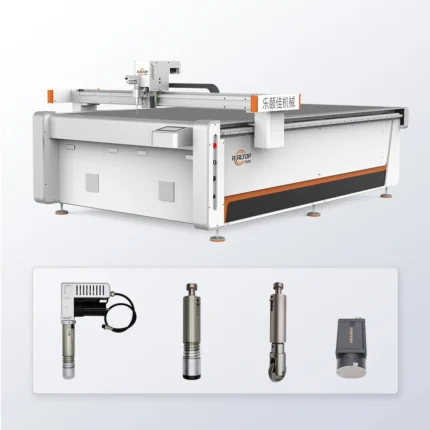
1070PAS4 A1 CNC Vibrating Drag Knife Cutting Machine, 400×600mm Working Area, CCD Camera — configured for packaging sample making and carton prototyping. Selectable tool heads include cutting, kiss-cutting and creasing options, each matched to paper, leather or thin non-metal materials by thickness. Ethernet transmission supports DXF, OLT, PDF and AI file formats with 0.05mm positioning accuracy for precise die-line cutting.
Sample cutting on your own material is recommended before commitment to confirm tool head and table configuration suitability.
Tool-head matching over raw speed — the 1070PAS4 A1 is configured per material and thickness before build, avoiding the common trap of specifying a CNC vibrating knife cutting machine specifications sheet by working area alone and ending up with ragged edges on the shop floor.
Technical Specifications
| Parameter | Value |
|---|---|
| Model | 1070PAS4 A1 |
| Product Type | CNC Vibrating Drag Knife Cutting Machine |
| Max Working Area | 400mm × 600mm |
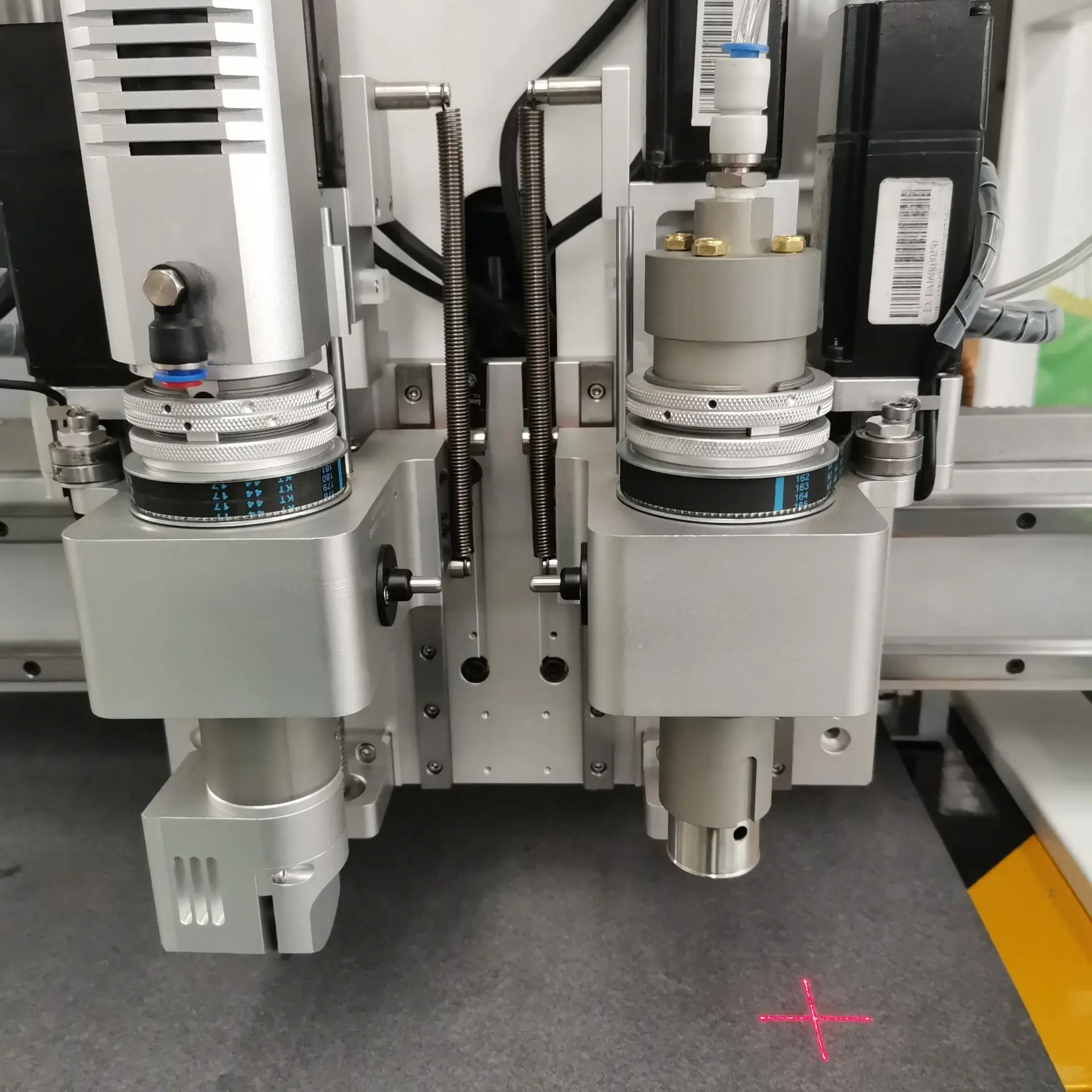
| Tools Group | Cutting Tool; Kiss-cutting Tool; Creasing Tool; CCD Camera; High Speed Oscillating Knife (Pro variant) |
| Max Cutting Speed | 1500mm/s (basis not stated in source — confirm material, thickness and profile geometry) |
| Cutting Thickness | <2mm (standard) / <5mm (Pro variant) |
| Positioning Accuracy | 0.05mm |
| Supported Profile Formats | DXF, OLT, PDF, AI |
| Data Transmission | Ethernet port |
| Rated Power | 2.5kW |
| Compliance | CE declaration available where applicable |
Application Suitability
| Application | Material or Output |
|---|---|
| Packaging sample making and carton prototyping | Corrugated board, folding carton stock, greyboard up to rated thickness |
| Leather goods and stationery finishing | Genuine and synthetic leather, PU, thin PVC film |
| Short-run digital die-cutting | Paper, card stock, adhesive-backed vinyl, thin gasket sheets |
| Printed contour trimming | Pre-printed sheets tracked via CCD camera for die-line alignment |
Why the Tool-Head Question Beats the Speed Question Every Time
A CNC Vibrating Drag Knife Cutter for Packaging Sample work is only as capable as the tool head matched to the material.
Buyers routinely shortlist machines on working area and quoted traverse speed, then discover on the first sample run that the knife crushes foam, tears leather grain, or leaves ragged fibres on corrugated flute tips. With the 1070PAS4 A1, the tool group is selected against the buyer’s actual sheet stock and daily profile mix before the machine is built [NEED_CITE: tooling selection methodology for digital flatbed cutting]. A kiss-cutting tool that scores vinyl without cutting the liner behaves very differently from a high-speed oscillating knife that slices through 5mm foam board, and confusing the two is one of the most common reasons a compact cutter sits idle in a packaging studio.
Tool Heads Matched to the Material, Not the Brochure
The 1070PAS4 A1 groups cutting, kiss-cutting, creasing, CCD camera and — on the Pro variant — a high-speed oscillating knife into a single tool station, so the CNC Vibrating Knife Cutting Machine specifications you review actually correspond to what will cut your stock. Paper and thin carton respond well to a drag knife with controlled downforce, while leather and synthetic sheets usually need an oscillating action to avoid pulling the grain. Creasing wheels handle the fold lines on packaging prototypes without breaking the surface fibres, which is what keeps a sample carton folding cleanly in front of a brand client.
CCD Contour Recognition at the Bench, Not Just on the Datasheet
Printed marks on packaging sheets shift with humidity, paper stretch and the printer itself, so a camera that only reads high-contrast targets under ideal lighting becomes a bottleneck on real jobs. The CCD camera on the 1070PAS4 A1 is specified for contour recognition on pre-printed stock, allowing die-lines to register to the printed image rather than to the sheet edge. When you send a file in DXF, OLT, PDF or AI over Ethernet, the operator can verify registration on the first sheet before the rest of the batch runs [NEED_CITE: CCD contour recognition behaviour on digitally printed packaging stock].
Reading the Spec Sheet Like a Production Manager
Positioning accuracy of 0.05mm matters most on tight-tolerance die-lines where a half-millimetre drift would show up as a misaligned crease on a folding carton sample. Rated power at 2.5kW places the 1070PAS4 A1 on a standard single-phase workshop circuit in many markets, but the actual voltage and frequency must be confirmed against the buyer’s site before the electrical cabinet is wired — I once watched a packaging line in Colombia sit dead for three weeks because a cutter shipped at the wrong voltage. Cutting thickness limits of under 2mm on the standard model and under 5mm on the Pro variant are tied to specific material densities, so a sample cutting report on your own stock is the only honest way to validate capacity before you sign the order [NEED_CITE: relationship between material density and effective cutting depth on oscillating knife tables].
The Hidden Cost of a Mis-Specified Compact Cutter
Ordering on working area alone usually shows up later as small parts lifting off the vacuum table mid-cut, or as a control language that the local operators cannot read during a rush job. A table this size is often squeezed into a design studio or sample room where single-phase power, extraction for paper dust and Ethernet cabling to the design desk are all assumed but rarely written into the purchase order. When any of those assumptions turns out wrong, the machine is physically in the room but functionally not in production [NEED_CITE: installation and utility planning for compact digital cutting tables].
Why Buyers Source This Class of Machine Here
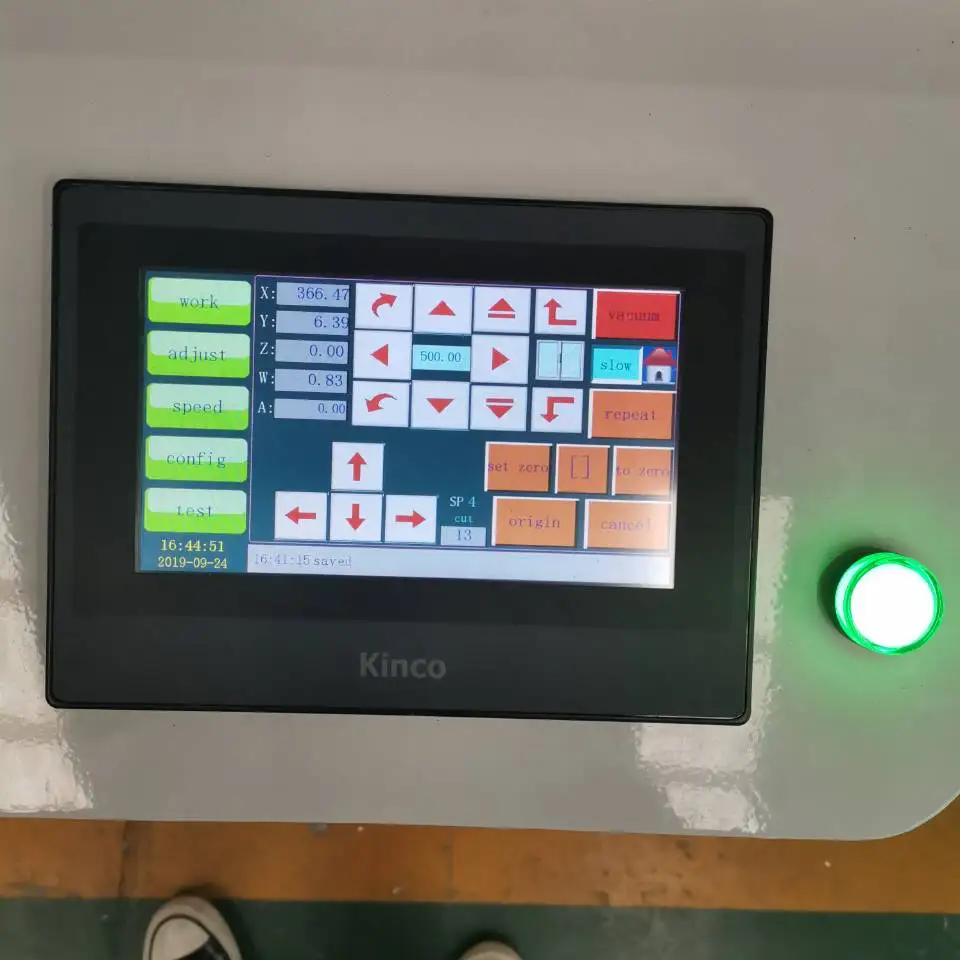
Tool head and table configuration on the 1070PAS4 A1 are locked against your material list, not a generic catalogue row, so the cutting, kiss-cutting and creasing tools that ship are the ones your samples actually need. CCD camera positioning is validated on your printed stock before dispatch rather than promised as a future option. Software compatibility — file formats, nesting workflow and control language — is confirmed in writing alongside the electrical schematic, so there are no surprises when the machine is plugged in. Sample cutting on your own material is part of the sales process, not an afterthought, and the factory test record ships with the machine.
Documentation & Verification
- Machine specification sheet matched to the configured tool group and table size
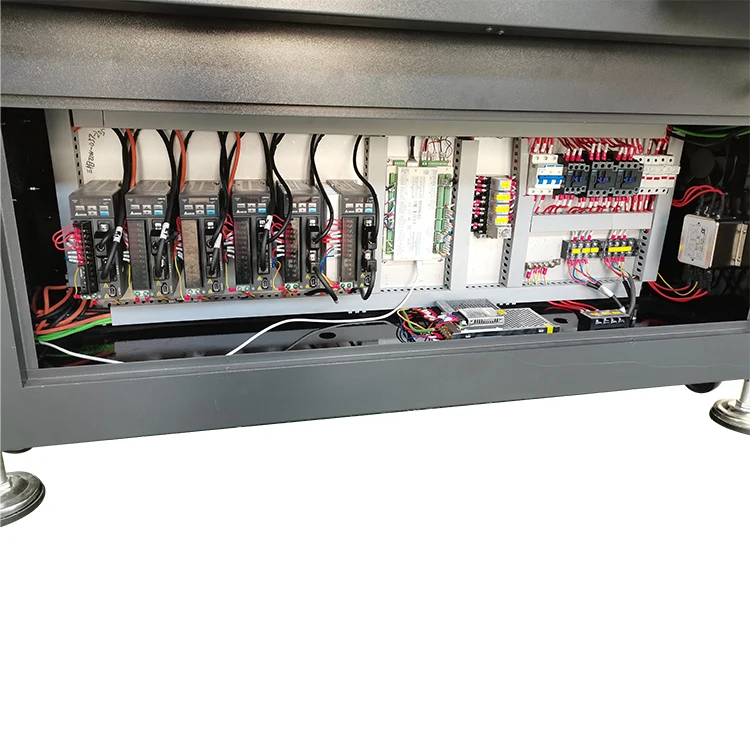
- Electrical schematic with confirmed voltage, frequency and plug type before build
- Sample cutting report run on your paper, leather or carton stock
- Software licence and file format compatibility note for DXF, OLT, PDF, AI workflows
- Factory test record and operation manual in the agreed control language
Installation, Commissioning & Support
- Verify single-phase supply and dedicated circuit for the 2.5kW rated power before delivery
- Confirm bench or floor footprint for the 400mm × 600mm working area envelope
- Ethernet drop to the design workstation for direct DXF, OLT, PDF and AI file transfer
- First-run commissioning includes tool-downforce calibration on your actual carton and leather stock
- Operator training covers tool change between cutting, kiss-cutting and creasing heads
- Spare wear parts list covers knife blades, creasing wheels and CCD calibration targets
What to Send With Your Enquiry
Tell us the exact materials you cut most days — paper weight, leather type and thickness, board grade — along with the typical die-line profile and your daily sample volume. Share your local voltage, frequency and the control language your operators read, plus the CAD or design software that will feed the machine, so we can confirm file compatibility and configuration before quotation.
Frequently Asked Questions
Q: How do I choose the right tool head for paper, leather or thin foam on this cutter?
A: Paper and thin carton generally run on a drag knife with controlled downforce, leather and synthetics benefit from oscillating action to avoid grain pull, and thin foam needs an oscillating knife with the right stroke. On the 1070PAS4 A1 we match the tool head to your actual material list and validate it with a sample cutting report before the machine is built.
Q: What does the cutting thickness rating actually mean for my material?
A: The under-2mm and under-5mm figures refer to specific material densities and cutting tool setups, not a single universal limit. A dense greyboard and a soft foam of the same thickness behave very differently under the knife, so we run your own stock on the 1070PAS4 A1 and document the result before you commit.
Q: How does the CCD camera handle printed marks at normal working speeds?
A: The CCD camera on the 1070PAS4 A1 tracks printed registration marks to align die-lines to the image, compensating for paper stretch and printer drift. Real-world performance depends on mark size, contrast and stock finish, which we verify on your printed sheets during the pre-shipment sample run.
Q: Which file formats are supported and how does the machine fit into our nesting workflow?
A: The control accepts DXF, OLT, PDF and AI profiles transmitted over Ethernet. We confirm software licence, nesting compatibility and control language with your existing design workflow before order, so files move from your CAD station to the cutter without manual conversion.
Q: What voltage and language options are confirmed before the machine ships?
A: Voltage, frequency, plug type and control interface language are confirmed in writing against your site conditions before the electrical cabinet is built. The 1070PAS4 A1 ships with the matching electrical schematic and a factory test record run at the agreed supply.


Related products
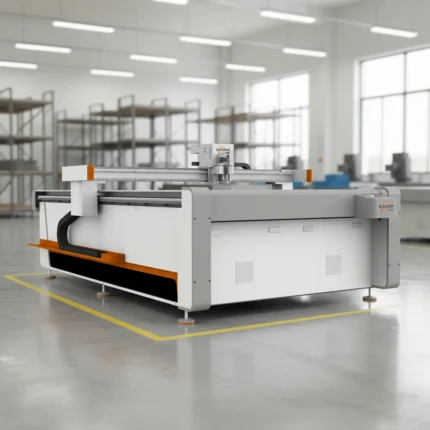
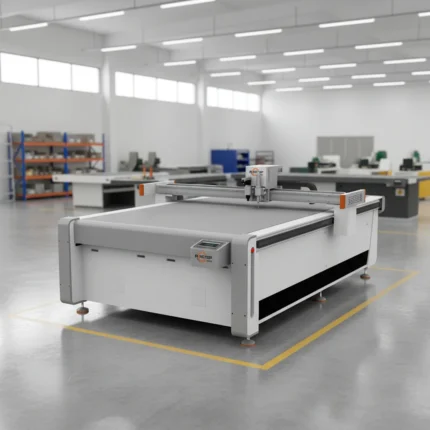
2026 Digital Flatbed Cutting Plotter Auto Corrugated Box Die Cutter
Product Introduction
Digital Flatbed Cutting Plotter 2026, ideal for auto corrugated box die cutting, offering precision and efficiency for professional packaging production.Specifications
| Type | Digital Flatbed Cutting Plotter |
| Model | 2026 |
| Application | Auto Corrugated Box Die Cutting |
| Function | Precision Cutting & Plotting |
Automation CNC Pizza Box Machine 2026 Rotary Die Cutting
Product Parameters
| Type | Automation CNC Pizza Box Machine |
| Model Year | 2026 |
| Cutting Technology | Rotary Die Cutting |
| Operation | Automated CNC Control |
Introduction
This 2026 Automation CNC Pizza Box Machine features advanced rotary die cutting technology, ensuring precise and efficient pizza box production. With automated CNC control, it offers high productivity and accuracy for professional manufacturing needs.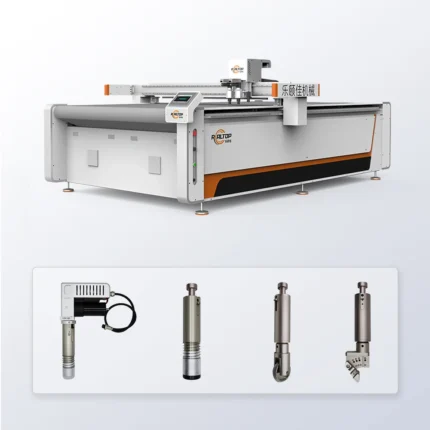
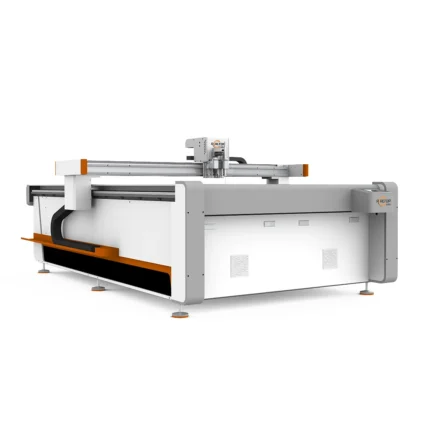
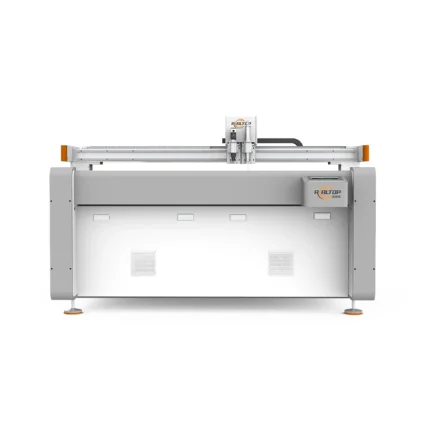
Digital Box Cutter 2026 Oscillating Knife Cardboard Cutter
Product Parameters
| Model | Digital Box Cutter 2026 |
| Cutting Type | Oscillating Knife |
| Material | Corrugated Cardboard |
Introduction
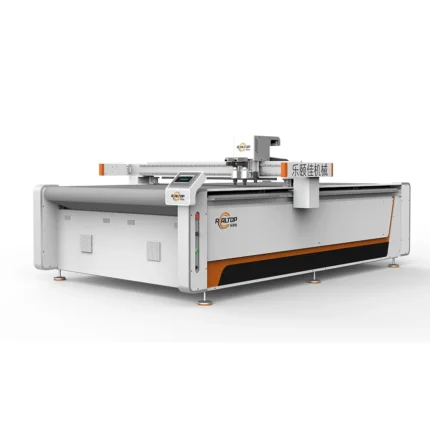
Professional oscillating knife cutting machine for corrugated cardboard. Ideal for precise, efficient cutting in packaging production. Reliable performance from China's leading welding & cutting equipment manufacturer.
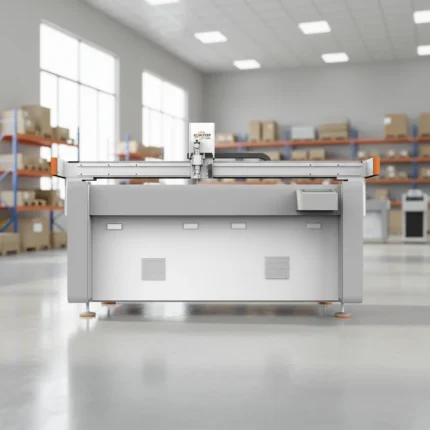
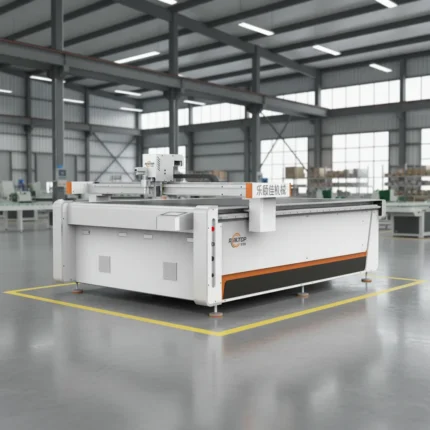

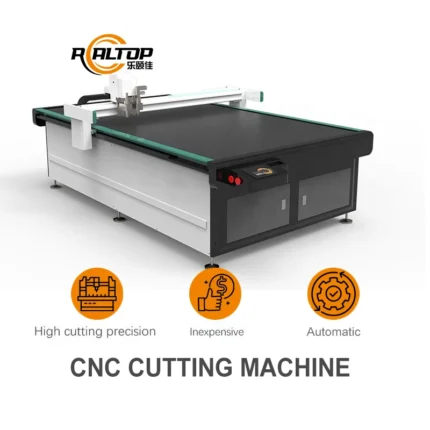
Realtop 2026 CNC Oscillating V-Cut Machine
Product Introduction
Realtop CNC Oscillating V-Cut Machine 2026 is a precision equipment designed for efficient V-cutting operations, ideal for various material processing needs with advanced CNC technology.
Key Specifications
| Model | Realtop CNC Oscillating V-Cut Machine 2026 |
| Type | CNC Oscillating V-Cut Machine |
| Application | Precision V-cutting operations |
| Feature | Advanced CNC technology |
商品评价
There are no reviews yet.