


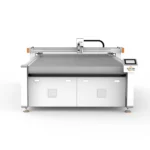


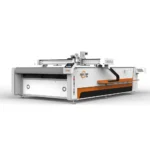
CNC Leather Cutting Machine with CCD Camera Contour – OEM Available
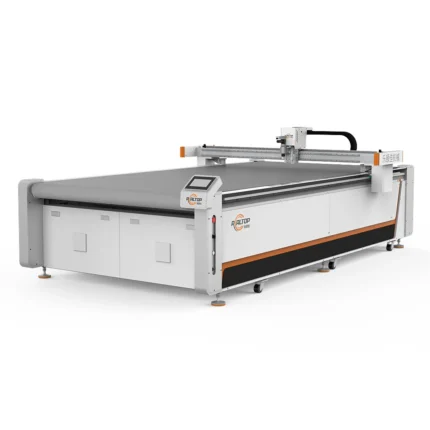
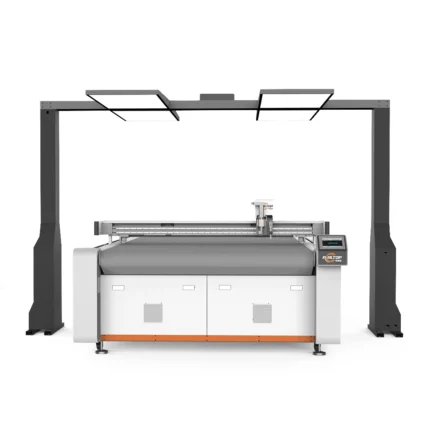
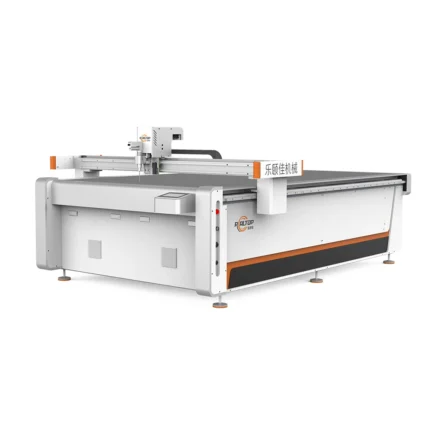
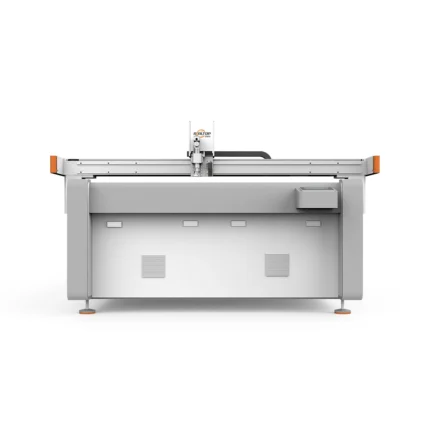
CNC Leather Cutting Machine, 1600×2500mm Working Area, CCD Camera Contour Recognition — equipped with interchangeable oscillating and driven rotary knife heads for clean, cold-cut edges on genuine leather and soft composites without thermal discoloration. The 9 kW aluminum bellows vacuum table ensures stable material hold-down across full sheet area during high-speed contour cutting. Backed by in-house tool head configuration matched to your leather type, thickness and production workflow.
Precision cold-cut configuration — every oscillating knife and vacuum zone is specified against your actual leather sample before the machine is built.
Technical Specifications
| Parameter | Value |
|---|---|
| Product Type | CNC Oscillating Knife Cutting Machine with CCD Camera |
| Working Area | 1600×2500 mm |
| Cutting Speed | 0–2000 mm/s |
| Cutting Thickness | ≤ 30 mm (basis to be confirmed by material density) |
| Cutting Accuracy | ±0.1 mm |
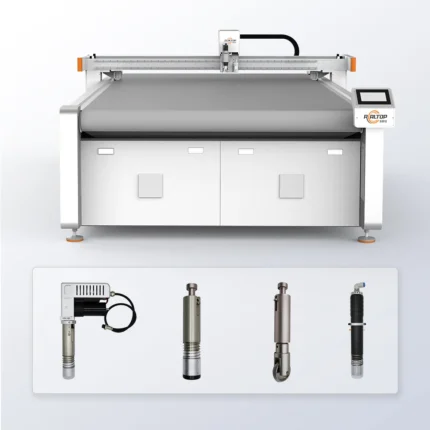
| Tool Head Options | Oscillating knife, Driven rotary knife, Creasing wheel, Kiss cutting, Pneumatic knife, Milling tool, V-groove knife |
| Positioning System | CCD Camera contour recognition |
| Vacuum Pump | 9 kW |
| Vacuum Table | Aluminum bellows vacuum table |
| Servo Drive Options | Panasonic, Delta, Dorna |
| Control System | PLC control panel with multi-language display |
| Voltage Options | 110V, 220V, 380V (frequency to be confirmed) |
| Supported File Formats | PLT, DXF, AI, PDF |
| Software Features | Auto-nesting, defect detection, power-off resume |
| Safety Devices | Infrared sensor, emergency stop |
| Overall Dimensions (L×W×H) | 3300×2100×1350 mm |
| Certification | CE |
Application Suitability
| Application | Material or Output |
|---|---|
| Shoe uppers and leather goods | Genuine leather, synthetic PU, PVC with textile backing |
| Automotive seat covers | Multi-layer composite leather, perforated hides |
| Bag and luggage production | Full-grain and corrected-grain leather, suede, nubuck |
| Sofa and upholstery cutting | Thick upholstery hides, bonded leather panels |
| Printed textile contour work | Patterned fabric rolls, dye-sublimated textile with registration marks |
| Gasket and foam components | EPE foam, neoprene, insulating composite sheets |
Why Knife Cutting Beats Laser on Light Leather
Thermal damage is the number one reason leather processors abandon CO2 laser and switch to cold-cut knife systems.
When buyers evaluate a CO2 laser cutting and engraving machine manufacturer for leather work, they often discover edge burning and yellowing on light-colored hides only after the machine arrives. The heat-affected zone on a laser cut leaves a hardened edge that cracks when the leather is folded or stitched. On white, beige, or pastel automotive upholstery leather, even a slight discoloration renders the panel unusable. A CNC oscillating knife cuts at ambient temperature, leaving a clean, flexible edge identical to a hand-cut sample. The CO2 laser cutting and engraving machine manufacturer catalog still has its place — engraving, perforating, and cutting dark synthetics — but for premium leather goods, cold-cut knife technology is the specification that avoids costly scrap [NEED_CITE: thermal damage thresholds on chrome-tanned leather].
CCD Camera Contour Tracking for Printed Leather and Fabric
The integrated CCD camera reads printed registration marks on leather hides and patterned textile rolls, aligning each cut to the pre-printed contour within ±0.1 mm. This matters when cutting shoe uppers where the design is printed or embossed onto the hide before cutting, or when processing dye-sublimated fabric where the graphic must align precisely to the cut edge. The camera tracks at production speed, so operators do not need to pause the machine between contours. Contrast between the registration mark and the substrate is the key variable — low-contrast marks on dark leather may require a mark-enhancement step before cutting [NEED_CITE: CCD contrast requirements for printed substrates].
Tool Head Selection: Matching the Knife to the Hide
Leather is not a single material. Full-grain cowhide at 3 mm behaves differently from split suede at 1.2 mm, and both differ from composite automotive leather with a foam-and-fabric backing. The oscillating knife handles most standard hides, producing a clean vertical edge. The driven rotary knife excels on long, sweeping curves in thinner materials, reducing drag marks. For thicker composite stacks or multi-layer automotive seat covers, the pneumatic knife delivers higher downward force to maintain edge squareness through the full depth. Choosing the wrong tool head is the most common reason for ragged edges or crushed backing material — a problem that looks like a machine fault but is actually a specification error.
Vacuum Table, Servo Drive, and Software: The Supporting Configuration
The 9 kW vacuum pump paired with the aluminum bellows table generates sufficient hold-down force across the 1600×2500 mm surface to prevent thin leather and fabric from lifting during high-speed reciprocating cuts. Servo drive selection — Panasonic, Delta, or Dorna — affects positional repeatability and long-term maintenance availability in the buyer’s region. On the software side, the nesting module accepts DXF, PLT, AI, and PDF files, with auto-nesting to maximize hide utilization and defect detection to route cuts around natural leather flaws such as scars or brand marks. Confirming that the buyer’s existing file workflow imports without conversion errors is part of the pre-order validation, not a post-delivery surprise.
The Hidden Cost of Skipping the Material Test
I once watched a European buyer commit to a cutting system based entirely on working-area dimensions, only to find the standard oscillating knife could not shear through their 4 mm composite automotive leather without delaminating the foam backing. The machine was mechanically sound — the tool head was wrong for the material stack. Four days of parameter adjustment followed before a qualified sample emerged. A sample cutting report on the buyer’s actual leather, specifying hide type, thickness, grain direction, and backing composition, eliminates this risk before the purchase order is signed [NEED_CITE: material testing protocols for CNC knife cutting procurement].
Why Source This Machine Here
The design team covers both knife and laser cutting technologies in-house, so the cutting method is matched to the material rather than forced into one platform. Tool head and vacuum table configuration is specified per buyer material and production volume, not pulled from a default list. CCD camera positioning parameters are verified against the buyer’s actual print marks before shipment. Software compatibility is confirmed with the buyer’s existing DXF or AI nesting workflow at the quotation stage. Voltage, plug type, and control panel language are locked in before production begins — 110V, 220V, or 380V with the correct frequency for the destination market. Every machine ships with a factory test record run on the buyer’s own material sample, not a generic demo board.
Documentation & Verification
- Machine specification sheet listing confirmed tool head and table configuration per material
- Electrical schematic with voltage, frequency, and plug type matching destination market
- Sample cutting report on buyer’s leather hide including edge quality photographs
- CE declaration with applicable machinery directive compliance scope
- Software licence and file format compatibility note for DXF, PLT, AI, PDF workflows
- Factory test record with dimensional accuracy measurement on buyer-supplied material
Installation, Commissioning & Support
- Foundation requires a level floor capable of supporting 3300×2100 mm footprint plus operator clearance
- Dedicated electrical circuit matching confirmed voltage option (110V / 220V / 380V) with correct frequency
- Machine ships partially assembled; vacuum table and gantry require on-site alignment
- First-run commissioning includes vacuum zoning check and CCD mark-reading calibration
- Operator training covers tool head changeover, nesting software, and defect detection setup
- Spare parts list identifies oscillating knife blades, vacuum seals, and CCD lens covers
What We Need to Quote Accurately
Send the leather or composite material type, thickness range, and maximum sheet size you plan to process. Specify your local voltage and frequency, the control language your operators require, and the file formats your design team currently uses. If you are cutting printed contours, include a sample hide with your standard registration marks so we can validate CCD tracking before building the machine.
Frequently Asked Questions
Q: Should I choose knife cutting or laser cutting for my leather products?
A: Knife cutting is preferred when edge appearance matters — no burn marks, no yellowing on light leather, no hardened edges that crack during stitching. Laser is better suited for engraving or perforating synthetic materials. We manufacture both platforms and recommend the method based on your specific leather type and end-use requirement.
Q: Can the CCD camera track printed marks at full production speed?
A: Yes, provided the registration marks have sufficient contrast against the substrate. Low-contrast marks on dark leather may require mark enhancement. We test your actual printed sample during the pre-order validation to confirm tracking reliability before the machine is configured.
Q: How do I know which tool head my leather requires?
A: Tool head selection depends on leather type, thickness, and backing composition. Oscillating knives handle most standard hides; rotary knives suit thin materials on long curves; pneumatic knives provide extra force for thick composites. We run a sample cut on your material to determine the correct head before quoting.
Q: Will small leather parts lift off the table during cutting?
A: Small parts can lift if vacuum hold-down is insufficient for their surface area. The 9 kW pump and aluminum bellows table provide broad coverage, but we review your part geometry during configuration to confirm the table meets your production requirements.


Related products
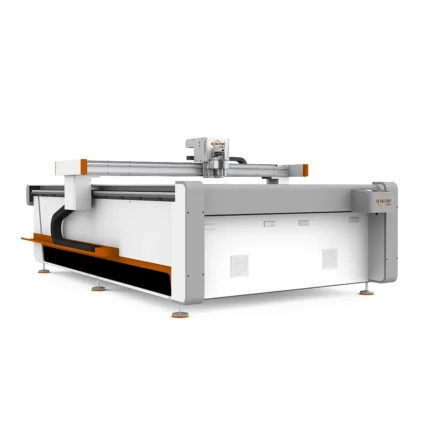
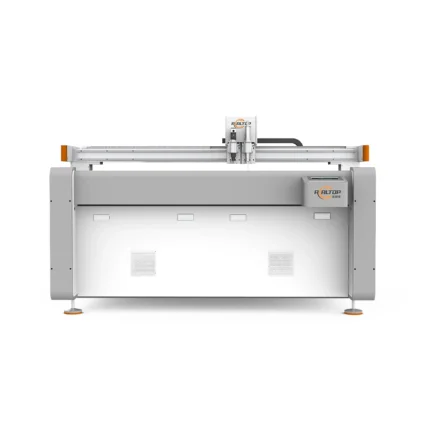
2026 CE Automatic Corrugated Cardboard Cutter Plotter
Product Introduction
Introducing the 2026 Model Automatic Cut Cutter Plotter, designed for corrugated cardboard processing. CE-certified for quality and safety, this advanced machine offers precise cutting performance for efficient production workflows. Ideal for professional manufacturing environments seeking reliable and automated cutting solutions.Product Parameters
| Model | 2026 |
| Certification | CE |
| Application | Corrugated Cardboard |
| Function | Automatic Cutting |


Auto Knife Leather Cutting Machine for Contour & Auto Feed – Manufacturer
RT-D2516/RT-S2516 CNC Oscillating Knife Leather Cutting Machine, 1600×2500mm Working Area, 9kW, 380V — engineered for leather, composite and flexible material processing with Swiss imported knife head supporting full-cut, half-cut and cursor location modes.
- Magnesium-aluminum alloy vacuum table with PVDF coating ensures uniform hold-down across the entire work surface
- CCD camera contour recognition with panoramic and mark-point positioning options for printed leather hides
- Auto-feeding configuration available for continuous medium-to-high volume production runs
- Software supports PLT, DXF, AI formats with auto typesetting and multi-language control panel
Sample cutting on your specific leather type and thickness is completed before order commitment, ensuring tool head selection and edge quality match your production requirements.
CNC Vibration Knife System 2026 Leather Cutting Machine
Product Introduction
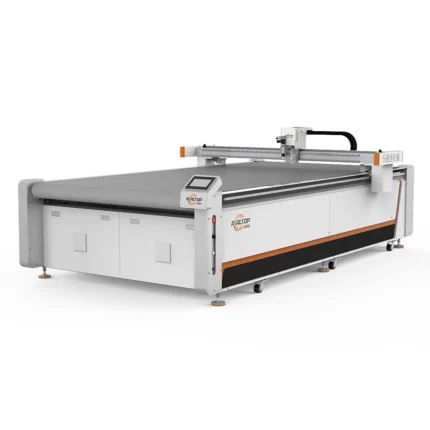
Designed for precision leather cutting, the CNC Vibration Knife System 2026 delivers efficient and accurate cutting performance, ideal for leather processing applications.Key Specifications
| Model | CNC Vibration Knife System 2026 |
| Application | Leather Cutting |
| Cutting Technology | Vibration Knife |
| Precision | High Accuracy |
| Efficiency | Enhanced Productivity |

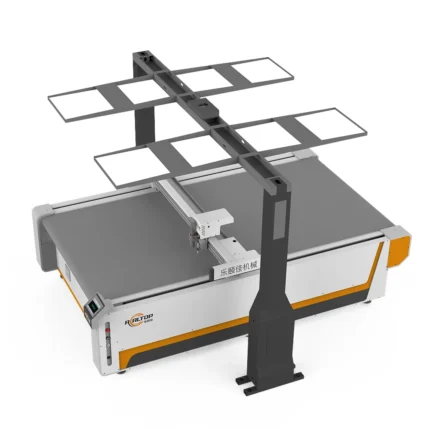
Realtop 2026 Digital Leather Cutting Machine
Product Introduction
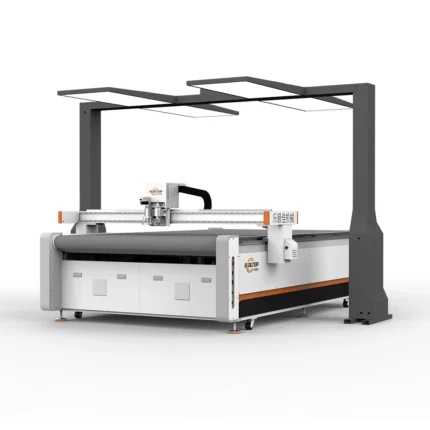
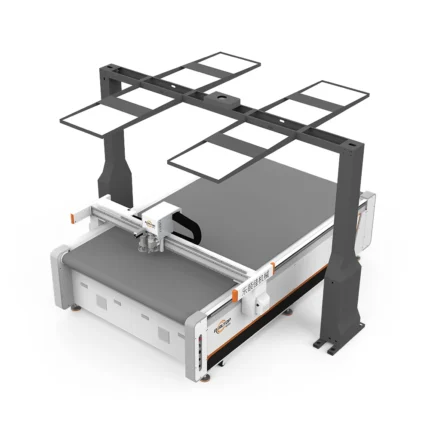
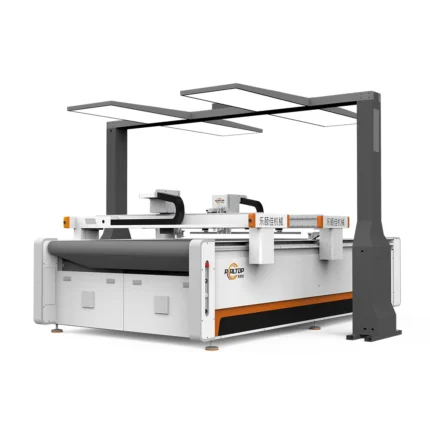
Realtop Digital Leather Cutting Machine 2026 is a professional equipment designed for precise leather cutting, ideal for manufacturing applications. It integrates advanced digital technology to ensure efficient and accurate cutting performance, suitable for various leather processing needs.
Product Parameters
| Model | Realtop 2026 |
| Type | Digital Leather Cutting Machine |
| Application | Leather Processing |
| Core Feature | Precision Cutting Technology |
商品评价
There are no reviews yet.