





CNC Oscillating Knife Cutter for Flexible Material – Factory Supply
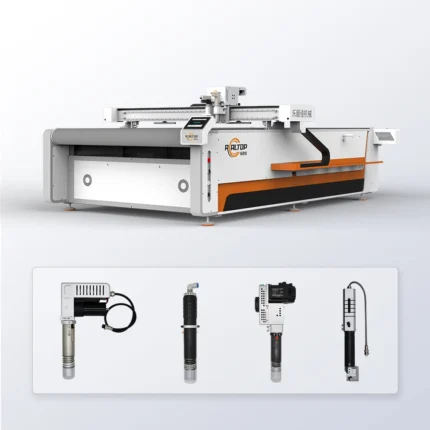
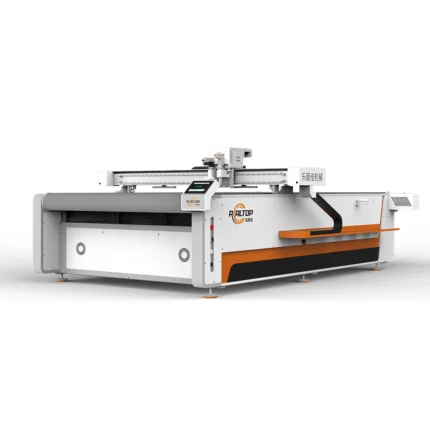
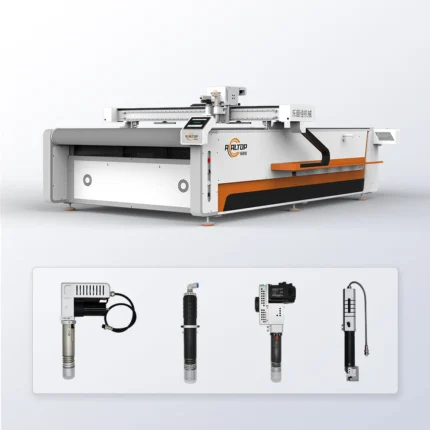
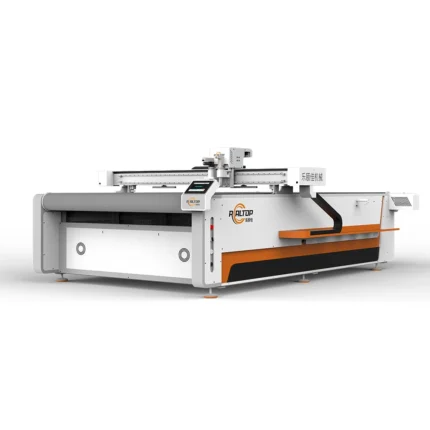
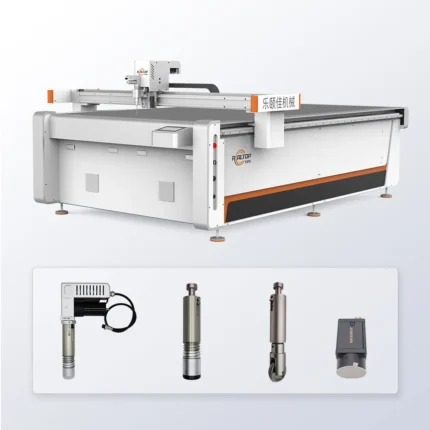
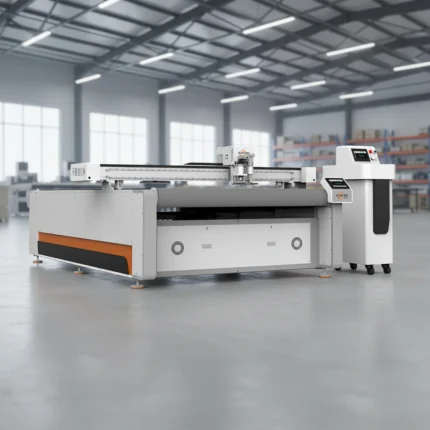
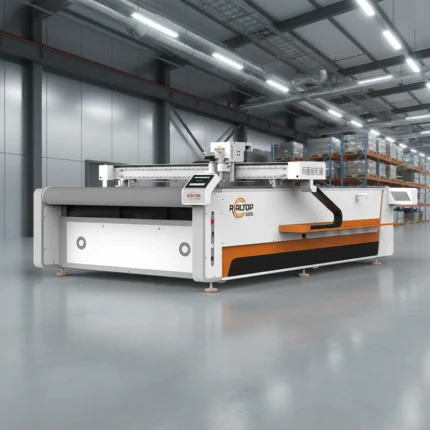
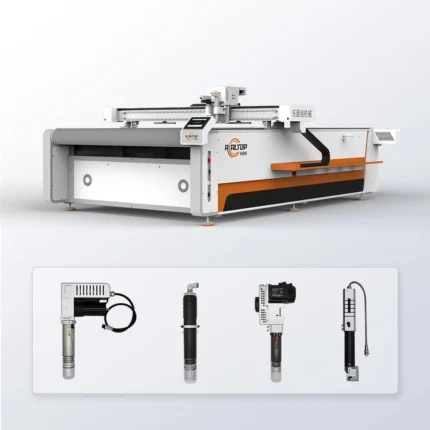
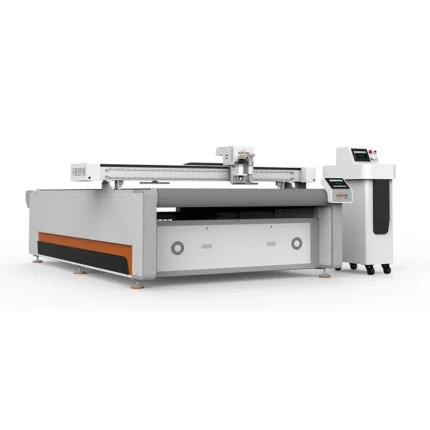
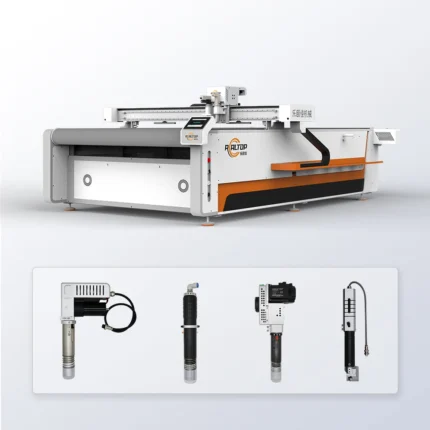
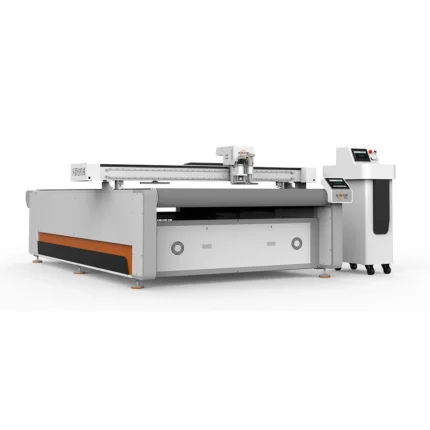
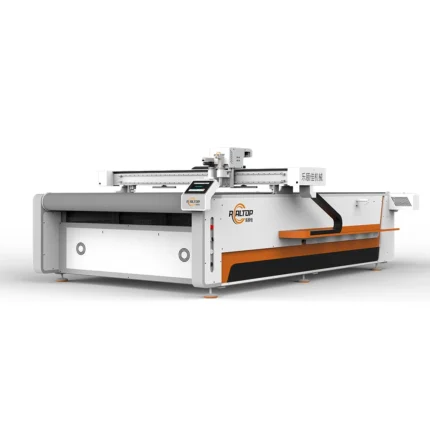
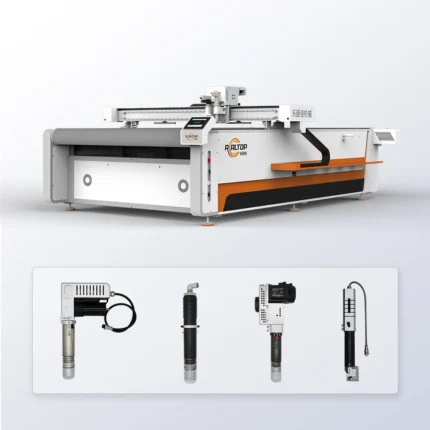
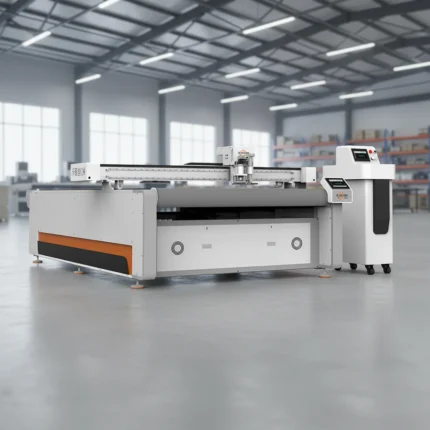
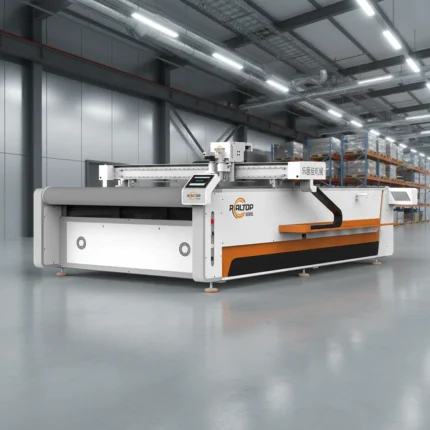
CNC Oscillating Knife Cutting Machine, 2500×2200 mm Working Area, ±0.1 mm Accuracy — configured with interchangeable tool heads including oscillating knife, driven rotary knife, creasing wheel and kiss cutting for fabric, foam, PVC and leather processing.
- Multi-tool flatbed system with 9 kW vacuum hold-down handles flexible materials up to 30 mm thick at speeds to 1500 mm/s
- PLC control with selectable display languages and DXF/PLT/AI/PDF file compatibility
Sample cutting on your own material is completed before commitment, with voltage, plug type and software workflow confirmed prior to shipment.
Multi-tool cutting configuration — every oscillating knife, rotary knife and creasing wheel setup is matched to the buyer’s actual material stack before the machine leaves the factory, not assumed from a brochure working area.
Technical Specifications
| Parameter | Value |
|---|---|
| Product Type | CNC Oscillating Knife Cutting Machine |
| Working Area | 2500 × 2200 mm |
| Tool Head Options | Oscillating knife, Driven rotary knife, Creasing wheel, Kiss cutting tool, Pneumatic knife, Milling tool, V-groove knife |
| Cutting Speed Range | 0 – 1500 mm/s |
| Maximum Cutting Thickness | ≤ 30 mm |
| Cutting Accuracy | ±0.1 mm |
| Vacuum Pump Power | 9 kW |
| Vacuum Table Type | Aluminum bellows vacuum table |
| Voltage Options | 110V / 220V / 380V (frequency to be confirmed per market) |
| Control System | PLC control panel with optional display languages |
| Servo Motor Options | Panasonic, Delta, Dorna (selection based on local service availability) |
| Compatible File Formats | PLT, DXF, AI, PDF |
| Safety Devices | Infrared sensor device, emergency stop |
| Machine Dimensions | 3300 × 2700 × 1350 mm |
Application Suitability
| Application | Material or Output |
|---|---|
| Automotive floor mat production | Full-coverage car mats, loop mats with interlayer alignment |
| Home carpet and non-slip pad manufacturing | Coral fleece carpets, PVC mats with geometric and petal-shaped contours |
| Yoga mat and foam product fabrication | Custom-shaped edges, wave-edge profiles, cut-out designs |
| Footwear and garment component cutting | Leather, fabric, EVA midsole sheets, textile layers |
| Packaging sample making | Cardboard, carton, corrugated board creasing and cutting |
Why Working Area Alone Will Not Cut Your Material
The machine frame defines the sheet size, but the tool head, vacuum zoning and blade amplitude define whether your material actually separates cleanly.
A buyer who specifies a flatbed cutter only by table dimensions often discovers mid-production that 30 mm EVA foam compresses under the blade instead of cutting, or that thin PVC lifts off the table surface at high speed because the vacuum zones are too large for small nesting parts. On layered automotive mats with a dense backing, an oscillating knife set for single-ply fabric will stall or leave uncut fibers through the bottom ply [NEED_CITE: material-specific tooling configuration standards for CNC flatbed cutting]. This CNC oscillating knife cutting machine addresses that gap by pairing the 2500 × 2200 mm work envelope with interchangeable tool heads and a 9 kW vacuum system, configured against the buyer’s actual material stack before the order is finalized.
Matching the Laser Process to Flexible Material Limits
CO2 laser systems seal edges on synthetic textiles and acrylics by melting the cut kerf, which prevents fraying on polyester and nylon fabrics used in automotive interiors and home furnishings. For a producer running coral fleece carpets or PVC mats with printed geometric patterns, the CO2 laser cutting and engraving machine approach offers edge sealing without secondary hemming. However, thick foam and layered rubber mats exceed the practical penetration depth of mid-power CO2 tubes, where the beam diverges through the kerf and leaves a tapered cut profile rather than a vertical wall.
Where Oscillating Knife Takes Over from Laser
When the material stack includes closed-cell EVA, multi-ply loop mats or rubber-backed composites, a mechanical knife tool delivers a vertical shear cut that maintains ±0.1 mm dimensional accuracy through the full 30 mm thickness range. The driven rotary knife handles continuous contour cutting on fabric rolls, while the oscillating knife cycles at high frequency to slice through dense foam without dragging the top layer out of registration [NEED_CITE: comparative cut quality between CO2 laser and oscillating knife on foam composites]. A buyer running both thin synthetic fabrics and thick mat products benefits from having both processes available under one production plan, rather than forcing one method to cover every material.
Reading the Specs Against Your Production Reality
The 9 kW vacuum pump paired with an aluminum bellows table generates suction across the full 2500 × 2200 mm surface, which holds thin single-ply fabrics flat against the table during high-speed contour cuts. Cutting speed reaches 1500 mm/s on simple outlines in thin material, though complex nesting profiles with frequent direction changes reduce effective throughput. The PLC control panel accepts PLT, DXF, AI and PDF file imports, which covers most nesting software output formats used by packaging sample makers and garment cutters. Voltage options span 110V, 220V and 380V, but frequency compatibility must be confirmed for markets running 60 Hz power grids. Servo motor selection across Panasonic, Delta and Dorna brands allows the buyer to choose a drive system with accessible local service representation.
The Hidden Cost of Wrong Tool Head Selection
Choosing an oscillating knife for closed-cell foam without matching the blade amplitude to the material density produces crushed edges and delamination between bonded layers. A drag knife on thick PVC mats leaves ragged entry points at sharp corners because the blade cannot rotate fast enough to follow the toolpath. When vacuum zoning does not match the nesting layout, small cut parts lift off the table and shift during subsequent passes, pushing dimensional tolerance beyond the ±0.1 mm specification [NEED_CITE: vacuum table zoning requirements for small-part CNC cutting]. These failures do not appear during the factory acceptance test on standard sample material; they surface weeks into production on the buyer’s own stock.
Why Source This Configuration Here
In-house design covers both knife and laser cutting technologies, so a buyer producing mixed material ranges can match the cutting method to each product rather than forcing one method across the board. Tool head and table configuration is specified per material and daily volume, not pulled from a standard catalog page. CCD camera positioning is available for printed contour work where registration marks must be tracked at production speed. Software compatibility is confirmed against the buyer’s existing DXF or AI workflow before the order enters production. Voltage, control language and plug type are locked in during the specification stage, eliminating field rewiring after delivery. Sample cutting on the buyer’s own material runs before commitment, providing a physical benchmark rather than a theoretical capability claim.
Documentation & Verification
- Factory test record documenting cut quality on buyer-supplied material at target thickness before dispatch
- Electrical schematic confirming voltage, phase and frequency matched to destination facility supply
- Tool head and table configuration list tied to specific material stack and production profile
- Software licence and file format compatibility note covering PLT, DXF, AI and PDF import verification
- CE declaration package where applicable to destination market machinery directive requirements
- Operation and maintenance manual with spare parts list matched to selected servo and tool head options
Installation, Commissioning & Support
- Machine footprint of 3300 × 2700 mm requires level concrete floor with clearance for material loading on all sides
- 9 kW vacuum pump draws dedicated circuit separate from the PLC control panel and servo drive supply
- Arrives as single-frame unit requiring rigging equipment rated for the full machine weight at destination
- First-run commissioning includes vacuum zone mapping and tool head calibration against buyer material samples
- Operator training covers PLC language selection, file import workflow and blade change procedures
- Wear parts list identifies oscillating knife blades, rotary knife discs and vacuum seals for local stocking
What to Include in Your Inquiry
To match the configuration accurately, the inquiry should specify the material type, maximum thickness and sheet or roll dimensions being processed. Confirm the local voltage and frequency standard along with the preferred control panel language. If the operation runs printed material requiring contour recognition, note the registration mark format and printing method used upstream [NEED_CITE: CCD contour recognition requirements for printed flexible materials]. Include sample material or arrange a sample cutting test before final specification lock.
Frequently Asked Questions
Q: How is the tool head selected for my specific material and thickness?
A: Each tool head — oscillating knife, driven rotary knife, creasing wheel, kiss cutting, pneumatic knife, milling or V-groove — suits a different material behaviour. The selection depends on material density, thickness up to 30 mm, and whether the cut requires edge sealing or clean shear. A sample cutting test on buyer-supplied material confirms the right tool head before the order is built.
Q: Can the machine handle multi-layer cutting, and what vacuum zoning is available for small parts?
A: Multi-layer cutting depends on the combined stack thickness staying within the 30 mm limit and the vacuum holding all layers in registration. The 9 kW pump on the aluminum bellows table provides full-surface suction, while zoning configuration is matched to the nesting layout so small parts do not lift during cutting.
Q: What voltage and control language options are confirmed before shipment?
A: Voltage options cover 110V, 220V and 380V, with frequency matched to the destination market. The PLC control panel display language is selectable from English, Russian, Italian, Chinese or customizable options. Both voltage and language are locked during specification confirmation, not left to field adjustment.
Q: Which file formats does the software accept, and does it integrate with my existing nesting workflow?
A: The system imports PLT, DXF, AI and PDF formats. Compatibility with the buyer’s specific nesting software output is verified during the specification stage by running test files through the complete import and cut workflow before the machine enters production.
Q: How do I verify cutting quality on my material before placing the order?
A: Send sample material to the factory for a cutting test at the target thickness and speed. The resulting sample cutting report documents edge quality, dimensional accuracy and tool head configuration, providing a physical benchmark that the delivered machine must match.


Related products
2026 Carbon Fiber Cloth Cutting Machine – China Manufacturer
Product Introduction
Fabric Sample Cutter Pillow Machine ¨C 2026 Carbon Fiber Cloth Cutting Machine, ideal for precise cutting of carbon fiber cloth and fabric samples, suitable for pillow production and related textile applications.Product Parameters
| Name | Fabric Sample Cutter Pillow Machine |
| Model | 2026 |
| Material | Carbon Fiber Cloth |
| Application | Pillow Fabric Cutting |
2026 CNC Knife Cutting Machine for Fabric Leather PVC Hot Sale
Product Introduction
2026 Hot Sale CNC Knife Cutting Machine for Fabric, Leather, PVC. Ideal for precise cutting of various materials with advanced CNC technology, perfect for manufacturing needs.
Product Parameters
| Application | Fabric, Leather, PVC |
| Type | CNC Knife Cutting Machine |
| Feature | Precision Cutting |
| Year | 2026 Model |
CNC Vibration Knife System 2026 for Polyester Nylon Non-Woven Prepreg
Product Introduction
CNC Vibration Knife System 2026 is ideal for cutting polyester, nylon, non-woven fabrics, and prepreg materials with precision and efficiency, suitable for industrial manufacturing needs.Product Parameters
| Model | 2026 |
| Cutting Technology | CNC Vibration Knife |
| Materials | Polyester, Nylon, Non-Woven, Prepreg |
Custom CNC Shirt Fabric Cutting Machine 2026
Product Introduction
Custom CNC Shirt Fabric Cutting Machine 2026, ideal for precise fabric cutting in garment manufacturing, offering efficient and accurate cutting solutions.
Product Parameters
| Model | Custom CNC Shirt Fabric Cutting Machine 2026 |
| Type | CNC Fabric Cutting Machine |
| Application | Shirt Fabric Cutting |
| Year | 2026 |
Jinan Realtop CNC Oscillating Knife Cutter 2026
Product Introduction
Jinan Realtop CNC Oscillating Knife Cutter 2026, a precision cutting solution from China's leading welding & cutting equipment manufacturer, ideal for efficient material processing with advanced CNC technology.
Key Specifications
| Model | 2026 |
| Type | CNC Oscillating Knife Cutter |
| Manufacturer | Jinan Realtop |
商品评价
There are no reviews yet.