



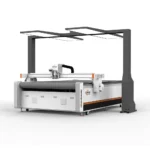

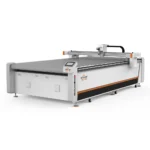


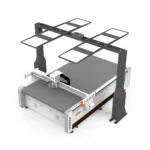
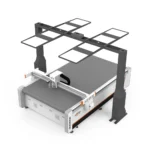
CNC Oscillating Knife Cutting Machine for Leather – Industrial Application
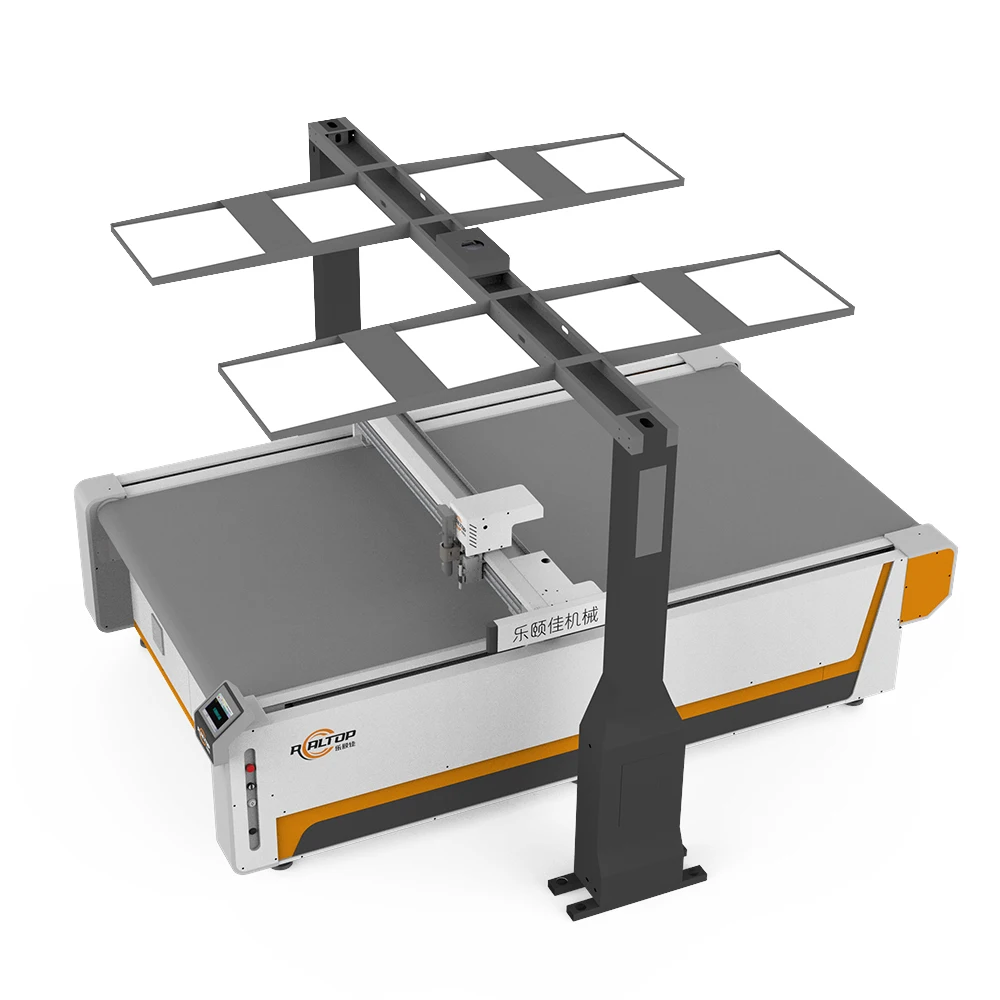
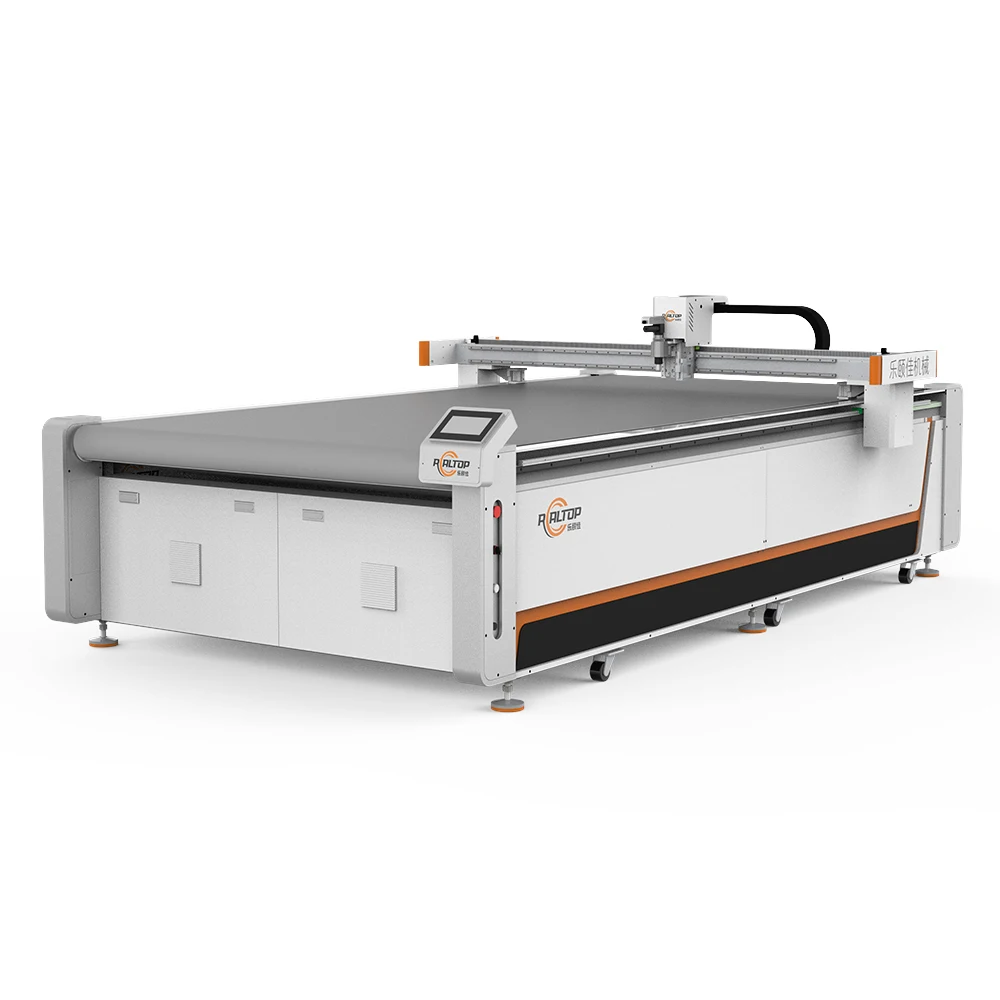
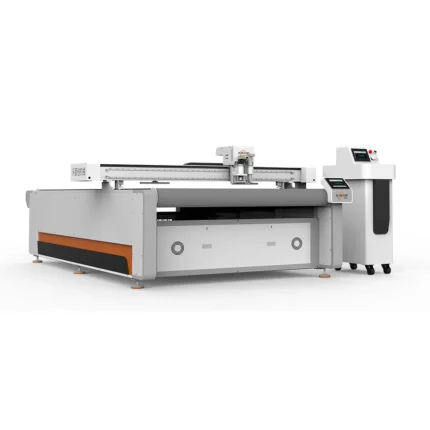
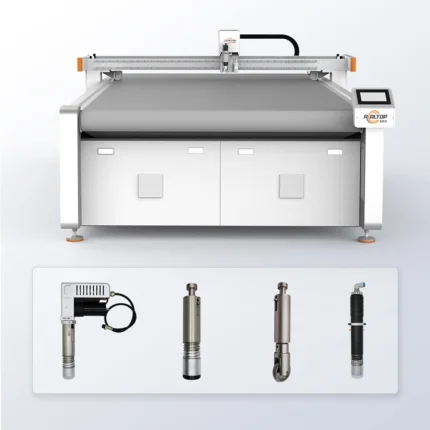
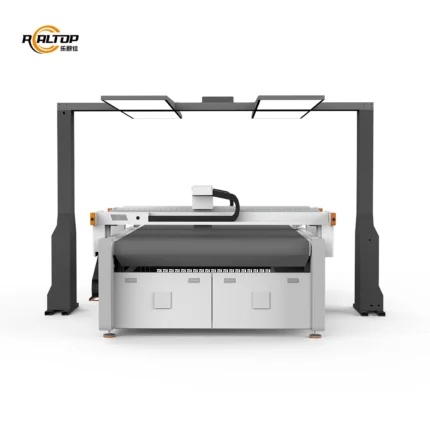
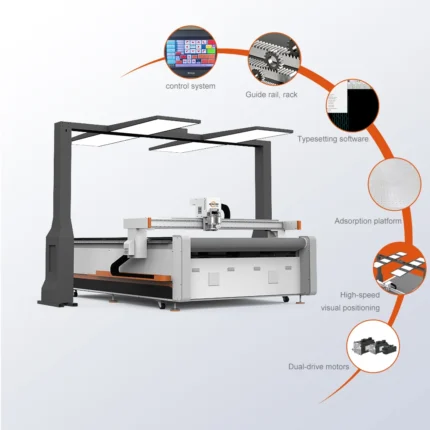
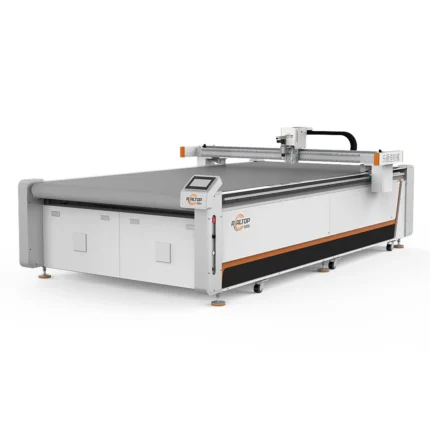
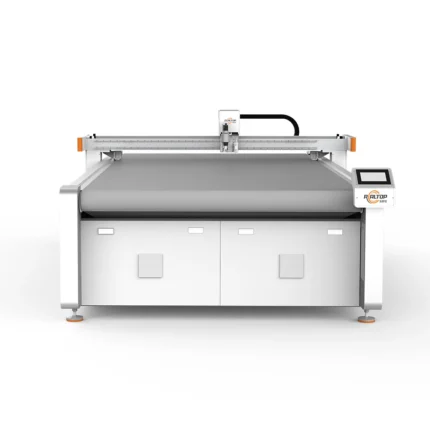
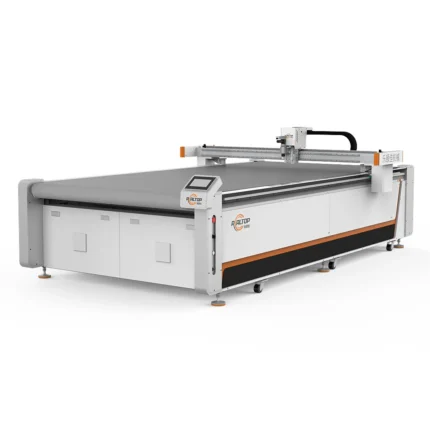
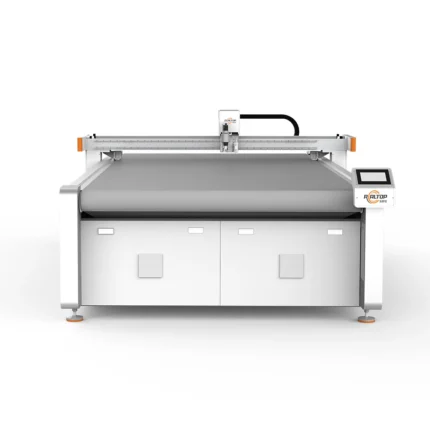
CNC Oscillating Knife Cutting Machine, 1600×2500mm Working Area, CCD Camera Positioning — configured with oscillating knife, driven rotary knife, and creasing wheel tool heads for precise leather and fabric cutting up to 30mm thick.
- Aluminum honeycomb vacuum table with zoning prevents small leather parts from lifting during high-speed cutting at 0-2000 mm/s
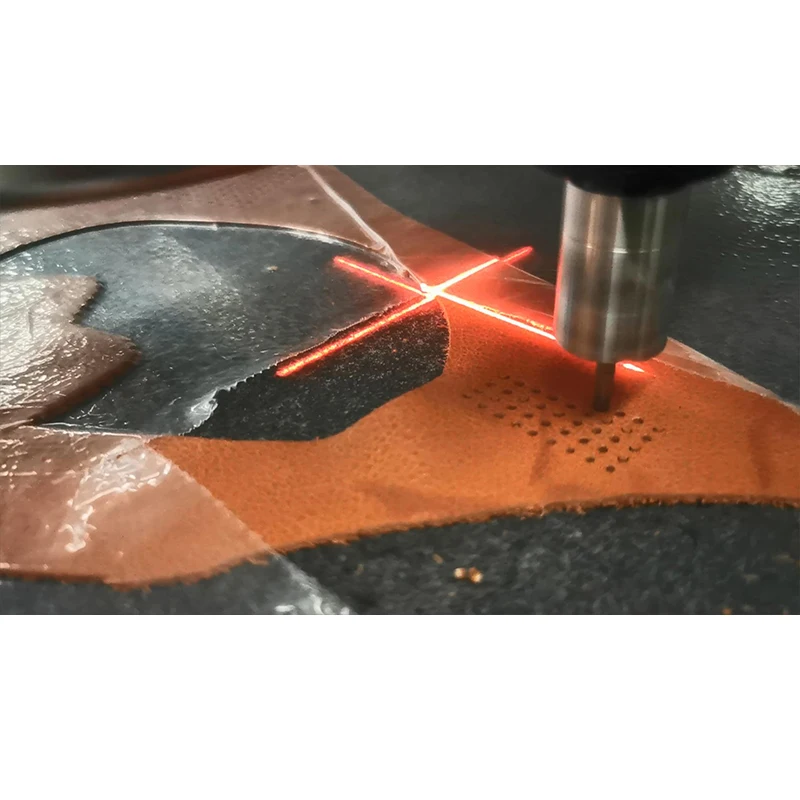
- CCD contour recognition tracks printed marks and natural leather grain boundaries for accurate nesting and material yield optimization
- Supports DXF, PLT, and AI file formats, integrating directly into existing pattern workflows
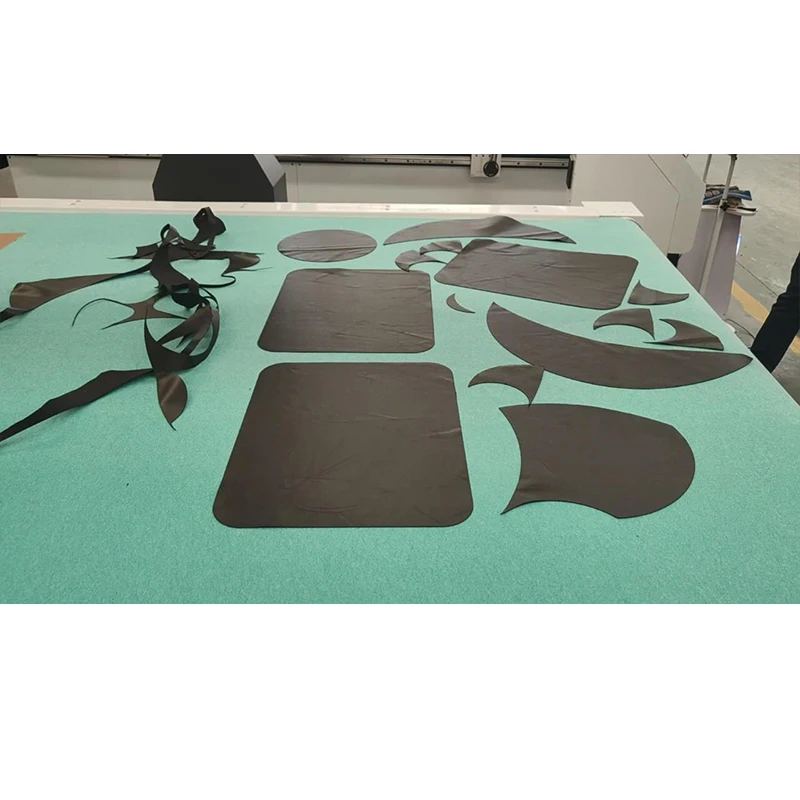
Sample cutting on buyer-supplied leather validates edge quality and tool head selection before order commitment.
Tool head and table configuration specified per material and production volume — Every oscillating knife, drag knife, and vacuum zone is matched to the buyer’s actual leather or fabric stock rather than a generic catalog setup.
Technical Specifications
| Parameter | Value |
|---|---|
| Product Type | CNC Oscillating Knife Cutting Machine |
| Working Area | 1600 × 2500 mm |
| Tool Head Options | Oscillating knife, Driven rotary knife, Creasing wheel, Kiss cutting tool, Pneumatic knife, Milling tool, V-groove knife |
| Cutting Speed | 0–2000 mm/s |
| Cutting Thickness | ≤ 30 mm (basis not stated in source — confirm material and format) |
| Cutting Accuracy | ±0.1 mm |
| Vacuum Pump Power | 9 kW |
| Vacuum Table | Aluminum honeycomb vacuum table |
| Servo Drive Options | Panasonic, Delta, Dorna |
| Voltage Options | 110V, 220V, 380V |
| Control System | PLC control panel |
| Software & File Formats | PLT, DXF, AI, PDF |
| CCD Camera | Camera-based contour recognition and positioning |
| Safety Device | Infrared sensor and emergency stop |
| Machine Dimensions | 3300 × 2100 × 1350 mm |
| Language Options | English, Russian, Italian, Chinese, custom available |
| Standards | CE (declaration where applicable) |
Application Suitability
| Application | Material or Output |
|---|---|
| Shoe upper cutting | Genuine leather hides, synthetic leather, PU and PVC sheets |
| Automotive seat covers and interior panels | Automotive-grade leather, perforated leather, multi-layer textile composites |
| Bag and leather goods production | Top-grain leather, split leather, lining fabric, reinforcement board |
| Garment and apparel cutting | Woven fabric, knitted fabric, denim, technical textiles |
| Sofa and home furnishing upholstery | Upholstery leather, heavy-weight fabric, bonded foam and batting |
| Car mats and flooring | PVC coil mats, TPE mats, carpet, rubber composites |
Why the Wrong Tool Head Ruins an Entire Leather Hide
An oscillating knife on chrome-tanned leather produces clean edges; the same blade on bonded foam crushes the core.
Leather is not a single material. A full-grain cowhide reacts completely differently under an oscillating knife compared to a chrome-tanned split or a synthetic PU layer. When a buyer specifies a CNC Oscillating Knife Cutting Machine for leather and fabric based on working area alone, the tool head is often chosen generically. The result shows up only when production starts — ragged edges on thin splits, crushed layers on bonded foam, or yellowed edges on treated hides where the wrong blade frequency generates excess heat [NEED_CITE: leather cutting tool head selection by material density and treatment].
I once set up a line for an automotive interior supplier. The trial cuts on natural vegetable-tanned leather samples came out perfectly. When they switched to a batch of chrome-tanned hides for actual seat cover production, the edge quality dropped noticeably and the workshop filled with an acrid smoke that had nothing to do with the machine. The entire parameter set had to be rebuilt from scratch. That is why sample cutting on the buyer’s actual production material — not a showcase swatch — has to happen before any configuration is locked in.
Matching the Blade to the Hide
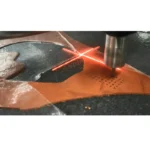
A driven rotary knife handles continuous contour cuts on genuine leather hides with minimal vibration, preserving the natural grain surface. For synthetic PU or PVC leather used in bag linings, an oscillating knife at high frequency delivers burr-free edges across long production runs. Pneumatic knife heads are available for thicker, multi-layer leather stacks where downward force must remain constant through varying densities. The CNC Oscillating Knife Cutting Machine for leather and fabric is configured with the specific combination the buyer’s material demands, not a default setting.
CCD Contour Recognition on Printed and Natural Marks
Leather hides carry natural grain variation, scars, and stretch marks that must be avoided during nesting. The camera-based contour recognition system reads printed fiducial marks on synthetic leather rolls and locates natural boundary edges on genuine hides, feeding position data to the nesting software in real time. This allows the cutting path to shift dynamically around defects [NEED_CITE: CCD contour recognition accuracy on natural versus printed leather surfaces]. For patterned fabric rolls, the CCD camera tracks registration marks at production speed to keep pattern alignment within the stated ±0.1 mm accuracy.
What the Specifications Actually Mean on the Workshop Floor
The 9 kW vacuum pump paired with the aluminum honeycomb table is not just a suction rating. The honeycomb structure divides the surface into zones, and zoning matters most when cutting small leather components like shoe upper pieces or bag strap segments. Insufficient zone control means small parts lift off the table mid-cut, destroying the piece and the blade. The PLC control panel manages zone activation so that only the area under the cutting head draws full vacuum, keeping the hide flat without wasting pump capacity on empty table space. Servo drive selection — Panasonic, Delta, or Dorna — affects motion smoothness on tight contours typical of shoe and bag patterns, and the choice is matched to the buyer’s production volume and maintenance infrastructure.
The Hidden Cost of a Generic Configuration
When the vacuum table zoning is not matched to the buyer’s typical part size, small leather pieces drift during cutting and the entire nest is wasted. When the software cannot import the buyer’s existing DXF or AI nesting files, operators spend hours redrawing patterns that already exist in their system. A voltage mismatch discovered after the machine arrives means weeks of downtime while a transformer is sourced locally. These are not theoretical problems — they appear repeatedly in post-installation service calls across different export markets [NEED_CITE: common CNC cutting machine post-installation issues by region].
Why Source This Configuration Here
The manufacturer designs and builds both knife and laser cutting systems in-house, so a leather buyer can evaluate oscillating knife versus CO2 laser for their specific hide type without being pushed toward whichever technology one factory happens to produce. Every tool head and table zone configuration is specified against the buyer’s own material sample, not a generic catalog entry. Software file format compatibility — DXF, PLT, AI, PDF — is confirmed before the order is finalized, not discovered during commissioning. Voltage, plug type, and control panel language are documented and locked before production begins. The sample cutting report on the buyer’s actual leather or fabric ships with the machine as a reference baseline.
Documentation & Verification
- Machine specification sheet listing every tool head and vacuum zone configured for your material
- Electrical schematic confirming voltage, frequency, and plug type before production starts
- Sample cutting report on your actual leather hide or fabric roll with edge quality photographs
- Software license key and file format compatibility confirmation for your nesting workflow
- CE declaration where applicable to your destination market’s import requirements
- Tool head and table configuration list matching your material type and thickness range
Installation, Commissioning & Support
- Foundation and floor leveling requirements checked against the 3300 × 2100 × 1350 mm footprint
- Dedicated circuit sizing confirmed for the 9 kW vacuum pump plus PLC control panel draw
- Machine arrives fully assembled; table leveling and vacuum seal verification completed on site
- First-run parameter tuning using your leather or fabric stock to establish baseline cutting speeds
- Operator training covers tool head changeover, CCD camera calibration, and zone activation on the PLC panel
- Spare oscillating and rotary knife blades, vacuum table seals, and CCD lens cleaning kit included
What We Need to Specify Your Machine Correctly
Send us the exact leather or fabric type you cut daily — including whether hides are chrome-tanned, vegetable-tanned, or synthetic — along with typical thickness range and sheet or hide dimensions. Share your current nesting file format and the software platform your design team uses. Let us know your workshop voltage and frequency, plus the control panel language your operators need. If possible, ship a production sample of your material so we can run trial cuts and confirm edge quality, vacuum hold, and CCD tracking before your configuration is finalized.
Frequently Asked Questions
Q: How do I choose between an oscillating knife and a driven rotary knife for my leather stock?
A: Oscillating knives work well on synthetic leather, PU, and thinner genuine splits where high-frequency vibration produces clean edges. Driven rotary knives are preferred for continuous contour cuts on thicker full-grain hides where smooth blade travel preserves surface quality. We test both on your actual material sample before finalizing the tool head configuration.
Q: Why do small leather parts lift off the table during cutting?
A: This happens when vacuum table zones are not activated correctly for the part size. The aluminum honeycomb table on this machine divides into controllable zones managed by the PLC panel, so only the area under the cutting head draws full suction. We configure the zone mapping based on your typical component dimensions during commissioning.
Q: Can the CCD camera reliably track marks on natural leather at production speed?
A: Natural leather hides lack printed fiducial marks, so the CCD system locates boundary edges and surface features instead of ink marks. On synthetic leather rolls with printed registration marks, tracking is direct. We validate CCD performance on your specific material during the sample cutting stage before the order is confirmed.
Q: How are voltage and control language confirmed before the machine ships?
A: We document your workshop voltage, frequency, plug type, and preferred control panel language in the specification sheet before production begins. The electrical schematic is sent for your approval, and the configuration is locked once you sign off. This prevents mismatches that would otherwise cause weeks of delay after delivery.
Q: Will the software accept my existing nesting files without re-drawing?
A: The system accepts PLT, DXF, AI, and PDF formats. We confirm compatibility with your specific file exports during the inquiry stage by processing a sample file you provide. The software license and a file format compatibility note are included in the documentation package shipped with the machine.


Related products
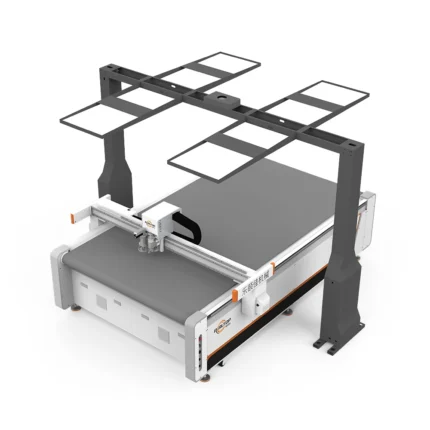
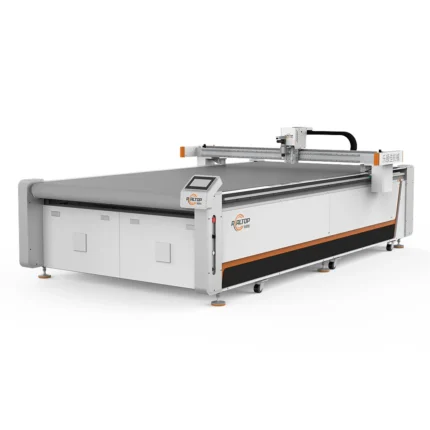
1625 CNC Oscillating Blade Cutter for Artificial Leather & Elastic Fabric
Product Introduction
1625 CNC Oscillating Blade Cutter, ideal for precise cutting of artificial leather and elastic fabric, offering efficient and accurate material processing for 2026 production needs.
Product Parameters
| Model | 1625 |
| Type | CNC Oscillating Blade Cutter |
| Applications | Artificial Leather, Elastic Fabric |
| Year | 2026 |
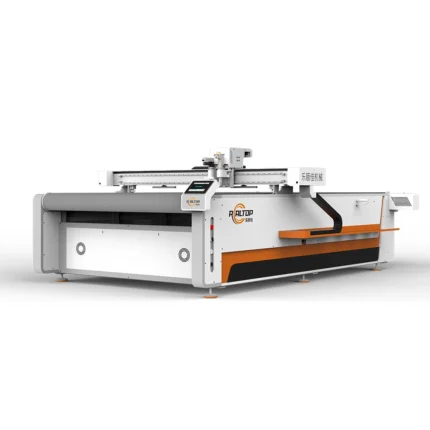

2026 Oscillating Knife Leather Cutting Machine Auto Feed Contour Cut
Product Introduction
2026 New Design Oscillating Knife Cutting Machine, ideal for leather processing with auto feed and contour cut functions, ensuring precise and efficient cutting performance.
Product Parameters
| Function | Auto Feed & Contour Cut |
| Application | Leather Cutting |
| Design | 2026 New Design |
| Type | Oscillating Knife Cutting Machine |
CNC Vibration Knife System 2026 Leather Cutting Machine
Product Introduction
Designed for precision leather cutting, the CNC Vibration Knife System 2026 delivers efficient and accurate cutting performance, ideal for leather processing applications.Key Specifications
| Model | CNC Vibration Knife System 2026 |
| Application | Leather Cutting |
| Cutting Technology | Vibration Knife |
| Precision | High Accuracy |
| Efficiency | Enhanced Productivity |
Oscillating Knife Leather Cutter CNC 2026
Product Introduction
Oscillating Knife Leather Cutter CNC 2026 is a precision cutting solution for leather materials, designed for efficient and accurate fabrication in manufacturing settings. Ideal for leather processing with advanced CNC technology.Product Parameters
| Model | Oscillating Knife Leather Cutter CNC 2026 |
| Cutting Type | Oscillating Knife |
| Application | Leather Materials |
| Control System | CNC |
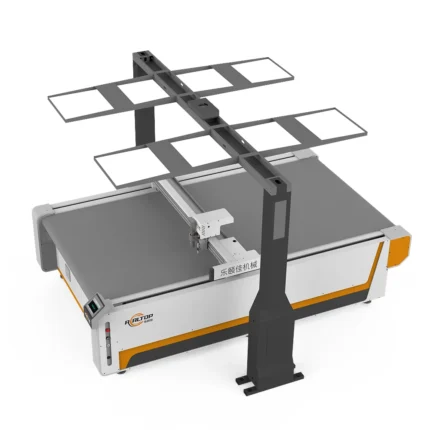
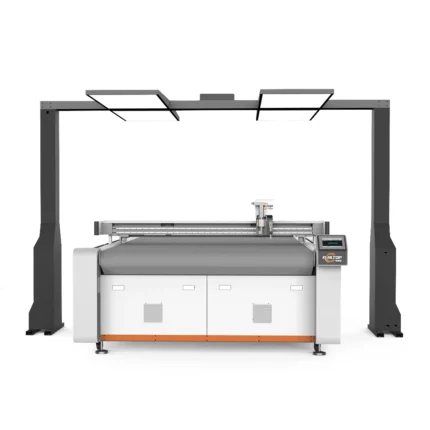
Realtop 2026 Leather CNC Oscillating Knife Cutter Camera
Product Introduction
Realtop Leather CNC Oscillating Knife Cutter with Camera ¨C 2026, ideal for precision leather cutting with advanced camera positioning. Efficient and reliable for professional manufacturing needs.
Key Specifications
| Type | CNC Oscillating Knife Cutter |
| Material | Leather |
| Feature | Built-in Camera |
| Model | 2026 |
商品评价
There are no reviews yet.