

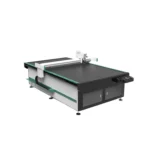
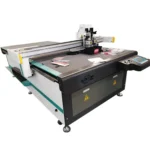
CNC Paper Board Cutting Machine for Packaging – OEM Available
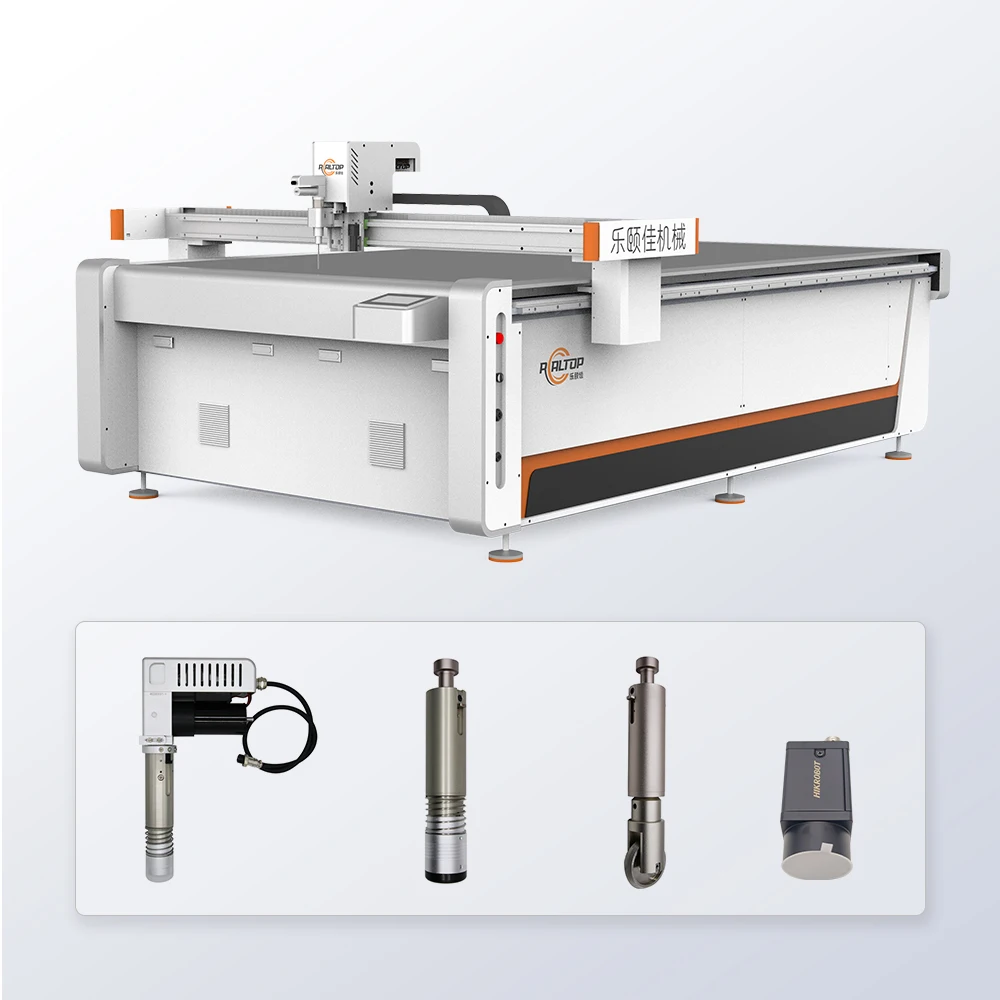
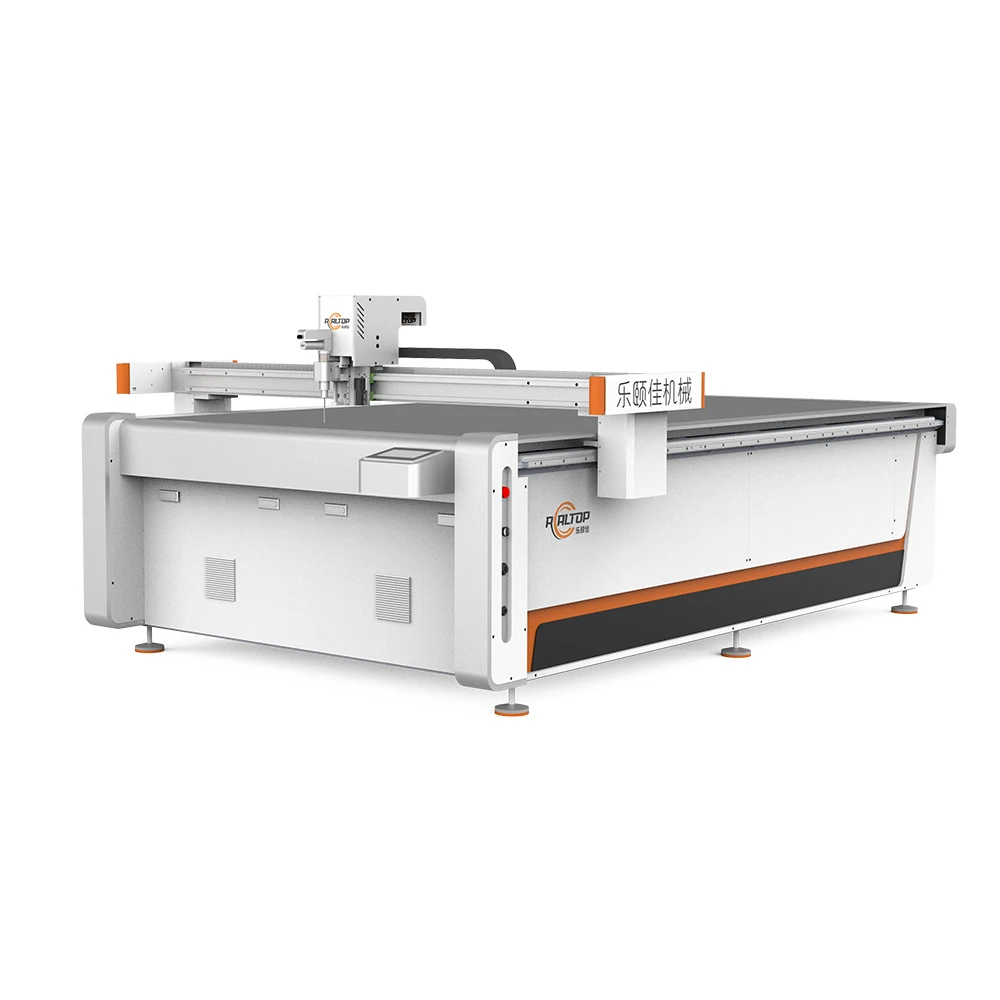
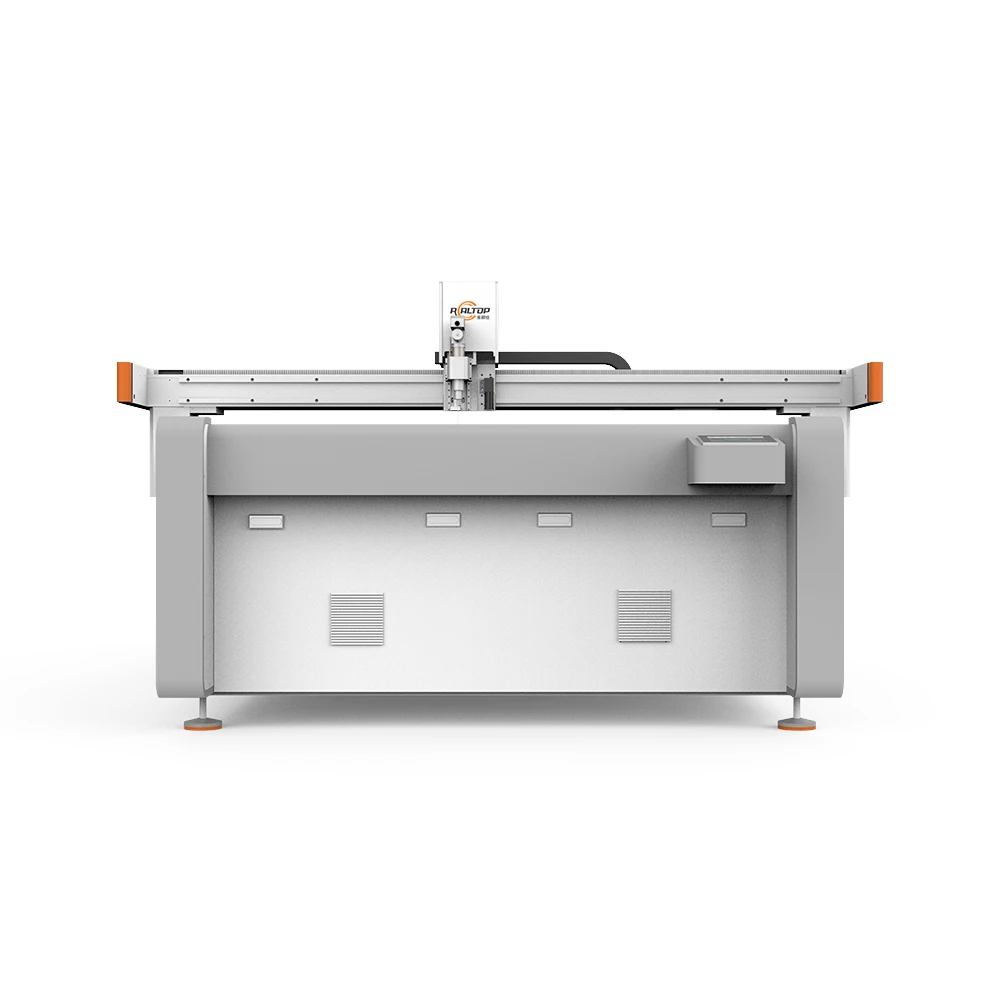
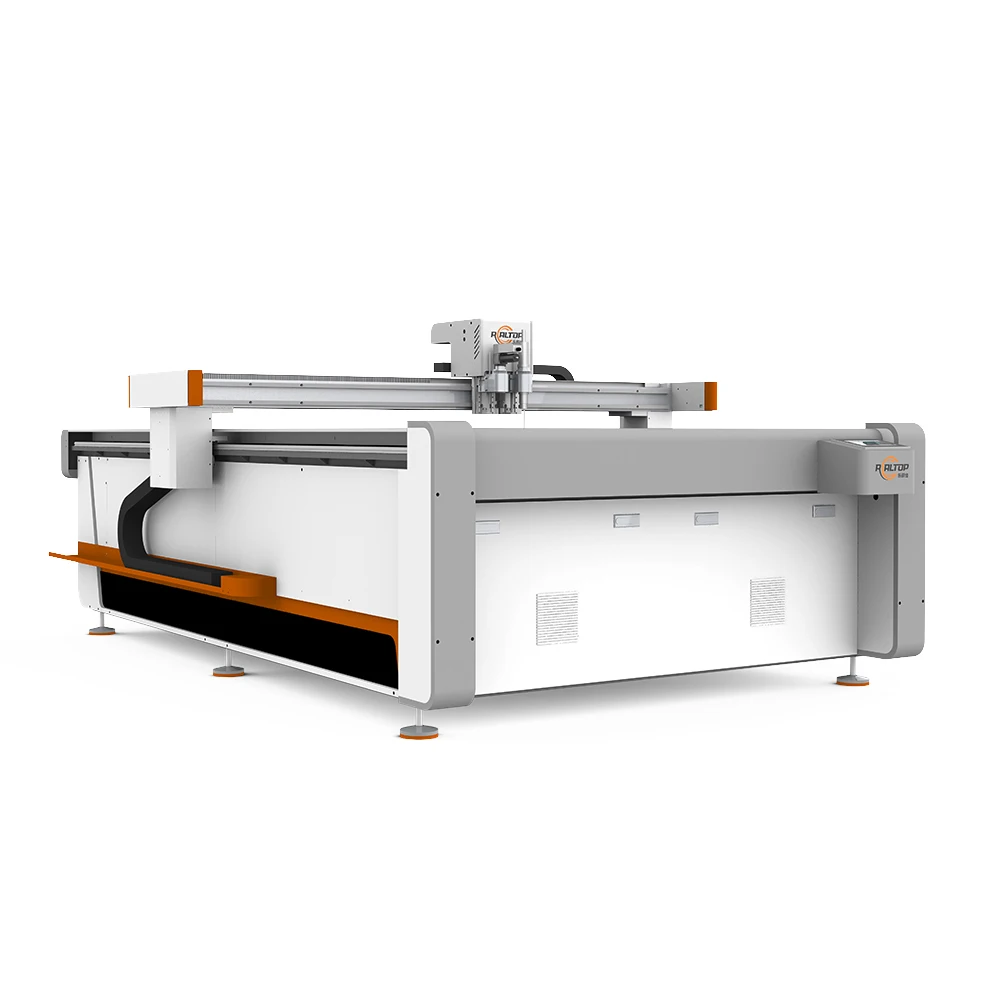
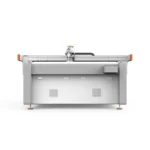
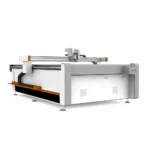
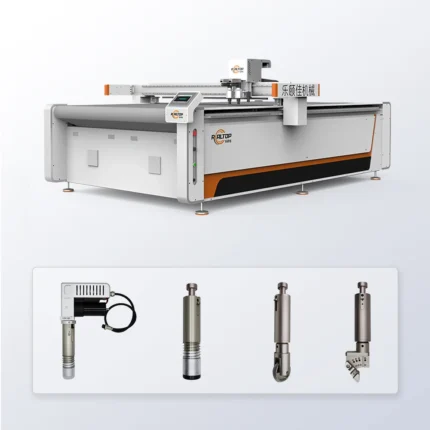
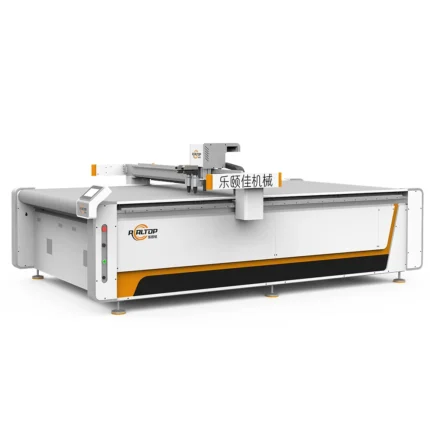
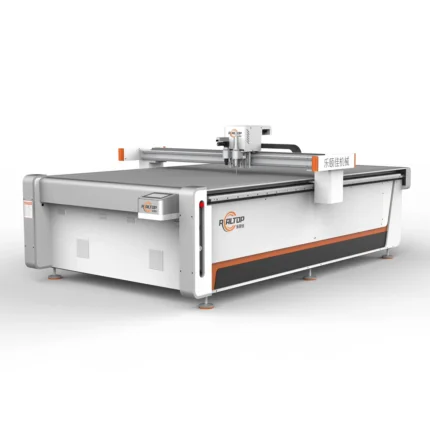
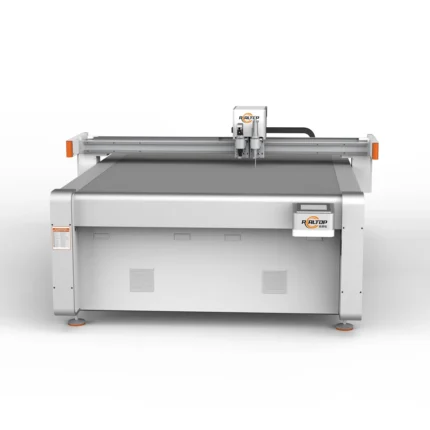
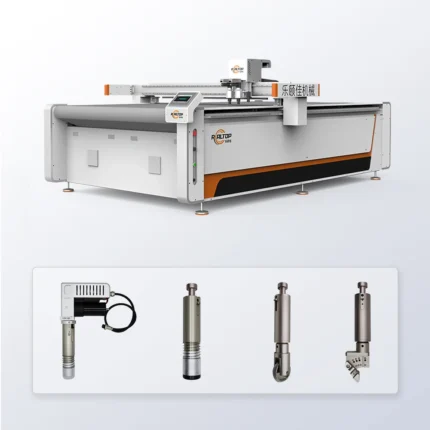
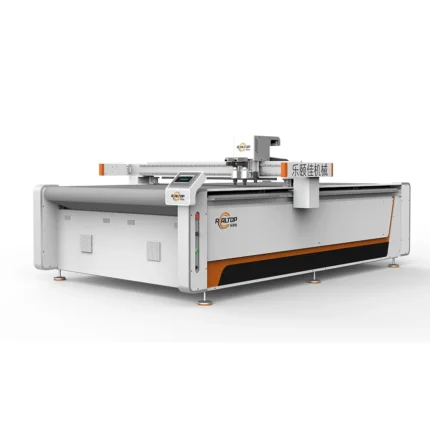
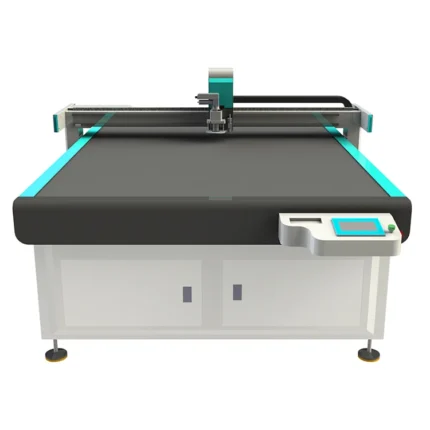
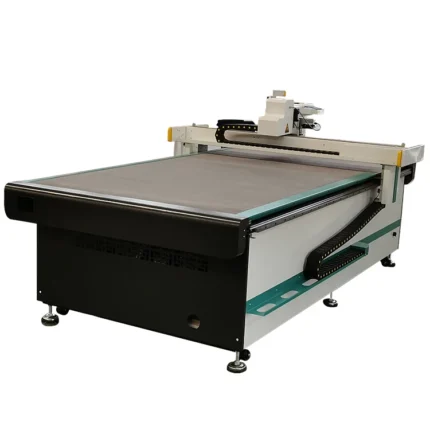
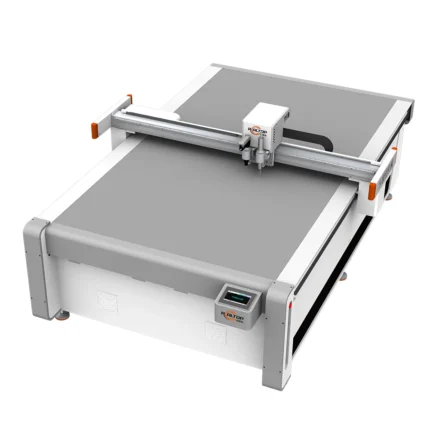
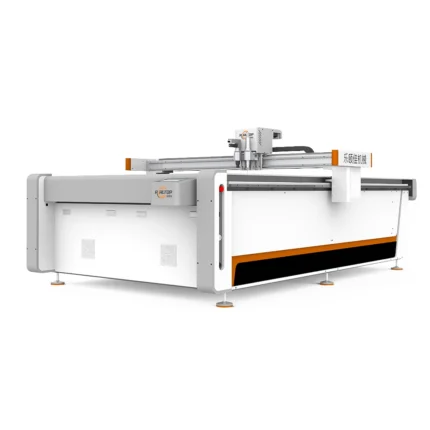
CNC Paper Board Cutting Machine for Packaging, 1600×2500 mm working area, oscillating knife and creasing wheel tooling — configured for corrugated cardboard, greyboard, and specialty paper sample making with ≤40 mm cutting thickness and ±0.1 mm accuracy.
- Dedicated packaging box structure design software included with PLT, DXF, AI, and PDF file compatibility
- Aluminum bellows vacuum table with 9kW pump ensures flat material hold-down across the full cutting area
- CCD camera contour recognition available for printed mark tracking at production speed
Tool head and table setup specified per your material type and flute profile, with sample cutting on your own stock provided before commitment to verify edge quality and crease depth.
Precision Tool Head Matching — Every oscillating knife, creasing wheel, and drag knife configuration is specified after testing your actual corrugated flute, greyboard, or specialty paper, so the edge finish holds up on the first production run rather than just the sample.
Technical Specifications
| Parameter | Value |
|---|---|
| Product Type | CNC Paper Board Cutting Machine |
| Working Area | 1600×2500 mm |
| Available Tool Heads | Oscillating knife, Driven rotary knife, Creasing wheel, Kiss cutting tool, Pneumatic knife, Milling tool, V groove knife |
| Cutting Speed Range | 0-1500 mm/s |
| Maximum Cutting Thickness | ≤ 40 mm |
| Cutting Accuracy | ±0.1 mm |
| Vacuum Table Construction | Aluminum bellows vacuum table |
| Vacuum Pump Power | 9 kW |
| Control Interface | PLC control panel with intuitive interface |
| Software Package | Dedicated packaging box structure design software included |
| Compatible File Formats | PLT, DXF, AI, PDF |
| Servo Motor Options | Panasonic, Delta, Dorna (source value — verify against manufacturer catalog) |
| Voltage Options | 110V, 220V, 380V |
| Interface Language Options | English, Russian, Italian, Chinese, custom language support available |
| Safety Features | Infrared sensor device and emergency stop device |
| Machine Dimensions | 3300×2100×1350 mm |
| Certification | CE (verify certificate scope) |
Application Suitability
| Application | Material or Output |
|---|---|
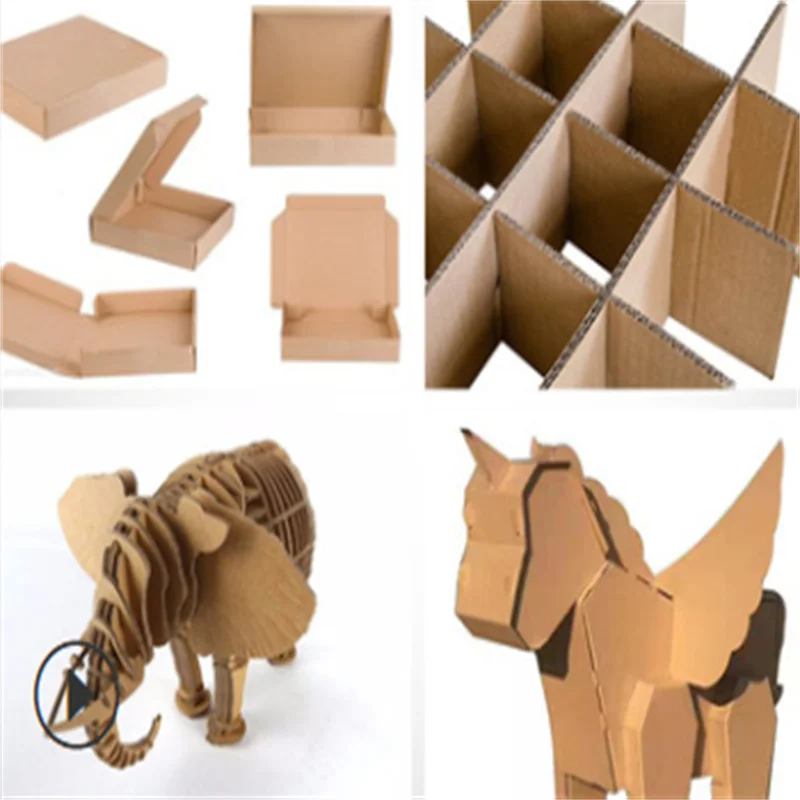
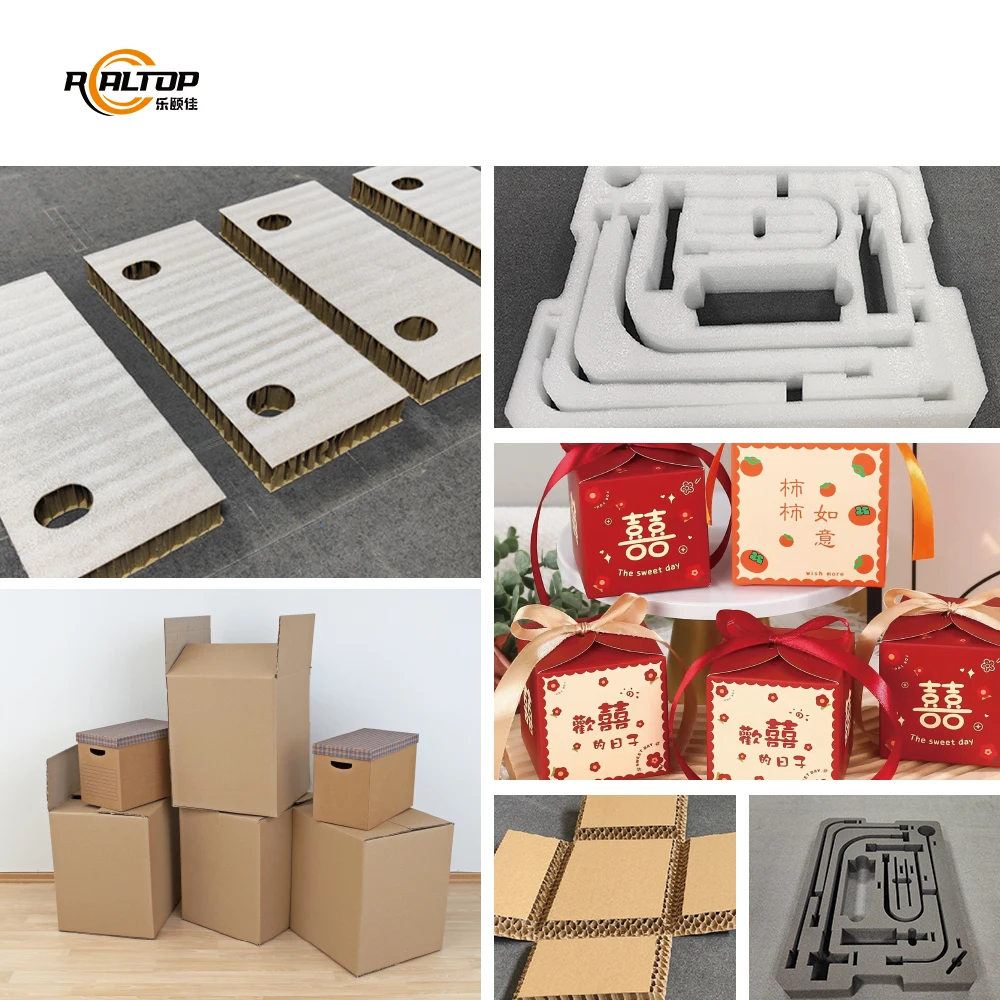
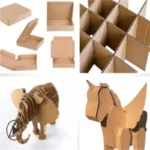
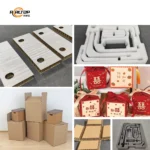
| Packaging sample making and carton prototyping | E-flute, B-flute, BC-flute corrugated cardboard |
| Small-batch customized packaging production | Greyboard, cardstock, art paper, specialty paper |
| Protective insert and divider cutting | EVA foam, EPE foam, PU foam |
| Gasket and seal prototyping | Rubber mats, PTFE sheets |
| Textile and leather packaging component cutting | Velvet, fleece fabric, non-woven fabric, leather, synthetic leather |
| Thin plastic packaging blank cutting | PVC, PET sheet, adhesive-backed materials |
| Rigid box and display board fabrication | Composite materials up to 40 mm |
Why "Standard Cardboard" Specs Fail on Your Actual Substrate
A CO2 laser cutting and engraving machine manufacturer will quote you clean cuts on generic 2mm greyboard, but your production floor runs laminated stock, coated art paper, and adhesive-backed laminates that behave entirely differently under the blade. The oscillating knife on this CNC Paper Board Cutting Machine handles these variations, yet the configuration still needs to match your exact flute profile and coating type before you commit to an order.
I once watched a packaging line in West Africa run three thousand boxes of laminated board through a machine set up for plain kraft. The coating gummed up the drag knife, creases cracked through the laminate, and the vacuum zones could not hold the smaller blanks flat. The fix was not a new machine — it was specifying the right tool head and vacuum zoning for their actual material stack [NEED_CITE: material-specific tooling selection for corrugated and laminated board]. Testing your substrate before purchase prevents that kind of costly discovery on your own floor.
Matching Tool Heads to Flute Profile and Board Weight
The oscillating knife handles standard single and double-wall corrugated cleanly at production speed, while the driven rotary knife suits long straight runs on heavier BC-flute where edge compression matters. Creasing wheels score fold lines without cutting through the liner, and the kiss cutting tool is essential when you need to slit the top layer of adhesive-backed stock without scoring the release liner beneath. Selecting the wrong head for your board weight is the single most common cause of ragged edges and rejected blanks coming off the table.
Vacuum Zoning for Mixed Blank Sizes
The aluminum bellows vacuum table with a 9 kW pump provides the hold-down force for full-sheet corrugated, but packaging runs often mix large carton blanks with small divider pieces on the same nest. Without adequate zoning, smaller parts lift during high-speed passes and shift position, throwing off the ±0.1 mm accuracy. Confirming that the table zones align with your typical nest layout is worth doing before the machine ships [NEED_CITE: vacuum hold-down requirements for small-format packaging blanks].
Reading the Specification Sheet Beyond the Headline Numbers
The 1600×2500 mm working area accommodates most standard packaging sheet sizes, and the 0-1500 mm/s cutting speed range gives you headroom for both detailed crease patterns and fast straight cuts. What matters more in daily operation is how the PLC control panel manages acceleration and deceleration on complex box structures — sharp corners and tight crease intersections require the servo system to slow precisely without overshoot. The included packaging box structure design software outputs directly in PLT, DXF, AI, or PDF, which avoids the file conversion errors that frequently corrupt crease-and-cut sequences when importing from third-party CAD packages. The ±0.1 mm cutting accuracy holds across the full bed only when the servo motors — available in Panasonic, Delta, or Dorna options — are matched to the table’s mass and the cutting head’s lateral force.
What Happens When Configuration Is Skipped
Choosing a machine on working area alone and discovering your 3mm laminated greyboard chatters under the oscillating knife is an expensive lesson learned on your own production schedule. A creasing wheel set for standard B-flute will crush E-flute micro-corrugated, leaving visible marks on premium retail packaging. And if your shop voltage does not match the machine’s configured supply, the vacuum pump will underperform and the servo drives may fault intermittently — problems that look like mechanical failures but trace back to an unchecked electrical specification [NEED_CITE: voltage mismatch effects on servo-driven CNC equipment].
Why Source This Equipment From REALTOP
The in-house design team covers both knife cutting and laser processing, so your packaging operation can match the cutting method to the material rather than forcing one technology across every substrate. Tool head and vacuum table configuration are specified per your actual board type and production volume, not quoted as a one-size-fits-all package. Sample cutting on your own corrugated, greyboard, or foam is completed before you sign off, with a written report documenting speed, edge quality, and crease integrity. Voltage, control language, and software file compatibility are confirmed during the order process — not discovered at commissioning. The dedicated packaging design software ships with the machine, reducing the gap between your structural designer’s file and the first cut on the table.
Documentation & Verification
- Machine specification sheet listing your selected tool heads and vacuum zone layout
- Electrical schematic with confirmed voltage and frequency for your facility supply
- Sample cutting report on your actual corrugated or greyboard stock with speed and edge photos
- CE declaration documentation with verified scope covering your machine configuration
- Software licence and file format compatibility note for your existing CAD workflow
- Spare parts list with lead times for oscillating knife blades, creasing wheels, and vacuum seals
Installation, Commissioning & Support
- Floor space planning for the 3300×2100 mm footprint with clearance for sheet loading on both long sides
- Dedicated electrical circuit sized for the 9 kW vacuum pump plus servo and control load at your local voltage
- Machine arrives as a single assembled frame requiring power connection, vacuum hose routing, and software activation
- First-run parameter setting for your specific flute profile and board thickness using the PLC control panel
- Operator training on tool head changeover between oscillating knife, creasing wheel, and kiss cutting tool
- Recommended spare blade and creasing wheel inventory based on your daily cutting volume and material abrasiveness
What We Need to Quote Your Configuration
Send us the specific board types you run — flute profile, thickness, coating or laminate — along with your typical blank dimensions and daily sheet volume. Confirm your facility voltage and frequency, and let us know which CAD package your structural designers currently use so we verify file import compatibility. If you are unsure which tool heads your product range requires, ship us a sample pack of your actual materials and we will run cutting tests before building your specification.
Frequently Asked Questions
Q: How do I choose between oscillating knife and driven rotary knife for corrugated board?
A: The oscillating knife suits standard B-flute and E-flute at moderate to high speed, producing clean edges on most packaging grades. The driven rotary knife performs better on heavy BC-flute and long straight cuts where continuous blade contact reduces edge compression. If your production mixes both profiles, the machine accepts both heads for changeover between jobs.
Q: Will the vacuum table hold small packaging blanks during high-speed cutting?
A: The aluminum bellows vacuum table with its 9 kW pump provides strong hold-down across the full 1600×2500 mm bed. For very small blanks below a certain area, we confirm vacuum zone sizing against your nest layout during the specification stage, adjusting zone boundaries so that small parts remain flat throughout the cutting cycle.
Q: Can I import my existing box structure designs directly into the machine software?
A: The included packaging design software accepts PLT, DXF, AI, and PDF files. We verify compatibility with your specific CAD output during the order confirmation process. If your designers use a proprietary format, we test file conversion before shipment and document any required export settings in the compatibility note.
Q: What voltage and electrical preparation does my facility need?
A: The machine is configurable for 110V, 220V, or 380V supply. We confirm your facility voltage and frequency before production, provide an electrical schematic for your electrician, and recommend a dedicated circuit sized to handle the combined vacuum pump and servo motor load without voltage drop during cutting.
Q: How is cutting accuracy maintained across the full working area over time?
A: The ±0.1 mm accuracy depends on the servo motor system — available in Panasonic, Delta, or Dorna options — matched to the table mass and cutting forces. Regular maintenance of the linear guides and belt tension, documented in the operation manual, preserves accuracy. We include a maintenance schedule calibrated to your daily operating hours.


Related products
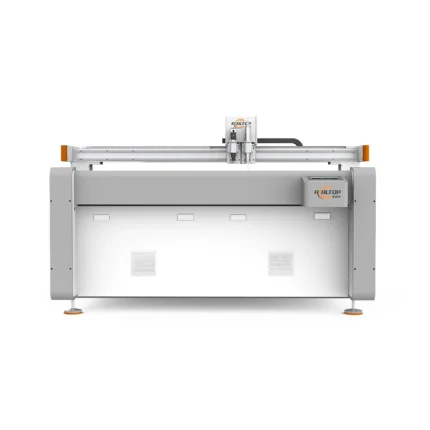
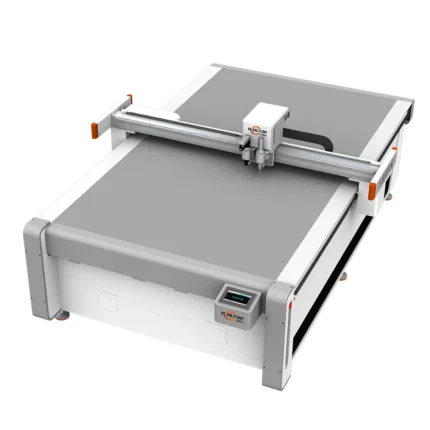
Automatic Digital Cardstock Cutter 2026 CNC Cutter
Product Introduction
Automatic Digital Cardstock Cutter 2026 is a CNC cutting machine ideal for white cardboard and kraft paper. It offers precise and efficient cutting performance, suitable for various paper processing needs in manufacturing and craft applications.Key Specifications
| Type | CNC Digital Cutting Machine |
| Material Compatibility | White Cardboard, Kraft Paper |
| Operation | Automatic |
| Application | Paper Cutting & Processing |
CNC Oscillating Knife Cutting Machine 2026 for Corrugated Cardboard & Honeycomb
Product Introduction
2026 CNC Oscillating Knife Cutting Machine, ideal for corrugated cardboard and honeycomb materials, offering precise and efficient cutting solutions for your production needs.Specifications
| Model | 2026 |
| Type | CNC Oscillating Knife Cutting Machine |
| Applicable Materials | Corrugated Cardboard, Honeycomb |
| Cutting Method | Oscillating Knife |


Digital CNC Cardboard Cutting Machine 2026
Product Introduction
High-precision Digital CNC Cardboard Cutting Machine 2026, ideal for efficient cardboard processing with advanced CNC technology, ensuring precise and fast cutting performance for various packaging and craft applications.
Key Specifications
| Model | 2026 |
| Type | Digital CNC Cutting Machine |
| Material | Cardboard |
| Feature | High Precision, Efficient Cutting |


商品评价
There are no reviews yet.