

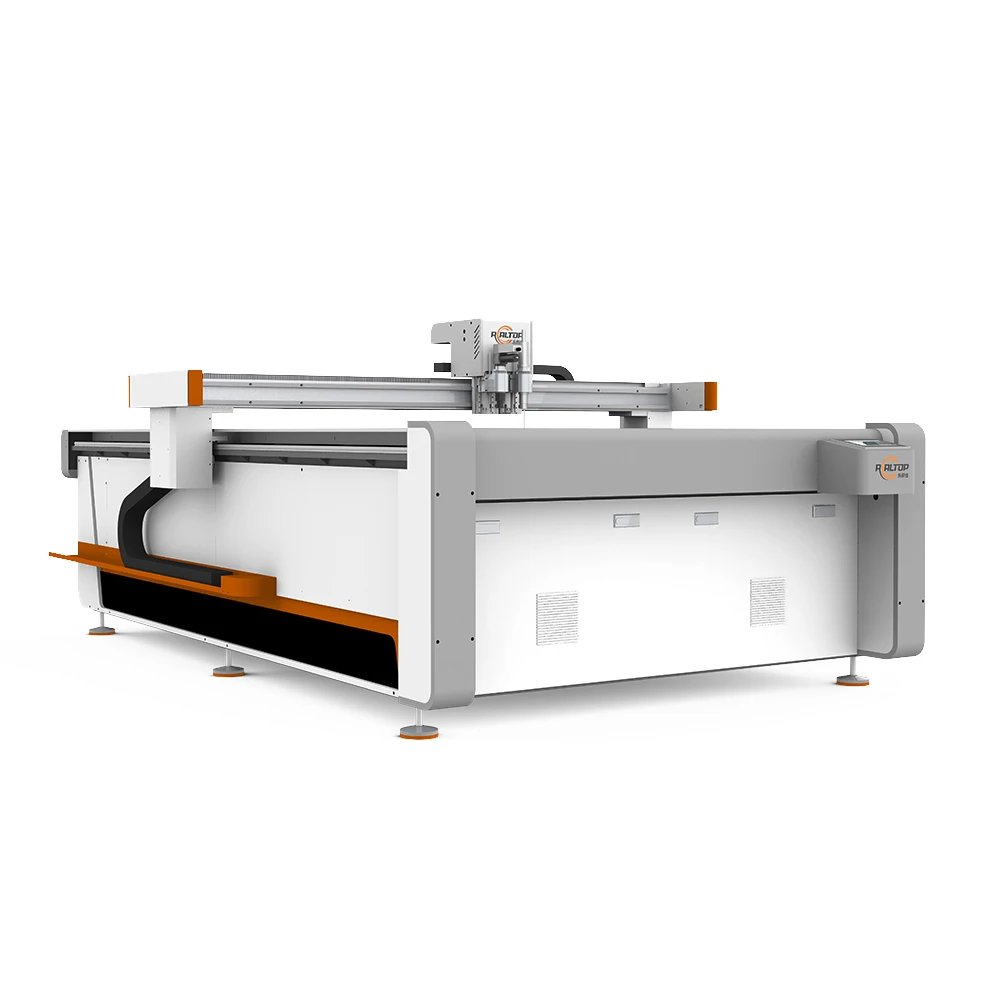
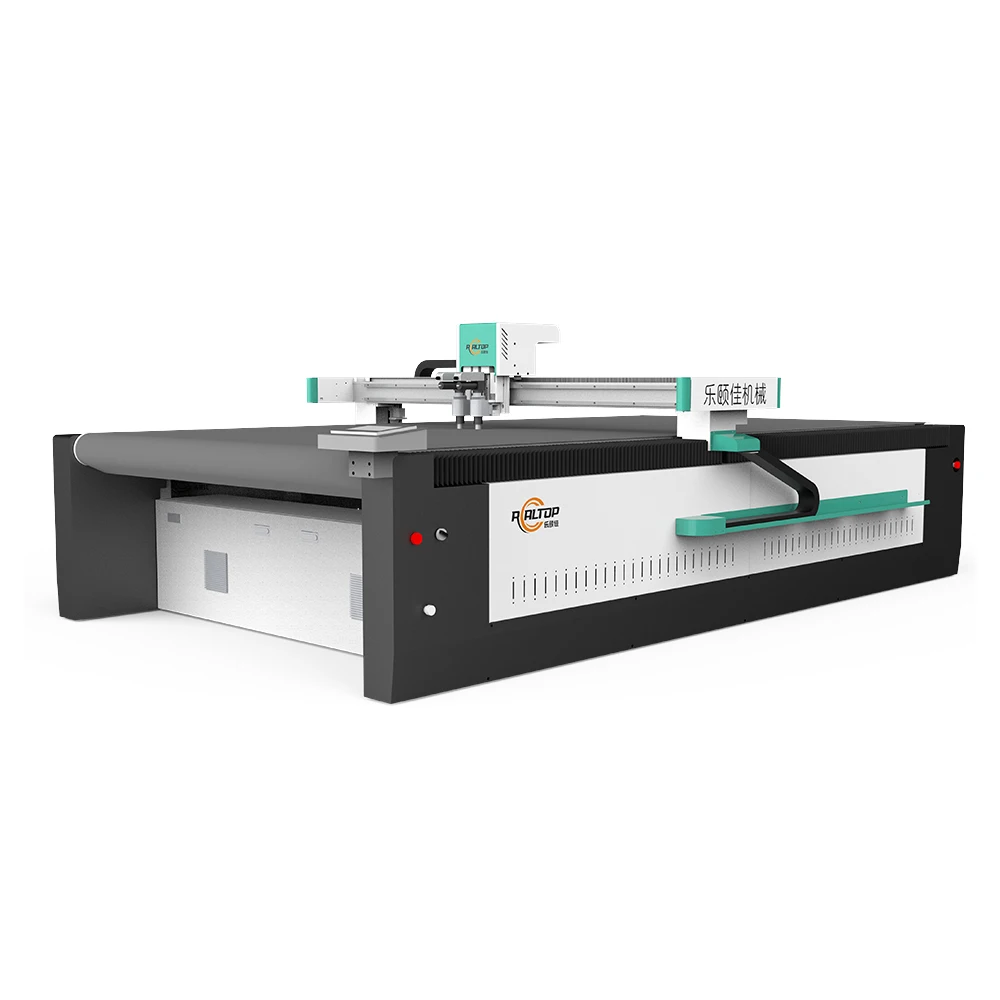
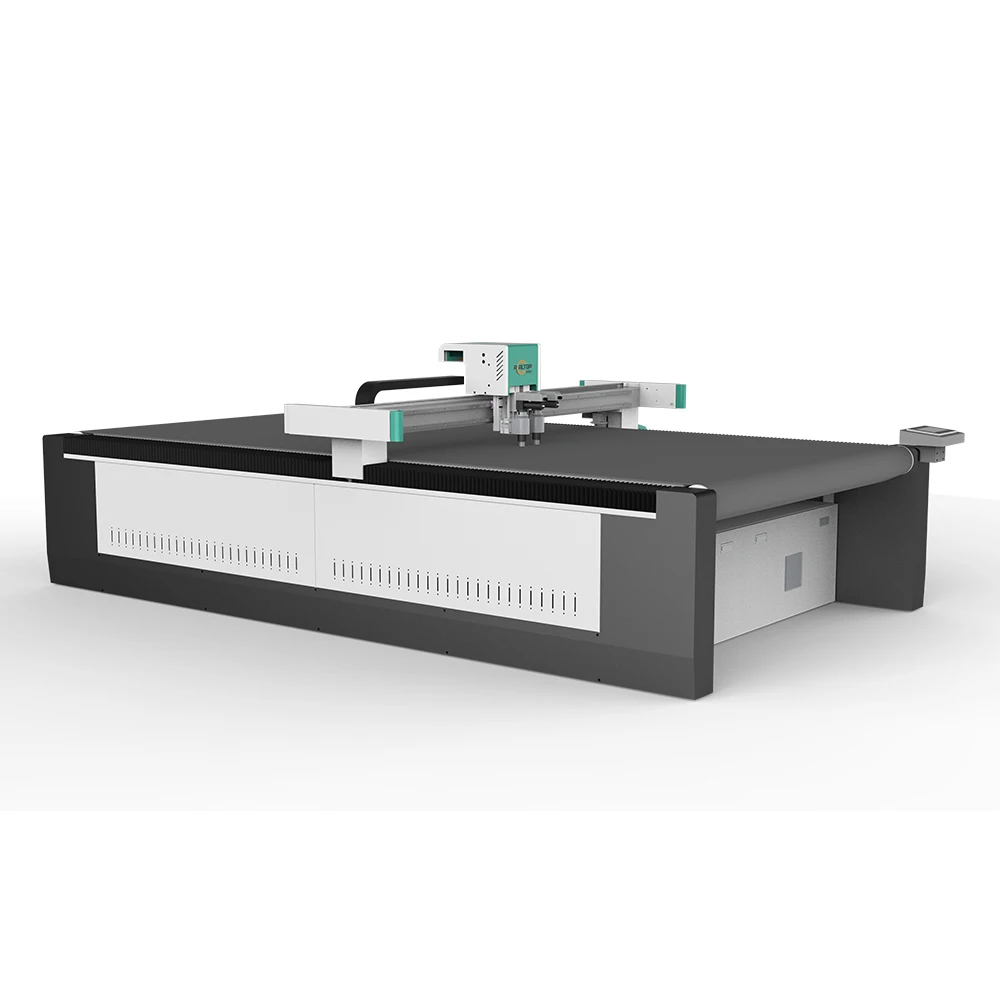
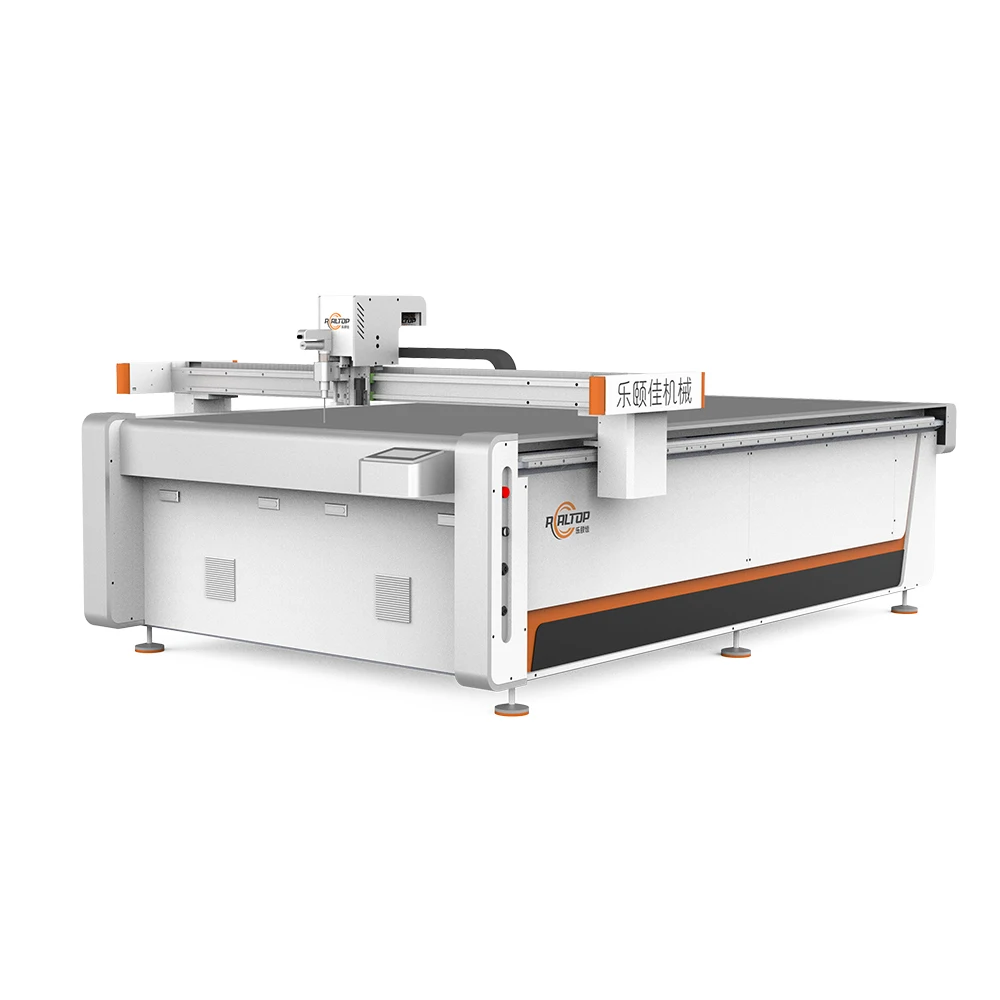
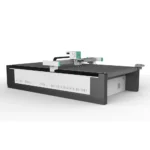

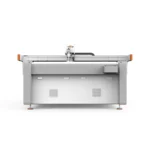

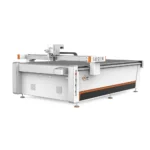
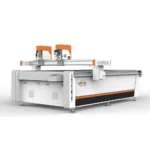
Composites CNC Cutting Machine for PVC & Acrylic – OEM Available
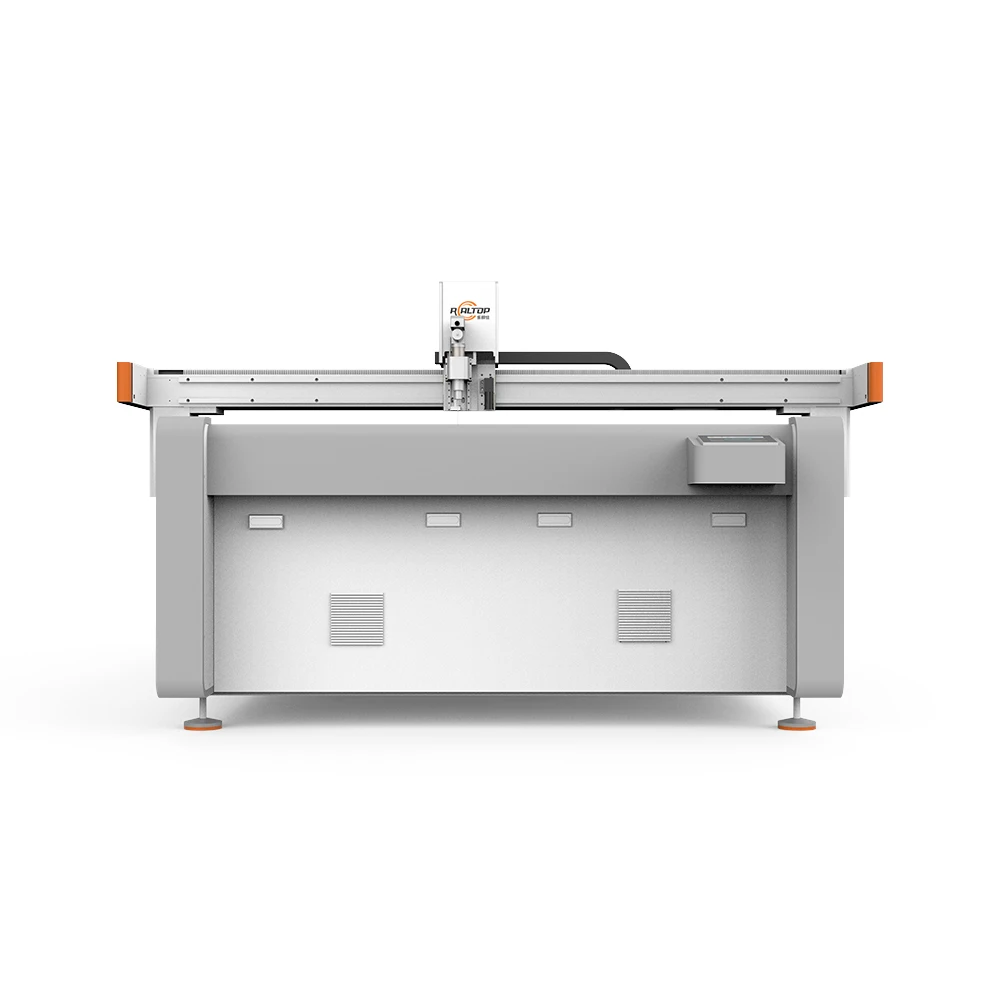
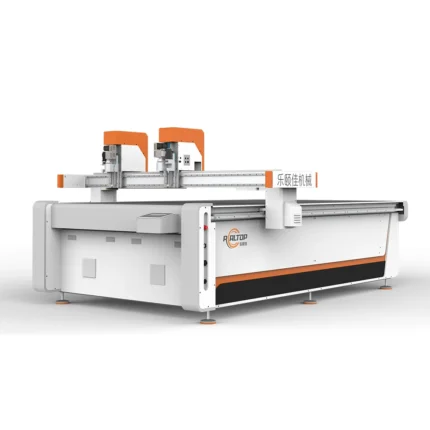
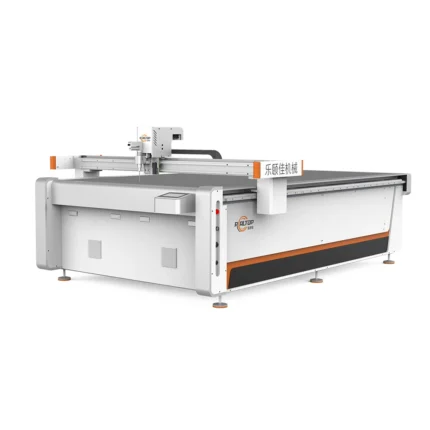
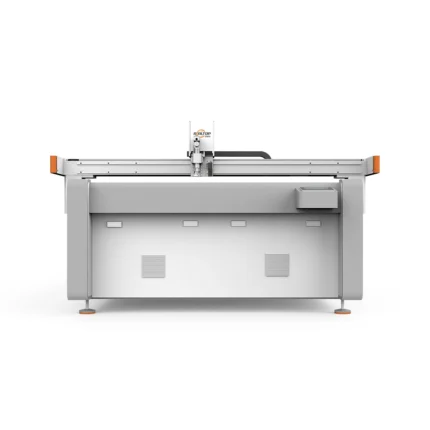
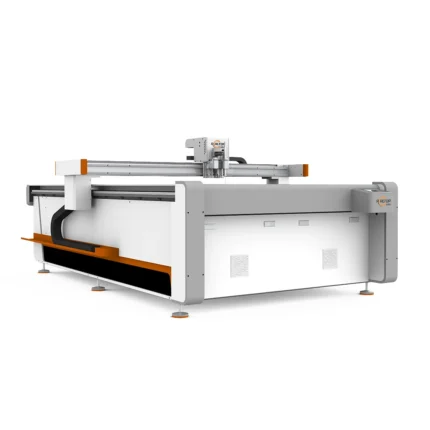
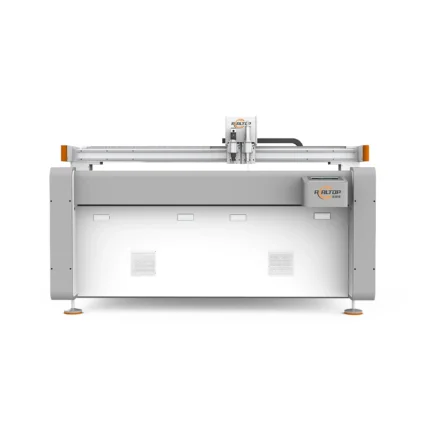
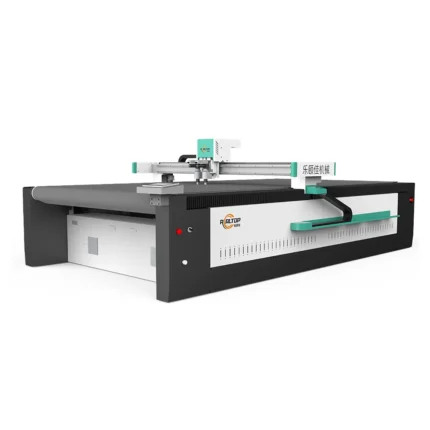
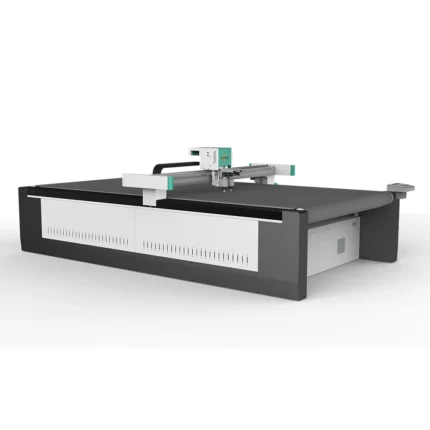
RT-D2516/RT-S2516 CNC Oscillating Knife Cutter, 1600×2500mm, 9kW — engineered for composite and flexible material processing. Swiss-imported oscillating knife delivers clean, burr-free edges on PVC, foam, and leather without burning or toxic fumes. Vacuum table with 7.5kW pump secures small parts during high-speed cutting at 800-2000mm/s, while CCD positioning ensures accurate contour tracking.
- ≤0.1mm repeated accuracy with Delta servo motors
- HP-GL compatible workflow for seamless file import
Sample cutting on your own material is available before commitment, with voltage and control language customized to your factory setup.
Swiss Imported Knife Integration — Physical cutting on composites eliminates thermal edge degradation that CO2 lasers produce when processing PVC and flame-retardant laminates, and the oscillating head on the RT-D2516/RT-S2516 holds ≤0.1mm repeat accuracy across the full 1600×2500mm working area to maintain that edge quality at production speeds.
Technical Specifications
| Parameter | Value |
|---|---|
| Model | RT-D2516/RT-S2516 |
| Product Type | CNC Oscillating Knife Cutting Machine |
| Working Area | 1600 × 2500 mm |
| Machine Size | 3450 × 2300 × 1250 mm |
| Rated Power | 9 kW |
| Table Type | Fixed flat working table, magnesium-aluminum alloy with fluorocarbon PVDF powder spraying, anodic and hard oxidation |
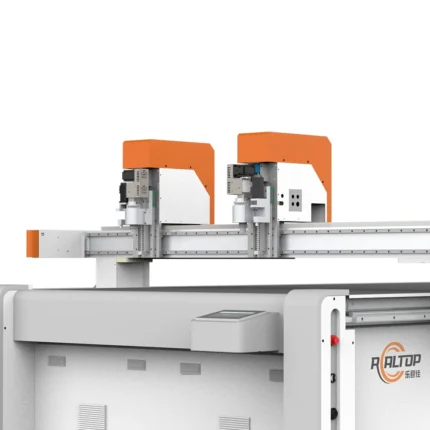
| Cutting Head | Multifunctional head with Swiss imported knife (vibration full cutting, vibration half cutting, cursor location) |
| Cutting Thickness | ≤100 mm (varies with material) |
| Translational Velocity | 800–2000 mm/s |
| Repeated Accuracy | ≤0.1 mm |
| Transmission System | Digital servo motor, linear guide, synchronous belt, ball screw |
| Servo Motor | Delta or Panasonic (optional, IP67 waterproof) |
| Vacuum Pump | 7.5 kW, integrated aviation aluminum shell |
| Conveyor Belt | Germany imported |
| Safety Device | Infrared sensors |
| Instruction System | HP-GL compatible format |
| Voltage | 380V ±10% |
| Standards | CE |
Application Suitability
| Application | Material or Output |
|---|---|
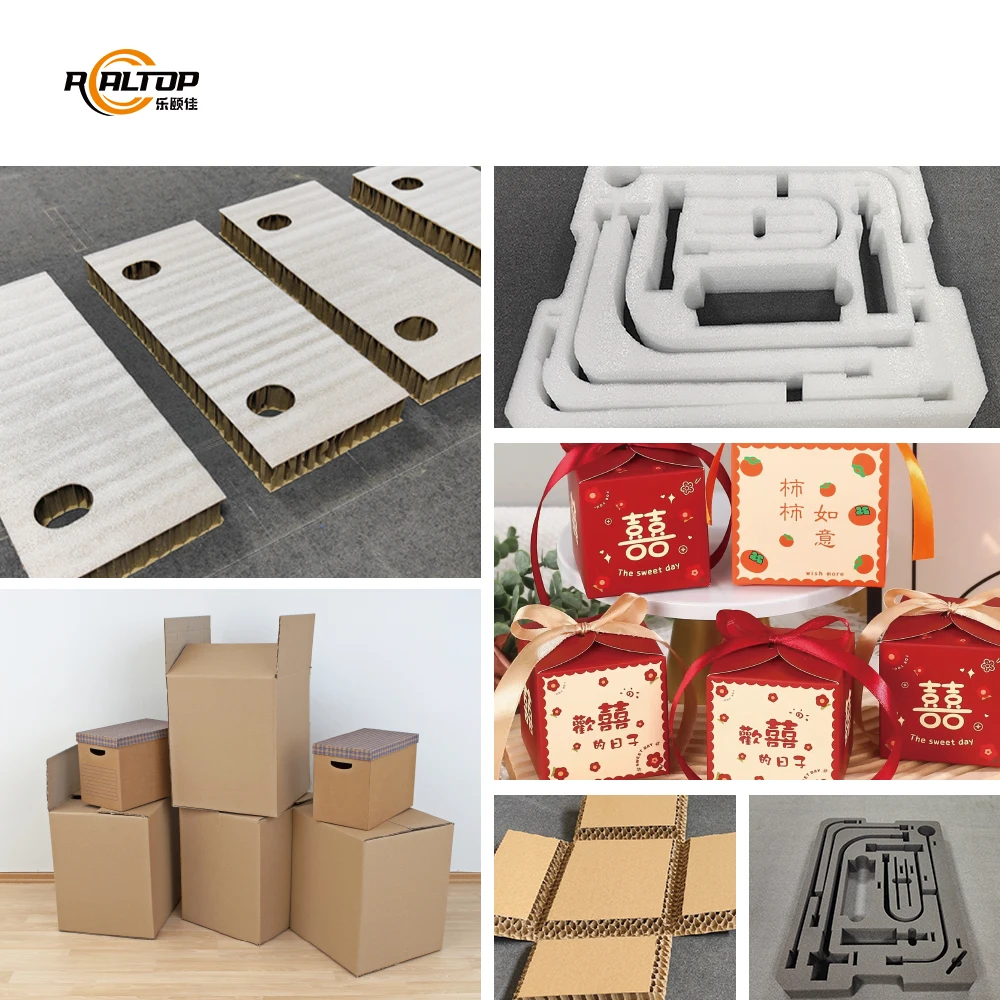
| Automotive interior component cutting | Multi-layer composite leather, sponge-laminated fabric, sound-deadening foam |
| PVC signage and soft board fabrication | Flexible PVC sheets, soft glass, silicone rubber up to applicable thickness |
| Leather goods and footwear production | Natural and synthetic leather, flexible garment materials |
| Gasket and seal fabrication | Rubber, silicone, composite non-metallic sheets |
| Packaging and flexible material prototyping | Corrugated composites, laminated flexible panels |
Why Burning Edges on PVC Composites Should Be Your First Question, Not Your Last
A CNC Oscillating Knife Cutter for composites and flexible materials removes the thermal problem entirely — no laser beam, no heat-affected zone, no toxic off-gassing from chlorinated substrates.
I spent years on the assembly floor before moving into technical sales, and one job still sticks with me. We shipped a CO2 laser unit to a signage shop that ran standard acrylic samples beautifully. Their actual production material was a flame-retardant composite acrylic, and the laser settings we dialled in were completely wrong for it — edges yellowed, carbonised, and an entire batch was scrapped. That loss was preventable. With PVC, the problem is worse: hydrogen chloride gas released during laser cutting corrodes the machine’s optics and poses a genuine respiratory hazard [NEED_CITE: health and safety guidelines on thermal processing of chlorinated polymers]. Physical knife cutting sidesteps all of that. The oscillating blade on this system slices through PVC and composite laminates without generating heat, leaving a clean edge that requires no secondary finishing.
Knife Versus Laser: Choosing the Right Process for Composite Laminates
Composite materials behave unpredictably under a laser beam. Layers with different melting points separate, adhesive interlayers bubble, and flame-retardant additives produce discolouration that ruins the cosmetic face of the part. The CNC Oscillating Knife Cutter for composites and flexible materials avoids every one of those failure modes because the cutting mechanism is purely mechanical. The Swiss imported knife vibrates at high frequency to shear through laminated stacks without pulling or delaminating the layers, which matters when you are cutting automotive headliner composites or multi-ply gasket material where edge integrity defines whether the part passes inspection.
How the Multifunctional Head Handles Material Variety
A single-head machine that only does full cutting forces the operator to change tools or compromise on creasing and marking operations. The multifunctional head here combines vibration full cutting, vibration half cutting, and cursor location in one unit. Half cutting scores the surface for fold lines on packaging prototypes without penetrating the backing layer. Cursor location registers printed fiducial marks so that contour cuts align to pre-printed graphics on flexible signage — a function that matters when your material has already been through a digital printer and registration drift of even a millimetre makes the part unusable. Switching between these modes is a software call, not a physical tool change [NEED_CITE: digital cutting workflow integration for print-and-cut registration].
Reading the Specs That Actually Matter in Production
The 1600 × 2500 mm working area fits standard sheet stock used in automotive and signage production, but working area alone does not tell you whether the machine will hold your material flat. The magnesium-aluminum alloy table with fluorocarbon PVDF coating and anodic oxidation resists corrosion from plasticisers that migrate out of PVC over time — a detail that matters twelve months into production when untreated tables develop sticky zones that drag material. The 7.5 kW vacuum pump generates enough negative pressure to pin flexible composites across the full bed, and the Germany-imported conveyor belt feeds roll stock continuously for nested layouts that maximise yield from each metre of material. The IP67-rated servo motors, available in Delta or Panasonic, tolerate the fine particulate that composite cutting generates, which would degrade an open-frame motor’s bearings within a season. Translational velocity reaches 800–2000 mm/s depending on the contour complexity and material density, so straight cuts on thin PVC run fast while tight radii on thick sponge composite slow down to maintain the ≤0.1mm repeated accuracy.
The Cost of Choosing the Wrong Tool Head or Table Configuration
Specifying a machine on working area and price, then discovering it cannot handle your material thickness, is the most common procurement failure I see in this category. A buyer ordered a flat-table knife cutter for thin leather, then tried to run 40mm sponge composite without the correct blade amplitude and the material compressed rather than cut, producing ragged edges and crushed foam cores. The vacuum zoning was also too coarse — small gasket parts lifted during the final contour pass and the blade caught the lifted edge, tearing the part and nicking the belt [NEED_CITE: vacuum table zoning requirements for small-part digital cutting]. These are not warranty claims; they are specification mismatches that could have been resolved before the machine left the factory.
Why Sourcing This Machine Through the Manufacturer Matters
The design team engineers both knife and laser platforms in-house, so the recommendation on whether your composite material should be cut mechanically or thermally is based on actual test results, not on which product line has inventory to move. Tool head and table configuration are specified per material type and production volume rather than offered as a one-size catalogue selection. Voltage, control language, and software compatibility are confirmed before the order enters production, so a 415V/50Hz workshop in Southeast Asia does not receive a 380V/60Hz cabinet. Sample cutting runs on your actual composite material — not a generic substitute — are standard before commitment, and the sample report documents edge quality, cutting speed, and recommended blade type so you have a baseline for production. The in-house core factory controls frame welding, motion assembly, and final testing, which means the people who built the machine are the ones answering your service call.
Documentation & Verification
- Machine specification sheet listing confirmed tool head and table configuration for your material
- Electrical schematic with voltage and frequency matched to your facility before dispatch
- Sample cutting report run on your actual composite material with edge photographs
- Factory test record documenting repeated accuracy and vacuum hold-down performance
- Operation and maintenance manual in confirmed control language
- Spare parts list covering blades, belts, and wear items with part numbers
Installation, Commissioning & Support
- Floor plan review for the 3450 × 2300 × 1250 mm footprint including conveyor infeed clearance
- Dedicated 380V ±10% circuit with verified amperage for the 9 kW rated load and 7.5 kW vacuum pump
- Assembly of table sections and conveyor integration on-site with alignment verification
- First-run parameter tuning on your composite material including blade depth, oscillation frequency, and vacuum zone mapping
- Operator training covering HP-GL file import, nesting workflow, and tool head mode switching
- Scheduled blade replacement intervals and belt tension checks documented in the maintenance manual
What to Prepare Before Requesting a Quote
Send your actual material — not a datasheet, but a physical sample with the exact composite layup, adhesive interlayers, and total thickness you will run in production. Specify your daily sheet volume and the maximum contour complexity so the nesting software and feed rate can be matched to your throughput requirement. Confirm your workshop voltage, frequency, and available amperage on the circuit where the machine will land. If your current workflow uses DXF, PLT, or other file formats beyond HP-GL, state that upfront so compatibility is verified before the order is placed.
Frequently Asked Questions
Q: How does oscillating knife cutting compare to CO2 laser on PVC and flame-retardant composites?
A: CO2 lasers melt and vaporise material, which on PVC releases hydrogen chloride gas and leaves carbonised edges on flame-retardant laminates. The oscillating knife cuts mechanically with no heat input, producing a clean edge without toxic fumes or discolouration. The trade-off is that very thin films may cut faster on a laser, but for most composite thicknesses the knife matches speed while eliminating thermal damage entirely.
Q: How do I select the correct blade type for different composite materials and thicknesses?
A: Blade selection depends on material density, thickness, and whether the composite contains abrasive fillers. Thicker sponge composites require longer blades with specific oscillation amplitudes to prevent compression during the cut, while dense rubber gaskets need stiffer blades to maintain straightness. The sample cutting phase tests your exact material and documents the recommended blade specification before the machine ships.
Q: Does the vacuum table hold small gasket parts securely during final contour cuts?
A: The 7.5 kW vacuum pump generates sufficient negative pressure across the magnesium-aluminum table, but holding small parts depends on zone configuration. If your nest includes parts smaller than a defined threshold, the zoning layout must be confirmed during specification so that each zone boundary aligns with your part geometry and prevents lift during the final cut pass.
Q: Can the control system interface and documentation be provided in our local language?
A: Voltage, plug configuration, and control language are all confirmed before production. The operation manual, maintenance guide, and software interface can be set to the required language so your operators do not need to work through a translation layer on the factory floor.
Q: What is the relationship between cutting speed and edge quality on multi-layer composites?
A: Higher translational velocity works on single-layer flexible materials with simple contours, but multi-layer composites with adhesive interlayers require reduced speed to prevent delamination at the cut edge. The 800–2000 mm/s range allows the operator to balance throughput against edge integrity, and the sample cutting report establishes the speed setting that delivers acceptable quality for your specific material stack.


Related products


2026 Oscillating Knife Foam Insert Digital Packaging Cutter
Product Introduction
Designed for foam insert cutting, this 2026 Digital Packaging Cutter features oscillating knife technology, ideal for precise digital packaging applications with efficient cutting performance.Product Parameters
| Parameter | Details |
|---|---|
| Type | Oscillating Knife Cutting Machine |
| Application | Foam Insert Cutting |
| Model Year | 2026 |
| Category | Digital Packaging Cutter |
Auto CNC Oscillating Knife Cutting Machine 2026
Product Introduction
Auto CNC Oscillating Knife Cutting Machine 2026 is a high-precision cutting solution from a leading Chinese welding & cutting equipment manufacturer, ideal for efficient and accurate material processing across various industrial applications.Key Specifications
| Type | Auto CNC Oscillating Knife Cutting Machine |
| Model | 2026 |
| Manufacturer | Chinese Leading Welding & Cutting Equipment Factory |
| Core Feature | High-precision CNC Control |
| Application | Industrial Material Cutting |
Jinan Realtop CNC Foam Cutting Machine 2026
Product Introduction
Jinan Realtop CNC Foam Cutting Machine 2026, a high-precision solution from China's leading welding & cutting equipment manufacturer, ideal for efficient foam cutting applications with reliable performance and advanced CNC technology.Key Specifications
| Model | 2026 |
| Type | CNC Foam Cutting Machine |
| Manufacturer | Jinan Realtop |
| Origin | China |
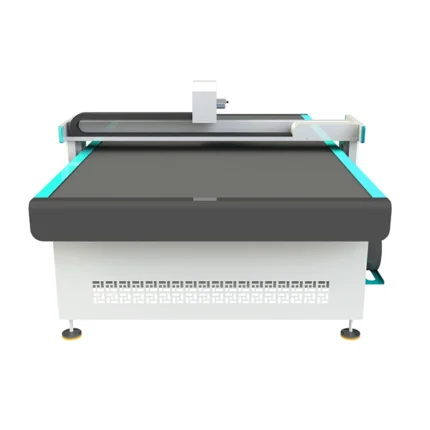
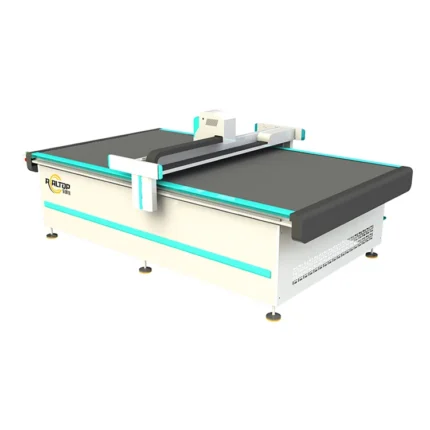
Oscillating Knife Cutter 2500x1600mm Composite Material Cutter
Product Introduction
Designed for composite materials processing, this oscillating knife cutter features a large 2500x1600mm working area, ensuring efficient handling of various composite material cutting tasks with precision and reliability.Product Parameters
| Working Area | 2500x1600mm |
| Cutting Type | Oscillating Knife |
| Application | Composite Materials |
Realtop EPE Cutting Machine 2026 High-Speed Digital Auto Cut
Product Introduction
Realtop 2026 EPE Cutting Machine features high-speed digital auto-cut technology, designed for efficient and precise cutting operations. Ideal for EPE material processing with automated functionality to enhance productivity.Key Specifications
| Model | Realtop EPE Cutting Machine 2026 |
| Type | High-Speed Digital Auto Cut |
| Operation | Automated |
| Application | EPE Material Cutting |
商品评价
There are no reviews yet.