

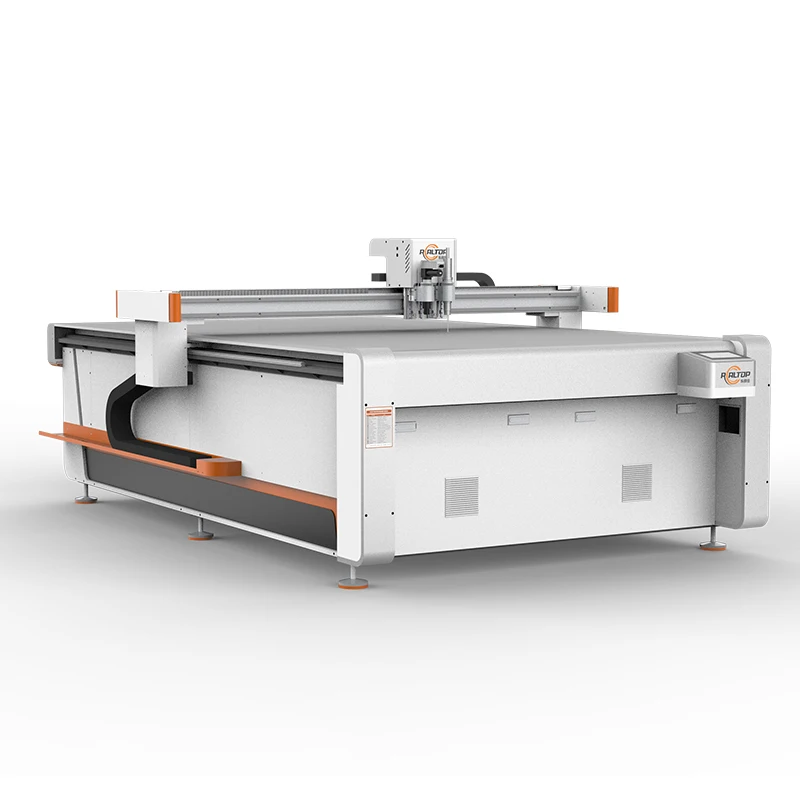
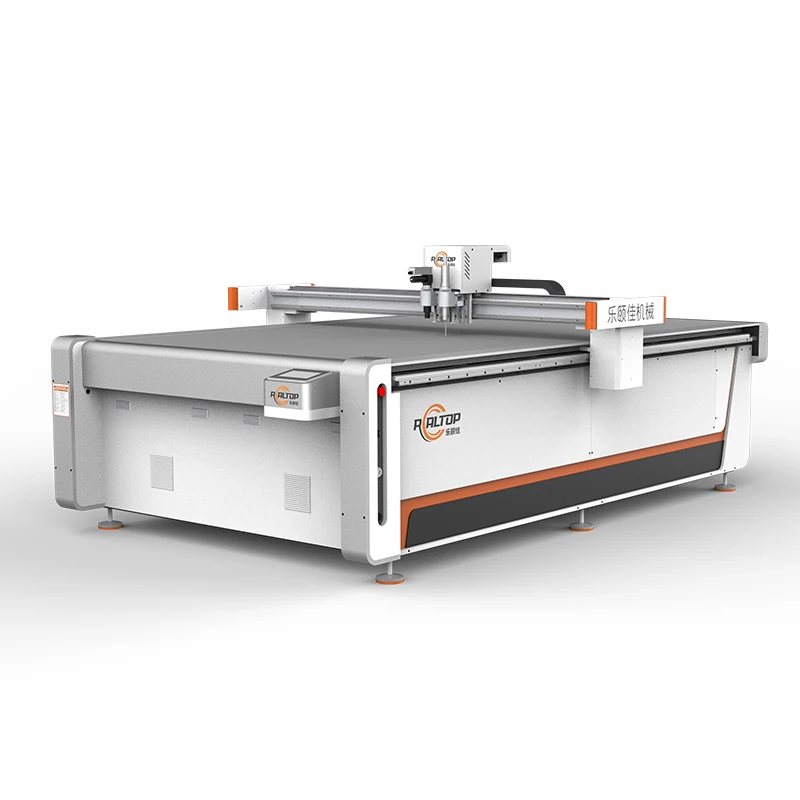
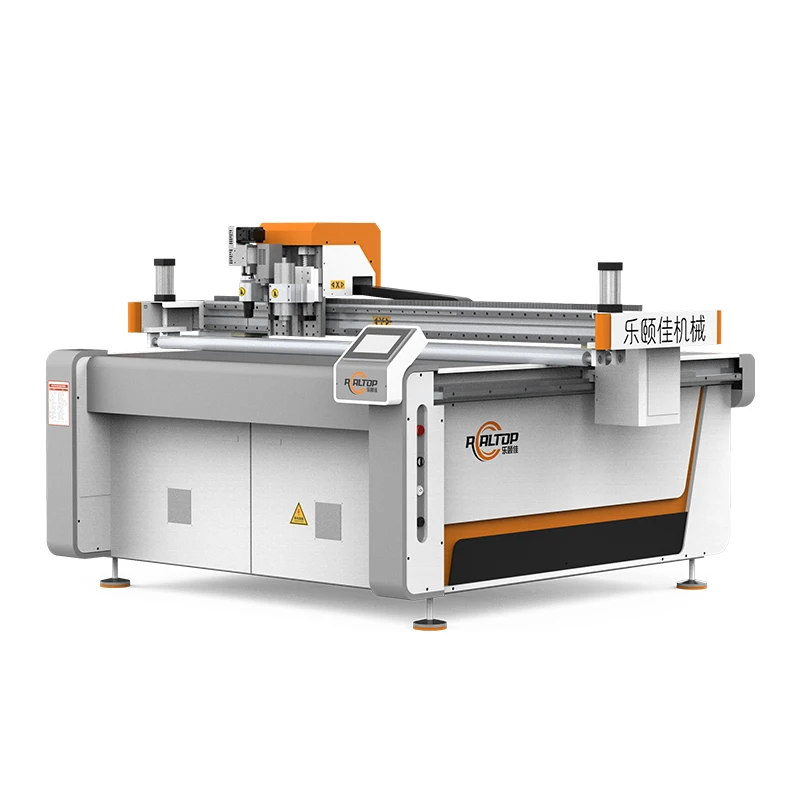
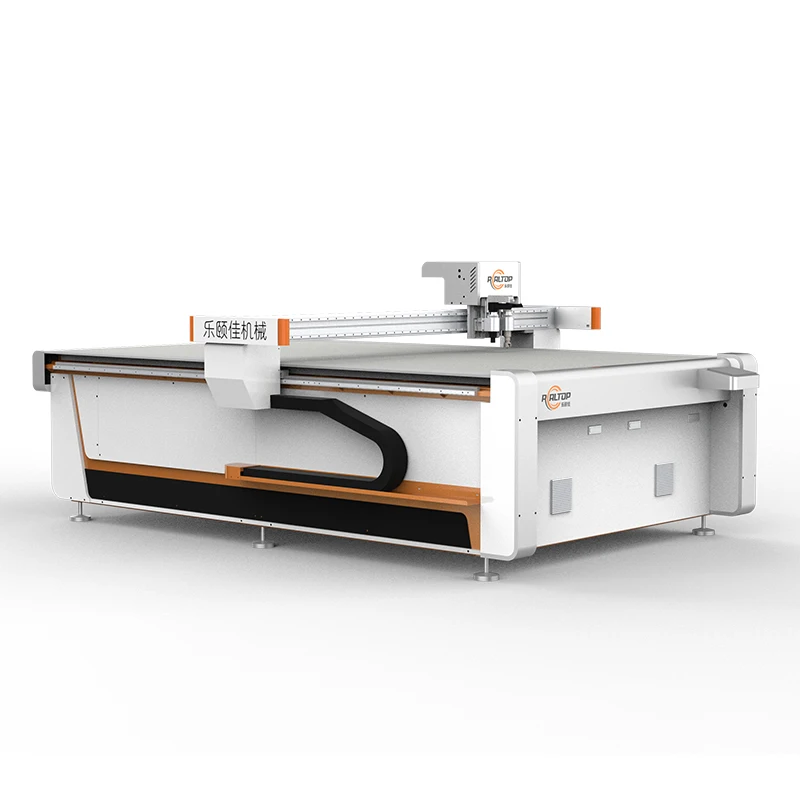
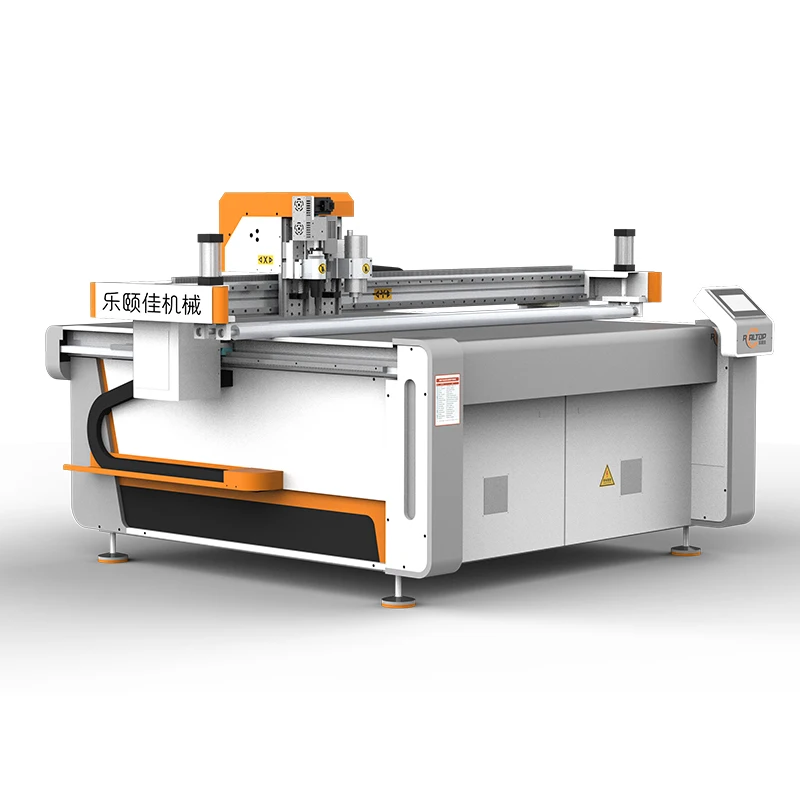
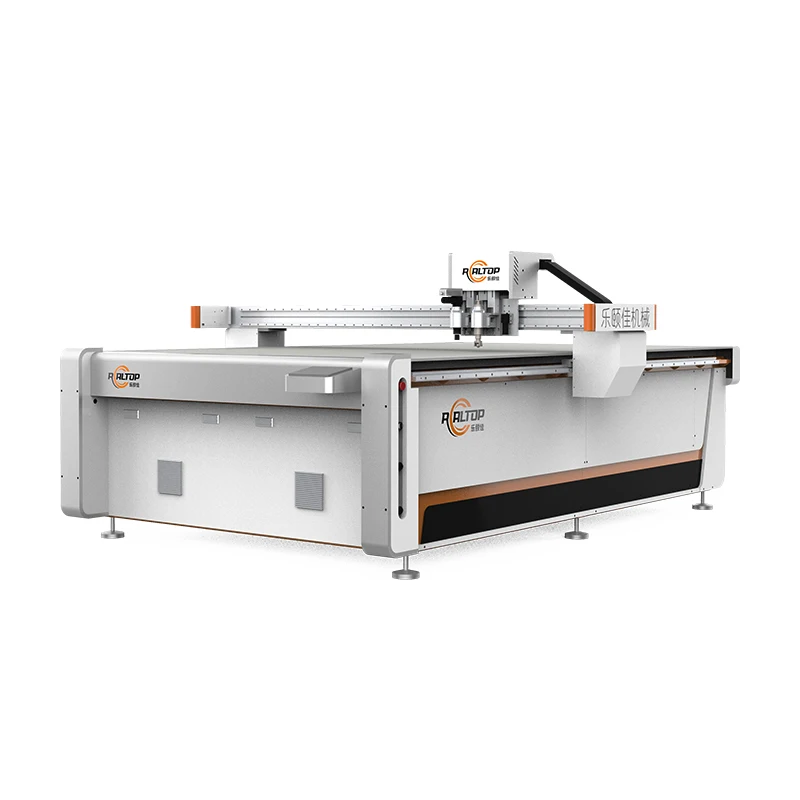
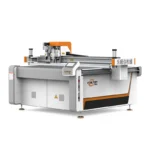
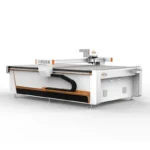
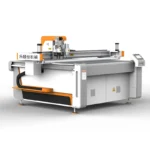
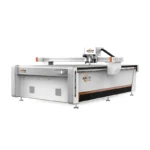
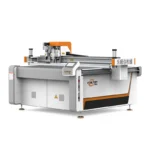
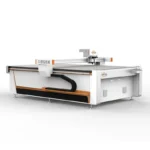
Double Cutting Head Auto-Loading CNC Digital Cutter for Packaging
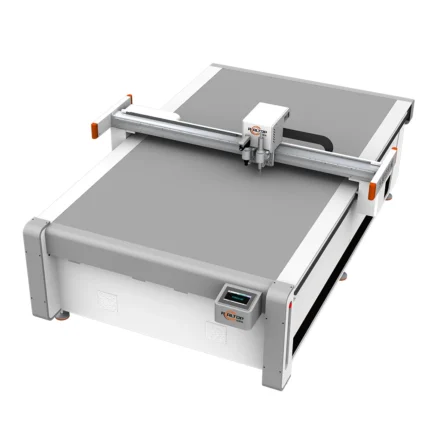
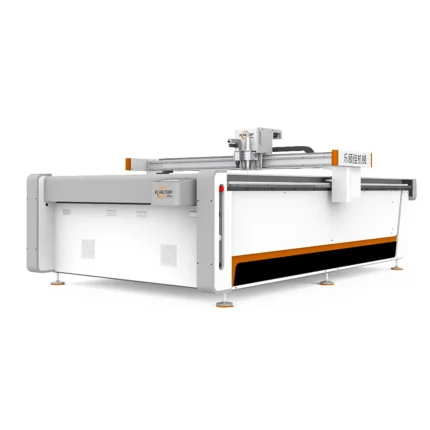
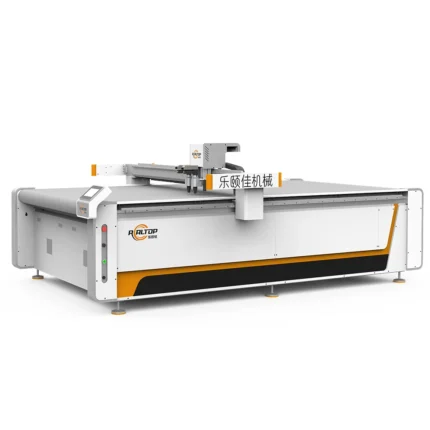
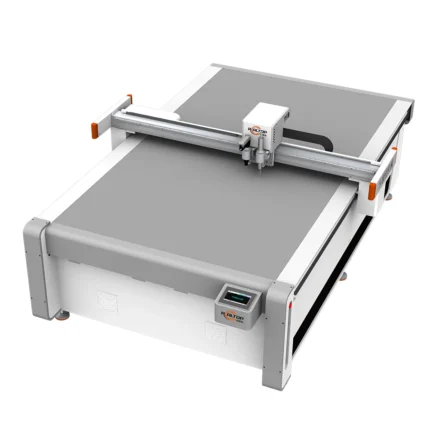
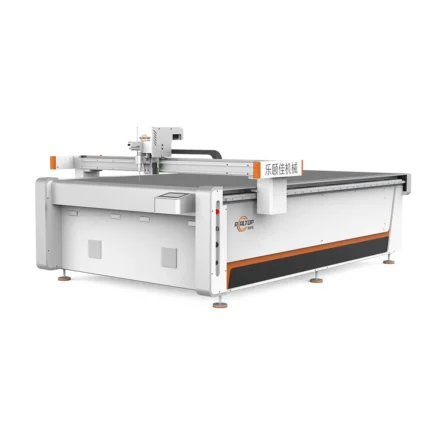
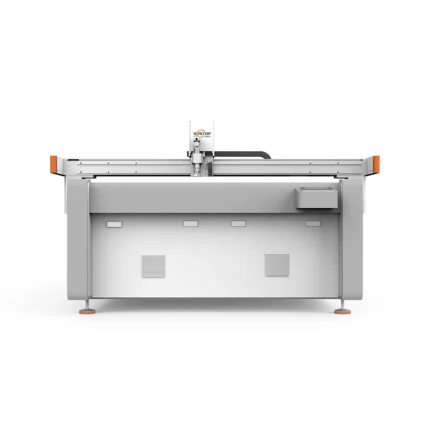
RT–R2513 / RT-D2516 / RT-S2516 CNC Oscillating Knife Digital Cutting Table, working areas from 2500×1300 mm to 1600×2500 mm, oscillating knife with creasing, kiss-cut and punch tools in one head.
- CO2 versus fiber process detail is not relevant here — this is a knife-driven system where tool head selection, vacuum hold-down zoning and rack-driven motion repeatability (<0.05 mm) determine cut quality on corrugated, cardboard and sticker stock.
- Includes 7.5 kW vacuum pump, aluminum honeycomb table, DXF/AI/PDF import and carton nesting software.
Buyers can request sample cutting on their own packaging material at actual thickness before commitment, with tool head and vacuum zoning matched to the specific board type and production workflow.1
Material-Driven Configuration — Oscillating knife and creasing tool heads are matched to the buyer’s specific board stock and flute type before the order is finalized, not left to assumption.
Technical Specifications
| Parameter | Value |
|---|---|
| Product Type | CNC Oscillating Knife Digital Cutting Table |
| Model | RT–R2513 / RT-D2516 / RT-S2516 |
| Working Area | 2500×1300 mm (RT–R2513) / 1600×2500 mm (RT-D2516 / RT-S2516) |
| Overall Dimensions (L×W×H) | 3550×1910×1400 mm (RT–R2513) / 3450×2300×1250 mm (RT-D2516 / RT-S2516) |
| Rated Power | 9 kW |
| Voltage | 380 V |
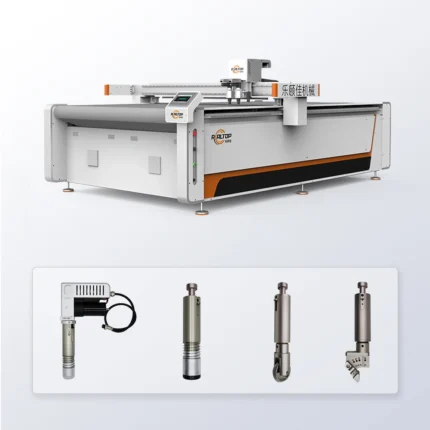
| Tool Head Configuration | Oscillating knife, creasing tool, kiss-cut knife, round punch |
| Cutting Thickness | ≤18 mm (basis to be confirmed by material type) |
| Repeatability | <0.05 mm |
| Servo Motor | Dongling servo (Delta servo motor available as option) |
| Transmission | Rack and pinion with imported linear square guide |
| Table Structure | Aluminum alloy honeycomb vacuum table |
| Vacuum Pump | 7.5 kW |
| Safety Devices | Infrared sensors, emergency stop |
| File Format Support | DXF, OLT, PDF, AI |
| Software | Professional carton nesting software with language customization |
| Blade Supply | 10 pieces of oscillating blades included |
| Warranty | 1 year (excluding felt and knife blades) |
| Delivery Time | <30 working days |
Application Suitability
| Application | Material or Output |
|---|---|
| Packaging carton and box sample making | Corrugated board, solid board, folding carton stock |
| Sticker and label contour cutting | Paper, vinyl, PP substrate, self-adhesive labels |
| Gift box and premium packaging prototyping | Thick grey board, art board up to 18 mm |
| Short-run packaging production | Cardboard, PP paper, composite packaging sheets |
| Display and POP packaging fabrication | Corrugated fluted board, honeycomb paperboard |
Why Board Thickness Decides More Than Working Area
A packaging CNC digital cutting machine for packaging specified only by table size often fails when the buyer’s actual board stock turns out denser or thicker than the quoted range. The cutting head, vacuum zoning, and drive torque must all be validated against the material before the purchase order is signed.
I remember a Middle East packaging plant that tested corrugated samples without issue during the pre-shipment run. Once the machine arrived, they loaded high-density grey board — the vacuum cups could not hold the sheet flat, and the oscillating knife could not push through the full depth in a single pass. Their line sat idle for weeks while we reconfigured the tool head pressure and adjusted the vacuum zoning remotely [NEED_CITE: vacuum hold-down requirements for high-density board materials]. The lesson was expensive for everyone involved.
Matching the Tool Head to the Packaging Job
The RT–R2513, RT-D2516, and RT-S2516 share a common tool head platform that carries an oscillating knife, creasing tool, kiss-cut knife, and round punch in a single head unit. This arrangement lets a packaging producer cut the box outline, score the fold lines, kiss-cut window inserts, and punch registration holes in one pass without manual tool changes. The creasing wheel pressure is adjustable so that heavier board stocks receive a deeper score without cracking the top liner, while lighter carton stock gets a shallow crease that folds cleanly. Selecting the right combination of tools at the ordering stage prevents the situation where a buyer discovers mid-production that their box style requires a punch tool that was never fitted.
Laser Versus Knife: Why the Method Matters for Packaging
The CO2 laser cutting and engraving machine has its place in acrylic signage and textile processing, but packaging work almost always demands mechanical knife cutting. An oscillating knife produces a clean edge on corrugated and solid board without the thermal burn marks that a laser beam leaves on cellulose-based materials. For sticker and label contour work, the kiss-cut knife slices through the face stock while leaving the backing intact — something a laser struggles to do consistently across varying adhesive thicknesses [NEED_CITE: mechanical versus thermal cutting on adhesive-backed substrates]. A CNC digital cutting machine for packaging keeps the process mechanical and predictable across the material range a packaging converter actually handles.
What the Numbers Actually Mean on the Shop Floor
The 7.5 kW vacuum pump paired with the aluminum alloy honeycomb table provides the suction needed to hold porous corrugated board flat during high-speed cutting. Without adequate hold-down, thin fluted sheets lift at the edges, and the oscillating knife drags instead of slicing. The rack-and-pinion drive with Taiwan Hiwin linear guides and a servo motor delivers repeatability below 0.05 mm, which matters when a die-cut box blank must register within tight folding tolerances after creasing. The 9 kW rated power covers the vacuum pump, servo drives, and oscillating knife motor simultaneously, so the machine does not trip breakers under sustained production load. File import supports DXF, AI, PDF, and OLT formats, meaning the nesting software works with artwork files the packaging designer already produces without an intermediate conversion step.
The Hidden Cost of Skipping the Sample Cut
When a buyer accepts a quotation without sending their own board stock for a trial cut, several problems tend to surface after installation. Insufficient vacuum zoning leaves small packaging blanks drifting during the final cuts, producing scrap instead of saleable boxes. A creasing wheel set for standard E-flute corrugated leaves fold lines that crack on double-wall or solid board, forcing the operator to slow the feed rate and lose throughput [NEED_CITE: creasing pressure and board density relationship]. Software incompatibility with the buyer’s existing nesting workflow adds hours of manual file preparation every shift. None of these issues show up in a brochure, but each one costs real production time.
Why Buyers Source This Equipment Here
Our in-house design team covers both knife and laser cutting technologies, so a packaging buyer gets the cutting method that fits the material rather than being pushed toward whichever machine happens to be on the showroom floor. Tool head and table configuration are specified per material and production volume before the order is confirmed. The professional carton nesting software is checked against the buyer’s file formats — DXF, AI, PDF, or OLT — before the machine leaves the factory. Voltage, control language, and plug type are locked in during the specification stage, not discovered as a surprise at commissioning. Every CNC digital cutting machine for packaging ships with a sample cutting report on the buyer’s own material, so there is documented proof the configuration works before the crate is sealed.
Documentation & Verification
- Machine specification sheet confirming tool head and vacuum configuration per your board type
- Electrical schematic with voltage and frequency matched to your local supply standard
- Sample cutting report on your own cardboard stock at actual thickness before dispatch
- Professional carton nesting software license with confirmed file format compatibility
- Operation and maintenance manual in your chosen control language
- Spare parts list covering oscillating blades, creasing wheels, and felt pads
Installation, Commissioning & Support
- Floor space planning based on the 3550×1910 mm or 3450×2300 mm footprint plus operator clearance
- Dedicated 380 V circuit rated for the 9 kW total draw including the 7.5 kW vacuum pump
- Table leveling and vacuum zone mapping during first commissioning on your board stock
- Creasing pressure and knife depth calibration for your specific board grades and flute types
- Operator training on nesting software, tool change procedure, and blade replacement
- Initial blade and felt inventory included with recommended reorder intervals noted
Before You Send an Inquiry
To give you a configuration that actually works on your floor, we need the type of board you cut most often — corrugated flute profile, solid board thickness, or adhesive-backed label stock — along with your typical sheet size and daily volume. Let us know your local voltage and frequency standard, preferred control language, and whether your design files come in DXF, AI, PDF, or another format. If you can send a sample of your material, we will run a cutting test and include the results with the quotation.
Frequently Asked Questions
Q: What board thickness can this machine actually cut through in a single pass?
A: The specification states up to 18 mm, but actual cutting depth depends on material density and flute structure. Single-wall corrugated cuts easily at full speed, while high-density grey board may require reduced feed rates or a heavier oscillating knife blade. We confirm the achievable thickness by running your actual stock before the order is finalized.
Q: Which tool heads come standard and which are optional?
A: The standard head unit includes the oscillating knife, creasing tool, kiss-cut knife, and round punch together. Additional specialized tool heads for specific packaging applications can be discussed during the configuration stage. We match the tool selection to your box styles and material range rather than shipping a generic setup.
Q: Is CCD camera contour recognition available for printed sticker cutting?
A: CCD camera positioning for printed contour work is available as a configuration option. If your production involves cutting around printed marks on labels or stickers, we need to confirm this requirement before the order so the camera, lighting, and software modules are integrated and tested at the factory.
Q: What electrical and software details are confirmed before shipment?
A: Voltage, plug type, control panel language, and software file format compatibility are all confirmed in writing before production begins. The nesting software is verified against your existing DXF, AI, PDF, or OLT files, and the electrical system is built to match your local supply standard so no transformer is needed on arrival.
Q: What does the warranty cover and what is excluded?
A: The one-year warranty covers mechanical components, servo drives, vacuum pump, and electronic controls under normal operating conditions. Consumable items including oscillating knife blades, creasing wheels, and felt pads are excluded, as their lifespan depends on material abrasiveness and production hours. The spare parts list shipped with the machine identifies reorder intervals for each consumable.


Related products
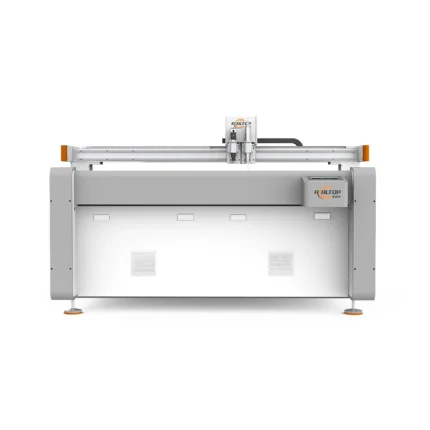
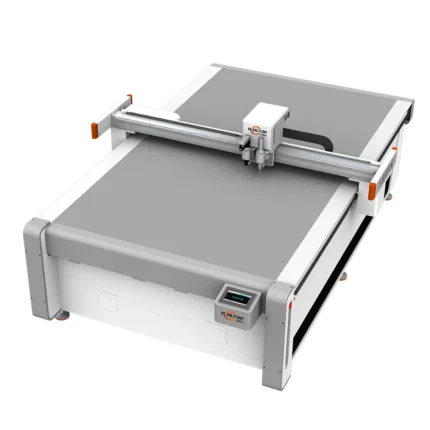
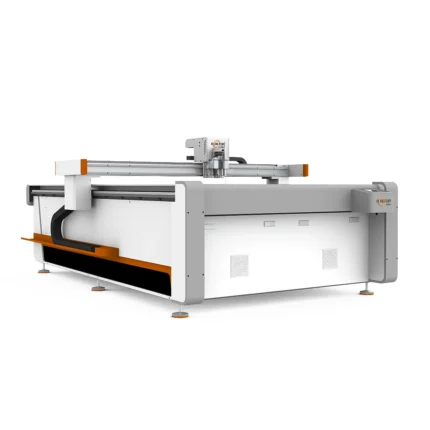
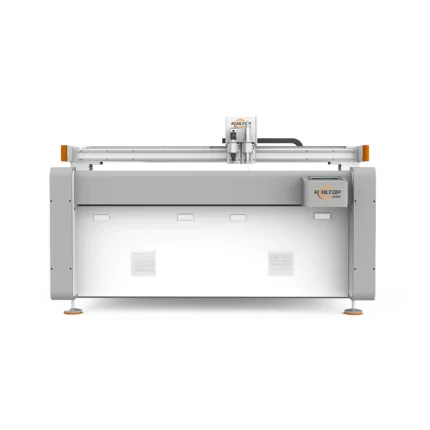
CNC Flatbed Cutter 2026 Digital Corrugated Box Making Machine
Product Introduction
High-precision CNC flatbed cutter designed for efficient cardboard box production. Ideal for 2026 digital corrugated box manufacturing, offering precise cutting and reliable performance for professional packaging solutions.
Key Specifications
| Type | CNC Flatbed Cutter |
| Application | Cardboard Box Production |
| Technology | 2026 Digital System |
| Material | Corrugated Board |

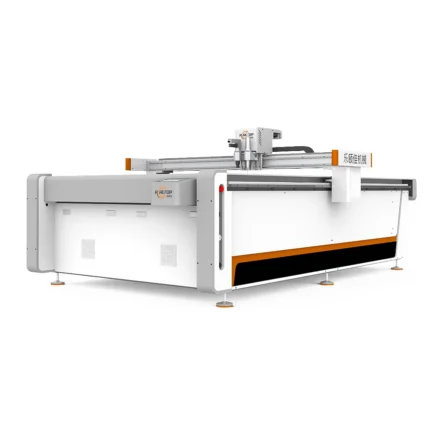
CNC Flatbed Oscillating Knife Cutting Machine 2026
Product Introduction
High-performance CNC Flatbed Oscillating Knife Cutting Machine 2026, ideal for precision cutting of various materials with advanced oscillating knife technology, ensuring efficient and accurate operations for industrial manufacturing needs.Specifications
| Model | 2026 |
| Type | CNC Flatbed Oscillating Knife Cutting Machine |

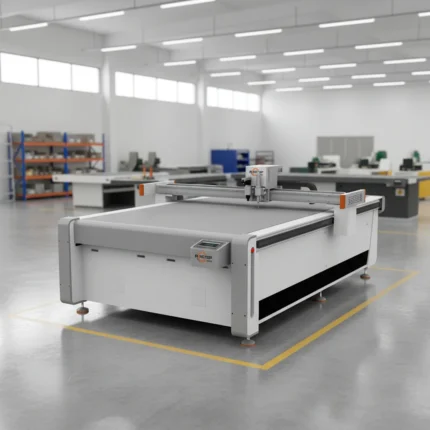
CNC Vibrating Knife Cutter 2026 Custom Cartons Packaging
Product Introduction
CNC Vibrating Knife Cutter 2026 is ideal for custom cartons & packaging, offering precise cutting solutions for various materials. Engineered by a leading Chinese welding & cutting equipment manufacturer, it ensures efficiency and accuracy for packaging production needs.Key Specifications
| Model | 2026 |
| Type | CNC Vibrating Knife Cutter |
| Application | Custom Cartons & Packaging |
| Manufacturer | Chinese Leading Factory |

Realtop 2026 Digital Box Cutter High-Speed Corrugated Board
Product Introduction
Realtop Digital Box Cutting Machine 2026 is a high-speed solution for corrugated board cutting, designed for efficient and precise box production in manufacturing settings.Key Specifications
| Model | 2026 |
| Type | Digital Box Cutting Machine |
| Application | Corrugated Board |
| Feature | High-Speed Cutting |
商品评价
There are no reviews yet.