

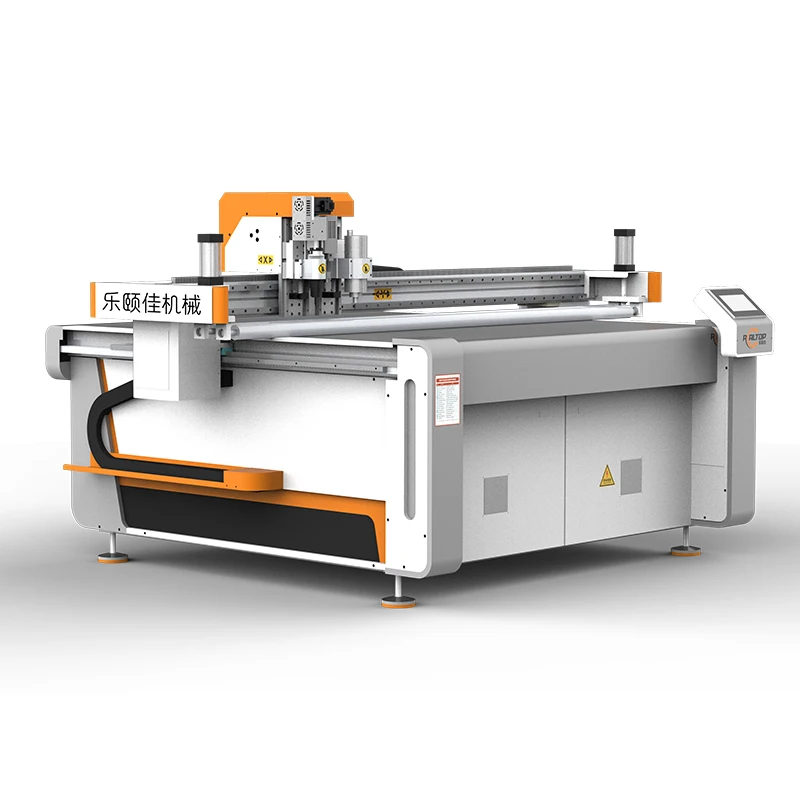
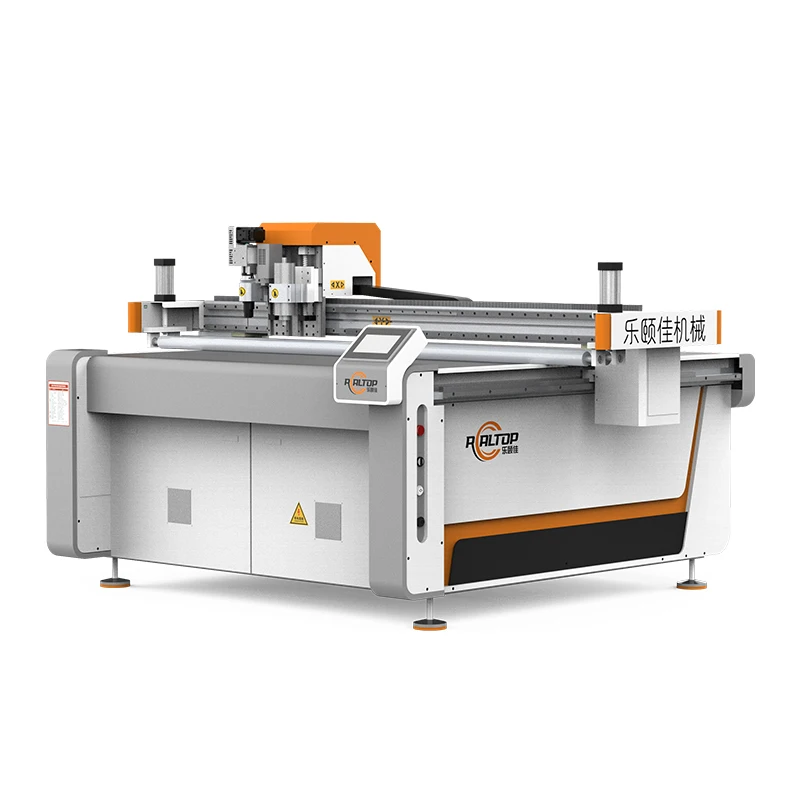
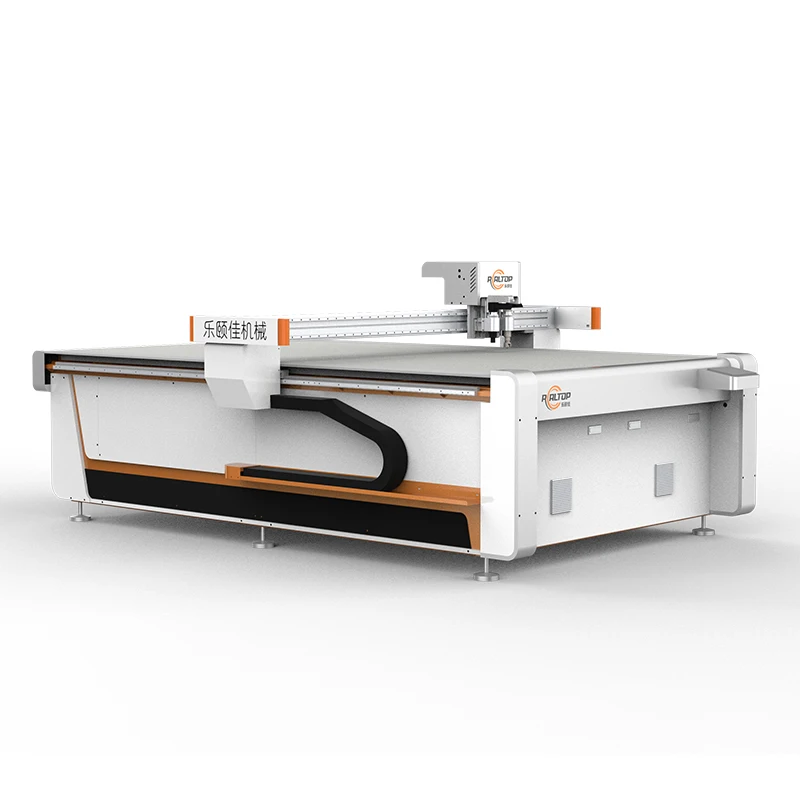
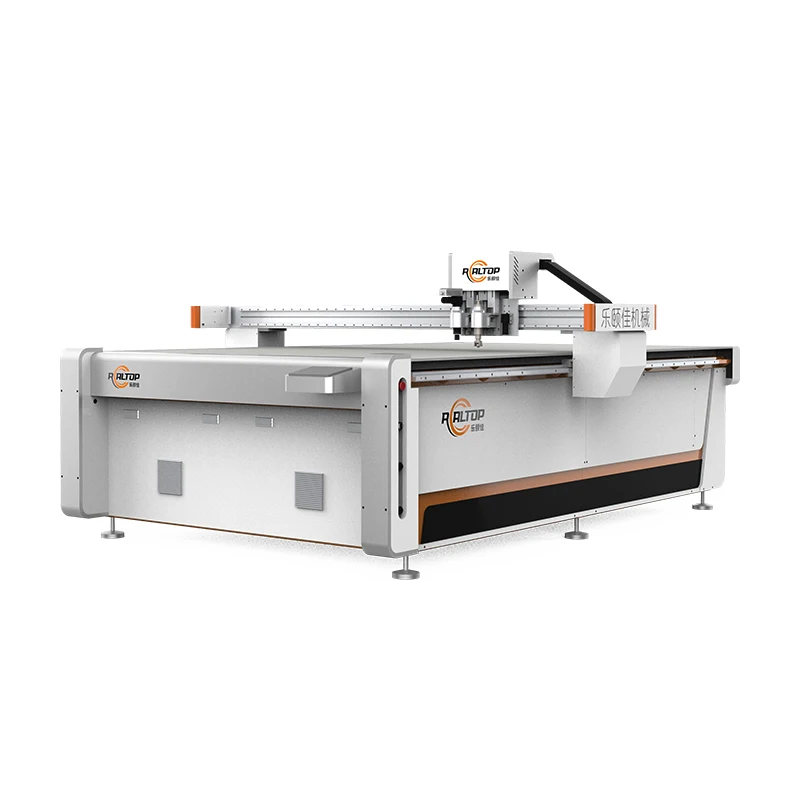

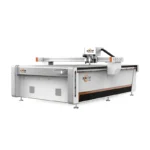
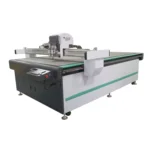
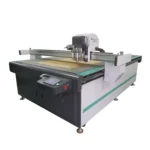
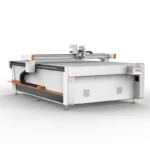

Model Selection Digital Flatbed CNC Cutting Machine – Auto Pizza Box
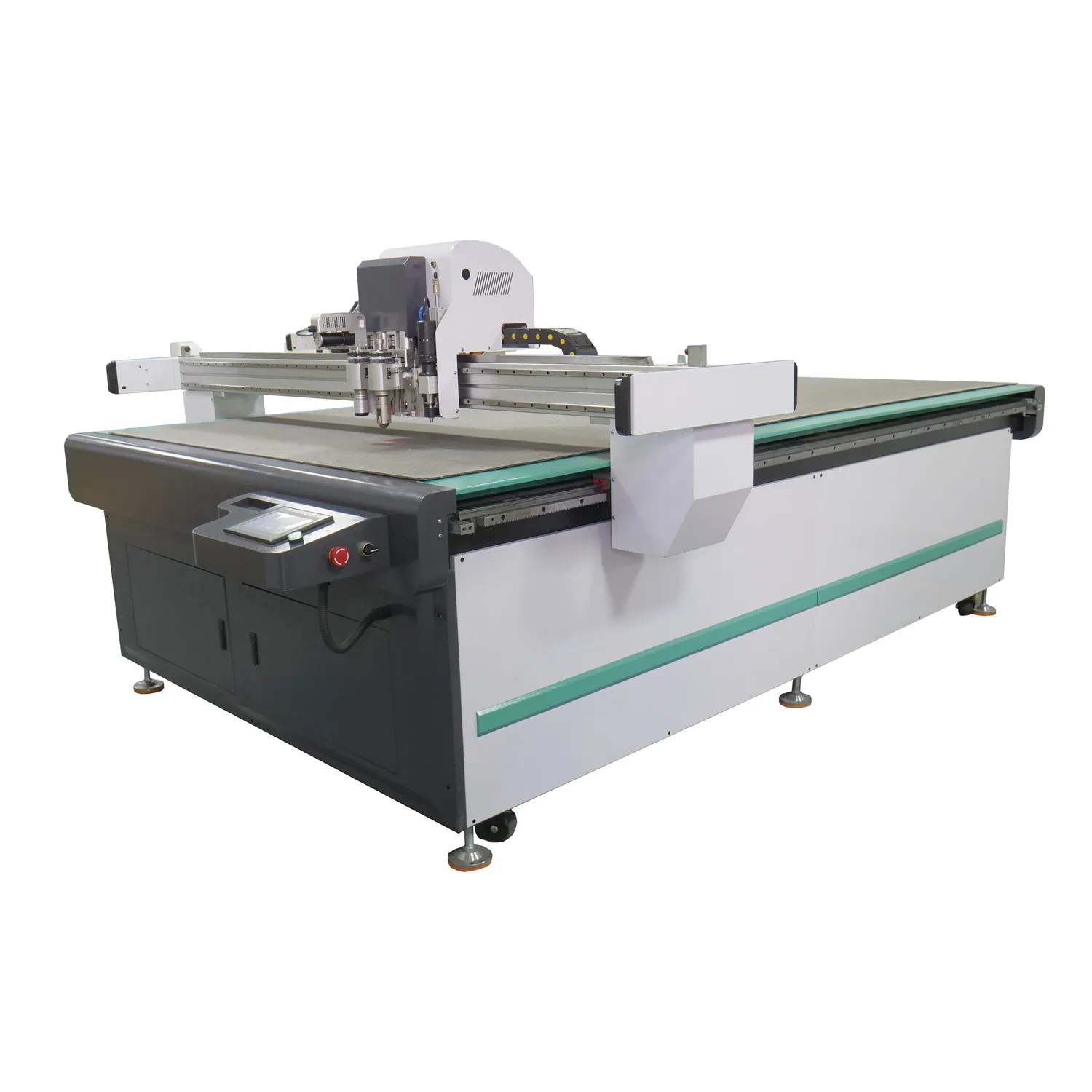
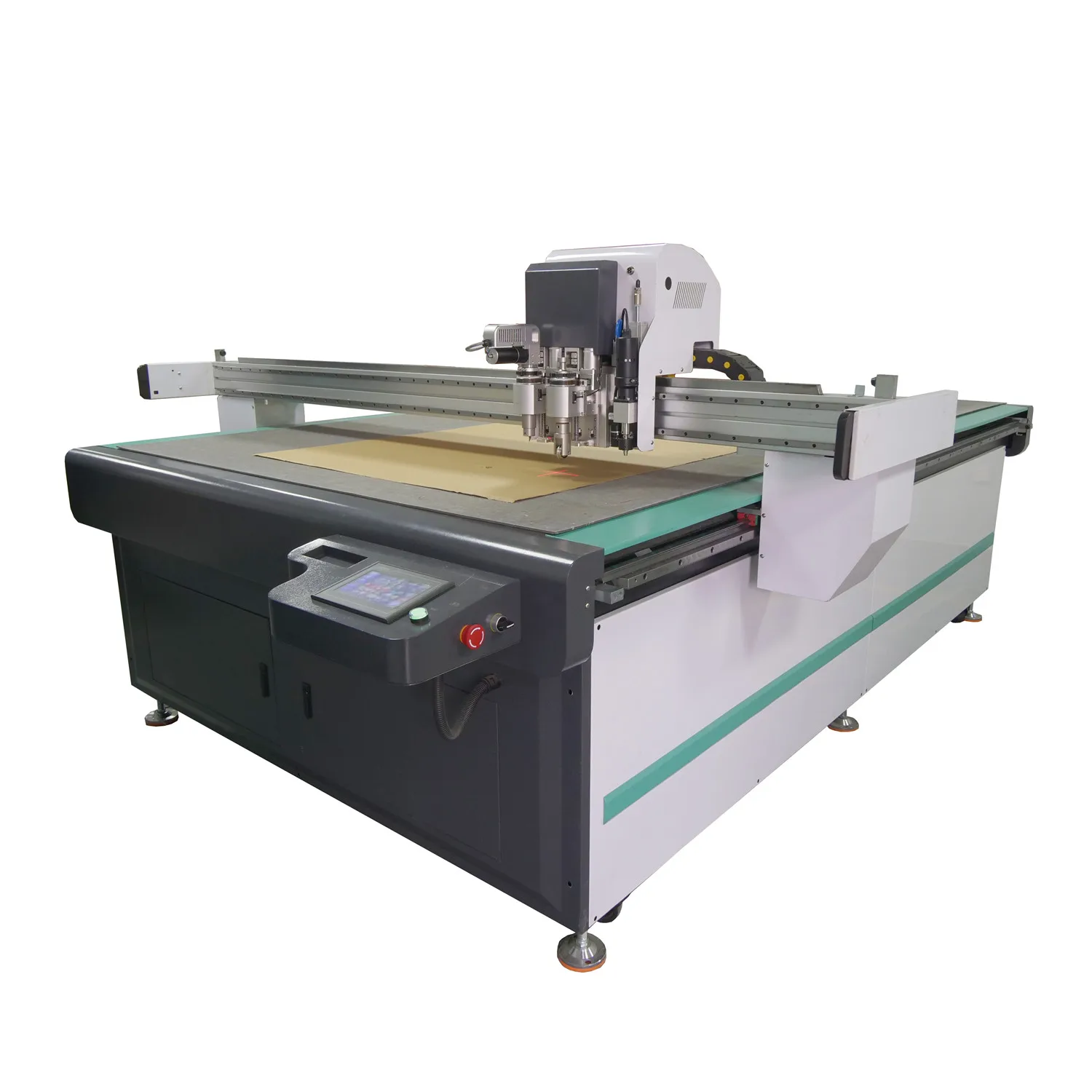
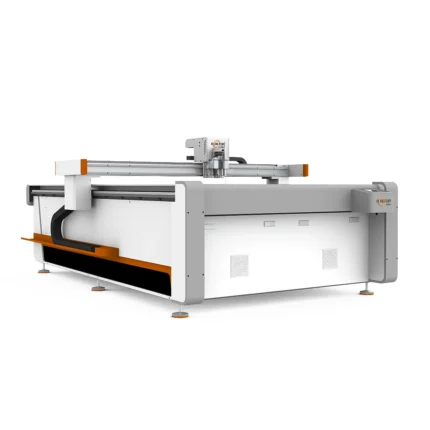
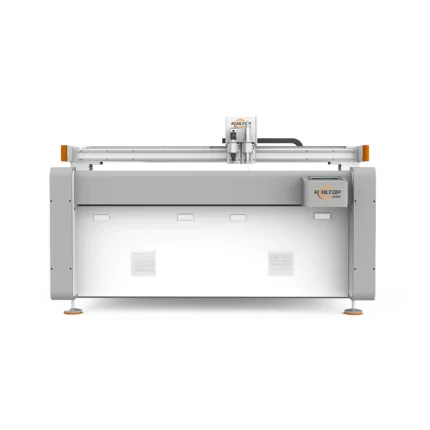
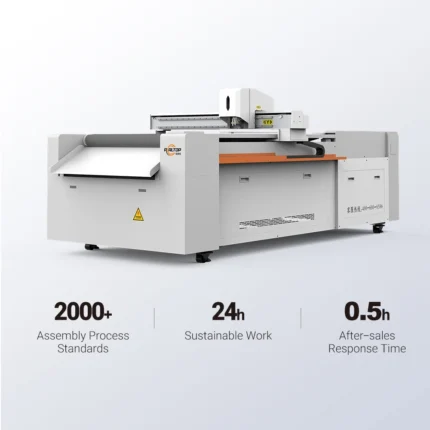
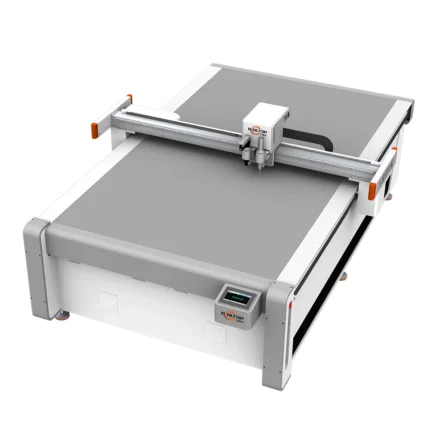
RT-D2516/RT-S2516 Digital Flatbed CNC Cutting Machine, 1600×2500mm Working Area, 9kW, 380V — configured with oscillating knife, creasing wheel and V-cutting tools for corrugated cardboard, carton and pizza box sample making.
- CCD camera and panoramic vision positioning ensure precise contour recognition on pre-printed packaging sheets
- Magnesium-aluminum alloy vacuum table with zoned adsorption and 7.5kW pump holds board flat during cutting and creasing
- Delta/Panasonic servo-driven linear guide delivers ≤0.1mm repeatability across the full working area
Realtop confirms tool head and table configuration against your actual corrugated board stock with sample cutting before commitment.
Cutting Configuration Locked to Material — Realtop tests your actual corrugated board stock before confirming the tool head, vacuum zoning and cutting parameters for this Digital Flatbed CNC Cutting Machine.
Technical Specifications
| Parameter | Value |
|---|---|
| Model | RT-D2516/RT-S2516 |
| Product Type | Digital Flatbed CNC Cutting Machine |
| Working Area | 1600×2500mm |
| Overall Dimensions (L×W×H) | 3450×2300×1250mm |
| Rated Power | 9kW |
| Voltage | 380V±10% (50Hz/60Hz subject to confirmation) |
| Table Type | Flat working table or Auto feeding table (conveyor) |
| Tool Head Options | Oscillating knife, creasing wheel, V-cutting knife, pneumatic knife, circular knife, drag knife, dotted line knife, punching tool, brush |
| Visual Positioning | CCD camera mark point positioning, panoramic camera recognition, projection positioning (configuration-dependent) |
| Translational Velocity | 800–2000mm/s |
| Cutting Speed | 200–800mm/s (basis to be confirmed by material and thickness) |
| Repeatability | ≤0.1mm |
| Transmission System | Digital servo motor (Delta or Panasonic optional), linear guide, synchronous belt, Taiwan Hiwin ball screw |
| Vacuum Pump | 7.5kW with aviation aluminum shell and built-in silencer |
| Control Panel | Touch screen with multiple language support |
| Software Compatibility | PLT, DXF, AI, HP-GL formats; auto nesting included |
| Safety Devices | Infrared induction blocking, anti-collision sensors, emergency stop with in-situ resume |
| Warranty | 1 year |
Application Suitability
| Application | Material or Output |
|---|---|
| Packaging sample making | Corrugated cardboard, honeycomb board, folding carton stock, gray board |
| Pizza box and carton production | E-flute and B-flute corrugated, plastic corrugated, cardboard blanks |
| Foam and composite processing | Foam board, PU, EVA, XPE, composite panels |
| Soft material cutting | Leather, fabric, textile, non-woven fabric, carpet, sponge |
| Industrial gasket and seal cutting | Rubber, PTFE, ETFE, silicone, PVC sheet, soft glass |
Why Working Area Alone Will Not Protect Your First Production Run
The cutting head and vacuum configuration must be validated against your actual board flute and thickness before the order is finalized.
A buyer specifies a flatbed cutter based purely on sheet dimensions, ships it across the ocean, and then discovers the machine tears through five-layer corrugated where a three-layer sample ran cleanly. The oscillating knife frequency that worked on standard gray board cannot penetrate denser flute profiles without crushing the edges. The vacuum zones designed for large-format sheets leave small carton blanks lifting mid-cut. These mismatches surface only when the machine meets real production material [NEED_CITE: material thickness and flute profile impact on oscillating knife cutting performance].
The Laser Cutting and Engraving Machine site often receives inquiries about non-metal cutting, and it is critical to distinguish between laser thermal processing and mechanical knife cutting for packaging substrates. Corrugated board responds to blade oscillation, creasing wheel pressure and vacuum hold-down — not to beam power or focal length. Specifying the wrong process for your material wastes both time and capital.
Laser Process Boundary for Packaging Substrates
When a packaging producer evaluates cutting technology, the choice between a CO2 laser and a mechanical oscillating knife depends entirely on edge requirements and material composition. Laser cutting seals the edge of synthetic fabrics and acrylic but leaves a charred kerf on corrugated cardboard that compromises print quality and fold integrity.
The Digital Flatbed CNC Cutting Machine addresses packaging substrates through mechanical force — blade oscillation at high frequency for full cuts, a creasing wheel for fold lines, and a V-cutting knife for slot removal. These tool heads produce clean, uncompressed edges on corrugated and honeycomb board that a laser cannot replicate without thermal damage.
Matching Tool Head Selection to Board Flute Profile
A single oscillating knife cannot cover every corrugated grade a packaging shop encounters. Single-face E-flute requires different blade amplitude and feed rate than double-wall BC-flute, and honeycomb board demands yet another approach to prevent core collapse during the cut. The creasing wheel must be matched to board caliper so the fold line scores without cutting through the liner.
V-cutting tools remove material for fold-and-glue structures, while a drag knife handles thin card stock and vinyl overlays at higher translational speeds. Selecting the wrong combination produces ragged edges on thick stock or crushed flutes that weaken the finished carton [NEED_CITE: tool head selection criteria for corrugated flute types]. The panoramic camera and CCD positioning system adds another layer — it tracks printed registration marks on pre-printed sheets, but only if the camera resolution and software processing speed are confirmed against your actual print layout and cutting throughput.
Specifying What the Spec Sheet Does Not Tell You
The 1600×2500mm working area accommodates full-size packaging sheets, but the vacuum table zoning determines whether small carton blanks stay flat during high-speed cutting. The magnesium-aluminum alloy table surface with fluorocarbon PVDF coating resists adhesive buildup from repeated sample runs, and the 7.5kW vacuum pump provides the suction force needed for porous corrugated material that leaks air through its flutes.
Repeatability of ≤0.1mm across the Hiwin ball screw and linear guide transmission means nesting patterns stay accurate over long production runs, reducing material waste on expensive printed stock. The servo motor choice — Delta or Panasonic — affects acceleration behavior on dense boards, which directly impacts corner quality on tight-radius carton designs.
The software must import your existing PLT, DXF, AI or HP-GL files without manual redraw, and the auto-nesting function should be tested on your actual sheet layout before the machine ships. Voltage confirmation at 380V±10% with the correct frequency for your facility prevents motor burnout on arrival.
What Happens When Configuration Is Left to Assumption
A packaging buyer receives a machine configured for the supplier’s standard demo material rather than their own production stock. The oscillating knife tears through the buyer’s five-layer corrugated because the blade frequency was set for three-layer board. Small pizza box blanks lift off the table mid-cut because the vacuum zones were sized for large-format sheets, leaving the pump unable to maintain suction across the smaller adsorption area.
Creasing wheels set for standard gray board crush the flute structure on honeycomb cardboard, producing fold lines that crack instead of bending. These problems surface during the first week of production, not during the factory demo [NEED_CITE: vacuum table zoning requirements for small-format corrugated blanks].
Why Buyers Source This Platform From RealTop
The in-house design team specifies the tool head combination against your actual board stock and daily volume, not against a generic catalog entry. A sample cutting report is produced on your own corrugated material before the order is confirmed, documenting edge quality, creasing depth and cutting speed on your specific flute profile.
Tool head and table configuration are locked in a written list that matches your material type, eliminating guesswork during installation. The CCD camera positioning capability is verified against your printed registration mark layout at production speed, not just on a static test image. Voltage, plug type and control language are confirmed in the electrical schematic before shipment, and the software license covers your required file format compatibility without additional licensing negotiations after delivery.
Documentation & Verification
- Sample cutting report produced on your corrugated board stock at production thickness before order
- Tool head and table configuration list matched to your specific flute profile and daily volume
- Electrical schematic with voltage and frequency confirmed for your target market grid
- Software license note covering PLT, DXF, AI and HP-GL file format compatibility
- Factory test record documenting repeatability and vacuum hold-down on your material
- Packing photographs showing crate construction and component securing before dispatch
Installation, Commissioning & Support
- 3450×2300mm footprint requires level concrete floor with clearance for conveyor feed if auto-feeding table selected
- 9kW rated power demands dedicated circuit; confirm 380V±10% supply with correct frequency before machine energization
- Machine ships fully assembled; rigging plan required for 1250mm height clearance through facility doors
- First-run calibration covers blade depth, creasing pressure and vacuum zone mapping for your board stock
- Touch screen supports multiple languages; confirm control interface language matches operator preference before production
- One-year warranty covers parts replacement with buyer-funded shipping; on-site engineer dispatch available at buyer expense
What to Provide for an Accurate Quotation
Share your corrugated board type, flute profile and maximum thickness along with the sheet dimensions you run most frequently. Specify whether your production requires flat-table loading or conveyor-fed auto-feeding for continuous sample output.
Confirm your facility voltage and frequency, and indicate the control language your operators need. If you run pre-printed packaging sheets, provide a sample print layout so the CCD positioning system can be configured and tested against your actual registration marks before the machine leaves the factory.
Frequently Asked Questions
Q: How do I match the tool head to my corrugated board flute type?
A: Single-face and double-wall flutes require different oscillating knife frequencies and creasing wheel pressures. The factory tests your actual board stock and provides a sample cutting report documenting the tool head combination, blade depth and cutting speed that produce clean edges without crushing the flute structure on your specific material.
Q: Can the CCD camera track printed marks at full production speed?
A: The panoramic camera and CCD positioning system can track printed registration marks, but performance depends on mark contrast, size and layout density. The vision system is configured and tested against your actual pre-printed sheet design at production cutting speed before the order ships, confirming reliable contour recognition.
Q: What voltage configuration is confirmed before the machine ships?
A: The standard supply is 380V±10%, but frequency must be confirmed as 50Hz or 60Hz depending on your local grid. The electrical schematic documents the exact voltage, plug type and circuit requirements for your facility, preventing motor damage or control system faults caused by incorrect power supply on arrival.
Q: Is sample cutting available on my own packaging material?
A: Buyers are encouraged to send their own corrugated board, honeycomb stock or folding carton material to the factory before committing. The sample cutting report documents edge quality, creasing accuracy and vacuum hold-down performance on your actual production substrate at the thickness and flute profile you will run daily.
Q: What does the one-year warranty cover?
A: The warranty covers replacement parts free of charge with the buyer responsible for shipping costs. On-site engineer dispatch for installation support or troubleshooting is available, with the buyer covering travel and accommodation expenses. Spare parts lists are provided with the machine documentation for long-term maintenance planning.


Related products
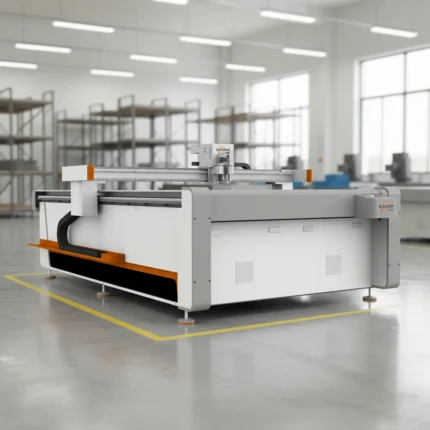
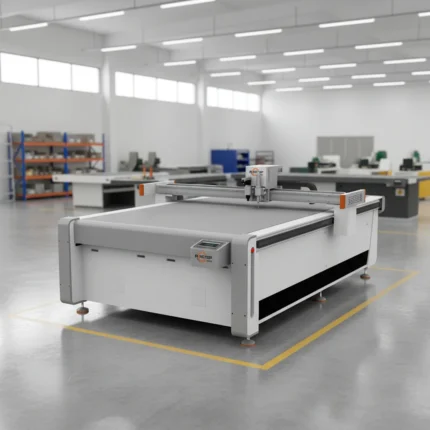
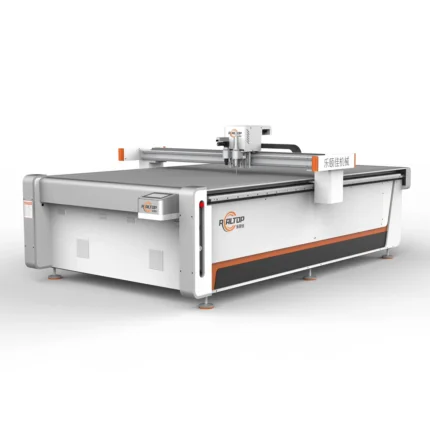
2026 Digital Flatbed Cutting Plotter Auto Corrugated Box Die Cutter
Product Introduction
Digital Flatbed Cutting Plotter 2026, ideal for auto corrugated box die cutting, offering precision and efficiency for professional packaging production.Specifications
| Type | Digital Flatbed Cutting Plotter |
| Model | 2026 |
| Application | Auto Corrugated Box Die Cutting |
| Function | Precision Cutting & Plotting |
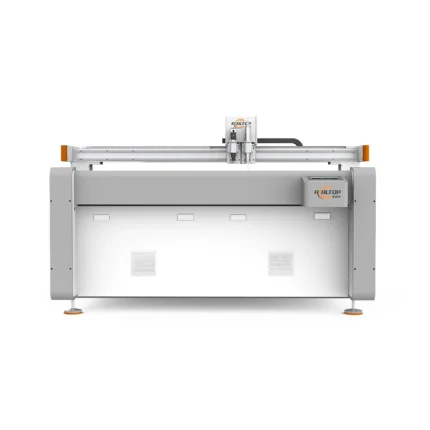
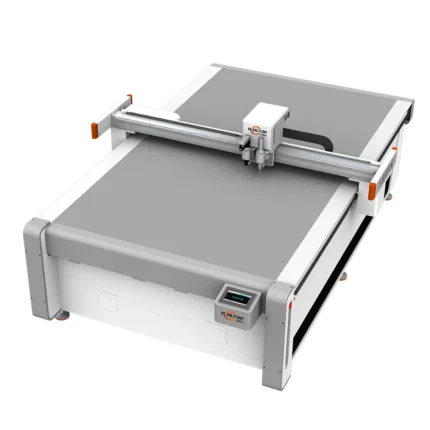
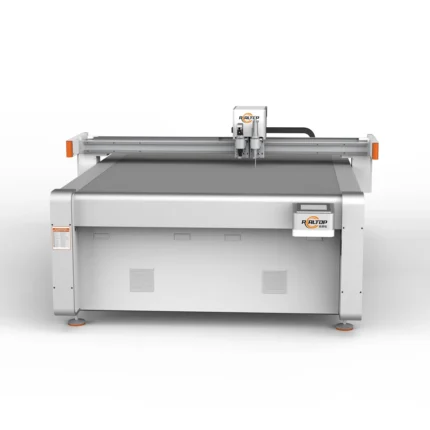
Automatic Digital Cardstock Cutter 2026 CNC Cutter
Product Introduction
Automatic Digital Cardstock Cutter 2026 is a CNC cutting machine ideal for white cardboard and kraft paper. It offers precise and efficient cutting performance, suitable for various paper processing needs in manufacturing and craft applications.Key Specifications
| Type | CNC Digital Cutting Machine |
| Material Compatibility | White Cardboard, Kraft Paper |
| Operation | Automatic |
| Application | Paper Cutting & Processing |
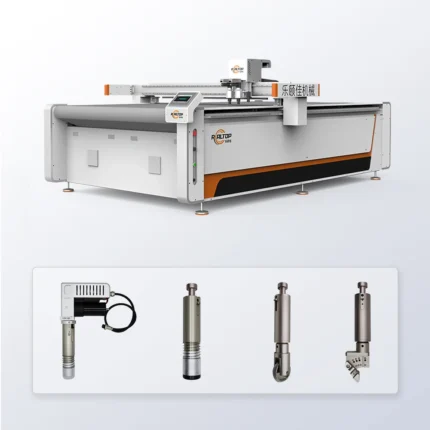
CNC Flatbed Cutter 2026 Digital Corrugated Box Making Machine
Product Introduction
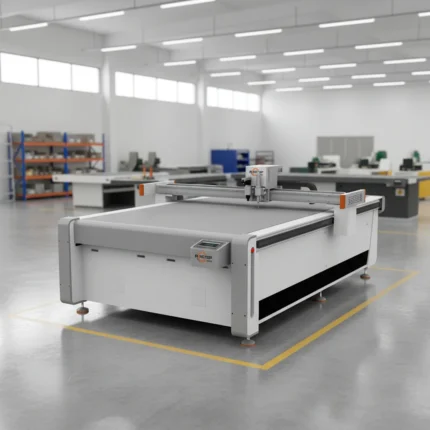
High-precision CNC flatbed cutter designed for efficient cardboard box production. Ideal for 2026 digital corrugated box manufacturing, offering precise cutting and reliable performance for professional packaging solutions.
Key Specifications
| Type | CNC Flatbed Cutter |
| Application | Cardboard Box Production |
| Technology | 2026 Digital System |
| Material | Corrugated Board |


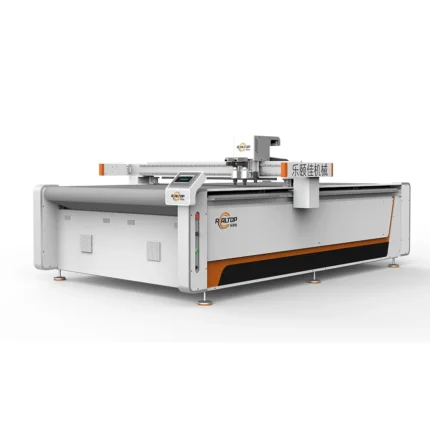
REALTOP 2026 Digital Industrial Cardboard Box Cutter
Product Introduction
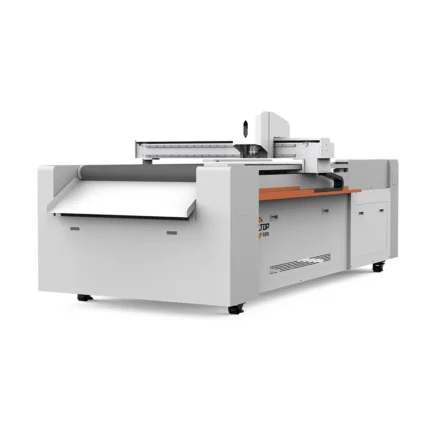
REALTOP Digital Industrial Cardboard Box Cutter Machine 2026 is a professional industrial-grade cutting equipment designed for efficient cardboard box processing, ideal for manufacturing and packaging applications.
Product Parameters
| Model | 2026 |
| Type | Digital Industrial Cardboard Box Cutter |
| Application | Cardboard Box Processing |
| Feature | Industrial-grade, Efficient Cutting |
商品评价
There are no reviews yet.