

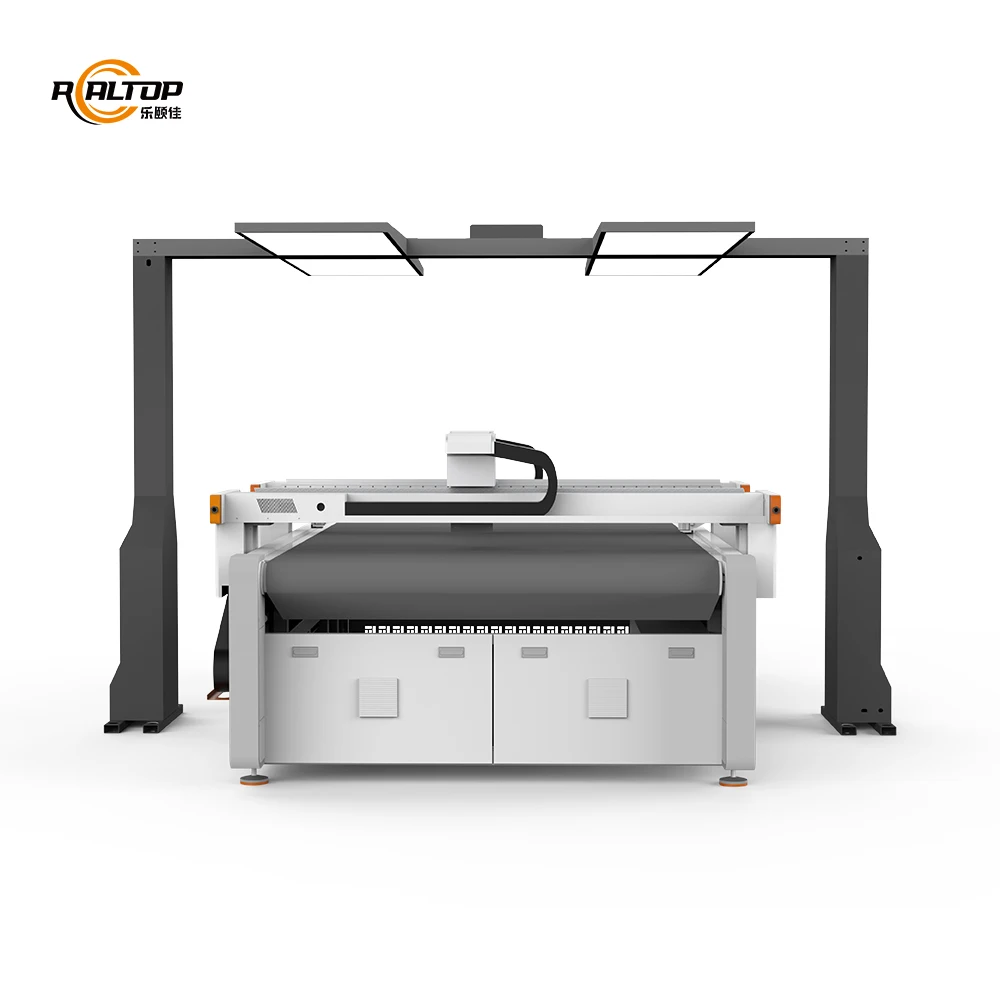
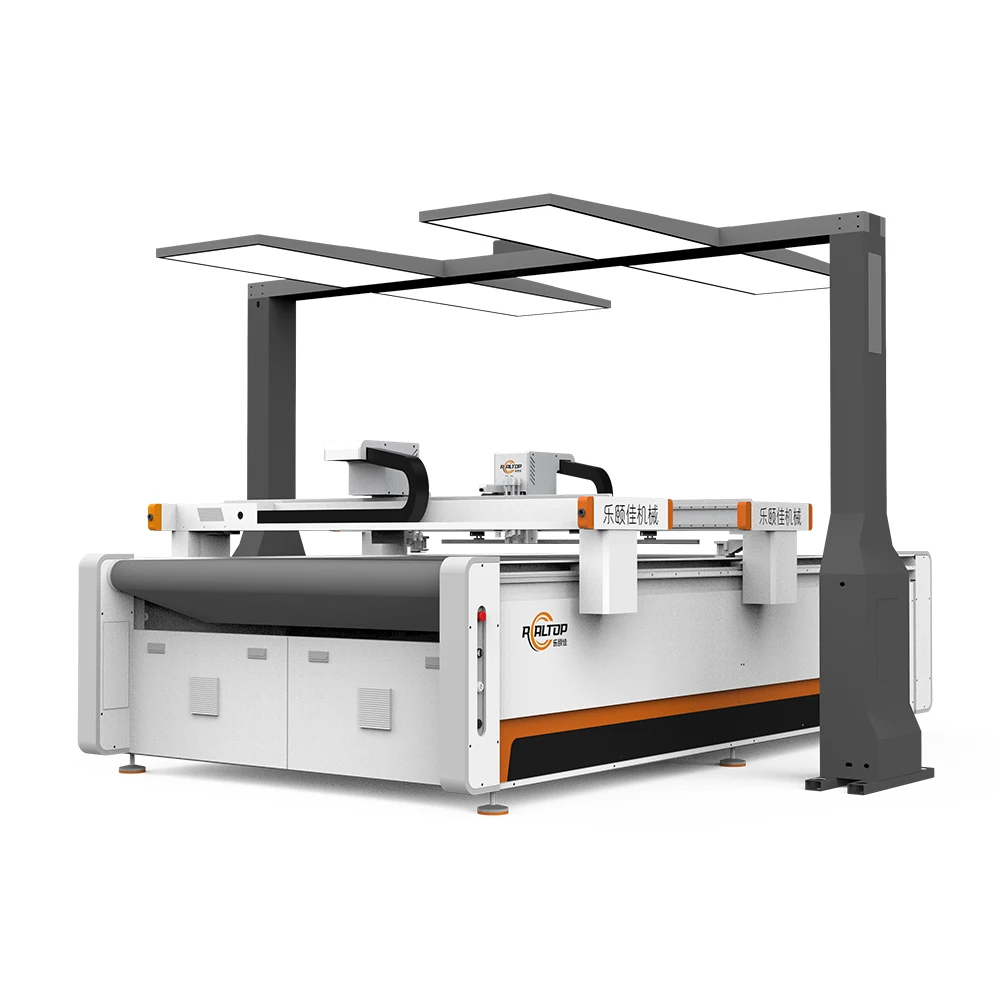
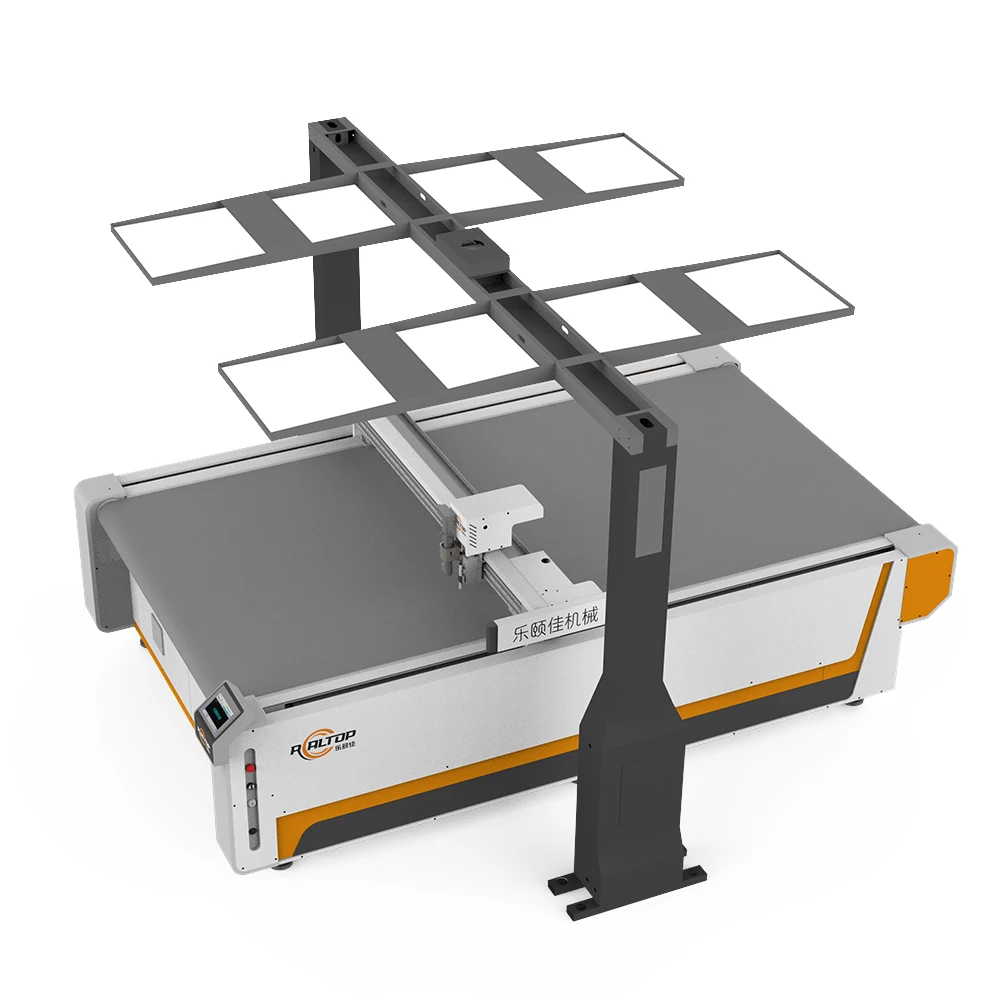
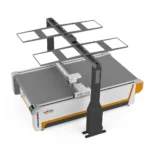
Oscillating Knife Leather Cutter CNC – Automatic Industrial Application
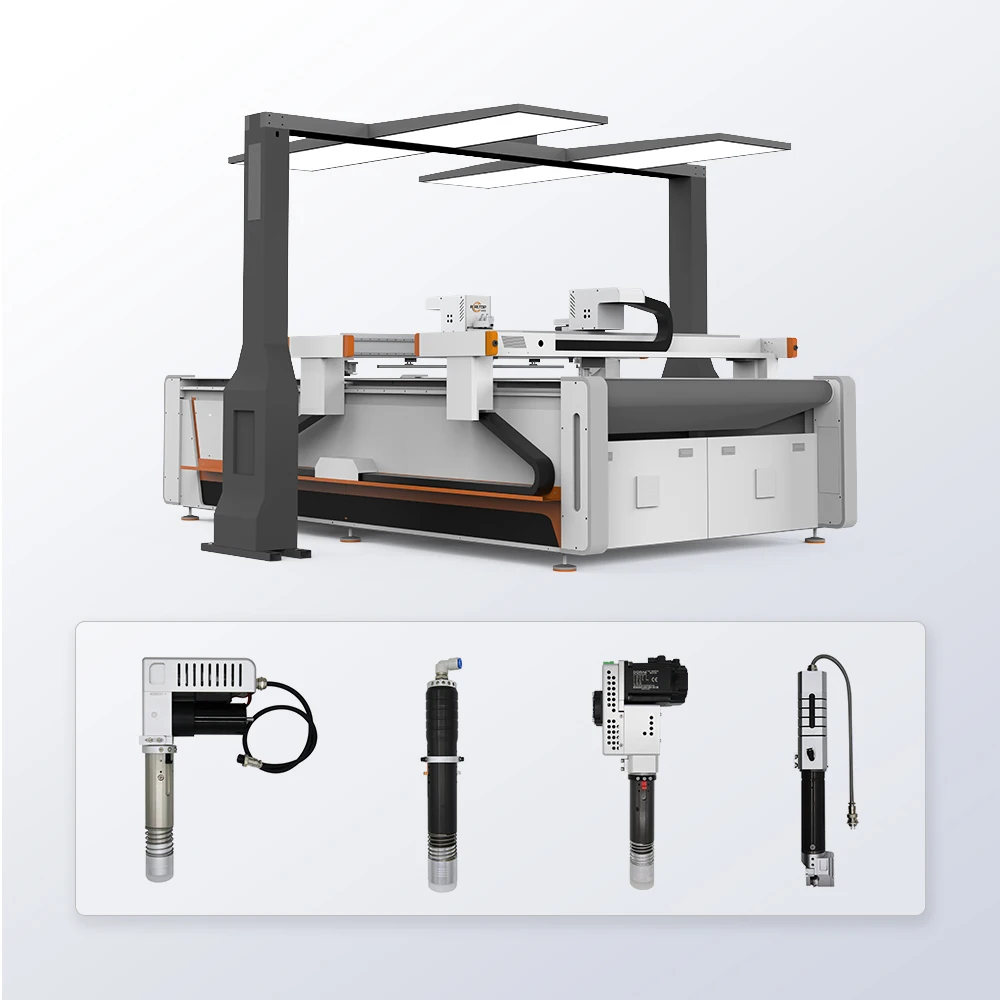
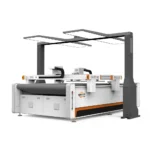
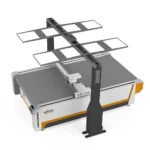
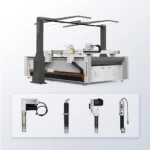
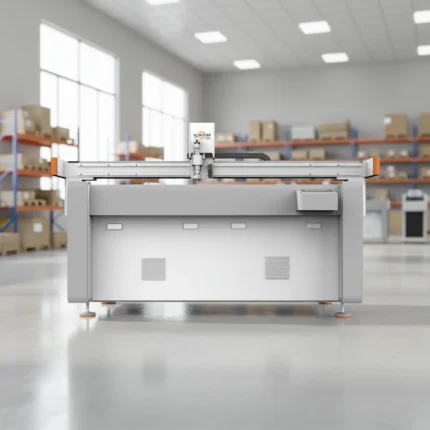
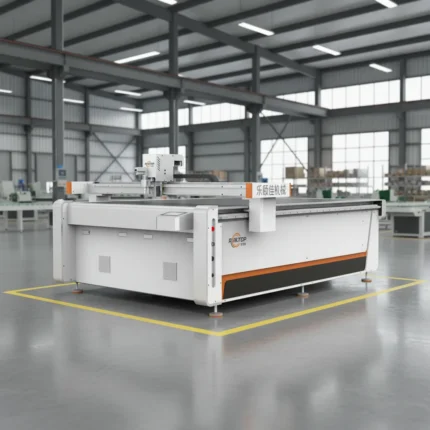
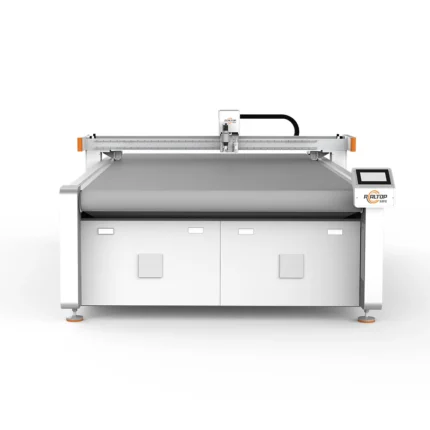
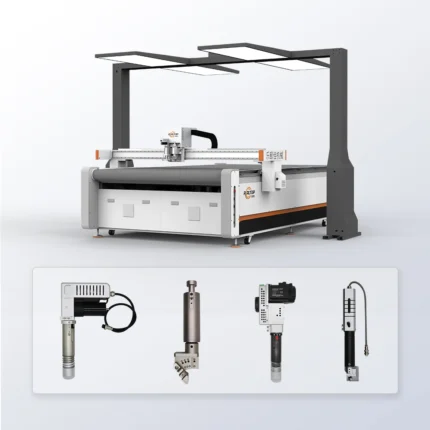
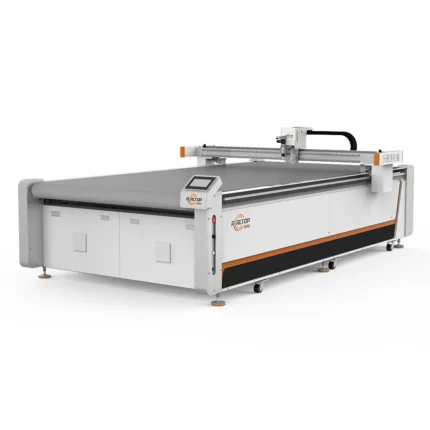
CNC Oscillating Knife Leather Cutting Machine, 1600×2500 mm Working Area, ±0.1 mm Accuracy, ≤30 mm Cutting Thickness — configured with multi-tool head options including oscillating knife, driven rotary knife, and pneumatic knife matched to genuine and synthetic leather density.
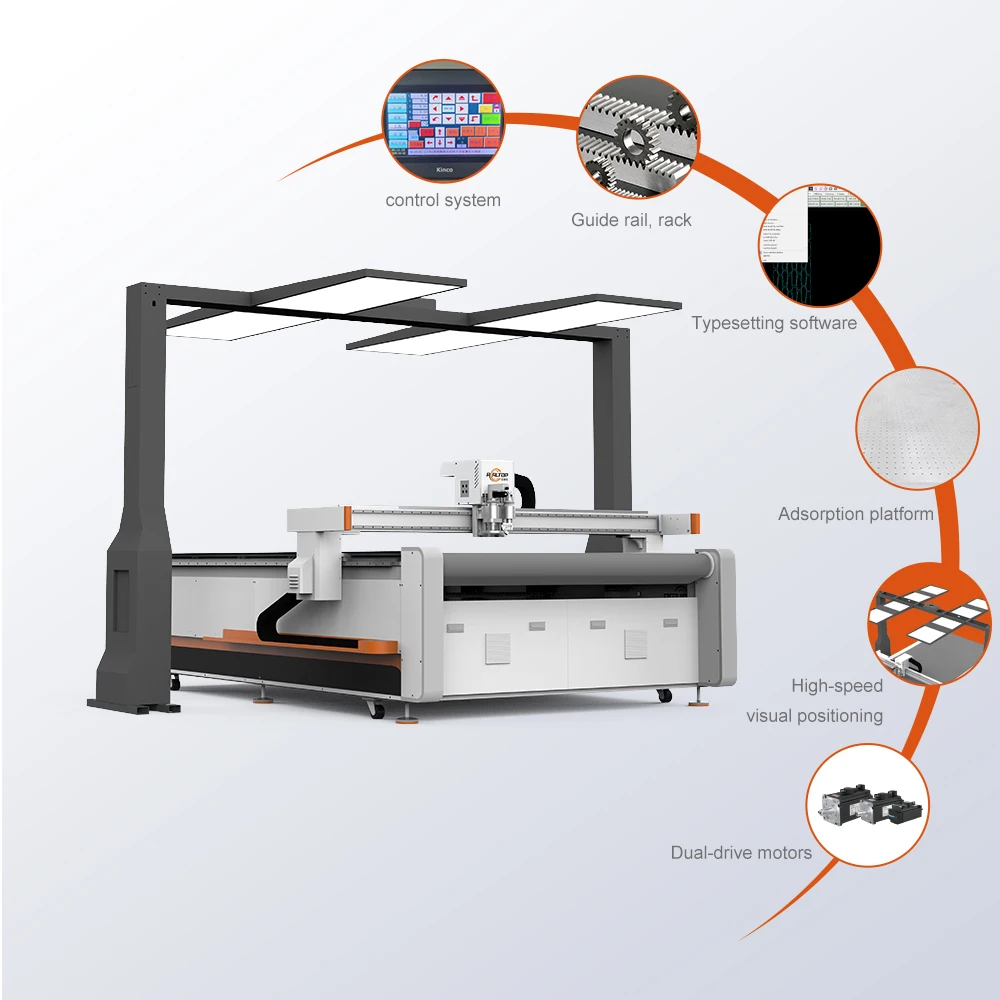
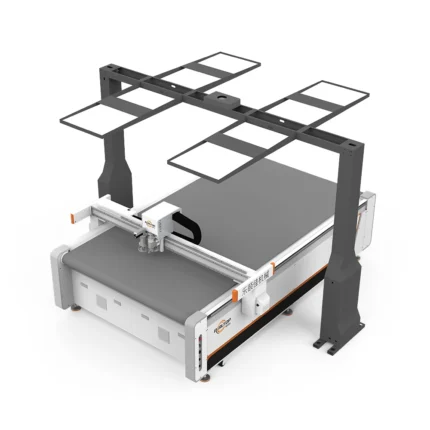
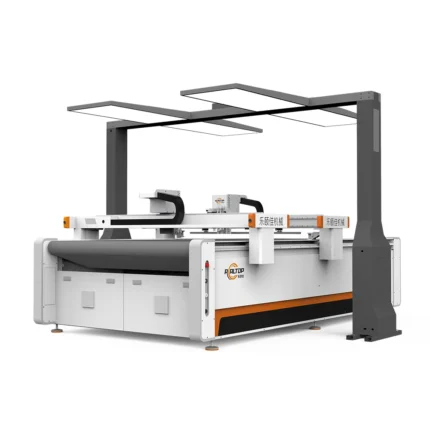
- CCD camera contour recognition tracks printed marks and natural hide boundaries at production speed, supporting auto-nesting with camera-based defect detection for improved material yield
- Aluminum bellows vacuum table provides consistent hold-down across the full cutting area; software imports DXF, PLT, AI and PDF files with language options including English, Russian, Italian and Chinese
Sample cutting on your own leather material confirms edge quality and thickness capacity before order placement, with tool head and vacuum zoning specified per your production requirements.
Configured tooling per hide type — We match oscillating or rotary knife assemblies to your leather density and verify edge quality on your own sample before building the machine.
Technical Specifications
| Parameter | Value |
|---|---|
| Product Type | CNC Oscillating Knife Cutting Machine |
| Working Area | 1600×2500 mm |
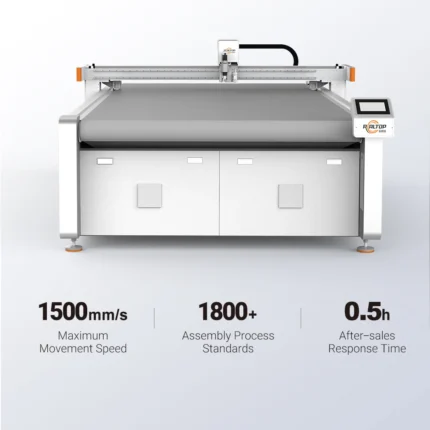
| Cutting Speed | 0–2000 mm/s |
| Cutting Thickness | Up to 30 mm (basis not stated in source — depends on leather density and backing) |
| Cutting Accuracy | ±0.1 mm |
| Tool Head Options | Oscillating knife, Driven rotary knife, Creasing wheel, Kiss cutting tool, Pneumatic knife, Milling tool, V-groove knife |
| Vacuum Table | Aluminum bellows vacuum table |
| Vacuum Pump Power | 9 kW |
| Servo Motor Options | Panasonic, Delta, Dorna (rated or peak not specified in source) |
| Voltage Options | 110V, 220V, 380V (frequency not specified in source) |
| Control System | PLC control panel |
| CCD Camera | Contour recognition for printed materials |
| Software Compatibility | PLT, DXF, AI, PDF |
| Safety Devices | Infrared sensor and emergency stop |
| Dimensions (L×W×H) | 3300×2100×1350 mm |
Application Suitability
| Application | Material or Output |
|---|---|
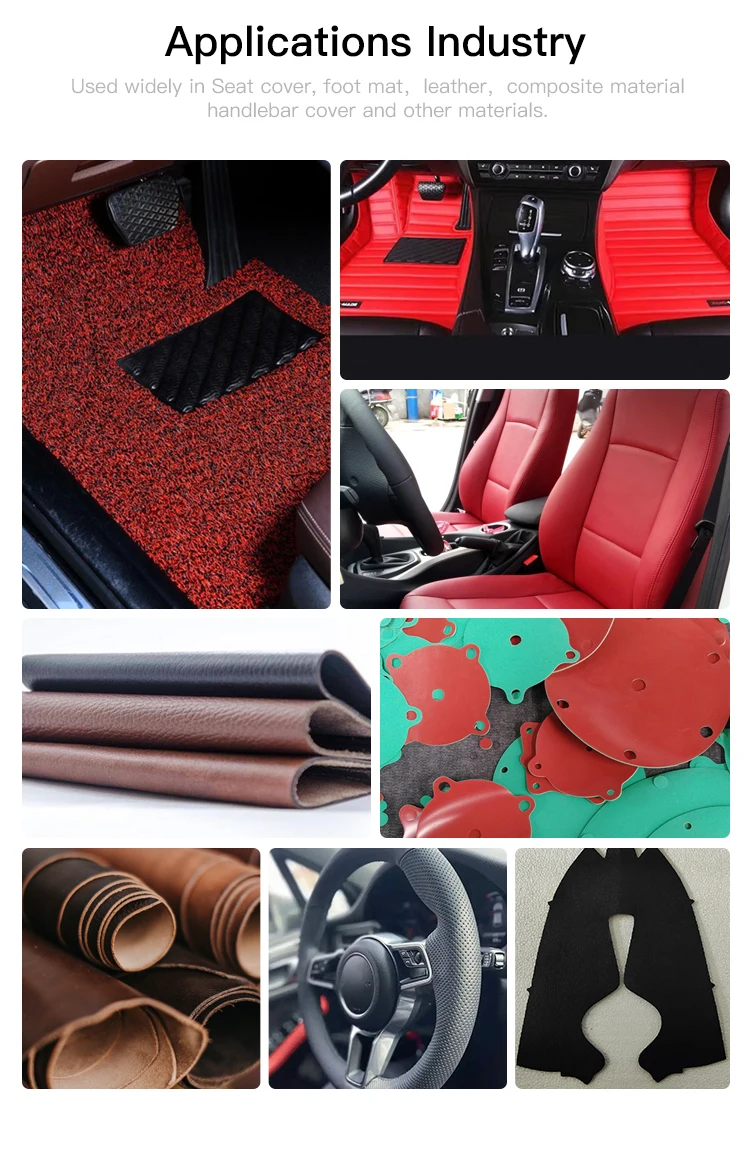
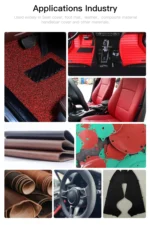
| Footwear production | Shoe uppers from genuine leather, synthetic PU, and microfiber |
| Bag and leather goods | Full-grain and split hides for handbags, wallets, and belts |
| Automotive interiors | Seat cover panels, car mats, and door panel trim in leather or composite |
| Upholstery | Sofa fabrics and patterned rolls for soft furnishings |
| Advertising and packaging | Foam boards, adhesive stickers, vehicle wraps, PVC sheets, cartons |
Why Blade Selection Matters More Than Working Area on a CNC Oscillating Knife Leather Cutting Machine
The right knife profile on a CNC oscillating knife leather cutting machine prevents edge crush, delamination, and material lift — problems that a larger table will only produce faster.
I spent years watching buyers focus on bed size and travel speed while ignoring the tool head entirely. A leather workshop I worked with ordered a standard oscillating setup to cut thick cowhide for belts. The edges came out frayed and the hides shifted during nested runs. They had to re-evaluate the configuration after losing material for weeks. The cutting method must match the hide thickness and finish requirement, not just the sheet dimensions [NEED_CITE: tooling selection principles for CNC knife cutting of leather].
Tool Head and Blade Configuration for Leather Density
Leather behaves differently from textiles or foam. A driven rotary knife handles thinner splits and synthetic uppers with a clean shear cut, while a high-frequency oscillating knife tackles thicker hides where the blade must penetrate without dragging the grain. Pneumatic knife options manage dense composite layers where downward force matters as much as oscillation speed. The selection depends on what you actually put on the table, and that decision should happen before the order is placed.
Vacuum Hold-Down and Zoning for Irregular Hides
Natural hides are uneven in thickness and shape. The 9 kW vacuum pump paired with an aluminum bellows table provides the suction needed to keep material flat, but zoning is what matters for small parts. If the vacuum zones are too large relative to your nested pieces, small shoe upper components will lift at the edges during the final cuts. Zone layout must reflect your typical nesting pattern [NEED_CITE: vacuum table zoning requirements for CNC cutting tables].
Reading the Spec Sheet Beyond the Headline Numbers
The ±0.1 mm cutting accuracy depends on the servo system maintaining position under load — a factor that varies with material resistance. Voltage must match your facility supply exactly; 110V, 220V, and 380V options are available, but frequency and plug type need confirmation before production. The CCD camera supports contour recognition on printed leather and patterned rolls, which matters if you cut around pre-printed logos or defect-marked hide boundaries. Software file compatibility covers PLT, DXF, AI, and PDF formats, so existing nesting files import without conversion. The PLC control panel handles language options including English, Russian, Italian, and Chinese, with custom languages available on request.
The Cost of Skipping the Material Trial
When a buyer specifies a machine on working area and speed alone, the first production run becomes the test. I have seen entire batches of leather goods rejected because the chosen knife profile left visible micro-serrations on finished edges — defects that only appeared after dyeing and assembly. Reconfiguring the tool head and reprogramming the vacuum zones after delivery costs far more than running a proper sample beforehand. The trial should use your actual hide stock, not a generic test piece [NEED_CITE: material trial importance in CNC cutting procurement].
Why Source From This Build Line
The design team covers both knife cutting and laser processing, so the cutting method gets matched to the material rather than forcing one technology across every application. Tool head and table configuration are specified per leather type, with the exact knife profile and vacuum zone layout written into the order documentation. CCD camera positioning is verified against your specific print marks and hide boundary conditions before the machine ships. Software compatibility is confirmed with your existing DXF or PLT workflow. Sample cutting runs on your own leather stock before you commit to the purchase.
Documentation & Verification
- Machine specification sheet listing confirmed tool heads and vacuum zone map
- Electrical schematic with your exact voltage, plug type, and frequency noted
- Sample cutting report on your leather stock showing edge quality and accuracy
- Software licence and file format compatibility note for PLT, DXF, AI, PDF
- Factory test record captured before dispatch
- Operation and maintenance manual with control language matching your operators
Installation, Commissioning & Support
- Foundation must support the 3300×2100×1350 mm footprint and dynamic cutting loads
- Dedicated circuit matching confirmed 110V, 220V, or 380V supply with correct frequency
- Machine ships partially assembled; table leveling and gantry alignment completed on-site
- First-run commissioning includes tool head calibration and vacuum zone verification
- Operator training covers PLC interface navigation and CCD camera mark teaching
- Spare parts list includes knife blades, vacuum seals, and belt tension specs
What We Need to Quote Accurately
Send a description of the leather types you cut, including typical thickness and whether hides are genuine or synthetic. Share your daily cut volume and the largest single piece dimension you need from the 1600×2500 mm bed. Confirm your workshop voltage, frequency, and preferred control language so the electrical and software setup is locked before production starts.
Frequently Asked Questions
Q: How do you confirm the machine can cut my specific leather thickness?
A: The ≤30 mm rating depends on leather density and backing composition. We run a sample cut on your actual hide stock and document edge quality, cut-through completeness, and contour accuracy in a written report before you place the order. That report becomes the acceptance baseline.
Q: Which tool head should I choose — oscillating, rotary, or pneumatic?
A: Selection depends on your leather thickness, edge finish requirement, and production volume. An oscillating knife handles thick hides, a driven rotary suits thinner splits, and a pneumatic knife manages dense composites. The wrong choice produces ragged edges or delamination that shows up after finishing.
Q: Will the CCD camera work with my printed leather and hide boundaries?
A: The camera tracks printed registration marks and natural hide contours, but performance must be verified against your specific mark size, contrast, and placement. We test this during the sample cutting phase using your actual printed material to confirm reliable tracking at cutting speed.
Q: What electrical and language specifications ship with my machine?
A: Voltage options include 110V, 220V, and 380V. You must confirm exact voltage, frequency, plug type, and control panel language before production begins. These details are recorded in the electrical schematic and software compatibility note that ship with the machine.
Q: How does the vacuum table handle small leather parts during nested cuts?
A: The 9 kW pump and aluminum bellows table provide strong hold-down, but zone size relative to your smallest part determines whether pieces lift. We specify vacuum zone layout based on your typical nesting pattern and smallest cut piece to prevent material movement during the final separation cuts.


Related products


Auto Knife Leather Cutting Machine 2026 Contour & Auto Feed
Product Introduction
Auto Knife Leather Cutting Machine 2026 with contour cutting and auto feed functions, designed for precise leather processing. Ideal for efficient cutting tasks in manufacturing settings.Product Parameters
| Function | Contour Cutting & Auto Feed |
| Type | Auto Knife Cutting Machine |
| Application | Leather Processing |
| Year | 2026 |
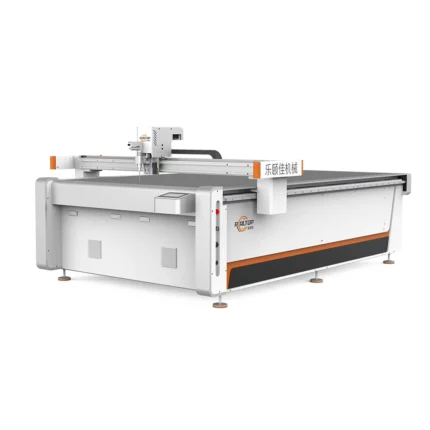
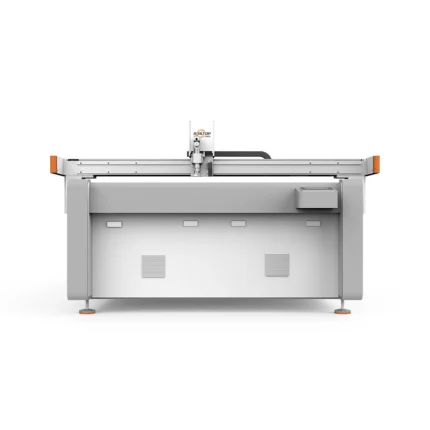
Leather CNC Oscillating Knife Cutter – Realtop1625
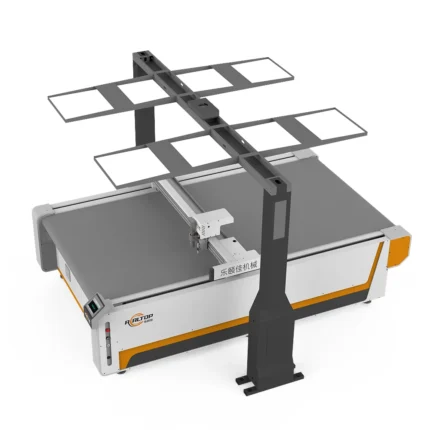
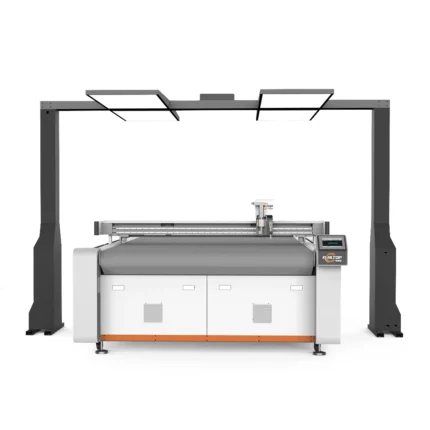
Realtop1625 Leather CNC Cutting Machine, 1600×2500mm, ≤30mm Thickness, CCD Contour Recognition — configured with interchangeable oscillating and rotary knife heads matched to leather grade and fabric density rather than a single fixed tool. Aluminum bellows vacuum table holds small contours flat across the full working area, with CCD camera tracking printed marks on patterned rolls at production speed.
Sample cutting on your own material with a written test report before order commitment, voltage and control language confirmed before shipment.
Realtop 2026 Leather CNC Oscillating Knife Cutter Camera
Product Introduction
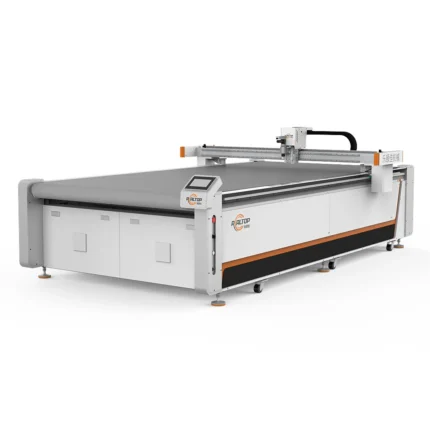
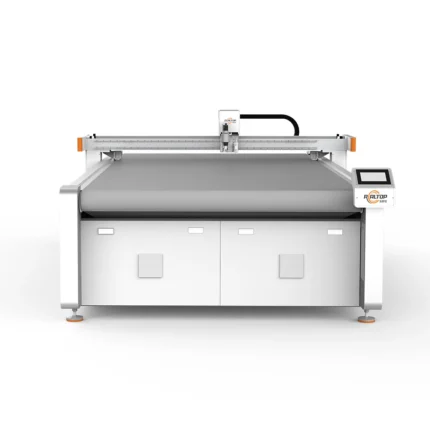
Realtop Leather CNC Oscillating Knife Cutter with Camera ¨C 2026, ideal for precision leather cutting with advanced camera positioning. Efficient and reliable for professional manufacturing needs.
Key Specifications
| Type | CNC Oscillating Knife Cutter |
| Material | Leather |
| Feature | Built-in Camera |
| Model | 2026 |
商品评价
There are no reviews yet.