







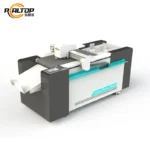

Packaging CNC Cutting Machine 1625 Automatic | Factory Direct
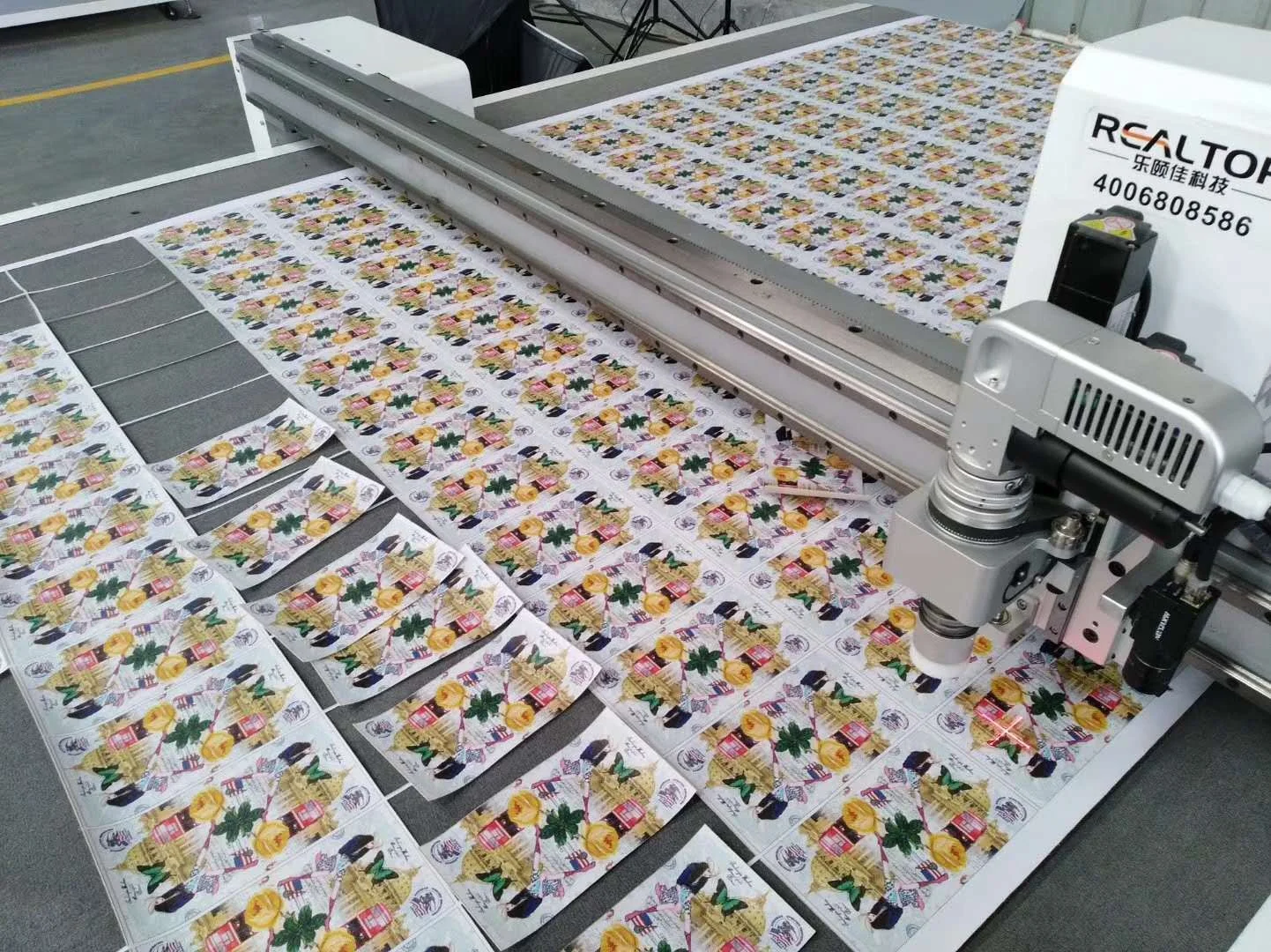
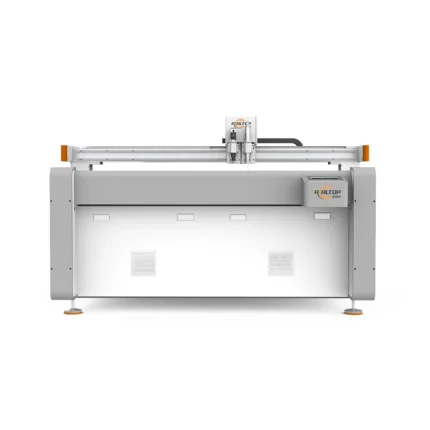
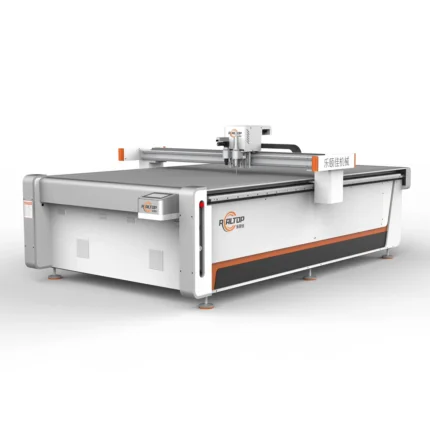
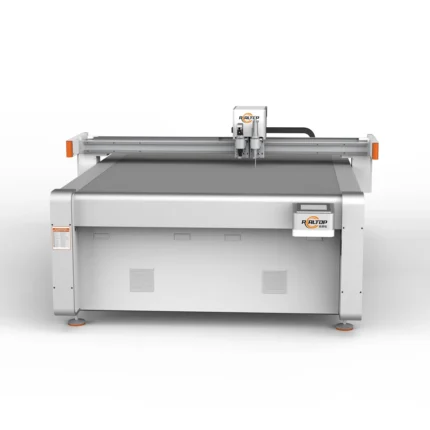
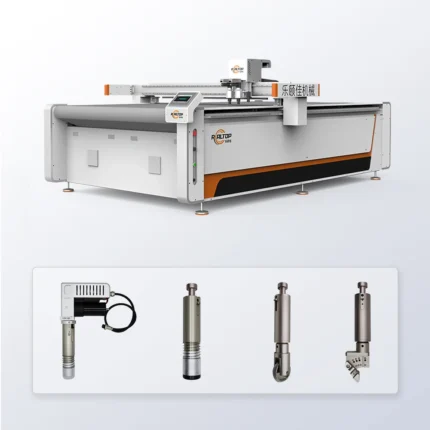
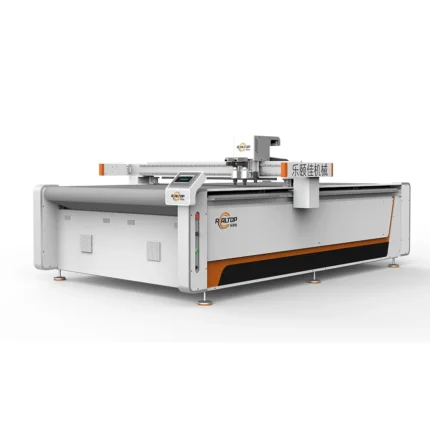
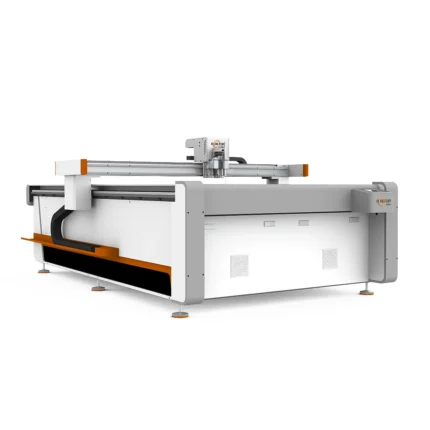
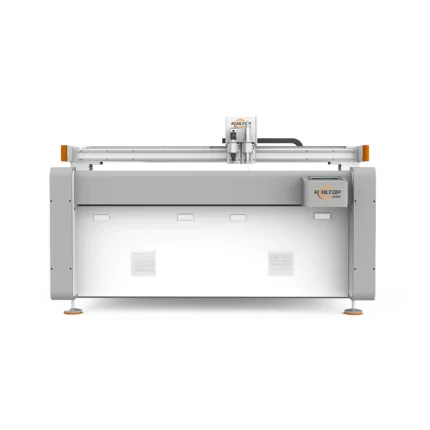
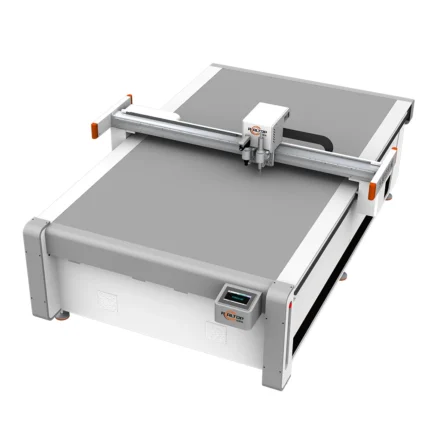
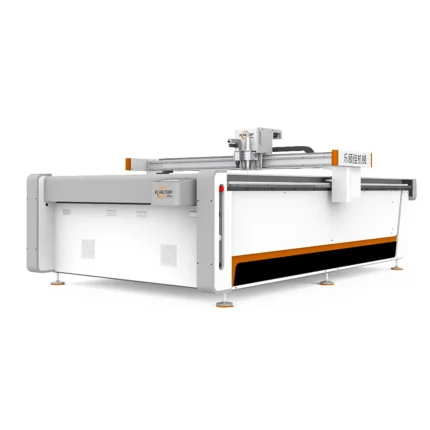
1625 CNC Oscillating Knife Cutting Machine, 1600×2500mm, PLC Control, ±0.1mm Accuracy — configured for corrugated, foam and composite packaging formats. Multi-tool head combines oscillating knife, creasing wheel and CCD camera on one carriage for complete carton sample output without manual changes. Aluminum bellows vacuum table with 9kW pump prevents lift on intricate cutouts. CO2 and fiber laser options available across our range ensure the right cutting method for each substrate. Sample cutting on your own material with full test report before commitment, voltage and software language confirmed prior to shipment.
- Cutting speed: 0–1500 mm/s
- Thickness capacity: ≤40mm
- File formats: PLT, DXF, AI, PDF
- Servo options: Panasonic, Delta, Dorna
Material-First Configuration — Knife or laser is matched to substrate density and edge requirement, avoiding forced methods that scorch corrugated or crush foam during packaging runs.
Technical Specifications
| Parameter | Value |
|---|---|
| Product Type | CNC Oscillating Knife Cutting Machine |
| Model | 1625 |
| Working Area | 1600 × 2500 mm |
| Tool Head Options | Oscillating knife, Driven rotary knife, Creasing wheel, Kiss cutting tool, Pneumatic knife, Milling tool, V groove knife, CCD camera |
| Applicable Materials | Fabric, Cardboard, Carton, Mats, PVC, EVA, Leather, Acrylic, Foam, PTFE, Rubber |
| Cutting Speed | 0–1500 mm/s |
| Cutting Thickness | ≤40 mm (basis not stated in source — confirm block format / material / thickness) |
| Cutting Accuracy | ±0.1 mm |
| Vacuum Pump Power | 9 kW |
| Vacuum Table | Aluminum bellows vacuum table |
| Control System | PLC with dedicated packaging box structure design software |
| Supported File Formats | PLT, DXF, AI, PDF |
| Servo Motor Brands Available | Panasonic, Delta, Dorna |
| Voltage Options | 110V, 220V, 380V |
| Software Language Options | English, Russian, Italian, Chinese (custom languages available) |
| Safety Devices | Infrared sensor device and emergency stop device |
| Machine Dimensions (L×W×H) | 3300 × 2100 × 1350 mm |
| Standards | CE |
Application Suitability
| Application | Material or Output |
|---|---|
| Packaging sample making and short-run carton production | Corrugated cardboard (E/B/BC-flute), greyboard, cardstock, art paper |
| Foam packaging insert cutting | EVA, EPE, PU, Coroplast cushioning profiles |
| Gasket and seal cutting | Rubber, PTFE, composite sheets for industrial enclosures |
| Leather and synthetic leather cutting | Accessories, trim, and inlaid packaging panels |
| Thin plastic sheet cutting | PVC and PET for blister packaging and retail displays |
| Fabric and non-woven cutting | Packaging lining, protective layers, and anti-scratch interleaving |
Why Promised Contour Tracking Fails at Full Cutting Speed
Registration depends on camera refresh rate relative to head travel speed, not on the presence of a CCD sensor alone.
I have watched packaging shops invest in a CNC digital cutting machine for packaging sample making after being shown a slow-speed demo, only to find the CCD loses printed marks once the oscillating knife reaches production feed rates on pre-printed corrugated. The board shifts on the table, the camera reads a lagging frame, and fifty carton blanks come off with crease lines half a millimetre out of register. [NEED_CITE: CCD camera refresh rate and motion synchronization in flatbed digital cutters]
Camera-to-Knife Synchronization on Printed Substrates
The 1625 pairs its CCD camera with the PLC motion controller so that contour data updates in real time as the carriage moves across the 1600 × 2500 mm bed. When cutting pre-printed carton or registered graphics on Coroplast, the camera captures fiducial marks ahead of the knife path, allowing the CNC digital cutting machine for packaging sample making to adjust trajectory without pausing. This matters most on short-run carton work where a single misaligned crease scrapes the entire sample batch.
Multi-Tool Carriage for Complete Carton Output
Switching between an oscillating knife for the outer contour, a creasing wheel for fold lines, and a kiss cutting tool for internal windows happens on-carriage without manual head swaps. The V groove knife handles rigid greyboard where a fold must sit at a precise angle. Running all operations in one pass keeps the board registered to the vacuum table throughout, which is where most two-pass workflows introduce drift on CNC digital cutting machine for packaging sample making jobs. [NEED_CITE: multi-tool carriage configuration for corrugated and greyboard sample making]
Vacuum Hold-Down and Small-Part Behaviour
The 9 kW pump feeds an aluminum bellows vacuum table designed to maintain suction across the full cutting area. Small packaging components — think insert dividers, corner protectors, or latch tabs on folding cartons — are the parts most likely to lift once the knife exits the cut. Zoned vacuum channels let the operator isolate suction to the active cutting region, so a small nest of gasket blanks stays flat even when surrounding table area is open to atmosphere.
What the Specification Sheet Does Not Tell You
The ±0.1 mm cutting accuracy figure is measured under controlled conditions on a flat, homogenous sheet. On double-wall BC-flute corrugated, internal air gaps compress unevenly under the knife, and actual profile tolerance depends on vacuum level, knife oscillation frequency, and whether the operator has selected a drag or oscillating mode. Cutting thickness is listed at up to 40 mm, but that ceiling varies with material density: dense EVA foam at 40 mm demands a slower feed than 3 mm art paper. Confirm the thickness rating against your specific substrate before treating it as a universal limit.
The Cost of Wrong Tooling Selection
Buyers who choose a machine on working area alone and then load 15 mm greyboard onto a drag knife table end up with crushed fibres along the cut edge and creasing wheels that skip on uneven stock. I have seen packaging sample rooms discard entire prototype runs because the knife angle was set for corrugated when the job was PU foam, leaving melted edges and delaminated layers. [NEED_CITE: oscillating versus drag knife selection for packaging substrates] Matching the tool head to the material family before the first cut prevents rework that no amount of software nesting can fix.
Why Source This Machine Here
The factory designs and builds both knife and laser cutting platforms under one roof, so the cutting method is selected by material behaviour rather than by whichever machine happens to be on the showroom floor. Each tool head and table configuration is specified against the buyer’s substrate list before production starts. CCD positioning, voltage, and control language are locked in writing before the frame goes to assembly. Sample cutting on the buyer’s own packaging board is completed and documented before the order moves forward. File format compatibility with the buyer’s existing design software is verified during the pre-order stage, removing a common cause of commissioning delays.
Documentation & Verification
- Machine specification sheet listing confirmed tool head and vacuum zoning for your material range
- Electrical schematic and voltage confirmation matching destination market frequency and plug type
- Sample cutting report on your packaging substrate with edge and crease photographs
- Factory test record documenting full-bed run on buyer-supplied material before dispatch
- Software licence and file format compatibility note covering PLT, DXF, AI, and PDF workflows
- Spare parts list identifying oscillating blades, creasing wheels, and vacuum seals by part number
Installation, Commissioning & Support
- Floor must support 3300 × 2100 mm footprint with level tolerance for the aluminum bellows vacuum table frame
- Dedicated circuit required per confirmed voltage option (110V, 220V, or 380V) with isolated grounding for PLC
- Machine ships in single-frame configuration; rigging plan needed for 1350 mm height clearance at doorway
- First-run parameter setting covers oscillation frequency, vacuum zoning, and CCD calibration on your board stock
- Operator training covers tool head changeover, PLC menu navigation in confirmed language, and nesting workflow
- Consumable spare kit includes oscillating blades and creasing wheel profiles matched to your substrate list
Before You Request a Quote
Send the specific packaging materials you cut — flute profile, board thickness, foam density — along with your largest sheet size and typical daily sample volume. Specify destination voltage and frequency, and note the design software your team currently uses so file format compatibility can be checked before CNC digital cutting machine for packaging sample making configuration is finalised. If you need a sample cut on your own stock before commitment, ship a representative panel and state the edge and crease quality standard your customer expects.
Frequently Asked Questions
Q: How is cutting thickness capacity verified per material?
A: The 40 mm figure is a general ceiling; actual capacity depends on substrate density and tool selection. Before order, the factory runs your material at proposed thickness and documents edge quality, crease integrity, and required feed rate in a sample report. This prevents assuming a single thickness limit applies across corrugated, foam, and composites equally.
Q: Which tool head suits corrugated versus foam packaging?
A: Corrugated board typically uses the oscillating knife for contour and a creasing wheel for fold lines. EVA and EPE foam inserts are cut with the oscillating knife at adjusted frequency to prevent edge melting. Composite dunnage may need the driven rotary knife. The configuration list confirms which heads are mounted for your material mix.
Q: What voltage options are available and how is compliance confirmed?
A: The system is configurable at 110V, 220V, or 380V. Before shipment, the electrical schematic and plug type are matched to your destination market standards. The PLC and servo drives are set to the confirmed voltage and frequency, and a voltage confirmation document is included in the dispatch file. [NEED_CITE: voltage and frequency standards by export market]
Q: How does the CCD camera hold registration on pre-printed packaging?
A: The camera reads fiducial marks ahead of the cutting head and feeds corrections to the PLC in real time. Registration accuracy depends on print contrast, mark size, and cutting speed. During the sample test, your printed board is run at proposed production speed to confirm the camera maintains contour lock without manual repositioning.
Q: What does the sample cutting test involve?
A: You ship a representative panel of your packaging material. The factory cuts your supplied file using the proposed tool head and vacuum settings, then returns the cut sample with a report covering edge quality, crease depth, dimensional accuracy, and observed cutting speed. Results are documented before you confirm the order.


Related products
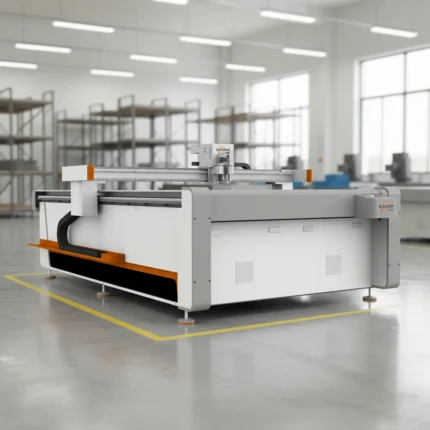
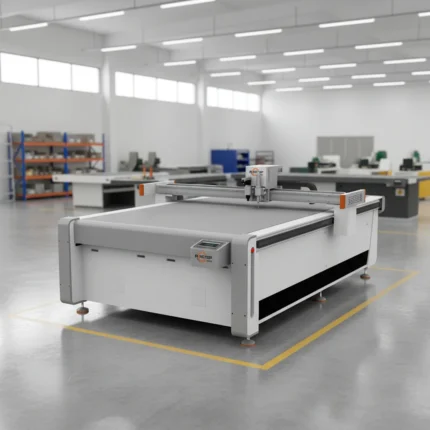
2026 Digital Flatbed Cutting Plotter Auto Corrugated Box Die Cutter
Product Introduction
Digital Flatbed Cutting Plotter 2026, ideal for auto corrugated box die cutting, offering precision and efficiency for professional packaging production.Specifications
| Type | Digital Flatbed Cutting Plotter |
| Model | 2026 |
| Application | Auto Corrugated Box Die Cutting |
| Function | Precision Cutting & Plotting |
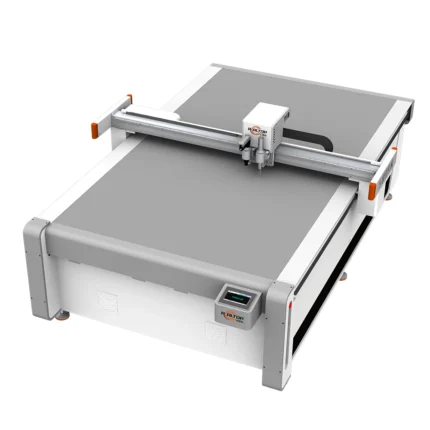
Automatic CNC Cutter Plotter 2026 Flat Bed Cardboard Cutter
Product Introduction
Automatic CNC Cutter Plotter 2026 is a flat bed cardboard cutting machine designed for precise and efficient cutting tasks. Ideal for various cardboard processing needs, it combines advanced CNC technology to deliver accurate results, suitable for manufacturing and packaging applications.Product Parameters
| Type | Automatic CNC Cutter Plotter |
| Model | 2026 |
| Design | Flat Bed |
| Application | Cardboard Cutting |
Automatic Digital Cardstock Cutter 2026 CNC Cutter
Product Introduction
Automatic Digital Cardstock Cutter 2026 is a CNC cutting machine ideal for white cardboard and kraft paper. It offers precise and efficient cutting performance, suitable for various paper processing needs in manufacturing and craft applications.Key Specifications
| Type | CNC Digital Cutting Machine |
| Material Compatibility | White Cardboard, Kraft Paper |
| Operation | Automatic |
| Application | Paper Cutting & Processing |
CNC Flatbed Cutter 2026 Digital Corrugated Box Making Machine
Product Introduction
High-precision CNC flatbed cutter designed for efficient cardboard box production. Ideal for 2026 digital corrugated box manufacturing, offering precise cutting and reliable performance for professional packaging solutions.
Key Specifications
| Type | CNC Flatbed Cutter |
| Application | Cardboard Box Production |
| Technology | 2026 Digital System |
| Material | Corrugated Board |
CNC Vibrating Knife Cutter 2026 Custom Cartons Packaging
Product Introduction
CNC Vibrating Knife Cutter 2026 is ideal for custom cartons & packaging, offering precise cutting solutions for various materials. Engineered by a leading Chinese welding & cutting equipment manufacturer, it ensures efficiency and accuracy for packaging production needs.Key Specifications
| Model | 2026 |
| Type | CNC Vibrating Knife Cutter |
| Application | Custom Cartons & Packaging |
| Manufacturer | Chinese Leading Factory |


REALTOP 2026 Digital Industrial Cardboard Box Cutter
Product Introduction
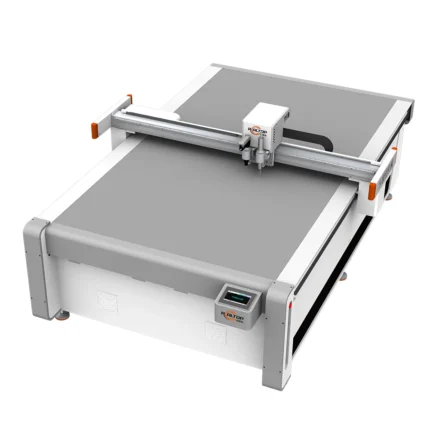
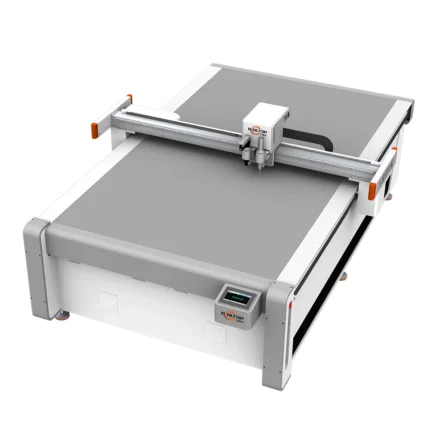
REALTOP Digital Industrial Cardboard Box Cutter Machine 2026 is a professional industrial-grade cutting equipment designed for efficient cardboard box processing, ideal for manufacturing and packaging applications.
Product Parameters
| Model | 2026 |
| Type | Digital Industrial Cardboard Box Cutter |
| Application | Cardboard Box Processing |
| Feature | Industrial-grade, Efficient Cutting |
商品评价
There are no reviews yet.