


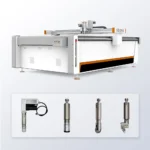
Paper Cardboard Fabric CNC Oscillating Knife Cutting Machine – Factory Supply
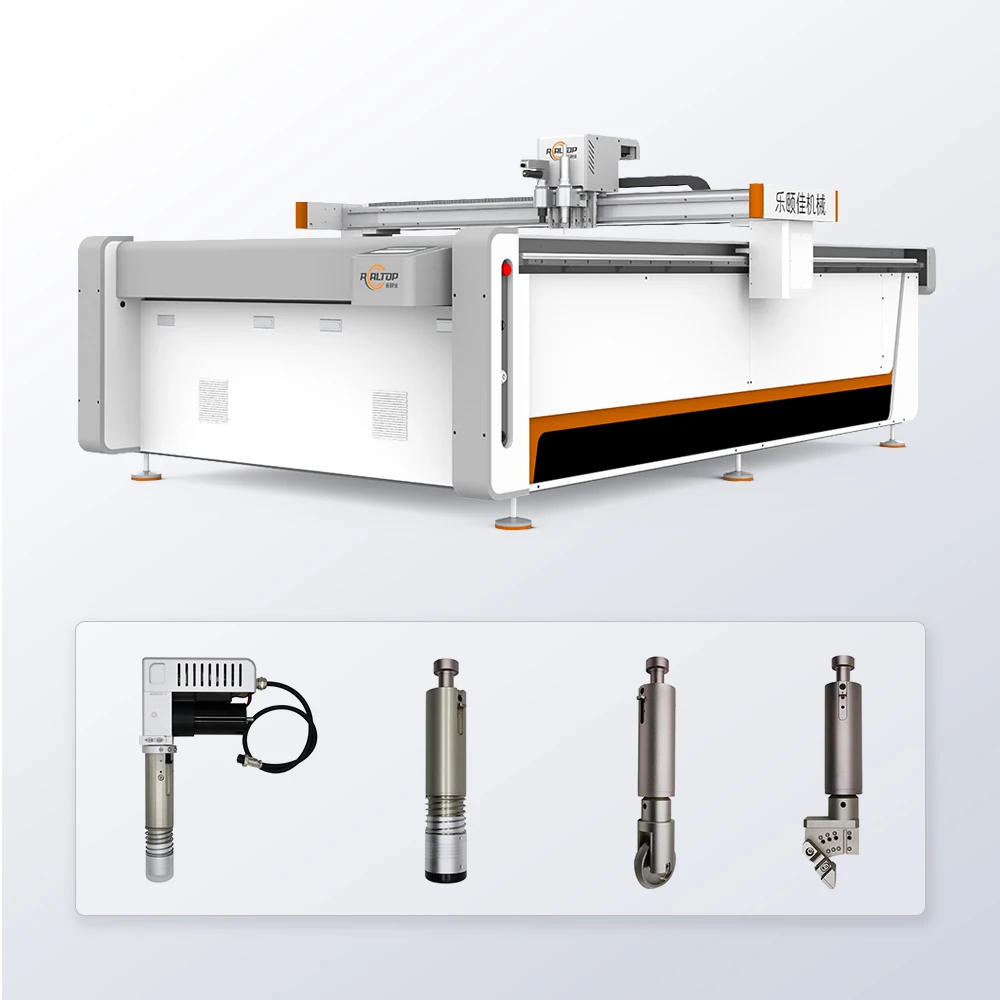
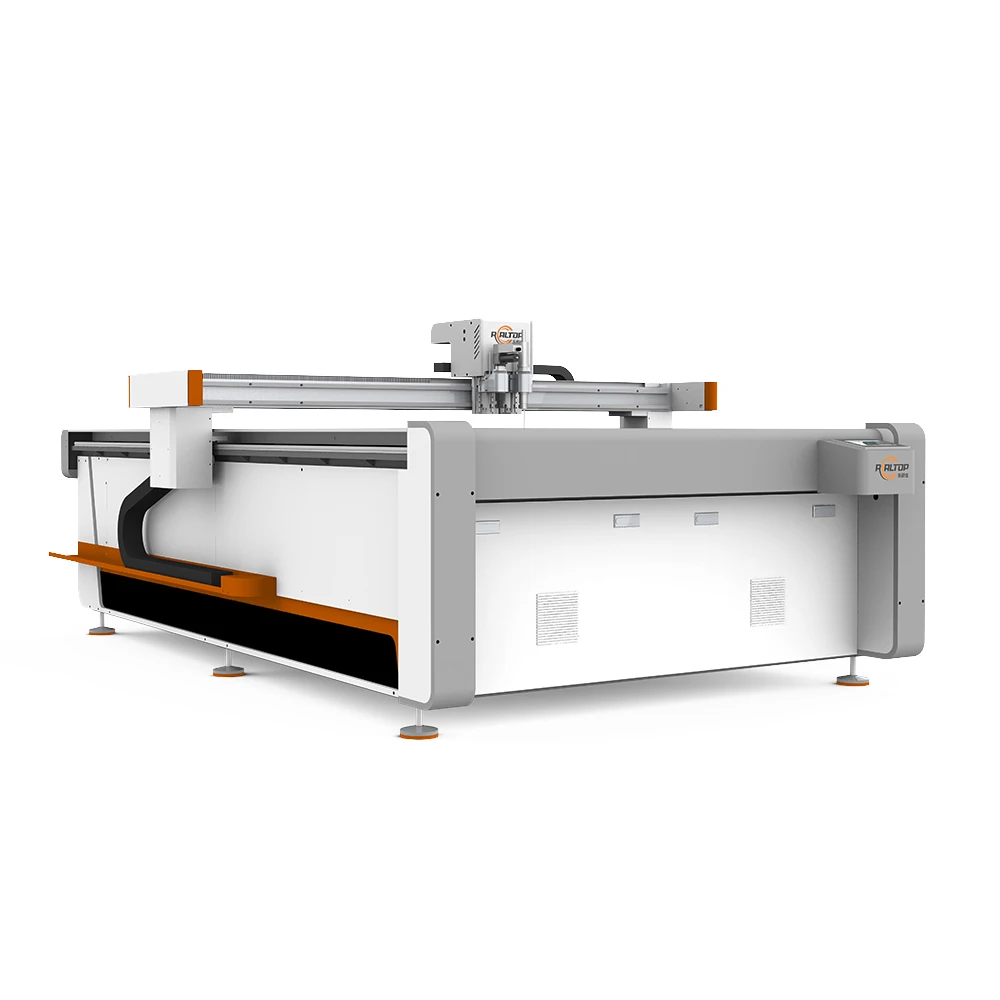
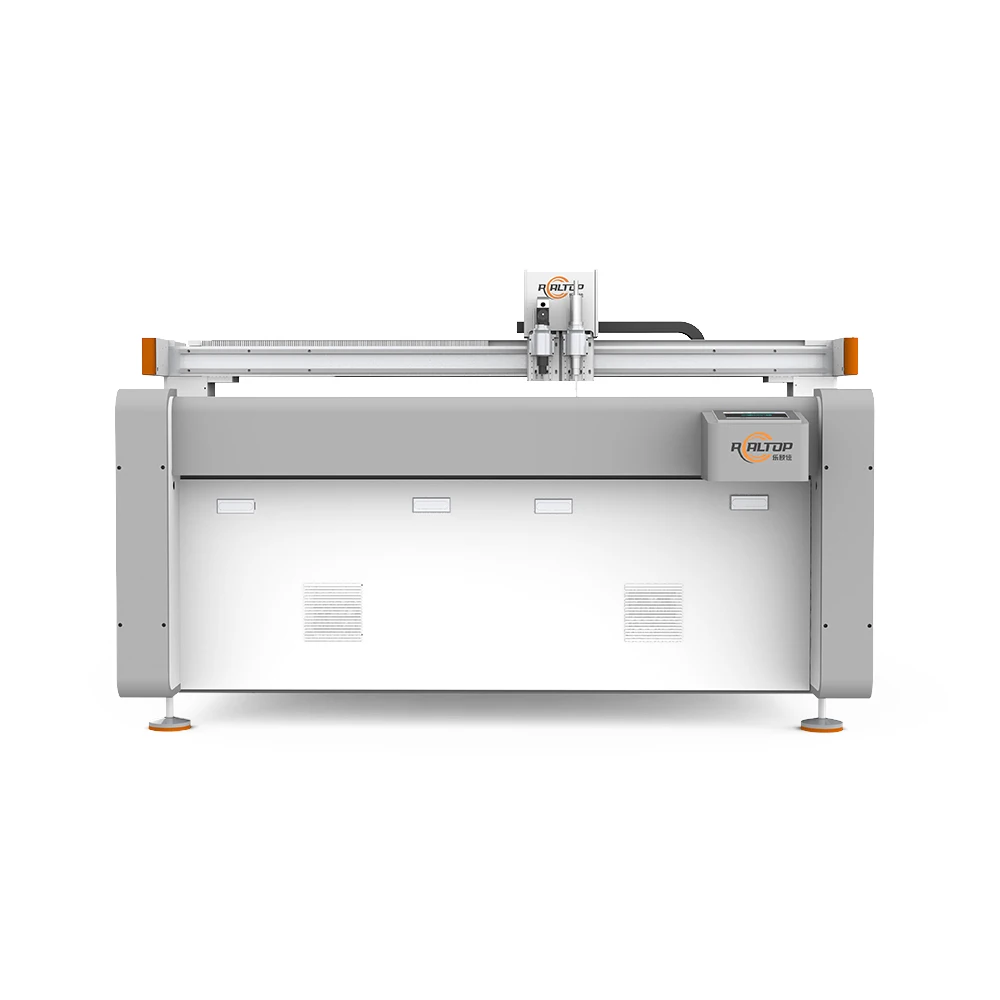
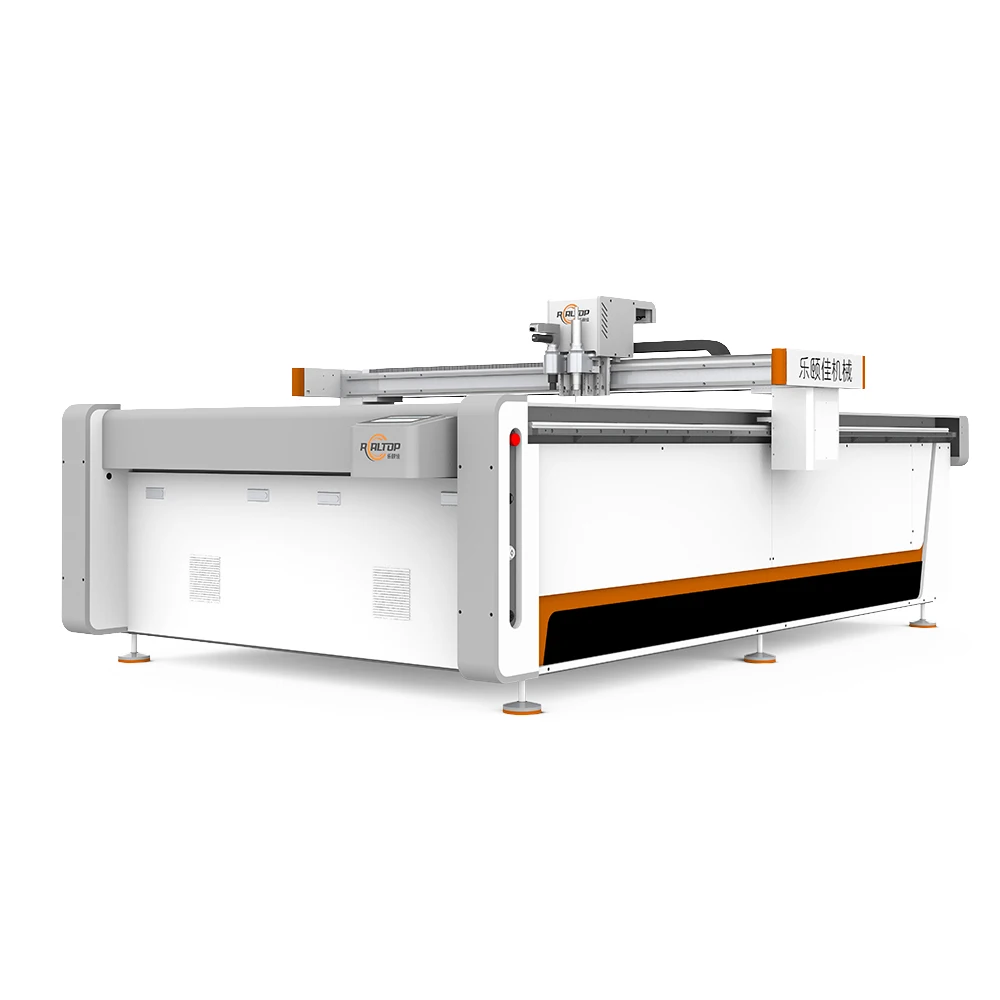
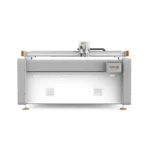
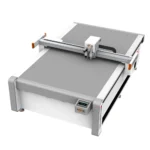
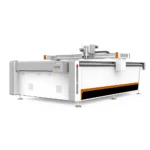
CNC Oscillating Knife Cutting Machine, 1600×2500mm Working Area, ±0.1mm Accuracy — configured for packaging and corrugated board sample making with oscillating knife, creasing wheel and kiss cutting tool options.
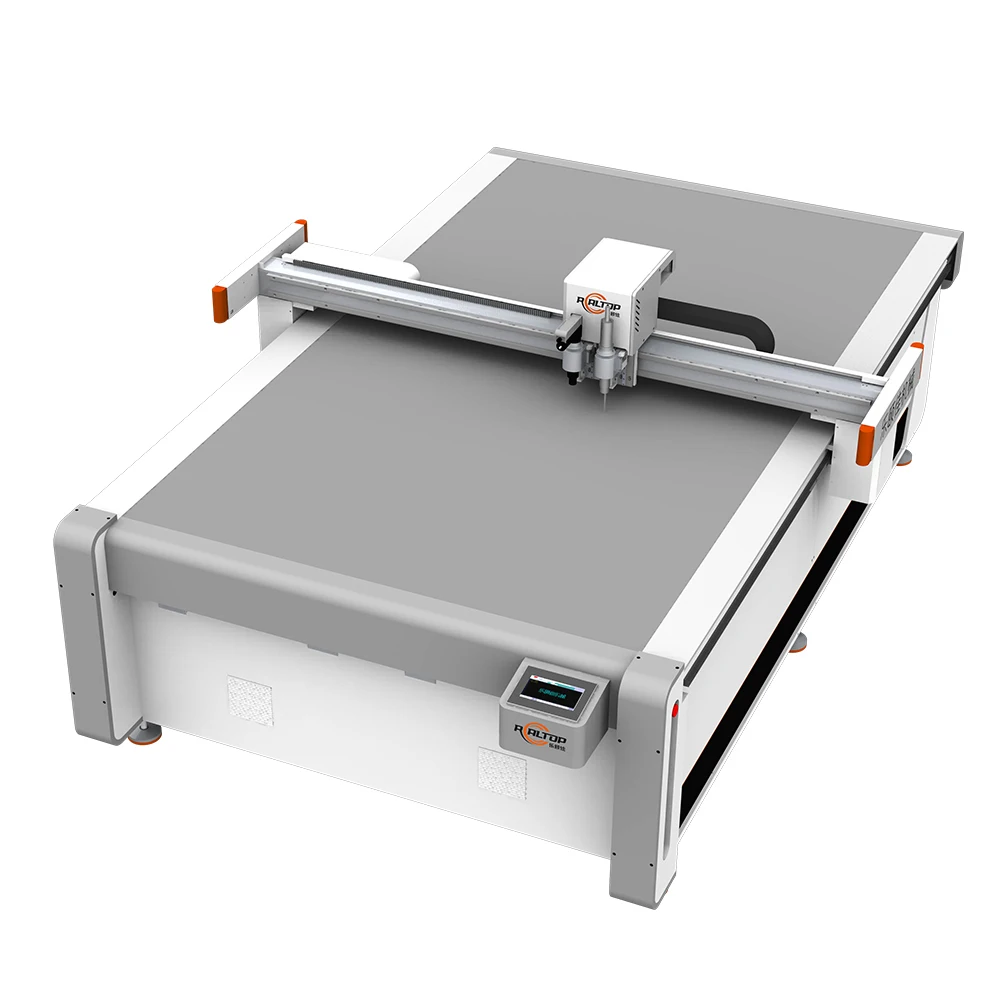
Laser cutting falls short on thick corrugated or heat-sensitive foam where cold knife processing delivers cleaner edges. This flatbed table pairs PLC control with an aluminum bellows vacuum table and dedicated packaging structure design software, accepting PLT, DXF, AI and PDF files for die-free short-run production.
- Cutting thickness up to 40mm across cardboard, EVA foam, fabric and composites
- Tool head and vacuum zoning matched to your material before shipment, with sample cutting on buyer stock to confirm edge quality
Cold cutting complement — Oscillating knife tool heads and aluminum vacuum table configured for thick corrugated board and foam where thermal laser processing would scorch edges or melt layers.
Technical Specifications
| Parameter | Value |
|---|---|
| Product Type | CNC Oscillating Knife Cutting Machine |
| Working Area | 1600 × 2500 mm |
| Cutting Thickness | ≤ 40 mm |
| Cutting Speed | 0 – 1500 mm/s |
| Cutting Accuracy | ±0.1 mm |
| Tools Available | Oscillating knife, Driven rotary knife, Creasing wheel, Kiss cutting tool, Pneumatic knife, Milling tool, V groove knife |
| Vacuum Pump | 9 kW |
| Vacuum Table | Aluminum bellows vacuum table |
| Control Panel | PLC control panel with intuitive interface |
| Software | Dedicated packaging box structure design software |
| Servo Motors | Multiple options (Panasonic, Delta, Dorna) |
| Machine Frame | Heavy-duty frame with precision-ground surface |
| Profile Format | PLT, DXF, AI, PDF |
| Voltage | 110V, 220V, 380V |
| Language Options | English, Russian, Italian, Chinese, others customizable |
| Safety Device | Infrared sensor device and emergency stop device |
| Machine Size | 3300 × 2100 × 1350 mm |
Application Suitability
| Application | Material or Output |
|---|---|
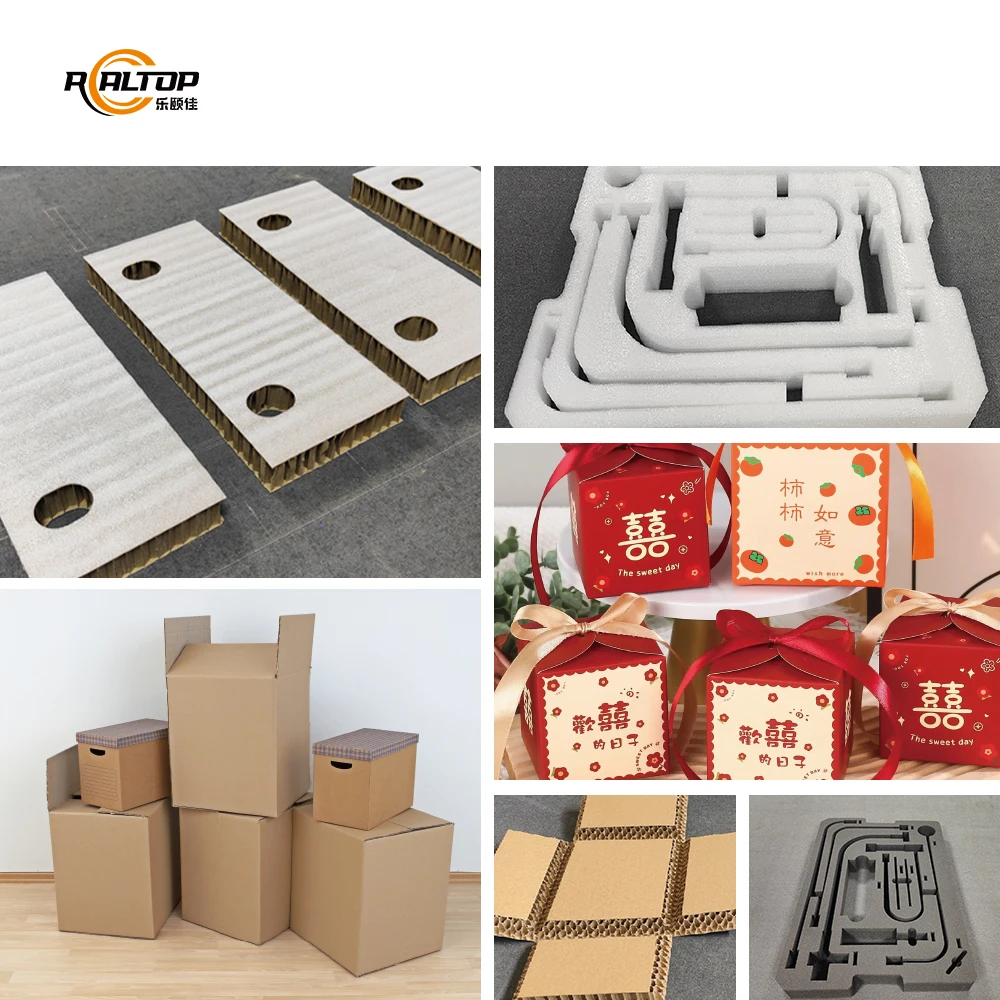
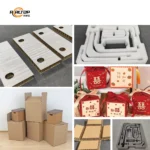
| Packaging sample making | Corrugated cardboard (E-flute, B-flute, BC-flute), greyboard, cardstock, art paper |
| Foam packaging inserts | EVA foam, EPE foam, PU foam |
| Gasket and seal fabrication | Rubber mats, PTFE sheets |
| Textile and fabric cutting | Velvet, fleece, non-woven fabric |
| Plastic sheet processing | PVC, PET |
| Leather component cutting | Genuine leather, synthetic leather |
| Automotive interior parts | Composite materials, adhesive-backed layers |
Why Laser Alone Fails on Thick Corrugated Board
A laser cutting and engraving machine handles thin acrylic and wood beautifully, but the moment a buyer switches to 5mm BC-flute corrugated board for packaging prototypes, the thermal process chars the flute edges and leaves soot deposits that compromise print quality downstream.
Cold oscillating knife cutting avoids thermal damage entirely, preserving the structural integrity and clean edge finish that packaging clients demand.
I spent years on the factory floor watching machines perform perfectly on standard greyboard during acceptance tests, only to struggle when the operator loaded real production material with printed registration marks and layered flute structures. The gap between demo conditions and daily workflow is where most capital equipment disappointments originate [NEED_CITE: common causes of CNC cutting equipment return or rejection]. When a packaging house needs both cutting and creasing on the same sheet without switching machines, the process choice matters more than the brand name on the cabinet.
Thermal Versus Mechanical Cutting Boundaries
The laser cutting and engraving machine excels at sealing synthetic fabric edges and engraving fine detail on acrylic, but mechanical oscillating knife cutting occupies a different niche entirely. Thick foam packaging inserts, multi-layer corrugated board, and adhesive-backed composites respond poorly to concentrated heat, producing melted edges or delaminated layers that fail structural tests.
The oscillating knife vibrates at high frequency to slice through fibrous and cellular materials cleanly, while the creasing wheel scores fold lines without penetrating the full sheet depth. This combination allows a single workstation to produce a finished carton sample with both cut outlines and fold creases, eliminating the secondary creasing station that a laser-only workflow would require [NEED_CITE: corrugated packaging sample making workflow requirements].
Vacuum Table Behavior on Irregular Sheets
Corrugated board is not flat in the way acrylic sheet is flat. Flute structure creates air gaps, and warped sheets from humid storage resist suction. The aluminum bellows vacuum table on this cutting platform provides full-surface adsorption across the working area, with the aluminum construction resisting the warping that cheaper composite beds develop after months of moisture exposure.
The 9 kW vacuum pump generates sufficient negative pressure to hold thin cardstock and irregular foam sheets without edge lift during high-speed knife passes. For buyers producing both rigid packaging samples and soft foam inserts, this table design covers the material range without requiring separate fixture setups for each job category.
Reading the Specification Sheet Beyond Working Area
Working area of 1600 × 2500 mm defines the maximum sheet footprint, but cutting thickness of 40 mm and cutting accuracy of ±0.1 mm determine what the machine actually does with that sheet. A thick EVA foam insert for protective packaging requires the pneumatic knife or oscillating knife at full stroke depth, while kiss cutting self-adhesive labels demands precise depth control to score the face material without cutting the release liner.
The tool head selection directly dictates material compatibility. The V groove knife produces clean bevel cuts on foam board for mitred packaging corners, while the driven rotary knife handles continuous cuts on woven textiles without fraying. PLC control with dedicated packaging box structure design software means the operator imports DXF or AI files directly, skipping the intermediate nesting software that generic CNC controllers require [NEED_CITE: CNC cutting software compatibility with packaging design formats].
The Cost of Skipping the Material Trial
I once watched a logistics coordinator sign off on a shipment because the acceptance test used standard greyboard, and the buyer’s actual 3mm flute corrugated stock arrived at the destination facility only to lift off the table mid-cut. The vacuum zoning was insufficient for small nested parts, and the entire first production run became waste.
Selecting tool head and vacuum configuration based on material type and thickness before the machine leaves the factory prevents this scenario. A sample cutting report on the buyer’s own stock confirms edge quality, holds dimension, and vacuum adhesion under real conditions [NEED_CITE: importance of material-specific cutting trials before equipment dispatch].
Why This Source Fits the Packaging Cutting Requirement
In-house design and production covering both knife and laser cutting technologies means the buyer receives a process recommendation based on material suitability rather than a single-technology sales pitch. The oscillating knife platform sits alongside the laser range, so the supplier can direct packaging buyers toward cold cutting and signage buyers toward thermal processing without forcing one machine to cover both jobs.
Tool head and table configuration is specified per material and production volume, not offered as a fixed catalog item. Software compatibility is confirmed before order placement, ensuring the buyer’s existing PLT or PDF design files import correctly. Voltage, plug type, and control language are locked in before shipment rather than adjusted on arrival. Sample cutting on the buyer’s own material runs before commitment, providing documented evidence that the configuration handles the actual production stock.
Documentation & Verification
- Machine specification sheet listing selected tool head combination and vacuum table zoning layout
- Electrical schematic and voltage confirmation matching destination country frequency and phase
- Sample cutting report on buyer’s own corrugated or foam material with measured edge quality
- Factory test record documenting cutting accuracy and vacuum hold-down under production speed
- Software licence documentation with confirmed file format compatibility note
- Spare parts list with recommended consumable tool heads for first-year operation
Installation, Commissioning & Support
- Heavy-duty frame requires level concrete floor with clearance for 3300 × 2100 mm footprint and material infeed
- 9 kW vacuum pump plus servo motors require dedicated circuit matching confirmed voltage (110V / 220V / 380V)
- Machine ships partially assembled with tool heads and vacuum table calibrated at factory before packing
- First-day commissioning includes PLC parameter setting for buyer’s primary material thickness and cutting speed
- Operator training covers tool head changeover between oscillating knife, creasing wheel, and kiss cutting tool
- Infrared sensor device and emergency stop device tested during commissioning and documented
Sending the Right Inquiry
Provide the material type, flute structure or foam density, maximum sheet size, and daily sample or short-run volume. Specify destination voltage and frequency, preferred control language, and whether existing packaging design files use DXF, AI, or PDF format. State whether sample cutting on your own stock is required before order confirmation.
Frequently Asked Questions
Q: How does oscillating knife cutting compare to CO2 laser for corrugated packaging board?
A: CO2 laser cuts thin materials quickly and seals synthetic edges, but thick corrugated board chars under thermal processing, leaving soot on flute edges. Oscillating knife cutting produces clean mechanical cuts without heat, preserving board structure and accepting print and glue without surface cleaning. The two methods complement each other across different material ranges.
Q: Which tool head handles EVA foam packaging inserts?
A: The oscillating knife cuts EVA and EPE foam up to 40 mm thickness with clean edges, while the V groove knife produces bevelled cuts for mitred corners on foam board. The driven rotary knife is reserved for continuous textile cuts. Tool head selection should be confirmed against the buyer’s specific foam density and thickness before order.
Q: Can the software import my existing packaging structure design files?
A: The dedicated packaging box structure design software accepts PLT, DXF, AI, and PDF profile formats. File format compatibility is confirmed before order placement, and the buyer’s nesting workflow is reviewed to ensure smooth integration with existing design output without intermediate conversion steps.
Q: How is voltage and language configured for different export markets?
A: Voltage is available at 110V, 220V, or 380V, and control language options include English, Russian, Italian, and Chinese, with special languages customizable. Voltage, plug type, and interface language are confirmed before shipment to avoid on-site rewiring or reconfiguration delays.
Q: What does the sample cutting trial before commitment involve?
A: The buyer sends representative material stock to the factory, and the configured machine runs cutting and creasing tests under production speed. A sample cutting report documents edge quality, dimensional accuracy, and vacuum hold-down performance, allowing the buyer to verify suitability before final order confirmation.


Related products
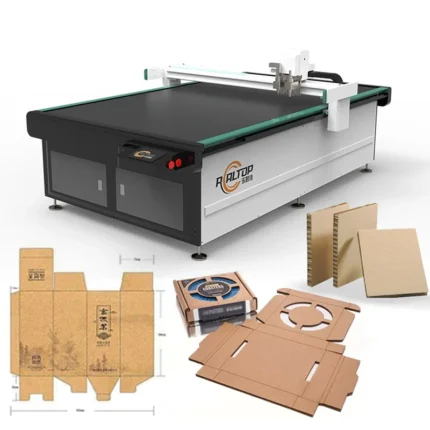
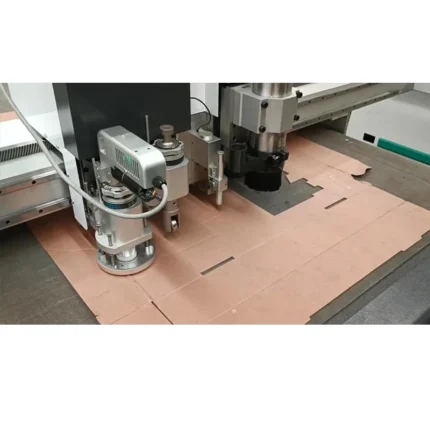
Automation CNC Pizza Box Machine 2026 Rotary Die Cutting
Product Parameters
| Type | Automation CNC Pizza Box Machine |
| Model Year | 2026 |
| Cutting Technology | Rotary Die Cutting |
| Operation | Automated CNC Control |
Introduction
This 2026 Automation CNC Pizza Box Machine features advanced rotary die cutting technology, ensuring precise and efficient pizza box production. With automated CNC control, it offers high productivity and accuracy for professional manufacturing needs.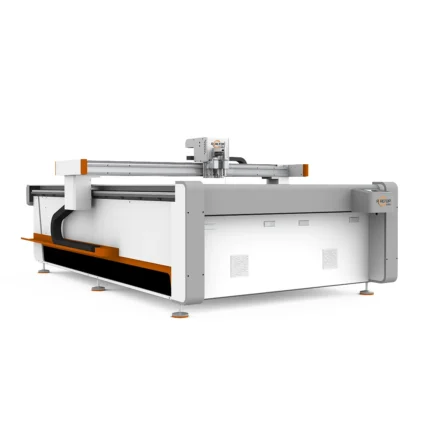



Digital CNC Cardboard Cutting Machine 2026
Product Introduction
High-precision Digital CNC Cardboard Cutting Machine 2026, ideal for efficient cardboard processing with advanced CNC technology, ensuring precise and fast cutting performance for various packaging and craft applications.
Key Specifications
| Model | 2026 |
| Type | Digital CNC Cutting Machine |
| Material | Cardboard |
| Feature | High Precision, Efficient Cutting |

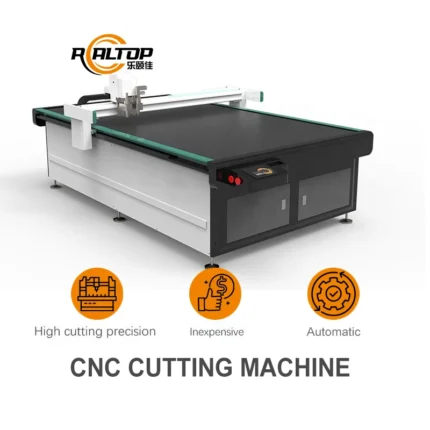
Realtop 2026 CNC Oscillating V-Cut Machine
Product Introduction
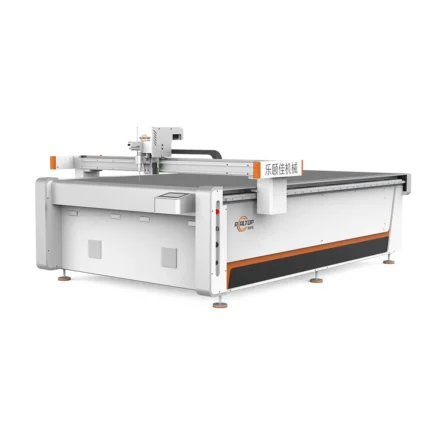
Realtop CNC Oscillating V-Cut Machine 2026 is a precision equipment designed for efficient V-cutting operations, ideal for various material processing needs with advanced CNC technology.
Key Specifications
| Model | Realtop CNC Oscillating V-Cut Machine 2026 |
| Type | CNC Oscillating V-Cut Machine |
| Application | Precision V-cutting operations |
| Feature | Advanced CNC technology |
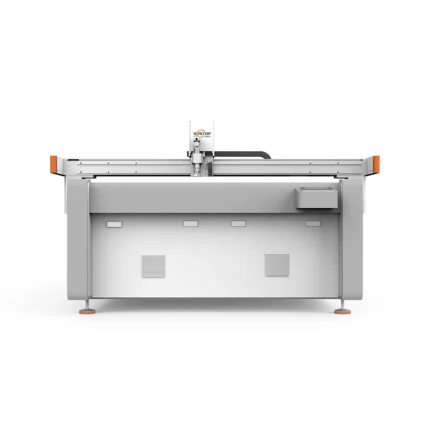
Realtop 2026 Digital Box Cutter High-Speed Corrugated Board
Product Introduction
Realtop Digital Box Cutting Machine 2026 is a high-speed solution for corrugated board cutting, designed for efficient and precise box production in manufacturing settings.Key Specifications
| Model | 2026 |
| Type | Digital Box Cutting Machine |
| Application | Corrugated Board |
| Feature | High-Speed Cutting |

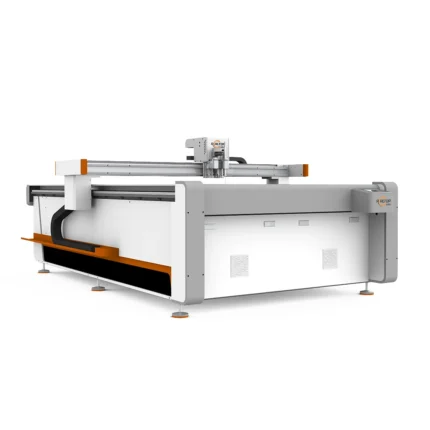
Realtop CNC Carton Box Cutter 2026 CCD Camera Honeycomb Cutting
Product Introduction
Realtop CNC Carton Box Cutter 2026 is a professional cutting solution featuring CCD Camera and Honeycomb Cutting technology, ideal for precise carton box processing with efficient performance.Product Parameters
| Model | Realtop CNC Carton Box Cutter 2026 |
| Vision System | CCD Camera |
| Cutting Technology | Honeycomb Cutting |
商品评价
There are no reviews yet.