








Realtop-2516 CNC Flatbed Cutter for Packaging – Manufacturer
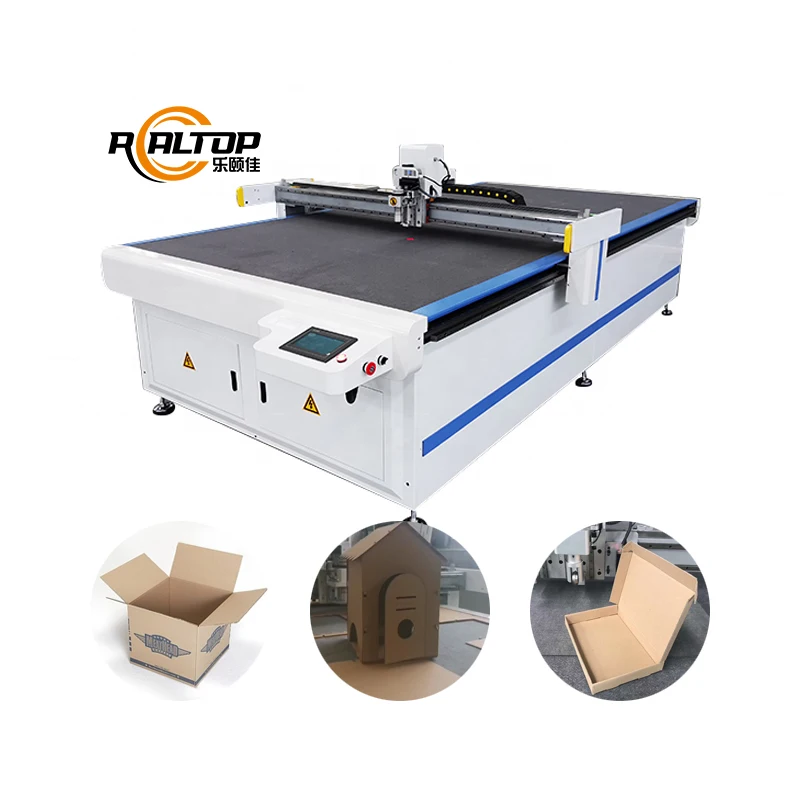
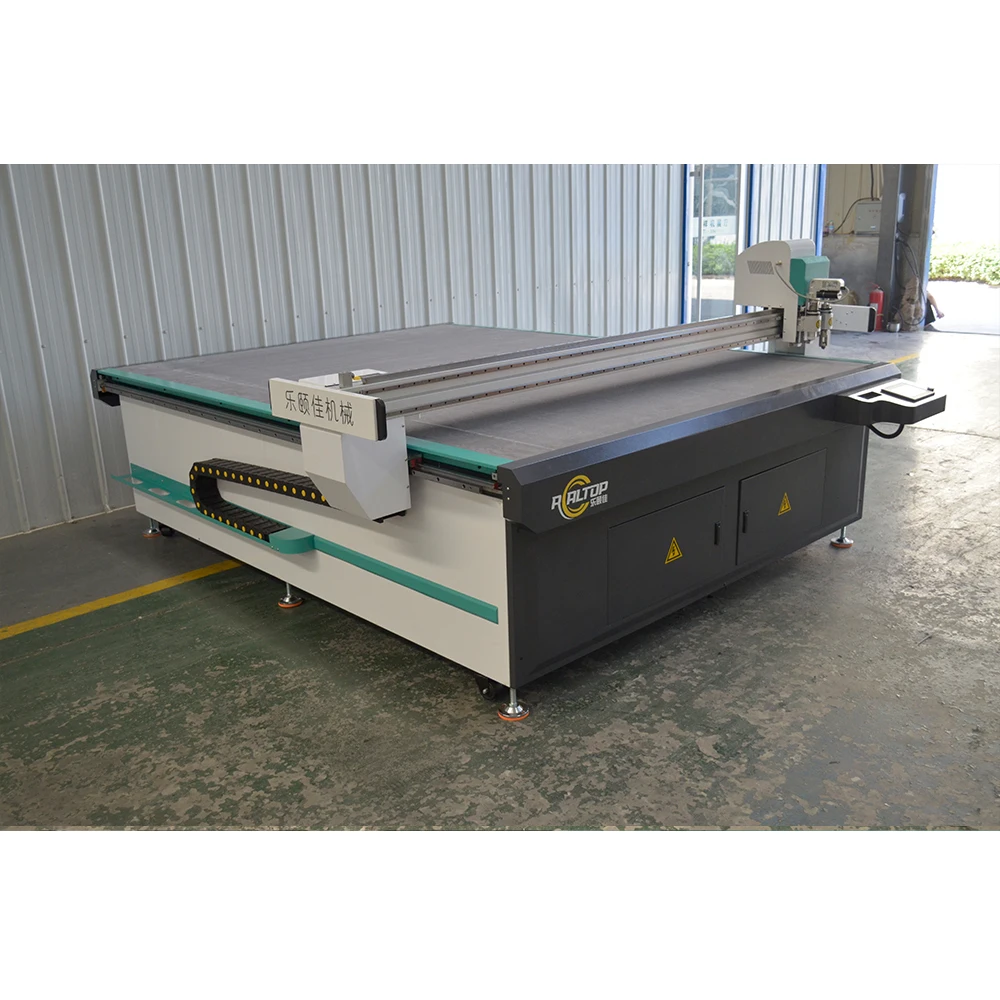
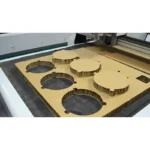
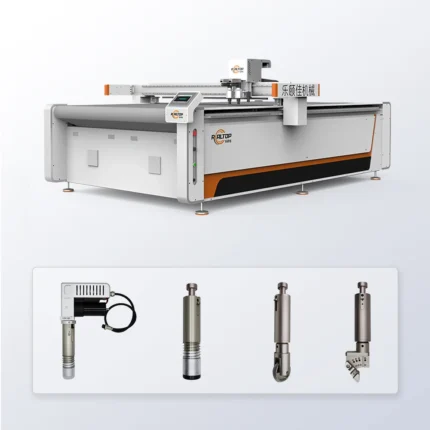
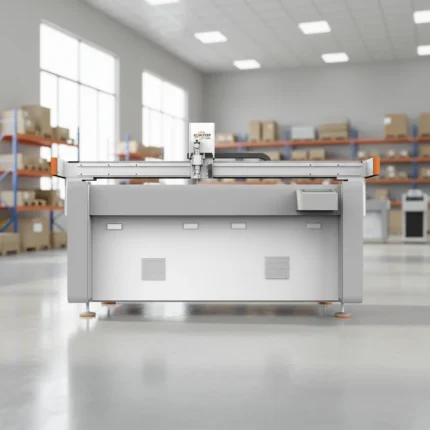
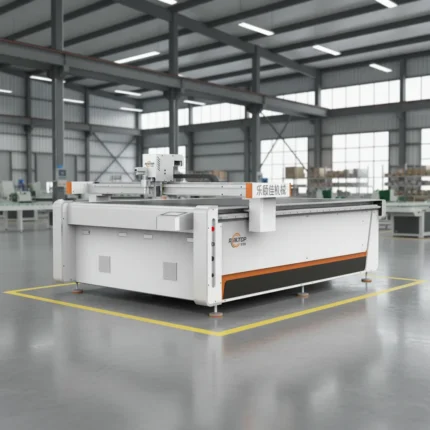
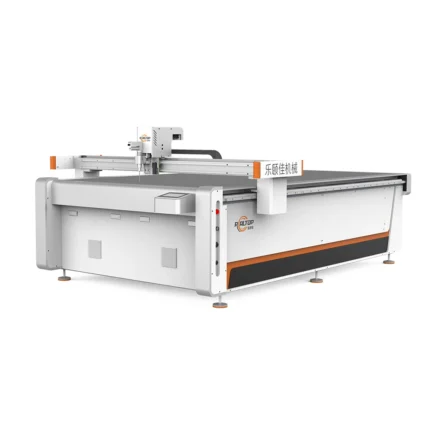
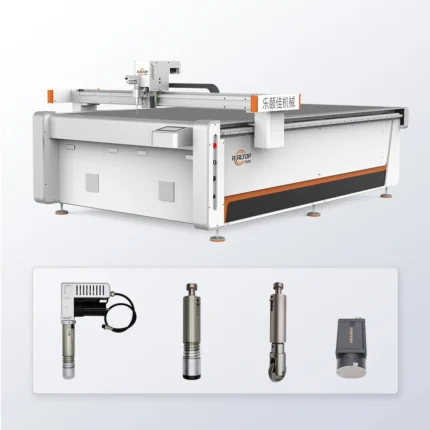
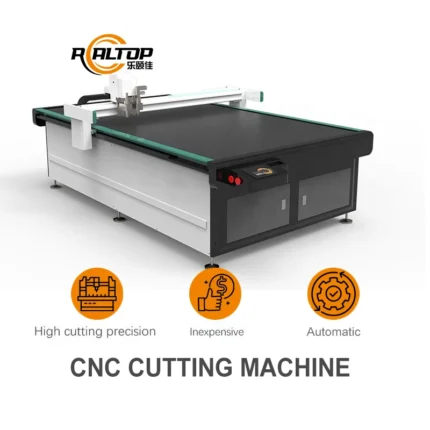
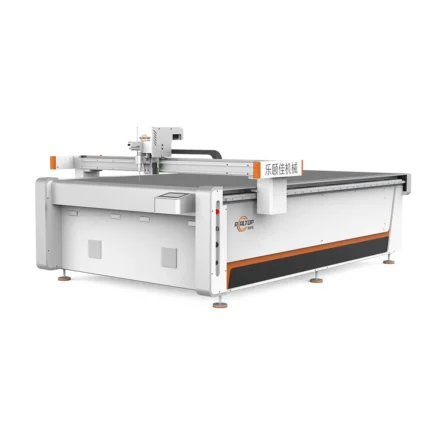
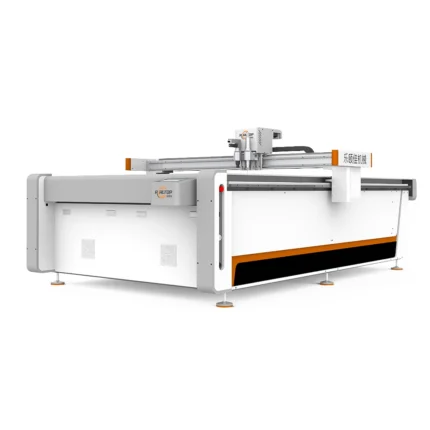
RT–R2513 / RT-D2516 / RT-S2516 CNC Oscillating Knife Flatbed Cutting Machine, 2500×1600mm, 9KW, 380V — configured for packaging and carton sample production with oscillating knife, creasing tool and kiss-cut knife in a single work cycle.
- Aluminum alloy honeycomb vacuum table with zoned adsorption holds small sticker and label parts flat without lift during high-speed cutting
- Rack-and-pinion drive on imported linear square guides delivers <0.05mm repeatability across long corrugated board production runs
- DXF/PLT/PDF/AI file import with customizable software language confirmed before shipment
Sample cutting on your own packaging material verifies edge quality and creasing accuracy before order commitment.
In-house Knife and Laser Process Coverage — We match the cutting method to the material, not the other way around, and this flatbed cutter is configured per packaging substrate and daily run volume before it leaves the factory.
Technical Specifications
| Parameter | Value |
|---|---|
| Product Type | CNC Oscillating Knife Flatbed Cutting Machine |
| Model | RT–R2513 / RT-D2516 / RT-S2516 |
| Working Area | 2500×1300 mm (RT–R2513) / 2500×1600 mm (RT-D2516 / RT-S2516) |
| Machine Size | 3550×1910×1400 mm (RT–R2513) / 3450×2300×1250 mm (RT-D2516 / RT-S2516) |
| Cutting Tools | Oscillating knife, Creasing tool, Kiss-Cut Knife Tool, Round punch |
| Cutting Thickness | Up to 18 mm (basis not stated in source — confirm material type and density) |
| Fixing Method | Vacuum adsorption with aluminum alloy honeycomb platform |
| Vacuum Pump | 7.5 kW (configuration option) |
| Rated Power | 9 kW |
| Voltage | 380V (customizable) |
| Drive System | Rack transmission with imported straight-line square guide |
| Servo Motor | Dongling servo (Delta servo motor available as option) |
| Linear Guide | Taiwan Hiwin rail (configuration option) |
| Repeated Accuracy | <0.05 mm |
| Transmission Method | Ethernet port |
| Profile Format | DXF, PLT, PDF, AI |
| Safety Device | Infrared sensors, emergency stop devices |
| Conveyor Belt | Germany imported (configuration option) |
| Auto Feeding | Available (configuration option) |
| Key Features | Professional carton cutting software with language customization, 10 free oscillating blades, CE declaration where applicable |
| Assembly State | Fully assembled at factory |
| Warranty | 1 year (excluding felt and knife blades) |
| Delivery Time | Under 30 working days |
Application Suitability
| Application | Material or Output |
|---|---|
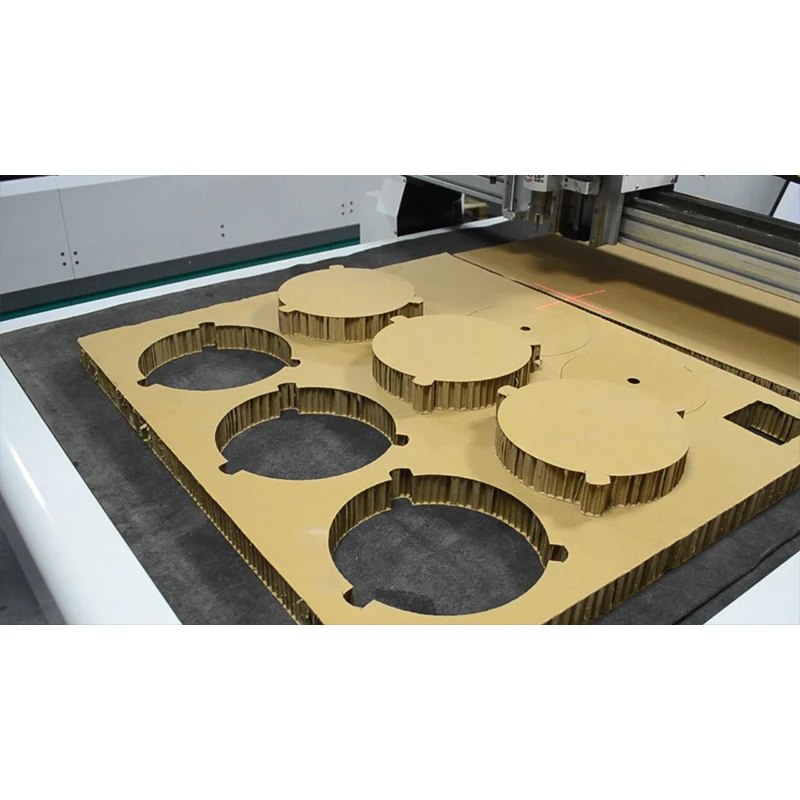
| Short-run carton prototyping | Corrugated board, greyboard, and card stock without physical dies |
| Sticker and label contour cutting | Self-adhesive vinyl and printed label stock |
| Express and e-commerce packaging | Single and double-wall corrugated cardboard at volume |
| Paperboard display and signage | Honeycomb board and PP corrugated sheet |
| Gift box sample production | Coated and uncoated card stock with crease lines |
What "Cutting Depth 18 mm" Actually Depends On
The stated thickness figure is a starting point, not a guarantee — real cutting capacity depends entirely on material density, moisture content, and the tool head selected for the job.
Many packaging buyers quote a working area and assume any material under the maximum thickness will cut cleanly. On double-wall corrugated, an oscillating knife at full depth behaves very differently than it does on 300 gsm white card. The laser cutting and engraving machine manufacturer you are talking to should be asking what you are actually cutting before confirming the tool head, vacuum zoning, and blade type. A mismatch here means ragged edges on foam board or crushed flutes on corrugated stock — both problems that show up on day one of production [NEED_CITE: material density and cutting depth correlation in digital flatbed cutting].
How Laser and Knife Processes Differ on Packaging Substrates
A laser cutting and engraving machine manufacturer typically recommends CO2 laser for acrylic, wood, and textiles — materials where the thermal edge seal is an advantage. On cardboard and corrugated packaging, that same thermal process burns the cut edge, produces smoke, and slows throughput. Oscillating knife cutting leaves a clean mechanical edge with zero burning and handles creasing, kiss-cutting, and punching in the same work cycle. The laser cutting and engraving machine manufacturer perspective here is honest: for non-metal packaging work, knife cutting is the right process, and forcing a laser onto cardboard creates problems that no software patch can fix.
The Tool Head Configuration That Actually Matters
A single oscillating knife handles straight cuts on corrugated and solid board, but packaging sample making requires more than cutting. The creasing wheel scores fold lines without breaking the surface fibers. The kiss-cut knife slices through sticker face stock without cutting the backing paper — essential for label converters running mixed sheets. The round punch handles ventilation holes and hanging slots on retail packaging [NEED_CITE: tool head selection for corrugated and self-adhesive packaging materials]. All four tools work in one machine cycle, so a sample maker can produce a finished, folded, and slotted carton prototype from a single DXF file without changing setups or moving the sheet between stations.
Reading the Specs That Affect Daily Output
The rack-and-pinion drive paired with imported linear square guides delivers repeatable positioning within 0.05 mm across the full 2500×1600 mm working area, which matters when a single carton layout contains dozens of crease and cut lines that must register precisely. The 9 kW rated power covers the servo drive, oscillating head, and vacuum pump running simultaneously. The aluminum honeycomb vacuum table provides zoned adsorption — critical when cutting small sticker or label parts that tend to lift and catch the blade mid-pass. The 380V supply must be confirmed against the buyer’s local electrical standard before the machine ships, because a voltage mismatch on arrival means weeks of downtime while a transformer is sourced. Professional carton nesting software imports DXF, PLT, PDF, and AI files directly, reducing the gap between a designer’s artwork and the cut sheet on the table.
The Cost of Skipping the Material Test
When a buyer specifies a machine based on working area alone without testing their actual material, the consequences appear fast. Wrong vacuum zoning on small parts causes lift, the blade catches, and you go through oscillating blades at an unsustainable rate. A creasing tool set to the wrong pressure crushes corrugated flutes instead of scoring a clean fold line. Software that cannot import the buyer’s nesting workflow forces operators to rebuild every layout from scratch, adding hours to each sample run [NEED_CITE: vacuum table zoning and small-part cutting failures in packaging production]. These are not theoretical problems — they are the reason sample cutting on the buyer’s own material before commitment is a standard step, not an optional extra.
What a Knife-and-Laser Manufacturer Brings to the Table
Realtop designs and builds both knife and laser cutting systems in-house, which means the cutting method recommendation comes from a factory that operates both technologies rather than a reseller pushing one platform. The tool head and table configuration for this flatbed cutter is specified per material and production volume, not sold as a standard package. Software compatibility with the buyer’s existing DXF and AI workflow is confirmed before the order is placed, preventing format conversion headaches after delivery. Voltage, plug type, and control panel language are documented in writing before shipment — not discovered on the day the container opens. Sample cutting on the buyer’s own material produces a report with edge quality, cutting depth, and creasing accuracy documented before any financial commitment is made.
Documentation & Verification
- Machine specification sheet listing confirmed tool heads and vacuum table zones for your material
- Electrical schematic with voltage and frequency matching your facility supply
- Sample cutting report produced on your actual corrugated or sticker stock before order
- Factory test record with cutting video on your specified material thickness
- Software licence and file format compatibility note confirming your DXF and AI import workflow
- Spare parts list with oscillating blade and felt consumable part numbers
Installation, Commissioning & Support
- 9 kW rated power requires a dedicated 380V circuit with confirmed frequency before arrival
- Machine footprint up to 3550×2300 mm — verify floor space and overhead clearance for your workshop
- Fully assembled at factory; positioning and vacuum pump connection are primary on-site tasks
- First-run parameter tuning on your corrugated board and sticker stock during commissioning
- Operator training covering creasing wheel pressure, knife depth, and vacuum zoning adjustments
- 10 free oscillating blades included; consumable blade and felt ordering process covered in manual
Before You Request a Quote
Provide the material types you cut most often — corrugated flute profile, greyboard thickness, sticker face stock — along with your typical sheet size and daily volume. Confirm your workshop voltage and frequency so the electrical system is built correctly from the start. If you already use carton nesting software, share a sample file so format compatibility is checked before the machine is configured.
Frequently Asked Questions
Q: Should I use a laser or an oscillating knife for cardboard and packaging samples?
A: Laser cutting burns cardboard edges and produces smoke extraction demands. Oscillating knife cutting leaves a clean mechanical edge, handles creasing and kiss-cutting in the same cycle, and runs faster on corrugated stock. For non-metal packaging materials, knife cutting is typically the right process choice.
Q: How do I confirm the correct tool head for my material?
A: Share your material type, thickness, and whether you need creasing or kiss-cutting. We run a sample test on your actual stock and provide a report showing edge quality, cutting depth, and crease accuracy before any order is confirmed.
Q: What voltage and software customizations are confirmed before shipment?
A: Voltage, plug type, frequency, and control panel language are documented and agreed in writing before production. Software file format compatibility with your existing DXF, PLT, PDF, or AI workflow is verified with sample imports before the machine ships.
Q: How does the vacuum table handle small sticker and label parts?
A: The aluminum honeycomb table uses zoned adsorption so the vacuum follows the active cutting area. Small parts stay flat without lifting into the blade path, reducing blade breakage and preventing material waste on intricate label contours.
Q: What does the sample cutting process involve before I commit?
A: You send your material or we source a representative sample. We cut it on the configured machine with your specified tool heads, then deliver a report covering cut edge quality, creasing accuracy, and achievable speed so you know exactly what the machine will do on your production floor.


Related products
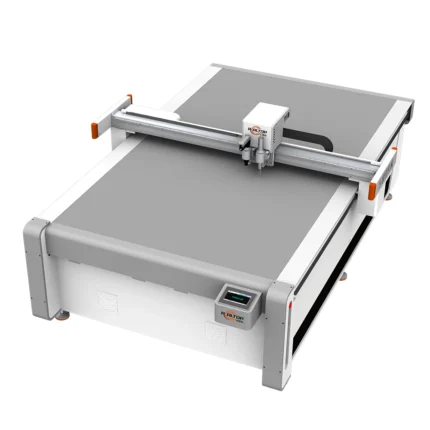
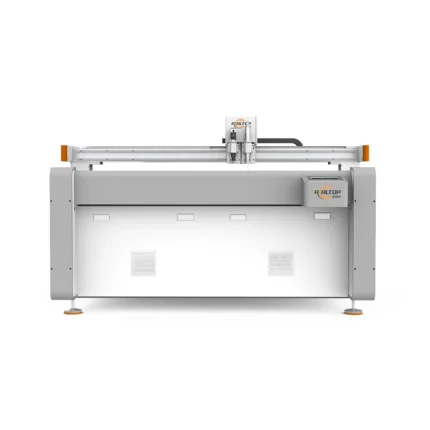
Automatic CNC Cutter Plotter 2026 Flat Bed Cardboard Cutter
Product Introduction
Automatic CNC Cutter Plotter 2026 is a flat bed cardboard cutting machine designed for precise and efficient cutting tasks. Ideal for various cardboard processing needs, it combines advanced CNC technology to deliver accurate results, suitable for manufacturing and packaging applications.Product Parameters
| Type | Automatic CNC Cutter Plotter |
| Model | 2026 |
| Design | Flat Bed |
| Application | Cardboard Cutting |
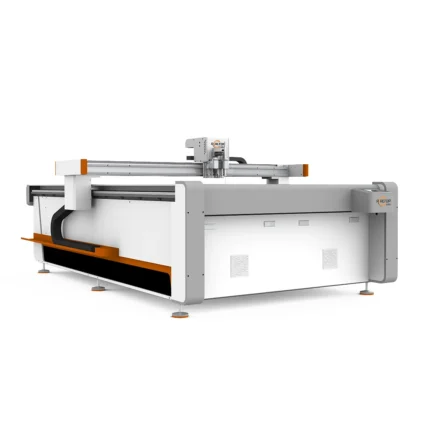
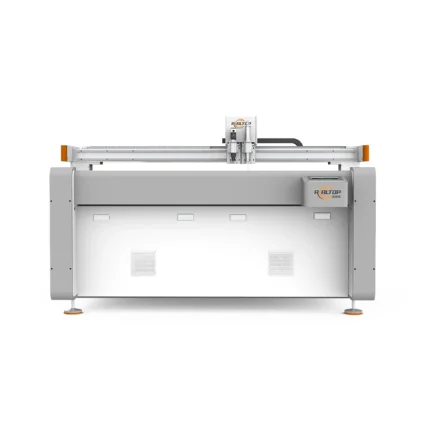
Digital Box Cutter 2026 Oscillating Knife Cardboard Cutter
Product Parameters
| Model | Digital Box Cutter 2026 |
| Cutting Type | Oscillating Knife |
| Material | Corrugated Cardboard |
Introduction
Professional oscillating knife cutting machine for corrugated cardboard. Ideal for precise, efficient cutting in packaging production. Reliable performance from China's leading welding & cutting equipment manufacturer.

Realtop 2026 CNC Oscillating V-Cut Machine
Product Introduction
Realtop CNC Oscillating V-Cut Machine 2026 is a precision equipment designed for efficient V-cutting operations, ideal for various material processing needs with advanced CNC technology.
Key Specifications
| Model | Realtop CNC Oscillating V-Cut Machine 2026 |
| Type | CNC Oscillating V-Cut Machine |
| Application | Precision V-cutting operations |
| Feature | Advanced CNC technology |
Realtop 2026 Digital Box Cutter High-Speed Corrugated Board
Product Introduction
Realtop Digital Box Cutting Machine 2026 is a high-speed solution for corrugated board cutting, designed for efficient and precise box production in manufacturing settings.Key Specifications
| Model | 2026 |
| Type | Digital Box Cutting Machine |
| Application | Corrugated Board |
| Feature | High-Speed Cutting |

商品评价
There are no reviews yet.