

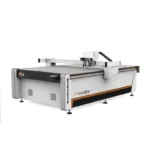
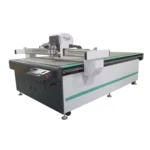
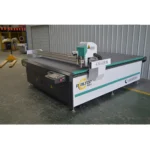
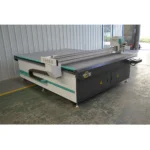
Rubber Cork Gasket CNC Oscillating Knife Cutter – Technical Guide
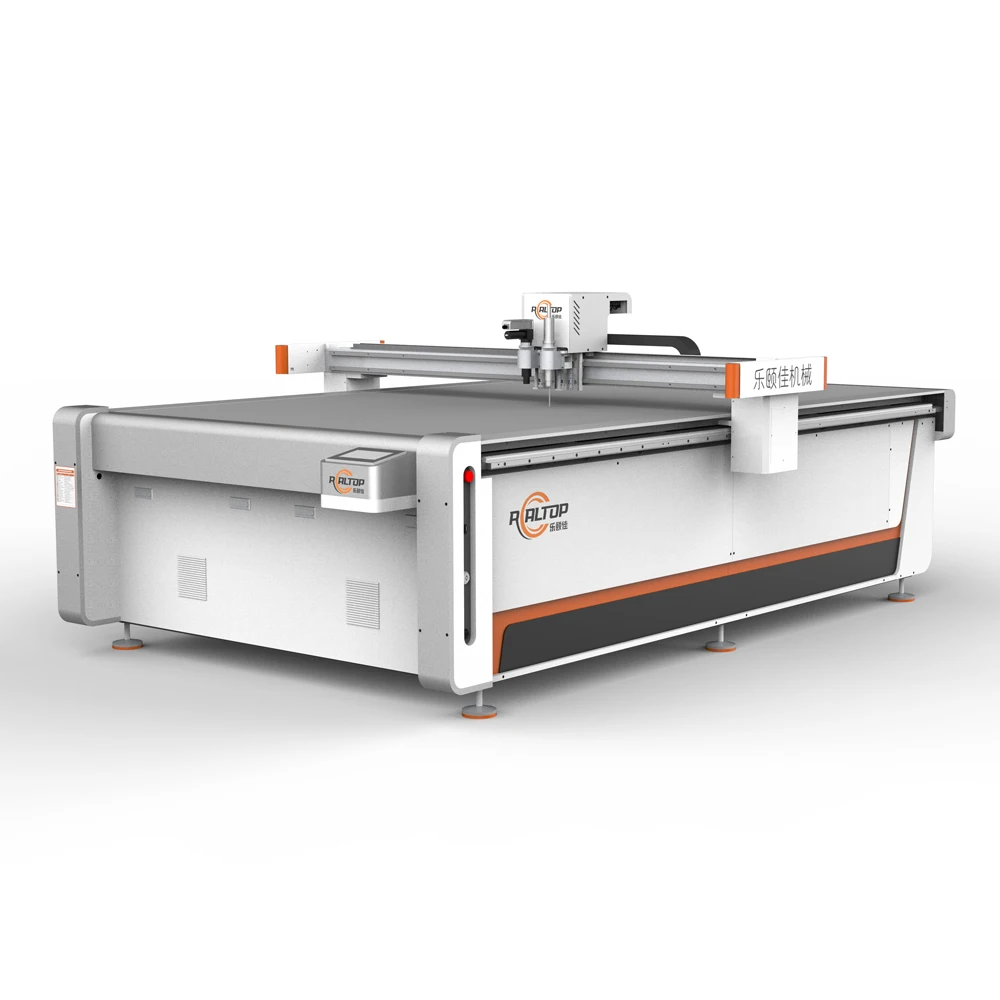
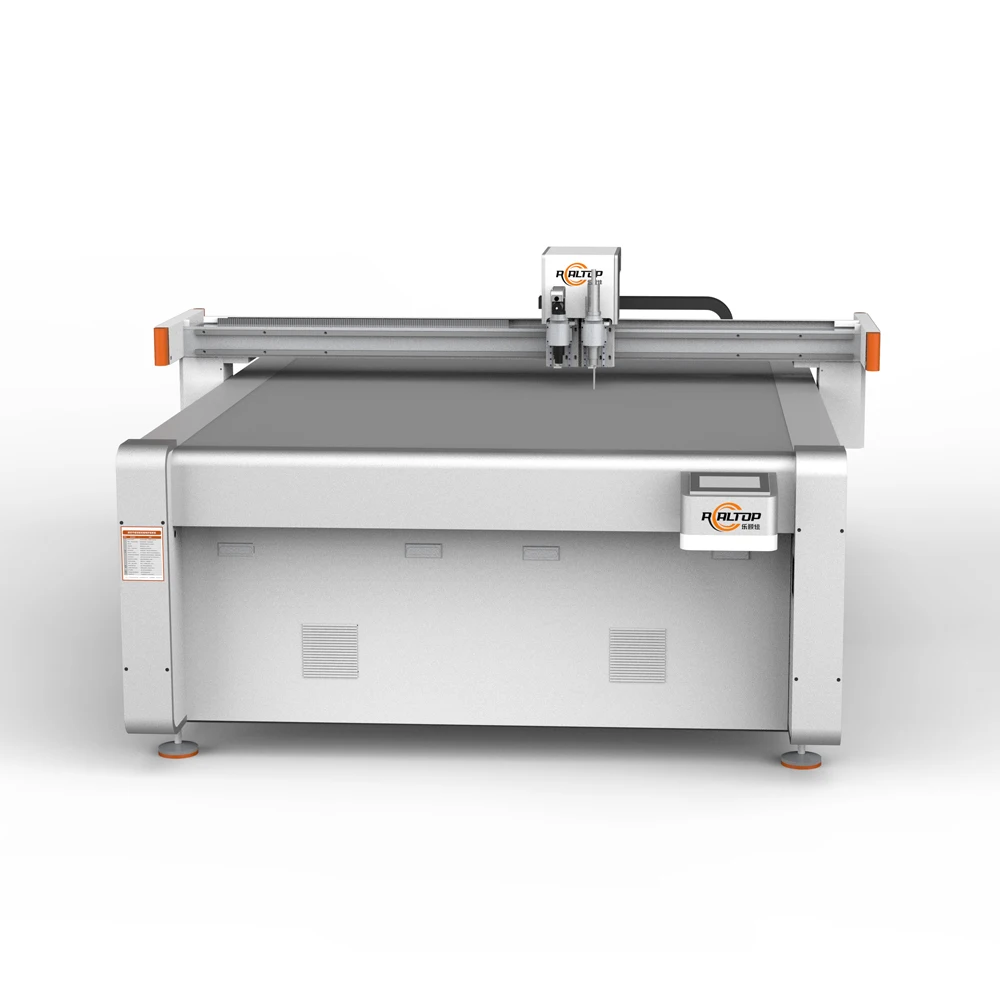
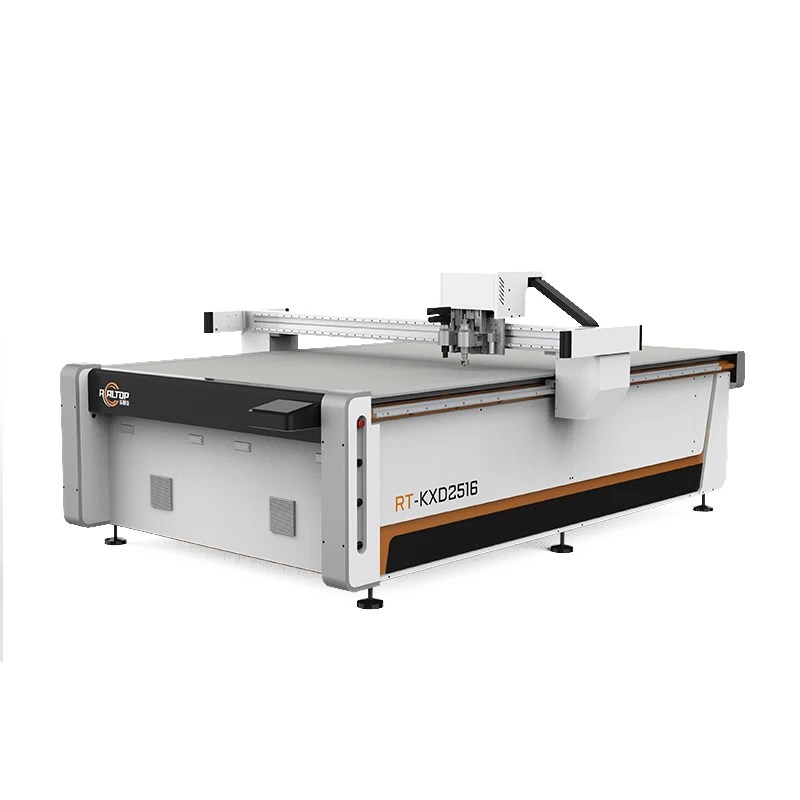
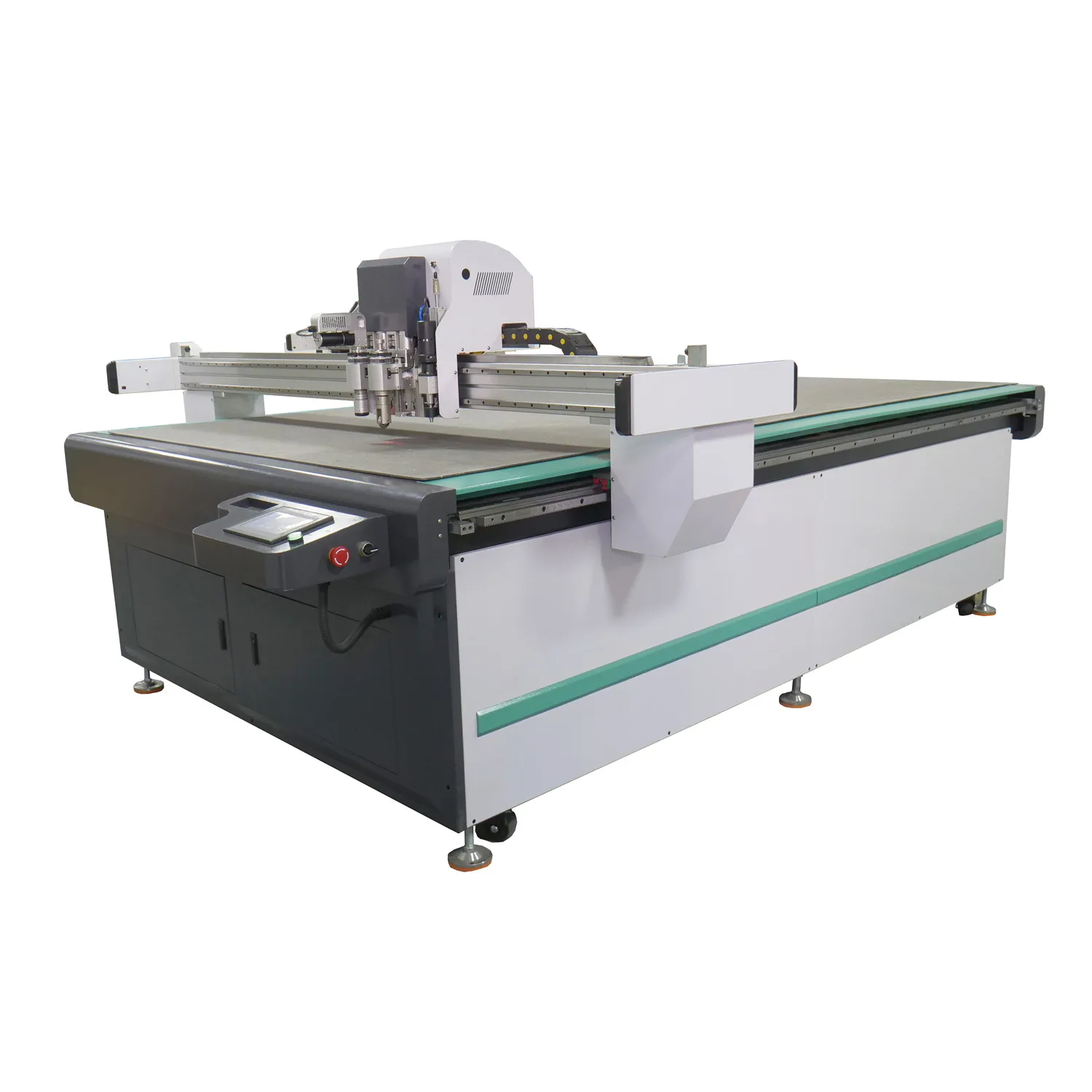
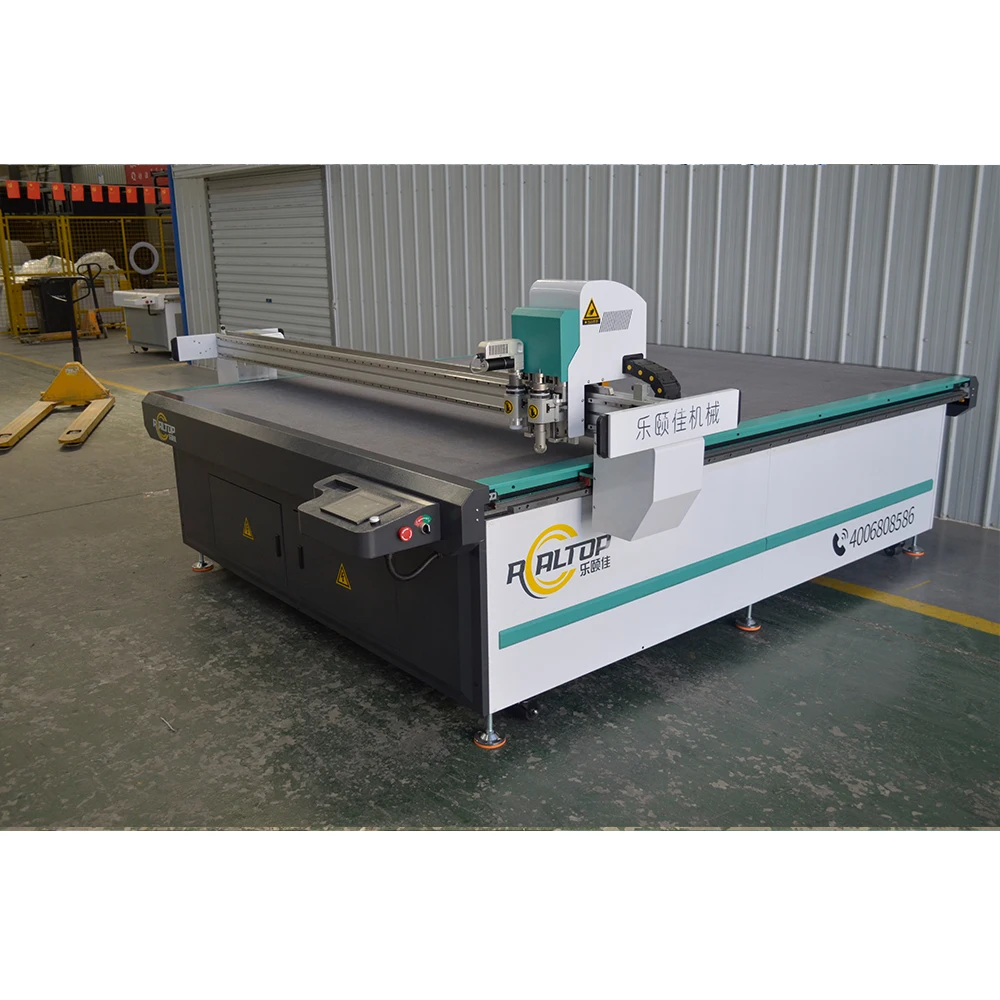
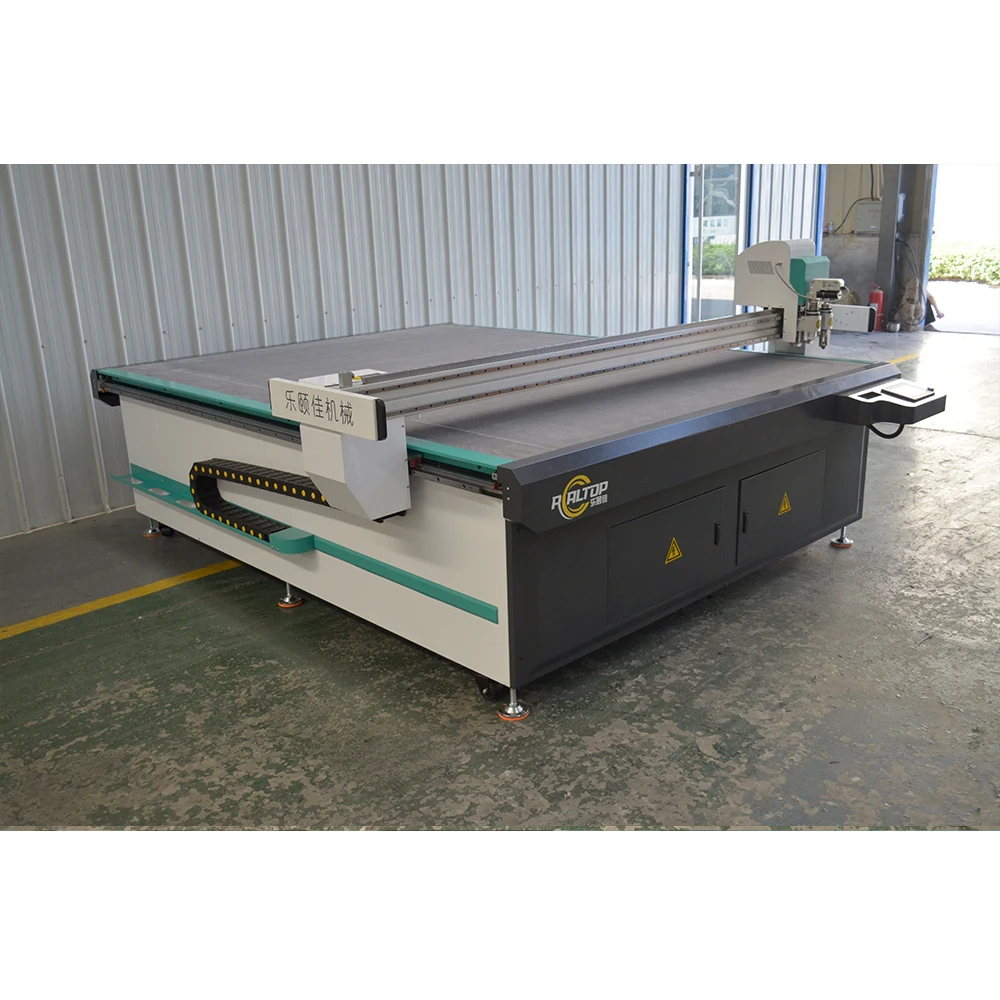
RT-D2516/RT-S2516 CNC Oscillating Knife Gasket Cutting Machine, 1600×2500mm, 9kw — engineered for clean, burr-free cutting of rubber, cork and composite sealing materials without thermal damage or fume generation.
- Multi-tool head with Swiss oscillating knife, drag knife and punching options matched to gasket material and thickness
- CCD camera positioning with panoramic recognition for accurate contour cutting on printed sheets
- Magnesium-aluminum alloy vacuum table with PVDF coating and ≤0.1mm repeatability via Hiwin linear guides
Sample cutting on your own gasket stock available before order commitment to verify edge quality, cutting depth and cycle time.
Matched Tool Head to Material — oscillating knife, drag knife and punching tools specified per gasket stock rather than forcing a single blade through rubber, cork and composite sealing sheets.
Technical Specifications
| Parameter | Value |
|---|---|
| Product Type | CNC Oscillating Knife Gasket Cutting Machine |
| Working Area | 1600 × 2500 mm |
| Machine Size | 3450 × 2300 × 1250 mm |
| Rated Power | 9 kW |
| Vacuum Pump | 7.5 kW, integrated aviation aluminum shell with built-in silencer sponge |
| Table Surface | Magnesium-aluminum alloy, PVDF powder sprayed, anodized and hard-oxidized |
| Transmission System | Digital servo motor (Delta, optional Panasonic IP67), Hiwin linear guide, ball screw, synchronous belt |
| Repeated Accuracy | ≤ 0.1 mm |
| Translational Velocity | 800–1200 mm/s |
| Multifunctional Head Options | Swiss imported vibrating knife (full and half cut), pneumatic knife, high-power vibrating knife, circular knife, V-cutting knife, drag knife, creasing wheel, dotted line knife, punching, brush, pen |
| Visual Positioning | Small CCD mark point positioning, panoramic camera recognition, projection positioning |
| Frame Construction | Welded thick-walled seamless steel, high-temperature tempering, CNC machining center finished |
| Voltage | 380 V ± 10 % |
| Control Language | English, Russian, Italian, Chinese, customizable |
| Software Compatibility | HP-GL compatible format |
| Safety Devices | Infrared sensors, beam anti-collision, emergency stop |
| Conveyor | Germany imported belt, auto feeding |
| Standard | CE |
Application Suitability
| Application | Material or Output |
|---|---|
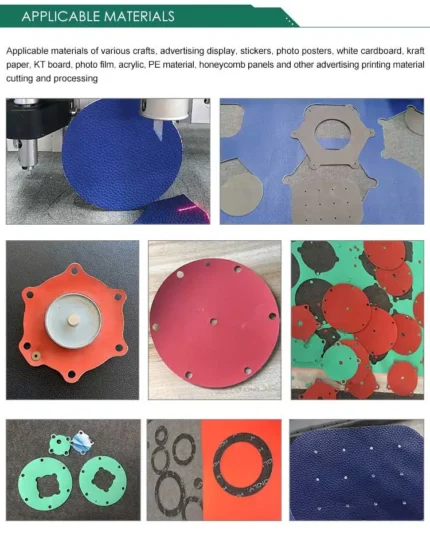
| Automotive cylinder head and manifold gaskets | Rubber, cork-rubber composite, fiber-reinforced elastomer sheets |
| Industrial pipe, valve and pump sealing pads | PTFE, ETFE, silicone, nitrile and neoprene |
| Flange and heat-exchanger gasket profiles | Cork, compressed non-asbestos fiber, graphite composite |
| Short-run custom sealing shapes | PVC, soft glass, PU, EVA, XPE, foam composites |
| Aftermarket gasket converters | Leather, non-woven fabric, sponge composite materials |
When "Cutting Thickness" Means Nothing Without the Material Name
Always confirm cutting depth against the specific gasket compound and Shore hardness before placing the order.
A datasheet may claim 20 mm to 80 mm cutting thickness, yet that range collapses once you move from soft sponge rubber to dense cork-rubber composite or reinforced PTFE. On a laser cutting and engraving machine, the issue is often laser power quoted at peak rather than continuous, with real cutting depth falling short on thick elastomer stock — and charred edges on cork that compromise the seal face. An oscillating knife gasket cutter sidesteps the thermal problem entirely, but the blade must still penetrate the full sheet without deflection. That is why a sample cutting report on the buyer’s own material is the only reliable proof [NEED_CITE: material hardness and cutting tool deflection in elastomer processing].
Blade Process vs Thermal Process for Sealing Materials
A laser cutting and engraving machine delivers excellent edge sealing on synthetics, yet rubber and cork release fumes and leave carbonized edges that can contaminate the sealing surface. The oscillating knife approach on this CNC gasket cutter produces a burr-free mechanical cut with no thermal degradation, preserving the compressibility and chemical resistance the gasket compound was formulated for.
Tool Head Selection Across Gasket Stock
The multifunctional head accepts a Swiss imported vibrating knife for full and half cuts through dense rubber, a drag knife for thin PTFE films, a creasing wheel for scored fold lines on composite sheets, and a punching tool for bolt-hole patterns. Each head is specified against the buyer’s material stack rather than bundled as a default, so a shop running primarily cork-rubber composite does not pay for a high-power vibrating knife meant for 60 mm foam.
Reading the Specs That Actually Affect the Seal Face
Repeated accuracy of ≤ 0.1 mm matters because gasket sealing surfaces that deviate beyond the flange tolerance will leak under bolt load. The Hiwin linear guide and ball screw transmission maintain that tolerance across the full 1600 × 2500 mm travel, whereas belt-only drives on comparable machines drift as the belt stretches [NEED_CITE: linear guide vs belt drive positional accuracy in CNC cutting]. The magnesium-aluminum vacuum table with PVDF coating stays flat under continuous suction and resists the cutting oils and solvents common in gasket shops. A 7.5 kW vacuum pump with integrated silencer sponge holds small gasket profiles — bolt-hole rings and narrow flange strips — that lighter tables allow to lift mid-cut.
The Cost of Skipping the Sample Cut
Sending a material swatch before the order takes a week and avoids the far longer delay of receiving a machine whose default blade cannot penetrate your 4 mm cork-rubber stock at production speed. Wrong tool head selection produces ragged edges on fiber composites or crushed cell structure in foam gaskets, both of which fail pressure tests on the assembly line. Shops that skip the voltage and plug confirmation also face rewiring charges at the dock, and a control panel in an unreadable language slows operator training by days [NEED_CITE: export machinery voltage and language confirmation checklist].
Why Source This Cutter Here
In-house design covers both knife and laser platforms, so the cutting method is matched to the gasket material rather than forced onto whichever machine the factory prefers to ship. Tool head and table zoning are configured per the buyer’s material list and daily volume before the quotation is finalized. CCD camera positioning — small mark-point and panoramic — is validated on the buyer’s printed registration marks at running speed, not just demonstrated on a clean sample sheet. Software file format and nesting workflow compatibility are confirmed during the sales process, eliminating the discovery that the buyer’s existing CAD output cannot import. Sample cutting on the buyer’s own gasket stock before commitment provides an edge-quality and cycle-time baseline that a brochure cannot.
Documentation & Verification
- Machine specification sheet listing the exact tool heads and table configuration quoted
- Electrical schematic and voltage confirmation matching the destination country supply
- Sample cutting report on buyer’s gasket material with edge photographs and cycle time
- Factory test record documenting repeated accuracy and vacuum hold-down performance
- Software license and HP-GL file format compatibility note before shipment
- Spare parts list covering blades, knife holders, vacuum cups and CCD lens
Installation, Commissioning & Support
- 3450 × 2300 mm footprint requires a level concrete slab with anchor bolt provisions
- 380 V ± 10 % three-phase dedicated circuit rated above the 9 kW total draw
- Machine arrives fully assembled; rigging plan needed for the 1600 × 2500 mm table section
- First-run calibration of CCD mark-point positioning against the buyer’s printed gasket artwork
- Operator training on tool head changeover and HP-GL nesting file import
- Consumable blade inventory sized to the quoted daily cutting volume and material abrasiveness
Before You Send the Inquiry
Provide the gasket material type, compound name, sheet thickness and Shore hardness, along with the largest flat pattern dimension and the daily piece count you need to sustain. Confirm your workshop voltage, frequency and the control language your operators read. If your nesting workflow already runs on a specific CAD platform, share a sample export file so software compatibility can be verified before quotation.
Frequently Asked Questions
Q: How do I confirm the machine will cut my specific gasket material at full thickness?
A: Send a representative sample of your gasket stock — including the compound name, sheet thickness and Shore hardness. A cutting test is run using the recommended tool head, and a report with edge photographs, cycle time and dimensional accuracy is returned before any order commitment.
Q: What voltage and language options are available before shipment?
A: The standard supply is 380 V ± 10 % at 50 Hz. Voltage, plug type and frequency can be configured to match the destination market. Control panel and software language options include English, Russian, Italian and Chinese, with additional languages customizable before the machine leaves the factory.
Q: Does CCD contour recognition work at full production speed on printed gasket sheets?
A: The system uses a small CCD camera for mark-point positioning and an optional panoramic camera for full-sheet recognition. Performance is validated on the buyer’s own printed registration marks during the sample cutting stage, confirming tracking accuracy at the intended translational velocity.
Q: Will the software import my existing CAD nesting files?
A: The control system accepts HP-GL compatible formats. Before quotation, share a sample export file from your nesting software so file translation and tool-path generation can be verified, avoiding workflow interruptions after delivery.
Q: When should I choose an oscillating knife over a laser cutting and engraving machine for gaskets?
A: Knife cutting is preferred for rubber, cork and composite gasket materials where thermal degradation, fumes or charred edges would compromise the sealing surface. A laser cutting and engraving machine is better suited to thin non-metal sheets where edge sealing and fine detail are the priority.


Related products
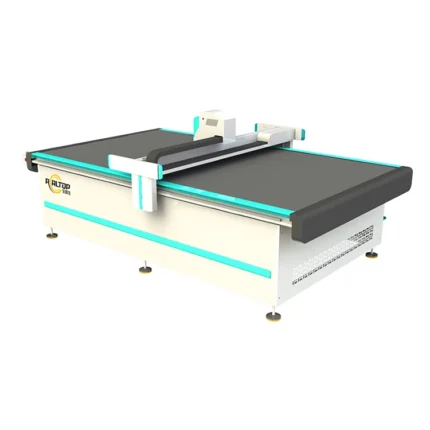
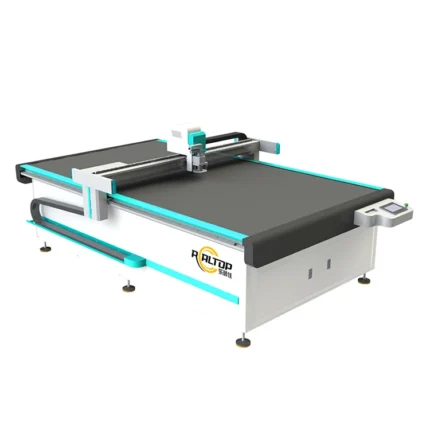
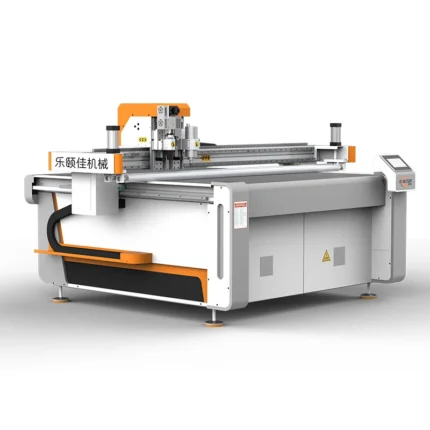
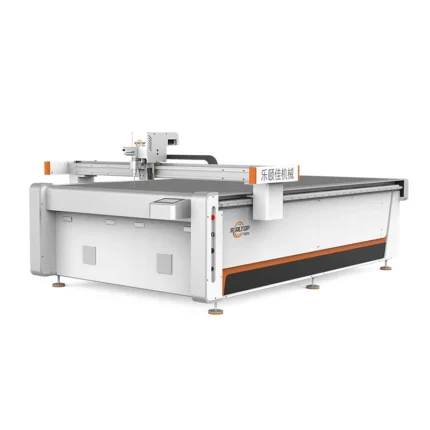
2026 Rubber CNC Cutting Machine High-Precision Auto-Feeding Gasket
Product Introduction
High-precision 2026 model Rubber CNC Digital Cutting Machine designed for gasket production with auto-feeding functionality, ensuring efficient and accurate cutting performance.
Key Specifications
| Model | 2026 |
| Type | Rubber CNC Digital Cutting Machine |
| Application | Gasket Production |
| Feature | High-Precision |
| Function | Auto-Feeding |
2026 Spiral Wound Gasket Cutter CE Hot Sale
Product Introduction
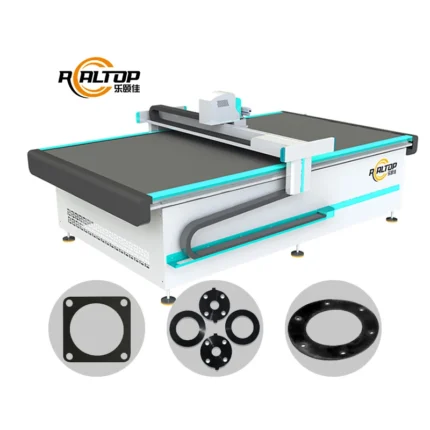
Hot Sale 2026 Spiral Wound Gasket Cutter with CE certification, ideal for precise gasket cutting in industrial applications. Made by a leading Chinese manufacturer of welding and cutting equipment.Product Parameters
| Model | 2026 |
| Certification | CE |
| Type | Spiral Wound Gasket Cutter |
| Application | Industrial Gasket Cutting |
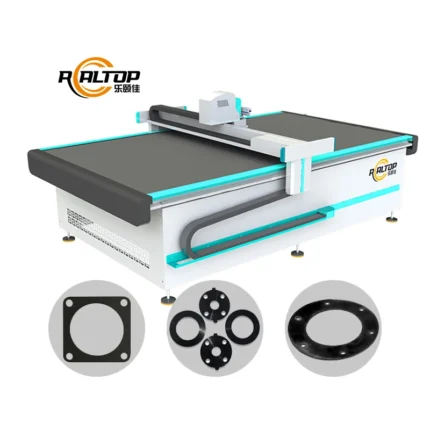
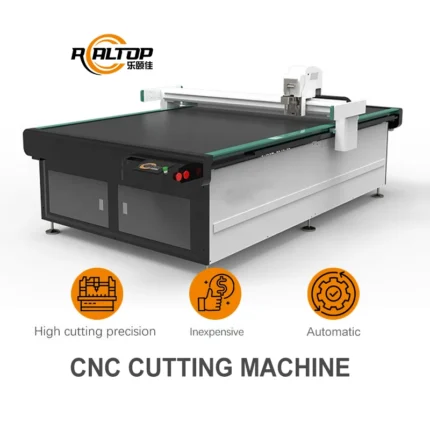
Realtop 2026 Automatic Gasket Cutting Machine
Product Introduction
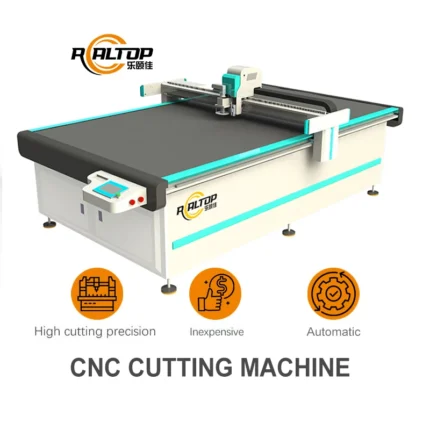
Realtop Automatic Gasket Cutting Machine 2026 is a high-performance cutting solution designed for efficient gasket production, ideal for industrial manufacturing needs with reliable automatic operation.
Product Parameters
| Model | Realtop 2026 |
| Type | Automatic Gasket Cutting Machine |
| Application | Industrial Gasket Production |
| Operation | Automatic |
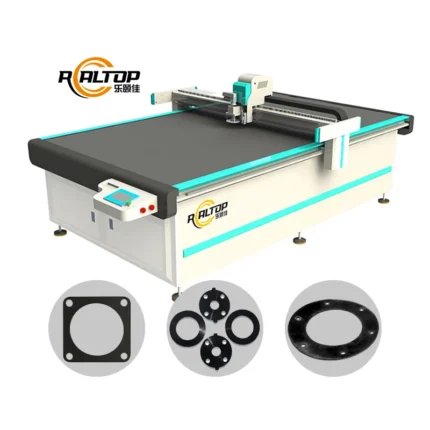
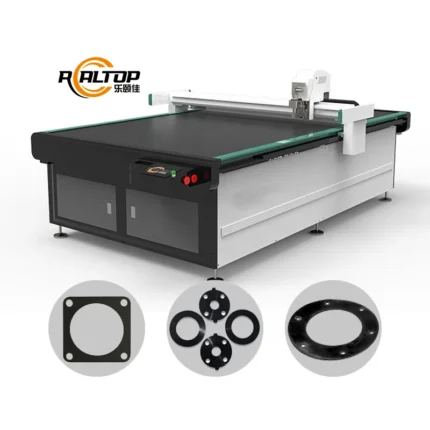
Realtop 2026 PVC Foam Board Cutting Machine
Product Introduction
A specialized cutting solution for PVC foam boards, ideal for precision cutting tasks in various manufacturing and fabrication applications. Engineered for efficiency and reliability in processing PVC foam materials.Product Parameters
| Model | Realtop PVC Foam Board Cutting Machine 2026 |
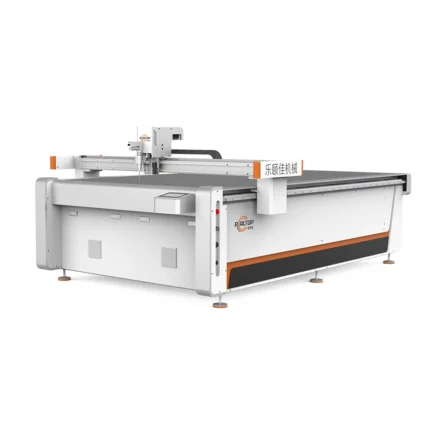
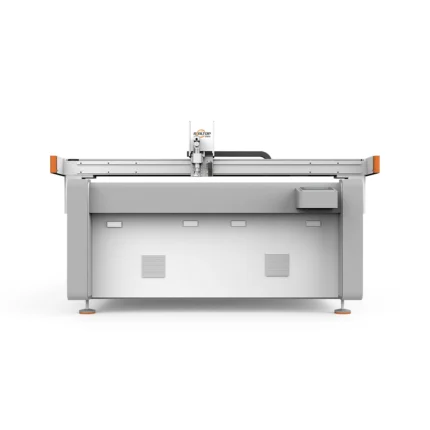
Realtop CNC Gasket Cutting Machine 2026 China Manufacturer
Product Introduction
Realtop CNC Gasket Cutting Machine 2026 is a precision tool designed for efficient gasket production, ideal for industrial manufacturing needs with advanced CNC technology.Key Specifications
| Model | Realtop CNC Gasket Cutting Machine 2026 |
| Type | CNC Gasket Cutting Equipment |
| Application | Industrial Gasket Manufacturing |
| Feature | Precision Cutting, Efficient Production |
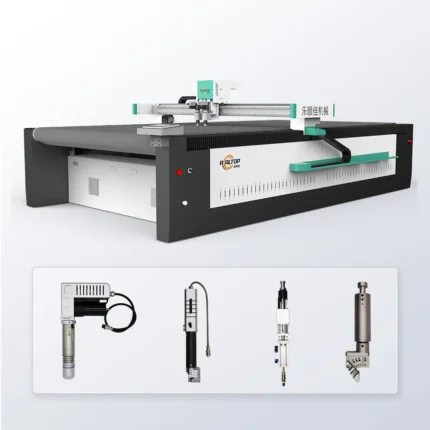
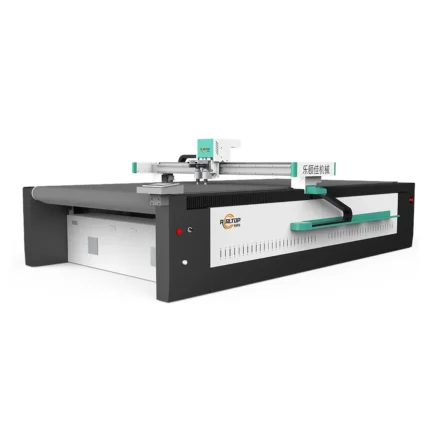
Realtop Graphite Gasket Making Machine 2026 – Advanced Flexible Material Cutter
Product Introduction
Realtop Graphite Gasket Making Machine 2026 is a professional equipment for graphite gasket production, ideal for manufacturing high-quality gaskets with precision and efficiency, suitable for industrial sealing applications.Product Parameters
| Model | Graphite Gasket Making Machine 2026 |
| Brand | Realtop |
| Application | Graphite Gasket Production |
| Feature | Precision Manufacturing |

商品评价
There are no reviews yet.