




Skip: no source title,
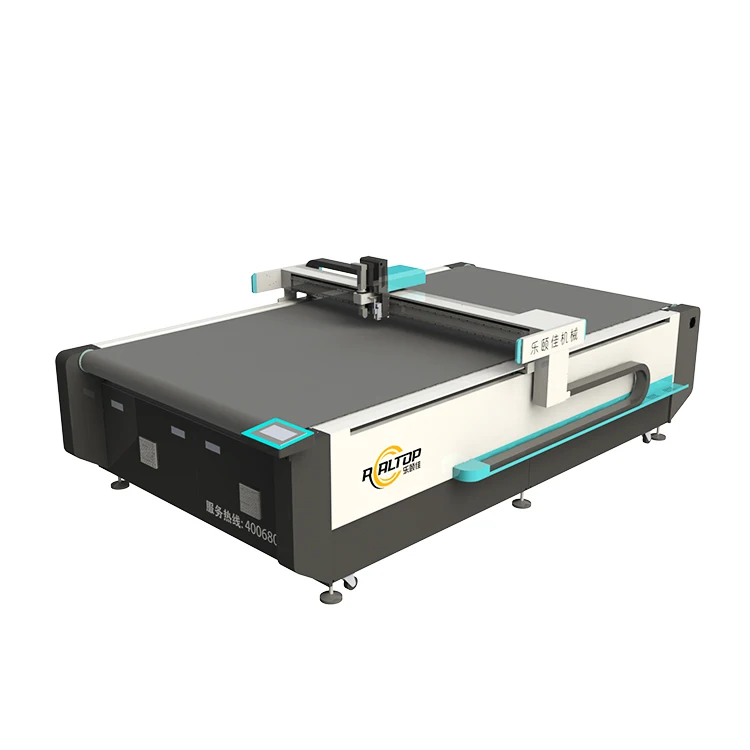
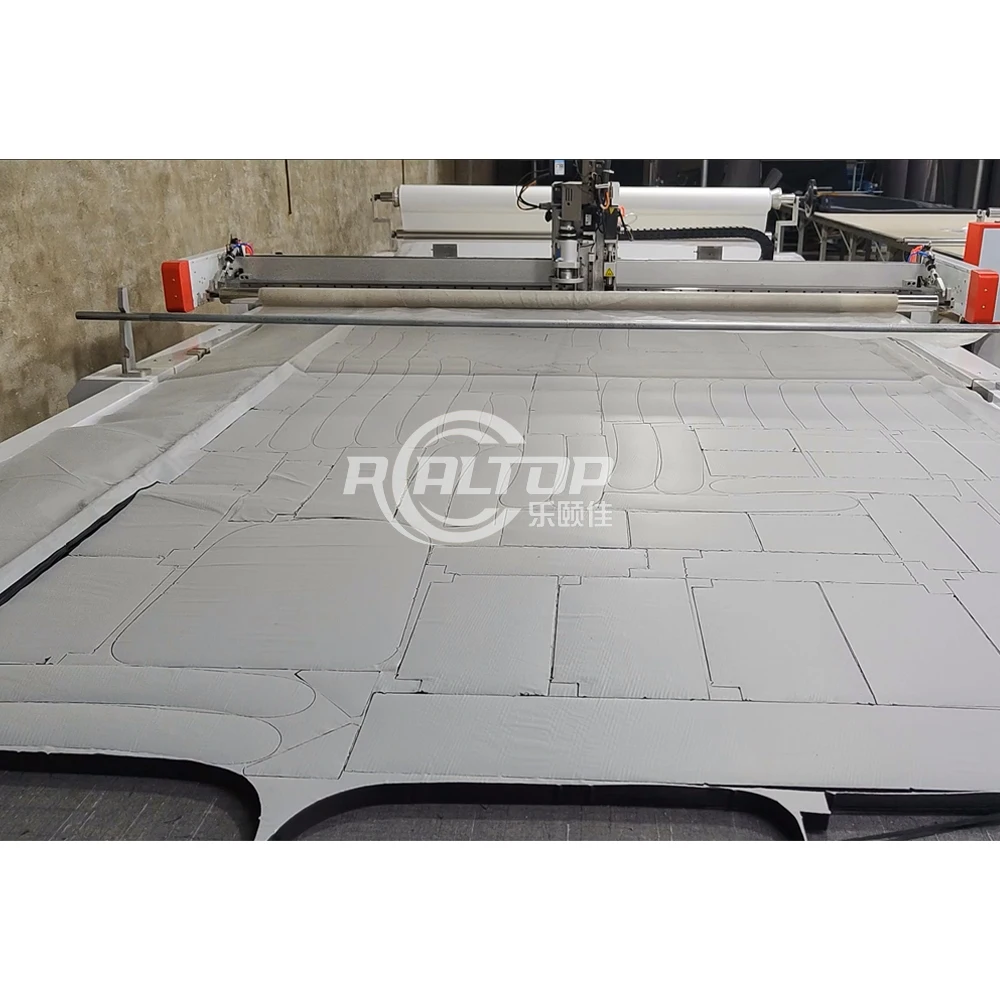
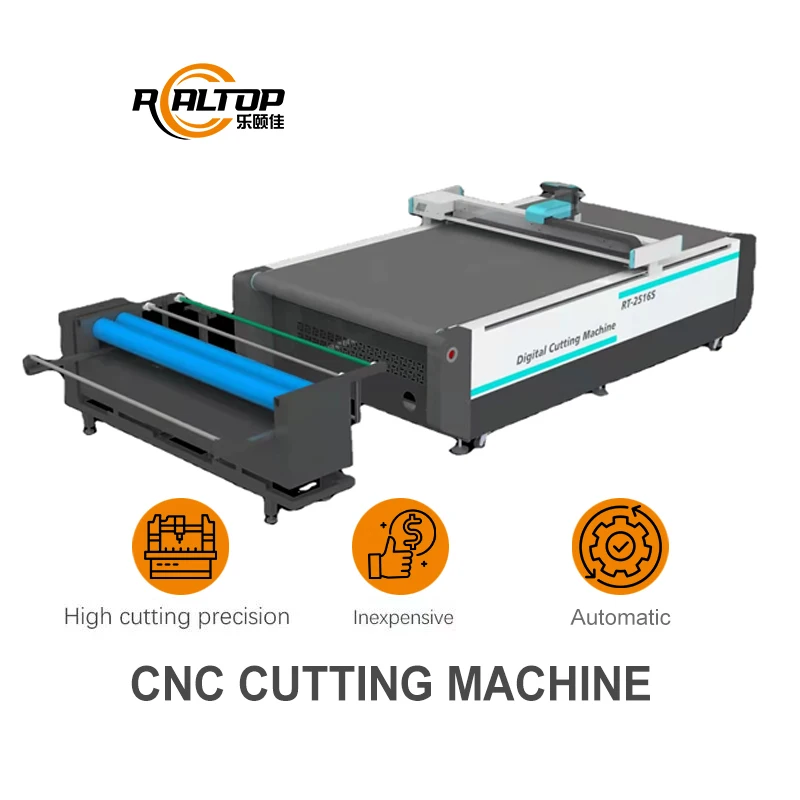
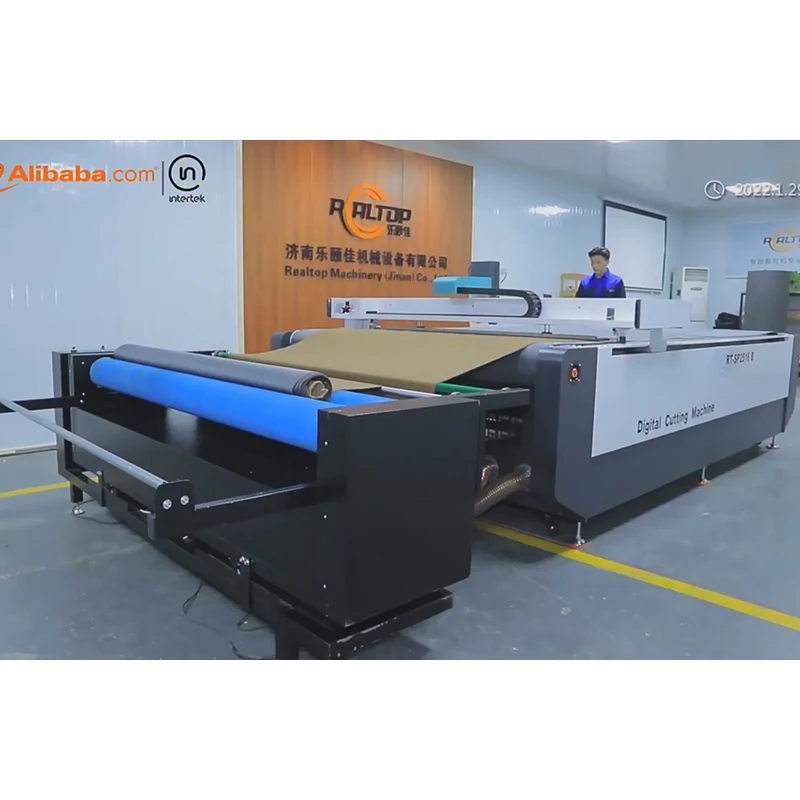
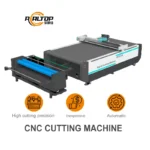
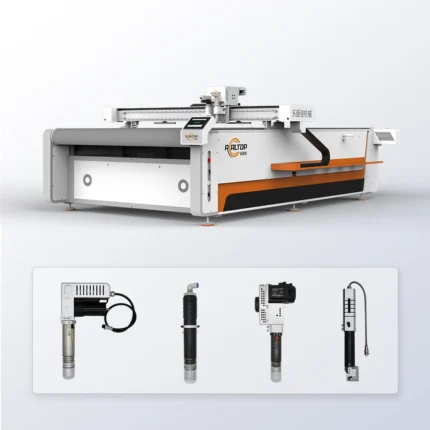
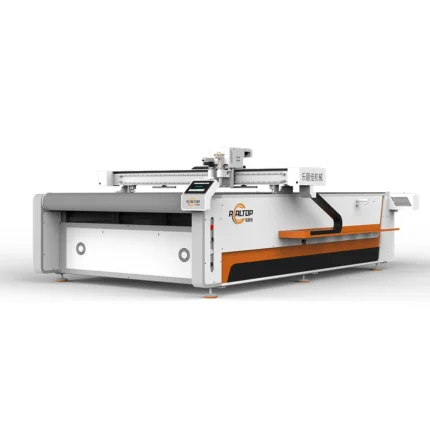
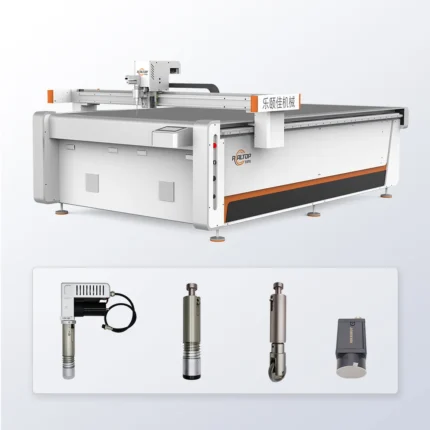
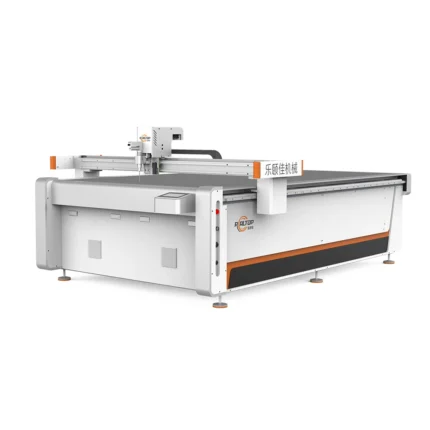
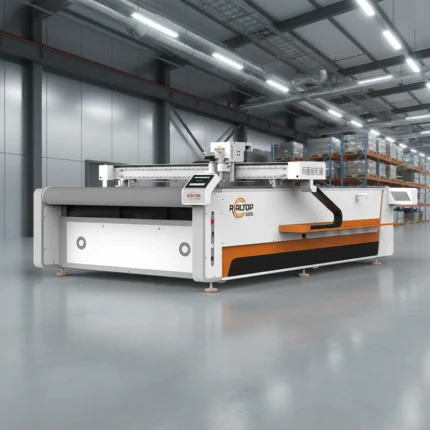
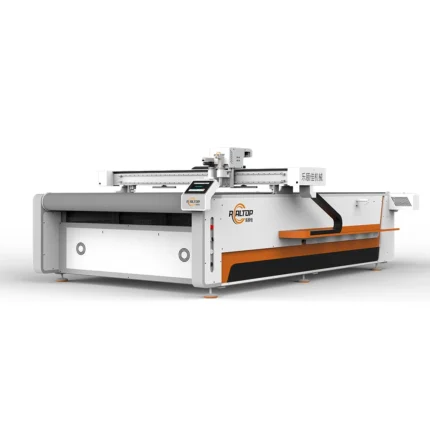
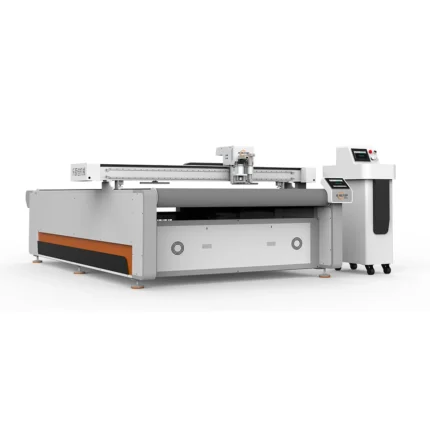
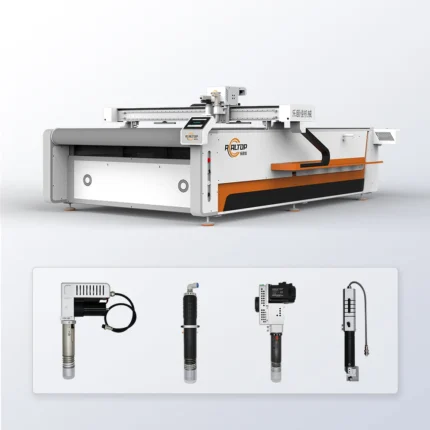
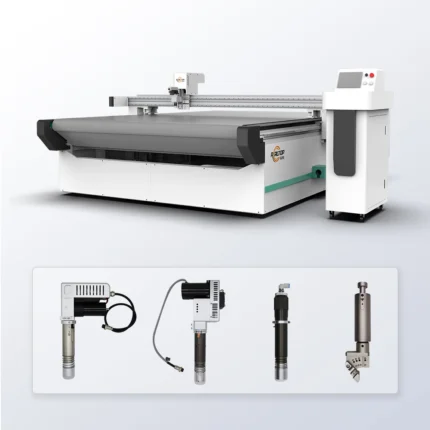
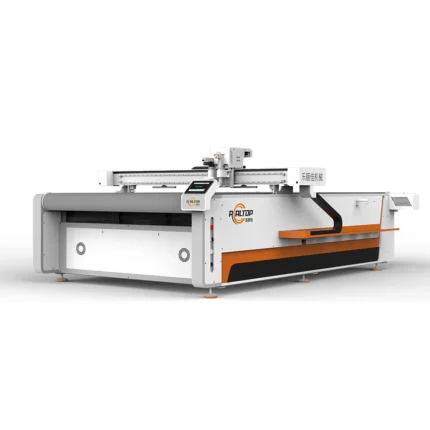
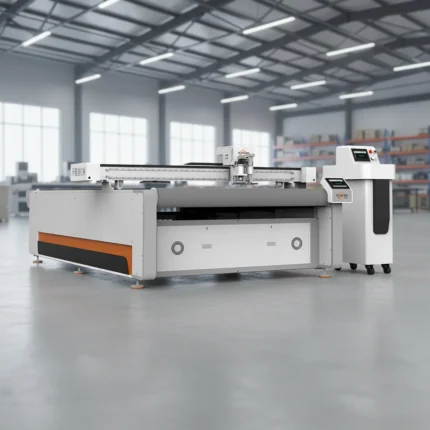
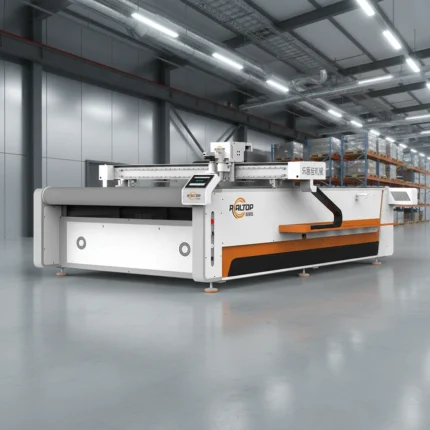
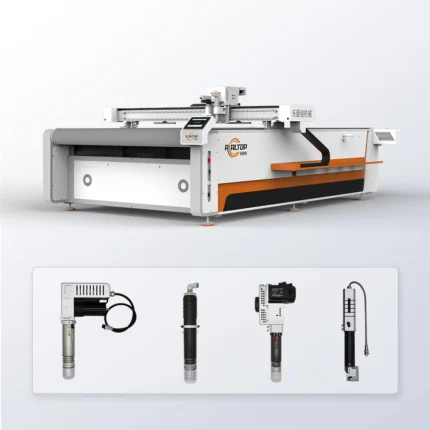
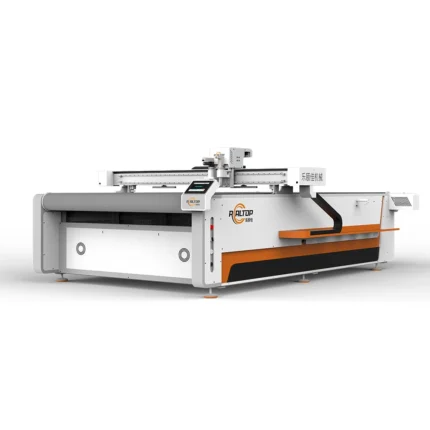
RT-D2516/RT-S2516 CNC Vibrating Knife Fabric Cutting Machine, 1600×2500mm Working Area, 9kW, ≤50mm Cutting Thickness — configured with Swiss-imported oscillating knife head for full cutting, half cutting and cursor location across fabric, leather and composite materials.
- Aviation aluminum vacuum countertop with internal wind structure for even suction distribution
- Pinion and rack transmission with Panasonic servo motor delivering ≤0.1mm repeated accuracy
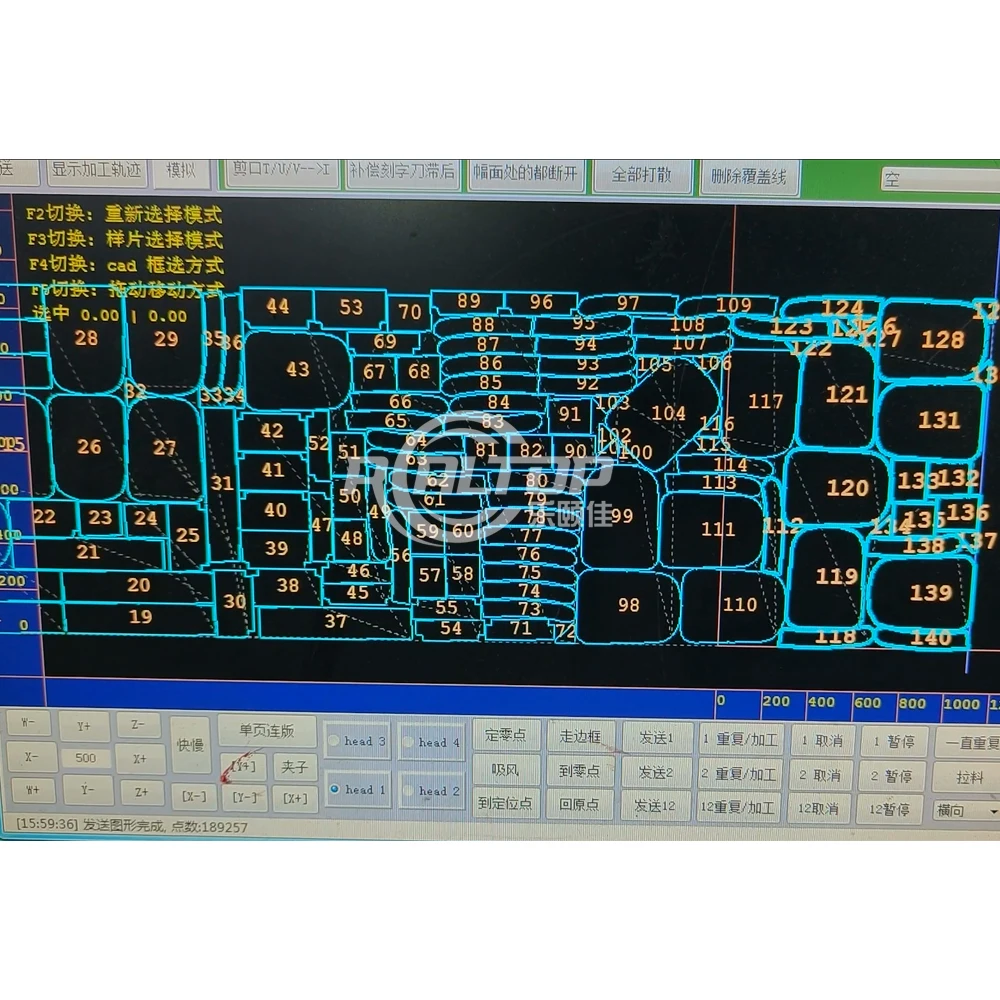
- HP-GL compatible file format with English, Russian, Italian and Chinese language options
Sample cutting on your own material with documented edge quality and cycle time report provided before order commitment.
Custom tooling configuration — every RT-D2516/RT-S2516 oscillating knife cutting table ships with a tool head and vacuum zoning setup matched to the buyer’s verified production material, not a generic default.
Technical Specifications
| Parameter | Value |
|---|---|
| Product Type | CNC Vibrating Knife Fabric Cutting Machine |
| Model | RT-D2516/RT-S2516 |
| Working Area | 1600 × 2500 mm |
| Overall Dimensions | 3450 × 2300 × 1250 mm |
| Rated Power | 9 kW |
| Cutting Thickness | ≤50 mm (varies by material density and type — basis to be confirmed) |
| Translational Velocity | 800–1200 mm/s |
| Repeated Accuracy | ≤0.1 mm |
| Table Structure | Aviation aluminum countertop with internal wind structure |
| Table Cloth | High-density felt |
| Vacuum Pump | 7.5 kW |
| Servo Motor | Panasonic |
| Transmission System | Digital servo motor, linear guide, synchronous belt, ball screw (imported) |
| Drive Mechanism | Pinion and rack transmission |
| Tool Head Function | Swiss imported knife with vibration full cutting, vibration half cutting, and cursor location |
| Safety Device | Infrared sensors |
| Instruction System | HP-GL compatible format |
| Voltage | 380V ± 10% |
| Language Options | English, Russian, Italian, Chinese (special languages customizable) |
| Conveyor Belt | Germany imported |
| Rail | Taiwan Hiwin |
| Lathe Bed | Overall welding process, imported milling machine processing |
| Control Box | Fixed on fuselage with high-flexibility cables |
| Certification | CE |
| Warranty | One year |
Application Suitability
| Application | Material or Output |
|---|---|
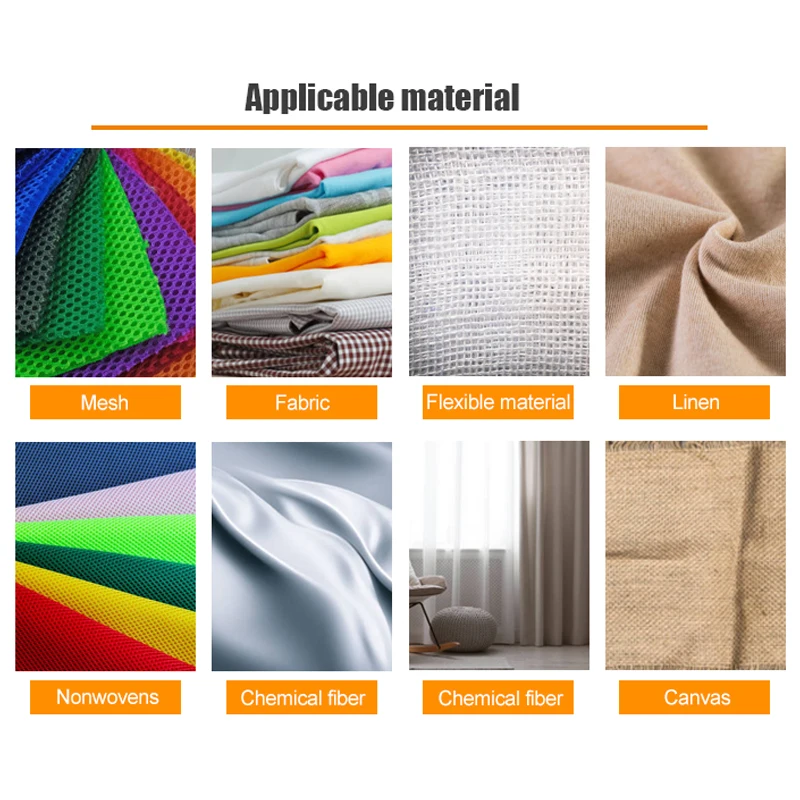
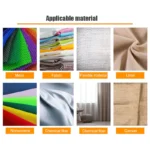
| Garment and textile manufacturing | Natural and synthetic fabrics, multi-layer textile layups |
| Automotive interior components | Sponge composite leather, soft foam materials |
| Footwear and leather goods | Natural leather, PVC, synthetic uppers |
| Industrial gasket production | Silicon, rubber, soft glass sheets |
| Composite and packaging fabrication | Flexible composite panels, corrugated sample stock |
Why Specified Cutting Depth Can Mislead on Soft Goods
Edge quality on coated technical fabric depends more on tool head frequency and vacuum hold-down than on rated thickness alone.
When a cutting thickness figure is quoted without the material reference, buyers discover too late that the machine handles dense rubber at that depth but struggles with layered garment textiles at half the stated value. The CNC Fabric Cutting Machine specifications for the RT-D2516/RT-S2516 list a maximum cutting thickness, yet the actual usable depth shifts with fabric density, coating type, and layer count. In our Southeast Asia shipments, the difference between cutting single-layer coated polyester and a five-layer layup of uncoated cotton is substantial, and no single number captures both [NEED_CITE: material density effects on oscillating knife cutting depth].
Oscillating Knife Mechanics on Flexible Materials
The Swiss imported knife head on this CNC Fabric Cutting Machine operates through vibration full cutting and half cutting modes, allowing the operator to select the stroke profile that matches the material behavior. Full cutting handles dense composites and gasket rubber by driving the blade completely through in each oscillation cycle. Half cutting scores adhesive-backed layers without penetrating the release liner, which is essential for label and applique production where substrate integrity matters.
Vacuum Table Zoning for Small and Irregular Pieces
The aviation aluminum countertop with its internal wind structure distributes suction across the 1600 × 2500 mm working area. High-density felt covers the surface to create a seal against porous textiles. When cutting small garment pattern pieces or intricate gasket shapes, uneven vacuum distribution causes material lift at the blade exit point, producing frayed edges or dimensional drift that accumulates across a production run [NEED_CITE: vacuum table zoning requirements for small-part CNC cutting].
What the Drive and Motion Specs Mean at Production Speed
The pinion and rack transmission replaces belt-driven systems that stretch under continuous lateral load, maintaining the stated ≤0.1 mm repeated accuracy as the Panasonic servo motors drive the head across the full working envelope at up to 1200 mm/s. The Taiwan Hiwin rail provides the linear guidance, and the high-flexibility cables in the control box routing prevent conductor fatigue from the constant directional changes inherent to contour cutting. The 7.5 kW vacuum pump sustains hold-down force during these rapid traverse cycles without pressure drop.
The Cost of Skipping Material Trials Before Shipment
A fabric cutting machine configured for standard polyester will produce melted edges and delaminated layers when switched to a coated technical textile on the production floor. The heat generation, blade frequency, vacuum pressure, and cutting speed all interact with the specific coating chemistry and fabric weave. Correcting this after installation means halting production while tooling parameters are rebuilt from scratch, consuming material and delivery time simultaneously. We have seen this scenario delay a buyer’s first commercial order by days [NEED_CITE: coated technical fabric cutting parameter sensitivity].
Why Buyers Source This Platform Here
The in-house design team covers both knife and laser cutting processes, so the decision to use an oscillating knife rather than a CO2 laser for this material class is made on technical grounds, not because one technology is unavailable. Each CNC Fabric Cutting Machine ships with a tool head and table configuration list matched to the buyer’s verified material stack. Software file format compatibility is confirmed against the buyer’s existing nesting workflow before the order is finalized. Voltage, plug type, and control panel language are set to the destination market specification. Sample cutting runs on the buyer’s own roll goods document edge quality and cycle time before commitment is required.
Documentation & Verification
- Machine specification sheet listing tool head and table configuration by material type
- Electrical schematic confirming 380V ± 10% wiring and circuit breaker sizing
- Sample cutting report documenting edge quality on your fabric at defined speed and frequency
- Software licence with HP-GL file format compatibility confirmation for your nesting system
- Factory test record showing repeated accuracy across the full working area before packing
Installation, Commissioning & Support
- Floor space of at least 4000 × 3000 mm required around the 3450 × 2300 mm machine footprint for material loading
- Dedicated 380V circuit with breaker sized for 9 kW continuous draw plus 7.5 kW vacuum pump
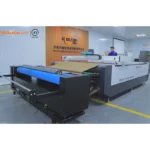
- Unit arrives with table and frame assembled; conveyor belt and control box mounted on fuselage
- First-run calibration of vacuum zones and blade depth against your production material thickness
- Operator training covers tool head changeover between full cutting and half cutting modes
- Spare blade and felt replacement schedule aligned to your daily cutting volume
What to Include with Your Inquiry
Provide the specific fabric or flexible material type, the number of layers in your typical layup, and the maximum sheet or roll width you process. Include your local voltage and frequency standard, preferred control language, and the file format your current nesting software outputs. If your production involves coated or laminated textiles, ship a roll sample so we can run cutting trials before the configuration is locked in.
Frequently Asked Questions
Q: How do I know whether oscillating knife or round knife is right for my material?
A: Oscillating knife handles rigid composites, dense foam, and multi-layer layups where the vibrating stroke pushes through the full stack cleanly. Round knife suits single-layer woven fabric where continuous rotary motion gives faster linear travel. We confirm the correct tool head after running sample cuts on your actual material before the order proceeds.
Q: What voltage and language options ship with this machine?
A: The standard electrical configuration is 380V ± 10% with customizable plug type. Control panel language options include English, Russian, Italian, and Chinese, with special languages available on request. We confirm voltage, frequency, and language match your facility before production begins.
Q: How can I verify cutting accuracy before committing to an order?
A: We run sample cutting on your own roll goods and document edge quality, dimensional tolerance against the ≤0.1 mm repeated accuracy spec, and cycle time. The sample report accompanies the quotation so you can evaluate results on your production material before confirming the configuration.
Q: Which file formats does the control system accept?
A: The instruction system is HP-GL compatible, covering output from most industry nesting and pattern software. We verify compatibility with your specific file format during the pre-order stage and confirm software licence terms and any required format conversion steps in the documentation package.


Related products
2026 Auto Fabric Cutter Round Knife High Efficiency
Product Introduction
High Efficiency 2026 Auto Fabric Cutter with Round Knife is a professional cutting equipment designed for fabric processing. It features advanced automation and high cutting efficiency, suitable for various fabric materials in industrial production.Product Parameters
| Model | 2026 |
| Type | Auto Fabric Cutter |
| Blade Type | Round Knife |
| Feature | High Efficiency |
2026 CNC Knife Cutting Machine for Fabric Leather PVC Hot Sale
Product Introduction
2026 Hot Sale CNC Knife Cutting Machine for Fabric, Leather, PVC. Ideal for precise cutting of various materials with advanced CNC technology, perfect for manufacturing needs.
Product Parameters
| Application | Fabric, Leather, PVC |
| Type | CNC Knife Cutting Machine |
| Feature | Precision Cutting |
| Year | 2026 Model |
2026 Inflatable Surf SUP Board Cutting Machine
Product Introduction
Ideal for inflatable surf SUP board production, this 2026 cutting machine ensures precise and efficient cutting, tailored for manufacturers seeking reliable performance in water sports equipment manufacturing.
Specifications
| Application | Inflatable Surf SUP Board |
| Type | Cutting Machine |
| Model Year | 2026 |
Automatic Fabric Cutting Machine 1200mm Delta Servo 2026
Product Parameters
| Cutting Width | 1200mm |
| Servo System | Delta Servo |
| Model Year | 2026 |
Introduction
High-performance Automatic Fabric Cutting Machine with 1200mm cutting width, equipped with Delta Servo for precision. Ideal for efficient fabric processing in textile industry, ensuring accurate and fast cutting operations.

Electric Fabric Rotary Cutter 2026 12V Auto-Cut Industrial
Product Introduction
Industrial-grade Electric Fabric Rotary Cutter designed for precise cutting of scan-printed cloth. Features 12V auto-cut functionality for efficient, automated operation, ideal for professional textile processing.Product Parameters
| Power Supply | 12V |
| Function | Auto-Cut |
| Application | Scan-Printed Cloth |
| Type | Industrial Electric Rotary Cutter |
Jinan Realtop CNC Fabric Slitting Cutter 2026: Advanced Flexible Material Cutter
Product Introduction
Jinan Realtop CNC Fabric Slitting Cutter 2026 is a high-performance cutting equipment designed for precise fabric processing, ideal for industrial manufacturing needs with reliable CNC technology.Specifications
| Model | 2026 |
| Type | CNC Fabric Slitting Cutter |
| Manufacturer | Jinan Realtop |
| Application | Fabric Processing |
| Control System | CNC |
Realtop CNC Fabric Cutting Machine 2026 CE Certified
Product Introduction
Realtop CNC Fabric Cutting Machine 2026, CE Certified, ideal for precision fabric cutting with advanced CNC technology. Engineered for efficiency and reliability in textile manufacturing processes.Key Specifications
| Model | Realtop CNC Fabric Cutting Machine 2026 |
| Certification | CE Certified |
商品评价
There are no reviews yet.