



Technical Guide CNC Knife Cutting Machine for PVC Drop Stitch Fabric
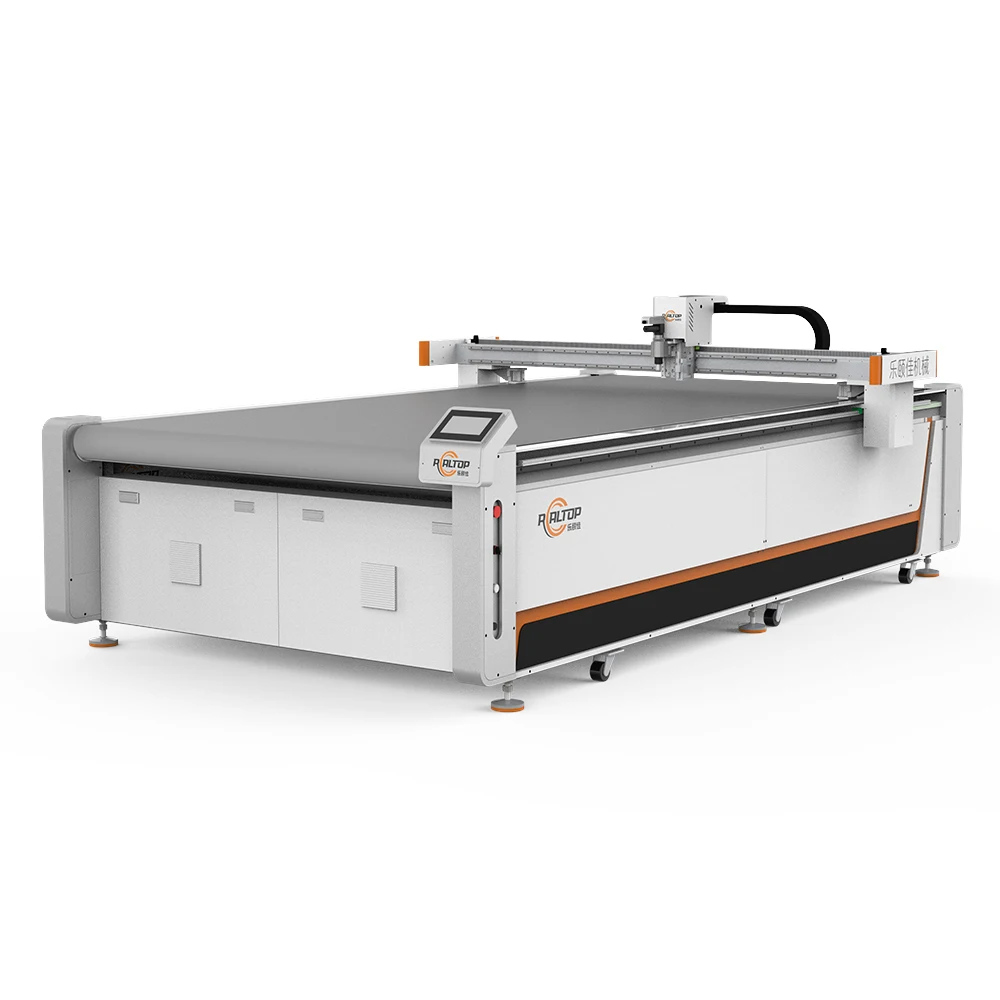
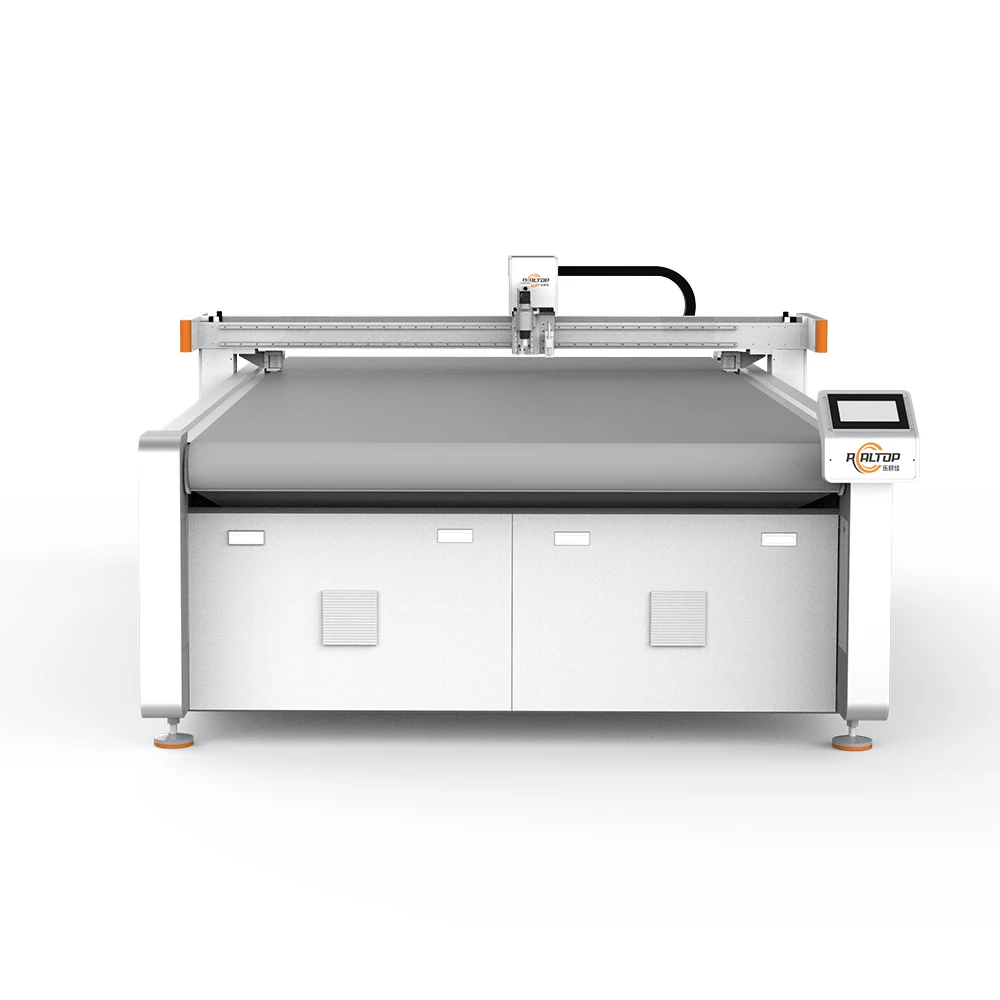
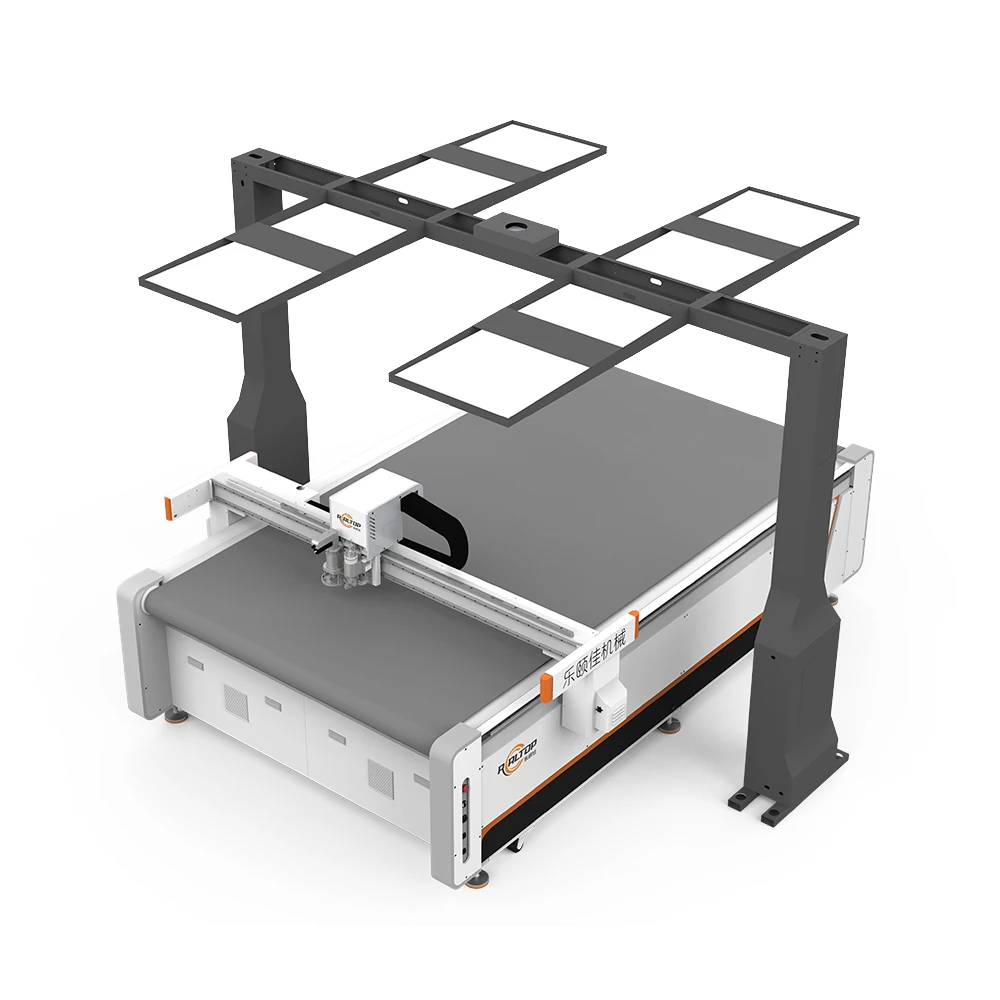
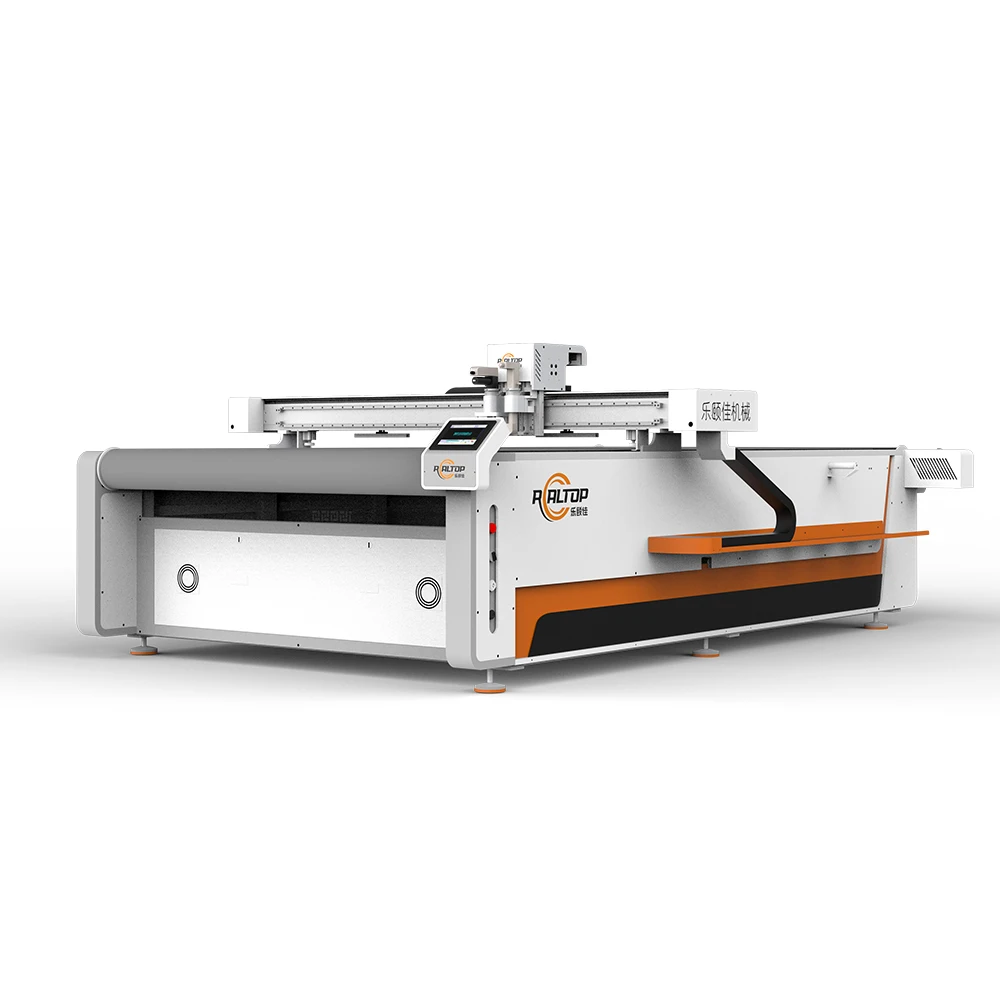
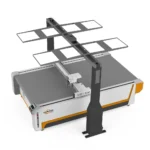
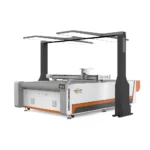
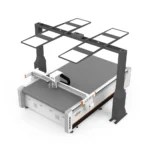
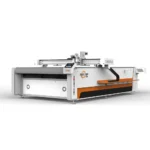
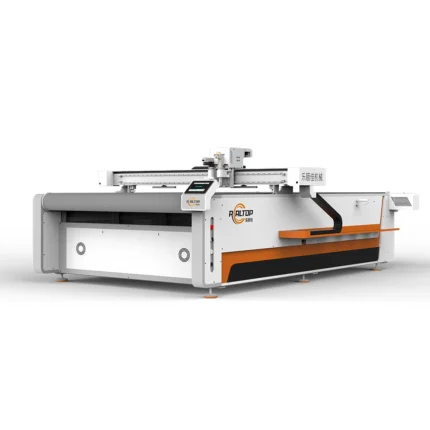
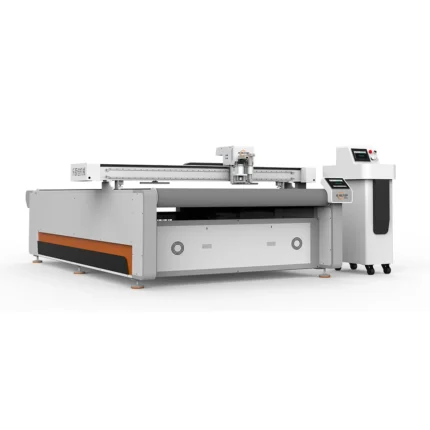
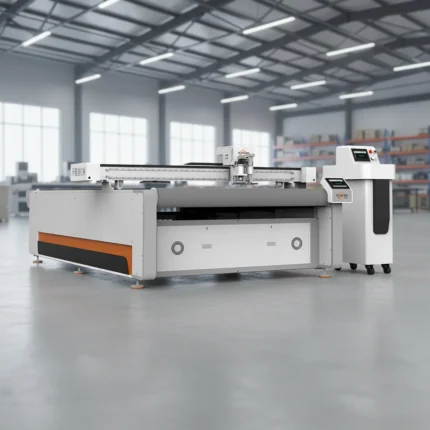
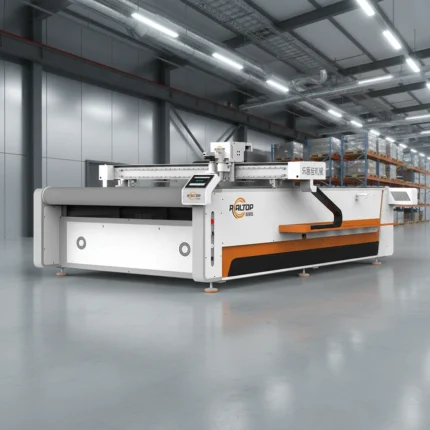
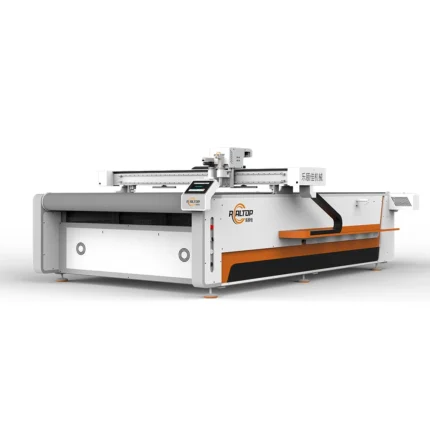
1625 CNC Oscillating Knife Cutting Machine, 1600×2500mm Working Area, ≤30mm Cutting Thickness — engineered for cold cutting of PVC, drop stitch fabric, and flexible textile rolls without thermal damage or fume generation.
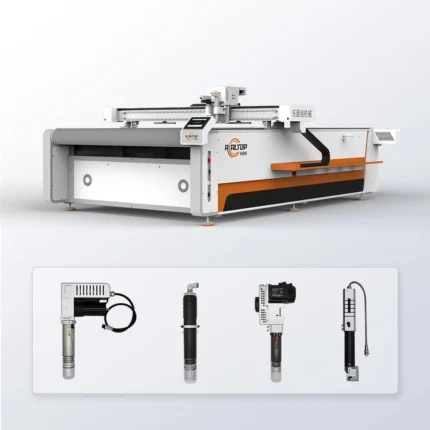
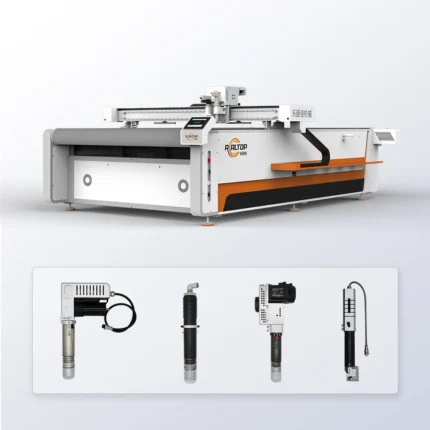
- Interchangeable tool heads including oscillating knife, driven rotary knife, and kiss cutting configured per material type and thickness
- Aluminum bellows vacuum table with full-surface adsorption prevents lift on small parts and flexible roll edges
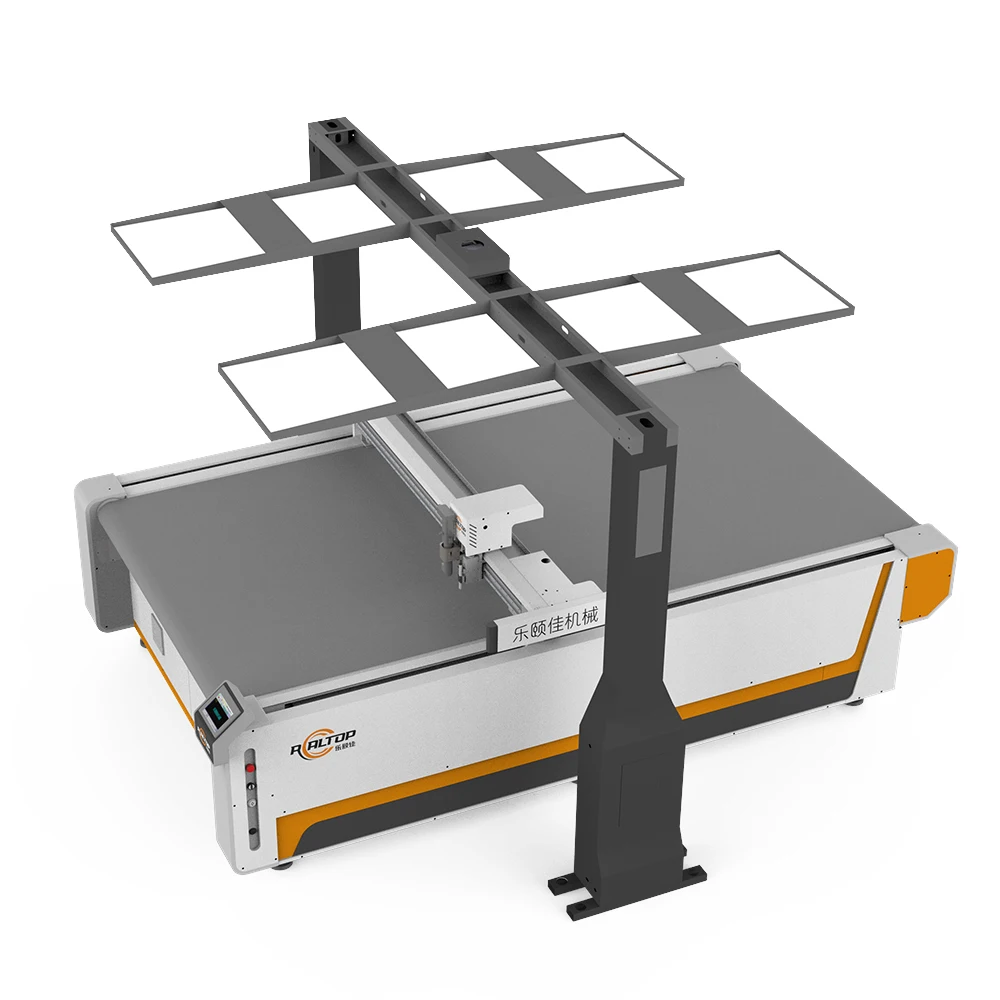
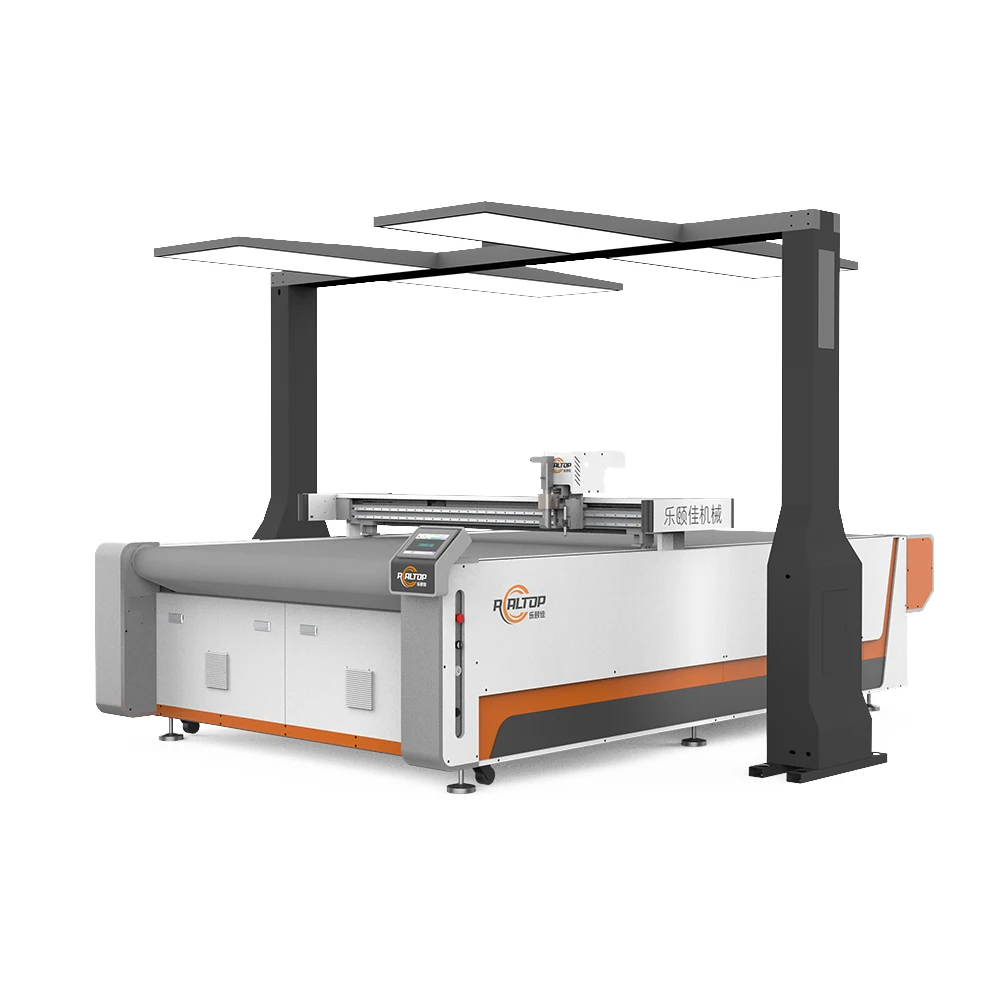
- CCD camera contour recognition and DXF/PLT/AI/PDF import for intelligent nesting and minimal material waste
Request a sample cutting report on your own PVC or drop stitch material before commitment, with tool head configuration and voltage confirmed in writing prior to shipment.
Multi-Tool Head Flexibility — A single 1625 cutting platform accepts oscillating knife, driven rotary knife, and creasing wheel heads so one machine handles PVC drop stitch fabric, apparel textiles, and automotive carpet without forcing a single tooling method across incompatible materials.
Technical Specifications
| Parameter | Value |
|---|---|
| Product Type | CNC Oscillating Knife Cutting Machine |
| Working Area | 1600×2500 mm |
| Tool Head Options | Oscillating knife, Driven rotary knife, Creasing wheel, Kiss cutting tool, Pneumatic knife, Milling tool, V-groove knife |
| Cutting Speed | 0–2000 mm/s (basis not stated in source — confirm material and thickness) |
| Cutting Thickness | ≤ 30 mm (basis not stated in source — confirm material type) |
| Positioning Accuracy | ±0.1 mm |
| Vacuum Pump Power | 9 kW |
| Vacuum Table | Aluminum bellows vacuum table |
| Voltage Options | 110V, 220V, 380V |
| Control System | PLC control panel (source value — verify CNC controller brand/model) |
| Servo Motor Options | Panasonic, Delta, Dorna (source value — verify standard vs. optional) |
| Safety Devices | Infrared sensor and emergency stop |
| File Format Compatibility | PLT, DXF, AI, PDF |
| Software Language Options | English, Russian, Italian, Chinese; custom languages available |
| Machine Dimensions | 3300×2100×1350 mm |
| Standards | CE |
Application Suitability
| Application | Material or Output |
|---|---|
| Inflatable boat and SUP hull panel cutting | PVC drop stitch fabric rolls up to 30 mm composite thickness |
| Garment and footwear pattern production | Knitwear, woven textiles, lace, leather hides |
| Automotive interior component fabrication | Seat fabrics, floor carpets, PVC mats |
| Home textile cutting | Sofa upholstery fabrics, curtains, rug materials |
| Composite material processing | Carbon fiber prepreg, aramid weaves, specialty flexible laminates |
| Packaging and carton sample making | Corrugated board, folding carton, gasket sheets |
Why "Rated Cutting Speed" Means Nothing Without Your Material Sample
A cutting speed claim is only valid against the exact material thickness and density you run in production.
I have seen buyers in Southeast Asia accept a quoted 2000 mm/s cutting speed, only to discover their drop stitch fabric for SUP boards is twice as dense as the test sample the factory used. The blade chattered, the edges frayed, and the first production run had to be scrapped. Speed on PVC and multi-layer textile is not a single number — it is a curve that drops as material resistance increases, and the only way to pin down your realistic throughput is to cut your own roll on the machine before signing anything [NEED_CITE: material-specific cutting speed validation for flexible composites].
How Cold Knife Cutting Eliminates Thermal Damage on Synthetics
Laser cutting melts PVC and synthetic textile fibers, leaving scorched edges, dark residue, and toxic fume clouds that require extraction infrastructure. The oscillating knife on this CNC platform slices through drop stitch fabric and PVC laminates at high frequency without generating heat, preserving the coated surface and the sealed air chambers that inflatable products depend on. For manufacturers producing inflatable boats or SUPs, this cold cutting method keeps the weld-ready edge clean and free from melted filaments that compromise seam integrity.
Vacuum Zoning Matters More Than Pump Horsepower
A 9 kW vacuum pump sounds capable, but if the table zoning is designed for large panels, small gasket or pattern pieces will lift off the surface during the knife pass. The aluminum bellows table on this machine provides full-surface adsorption across the 1600×2500 mm bed, holding flexible PVC and textile rolls flat even when the cutting path creates narrow offcuts. Proper zoning means the vacuum is directed only to the zones where material is present, preventing lift on pieces as small as footwear pattern components [NEED_CITE: vacuum table zoning principles for CNC knife cutting].
What the Specification Sheet Actually Tells You About Edge Quality
Positioning accuracy of ±0.1 mm means the knife returns to the same coordinate within a tenth of a millimeter across repeated passes, which matters when you are cutting nesting layouts where pieces share a common cut line. If the tolerance drifts, one piece gets an oversized margin and the neighboring piece gets a shortage — both end up as waste. The interchangeable tool head system lets you match the cutting edge to the material: oscillating knife for rigid PVC and dense drop stitch, driven rotary knife for woven textiles and knits that need a shearing action, and kiss cutting for adhesive-backed vinyl where you must cut the face layer without penetrating the release liner. The PLC control panel manages tool changes and path sequencing, though the specific controller brand should be confirmed with the factory before order.
The Cost of Specifying on Working Area Alone
I once worked with an inflatable boat manufacturer who ordered a machine based purely on the 1600×2500 mm bed size, assuming any knife cutter of that format would handle their drop stitch material. They did not disclose that their PVC was a reinforced three-layer laminate at the upper end of the thickness range. The standard oscillating knife head deflected under load, producing ragged edges that required manual trimming on every panel — negating the automation benefit entirely. Had they sent a material sample first, the factory would have specified a pneumatic knife head with higher downward force and a stiffer blade geometry [NEED_CITE: tool head selection for reinforced PVC composites].
Why Procurement Through This Channel Works
The factory designs and builds both knife and laser platforms in-house, so the cutting method is matched to the material rather than the buyer being forced into one technology. Every machine ships with a sample cutting report produced on the buyer’s own PVC, drop stitch, or textile material, providing physical evidence of edge quality and achievable speed before commitment. Voltage, plug type, and control panel language are confirmed in writing before production starts, eliminating the common arrival-day surprise. Software file format compatibility is verified against the buyer’s existing DXF, PLT, or AI workflow so there is no post-delivery nesting bottleneck. Tool head and vacuum table configuration are documented per order, meaning the machine arrives configured for the specific material profile rather than as a generic stock unit.
Documentation & Verification
- Factory test record showing cut quality on your specific PVC or drop stitch material batch
- Electrical schematic with voltage, frequency, and plug type confirmed for your facility
- Tool head and vacuum configuration list matched to your declared material thickness range
- Software licence and file format compatibility note for DXF, PLT, AI, and PDF workflows
- Spare parts list identifying wear items for your selected knife and creasing tool heads
- CE declaration documentation for machinery directive compliance
Installation, Commissioning & Support
- Floor space of approximately 3300×2100 mm required, with clearance for material roll loading on the long axis
- Dedicated electrical circuit matching confirmed voltage option (110V, 220V, or 380V) with proper grounding
- Machine ships partially assembled; gantry and tool head carriage require on-site alignment and calibration
- First-run commissioning includes vacuum table flatness verification and knife depth calibration against your material
- Operator training covers tool head changeover, nesting software import, and PLC parameter adjustment
- Wear parts supply covers oscillating knife blades, rotary knife discs, and vacuum table sealing strips
Before You Request a Quotation
Provide your material type, maximum thickness, and roll width so the tool head and vacuum configuration can be matched to your actual production. Specify your local voltage and frequency, the control language your operators need, and whether your existing nesting software exports DXF or PLT. If you are cutting drop stitch fabric for inflatable products, send a sample roll segment so the factory can run a cutting test and document the result before any order is placed.
Frequently Asked Questions
Q: How do I verify cutting speed claims against my PVC or drop stitch fabric?
A: Request a sample cutting report using your own material. The factory runs your PVC or drop stitch fabric on the 1625 platform and documents the achievable speed, edge quality, and tool head used. Cutting speed varies with material density and thickness, so a generic 2000 mm/s figure without your material context is not a reliable planning number for production scheduling.
Q: Which tool head should I use for drop stitch fabric versus woven textile?
A: Drop stitch fabric with its dense PVC-coated structure typically requires the oscillating knife for clean penetration and straight edges. Woven textiles and knits often perform better with the driven rotary knife, which shears fibers rather than punching through them. The factory confirms the recommended head after testing your specific material sample on the machine.
Q: Will small cut pieces lift off the vacuum table during cutting?
A: The aluminum bellows vacuum table is divided into zones so suction is concentrated under the material actually present. Small pattern pieces and narrow offcuts stay flat as long as the correct zone is activated. If your production mix includes very small gasket or footwear components, confirm the zone configuration with the factory before order to ensure adequate hold-down across your part size range.
Q: What voltage and language options are confirmed before shipment?
A: Voltage is configurable across 110V, 220V, and 380V, and the exact plug type is confirmed during order documentation. The control panel and software interface are available in English, Russian, Italian, and Chinese, with custom language options. All electrical and language specifications are recorded in the order confirmation before production begins.
Q: Can I send my own material for a sample cutting test before ordering?
A: Yes. The standard sales process includes a sample cutting stage where your PVC, drop stitch, or textile material is tested on the machine. You receive a cutting report documenting the tool head, speed, edge quality, and recommended configuration. This step is strongly recommended before any commitment, especially for reinforced or multi-layer composites outside standard thickness ranges.


Related products
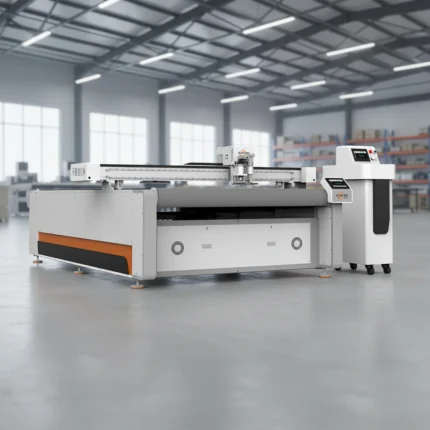
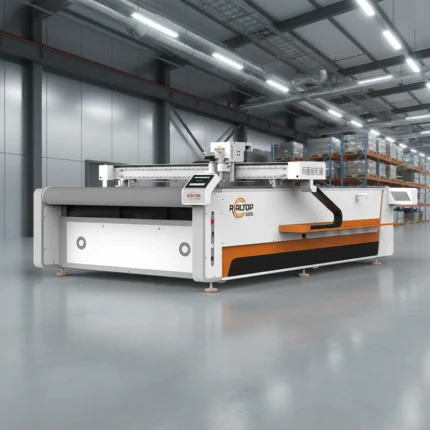
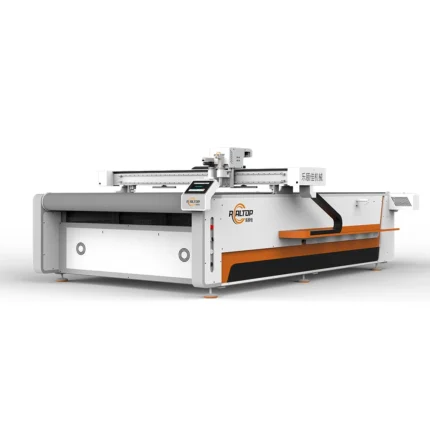
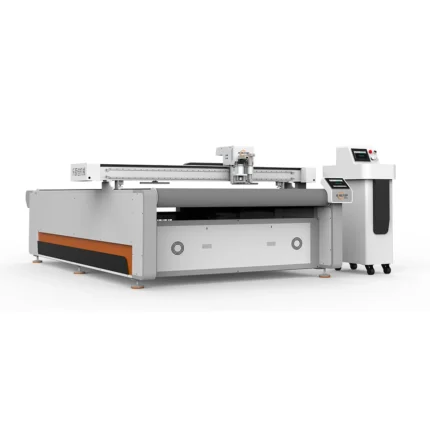
2026 CNC Knife Cutting Machine for Fabric Leather PVC Hot Sale
Product Introduction
2026 Hot Sale CNC Knife Cutting Machine for Fabric, Leather, PVC. Ideal for precise cutting of various materials with advanced CNC technology, perfect for manufacturing needs.
Product Parameters
| Application | Fabric, Leather, PVC |
| Type | CNC Knife Cutting Machine |
| Feature | Precision Cutting |
| Year | 2026 Model |
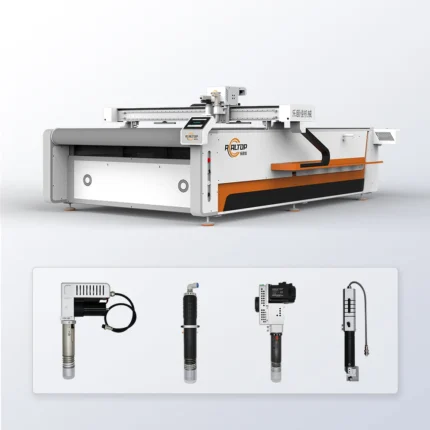
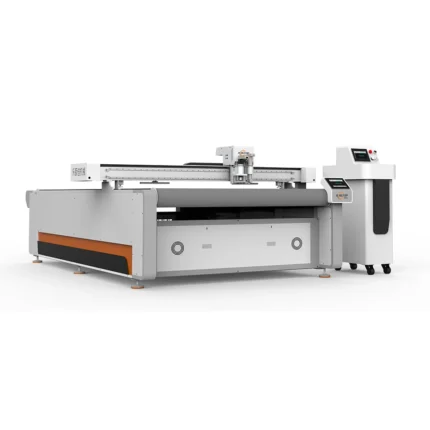
2026 Inflatable Surf SUP Board Cutting Machine
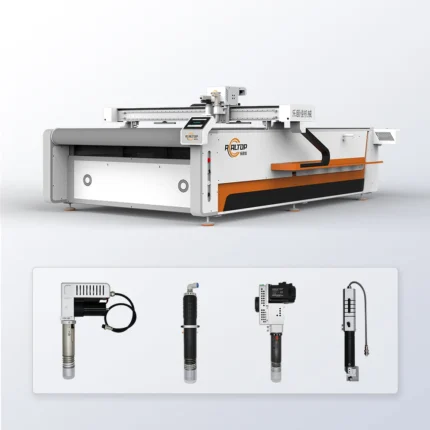
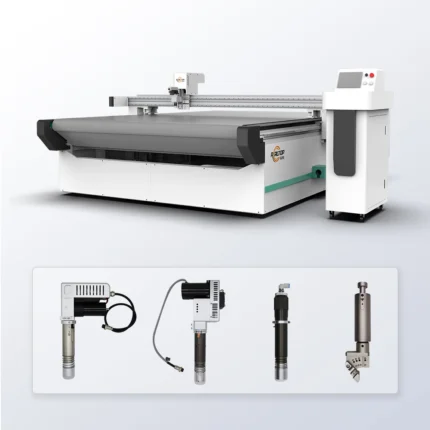
Product Introduction
Ideal for inflatable surf SUP board production, this 2026 cutting machine ensures precise and efficient cutting, tailored for manufacturers seeking reliable performance in water sports equipment manufacturing.
Specifications
| Application | Inflatable Surf SUP Board |
| Type | Cutting Machine |
| Model Year | 2026 |
Automatic Fabric Cutting Machine 1200mm Delta Servo 2026
Product Parameters
| Cutting Width | 1200mm |
| Servo System | Delta Servo |
| Model Year | 2026 |
Introduction
High-performance Automatic Fabric Cutting Machine with 1200mm cutting width, equipped with Delta Servo for precision. Ideal for efficient fabric processing in textile industry, ensuring accurate and fast cutting operations.
CNC Oscillating Knife Cutting Machine 2026 3000¡Á1600mm High-Speed
Product Parameters
| Model | CNC Oscillating Knife Cutting Machine 2026 |
| Working Area | 3000mm¡Á1600mm |
| Cutting Type | Oscillating Knife |
| Application | Fabric Cutting |
| Feature | High-Speed |
Introduction
High-performance CNC oscillating knife cutting machine with 3000mm¡Á1600mm working area, ideal for high-speed fabric cutting. Precision and efficiency for professional textile processing needs.
CNC Vibration Knife System 2026 for Polyester Nylon Non-Woven Prepreg
Product Introduction
CNC Vibration Knife System 2026 is ideal for cutting polyester, nylon, non-woven fabrics, and prepreg materials with precision and efficiency, suitable for industrial manufacturing needs.Product Parameters
| Model | 2026 |
| Cutting Technology | CNC Vibration Knife |
| Materials | Polyester, Nylon, Non-Woven, Prepreg |
Jinan Realtop CNC Fabric Slitting Cutter 2026: Advanced Flexible Material Cutter
Product Introduction
Jinan Realtop CNC Fabric Slitting Cutter 2026 is a high-performance cutting equipment designed for precise fabric processing, ideal for industrial manufacturing needs with reliable CNC technology.Specifications
| Model | 2026 |
| Type | CNC Fabric Slitting Cutter |
| Manufacturer | Jinan Realtop |
| Application | Fabric Processing |
| Control System | CNC |
Jinan Realtop CNC Oscillating Knife Cutter 2026
Product Introduction
Jinan Realtop CNC Oscillating Knife Cutter 2026, a precision cutting solution from China's leading welding & cutting equipment manufacturer, ideal for efficient material processing with advanced CNC technology.
Key Specifications
| Model | 2026 |
| Type | CNC Oscillating Knife Cutter |
| Manufacturer | Jinan Realtop |
商品评价
There are no reviews yet.